I AM ALSO A FUGITIVE FROM A CHAIN GANG: HELL’S HIGHWAY (1932)

November 3, 2015

hell00006

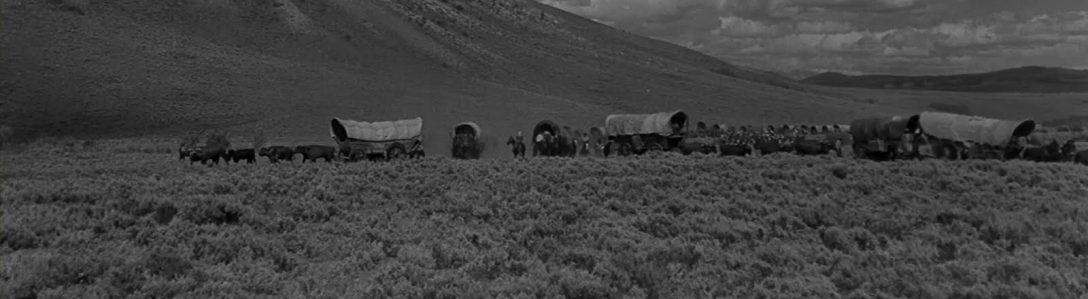
In 1932 the treatment of prisoners on chain gangs became an issue of national import. In January Robert Elliott Burns published I Am a Fugitive From a Georgia Chain Gang!, which recounts two escapes, eight years apart, from brutal prison camps. Warner Brothers would rush to adapt it into I Am a Fugitive From a Chain Gang for a November release. In June Arthur Maillefert died inside a “sweat box” at the Sunbeam Prison Camp in Florida, a chain wrapped around his neck and wooden stocks nailed around his feet. The camp’s captain was charged with first degree murder and found guilty of manslaughter, sentenced to twenty years imprisonment. Calls for reform reverberated across the country, and the film studios were eager to capitalize on the nation’s interest. Universal was developing Laughter in Hell (which I wrote about here), adapted from a Jim Tully novel, while RKO was fast-tracking Hell’s Highway, which combines Burns and Maillefert’s stories into a narrative they hoped not to get sued overPrizing speed above all else, RKO got Hell’s Highway into theaters first on September 23rd, beating Fugitive to screens by almost two months (Laughter in Hell didn’t arrive until January of 1933). Brought to the screen by the famously combative director Rowland Brown, Hell’s Highway is cynical and punchy, but compromised by studio meddling.  The Warner Archive has made Hell’s Highway available on DVD as part of “Forbidden Hollywood Volume 9″, the latest in their series of pre-code DVD sets (it also includes Big City Blues, The Cabin in the Cotton, When Ladies Meet, and Sell Anything).

HHighway

The sole reason for Hell Highway’s being was to beat Am a Fugitive From a Chain Gang into theaters, regardless how it accomplished that goal. Producer David O. Selznick and writers Samuel Ornitz, Robert Tasker, and Rowland Brown cobbled together a script culled from the Burns novel, the Maillefert story, and Agnes Christine Johnson’s Freedom, another book about chain gangs. Then Selznick cut out anything he thought might get them sued. This “original” tale focused on Duke Ellis (Richard Dix), a prisoner on a chain gang continually looking for an escape. He nearly breaks loose thanks to a distraction from the fortune-telling bigamist Matthew (Charles Middleton), but had to call it off when he discovers his young brother Johnny (Tom Brown) has been detained in the same camp. After a Maillefert-like prisoner dies in a sweatbox, the inmates start advocating for revolt. Johnny receives word that Duke is about to be extradited to Michigan to serve a life sentence, so Johnny decides to bust Duke loose. The attempted escape triggers an all out riot that burns the prison camp to the ground, and Duke and Johnny try to stumble their way to survival.

hell00003

Brown gets a lot of mileage out of symmetrical shots out of chained feet, men lined up at the cafeteria table and trudging to work to build a road. They are effectively dehumanized, herded like cattle and whipped like dogs. Duke is the one who can’t be broken, a hard-bitten cynic who seems to have been raised in jails and resents every authority figure he’s ever met. The warden and all the guards are depicted as ignorant goofs or sadistic fascists, not exceptions but representatives of a violent system. It is missing I Am a Fugitive From a Chain Gang’s  meticulous attention to detail and Laughter in Hell’s death-drive delirium, but it does have dirt and grime and an atmosphere of desperation, ably lensed by DP Edward Cronjager (Heaven Can Wait).

hell00009

Martin Scorsese was a fan, and wrote for TCM, “There are moments that you will never forget. There’s a remarkable scene that we included in my documentary on American cinema: the prisoner played by Richard Dix is about to be whipped by a guard, who suddenly flinches when he sees the tattoo on Dix’s back and recognizes that he’s a fellow WWI vet. And there’s another passage that is quite unlike anything else in American cinema of the period, in which the story of a cuckolded guard and his cheating wife is told in an impromptu Frankie and Johnny ballad.” The latter is a bizarre interlude unrelated to the rest of the action. There is a group of black prisoners, segregated from the whites, who sing spirituals in their off hours. But one of them is a talented caricaturist, and sketches out a few cartoon panels of one of the guard’s cheating wife. The story is told through song. It is graphic, funny, and a completely different tone from the quiet desperation of the rest of the feature. It’s hard to say why Selznick did not cut that sequence, when he did so many more, as well as re-shooting the ending. He had John Cromwell come in to shoot an absurdly upbeat ending that inserts a benevolent bureaucrat who punishes the staff and implicitly exonerates the prison-industrial system.

film-daily-sept-33-ad

Director Rowland Brown is one of those great Hollywood enigmas. He only directed three well-regarded films (Quick Millions, Blood Money and Hell’s Highway) before reportedly punching out a producer and never directing again, though he maintained a career as a writer up through the ’50s (he received a story credit on Kansas City Confidential (’52)). He was born in Ohio, and got his start in the arts as an illustrator and sports cartoonist. He eventually moved to Los Angeles and became a day laborer at the studios. According to James Curtis’ Spencer Tracy biography Brown, “turned to screenwriting under the auspices of the late Kenneth Hawks [Howard’s brother], went to Universal for a short while, then sold a grim mob story, “A Handful of Clouds”, to Warner Brothers, shot as The Doorway to Hell (1930, directed by Archie Mayo). Brown was reportedly involved with the mob, and was rumored to have made a living as a bootlegger during prohibition, and was said to have been an acquaintance of Bugsy Siegel. This all lent an air of legitimacy to his gangster films, and perhaps got him the opportunity to direct his script for Quick Millions (1931), a movie about a small time protections racket starring Spencer Tracy. What is remarkable about Brown is how much remains unclear. It doesn’t seem like anyone knows for sure his true relationship to the mob, or who he actually punched at RKO. It was rumored to be David O. Selznick or Frank Davis, the producer on The Devil is a Sissy, from which Brown was fired and replaced by W.S. Van Dyke. Let’s just say I will buy the Rowland Brown biography if it is ever published.

hell00011

Despite it’s beating I Am a Fugitive On a Chain Gang into theaters, the comparatively slim and cheap Hell’s Highway was soon overwhelmed at the box office, and it has disappeared from view aside from the chatter of a few Rowland Brown cultists. It is a strange, tough little film with a grim view of American incarceration, one that was kneecapped by Selznick’s re-shoots, but one that still retains its ability to shock.

DEATH WATCH: JOSEF VON STERNBERG ADAPTS AN AMERICAN TRAGEDY (1931)

September 8, 2015

In 1931 the Paramount Publix Corporation was eager to film an adaptation of Theodore Dreiser’s novel An American Tragedy, having failed to do so since acquiring the rights soon after its publication in 1925. They got close in 1930, when the visiting Sergei Eisenstein wrote an experimental script that was eventually rejected for being too long and uncommercial. So instead they assigned Josef von Sternberg, who was coming off three hits starring Marlene Dietrich (The Blue Angel, Morocco, and Dishonored), and seemed to have the box office touch for artier, offbeat material. The resulting film, now out on DVD from the Universal Vault (the transfer is likely from an old VHS master, soft but watchable), is an oneiric oddity, using dreamlike visuals to illustrate a story of true crime barbarism – murder by drowning. Water imagery abounds, in lap dissolves and superimpositions – it even breaks up Von Sternberg’s name in the opening credits. Von Sternberg turns Dreiser’s indictment of American society, one that created the conditions for murder, into something more subjective and opaque. Dreiser claimed that Paramount had turned his novel into an “ordinary murder story”, and sued to have the movie’s release halted. The New York Supreme Court judge ruled in favor of Paramount, and the film was released. Motion Picture Herald claimed the decision was, “likely to become an important part of legal tradition and precedent in the relation of the art of literature and the art of the motion picture.” So whenever Hollywood takes creative liberties with a novel, for better or worse, it has Paramount’s An American Tragedy to thank.

“I have just finished reading the Eisenstein adaptation of An American Tragedy. It was for me a memorable experience; the most moving script I have ever read. It was so effective, that it was positively torturing. When I had finished it, I was so depressed that I wanted to reach for the bourbon bottle. As entertainment, I don’t think it has one chance in a hundred. …Is it too late to try to persuade the enthusiasts of the picture from making it?” – David O. Selznick to B.P. Schulberg, October 8, 1930

In April of 1930 the Vice President of Paramount, Jesse Lasky, signed Eisenstein to a contract – he would receive $900 a week, out of which he would pay his cameraman Eduard Tisse and assistant Grigori Aleksandrov . They all arrived in Hollywood in May, and received the grand tour, visiting Disney, and attending a party at Ernst Lubitsch’s place at which Marlene Dietrich and Josef von Sternberg were guests. An American Tragedy was settled upon as the project. Dreiser’s story was based on the real murder of 20-year-old Grace Brown by Chester Gillette in Upstate New York in 1906. They were transposed into the novel and film as farm girl Roberta Alden and son of poverty Clyde Griffiths. Griffiths runs away from his hometown after witnessing a murder, and bounces around menial jobs (bellboy and dishwasher) until he lands a job at a printing and stamping factory. It is there he meets Roberta, and he believes he is in love until he sets his eyes on the upper class charms of Sondra, the hit of the society pages. Clyde will lose his job if his relationship with Roberta comes to light, so thoughts turn to making her disappear. Eisenstein became entranced with the idea of “internal monologue”, which was not simple voiceover but more like stream-of-consciousness audio montage that would ebb and flow with the intensity of the characters’ emotions. A snippet from his script treatment:

“As the boat glides into the darkness of the lake, so Clyde glides into the darkness of his thoughts. Two voice struggle within him — one: ‘Kill — kill!’ the echo of his dark resolve, the frantic cry of all his hopes of Sondra and society; the other: ‘Don’t — don’t kill!’ the expression of his weakness and his fears, of his sadness for Roberta and his shame before her. In the scenes that follow, these voices ripple in the waves that lap from the oars against the boat; they whisper in the beating of his heart; they comment, underscoring, upon the memories and alarums that pass through his mind; each ever struggling with the other for mastery, first one dominating then weakening before the onset of its rival.”

He had more abstract ideas too, in line with the work of James Joyce and Gertrude Stein that he admired: “Then in passionate disconnected speech. nothing but nouns. Or nothing but verbs. Then interjections. With zigzags of aimless shapes, whirling along with these in synchronization.” The script he delivered would run 14 reels (around 154 minutes), and Paramount had no intention of following his whims for such an obvious money losing project. Selznick’s view won out, and Paramount paid Eisenstein $30,000 to end their contract. They turned to von Sternberg to get the film made.

Sternberg claims to have seen nothing of Eisenstein’s treatment, and considered him a friend from their evenings together. In his autobiography Fun in a Chinese Laundry, he recalls, “I was approached by Adolph Zukor. He told me that the company had a dormant investment of half a million dollars in An American Tragedy, and pleaded with me to undertake to salvage this by making an inexpensive version of it. I eliminated the sociological elements [with screenwriter Samuel Hoffenstein], which, in my opinion, were far from being responsible for the dramatic accident with which Dreiser had concerned himself.” So gone was the precise detailing of Clyde’s social class, and, so, according to Dreiser, “instead of an indictment of society, the picture is a justification of society and an indictment of Clyde Griffiths (Phillips Holmes).” I would say the film does not justify society as much as ignore it, and it is not an indictment of Griffiths but an attempt to understand him. The film tries to get into his head through the atmospherics provided by DP Lee Garmes and sound recordist Harry D. Mills, who had both worked on Morocco and Dishonored. Though limited by the close attention being paid the project by the censors (Roberta’s (Sylvia Sidney) attempted abortion is implied rather than stated in the film), it tries to sketch out Clyde’s fantasy life.

The first we glimpse of Clyde’s factory job, he is overseeing his young female clientele, and Garmes’ camera tracks to the right, pausing when Clyde pauses, as the women stare up at him with theatrical flirtations. After Clyde returns to his Spartan office, the floor covered in rejected collars, there is an unusual cut to an extreme close-up underneath the factory tables, of women’s feet and ribbon. It is the only insert in the entire sequence — a peek inside his head, into his limited interests of his erotic imagination. Water is the overarching trigger for Clyde’s desires, however. His first date with Roberta is a canoe ride down a stream, and Von Sternberg utilizes long lap dissolves of water, with scenes melting into and layering on top of each other. In Spring time, the blossom of his love for Roberta, a close-up of the shimmering river is superimposed on top of a long-shot of the same river, creating an abstract image of glimmer, something of the sensorium exploding in Clyde’s head. Later when he hears the newsboy haranguing passersby with headlines of a drowned woman, murder arrives on the horizon of possibilities. Clyde’s hand hovering over a map is then dissolved over an image of a lake, as he begins to assert control over his own violent desires, starts to put them into action.

This intimate dreamscape, some of Von Sternberg’s most discomfiting work, asking the audience to identify with a fetishistic killer, ends abruptly in the extended courtroom sequence that ends the film, a marathon of stilted exposition. The slow, drowsy build into Clyde’s paranoid mindset turns flat and realist, the fog of mystery lifted in favor of legibility and half-hearted redemption. But a film with as complex a production history as this one couldn’t help but being compromised in the end, with so many demands coming from Paramount, the censors, and Dreiser’s lawsuit. It is two-thirds of a great film.

BAYOU BREAKOUT: CRY OF THE HUNTED (1953)

October 27, 2015

cryhunted00011

After a career of making B-pictures for Columbia and Poverty Row, Joseph H. Lewis signed a contract with MGM in 1950. His calling card was Gun Crazy (1950), a daring crime film whose location photography and long-take heist sequence created a buzz in Hollywood, if not at the box office. MGM executive Dore Schary screened the film at his home, and brought Lewis into the fold. They sold him on the idea of making a documentary portrait of Cuban immigrants, “no actors, done with all portable equipment”, but this bold experiment never materialized. The idea was recycled into the Hedy Lamarr vehicle  A Lady Without Passport (1950), which was Lewis’ directorial debut for MGM. Their artsy hire became just another contract director. But Lewis was used to working miracles off of threadbare scripts – he earned the nickname “Wagon Wheel Joe” on B Westerns by continually bisecting his compositions with wheel spokes. One of the most delirious examples from this period is Cry of the Hunted (1953), about the manhunt of an escaped prisoner through the Louisiana bayou, that Warner Archive has just issued on DVD. Lewis takes every opportunity to ratchet up the intensity: he pushes into extreme close-ups to emphasize flop sweat, lenses a fog-choked hallucination brought on by swallowing swamp water, and captures intense on-location footraces up the Angels Flight funicular in Los Angeles and long take brawls through the Louisiana Bayou. The characters don’t have time to take breaths, and in its svelte 80 minutes, neither does the viewer.

cryhunted00001

Cry of the Hunted was shot in September of 1952 in Los Angeles and the Louisiana bayou, an ambitious schedule for a B picture. But even MGM’s B films were done at budgets higher than Lewis was used to. He recalled to Peter Bogdanovich in Who the Devil Made It:  “At Metro, I found when I had a sequence to shoot with fog in it, they wanted to give me two huge stages and build a whole swamp set, put a boat in there and everything. I knew what that meant: you’d fog up the scene and after you made a shot, you’d have to wait for a half hour of forty-five minutes until the huge fans blew out all the old smoke. Right? Well, that was the Metro way. I wasn’t about to do that – I wanted to do it on the outside, which we did eventually.” Lewis was always trying to get outside and onto the streets and the dirt – thinking it was cheaper to find something ready-made than have it constructed. This was not quite the MGM way, and this made him an odd fit at the company, and he often regretted signing the deal.

cryhunted00005

The screenplay by Jack Leonard is fairly elemental. Jory (Vittorio Gassman), a petty Cajun criminal, has been imprisoned for driving the getaway car at a robbery. Lt. Tunner (Barry Sullivan) had been tasked with getting Jory to talk and incriminate his heist-mates. When Jory busts out of jail, he lams it for Louisiana. It is up to Tunner and his rotund partner Goodwin (a sardonic William Conrad) to wade through the swamps and the quicksand to find Jory and bring him back to justice.

cryhunted00006

The energy lags anytime there is a scene indoors, whether it’s at the prison Warden’s office handing Tunner his detail or it’s the Lieutenant at home, making nice with his improbably perky wife (she mixes him martinis for his manhunt picnic basket). These are script pages to plow through, an assignment to complete. But the film comes alive outside. The first galvanic scene is Jory’s escape, which happens during a car accident when they are transferring him back to jail. After being harangued in the backseat by Goodwin’s threatening banter (William Conrad plays his cop as a smiling sociopath), he springs loose on a Los Angeles street following a head on collision. Lewis seems to feel as suddenly free  as Jory, capturing Gassman hoofing it towards the Angels Flight funicular with the piston-like form of Tom Cruise. The funicular was a transport from Downtown to the working class neighborhood of Bunker Hill. The history and various incarnations of Angels Flight were dissected in Thom Andersen’s Los Angeles Plays Itself, a history of the city on-screen. This instance is particularly notable, for Lewis jams a camera into one of the cars as it travels up, and shots Conrad (or his stand-in) as they race up a staircase across the way.

cryhunted00014

The scenes shot on the Louisiana Bayou are less urgent and more atmospheric – sweaty, sticky sequences where everything seems to be sinking into a bog. Lewis’s use of extreme close-ups becomes even more prominent, pushing his camera straight into the sweat ridges on male foreheads. Forward motion becomes impossible through the thick swamp, dotted as it is by quicksand, crocs, and disfigured Cajun soothsayers who scream for their lost loved ones (“Raul! Raul!”, she yells, to no response). Tunner even hallucinates being choked by the fog (and by Jory), a fever dream of elongated giant shadows towering over him and his hospital bed – it’s an impossibly strange bit of surrealist cinema for a MGM programmer.  With all of this insanity, the easy thing for Tunner and Jory to do would be to sink and disappear, but they keep fighting until the swamps threaten to consume them. They are ready to be devoured until a miraculous last act of heroism by the previously self-serving Goodwin. It’s an improbable end to a story that seemed destined to dissolve in the muck, but that’s Hollywood for you. And that’s Joseph H. Lewis for you as well, finding visual intensities from script inanities.

PULLING THE STRINGS: WHAT EVERY WOMAN KNOWS (1934)

October 20, 2015

Woman00012

When Helen Hayes was cast in the 1926 Broadway production of What Every Woman Knows, she was not yet “The First Lady of the American Theater”. According to the show’s producer William A. Brady, she had previously been “deep in the high heels and lipstick business – flapper roles”. It was with the part of the pragmatic “Maggie” in J.A. Barrie’s 1908 play, a Scottish battle of the sexes, that she established the Hayes persona, her civilized veneer holding back a mischievous spirit. The show ran for 268 performances and rave reviews. After further Broadway successes in Coquette (’27) and The Good Fairy (’31), she signed with MGM in 1931 to extend her career into the movies. It seemed natural to have her return to her breakthrough role, and What Every Woman Knows was directed by Gregory La Cava in 1934 – available now on DVD from the Warner Archive. But it was a frustrating experience for all involved, hampered by poor test screenings and re-shoots. Hayes was so disappointed in the process she stopped acting in films for nearly two decades. Regardless of the off-screen dramas, the film itself is a charming comedy about a smart young spinster who manipulates the men in her life into prominence, becoming a behind-the-scenes power broker. It is a rare treat to see Hayes reprise her star-making role, and it is a layered performance built on hundreds of stage repetitions, in which every glance is like a conductor’s wand, controlling the men around her.

Woman00001

Hayes may have first become wary of cinema during that initial Broadway run of What Every Woman Knows at the Bijou Theater in 1926. As she was performing,  MGM’s epic WWI movie The Big Parade was screening next door at the Astor, and the live accompaniment was so loud it would reportedly startle the Bijou performers (per Ken Bloom’s BroadwayAn Encyclopedia). She would recover enough to take MGM’s money and immediately win a Best Actress Oscar for The Sin of Madelon Claudet (1931), and was radiantly innocent in Frank Borzage’s adaptation of A Farewell to Arms (’32).

Woman00003

What Every Woman Knows had already been filmed in a 1917 British version and a 1921 Paramount Production starring Lois Wilson. But enough time had passed for MGM to take their shot, and they had the definitive “Maggie” to go with it, so they paid Paramount $65,000 for the rights to J.A. Barrie’s play. It is set in the village of Kilburne, Scotland and concerns Maggie Wylie (Hayes), a plain, rather brilliant 26-year-old whose family fears she will become a spinster. With her mother passed on, she is surrounded by her father Alick (David Torrence), and her two brothers James (a delightfully dopey Dudley Digges) and David (a starchy Donald Crisp). A few betrothals have fallen apart, and the male Wylies become desperate to marry her off, while Maggie endures them with a twinkle in her eye. The family sees an opportunity in John Shand (Brian Aherne) when they catch him breaking into their library to study, for he’s too poor to attend school. So the Wylies propose to pay for his schooling if he signs a contract promising to marry Maggie after his graduation in five years. The contract is adhered to, and suddenly John is thrust into a race to become MP. Maggie is by his side, and his ear, guiding him to higher positions. The only threat to her ascent is the beautiful socialite and political operator Lady Sybil (Madge Evans), who has her own designs on John, but Maggie has a plan for her too.

Woman00004

Maggie operates in a suffocating patriarchy in which her only value to her family is through marriage, so while they love and adore her, they are desperate to get her out of the house. The early scenes are fascinating for how lightly Hayes plays them as her fate is decided by men sitting around a table. She blames her lack of “charm” for not getting a husband, and continues to flit around the house seemingly oblivious to the monumental changes her life is about to undertake. Whether she is accepting a present or a husband, her reaction is the same, with a benign, half-smiled acceptance. This false “lightness” is conveyed through her lilting Scotch burr as well as her walk. The one aspect of her that can’t lie is her eyes, and director Gregory La Cava, a wonderful director of actresses (Bebe Daniels in Feel My Pulse, Constance Bennett in Bed of Roses), has the blocking in the frame dictated by her gaze. Men are the filaments to her magnet, shifting around her as she tilts her head. While she cannot run for political office due to her sex, she can control their actions from her boudoir.

Woman00009

After a poor test screening in Los Angeles, La Cava brought the cast and crew back into the studio for retakes, saying, “every Joe Miller Scotch joke ever written” would be thrown in to please the audience (Joe Miller’s Jests was an English joke book from 1739), though Hayes recalled that none of the 18th century bon mots made it into the film. She was unhappy with the production, though it received decent reviews (the NY Times called it “heart-warming and decidedly effective”. She threatened to no-show her next assignment, Vanessa: Her Love Story (’35), but did the job to avoid getting sued. Through with Hollywood, she would devote the rest of her career to the stage, returning to TV and film intermittently (memorably so in Leo McCarey’s My Son John (1952)). What Every Woman Knows was a project La Cava and Hayes would both like to forget, but my job is to keep people from forgetting. It is a loose and amiable film with an alert, masterful performance at its center.

SHIP OF FOOLS: THE LONG VOYAGE HOME (1940)

October 13, 2015

HollywoodBar6

The Long Voyage Home (1940) was self-consciously an art film. An atmospheric bummer adapted from four one-act plays by Eugene O’Neill, it was the first  movie made for John Ford’s independent production company Argosy (co-founded with Merian C. Cooper). This offered Ford an unusual amount of freedom, and co-producer Walter Wanger commissioned prominent fine artists (Thomas Hart Benton, Grant Wood, Luis Quintanilla, Georges Schreiber, and Ernest Fiene) to come on the set and paint whatever they wanted.  In the biography Searching for John Ford Joseph McBride quotes the director as saying “I didn’t like the idea at first, but the artists proved to be a grand bunch of guys.” Ford and cinematographer Gregg Toland did their own painting with light, making The Long Voyage Home his most visually experimental film. There is the deep focus that Toland made famous the next year in Citizen Kane, plus low-light chiaroscuro and trick shots like anchoring the camera to the floor of the ship so the audience has a plank-level view of a storm, the waves crashing over the lens. It screened on 35mm (a UCLA restoration) in the Revivals section at this year’s New York Film Festival, but it is also streaming on Criterion’s Hulu page, if you are digitally inclined. At points the film feels like a workshop, to try out techniques Ford was unable to use on his bigger studio pictures, which gives The Long Voyage Home its patchwork quality. And yet Dudley Nichols’ sensitive script is able to tie the anecdotal structure together, and it remains a profoundly moving experience of unmoored men at sea, fruitlessly trying to claw back to land.

tumblr_m83jse9c4T1qbhnrvo1_1280

The Long Voyage Home was shot in thirty-seven days for $682,495 at the Goldwyn Studios lot, as well as aboard the freighter S.S. Munami at Wilmington Harbor, CA. Eugene O’Neill was friends with Ford and proposed bundling his seafaring one-acts into a film. Dudley Nichols updated it to WWII, gathering a group of O’Neill’s dead-ender sailors on The Glencairn as they travel from the West Indies to Baltimore and on to England, transporting explosives through a war zone. It is an ensemble cast that includes Thomas Mitchell as Driscoll, a gregarious Irish rouster, John Wayne as Ole, a sensitive, big-hearted Swede, and Ward Bond as Yank, a bullet-headed brawler. In the digressive narrative room is given to the stories of Smitty (Ian Hunter), an alcoholic escaping his past, and Cocky (Barry Fitzgerald), a failure come to terms with his lonely life at sea. John Qualen and Billy Bevan are also on board to provide some nosy comic relief.

wayne_61

None of them have managed to figure out life on land, so they continually sign up for more journeys on the ocean, in perpetual avoidance of the “real” world on solid ground. Instead they drink and brawl and pine nostalgically for the old days of drinking and brawling. The crew pairs off in friendships, with Driscoll and Yank as best friends and world travelers, even if they can’t remember half of their trips. Smitty and Cocky continually end up on deck with each other, as the rest of the crew gets blasted. Smitty is nervous, sweaty and haunted, the most noirish character of the bunch. The crew invents an elaborate backstory for his secretiveness, one that expands in complexity until they start believing his is a Nazi spy.  Most of their time is occupied inside of these fantasies. Smitty’s refusal to participate marks him as an outsider. The truth is sadder than any of them can comprehend. So they ignore it and move on.a_wa1094

John Wayne gives one of his most unusual performances, taking on a Swedish accent and playing Ole as a sweet, slow-witted goofball. He is a lovable giant, and the characterization runs counter to the All-American athlete persona he had been cultivating for years. But for John Ford he would do anything. Wayne was still finishing off his Republic Pictures contract, and had to shoot the drama Three Faces West for twenty days before taking on Long Voyage Home. Insecure at his talent for accents, he asked Ford for help. As quoted in Scott Eyman’s John Wayne: The Life and Legend, Ford responded: “Well, Jesus, all right if you want to be a goddamn actor. You don’t need it.” But Ford hired Danish acting coach Osa Massen to help him out, and if the accent isn’t quite accurate, her instruction put Wayne at ease, and his performance of wide-eyed innocence is one of the most delicate of his career. Though it was a glorified supporting part, Wayne was still given top billing, probably due to the smashing success of Stagecoach in 1939.

a_duk153

Ole has plans to quit the seaman life and return home to his family in Sweden. It is the crew’s solemn vow that they will protect him on shore leave and make sure he gets on the ship home. He has failed many times before, getting caught up in drink, getting in debt, and returning to work to pay off his debts. But for all of the men, Ole is a symbol of freedom, the only one who could conceivably forge a real life on land. Everyone else has had their family and friends die off or disavow them. The ship is their entire world. And the way in which Toland shoots them it feels like a moving mausoleum. Toland reserves his low light shots for the bridge, the tools of navigation bathed in darkness. They hyperreal qualities of deep focus here emphasize the empty spaces, of lost crew members and phantom memories. The most representative sequence is the shot of the raging storm that crashes onto the camera, which anticipates the GoPro techniques of Verena Paravel and Lucien Castaing-Taylor’s immersive boat film Leviathan. There are no actors in the shot, it is emptied of everything but the water. The crew of the Glencairn are disappearing, and they will all eventually be subsumed in the ocean. The shot is a foreshadowing of future absence, and for most of the crew, not an unwanted one.

THE 2015 NEW YORK FILM FESTIVAL

October 6, 2015

Originally published in Movie Morlocks, the official blog of Turner Classic Movies

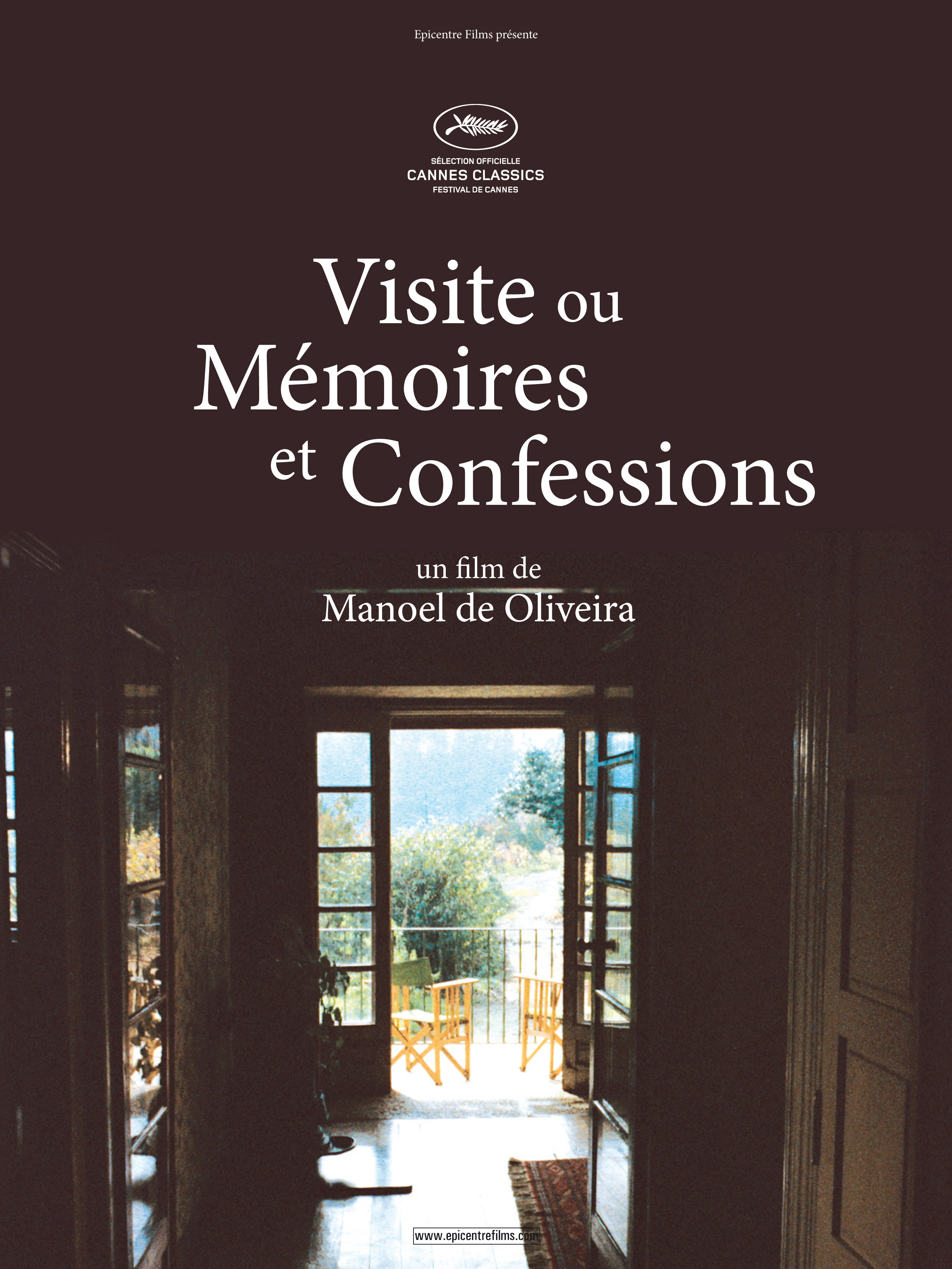
To stud its carpets with stars, the 53rd New York Film Festival has turned to the biopic. It opened with The Walk, Robert Zemeckis’ recreation of Philippe Petit’s World Trade Center tightrope walk, gave a centerpiece slot to Michael Fassbender as Steve Jobs, and closes with Don Cheadle’s Miles Davis movie, Miles Ahead. Though I haven’t managed to see those high-gloss productions, biographical approaches extended throughout the festival and into many of my favorites. Manoel de Oliveira’s Visit, Or Memories and Confessions is a wistful and austere reflection on his life, his career, and the house he lived in for forty years. Hong Sang-soo puts another of his wayward film director characters through a structural ringer in Right Now, Wrong Then, and the weight of history and mortality is felt in Apichatpong Weerasethakul’s Cemetery of Splendour, set in his hometown of Khon Kaen, Thailand, and which he has described as “a search for the old spirits I knew as a child.” Soldiers afflicted with sleeping sickness dream away their lives in a makeshift hospital, situated on top of ‘an ancient burial ground. Those sleepy spirits of history seem to have wandered throughout the festival and through the avant-garde Projections sidebar, much of which is on Weerasethakul’s somnambulant wavelength.

“It’s a film by me, for me. Maybe I shouldn’t have made it. Either way, it’s done.” So says Manoel de Oliveira near the start of Memories and Confessions, in a voice-over written by novelist and frequent collaborator Agustina Bessa-Luís. It is a film of reluctant revelation. Shot in 1982, Oliveira ordered it not be shown until after his death, which sadly occurred this past April. The NYFF screening was its North American premiere. The film is structured as a tour of Oliveira’s Oporto home, built for he and his wife Maria Isabel (still with us at age 97) after their marriage in 1940. An unseen male and female walk through its environs, comparing the garden trees to guardians and the house as a ship – to these interlocutors it is a shapeshifting landscape occupied by spirits. They hear noises of its previous inhabitants, one of them being Oliveira the friendly ghost, tapping away at his typewriter. He turns in an artificially startled manner toward the camera, as if on an awkward public access show, and tells the story of his life. He screens home movies of his four children, lingers over portraits of his wife, and walks us through the economic failure of his father’s hat factory that put him into debt, leading to the sale of the home. Maria Isabel is only shot outside in the garden, cutting flowers. Asked by an offscreen voice what it is like to be married to a filmmaker, she replies, “it is a life of abnegation”, with a hint of a Mona Lisa smile on her face conveying the years of stresses living with a “man of the cinema”. Manoel has numerous copies of Da Vinci’s masterpiece stashed around the house – perhaps it reminds him of his wife? Though only 72 at the time of shooting, the film seems like a summation, a wrapping up, as he strolls through a Portuguese film studio and reflects on his own insignificance as the roll of film ends, cutting to white screen and the sound of flapping celluloid. He would go on to shoot twenty-five more features.

Cemetery of Splendour is also about the energies and spirits that can adhere to a space. Apichatpong Weerasethakul grew up in the small town of Khon Kaen in Thailand, where his parents were doctors. For the film he merged all of his childhood landscapes into one: his wooden home, the patients’ ward where his mother worked, the school, and the cinema. The movie is about a temporary rural hospital that cares for soldiers with sleeping sickness that no other wards will take.  Their building is a rotting old schoolhouse that still displays remnants of its past: chalkboards, toys, and textbooks. The doctors utilize an experimental therapy using colored fluorescent lights that are said to tame the patients’ dreams, and perhaps ease them back to consciousness. Volunteer Jenjira (Weerasethakul regular Jenjira Pongpas) develops a close friendship with patient Itt (Banlop Lomnoi), who scribbles enigmatic koans in a notebook in between narcoleptic sleeps. An encounter with the psychic Keng (Jarinpattra Rueangram) forges a mental bond between Jen and Itt that traverses dreams and reality, with Itt guiding Jen into the world of warring kings, buried in the ancient cemetery underneath the hospital. At the same time Jen leads Itt through the ruins of the school where she once attended, weaving history and myth together, all part of a lost Thailand that Weerasethakul is mourning.

At the beginning of the short video Bring Me the Head of Tim Horton, Guy Maddin is mourning his career. Unable to complete funding for his next feature (what would become The Forbidden Room, part of the NYFF main slate), he decides to take a job as a director of a behind-the-scenes video for Hyena Road, a big-budget Afghanistan war movie. Maddin decries how Hyena Road’s catering budget could fund most of his features, so he soldiers on, even deigning to act as an extra corpse in one particularly humiliating long shot. But this being a Guy Maddin film (co-directed with Evan and Galen Johnson), things don’t stay linear for long. He decides to cobble together his own war movie with random shots of extras and and some lo-fi CGI lasers, morphing the hero-worshipping Hyena Road into some kind of subversive sci-fi freakout where the Afghan extras are the leads. Maddin makes it personal by pulling in his childhood hockey heroes Tim Horton and Guy Lafleur (he intones “Lafleur, Lafleur” as if the name itself held the key to the universe), and ends with Lafleur’s bumptious disco song “Scoring” while a talky drone interprets the lyrics.

Hong Sang-soo is a serial self-portraitist, always depicting sensitive male artist types in various states of self-examination or self-delusion. In Right Now, Wrong Then he follows famed art film director Han Chun-su (Jung Jae-young) the day before he is giving a post-screening lecture in the small town of Suwon. He spends it with painter Hee-jung (Kim Min-hee), who he is strenuously attempting to seduce. They have coffee, retreat to her workshop to discuss her work, have dinner, and attend a small party. Through it all Han is working from an established script, using practiced lines from old interviews to create the seamless patter of an intellectual pickup artist. Hee-jung is initially charmed, then slowly irritated by his insecure mansplaining. But this is not the end – as Hong cycles the timeline back to the beginning and replays each scene, with Han subtly altering his approach.  Each detail is magnified in this second go-round, each thread of conversation a possible fork in the narrative that sends it down new paths. Han displays more confidence in his own thoughts the second time around, speaking thoughtfully and honestly rather than relying on recycled ideas, baring his body and soul. As Han begins to listen to Hee-jung’s perspective, Hong shifts his camera to her – though it framed Han more centrally in the first half. It all sounds very simplistic and binary, but in action it is a marvel of subtlety of Jung and Kim’s performances. The first half was completed and screened for them before they shot the second, and their reactions seem to play off that first encounter, a teasing flirtation both with each other and with the movie itself.

The Projections programs of experimental films also dealt with the self, especially Laida Lertxundi’s Vivir Para Vivir, which attempts to render her body through cinema. Mountain peaks are connected to the peaks in her cardiogram, which are both seen and heard on-screen. It is a bold, sensuous kind of embodied cinema, ending with a blast of color timed to a recording of an orgasm. Alee Peoples’ Non-Stop Beautiful Ladies is a casual bit of urban photography, as Peoples documents an unusual marketing technique around her north Los Angeles neighborhood: busty female mannequins which hold motorized signs for a variety of small businesses – income tax accountants and gas stations alike. In an economically depressed landscape of empty billboard signs, these intrepid inanimate ladies still hawk their wares, absurd emblems of sexism that have held onto their jobs longer than most. The most unique and haunting work I saw in the festival was Lois  Patiño‘s Night Without Distance, another short playing in Projections. Shot in the mountains on the Galicia/Portugal border, it envisions the smuggling trade as ghostly emanations of the landscape. Patiño used color reversal stock and then presented it in negative, creating uncanny silvery images that look like they came out of the video game Metal Gear Solid. That impression is further solidified by how the spectral figures, speaking of secret meetings and escapes, use stealth like that game’s Solid Snake. The long takes of smugglers waiting in crevasses and by creeks take on depth and volume, with physical textures vibrating across the frame. The travelers seem to speak in code, traveling towards a point beyond time, ghostly smugglers wandering the borderlands of perceivable reality.  It conjures the same spell as Cemetery of Splendour, leaving me suspended in its waking dream of cinema.

THRILL KILL: 10 TO MIDNIGHT (1983)

September 29, 2015

ten


Charles Bronson’s association with the exploitation mavens at Cannon Films started with Death Wish II (1982), and continued through six years and seven more movies of profitable urban bloodshed. The second of these was 10 to Midnight (1983), a ultra-sleazy slasher film in which Bronson’s morally dubious cop attempts to protect his daughter from a loony who commits murders in the nude. Now out on Blu-ray from Twilight Time (available exclusively through Screen Archives), it’s a lowest-common-denominator product that gives the people what they want, and what they wanted in 1983 was healthy heaping of gently jogging nudity (male and female), a few spurts of blood, and Bronson looking constipated, apparently.

10-to-midnight

10 to Midnight began as a title without a story. Producer Pancho Kohner had been working with Bronson since St. Ives (’76), and was being pitched by Menahem Golan to come to Cannon Films to make Bronson’s next picture. In Paul Talbot’s book Bronson’s Loose!, Kohner described the strange development of the film. Initially he and Bronson wanted to adapt the novel The Evil That Men Do, but Golan was unwilling to reimburse them for the rights, so, Kohner recalled:

Golan said: ‘I’ll tell you what. We’ll go to Cannes anyway and we’ll pre-sell the next Bronson picture. When we come back in two weeks, we’ll find another story and we will not make The Evil That Men Do. What’s a good title?’ I always liked 10 to Midnight. So, we went over to Cannes and I sat in this suite at the Carlton and all the buyers came through. I explained that there was going to be great action and great danger and great revenge and it was going to be called 10 to Midnight. Everyone was pleased. We didn’t have a script yet. We got back to Los Angeles and I had to scramble to find a story that would be a Bronson project that Charlie would like. I called a friend of mine…and I asked him if he had any stories and he know of Bill Roberts’ screenplay called Bloody Sunday…. I said, ‘Would you mind if we called it 10 to Midnight?’ He said, ‘No.’ [Laughs].

10 To Midnight

William Roberts’ script was loosely based on the story of serial killer Richard Speck, who murdered eight student nurses in 1966. The screenplay transposes him into Warren Stacey (Gene Davis), a good-looking perv who gets his kicks by stripping naked and chasing down young women with a knife. Bronson plays Lieutenant Leo Kessler, a decorated investigator who has started cutting corners to imprison those he deems guilty. His partner Paul McAnn (Andrew Stevens) is more of an idealist, an educated upstart who wants to clean up the force. Both are interested in protecting Kessler’s daughter Laurie (Lisa Eilbacher), a student nurse and one of Warren’s potential targets. Note: the title has nothing to do with the story, though the posters promised “a deadline”, there is no such thing in the film.

10tomidnightpolice-1600x900-c-default

Bronson had developed a stone face as inert as Buster Keaton’s, and opted for as little physical movement as possible. Watching a Bronson film from this period is a constant test of the Kuleshov effect. If the cutaway is to  a scumbag murderer, Bronson’s impassive face must be registering anger, but if he’s looking at his daughter, then it has to be affection. The closest he comes to “acting” is when he confronts some of the more ludicrous turns of the plot. While at the morgue standing next to the latest victim, he is forced to say, “If anybody does something like this, his knife has gotta be his penis.” Though he maintains a laconic volume, there is a rhythm to his delivery that lands “penis” as a punchline. His co-star Andrew Stevens recalled, “Charlie made continual jokes, and when he has to say the line, “The knife is his penis,” he cracked up over and over. Usually standoffisih on set, Stevens reported that Bronson was feeling loose and jocular, perhaps having fun with the absurdity of the script.

10tomidnight

The crew was made up of professionals, from director J. Lee Thompson (The Guns of Navarone), to DP Adam Greenberg (The Terminator), who frame the story as more of a horror film than a thriller. Warren is positioned as a Michael Myers-type, scarred by psychological damage here left unexplained, his only source of pleasure when he is able to strip and take another life. Once naked, he is a monster, appearing as a Psycho shadow behind the shower curtain. He is something like the male id run wild, and shows off his svelte behind more often than the any of the women he goes to out to kill. He is objectified more than anyone, though the film has its quota of buxom ladies running for their demise. Roger Ebert was disgusted by the film, calling it a “scummy little sewer of a movie”, and declaring that everyone who made it, including Bronson, should be ashamed of themselves. It is a cynical market-driven product that exploits all of its characters for cheap thrills. But it is consistent in its cynicism, depicting everyone as compromised or on the take, and contains a barely suppressed lunacy that threatens to overtake the film at every turn. This spark of madness makes it hard to look away from Brosnan’s rigid visage, in the hopes of watching it break.

OUT FOR THE COUNT: FAT CITY (1972)

September 22, 2015

Fat_City-742983492-largeFat City (1972) is a major bummer in a minor key, detailing the apathetic lives of a couple of down-on-their-luck boxers in Stockton, California. Director John Huston had been trained as a boxer when he was seventeen, and was still friends with some of his fellow pugs from the Lincoln Heights neighborhood of Los Angeles. So he was attracted to Leonard Gardner’s novel of the same name, which captured the lower levels of the sweet science, of callow kids struggling  their way up the card and punch-drunk veterans close to washing out. The film is as stuck in a haze as its protagonists, with neither attaining sharpness or clarity, both shot in the dusky glow of DP Conrad Hall’s cinematography. All of which can be seen to devastating effect in the beautiful new Blu-ray from Twilight Time (available exclusively through Screen Archives).

fat-city-poster

John Huston and his producing partner Ray Stark hired Gardner to adapt the screenplay from his novel, and the film started shooting on location in Stockton, CA in June of 1971. The story, such as it is, revolves around two struggling fighters. The first is Tully (Stacy Keach), a drifter and day laborer who dreams of getting back into shape for another run inside the ring. His initial boxing career was ended by booze, which he hit hard after his marriage dissolved. Broke and almost thirty-years-old, all he has left are dreams and alcohol. One day at the gym he meets Ernie (Jeff Bridges), a painfully young kid with a long reach who Tully encourages to pursue a career in pugilism. Tully directs him to his old coach Ruben (Nicholas Colasanto), an amiable bottom-feeder with delusions of championship belts. His eyes light up when he sees Ernie, a handsome white kid who could bring in box office. Tully and Ernie both get in the ring, winning some and losing some, but never getting ahead. Tully spends his free time with Oma (Susan Tyrrell), a similarly afflicted drunk, who is passing the time until her boyfriend Earl (Curtis Cokes) gets out of prison. Ernie takes up with small town girl Faye (Candy Clark), their relationship made out of conversations in parked cars. Poverty is an endless loop, and as much as Tully and Ernie claw against its grip, they always end up broke and looking for another angle.

111FATcity

It’s a recursive film, with Tully sticking to his routines and hoping for different outcomes that never arrive. He goes from day labor (picking fruits and vegetables) to a grim-looking bar and back home, with an occasional detour to an empty gym. The locations speak more than Tully ever could, as the movie opens with a montage of the  town’s poorest neighborhood, showing a Mission house, a burnt-down home, a bum smoothing his hair in front of a Kaopectate sign, while the locals, , blacks, whites and Hispanics, go about the business of daily life next to the bombed-out homes. In his autobiography An Open Book, John Huston recalled the Stockton neighborhood. where he cast many non-professional actors:

We shot most of the picture on Stockton’s Skid Row. It’s now a thing of the past; they’ve wiped it out. I wonder where all the poor devils who inhabited it have gone. They have to be somewhere. There were crummy little hotels; gaps between buildings like missing teeth; people…standing around or sitting on orange crates; little gambling halls where they played for nickels and dimes. Many of the signs were in Chinese because the area had a large Chinese population. The police were very gentle with the derelicts. As long as they stayed within the sharply defined boundaries of the neighborhood, they could sleep in doorways, wine bottle in hand; if they wandered out, the police simply shooed them back. They were completely harmless, defeated men.


fatcity2

Stacy Keach embodies the defeated man, first seen sprawled in bed in old tight briefs, faded polo shirt, and a stringy receding hairline. His most prominent feature is a scar on his lip, which makes him look like he’s snarling before he even speaks. He’s a natural backslider. His first day back in the gym he pulls a muscle, so ends up at a bar. It is there he meets Oma, a a blowsy broad who dresses as loudly as Edina from Absolutely Fabulous. Susan Tyrrell was nominated for a Best Supporting Actress Oscar for her performance, and it is a fearless one. She is greasy all over, and shows Oma to be so pumped full of alcohol she’s almost sliding out of the film frame throughout the movie. Oma’s rapport with Tully is like recognizing like, two defeated people pretending to be alive again. The flirtation is invigorating, firing those old synapses, in their brief time together they seem like patients awakening out of a coma. But it’s only a flash, and soon they retreat to their own pockets of darkness.

fat-city-poster_149514_37942

DP Conrad Hall does some wonderful things with shadow, including one moving sequence with Ruben, the boxing coach. In the only shot of him at home, he is sitting up in bed next to his slumbering wife, knuckles on chin. His face is edged with light as he expresses his dreams: “This kid could develop. Aw, you oughta see the reach on him. And he’s tall, you know. He put on some weight he could look like a good looking white heavyweight. He could draw crowds someday, if he ever learned how to fight. Maybe he can if he just listened to me and let me put everything I know into him. Sweetheart, you awake?” She is not awake, having missed his fantasies for what we assume is the umpteenth time. Ruben turns off the lamp, and smokes his cigarette in the dark, the tip of it lighting up just before a cut. Ernie is not much of a fighter, but this is a ritual Ruben clearly most go through to justify his work, one of the many rationalizations that keep these men and women going. Tully constantly claims he can get back into fighting shape while Ernie talks himself into loving and marrying Faye, despite having known each other briefly, mostly by the sides of roads.

IMG_20150922_024811

Fat City is made up these rationalizing rituals, the little motivational tactics that get us through bad days. It’s easiest when another person is there to hear them, even if they aren’t paying attention. The saddest and most beautiful performance of the film comes from Sixto Rodriguez (not the Searching for Sugar Man guy, but an ex-boxer), whose character is completely alone. He plays Lucero, a veteran Mexican fighter brought to Stockton to face Tully. He arrives on a Greyhound bus, pisses blood, starts the fight, and gets knocked out. After the bout he wordlessly strolls out of the theater hallway, impeccably tailored. The ceiling lights start turning off in succession above him, a theatrical send-off for the end of his career, and quite possibly his life.   Rodriguez was an ex-boxer who fought under the nickname “Kid Sixto”. He compiled a career record of 28-12-3, with 7 knockouts. The 6′ 1″ Puerto Rican’s last fight was in 1964 when he was 27, a 10 round victory over Norman Letcher in San Francisco. Rodriguez was 34 when Fat City was being shot, retired for seven years already. So he already knew how it felt on that last walk, when all you had known, all you had trained for, fades to black.


IMG_20150922_025014

PASSING FASHION: KAY FRANCIS AT WARNER BROTHERS

September 15, 2015

Kay00017

In 1935 Kay Francis was one of the highest paid women in Hollywood, a glamorous star who set fashion trends based on the gowns Orry-Kelly designed for her. In 1939 Warner Brothers terminated her contract. This rapid fall from corporate favor is documented in three films the Warner Archive recently released on DVD:  I Found Stella Parish (’35), The White Angel (’36), and Confession (’37). All feature Francis as the suffering center, absorbing the sins of the world in sacrifice for the virtues of motherhood and mercy, expressed in extreme close-ups where Francis radiates a divine glow. Stella Parish and Confession are urban melodramas that offer Francis the opportunity for multiple hair and costume changes, one of the main pleasures of any Francis film, whereas The White Angel, a Florence Nightingale biopic, keeps her in heavy woolen nursing gear. It was the latter that disappointed Warners. It was perceived as a flop (though it actually turned a profit), and started the downshift in her career. None of these movies are masterpieces (see Trouble in Paradise for that), but contain the compensatory pleasures of any Francis film – gorgeous gowns, a dizzying array of haircuts, and a heart-tugging melodrama of female self-sacrifice.

I Found Stella Parish, directed by studio stalwart Mervyn Leroy (I Was a Fugitive on a Chain Gang) was such a success on its New York opening that WB extended Francis’ contract well before it was to expire. Based on a John Monk Saunders story called “The Judas Tree”, it is the story of London stage sensation Stella Parish (Francis), who disappears right after another smash hit debuts. A shadowy figure from her past appears in her dressing room, threatening to reveal a violent secret. In order to protect her daughter, Parish flees home to the US, and is trailed by a reporter, who reveals her past involvement in a murder case. Fashion is closely tied to identity. On the ship from London to the US,Francis hides her identity as a gray-haired granny in what looks like conservative mourning clothes. When she takes off the wig and returns to her natural age, reality sets in, the past still on her trail.

Kay00022 Kay00023

Parish abandons her daughter to keep her free of scandal, and hits the stage to cash in on her newfound fame. Francis goes from grand dame lead in London to vaudeville circuit curiosity, her wardrobe getting tawdry, her language salty. There are no surprises in the film, but it hits its marks, and Francis is reliably stunning in Orrin-Kelly’s draping, backless gowns, and she positively glows with mother-love:

Kay00014Kay00019Kay00027Kay00032

The White Angel is something else entirely, a drab biopic of Florence Nightingale’s reformation of England’s nursing corps during WWI. Director William Dieterle, who had directed Francis before in the fast-paced screwball heist film Jewel Robbery (’32), seems bored with the material, as does most of the cast and crew, although there are a few nice tracking shots of Nightingale checking on wounded veterans, lit only by a lantern. But Francis wasn’t right for the role, and she knew it: “I shudder to think of that one”, she said in 1938:

Kay00037Kay00034Kay00038

More importantly, the studio was displeased. Producer Hal Wallis:  “In scene after scene, reacting to the sight of the injured…she looked completely blank. We weren’t too happy with the picture. The White Angel was well directed, but miscast, and Kay Francis had lost the box office she once had. It was one of our box office failures.” Though he overstated the financial failure (it made $886,000 domestically on a $506,00 budget), the perception was something of a disaster. And once she lost that shine, she had trouble getting it back, not that WB was giving her great opportunities to succeed.

Kay00003

Confession (1937) is the most fascinating film of the three (and the least successful at the box office), directed by German expat Joe May (Asphalt). The film was a remake of the Pola Negri movie Mazurka (1935), and reportedly May was militant about copying the film down to the second, showing up to the set with a stopwatch to make sure the shot length matched exactly. The movie has a complex flashback structure, delving into the past of Vera (Francis), as she is being tried for murder. A one-time actress in operettas for Michael Michailow (Basil Rathbone), she had later married, divorced, and lost her daughter in the split. Each phase of her life brings a different haircut and wardrobe, from the chin-length blonde locks of her court date, to a curly golden wig of her nightclub routine, back to her days as a happy-go-lucky brunette. Francis doesn’t even appear in the film for the first twenty minutes, a bold narrative strategy that focuses on secondary characters in elaborate tracking shot sequences, in and around a transit station, and then up and through a dinner theater. The lengthy prologue ends with Francis in a tacky patterned dress and wig, desperate to end that segment of her life. And so she does, with a gunshot to her male tormentor’s torso. The film has a strong sense of female solidarity, as Vera finds sympathy and tenderness from the second wife of her husband  and the estranged daughter who was the cause of it all. The intensity of that bond is terribly moving, and May’s roving camera and cluttered mise-en-scene provides a background of  a life in disarray. After the disappointing returns on The White Angel and Confession, WB started giving her cheaper projects, eventually shunting her off to their B unit, until they terminated her contract in 1939.

Kay00006 Kay00010 Kay00015 Kay00013

PAST LIVES: THE SHE-CREATURE (1956)

September 1, 2015

she_creature_poster_02In 1956 the hip new fad was past life regression, thanks to the story of Bridey Murphy. In Colorado, amateur hypnotist Morey Bernstein had been experimenting his craft with Virginia Mae Morrow, who claimed to have died in Ireland in 1864, when she was known as Bridey Murphy. The story was reported in the Denver Post, and then published as a best-selling book authored by Bernstein in 1956, The Search for Bridey Murphy. It was briefly on everybody’s lips, with the New York Times reporting, “there were Bridey Murphy parties (‘come as you were’) and Bridey Murphy jokes (parents greeting newborns with ‘Welcome back’).”  Hollywood wanted to cash-in on the craze while it was still relevant, so Paramount rushed their official adaptation of The Search for Bridey Murphy, starring Teresa Wright, into production. It was released on October 1st of 1956. American International Pictures worked a little quicker, cranking their past life regression monster movie The She-Creature (1956) out in nine days, and getting it into theaters on July 25th. Though beset by casting troubles and budget restrictions, The She-Creature manages to create an atmosphere of voluptuous dread, aided by Paul Blaisdell’s insectoid creature design and efficient direction from bargain basement king Edward L. Cahn.

TheShe-creature1

Wanting to profit while past life regression was still all the rage, AIP president Jim Nicholson assigned Lou Rusoff to put together a treatment for a film with hypnotism as its theme. The project didn’t have a clear shape until Nicholson and producer Alex Gordon were at a party where local exhibitor Jerry Zigmond mentioned The She-Creature as a possible title that could sell the Bridey Murphy hook. With the title in place, Rusoff then built the story around a prehistoric female monster, the endpoint of a past-life regression that goes back to the beginning of time. Andrea (Marla English) is the suggestive woman under the power of carny mesmerist Dr. Carlo Lombardi (Chester Morris), who is able to take her back through all of her past lives back into a primordial creature. The power of this hypnotic trance is so strong that the monster gains physical form,  killing socialites on the California beaches with its thudding she-claws before disappearing back into the ocean. Lombardi builds his psychic reputation by predicting these murders, and starts to make millions with his business patron Timothy Chappel (Tom Conway). The one skeptic is Dr. Ted Erickson (Lance Fuller), a strait-laced academic who studies psychic phenomena. He is out to debunk Lombardi and free Andrea from his thrall.

621_356_the_she_creature

The budget was $104,000 and the shoot was set for nine days. Director Edward L. Cahn had just completed Girls in Prison (1956) for AIP, and rolled right into The She-Creature, on which he wrings a lot out of abandoned beaches and double exposures – representing all the souls of Andrea’s past.  Gordon wanted to get Peter Lorre for the Carlo Lombardi part, and Edward Arnold for Chappel. Both actors had worked together before in Josef Von Sternberg’s Crime and Punishment (1935). But Lorre backed out after reading the script, and Arnold died soon before shooting was set to begin. So they scrambled and hired Chester Morris and Tom Conway. Morris, best known for his starring role in the Columbia Boston Blackie series, was an experienced amateur magician, and brought an enthusiasm for prestidigitation to the role. His wide-set eyes and rumbling voice made for convincing hypnotics, even when he’s trying to mesmerize a dog. Tom Conway had his own series, as The Falcon for RKO, and looks to be having fun in deploying his plummy British accent in service of a scummy exploitation entrepreneur making a fortune off of Lombardi’s morally dubious act – not unlike how AIP was cashing in on the whole Bridey Murphy affair. This might have been an in-joke on Rusoff’s part (he was executive producer Sam Arkoff’s brother-in-law). Lance Fuller (This Island Earth) was another last-minute addition to the cast, and he looks jet-lagged and morose throughout, the dead space in an otherwise well-acted film.vOsaE

The she-creature herself is doubled as Marla English in the human present, and Paul Blaisdell in the foam rubber suit as her prehistoric avatar. English was a San Diego beauty queen, whose career, at the age of 21, was already over. Previously signed to Paramount Pictures, they dropped her contract after she refused a lead role in The Mountain alongside Spencer Tracy, either due to falling ill from a smallpox vaccine, orbecause they would not cast her boyfriend Larry Pennell, causing her to quit in protest. She would retire from acting soon after shooting The She-Creature, and she looks ready to leave Hollywood for good, dazed but distantly beautiful — appropriate for a character in a hypnotic trance for most of the film’s running time. There is something elemental about English’s connection to the creature, depicted in double exposures as a foggy excrescence on the ocean until it takes physical form, her thoughts taking shape. It is an embodiment of the rage she has suppressed, her loss of power diverted into the creature’s superpower. And though Lombardi guides Andrea to call this being to life, it is not his creation – so he cannot control it. The most affecting moment in the film occurs when the monster, after scaring off one of Chappel’s rich regression parties, kneels worshipfully next to Andrea, as if in some kind of  mind meld, sharing each other’s pain.

SheCreature#2

The monster itself is another remarkable creation by Paul Blaisdell, the unsung hero of 1950s science fiction (read Randy Palmer’s Paul Blaisdell, Monster Maker for the full story – it is the main source of information for this post). Blaisdell was a creature designer and builder for AIP who made something out of next-to-nothing, working in close concert with his wife, Jackie. They designed monsters for The Day the World Ended, It Conquered the World, Invasion of the Saucer Men, It The Terror From Beyond Space and many more. The She-Creature was “the best one I’ve ever done”, Blaisdell said. He built the creature on a pair of old long-johns, with the body a jigsaw puzzle of foam rubber made to look like the seabed floor. Its chest was made of “sea hooks” which could be used for disemboweling, its arms were clubbing crab-like claws built around a pair of welding gloves, while the face is a cat-lizard-insect combo with stringy blonde hair made for man-devouring. The compressed time schedule kept Cahn from utilizing all of the creature’s capabilities (swinging tail, chewing sea hooks), but it is a striking, unearthly creature that somehow has a spark of humanity in it. Blaisdell built the costume to fit his own body, he literally knew it inside and out, so there was no better person to give the She-Creature life.