OF TIME AND THE FAMILY: THE LONG DAY CLOSES (1992)

February 4, 2014

long-day-closes-1

My memories are all knotted up with the movies. At times I fear I remember films more than reality. My first date with my future wife is nothing now but place names (Blue Ribbon Bakery, Film Forum) and an atmosphere of skittish anticipation. None of the words I spoke to her remain in my gray matter, though I recall the college fight song John Barrymore belted out in the B-Musical Hold That Co-Ed, the film which capped our evening. That tune imprinted itself, though not as much as that transformative parting kiss. No film captures the poetic arbitrariness of memory than Terence Davies’ The Long Day Closes, released last week in a sumptuous Blu-ray transfer from Criterion. Davies weaves together impressions from his mid-1950s Liverpool childhood in suggestive flashes, from the play of light upon a carpet to the audio of some of his favorite moviehouse memories (The Magnificent Ambersons and Meet Me in St. Louis feature prominently).  Davies claimed it was the happiest period in his life, set in the years after his father’s death, and before the crippling doubts of adolescence. The Long Day Closes is a rapturous experience, capturing the ebb and flow of sense memory in rich, tactile images, all underscored with the knowledge of their passing. These moments are gone and they will last forever.

NDzxx

Terence Davies began the archaeological dig into his past with the three short films Children (1976), Madonna and Child (1980) and Death and Transfiguration (1983), known collectively as “The Terence Davies Trilogy”. These followed his alter-ego Robert Tucker through victimized childhood, depressed maturity, and lonely death. It continued in Distant Voice, Still Lives, in which Davies removes himself from the screen, instead investigating the aftereffects a violent patriarch has on his mother and three of his siblings. In the Criterion liner notes, Davies tells Michael Koresky (who wrote a forthcoming book on the director for the University of Illinois Press) that, “I couldn’t put in many things that happened, because nobody would have believed it. He was so violent.”

vlcsnap-2010-04-21-00h21m56s252

The Long Day Closes captures the slow restitution of a family following his death, though the patriarch is never mentioned. His mother (Marjorie Yates) is layered in the delicate latticework shadows of cinematographer Michael Coulter, blending her into the home, as if its foundation. She is introduced making tea, lilting the melody to “If You Were the Only Girl (In the World)”. It’s a song of escape, continuing, “and I were the only boy/Nothing else would matter in the world today.” Her face is content, almost blissful, imagining such swooning romanticism, a remnant of her youth. Davies uses songs as time machines, conjuring the emotions of their original reception and mourning their loss in the same move. He begins in the opening shot, as Nat King Cole sings Hoagy Carmichael’s ode to evanescent love, “Stardust”, over the image of a decrepit rain-soaked street. In his supple tenor Cole intones, “Love is now the stardust of yesterday/The music of years gone by”, as Davies dollies his camera to a collapsed staircase. Alec Guinness fades onto the soundtrack from The Ladykillers, “I understand you have rooms to let,” before a young boy’s voice yells “Mom!”, and the film proper begins. All that follows will decay, Davies shows, the staircase becoming a wreck, and the song “Stardust” itself will become the stardust of yesterday.

The film becomes a series of fragmentary impressions from Davies’ childhood, music and sense memories connected by camera movement. An observer since childhood, Davies depicts himself as separate from the rest of the family, too young to go out to dances or bars, his evenings spent staring out windows waiting for his siblings to come home. He also awakens to his own homosexuality when admiring a shirtless construction worker across the way. Then his is immediately overwhelmed with shame – further distancing him from society at large. His afternoons are spent in school or the cinema, both avenues for escape. Davies connects all these flickering memories in fluid camera movements, as if remembering in one breath. These worlds are connected through Davies’ graceful camera movements, which traverse space the way his songs travel in time.

The_Long_Day_Closes_slide_18

In one bravura sequence, the boy is sitting rapt in the balcony of a movie theater, framed inside the cone of the projector’s light. The camera cranes downward, and the movement continues after a dissolve to an amusement park, the ferris wheel lights in place of the projector. The family walks in a military line perpendicular to the camera, agog at the sights, the shape of their lockstep single line formation repeated in the image of air rifle barrels at a carny game. The camera, still tracking rightward, then cuts to the boy in his mother’s arms, as she sings the Irish folk song “She Moved Through the Fair”, about a ghostly lover returning to see her beau. Mother and child sit in front of a flickering light, presumably a fire, as the Mother’s eyes brim with tears. The constant flicker against her tearful face is reminiscent of Major Amberson’s stare into flames in The Magnificent Ambersons. In that scene he was facing death, and in Welles’ voice-over, he was “engaged in the profoundest thinking of his life. He realized that everything that had worried him or delighted him during his lifetime, all his buying and building and trading and banking, that it was all trifling and waste, beside what concerned him now.” Mother is no industrialist, but she is engaging in the same, profound thinking. She tells her son, “my dad used to sing that”, and shudders with remembrances of her own childhood, one Davies is not privileged to see. She is of firmer stock than the Major, and is capable of handling the dissipations and disappearances of time, those which Davies mourns so beautifully..

CAGED: A NICOLAS CAGE MARATHON

January 28, 2014

nic-cage-vampires-kiss-3

In 1999 Sean Penn said Nicolas Cage was “no longer an actor. He could be again, but now he’s more like a…performer.” Penn intended this as a criticism, framing a narrative of Cage abandoning art (Wild at Heart, Leaving Las Vegas) for commerce (The Rock, Con Air, Face/Off). That has been the accepted story of his career ever since: that of an eccentric, gifted actor who wasted a promising career cashing facile blockbuster paychecks because of bad real estate investments. The Alamo Drafthouse in Yonkers, NY hosted a four-film Nicolas Cage marathon last weekend (Con Air, Red Rock West, CoVampire’s Kiss and Face/Off – all on 35mm!) that shifted my perception of his career. From the start Cage was a “performer”, a destabilizing physical presence rather than the reflective “method” artist which Penn desires from his actors. In The Guardian, Cage told Emma Brockes that, “if you look at Vampire’s Kiss, it’s all about that memory of Nosferatu; that Germanic, expressionistic acting style.” He has the angular, haunted face of Conrad Veidt attached the quick-twitch tendons of Jim Carrey, blaring his silent film pantomimes out to the back row. You can trace these moves throughout his career, his goggle eyed stare and hunched shoulder lope a fixture of the 90s blockbuster through to his Aughts VOD quickies. Even before his financial difficulties he was a prolific performer – he would have savored the 5-movie-a-year pace of old studio hands.  To follow his breakout year of 1987 (Moonstruck and Raising Arizona), he accepted a part in the deliriously strange black comedy Vampire’s Kiss, while he countered David Lynch’s Wild at Heart with the immortal Sam Pillsbury’s Zandalee.  His relentless work ethic has landed him in more dross than gold, but even in the dregs he’s capable of inspired, movie-imploding madness.

The Alamo Drafthouse opened its six-screen Yonkers outpost this past August, and imported the “Caged” marathon from its mothership in Austin, although it swapped out a few titles. Famous for serving food and beer during screenings, they also have a strict no talking/texting policy, under which they famously banned Madonna from their chain. This seemed to be contradictory, for what could be more disruptive at a screening that waiters flitting back and forth in front of your seat? As an anti-social cinemagoer, my Platonic theater ideal is the monastic original Anthology Film Archive seats, which included blinders on both sides, so all you could see was the holy projected light on the screen. And yet, at least in the convivial atmosphere of an all-day marathon, the servers did not prove to be a major distraction, and they allowed me to consume a Ghost Rider-themed hamburger (lots of jalapenos), which I can now cross off my bucket list.

con-air-1a

The afternoon began with a screening of Con Air (1997), the first feature Jerry Bruckheimer produced after the death of his partner Don Simpson. It is the continuation of Cage’s supposed “sellout” phase, after he pivoted from his Oscar winning role in Leaving Las Vegas to the Michael Bay blow-em’-up The Rock (1996). In Con Air Cage plays Cameron Poe, an Army Ranger from Alabama imprisoned for murder (defending his wife, of course). Sporting scraggly shoulder-length locks cascading around his widow’s peak, and speaking in a halting, syrupy sweet Southern accent, he acts more like an aging rhythm guitarist from Lynyrd Skynrd than an action hero. Cage always introduces these kinds of tensions into his work, emphasizing his own ungainliness. For while he is in great physical shape, shown off under his flimsy undershirt, he is far from graceful. His limbs are too long for his body and his run is an uncoordinated gallop rather than the fleet exertions of a Tom Cruise. Cage is the lead weirdo in a cast full of them (John Malkovich, Steve Buscemi, Dave Chappelle and Ving Rhames all deliver perverse work), introducing genuine strangeness into Bruckheimer’s slam-bang formula.

americanfriendred

After the visual and aural assault of Bruckheimer, programmer Cristina Cacioppo slowed down the tempo with Red Rock West, a neo-noir of quiet desperation that aired on HBO in 1993 and disappeared after. For a quick moment director John Dahl (The Last Seduction) looked like a true inheritor of the noir tradition, with his airtight constructions of American greed and vanity. Like auteurs of old, he is now a prolific director on television. Dahl co-wrote and directed this poisonous little thriller about a drifter (Cage) who ambles into the middle of a violent feud between a husband (J.T. Walsh), a wife (Lara Flynn Boyle) and a hitman (Dennis Hopper). Cage is introduced as already debilitated, his leg hanging out the drivers door, a heavy bandage around his knee. He’s playing an out-of-work roughneck who inadvertently steals a hitman’s payday. Dahl continually circles through a few locations, the town of Red Rock a circle of hell to which Cage reluctantly keeps returning, to as if dragged by fate. For Cage it is a quiet performance, as he lets his hangdog eyes and stooped back tell his tale. He defers to Dennis Hopper to provide the scenery chewing, who channels the chattering psychosis of his Frank Booth in Blue Velvet. When Hopper sneers, “You think you’re better than me?”, it feels like a dysfunctional passing of the torch.

vampire1

Cage literally chews the scenery in Vampire’s Kiss, a pitch black comedy written by After Hours scribe Joseph Minion. The movie tracks the mental breakdown of a NYC literary agent who believes he is turning into a vampire. Cage channels everything from John Barrymore in Dr. Jekyll and Mr. Hyde to Mick Jagger in his most experimental and uproarious performance, in which his character transforms from clean-cut yuppie to drooling savage – done without makeup or effects aside from the plasticity of Cage’s body. In his ritual harassments of his assistant (Maria Conchita Alonso), he becomes increasingly grotesque, popping open his eyes to the straining point and stretching his grin to Joker-lengths, looking like Conrad Veidt in The Man Who Laughs. His face is one thing, his body another, as it skitters and stutters in unpredictable contortions. Jonathan Rosenbaum compared it to Jerry Lewis, while Pauline Kael said Cage does “some of the way-out stuff that you love actors in silent movies for doing.”

It reminded me most of Jim Carrey, who would break out a few years after The Vampire’s Kiss in Ace Ventura. Both wring unpredictable angles out of their angular bodies, though Cage aims to alienate the audience (at one point he eats a live cockroach) while Carrey is serving it. The whole arc of the film leads to Cage’s horrific self-annihilation, in which his character takes some violently misogynistic turns. Cage borrows some of these destabilizing moves for Face/Off (2007), with his priest’s strained orgasmic stare in the opening matching the death’s head glare from Vampire’s Kiss, lending a symmetry to his work that continues today.  He is currently filming a new movie from Paul Schrader (The Dying of the Light), and his Southern gothic drama Joe, made by David Gordon Green, has received positive festival notices. In between, of course, will be the Russian mob thriller Tokarev and the evangelical Christian movie Left Behind. He wouldn’t have it any other way.

vampires-kiss-500face-off

TRANSPARENCY OF STYLE: THE BEST YEARS OF OUR LIVES (1946)

January 21, 2014

Annex - Loy, Myrna (Best Years of Our Lives, The)_NRFPT_01

The Academy Awards present what Hollywood considers its best face to the world. Never an objective measure of artistic accomplishment, if such a thing is even possible, it instead functions as a self-justification that the almighty dollar doesn’t decide their every decision. Any self-serious title has a shot at the gold, so it’s only through luck or strong-arm tactics that historically significant work is awarded. Instead of bemoaning the unearned influence of the awards, or the value of this year’s nominations, I’m devoting space to one of those rare, remarkable Best Picture winners, The Best Years of Our Lives (1946). Released late last year in a richly detailed Blu-ray transfer from Warner Brothers, it is a patient, empathetic examination of soldiers re-entering American society following WWII. In its even lighting, off-the-rack costuming and deep focus long takes, Andre Bazin found “the perfect neutrality and transparency of style”.

Director William Wyler was a serviceman for three years, as part of the Eighth Air Force Technical Training Unit, whose orders were to produce films for “public morale and education” and capture “events of historical value.” He accompanied bombing raids from England into Western Europe, filming as much as he could. His technical crew was exposed to the same dangers as the pilots, and Wyler’s sound man Harold Tannenbaum was killed after his B-24 Bomber was gunned down over Brest, France. Wyler grew fond of his crew mates, writing at the time, “they’re the most alert, most alive and most stimulating group of young men I’ve ever met.”  This footage was edited into his War Department documentary about the Memphis Belle bomber, which occasioned the first front page film review in the NY Times’ history (“thorough and vivid”, Bosley Crowther wrote).

the-best-years-of-our-lives-25289-hd-wallpapers

After the war Wyler formed Liberty Films with fellow veterans and filmmakers Frank Capra, George Stevens and Samuel Briskin. But before starting out on this new venture, Samuel Goldwyn convinced him to sign on to make The Best Years of Our Lives for his production company. Goldwyn became interested in the project  in 1944, after his wife Frances recommended a Time Magazine story entitled, “The Way Home”, about soldiers re-adjusting to civilian life. He hired MacKinlay Kantor to write a treatment, now titled “Home Again”, and he produced 100 pages of blank verse that eventually turned into the novel Glory For Me (1945). His treatment was thoroughly re-worked by Robert Sherwood, who wrote the shooting script with input from Goldwyn and Wyler. A major change from treatment to script was the transformation of the disabled character, Homer, from a spastic into an amputee. Wyler saw Harold Russell in an educational short, “Diary of a Sergeant”,  who displayed impressive dexterity with his prosthetic hands, after losing both in a 1944 training accident. The non-professional Russell was cast in the film, and would win a Best Supporting Actor Oscar for his work, which he would later sell in 1992 for over $60,000.

teresa wright & dana andrews - the best years of our lives 1946

The script follows Homer (Russell), Al (Fredric March) and Fred (Dana Andrews) as they return to their old lives in Boone City, a fictional Midwestern city modeled on Cincinnati. Homer is a sweet, innocent kid who wants to be treated as a normal joe, but is tormented by how his disability unsettles those around him. People subtly shift the direction of their glances and adjust their bodies, Homer’s hooks displacing the normal flow of social intercourse. Bazin writes that “Almost all Wyler’s shots are built like an equation, or perhaps better, like a like a dramatic mechanism whose parallelogram of forces can almost be drawn in geometrical lines.” In these early scenes Homer is expelling force, not gathering it. Sensitive to these disruptions, he avoids his high school sweetheart Wilma (Cathy O’Donnell) for fear she will marry him for pity rather than love. Fred, a much-decorated Air Force Captain, is busted down to an under-employed working man once he’s back in civilian clothes, a glum perfume jockey at a department store – one that swallowed up the soda joint from his youth. He got married a week before shipping out, and his wife Marie (Virginia Mayo) acts like they were never hitched. She’s an underwritten nightclub gal, a thrill-seeking golddigger that’s more of a plot point than a character. She is contrasted against Peggy (Teresa Wright), the no-fuss nurse who falls in love with Fred. Al is Peggy’s father, an Army Sergeant who has the cushiest re-entry, with a stable bank job and a loving (if strained) marriage.

Wyler felt he “knew these people”, and spent the production searching for a lucid realism. Today “realism” invokes images of a handheld camera bobbing around the streets of Italy, but Wyler was not after neorealism’s immediacy, but the power of Hollywood technology to create maximum legibility. In Citizen Kane Gregg Toland’s deep focus is maximal, the chiaroscuro and canted angles touches reflecting Kane’s deteriorating psyche. In The Best Years of Our Lives Wyler wanted “a realism that would be as simple as possible.” One that “could follow an action to its end without cutting. The resulting continuity makes the shots more alive, more interesting for the viewer, who can choose of his own will to study a particular character and who can make his own cuts.”

Best_Years_of_Our_Lives_01_bar

In many ways Wyler was after the one-shot tableaus of early cinema and the Lumieres, only with more depth of field. This strategy emphasizes groupings and separations, weighing each side of the screen. Imbalances in composition undergird those of the characters, whether it’s the panopticon perch of the department store manager overlooking Fred in the extreme distance, or the famous unbalanced shot of Fred in the far left background (phoning Peggy that he can’t see her anymore) and of Al watching Homer play chopsticks on the piano with his Uncle Butch (Hoagy Carmichael). This sequence is emblematic of Wyler’s process of reduction – hiding an important plot point in the back of the frame while the soundtrack and visual cues direct the eye to the piano, creating tension without need for cross-cutting. That scene marks a temporary fissure in the servicemen’s friendship, initially composed in a tight clump of three aboard the plane to Boone City. They are reunited in another unbalanced composition, a mass of wedding revelers embrace to the right, while a glance from Fred to Peggy connect fore and background in Wyler’s geometric and deeply moving film.

the-best-years-of-our-lives-17679-hd-wallpapers

“FIRST LOOK” AT THE MUSEUM OF THE MOVING IMAGE

January 14, 2014

gw4

Last week Manohla Dargis complained about the overwhelming glut of films released in New York City. The New York Times has a policy to review every new release, and in 2013 they published 900 reviews, seventy-five more than the year before. Worthwhile indies like Computer ChessThis is Martin Bonner and Museum Hours are subsumed in a flood of dreck, which rent out screens to fulfill contractual obligations before limping onto VOD. So vanity projects with deep pockets eat up theater space, rendering word-of-mouth success almost impossible, since most titles are forced out in a week. The day after Dargis’ complaint was published, the third annual “First Look” series kicked off at the Museum of the Moving Image (January 10 – 19), a program of forward-thinking work, almost none of which has distribution. These are the films left behind by the broken distribution system in the United States, a freewheeling mix of handcrafted oddities, personal essays, and deeply researched documentaries.

Even though it’s only in its third year, “First Look” has become one of my favorite yearly rituals, its cherry picking of the bleeding edge of world cinema innovation the kind of thing I’d otherwise read about with green-faced envy in a globe-trotting dispatch in Cinema Scope.  They alerted me to new films from old masters like Chantal Akerman (Almayer’s Folly) and Philippe Garrel (That Summer) as well as young talents like Goncalo Tocha (It’s the Earth Not the Moon), Jang Kun-jae (Sleepless Night) and the riches of Berlin School filmmakers Thomas Arslan and Christoph Hochhausler. They’ve continued in the celebration of the small this year, in a program populated with intensely personal visions made with a DIY spirit, from the opening night’s handmade childhood idyll Little Feet to the closing night whimsy of The Rendez-Vous of Deja Vous, a bit of strained screwball shot on the streets of Paris. Bereft of big name directors (aside from a Rohmer short), this year’s “First Look” encourages exploration – better to go in without program notes and hope for the shock of the new.

1183471_Rohmer-In-Paris-1

But let’s start with the old. Rohmer in Paris is a charmingly obsessive study of the New Wave director’s filmic ambulations around the city of lights. Director Richard Misek begins when Rohmer’s wanderings intersect with his own – Misek was unknowingly an extra in Rendezvous in Paris. He noticed himself crossing the screen while idly watching Rendezvous on TV, which then triggered his OCD, and he began mapping Rohmer’s characters as they wandered around Paris. The movie is a topographical map of these walks, layered on top of one another as if tracing the neural network of Rohmer’s mind. He also catalogues and inventories glances, staircases and doors, the first step toward an encyclopedia of Rohmer ephemera. Misek stumbles when he begins to interpret these repetitions – tracing them all back to the Spanish Quarter, and declaring that Rohmer was haunted by the New Wave and always trying to return to its bosom. This ignores how engaged Rohmer was with the present, in everything from fashion to music, and that if anything Rohmer’s films are suspended in an eternal “now” rather than looping in a return to his days at Cahiers. But this detracts little from the film’s multifarious pleasures, and the overwhelming need to re-watch his entire corpus from start to finish once you leave Misek’s headspace.

Natan,_Bernard,_French_movieproducer_on_trial_1936_circa

The other standout documentary is David Cairns and Paul Duane’s Natan, which re-inscribes the French-Romanian film impresario back into film history, after he was erased in the concentration camp at Auschwitz. Natan was a pivotal figure in France’s transition from silent to sound filmmaking. Charles Pathé was skeptical of talkies, so Natan stepped in, became a partner in the company (rebranded Pathé-Natan), and produced some of the most spectacular films of the early French sound era, including Raymond Bernard’s Wooden Crosses (available in the Criterion Collection). He had rebuilt the French film industry following WWI, and his adaptability to new technologies kept it relevant and popular against the onslaught of Hollywood’s vast resources. But with the fall of France to Germany and the installation of the anti-Semitic Vichy regime, the Jewish Natan was subjected to a debilitating whisper campaign that insinuated he was an actor in pornographic films, a charge that has been repeated to this day, despite its virulent origins. He was stripped of his citizenship and sent to Auschwitz, where he died sometime in 1943. The Natan name was scrubbed from Pathé history, and his name is nowhere to be found at the sound studio he built. A work of barely suppressed rage that is also a fine piece of scholarship, it’s the rare talking head documentary that I’d recommend without reservations. You should also check out David Cairns’ movie blog, Shadowplay, which is unfailingly lively and intelligent.

Vic-+-Flo-Saw-a-Bear

The only director in the series that I had seen work from previously is the Quebecois director Denis Côté, whose dour black comedy Curling (2010) I had enjoyed a few years back. His new feature, Vic + Flo Saw a Bear, is a more mysterious and withholding film, while retaining his off-kilter humor. It follows the post-prison life of Victoria (Pierette Robitaille), who moves in with her invalid uncle in a rural Canadian town, enduring the prying eyes of her probation officer while rekindling a relationship with her girlfriend Florence (Romane Bohringer). Florence has a past of her own, however, that shows up with a bloody vengeance. Unfurling like a fissured fable, Victoria uses her forest retreat to tame her insecurities and find whatever self she has left – but that self is invested in Florence, whose life is more out of a Richard Stark novel. In his droll, dreamy long takes Côté establishes that their love is in the past but not behind them, a curse they can’t rid themselves of, as dangerous as the psychotic gangster Jackie and her mute henchmen who’ve got a thing for breaking Flo’s limbs. It’s a love story and a death story which turn out to be the same thing.

There is much more to uncover at this year’s “First Look” showcase, including a history of the electronic Ondes Martenot instrument, Wavemakers, that I’m keen on seeing. But the pleasure of the series is going in blind and encountering the unexpected. Here’s to more surprises in First Looks to come.

BACK TO THE PERFUME COUNTER: JOAN CRAWFORD IN THE WOMEN (1939)

January 7, 2014

It is Joan Crawford month at Turner Classic Movies, with sixty-two of her features airing on Thursday nights in January. Today I’ll be looking at one of her scene-stealing supporting turns, as the gold lamé digger Crystal Allen in The Women (1939, screening on 1/16 at 8PM on TCM). It was directed by George Cukor, recently the subject of a complete retrospective at the Film Society of Lincoln Center. Cukor was canned from Gone With the Wind a month before shooting started on The Women, and it was a fortuitous re-assignment. The Women was based on the hit stage comedy by Clare Booth Luce, trumpeted as having ran for 666 performances at the Ethel Barrymore theater. Famed for having an all-female cast, Cukor’s movie claimed that even its animals were of the fairer sex. A sensitive director of actresses, Cukor elicits a wide range of performances from his volcanically talented cast. Norma Shearer is the nominal lead, projecting regal innocence as news of her husband’s infidelity is smeared over the tabloids. Rosalind Russell is her loudest friend, a motormouthed gossip buried under headscarves and microscopic hats. Cukor was fondest of Joan Fontaine, one of his discoveries, perfecting her shaking leaf naivete. But the one who hip-swivels away with the picture is Joan Crawford.

Crawford had first worked with Cukor on No More Ladies (1935). The original director, Edward H. Griffith, took ill, and Cukor was brought in to finish the film, uncredited. Crawford was impressed with his work, telling Charlotte Chandler that he was “the director who, hands down, helped me the most. She went on to say that, “his words stayed with me always, so he was actually directing me later when I worked with lesser directors.” The character of Crystal is selfish, cruel, and rather irresistible. She gains a kind of integrity from being brutally honest about her intentions. Louis Mayer warned her against accepting the role, worried that playing such an “unsympathetic” character would upset her fans.  Cukor valued how Crawford “made no appeals to audience sympathy: she was not one of those actresses who have to keep popping out from behind their characters, signaling, ‘Look…it’s sweet lovable me, just pretending to be a tramp.” 

She is not introduced for a good thirty minutes, the name of “Crystal” thrown around as a particularly vile piece of trash. Her name begins as an idle piece of gossip passed along the routes of a Park Avenue spa, traversed by Cukor in a series of long tracking shots. It circulates from the loose lips of a manicurist to hyperactive social butterfly Syliva (Russell), who spreads her venom throughout town. Crystal, it appears, is a trampy perfume counter girl is breaking up the happy home of Mary (Shearer) and Stephen Haines. By the time Crawford appears as Crystal, she’s been given a buildup as fraught with anticipation as Orson Welles’ in The Third Man.

She is first seen behind that counter, her face set in a mask of the bland affability of customer service. In this first shot Crystal is already performing a role, one she sloughs off immediately upon entering the back room, where the soft edges of her voice harden. Her voice is a flirtatious weapon, molded to the circumstance. In a flurry of movement she prepares for dinner with Stephen Haines, set to prove her bona fides as a good girl, or at least one that can make a decent meal. She sarcastically tells her co-worker that it’s time Stephen”found out I was a home girl.” Crawford laces the line with irony, bouncing on the balls of her feet while trilling her voice upward on “home girl”, indicating how much of it will be just another show. It’s that little bob, the slightest of movements, that reveals the density of her hard heart. It also shows why Cukor called her a “great movie personality.” He elaborates: “All she has to do is walk across the room, from one side to the other, and you notice that something very special is happening.”

When she then gets Stephen on the phone, it’s a master class in manipulation. After issuing gruff orders to her maid to cook dinner (to pass off as her own), she receives the call. Her voice is sanded down into a gentle, rounded chirp, that of a submissive housewife. She successfully plays the victim, guilting him out of breaking their engagement. Her victory screech: “He almost stood me up for his wife!”. The scene ends with a pitched battle between Sylvia and Crystal. Sylvia throws loaded questions about the Haines family at Crystal, who swats them away with icy cold disinterest. The customer service mask cracks into one of condescending hatred. Then Crystal disappears for another twenty minutes, but her presence hangs over the proceedings like soap scum on a shower wall.

One of the early climaxes of the film is the first encounter between Crystal and Mary Haines, who stare each other down inside a dressing room. The MGM publicity department positioned this as “the catfight of the century”, even though they never come to blows, by playing up the real life tension between Crawford and Norma Shearer. Crawford famously complained, “How can I compete with Norma when she’s sleeping with the boss?”. Shearer was married to MGM head Irving Thalberg. He had died before filming on The Women began, but she still retained enormous influence at the studio. Though exaggerated by publicity flacks, their feud added some extratextual flair to their boudoir fracas.

Shearer is wearing a swooping ball gown, and Crawford a short-skirted gold lamé contraption with a turban and excess bow ties (designed by the overworked Adrian). Crawford’s outfit looks like a reject from a Busby Berkeley harem routine, but she exudes arrogant charm anyways, owning that getup. After Mary orders her to cease her affair, Crystal purrs with Olympian disdain, “he seems to be satisfied with the arrangement.” She seems to be totally free of shame or insecurities, completely content with her destabilizing station in life. Crawford then smokes a cigarette with exasperation, as if dealing with a pesky child. Then she gives Mary the ultimate kiss-off with, “You noble wives and mother bore the brains out of me.”

Though she loses the game of musical husbands in the manic closer, she never loses her sense of self.  So when Crawford says, “back to the perfume counter for me”, it is not with regret or sadness but a matter-of-fact rationality. Money comes and goes, but there will always be rich men she can sucker with soft words and a firm touch.

FAVORITE HOME VIDEO RELEASES OF 2013

December 24, 2013

Humanity and Paper Balloons (1937)

Physical media is aging gracefully. If it dies, it will leave a beautiful corpse. Sales continue to crater, but DVDs and Blu-Rays have never looked so ravishing. And while the vast majority of film history is still absent on video, it dwarfs the spotty selections available on streaming services to date, although that may change in the distant future. For right now, though, those round shiny discs remain essential to the education of any curious film lover. This year they’ve introduced me to hidden gems of the classical Hollywood era as well as the tragically short career of a subversive Japanese master. Below the fold I’ve listed ten discs that expanded and deepened my understanding of the movies in 2013.

A note on my arbitrary selection process: it’s impossible to view even a fraction of a given year’s releases, so it’s likely you could compose a far superior list from what I haven’t seen. Each title passes a basic level of technical competence, but are not necessarily reference quality discs. For the most part I’m grateful to have them available at all. I’ve never had much use for bonus features (I could be watching another movie instead!), so many of those listed below are bare bones releases.

Annex - Baxter, Warner (Road to Glory, The)_NRFPT_03

1. The Dawn Patrol (1930, Warner Archive DVD)/The Road to Glory (1936, Fox Cinema Archives DVD)

These two Howard Hawks WWI dramas depict the war machine as a circular assembly of death, its soldiers staying sane by focusing obsessively at the mission at hand. Never before available on DVD, these are Hawks’ most despairing titles, with Richard Barthelmess and Warner Baxter, respectively, carrying the weight of a world’s dead flyboys on their shoulders. Hawks lost many friends in WWI, and his brother died in a plane crash before filming began on The Dawn Patrol. These are his personal documents of mourning, before he detaches his art from the real world and enters into his communal Hawkisan fantasy lands,  like the fictional Barranca of Only Angels Have Wings (1939) made only a few years later. I went longer on these two films in Moving Image Source if you’d like to read more.


a Sadao Yamanaka Ninjo kami fusen Humanity and Paper Balloons DVD Review PDVD_005

2. The Complete (Existing) Films of Sadao Yamanaka (Eureka/Masters of Cinema DVD)

Sadao Yamanaka was a galvanizing force in Japanese cinema during the 1930s. He used his prickly sense of humor to modernize the jidai-geki, or period drama. He sought to dirty up distinguished drama and capture the dead-end reality of working class life. He wrote, “If what drinkers say is lively when utilised in a film, I may insist that drinking is part of my profession.” He directed 22 films before being conscripted into the Japanese army, when he died of an intestinal disease at the age of 28 in Manchuria. Only three of his features survive, collected in this astonishing set from the heroic UK outfit Masters of Cinema (you must have an all region DVD player to view). Tange Sazen: The Million Ryo Pot, Kochiyama Soshun, and Humanity and Paper Balloons raise hanging out and doing nothing into an art form. My Movie Morlocks review is here.

shoah

3. Shoah (1985, Criterion Collection, DVD and Blu-Ray)

A film that exceeds language, given the Criterion treatment. This space gives me the opportunity to quote my favorite piece of writing this year, by J. Hoberman in Film Comment: “Sure, Shoah is a great movie. It’s also a terrible fate, an absolute isolation, the stones in your passway, the abyss beneath your feet, the cop at your door, the iceberg that sank the Titanic, the sign Dante placed at the Gate of Hell, the being of nothingness, the dream you can never recall. You can see Shoah and even if you forget it you’ll never stop thinking about it because Shoah is.”

upstream-1927-john-ford-image-06

4. Lost and Found: American Treasures from the New Zealand Film Archive (National Film Preservation Foundation/Image Entertainment, DVD Box Set)

A miracle. In 2010 film preservationists Leslie Lewis and Brian Meacham were sent to investigate the American nitrate film holdings in the New Zealand Film Archive. They discovered an astonishing cache of titles long thought lost. That includes the nearly intact John Ford feature Upstream (1927)and the first three reels of The White Shadow (1924) – the earliest surviving feature that Alfred Hitchcock worked on (as assistant director, scenarist, jack-of-all-trades). The Ford is a delightful backstage comedy gorgeously restored by Park Road Post Production in Wellington, New Zealand, overseen by 20th Century Fox and the Academy Film Archive. Those two titles alone make this an essential set, but it also includes a madcap Mabel Normand slapstick short and a cache of old newsreels that contain, in my most treasured treasure, footage of an ostrich drawn carriage.

Tristana-large

5. Tristana (1970, Cohen Media Group, Blu-Ray)

One of Luis Bunuel’s most intractable, lingering mysteries. Catherine Deneuve stars as an orphan girl raised with imperious lechery by Fernando Rey. Their power struggle shifts as Deneuve begins to harness the malleability of Rey’s desire, shaping it to her own needs. But they both remain irreducible ciphers. Rey is politcally progressive (he won’t set foot in church) and resolutely classist (he clings to his bourgeois entitlements), while Deneuve is an angelic, innocent victim who is also a cunning manipulator Bunuel creates calm, lucid surfaces under which he masks the unknowability of his inflexible characters. The film is also the subject of one of my favorite Bunuel quotes: “Catherine Deneuve is not precisely my type of woman, but when she is crippled and made-up, I find her very attractive.” Cohen Media Group made a striking debut this year with this gorgeous transfer. Their release of Intolerance on Blu-Ray was also wel received, although I have not yet viewed it.

tumblr_lw49ywpGiL1qzbra9o1_500

6. Experiment in Terror (1962, Twilight Time, Blu-Ray)

You could pull any frame from this B&W Blake Edwards thriller and nab an arresting image. Edwards followed up Breakfast at Tiffany’s with this downbeat procedural, in which a bank teller is blackmailed into robbing her employer. Pigeonholed as a director of light comedy, Edwards wanted to stretch stylistically, and this contains everything baroquely expressionist interiors, where every piece of set design reflects Lee Remick’s emotional state, to the docudrama realism of the exteriors, in which cop Glenn Ford tracks down the case. For sheer visual bravura, this is my disc of the year. My Movie Morlocks review is here.

Whispering_Pages4-labyrinth-hi-res

7. Sokurov: Early Masterworks (Cinema Guild, DVD and Blu-Ray)

I’ve never been able to get a good read on the work of Aleksandr Sokurov, the splenetic spiritualist who dregs up the ghosts of Russia in front of image-distorting lenses. This is why I continue to explore his work with pleasure, in the search for transcendental understanding, or at least an inkling of what the hell is going on. He’s the one director, pace Manny Farber on Godard, that makes me feel like a stupid ass on a consistent basis. This is a frustrating and beautiful set on the way towards enlightenment. For the record, I found To Save and Protect to be gratingly impenetrable, Stone productively mysterious, and Whispering Pages to edge into greatness.

76152718

8. Olive Films Noir (DVD and Blu-Ray)

The small Olive Films label has continued to release obscure and wonderful Paramount titles in bare bones editions. This past year saw them put out a passel of phenomenally downbeat and obscure films noir, with all of the following being highly recommended:  Failed-actor-turned-director Mark Stevens’ self-lacerating Cry Vengeance; Hubert Cornfield’s ode to Los Angeles freeway gridlock Plunder Road ; John H. Auer’s seedy survey of one Chicago night in City That Never Sleeps; the prison-break character actor death march of Crashout; and the red scare laffs of Shack Out on 101.

assault-on-precinct-13-1976

9. Assault on Precinct 13 (1976, Shout! Factory, Blu-Ray)

The horror imprint of the Shout! Factory label, Scream Factory, has done fine work this year in upgrading many of John Carpenter’s greatest films to Blu-Ray. None come greater, though, than Assault on Precinct 13his terse condensation of Howard Hawks’ Rio Bravo. My Movie Morlocks review is over here.

mary-kate

10. The Quiet Man (1952, Olive Films, Blu-Ray)

What was once only available in smeary editions on DVD is now available closer to its Technicolor glory on Blu-Ray. For those who can’t stand John Ford’s penchant for knockabout comedy and sentimentality, this is your Waterloo. For everyone else (and me), its pure pleasure.

I wrote essays included in the Olive Films Blu-Ray of The Bells of St. Mary’s and the TCM/Sony DVD of John Ford: The Columbia Films Collection, so I did not include them in my top ten. So, full disclosure and all that, but I think both are essential releases. 

Discs I wish I had seen: Me and My Gal, The Big Parade, The Best Years of Our Lives, How Green Was My Valley, the rest of the Criterion Collection

THE GRATING AMERICAN NOVEL: YOUNGBLOOD HAWKE (1964)

December 17, 2013

youngblood-hawke-628

If my blog posts were the only articles you read this year, you’d come away thinking Delmer Daves was the most popular man in America. Alas, this is only true in my living room. But this was the year I delved into Daves, helped along by a two-part retrospective at Anthology Film Archives. The first was way back in May (of which I gushed here), and the second wraps up today, for which programmers Nick Pinkerton and Nicolas Rapold culled from Daves’ less reputable potboiler period. After a long career of open-air Westerns, Daves made a surprising turn to soapy melodrama. The change was necessitated by his health. Daves suffered a heart attack in 1958, and was instructed to ease back on stressful location shoots for the relative safety of studio-bound pictures. So he turned to the soaps, for which he escorted Troy Donahue into stardom. The most famous of these is A Summer Place, which scored a #1 pop hit while embracing the sexually permissive mood percolating in the country. Anthology is screening A Summer Place (yes, which I also wrote about), as well as Youngblood Hawke, his last melodrama for Warner Brothers, and the much-derided topic of today’s post.

Youngblood.Hawke_

The implausible novel by Herman Wouk regards a coal miner launched to stratospheric celebrity through his doorstopping book “Alms For Oblivion”. Hawke is also bulging with ravenous sexual appetites, though framed in Charles Lawton’s restrained B&W rather than the ripe Technicolor of Harry Stradling’s work in A Summer PlaceYoungblood didn’t match its predecessor’s success, and very rapidly became a punchline. John Gregory Dunne lays the groundwork in the December 4th, 1964 issue of Life magazine. After admitting he has a “perverse predilection for the awful”, he declares Youngblood Hawke to be the, “hippiest and funniest motion picture in years, one which not only summons up the implausibility of the vintage Marx Brothers epics but also is sure to be discussed by the long-haired Cahiers du Cinema crowd for some time to come.” Truffaut was an avowed Daves fan, though I don’t know if Hawke ever got the full Cahiers treatment. Dunne closes by saying Dr. Strangelove was “made by the hipsters unwittingly for a mass audience”, while “Hawke was made by a mass filmmaker unwittingly for the hippies. See it now or see it later: in years to come it should be the highlight of Delmer Daves festivals at the Museum of Modern Art.”

He is calling it camp, a source of unintentional hilarity made for hipster guffaws that might yet be over-interpreted by cinephiles. His prediction has not yet come true, as it faded into obscurity instead of into Mystery Science Theater or Cinema Scope.  Released in a restored DVD by the Warner Archive last year, I think it’s worthy of reconsideration as both ridiculous and sublime, a narrative absurdity and an aesthetic marvel, a grim B&W vision of mid-century NYC, with the emptied out modern design reflects the hollowed out characters. Dunne’s final jab may yet come true, as new adjunct curator at MoMA, Dave Kehr called Youngblood Hawke the “sleeper” of the Anthology series.

james-fransiscus-youngblood-hawke-0027

Warren Beatty was originally cast to play the title Hawke, and Hedy Lamarr was competing with Gene Tierney to land the role of Frieda Winter, the rich socialite who inducts Hawke into the ways of the city and her boudoir. None of this worked out. Jousting with WB management, Beatty quit the production, and Lamarr and Tierney were passed over for French actress Geneviève Page. After getting tossed off the studio lot for intransigence, Beatty eventually agreed to appear in Robert Rossen’s Lilith (1964). To replace him, Daves and the production team chose James Franciscus, the blonde-haired monolith who was starring in the NBC high school drama Mr. Novak. Instead of an alluring contrast of New and Old Hollywood,  Daves was left with incompatible parts. The bland functionality of Franciscus is a poor fit for the volcanic virility of Hawke, whom women “could feel across the room”, per the salacious tagline. He has rangy good looks but moves like a disgruntled mule, appearing as though he suffers from indigestion more than arousal or emotional turmoil. Geneviève Page was still adapting to Hollywood productions after years in Europe, and her English had not yet been perfected, yet hers is a more layered and affecting performance.

Genevieve-Page-in-Youngblood-Hawke-1964

As Frieda, Page has to convey a flightiness masking a bone-deep melancholy. As an aging beauty (she was 37 at filming), Frieda needs to convince herself she can still bed the latest hot young literary thing – despite her rich husband and two kids. In one of the many hauntingly composed shots, Daves frames Page in the dark foreground, her faced edged by an adjacent lamp, while Fransiscus is immobile with lust by the fireplace behind her. They are both looking forward, their desires in momentary abeyance, when a smile flashes across Page’s face, an acknowledgement of the utility of her own beauty. Their bodily distance will soon be closed, but her smile announces this encounter as a mutually selfish act, a union of vain bodies. The lady whom Daves and Wouk’s script position as Hawke’s true love is Jeanne Green (Suzanne Pleshette), the Ivy League grad who edits Hawke’s unwieldy tomes. She is the modern future of femininity, on the inside of a publishing business at which Frieda can only chip at with her sexuality.

hawke 4

Art director Leo Kuter and DP Charles Lawton do quite a bit to contextualize Hawke’s emotional state through mise en scene. His first NYC apartment is a dingy attic in far out Brooklyn Heights, in which laundry lines run through his workspace. Then, after his second novel (Chain of Command) wins the Pulitzer, he starts his own publishing company complete with his personal skyscraper and posh penthouse pad. Even back in the halcyon days of publishing this gargantuan wealth was far-fetched for any writer – Hawke even has cash to invest in a Long Island shopping mall scam. Most of it is poured into his home,  but all the angled wood and Eames furniture can’t suppress Hawke’s low-class lineage, as clothes lines still criss-cross the space, cutting it up into cramped squares rather than the luxurious open concept it’s supposed to realize. Hawke is constrained by the space around him as well as his own outsized ego. While Youngblood Hawke is not one of Daves’ masterpieces, it at least proves his unerring visual knack. Even if it never ends up at MoMA, it deserves a place in your living room.

PIGSKIN ADDICTS: COLLEGE COACH (1933) AND EASY LIVING (1949)

December 10, 2013

Horn00024

Staring disconsolately at a blank wall as the Buffalo Bills are eliminated from playoff contention is one of my longest held traditions. It’s been fourteen years since that benighted franchise has played in the second season, and any damp flickerings of hope this go ’round were quashed after consecutive demolitions by league doormats (Falcons and Buccaneers). To avoid reflecting on these latest humiliations, I escape into pigskin fantasies of the silver screen. Luckily, TCM is airing a whole day of football flicks tomorrow, from 6:45 AM to 8PM. For heartsick fans of other downtrodden teams, may I suggest William Wellman’s College Coach (1933) and Jacques Tourneur’s Easy Living (1949)? The first is a speedy campus comedy with Pat O’Neil in short pants and a crooning Dick Powell, while the latter is a downbeat relationship drama with declining QB Victor Mature and his glory-hogging wife Lizbeth Scott. Neither will rescue your franchise from irrelevance, but they will pass the time until the indignities of next football Sunday.

Horn00020

College Coach was the sixth and final movie that William Wellman directed in 1933, right after his Great Depression youth-in-revolt classic Wild Boys of the Road . College Coach looks like a slice of reassuring Americana in comparison, but his portrait of an opportunistic college football coach makes corruption look as American as apple pie. Pat O’Brien plays Coach Gore, a fast talking operator who wins at all costs (and it often costs him a pretty penny). He stacks his rosters through bribes that would make the 1990s University of Miami blush. The money-starved Calvert College is seeking ways to boost revenue after investing heavily in their chemistry department, so they lure Gore away to lead their moribund team. Swiftly importing a trio of jacked up goons to add to their one bonafide star (Dick Powell), Calvert suddenly has a powerhouse franchise, a marketable gimmick, “The Four Aces”, and bursting box office coffers (also keep an eye out for cameos by Ward Bond and John Wayne).

Pat O’Neil has a ball as the con-man coach, massaging his players past academic requirements and ordering game-time hits on the competition’s star player. Reminiscent of Gregg Williams’ bounty scandal when with the New Orleans Saints (players would win prizes for knocking out opponents), in College Coach such an order leads to a player’s death. When confronted, Gore icily responds, “40-50 die every year…that’s football.”  Perfectly encapsulating the attitude that led to concussion research getting swept under the table, as detailed in the Frontline documentary “League of Denial”, Gore sees football as a warzone in which the ends justify the means. What’s remarkable is that Gore somehow remains the hero of the tale, his illegal activities the actions of an engaging roue rather than a hardened criminal. Like so much of Warner Brothers’ pre-code output, criminality is no sin when the whole economic system had collapsed. It was simply common sense.

Horn00027

Made for a reported $245,000, Wellman gooses things along with some snappy montage. Gore’s hiring at the start of the football season is heralded with close-ups from students to janitors that exclaim, “They hired Gore!”. It’s like he had just watched Rouben Mamoulian’s Love Me Tonight (1932) and wanted to experiment with musical dialogue of his own. His other visual flourish is to express characters’ state of mind through the feet . Gore’s much ignored wife (played with verve by Ann Dvorak) is introduced from the shins down, cutting holes in the rug with her nervous walking. Later, Wellman will stage a fight between Powell and a loud-mouthed Lyle Talbot and focus entirely on the ground, their dancing feet telling the tale of the bout. Talbot is keen on wooing Dvorak, so this bit of visual rhyming displays that they might have a future.

Horn00013

As Marlene Dietrich said of Orson Welles in Touch of Evil, Victor Mature’s future is all used up in Easy Living (1949), Jacques Tourneur’s melancholy football melodrama. Mature plays the star QB of the New York Chiefs, Pete Wilson, whose image adorns the banner outside the stadium (although he still takes the subway to work). Nicknamed “King Football”, he may have to hang up his spikes after being diagnosed with a serious heart condition. Having bankrolled his wife’s interior decorating company, and aware of her eagerness to climb the social ladder, Wilson is reluctant to give up the mantle of fame. The story is very punishing towards female ambition, and includes a tacked on ending of casual misogyny. For Tourneur it was a job he was not enthusiastic to take. He had just completed Berlin Express for RKO, and turned down the opportunity to make A Woman’s Secret, which would end up as the second film by Nicholas Ray. Not wanting to push the limits of his power, he accepted the next script offered to him, which was originally titled Inteference. He accepted what would become Easy Living even though he had never seen a football game before. As he is quoted in Chris Fujiwara’s The Cinema of Nigthfall, Tourneur admitted, “I’m not interested in any sports.” This is evident in Mature’s awkward throwing motion in practice, a short arm heave with no follow-through (although Philip Rivers has made a similar motion work in the pros).

With little interest in the game on the field, Tourneur focuses on the business of the game, as outlined in Charles Schnee’s script. Early on a long-time Chiefs player is cut loose, with no pension or health care to see him through the rest of his days. The team secretary, played with world-weary resignation by Lucille Ball, says the ex-player only has himself to blame. Ball is spectacular in one of her final pre-I Love Lucy roles. Having once been an RKO contract lead player, she was now relegated to supporting status. She could probably relate to the also-ran status of her character, she is widowed by by a deadbeat and now carries an unrequited torch for Wilson. Ball displays her whip-smart timing in acid exchanges with Wilson, as she nurses his hangovers and hurt feelings. She is a mitigating force against the screenplay’s sexism, which focuses its ire on Wilson’s wife Liza (Lizbeth Scott). She is the gold-digging harpy of misogynist fantasy, holding back her husband’s masculine birthright to be the sole breadwinner. Scott does what she can in a thankless role, but it is Ball who walks away with the picture.

Horn00012Horn00018

Tourneur creates a cramped atmosphere in the locker room, pushing his camera into packed frames of jock straps and high socks. In the city scenes he positions his actors in positions of non-communication, backs turned and looking at cross-purposes. Some of the compositions look like they’re straight out of Antonioni, including one striking image of a magnate’s mistress sitting disconsolately in the foreground, separated from her lover by Liza’s figure in the middle. Later Victor Mature will be separated from Lucille Ball in a similar fashion, this time by an analog boxing arcade game. As hackneyed as the script can get, these are striking images of alienation, and Mature gives a withdrawn, grieving performance as Wilson, as if death would be a release. The egregious Hollywood ending prevents such a peek into the void, but it’s something that Tourneur leads us there. He said of Easy Living that, “This is a very bad film for a reason that I must keep secret.” I would say it is these unspoken secrets that make it worth watching.

BUMBLING ANGEL: THE HORN BLOWS AT MIDNIGHT (1945)

December 3, 2013

Horn00010

For Jack Benny The Horn Blows at Midnight was a punchline, the crowning clunker in his failed movie career. He made it the object of self-deprecating scorn on his radio and TV shows, and as late as 1957 on The Jack Benny Program he staged a slow burning sketch that ended with a security guard spotting Benny on a studio lot: “-Jack Benny? -Yes. -The one that starred in The Horn Blows at Midnight? -Yes, yes. I made that for Warner Brothers years ago. Did you see it? -See it? I directed it!” As his last feature in a starring role, Benny kept the film alive as a joke, but as the recent Warner Archive DVD release shows, it’s worthy of more than his deadpan putdowns.

A true oddity that seeped through the Warner Brothers studio filter, it depicts heaven as a corporate bureaucracy in which Jack Benny is just another angelic cog, a variation of which Albert Brooks used in Defending Your Life. Earth is an anonymous planet slated for destruction by harried middle manager Guy Kibbee, who sends Benny to do the deed. After a series of mortal mishaps, Benny gets stuck in NYC, and cultivates a liking for the finer things in flesh-bound life. The script is a pileup of increasingly improbable gags, which director Raoul Walsh speeds through with verve and a definite lack of religious deference. Aided by the kaleidoscopic special effects of Lawrence Butler, the celestial choir is turned into a faceless mass of cardboard cutouts, making life in the swing clubs and ballrooms all the more desirable.

Horn00003

The Horn Blows at Midnight avoided accusations of blasphemy in the Production Code era by framing the story as Benny’s dream, after he zonks out on stage during rehearsals for a dreary radio program sponsored by “Paradise Coffee”.  The movie was briefly banned in England, but no serious objections were raised in the States that I could find. The bonkers story idea came from Aubrey Wisberg, previously known for his WWII propaganda programmers like They Came to Blow Up America and Betrayal From the East. Raoul Walsh had just completed a trio of dark thrillers with Errol Flynn (Desperate Journey (’42), Northern Pursuit (’43) and Uncertain Glory (’44)), and this lighter assignment must have come as a surprise. Actor Richard Erdman recalled that the production was “the talk of the Warner Brothers lot” but that it was “considered ruined because Walsh was the wrong director for the light-footed comedy.” But Walsh had excelled in knockabout hijinks in his silent smash What Price Glory (’27) through his 1930s masterpieces like The Bowery and Me and My Gal. While Horn is not on their gut busting level, it still exhibits Walsh’s interest in framing gags.

Horn00011

The most elaborate occurs in the finale, when Benny is draped over the edge of a skyscraper and tumbles into a giant mechanical Paradise Coffee logo, complete with milk and sugar. Working with effects man Lawrence Butler, Walsh cuts between sets, miniatures and mattes to create a dizzying sense of verticality on a budget. The complex matte paintings of the city were made by the uncredited Charley Bonestell, who included moving cars with headlights in his creations. Walsh balances all of these crafts into a delirious whole, as he depicts the city’s advertisements about to devour Benny. Neither fascistic heaven nor capitalist Earth is safe for a good man like Benny – he’s either lost in a crowd or ground into bits by a sugar spoon. Before the town eats him up though, he is inducted into the many sensorial pleasure of urban life as a grounded angel.

Horn00001

Benny, as the angel Athanael, deploys his patented slow-burn reactions to the marvels of modern Earth-city life. The movie is split into a series of fish-out-of-water sketches, many of which seemed improvised on the spot. Walsh biographer Marilyn Ann Moss reports that the script (by Sam Hellman and James V. Kern) was not completed by the time shooting started. Used to filming on the fly from his silent days, it’s likely scenarios were conceived on the set. And while Benny never held the film in high regard, he felt fondly towards Walsh. One of the irascible director’s prized possessions was a silver cigarette case that Benny gave him, engraved with, “Dear Raoul, This case is for cigarettes so that you don’t have to roll your own.”

The sketches seem to arise from necessity, churning jokes out of whatever location is available. They got a diner, so one sequence finds Benny eating everything in stock in revolting combinations. He doesn’t have an Earth-bound palate, you see. Pickles and ice cream slink down his gullet, similar to Will Ferrell’s creative eater in Elf. As on so many SNL sketches though, it takes one joke and extends it into infinity. By the time Benny unwittingly skips out on the tab, the laughs are but a memory. More lasting is a clever bit at a nightclub. In need of quick cash to pay off his meal, this former member of the biggest band sits in on a “hot” jazz group at a local dance hall. Coming from the regimented sight-reading of the heavenly choir, he is totally adrift at this manic improvisation. When it’s his turn to solo for a few bars, he stands and repeats the same facile phrases over and over. He gets fired before he can finish, the ill-tempered jitterbuggers ready to riot over this square’s lack of rhythm. Heaven, it turns out, does not get jazz.

Horn00008

Audiences did not get The Horn Blows at Midnight. While not the gigantic flop that Jack Benny implies (his biographer claims it made back its money), it was still perceived as a failure. In a 1948 editorial in The Screen Writer, the trade publication of the Screen Writers Guild, Collier Young responds to criticisms of studio “story experts”: “Mr. Taylor’s article does generally presuppose that the writer…is total master of his craft. Thus it follows that all ‘story experts’ are heavy-handed louts who wander about the studio with stray pages from The Horn Blows at Midnight sticking between their toes.” But rather than the toejam of ignorant studio flacks, The Horn Blows at Midnight is yet another example of the genius of the Hollywood system. A group of craftsmen were left to their own devices and created an anarchic absurdity.

GERMAN CLASS: FILMS FROM THE BERLIN SCHOOL AT MOMA

November 26, 2013

die-innere-sicherheit2

“I watch old [soccer] games on YouTube. Gladbach against Cologne in 1973, Ernst Huberty is broadcasting. Four camera positions, few cuts. Berlin School.”

-Christian Petzold (quoted in epigraph to Marco Abel’s The Counter-Cinema of the Berlin School)

This tongue-in-cheek quote from director Christian Petzold identifies the severe economy of style associated with the “Berlin School” of filmmakers, now receiving a retrospective at the Museum of Modern Art. Petzold, Thomas Arslan and Angela Schanelec each attended the Deutsche Film und Fernsehakademie Berlin (dffb) in the early 1990s under the tutelage of Harun Farocki and Hartmut Bitomsky. The three directors made recalcitrant, intensely observational genre films as a reaction to the 1990s “cinema of consensus” in Germany, as described by Eric Rentschler. The end of East Germany became the fodder for comedies like Go Trabi, Go (1991), along with the sober historical dramas that continue to this day (Downfall, The Lives of Others). This first generation of “Berlin School” directors instead wished to focus on the dislocations of the present, whether of the influx of Turkish immigrants, or internal displacement wrought by the shift from socialism to capitalism. Other directors with similar interests, who did not attend the dffb (including the editors of Revolver Magazine, Benjamin Heisenberg and Christoph Hochhausler), were later grouped with Petzold, Arslan and Schanelec as the “Berlin School” of filmmaking, which would produce the most critically-acclaimed German films since the “German New Wave” of Fassbinder, Herzog and Schroeter. It is a critic’s construct, first coined by German reviewer Merten Worthmann, and perhaps has led to the films being ignored in the United States. While “New Wave” suggests the vibrancy of youth, “Berlin School” elicits visions of pedantic schoolmasters chastising viewers with ruler thwacks to the wrist.

GOLD-Photo2

Hopefully the series at the Museum of Modern Art will begin to change all that. The series is more of an introduction than a deep dive, with 17 films by nine directors, including the New York premiere of Thomas Arslan’s Gold. The series also coincides with the publication of three English language studies: Marco Abel’s The Counter-Cinema of the Berlin School, Jamey Fisher’s Christian Petzold for the University of Illinois’ Contemporary Film Directors series, and the Berlin School Glossary from the University of Chicago Press. It seems like a tipping point has been reached, at least in small academic presses, but the vast majority of these movies have never been released in the United States, although the success of Petzold’s Barbara from last year is a step in the right direction. Then again, it’s the only Berlin School feature set in East Germany before the wall fell, and may simply have fooled audiences into thinking they were seeing a feel-good Stasi movie like The Lives of Others. It’s not encouraging that the very sellable Gold still lacks a distributor.  A (north) Western, it tracks a doomed caravan through the Canadian Yukon as they trek towards the remote city of Dawson, and a rumored gold rush.

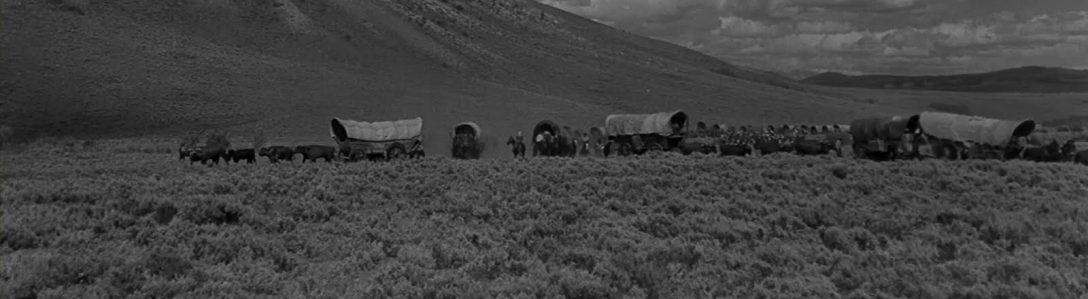
It stars Berlin School muse Nina Hoss as Emily, a tight-lipped divorcee who emigrated to Chicago from Bremen. A housemaid now determined to strike out on her own, she is the most self-reliant of the group of money-hungry scalawags. The caravan is led by an incompetent con-man, and followed by a bibulous reporter, a cowardly father and bickering husband and wife cooks. All are escaping the American dream and chasing a similar one in the wilds of Canada, this time without the burden of family or societal constructs. In escaping one freedom they get trapped in another. Shot digitally on the Arri Alexa, Arslan obtains an uncanny effect – his long shot landscapes seem to enclose his protagonists instead of set them free. Nature is against them from the start, during which a wooden axel shatters on an overgrown path, their one mechanical luxury – a wagon – rendered unusable. Then there are broken bones, bear traps and amputations. This host country is as malevolent as the one they left, but Emily is determined to survive by any means necessary.

t1aku

Arslan is the son of a Turkish father and a German mother, and experienced firsthand the traumatic dislocations of immigration. He first funneled these experiences into his “Berlin Trilogy”, a series of portraits of Turkish youth navigating life in Berlin. Brothers and Sisters (’97) is a loose, improvisatory drama about teens in the Kreuzberg neighborhood of Berlin. Once a community for poor immigrant families, it’s now one of the more gentrified parts of the city. Under Arslan’s roaming handheld camera, though, it’s a maze of flourescent delis and abandoned parks. The non-professional actors wander aimlessly, imbibing metric tons of Coca-Cola and wondering how they’ll escape this city. It follows one family and the assimilationist divisions therein. The older brother Erol (Tamer Yigit), who looks like a curly haired James Franco, still has vivid memories of Istanbul, and chooses to accept his induction in the Turkish army. His younger brother Ahmed (Savas Yurderi, now one of Germany’s most popular rappers), avoids ethnic signifiers, ready to accept his nascent German-ness. Their sister Leyla (Serpil Turhan) is thrashing at the conservative yoke of her father, and eager to break free. Arslan uses Mean Streets as a template, channeling the live-wire indolence of its hangout scenes, where boredom can snap into violence with the snap of a pool cue. He places the same actors in different parts and locales in the next two parts of the trilogy, Dealer (’99) and A Fine Day (01), in which he reconfigures the crime drama and Rohmerian romance. These are not deconstructions of genre but engaged revivals, as in his cool Melville-esque heist film In the Shadows (’10), which was somehow never released here.

die-innere-sicherheit

Christian Petzold is another recombinator of genre, as he places his stories of East German phantoms into templates of Hollywood narratives. The State I Am In (2001) opens MoMA’s series, and was his (and the Berlin School’s) breakthrough feature, winning the German Federal Film Prize. Two exiled RAF (Red Army Faction) terrorists and their daughter make their way back to Germany, only to discover their own ghostly irrelevance in the new neoliberal state. Petzold modeled his film on Kathryn Bigelow’s Near Dark, as he told Jamey Fisher: “They drive all over the country, cannot really die, but also not really live, living in the dark, hanging around transit spaces, in bars, in campers, in trailer parks.” They “cannot really die” because it seems the police are no longer looking for them, more concerned with rounding up the illegal immigrants at a rest stop than these aging totems to an archaic radicalism. Their former Baader-Meinhof colleague greets them with incredulity that they are still active – only aiding their escape after some physical re-education. Their daughter Jeanne is the only one visualized to be alive and connected to this new world -as she is eager to acquire the material trappings of the West. Early on she dreams of a rich boy’s villa, lingering on the phrase “underfloor heating”, as if it were an incantation. She gets her wish, and the new reality awaits.

20074474f

Another such phantom exists in Christoph Hochhausler’s debut Falscher Bekenner (I Am Guilty, 2005). Hochhausler is one of the younger generation of Berlin School directors, who, along with Benjamin Heisenberg, edits the film journal Revolver, which acts like a tendentious house organ for Berlin School arguments. One such argument led to the making of Dreileiben (2011), a triptych about a serial killer loose in the Thuringian forest, inspired by critiques of Berlin School form by old school genre director Dominik Graf. Graf, Hochhausler and Petzold contributed to this rather astonishing work (which I wrote about here, and of course, was never distributed stateside). I Am Guilty is another youth film, like Brothers and Sisters, but there does not seem to be any assimilationist moves for Armin (Constantin von Jascheroff) to make. Already a blonde-haired blue-eyed German youth, he has been given every opportunity to become a part of Germany’s economic boom. Instead he lurks and broods and fantasizes. Hochhausler shoves him to the edges of the frame when around groups of people, uneasy with the success of his middle-class family, whose only concern is that he get a job. Their entire lives seem like performances, every bit of advice he receives regards the stagecraft of job interviews, of proper tone and outfit. All Armin wants to wear is leather, and escape to his dreams of lithe biker boys straight out of Kenneth Anger’s Scorpio Rising. Where Jeanne is eager to accept entry into the German dream, Armin wants to develop his own subterranean fantasies, and discovers it in the back of a cop car with a smile.

I am an arriviste to the Berlin School, but am entranced by their command of formal language as well as film history – and how they continuously confront the contradictions and dislocations that writhe underneath their still booming country. This is a major movement that has barely seen screens in the United States, so if you live in the NYC area try and catch the remaining shows. The series runs through December 6th.