Since the formation of his Milkyway Image production company in 1996 in Hong Kong, Johnnie To has been the most imaginative (and prolific) director of genre films in the world. Mainly known stateside for self-reflexively stylish gangster flicks like “The Mission” (1999) and “Exiled” (2006), he’s also produced a slew of hit romantic comedies (including the delirious 2002 supernatural love story “My Left Eye Sees Ghosts”). Whatever the subject, his films hum with the skill of a committed craftsman, every shot jiggered for maximum lucidity and intensity. There’s no wasted motion in a To film — every gun crack or eye-poke carries the weight of the character behind it.
To’s collaborated with screenwriter and Milkyway co-founder Wai Ka-Fai on his most daring projects, including the bodybuilding Buddhist thriller “Running on Karma” (2003), and they reteam again for “Mad Detective,” which recently screened at the New York Asian Film Festival and which opens in New York on July 18th. A knotty noir about a burnt-out cop (Lau Ching Wan) who claims he can see people’s inner personalities as distinct individuals, it shoehorns black comedy and psychological musings into its pistol operatics. I got the chance to chat over email with Mr. To about the film as well as his sublime new pickpocket tale “Sparrow” (also a part of this year’s NYAFF, and currently without U.S. distribution), and his next project, a remake of Jean-Pierre Melville’s “Le Cercle Rouge.”
What’s your working relationship like with Wai Ka-Fai? He’s given a co-director credit on “Mad Detective.”
To put it simply, Wai Ka-Fai is the brain of Milkyway, whereas I consider myself the hands that handle the execution. All the ideas come from Wai Ka-Fai, although I handle everything that’s related to shooting. For “Mad Detective,” Wai and I were on the set together because the story was very complicated. We conferred with each other frequently to make sure I didn’t shoot incorrectly. Without Wai, there wouldn’t be “Mad Detective.”
How do you prepare to film a major action set piece like the final shootout in “Mad Detective,” or the long opening take in “Breaking News”? Do you storyboard every shot beforehand, decide on the blocking once you arrive on set, or both?
I don’t storyboard. Everything is kept in my head. For “Breaking News,” after initial location scouting, I planned out the sequence step-by-step while rehearsing with the cast and crew. I don’t like to plan things too early because it takes away the fun of actual shooting.
I understand you filmed “Sparrow” over a three-year period. Could you describe the production process?
“Sparrow” was a personal and fun project for me. I would shoot whenever I had ideas, be it a scene or an image. Basically we shot for three years, but it was for a few days every 3-4 months between projects. Without the Berlin Film Festival’s invitation, I probably would’ve gone on shooting! I really appreciated the actors’ patience and their ability to stay relatively the same over a period of three years.
What was your original conception for the film? Did it change over the course of the shoot?
When I shot “The Mission,” it was about a group of bodyguards. Then I made “PTU,” which was about a group of cops. So I thought it’d be fun to make another film about teamwork, but this time without guns and blood.
Could you comment on the score? It seems highly indebted to Michel Legrand’s work for Jacques Demy.
For me, “Old Hong Kong” meant a combination of Eastern and Western culture. So I thought the sound of “exotic oriental” would be perfect for the film, something similar to the score of “The World of Susie Wong.” The last scene in the film is an homage to Jacques Demy, so our composer followed that direction as well.
Your work uses the richness of the film grain to such an expressive extent, I’m curious as to what your thoughts are on digital photography. Do you ever see yourself shooting in HD?
I am a 35mm person. But recent developments in digital cameras has impressed me, like with the Nikon D3. Also, I liked a lot of what David Fincher did in “Zodiac.”
The “Bourne” films have created a bit of a stir in the U.S. for their hyperactive editing schemes. As someone who places great importance on editing, I wondered if you had seen these films, and what you think of their style?
I’m not familiar with the “Bourne” films, but I think editing is very crucial to storytelling, not simply for providing a sense of motion and speed. Too much of Hong Kong cinema has focused on that in the past and in the end, audiences don’t care about the story anymore.
You’re an incredibly prolific worker, and I’ve read that you’ve started preparing a remake of Jean-Pierre Melville’s “Le Cercle Rouge.” What do you value in Melville as a filmmaker?
The remake is currently in development and the script is written by Wai Ka-Fai.
I think my work and Melville’s bear a lot of resemblance to each other, not just visually but also philosophically. I must admit I didn’t know much about Melville when I was young. I saw all his films when they first came out because I was a fan of Alain Delon!
Rajinikanth is a paunchy and balding 69-year-old man who also happens to be one of the biggest movie stars in the world. He has been making blockbusters in the South Indian state of Tamil Nadu (aka Kollywood) for nearly five decades now, and he shows no signs of stopping. His latest film Darbar (2020) is a giddily violent revenge drama in which Rajini slices his way through the underworld of Chennai, and it is on its way to becoming one of the biggest Indian hits of the year.
He famously started as a ticket taker for a bus line and worked his way up to stardom, and it is this bootstrapping story and man-of-the-people persona that generated an intense fandom throughout India and Southeast Asia. His working class swagger – exemplified in hair flips, cigarette tricks, and increasingly flamboyant entrances – has become a genre unto itself.
Rajinikanth was born Shivaji Rao Gaekwad on December 12, 1950 in Bangalore. His father Ranoji was a constable in the police force, while his mother Rambai worked raising Shivaji and his three siblings Ashwat Balubai, Nageshwara Rao and Satyanarayana Rao. They grew up in near-poverty, as his father retired in 1956, the family having to live off his meager pension. Rambai died of a respiratory issue when Shivaji was eleven-years-old, upending any sense of a normal childhood. While his older siblings got jobs to support the family, Shivaji was encouraged to get through school, but his main interest was acting in school plays and playing cricket. He had little interest in going to university, so his brother Satyanarayana got him a job as a bus conductor. He was officially licensed by the Bangalore Transport Service in 1970.
Thus begins the official working class hero legend of Rajinikanth, canonized in Baasha (1995) where he stars as an auto rickshaw driver with a violent past who protects the drivers from mob shakedowns.
In reality he was not a driver though, but a conductor (essentially a ticket taker) for a bus line. Shivaji became close friends with his driver Raja Badhar, who would run the line from Srinagar to Bangalore. Badhar recalls their time together, as quoted in Naman Ramachandran’s Rajinikanth: The Definitive Biography:
There was no one faster than him in issuing tickets. He would give out tickets with a flourish, return change in style; it was all about style. Passengers would look on in amazement. He would always flick back his forelock in those days, that’s why he is bald today.
Raja Badhar (18)
In the evenings both would rehearse plays organized by the Bangalore Transport Service (BTS), and would talk endlessly about the cinema, always seeing the latest films from stars like Sivaji Ganesan, Rajkumar and MGR.
Later on Rajinikanth would say of Ganesan: “I watched him, I imitated him. He is the reason I am in the cinema industry.” Their fates became linked in the 1952 Tamil feature Parasakthi (The Goddess), where Ganesan, then named Viluppuram Chinnaiahpillai Ganesan, took on the role of Maratha warrior Chhatrapat Shivaji. His performance was so convincing that he became known as “Sivaji” Ganesan. Rajinikanth’s birth name was Shivaji, named after the same warrior.
Ganesan would be associated with an intense and brooding style that the Los Angeles Times would compare to Marlon Brando. Rajinikanth experimented with many different styles before he became a superstar, including a Ganesan-esque turn in Mullum Malarum (1978), in which he plays a firebrand winch operator fiercely protective of his sister. The final sequence contains some of his finest acting, in which he has to convey a change of heart in allowing his sister to marry. He executes it in a puckish, self-deprecating, deeply moving fashion, an alpha male discovering the limits of his aggression.
Shivaji entered the Madras Film Institute after the urging of his friends – he had become a local star in the BTS dramas that were mounted locally. Though unclear how he would support himself, and unable to speak more than a smattering of Tamil (Kannada was his native language), he took the plunge. This was all thanks to his brother Satyanarayana and his buddy Raja Badhar, who funded the trip in the belief he could make it big, despite the objections of his father, who wanted him to keep the stability of the BTS bus conductor gig. Luckily Shivaji made the right choice.
He received a decisive break from director Kailasam Balachander, who gave a lecture at the film institute, but was also preparing production on Apoorva Raagangal (Rare Melodies, 1975). Shivaji was soon to complete the two-year course and was seeking a way into the industry, and managed to get a brief meeting with the director. Balachander recalled: “I was thrilled by the fellow’s fragile health and powerful eyes and his chiseled face. These were the good things. And of course, his skin colour, you know. The dark skin I thought was an advantage, because again it is different from others. All the people who are very fair and all that, they have an easy entry into films. Why shouldn’t I take this boy, give him a good role, and see what can be drawn out of him?” (Ramachandran, 27).
Shivaji’s “fragile health” appealed to Balachander because the character he had in mind was dying of cancer. He was to play the small but pivotal role of an estranged husband returning to see his wife before he passes.
He receives an appropriately dramatic entrance, in a low angle shot pushing open a gate. He is disheveled, his face unshaven, his shirt untucked, as if on a staggered stroll right to the gutter. But before he fully dissipates he is seeking forgiveness, and his performance is one of pained hope. There is a beseechingness in his eyes that is surprisingly moving for such a bit part. It was an encouraging debut for one so enamored with Sivaji Ganesan. And since his real name was so close to “Sivaji”, Balachander decided he needed a new name for his acting debut.
So Balachander chose a character name from his film Major Chandrakanth (1966) – Rajinikanth. It literally means “color of night”, and was a reference to the darker hue of his skin. For an industry that preferred lighter-skinned performers, it was already a difficult task for Rajinikanth to get work, and now he was given a name that emphasized that perceived flaw. Balachander was aware of this prejudice and thought it was time to push back aggressively. “Even for a small role”, he said, “they’d not take a dark chap. I am quite dark, you know. My father was even darker than me. So, I thought, why not introduce a dark-complexioned fellow as a new character? Especially as the main villain? And it worked out. It worked out wonderfully.” For years after Rajinikanth would call Balachander on the anniversary of his name change, to thank him for that gift.
So now all of the elements of Rajinikanth’s stardom are converging. There is the hustler vaudevillian from his Bangalore Transport Service days, entertaining customers with hair flips. Then there is the serious film actor who trained in Madras and idolized Ganesan, who finally gets his big break into the Tamil film world. Finally there is the name itself, “Rajinikanth”, which is subversive in foregrounding his dark skin – his name on the screen immediately indicates his otherness, which gave him outsider appeal to an audience that rarely saw someone of that look on-screen. All of these elements converge over time to create “Superstar” Rajinikanth. But this would still take some time as he worked his way through the different Indian film industries, from Kannada to Telugu and back to Tamil.
One pivotal feature was Anthuleni Katha (Story Without an End, 1976), where he plays a deadbeat gambler. Though he has a slightly redemptive arc in this Balachander melodrama, the key aspect of the film is the depiction of a cigarette trick, wherein he flips the cig into his mouth with a flip of his wrist. These kinds of stylish moments have become a Rajinikanth signature, and his fans tally up how much “swag” he displays in each film. His modern features are basically structured around these displays of swag, though the cigarettes have been replaced by sunglasses as his prop of choice.
Between 1977 and 1979 he appeared in an astonishing 44 films, working at an exhausting clip. He was making money for the first time in his life and accepted jobs as if he would never receive another. Bairavi (1978) is the historically important title here, as it established him as a hero in Tamil cinema, after a run of villain roles, and the publicists promoted him as “Superstar” Rajinikanth, a nickname which would stick – and would eventually become part of the opening credits of all of his features. One of the joys of Tamil cinema is seeing tiny blue lights spell out “Super” and “Star” across the screen as a celebratory “hey!” chant pumps through the speakers.
The most influential film from this period however, is Mullum Malarum (1978), which establishes many of the character elements that Rajini would elaborate upon throughout his career. “Kaali” is deeply protective of his sister and brazenly rude to the owner of the power plant that he works for – which rallies his fellow employees around him. He is a labor organizer in spite of himself. This character will reappear as “Kaala”, Pa Rajinth’s ambitious 2018 effort that depicts Kaali/Kaala as a community organizer trying to keep his town from being swallowed by redevelopment.
The 1980s found Rajinikanth trying to relax – his impossible pace of the previous decade put him in the hospital for exhaustion. But now that he was established as a superstar he drastically reduced the number of projects he agreed to work on. This included his ill-advised attempt at a Hollywood crossover – Bloodstone (1988) – which was a low-budget Romancing the Stone (1984) knockoff. He played a cab driver (of course) who gets entangled in the chase for a precious gem. It was an independent production with no Western stars, and it went straight-to-video in the U.S. He would focus on the domestic market from then on. My pick for Rajinikanth’s greatest film is Thalapathi (1991), his first and only film with revered director Mani Ratnam (Dil Se.., 1998). He plays an orphaned child rejected by society but accepted by local mobster Devaraj (Mammootty). They form an intensely personal bond, a familial love that is tested from without and within. A deeply empathetic portrait of two love-starved men, it shows Rajinikanth at his most vulnerable, his performance an open fount of need. It is one of the few Rajini films that fails to follow his usual heroic template, instead focusing on the intensity of a platonic love. The story was based on the friendship between Karna and Duryodhana in the Mahabharata, and Mani Ratnam keeps the tone pitched at a religious intensity.
Rajinikanth has never matched that depth-of-feeling since, but instead has gone after more plastic pleasures. The aforementioned Baasha (1995) is what the set the template for his late-career blockbusters. He plays a heroic worker with rebellious tendencies who, it is revealed in an epic-length flashback, is a legendary gangster whose whole career in crime was a long-haul act of revenge. This setup lets him have it both ways – to be a slang-slinging man of the people as well as a super-rich mobster in top dollar suits. It’s the contradiction he’s been incorporating into his films ever since – most of his films has the same working class present tense and gangster/revenge flashback (with a reveal of hidden wealth). This plot structure mirrors Rajinikanth’s relationship with his fans, who revere him for his humble beginnings and flamboyant screen style, and who consider his wealth deserved. But Rajinikanth has a supremely self-effacing personality and a total disinterest in maintaining his image off-screen. When he appears in public his wild mane of hair from the movies is gone, as he proudly displays his bald pate and protuberant belly, making him even more beloved to his worshipful fan base (there is a whole documentary about their fandom, entitled For the Love of a Man ).
Petta (2019) and Darbar (2020) pull from the Baasha playbook, with him playing a dorm room RA and a disgraced cop, respectively, both full of swag. But the two films that have moved away from that pattern have been his most successful – the sci-fi spectaculars Enthiran (Robot, 2010) and 2.0 (2018), both directed by S. Shankar. In those films he plays a rich scientist who invents an android (also played by Rajini) who goes mad and wreaks havoc on the city in the first, and saves it in the sequel. They were attempts at making a Kollywood blockbuster with Hollywood-level money and effects, though with more visual invention than recent Hollywood fare (such as a group of androids self-replicating into different shapes in Enthiran, and a monster built out of cell phones in 2.0). These films don’t run on Rajini’s aura, but on baroque CGI constructions.
So it was refreshing to see him return to form in Petta and Darbar, which are nothing more than fan-service machines, setting up sequences for Rajinikanth to swat away bad guys, fluff his hair, flick open his sunglasses, and bellow out a beguilingly arrogant laugh. This basic formula has worked for decades and will continue to until Rajinikanth decides to retire. But for now he seems indomitable. Anurag Kashyap (Gangs of Wasseypur, 2012), one of the most exciting directors on Tamil’s independent film scene, is another fan of Rajinikanth’s, and summarizes his appeal better than I ever could: “He’s a man of the people. He came from us. And he gave us that feeling that we can fight against the system. Amitabh Bachchan became synthetic…but Rajinikanth never became synthetic. He stayed what he was.” (Ramachandran, 254)
Originally Published in NeoText on November 19, 2020
As VHS sales boomed in the 1990s, PM Entertainment saw an opportunity. This fledgling direct-to-video production company, founded by the Canadian Richard Pepin (“P”) and Syrian Joseph Merhi (“M”), envisioned Blockbuster Video walls and HBO schedules filling up with their titles, and tailored their films to serve what was selling. Invariably this meant guns, pecs, enormous fireballs, and a soupçon of sex, so that’s what they delivered with clockwork regularity. Over the course of the decade PM Entertainment would produce over 100 features and television episodes that contained more exploding cars-per-minute than any studio in history. Despite miniscule budgets they executed insanely complicated stunts that would launch their action choreographer into the Fast and Furious franchise.
Joseph Merhi emigrated from Syria to the United States as a teenager “armed only with a high school diploma, 400 dollars and a basic grasp of the English language”, according to his official biography. He started as a dishwasher at a Chaparral Steakhouse and worked his way up to owning and operating five Pizza N Pizza locations in Las Vegas. While in Vegas he started taking acting classes, which is where he met future PM Entertainment director Richard Munchkin. In 1984 he sold the restaurants and moved to Los Angeles with Munchkin to become a filmmaker.
In an invaluable oral history for Hopes & Fears Merhi recalled that “I knew I wanted to make movies, but I didn’t really know how to do it. So I hired this guy I knew of named Rick Pepin. He owned his own 16mm camera and could operate it.” Thus began a decades-long collaboration. First they made a comedy together called Hollywood in Trouble (1986) that is now impossible to see, as every distributor rejected it. Instead they were told that if they made an action movie they might consider it. They would learn this lesson, but not for a few years. Instead they formed the production company City Lights to make a passionately bizarre thriller entitled Mayhem (1986), which Merhi wrote and directed, and Pepin edited and shot. Made on a shoestring, it’s about two misogynistic buddies who pine for lost loves in-between their day job of assassinating lowlifes. Most of it takes place in diners and on the way to LAX, a portrait of drift and empty L.A. streets more than the bloodshed promised on its poster. If there’s one thing from this period they carry over to PM, it’s the location photography, in which they capture the in-between spaces of Los Angeles with the eye of a local.
City Lights focused on the horror market its first few years (Epitaph, The Newlydeads), but started to transition to action films (L.A. Crackdown) just as there was a falling out with a third partner, Ron Gilchrist. So when Pepin and Merhi spun off and started PM Entertainment in 1989, they were ready and willing to give distributors as much bang for their buck as they desired, and they soon had a deal with HBO to air movies of the week. Richard Munchkin would describe their blueprint to Hopes & Fears: “The rule eventually became that somebody had to either be shooting, chasing, or fighting every seven minutes, and, if it was quicker than that, even better.” They became especially adept at car stunts, especially “grab strap turnovers”, which stunt choreographer Cole McKay described as “a car turnover where you don’t use a cage.” They would do four of these a day whereas one a day was the norm.
Some of the very early PM productions, such as the amiable Dan Haggerty vehicle Repo Jake (1990), look like they were shot on video, and have the amateur airlessness of student films.
But very quickly budgets were in the $350,000 range for a 15-day shoot, and everything shifted to 35mm. With the Bloodsport fight tournament template still in-demand, they would cast recognizable names and have them go kick shirtless for 90 minutes, like Lorenzo Lamas in Final Impact (1992) or Jeff Wincott in Deadly Bet (1992). They would also try to develop the English kickboxer Gary Daniels and the tow-headed Michael Worth as in-house martial arts stars, bumping them up in prominence with each film.
This nurturing of talent happened below the line as well, as Cole McKay went from doing stunts on Angels of the City (1989) to stunt coordinating on the Wings Hauser movie The Art of Dying (1991) to directing the Jeff Fahey vehicle The Underground (1997). It was a place reminiscent of the old Hollywood studio system, where you could learn every aspect of film production very fast since they used small production teams.
Final Impact and Deadly Bet were shot in nearby Las Vegas, and the cinematographers made the most of the dark, neon-lit setting. At City on Fire Michael Retter makes the case for these films to be part of a cycle of “Kickboxing Noir” films made for the company. Director of Photography Ken Blakey said, “I got my foot in the door just as they were making the transition from 16mm ultra low budget movies to 35mm films with known actors and bigger production values. The film noir look in the martial arts films in 1990/91 were shot by Rick with me as his Gaffer and 2nd camera.” These were certainly lit darker than other PM productions, and this style was pushed to its limit in Maximum Force (1992), the most expressionistically lit DTV production until Universal Soldier: Day of Reckoning (2012).
Blakey takes credit for the look: “The noir aesthetic in Maximum Force was strictly my choice. Of course, I had to give the studio a commercially viable product that they could market, but when dailies started coming in they loved it. At the time I remember seeing two pictures shot by cinematographer Bojan Bazelli. They were King of New York (1990) and Deep Cover (1992). They both had a very dark look and used saturated colors in the lighting. Maximum Force was my third show as Director of Photography for PM and I decided to just let it all hang out. Extreme angles, wide lenses, and most of all DARK. Even in daylight the contrast between sun and shadow is often emphasized. At night faces are back or side lit with little or no fill light. The “unseen” adds to the drama and sense of foreboding.”
Maximum Force is in another favorite PM genre – rogue cop goes up against a corrupt police force. This time it is Flash Gordon himself, Sam Jones, starring as the only clean officer in a town bought up by mobster Max Tanabe (Richard Lynch, Invasion U.S.A.). Joseph Merhi directs with growing efficiency, having taken the 7-minute rule to heart more than anyone on staff, making his films sleek propulsive machines that rarely stop to allow his actors to emote (dangerous for Jones, as well as Lamas and Wincott). The stunts are choreographed by Red Horton, who started with Merhi back at City Lights and who opts for a brutal, brawling style well suited to Sam Jones’ linebacker physique. There is a wild frisson that occurs when you see Jones ham-fisting his way through a brawl and it is lit like a Delacroix painting with pools of inky blackness. PM allowed for experimentation within their template – as long as you were within budget.
While the martial arts and cop films are the most fondly remembered, PM also tried to rip off any popular trend in Hollywood, whether it was virtual reality (Hologram Man), alien invasion (Dark Breed) or Die Hard (Skyscraper, in which Anna Nicole Smith took the John McClane role). In this sense they were the forerunner of The Asylum, who transitioned to “mockbusters” in 2005 and are still cranking out Sharknados. But the meat and potatoes product were the fight films, and over the years Gary Daniels became their most reliable performer. Born in London, Daniels started kickboxing training when he was 17, and entered the professional ranks before retiring with a 4-0 record, as the movies were offering better paydays. In an interview with Eastern Film Fans, Daniels recalls how he hooked up with PM: “Van Damme had just come out with Bloodsport, Segal had Above the Law so martial arts movies were hot at that time and a lot of smaller independent companies were casting for ‘real’ martial artists for their films. I had just won a WKBA light heavyweight title and was asked to audition for a role in Ring of Fire (1991) for a company called PM Entertainment. I was hired, got my S.A.G. card and then they offered me a three picture deal so my career just picked up pace from there.”
Ring of Fire starred another key PM fighter from the kickboxing world, Don “The Dragon” Wilson. Wilson is regarded as one of the greatest kickboxers ever, having won eleven championships. Roger Corman’s Bloodfist (1989) put him on PM’s radar, convincing them to make kicking their business (and business was good). Daniels was brought in as an early round fighter wearing tiny red muay thai shorts who loses to Wilson in Ring of Fire and then to Michael Worth in Final Impact (1992). With his lush ponytail and cocky pre-fight splits, he looked like a yuppie version of Van Damme.
Sensing a DTV star in the making, they gave him a lead role in the sci-fi actioner Firepower (1993) alongside Chad McQueen (Steve’s son), which also featured former WWF wrestler The Ultimate Warrior in an all-grunting role as “The Swordsman”. There is a grab strap turnover and an exploding car almost exactly seven minutes into this remarkably bizarre feature directed by Richard Pepin with stunts coordinated by Cole McKay, set in a future 2007 where a counterfeit AIDS vaccine is flooding the market and Daniels is caught inside an unpoliced area called the “Hell Zone” in which his only way out is, you guessed it, a fighting tournament. The one theme that runs throughout PM productions is a complete lack of faith in authority. Whether it’s the government, the police, or the family unit, corruption infects everyone except for one principled man (who is great at kickboxing).
The peak in PM Entertainment’s output, and of Daniels’ run with them, is the three R’s – Rage (1995), Riot (1996) and Recoil (1998). This aligns with the arrival of action director Spiro Razatos, who would raise the technical level of PM Entertainment’s stunt work above what Hollywood was doing at the time. He was so valued at the company he would get his own end title card before the credits rolled. And after you see the semi-truck chase in Rage or the barroom brawl in Riot, you’ll see why he was soon snapped up by the big studios, where he still works today, most recently in reviving the Fast and Furious franchise.
Razatos grew up in Denver, Colorado, where he was bullied as a kid. He told Slash Film about how he became fixated on Shaft, seeing it 28 times until a friend said to him, “You know Shaft doesn’t actually do all that stuff, right?” So he started to learn about who did do all that stuff, and taught himself how to fall without getting hurt. He put together a reel with a Super 8 camera, jumping off the roof and setting himself on fire. The reel starting getting seen in Hollywood, which became his ticket out of Denver – getting an uncredited stunt on Sam Peckinpah’s The Osterman Weekend.
Orson Welles once said that working on a Hollywood movie was like having the biggest toy train set any boy could ever have. And on his films with PM Entertainment, Razatos exemplifies that attitude. If two cars enter a frame, they WILL crash into each other and explode. In Rage, directed by Joseph Merhi, Daniels plays a mild-mannered school teacher who is injected with a government super-soldier serum (being tested on immigrants without their consent) that makes him flip out and go on a rampage. The whole film is one long chase as the cops and the military try to corral him. In his initial escape he commandeers a semi-truck, blasts through a road block, smashes four cars, explodes four more, and ends it in a duel with another big rig that jackknifes, crashes to the ground, and blows up in a massive conflagration. The cherry on top is a cop car that is pipe ramped over the explosion, pirouetting through the air through the fire until it lands with a satisfying crunch. It’s pure twisted metal poetry that wouldn’t be out of place in a Fast and Furious movie. Razatos started on Fast Five as second unit director and has worked on every one since doing second unit and stunt coordinating work, including on Furious 9, which is due in 2021. Andy and Jack Gill, the brother stunt choreographers, give lots of credit to Razatos for invigorating the franchise in that Slash Film interview. Here is what they attributed Fast Five’s success to: “let’s go back to doing things real. Let’s make the audience feel like they’re part of the action again. And that’s what really started the evolution of reviving the Fast & Furious franchise. Well, that approach…plus the fact that Spiro is a creative genius.”
Riot, also directed by Merhi, makes the, let’s say, problematic decision to make an action movie out of the L.A. riots. Daniels, with the help of Sugar Ray Leonard, is sent into the most violent section of a riot (a reaction to a cop killing an unarmed black civilian) to rescue the daughter of the governor. The gangs seem straight out of The Warriors, except they are hockey thugs rather than baseball goons. There is a beautifully composed brawl early on in a bar, when Leonard and Daniels sync up to beat up a group of beer league bozos who use racial slurs. It is pure simplicity and logic – Daniels tenderizes them with kicks, and Leonard knocks them out with punches. Razatos adapts to the different tone of the film, going for character building jabs rather than spectacular roundhouses.
Recoil, directed by Art Camacho, has the simplest setup – a variation on the corrupt cop scenario from Maximum Force. This time Daniels is an officer who kills a mobster’s son in the line of duty, and everyone involved starts getting knocked off. The whole Los Angeles police force seems to be in the gangster’s pocket in his quest for revenge. Razatos opens with an epic bank shootout that transitions into a jaw-dropping motorcycle chase. The stunt drivers pull off some preposterously skilled maneuvers in scaling down a staircase and climbing up and over a police car to angle for an escape.
By 2000 the studios started to notice how lucrative the DTV market had become, and began putting some investment into that market – pushing Van Damme and Lundgren most of all. Knowing they couldn’t compete on budget, Merhi, Pepin, and their third partner George Shamieh (who led their international sales division) decided to sell before their market collapsed. So in 2000 PM Entertainment, and its library of over 150 films and 74 television episodes, were sold to Harvey Entertainment Group (of Casper the Friendly Ghost fame) for $10 million. A few years later Harvey Entertainment sold the PM library to what would later be known as Echo Bridge Home Entertainment for $6 million.
Joseph Merhi and Richard Pepin have since removed themselves from the movie business, and the legacy of PM Entertainment has faded. But this was a company that should be celebrated in the same spirit as Roger Corman’s New World Pictures, one that allowed many talented young artists to make some very big explosions.
Originally Published in NeoText on December 22, 2020
In 2019 Chinese comedy legend Stephen Chow released The New King of Comedy, a loose sequel to his King of Comedy (1999) from twenty years before. It was a surprising choice of material – as King of Comedy, a bittersweet pratfalling story of a struggling actor, seems small scale next to the super-productions Chow is now regularly mounting. His previous film The Mermaid was briefly the highest-grossing Chinese film of all time, a CG spectacular about mer-people fighting against redevelopment. But King of Comedy marks an important transition point in his career, the moment at which he shifted from local Hong Kong hero to worldwide juggernaut. It was the last of his small-scale nonsense comedies before moving to FX-heavy spectacles, beginning with 2001’s Shaolin Soccer. He has stayed in that CG zone ever since, adapting to mainland China blockbusters far more smoothly than could have ever been predicted by looking at the slapstick bodily-fluid-rich comedies that made him famous. The New King of Comedy is in a sense an attempt to look backward, to recapture a style and a mood that first brought him fame.
Stephen Chow was born Chow Sing-chi in 1962 and was raised in the Hong Kong neighborhood of Kowloon. His parents divorced when he was seven, so he grew up in a 300-square-foot government housing apartment with his mother and two sisters. He became obsessed with Bruce Lee as a kid, telling the Village Voice his career was “all because of Bruce Lee. I still remember the yelling, the atmosphere in the theaters. I decided to be someone like him.”
He told the Los Angeles Times that he saved enough money to take Wing Chun classes for three months before running out of cash. So he pivoted to acting, applying to TVB’s performing artist training program (TVB is Hong Kong’s largest public television channel).
The program, according to the Associated Press, was “founded in 1971 amid a shortage for TV talent when the medium was still developing in Hong Kong.” Its training is more practical than artistic, educating in TV production, hosting, make-up, dance, and martial arts. Initially rejected, Chow eventually got into the program and became the host of the kids show 430 Space Shuttle alongside another future star, Tony Leung Chiu-Wai (In the Mood for Love).
This was his entry point into acting, in which, remarkably, he started out in dramatic roles, even winning a Golden Horse award for his performance in Final Justice (1988) as a car thief. His breakout part was in All for the Winner (1990), a raucous parody of God of Gamblers (1989) in which Chow plays a mainland everyman moving to Hong Kong to live with his gambling-addicted uncle (Ng Man-tat, Chow’s frequent partner, and a TVB alumnus). Chow also happens to have x-ray vision, a helpful tool in a poker tournament. One of the iconic moments in God of Gamblers is Chow Yun-fat’s dramatic slow-motion entrance into a gambling hall, which Chow burlesques here in an acrobatic bit of pantomime. All for the Winner would outgross God of Gamblers 2, and that franchise’s producer Wong Jing was so impressed he would end up casting Chow in God of Gamblers 3.
All for the Winner set the template for what would become known as mo lei tau, or nonsense, humor. Chow became the avatar for this suddenly popular style. Shelly Kraicer in Cinema Scope defines it as “a fast, dexterous, and impossible-to-translate speaking style that creates comedy out of witty, allusive wordplay.” Non-Cantonese speakers are missing out on the subtleties of the language, but can still hear the cadence and rhythm, which has a careening stop-start quality, as well as it’s digressive and unpredictable hairpin turns in subject matter. Through his wholesale redevelopment of the Cantonese language, he provided a subversive rallying point for Hong Kong youth. La Frances Hui elaborates in the Asian American Writers’ Workshop:
“The ever-transforming slang that was a dominant feature in Chow’s films became the language of the young. In fact, language had always been a problematic issue for the westernized colony. While English had been used as the medium of instruction in most schools, a majority of the public did not speak it in everyday life. Most comfortable in Cantonese, which, unlike Mandarin, is a spoken language and cannot be directly transformed into formal written Chinese, Hong Kong people were trapped between Chinese and English and sometimes considered “native” in neither. Chow’s slang effectively gave Hong Kong’s youth a voice they could claim as their own.”
His phrases entered the lexicon, and he became a ubiquitous part of the cultural landscape, appearing in nearly fifty films in the 1990s alone, and dominating the box office charts.
Though Chow has become more widely known in the U.S. with the Looney Tunes martial arts energy of Shaolin Soccer and Kung Fu Hustle, it is these mo lei tau films that cemented his popularity in Hong Kong and throughout Asia. And despite the centrality of language to their appeal, they remain subversively, grotesquely hilarious to a non-Cantonese speaker like myself. Chow is not just an agile talker but he is a master of the slow burn. He keeps his face still, more of a Buster Keaton deadpan than a Chaplin emoter (though he cites Chaplin as one of his major influences). Whether it’s taking a chalkboard eraser to the face in megahit Fight Back to School(1991, a variation on 21 Jump Street) or repeatedly getting his groin set on fire in A Chinese Odyssey (1995, a mythological retelling of the founding of Buddhism – with lots of dick jokes), there is a delicious second or two where Chow lets the tension build, letting the audience realize his cruel fate along with him before releasing the tension with a grimace or a howl. This underplaying also allows him to fade into the background – he is always ceding ground to Ng Man-tat or another of his regular company of actors, like the droopy eyed Wong Yat-fei or reliably manic Karen Mok.
One of my favorites is another one from 1990, a supernatural comedy entitled Look Out, Officer! in which Chow is a newly hired cop who is haunted by a dead detective demanding he investigate his murder. It is just non-stop invention, from the self-reflexive way Chow arranges objects in a doctor’s office to hide his penis from the camera (a joke later used in Austin Powers) to the balloon pants that catch the emissions of a farting ghost. You are guaranteed to see something genuinely new in each 1990s Stephen Chow production.
His productivity slowed when he added directing to his duties in 1994’s From Beijing with Love, a profoundly silly James Bond parody which he co-directed with frequent collaborator Lee Lik-chi (Shaolin Soccer). And with more control his films gain more geometrical precision, with thought placed into every last prop, whether his trusty meat cleaver in From Beijing with Love or his precious acting manual in King of Comedy.
For King of Comedy, also co-directed with Lee Lik-chi, Chow pulled from his own struggles breaking into the movie business – it’s the first of his films that could be called personal. He plays Wan Tin-sau, a down-at-heel actor scrounging for gigs as an extra while working at a community rec center to pay the bills. There are some pitch perfect movie set parodies, including a John Woo gun-fu extravaganza (with Karen Mok as action star Sister Cuckoo) filled with wire-work, flapping doves, and a grenade launcher standoff. Wan, who is gunned down immediately, revives and starts staggering in the background of a shot, an attempt at upstaging that just gets him fired (he is replaced by Jackie Chan in a killer cameo). The closest thing he gets to a paying acting gig is when a group of nightclub girls need help to act convincingly as schoolgirls so they can get more tips from male customers. Wan takes the job as if he is teaching Shakespeare, and convinces one of the girls, Lau Piu-piu (Cecilia Cheung), to fall in love with him. After Sister Cuckoo gets in a fight with her male co-star, she decides to hire Wan as her co-star on a whim, and though this will fulfill all his most grandiose fantasies, it could also destroy his relationship with Lau. The film mimics Chow’s initial rejection from TVB and then his swift ascent to the top. In this alternate reality Wan/Chow never gets his big break, and instead joins a police task force mounting a sting against the triads – and successfully mounts one of his community theater productions. It’s a sweetly bizarre conclusion, and indicative of the ambivalence Chow seems to have towards the movie business and his enormous success within it.
The more famous Chow became, the more his image darkened. No longer the working class everyman who spoofs the powerful, he has become something of an isolated genius, earning a rep as a prickly perfectionist who has driven away his former friends and collaborators. In a 2009 article in the South China Morning Post entitled “No One Seems to Like Stephen Chow Anymore”, it quotes God of Gamblers director and frequent Chow producer Wong Jing as saying “he was difficult to work with” and Danny Lee Sau-yin, Chow’s co-star from his debut film Final Justice, criticized his “over-calculating” demeanor, and that if he saw him now, he would say to him “Sometimes, money can’t buy you everything. He should learn the importance of friendship”. In an interview in 2019, Ng Man-tat lamented their split: “I don’t know how to bring our friendship back. Will he come to me first or should I go to him? It’s very sad.”
Choosing to remake King of Comedy in 2019 could be seen as an attempt at changing the narrative around himself, to refurbish the bond he had made with Hong Kong youth, now made up of kids who are rebelling against the mainland that Chow is now so firmly ensconced in. The New King of Comedy is one of the lowest budget films Chow has directed, taking place mostly on film sets and with an unknown actress in the lead. Chow wanted to cast people who had lived the struggling actor’s life. And E. Jingwen, who landed the starring role, fit the bill. Chow said, “She has a lot of experience being an extra and playing minor roles, but she has never given up on her dream of being an actress. That fits the story of the character and of course, her performance was very good. I think I picked the right actress for this part.”
Like the original, The New King of Comedy opens with a shot of waves rolling in, but instead of facing the water yelling about hard work, as Stephen Chow did twenty years ago, E. Jingwen strolls right by the shore without a glance, gripping a book entitled “An Actor Prepares”. Her character of Dreamy is even more singleminded than Chow’s Wan Tin-sau, viewing everything around her as a performance. Her first interaction is with a car accident victim whom she believes is a con artist, so she tells him: “your acting lacks depth.” When he passes out with blood dripping down his nose she claims he has “already lost his audience.” Jingwen has seemed to internalize the old Stephen Chow persona, an ingratiating everyday goofball who blithely strolls into a world collapsing around her, reacting with a smile. She doesn’t even have the rec center job to fall back on, instead living with her parents, who are growing tired of her long-suffering dream. She shows up to her dad’s birthday dinner with an ax still lodged in her head from the day’s shoot.
Daisy’s story is compared to that of Marco’s (Wang Baoqiang) a former star on his way down the ladder of fame, lured to star in Snow White – Bloodbath in Chinatown, an absurdly violent remake (I would love to see this on Disney+). Wang also came up through the bottom of the ranks as an extra, giving a tremendously moving performance of a insecure artist reckoning with failure, his primadonna routine on set masking the creeping fear of failure.
Dreamy inadvertently rockets Marco back to stardom through a viral video, while her route to fame is more circuitous and grandly melodramatic. She has to navigate the drama in her own life before getting to display any on-screen. Everyone in The New King of Comedy is performing on some level – from her secretively duplicitous boyfriend to her apathetic ladder-climbing bestie, they are all playing roles, very consciously, and more successfully, than Dreamy. Just as in the original, this takes an improbable turn in its last act, one that has Dreamy finally take control of her image, transforming herself from Chow’s sadsack everyman and into a glamorous leading lady like Karen Mok’s Sister Cuckoo. All of a sudden Dreamy has entered the dreamlife. And where in the first film Chow imagined an alternate reality where he maintained his community of artists, in the sequel he displays the path taken, one of impossible fame, ridiculous wealth, and walled-off loneliness.
Though it did not top the box office like the original King of Comedy,The New King of Comedy was one of the top 20 grossers in China of 2019, once again proving Chow’s enduring appeal. If in another twenty years he makes a third, I would hope for a mo lei tau version with Ng Man-tat, a joyful reunion of the two kings of nonsense.
Writing a novel is, as you know, a demanding job. I guess everyone does the best they can. Maybe. It makes me uncomfortable. You’re not supposed to write just one book and then hang it up.
Leonard Gardner is best known for his absence. His debut novel Fat City was released in 1969 to rapturous praise and a National Book Award nomination, but he never published again. He worked sparingly in Hollywood, adapting Fat City into a screenplay for director John Huston in 1972, and then, much less famously, expanded one of his short stories for Valentino Returns (1989). His influence on a generation of writers (including Denis Johnson) was enormous, his output slim. His writing has a lucidity of loserdom, what it feels like to get your head caved in by a right cross or top an onion while nursing a hangover. It’s instructive to look at his two screenplays for how they so faithfully adapt his hyper-local literature to the screen – Fat City condenses while Valentino Returns expands, but both retain the flavorful detail of his snake bit hometown of Stockton, CA.
Fat City is one of the all-time feel-bad novels, opening with the somnambulant line, “He lived in the Hotel Coma”. Its main character Billy Tully remains in a near-unconscious state throughout, an ex-boxer yearning for another fight in between alcoholic stupors. In a rare moment of clarity, while working out at a dingy YMCA, he spars with a callow teen named Ernie Munger. Munger peppers the lumpen Tully with jabs until Tully pulls a calf muscle. In a desperate ploy to save face, Tully tells him, “Well, you got it, kid. I mean, nobody used to hit me. They couldn’t hit me. They’d punch, I wouldn’t be there. You ought to start fighting.” It’s not that Tully is human wreckage who any kid could tag, no, Munger must be a real talent. This face-saving bit of buttering up sends Munger on Tully’s old path, getting tenderized for pocket change. The two men go their separate ways – Tully into the arms of a fellow boozehound named Oma, Munger onto the small town boxing circuit to make money for his pregnant girlfriend and soon-to-be wife. Both end up working as farmhands for extra money, but Tully is heading for the gutter while Munger is scrounging up a working class living for his wife and kid. Their dreams will be indefinitely deferred.
The film adaptation hews miraculously close to the novel, as Gardner worked closely with director John Huston on the screenplay, who had boxed a little growing up and was open to a more realistic portrayal of lower level fighters. Also able to shoot on location in Gardner’s hometown of Stockton, CA, it gives real-life images to Gardner’s textured prose. In John Huston’s autobiography An Open Book he describes the neighborhood where they shot, where they also cast a number of non-professional actors:
“We shot most of the picture on Stockton’s Skid Row. It’s now a thing of the past; they’ve wiped it out. I wonder where all the poor devils who inhabited it have gone. They have to be somewhere. There were crummy little hotels; gaps between buildings like missing teeth; people…standing around or sitting on orange crates; little gambling halls where they played for nickels and dimes. Many of the signs were in Chinese because the area had a large Chinese population. The police were very gentle with the derelicts. As long as they stayed within the sharply defined boundaries of the neighborhood, they could sleep in doorways, wine bottle in hand; if they wandered out, the police simply shooed them back. They were completely harmless, defeated men.”
The film opens with a montage of Stockton, displaying a Mission house, a burnt-down building, a bum smoothing his hair in front of a Kaopectate sign, while the diverse locals go about the business of daily life. In a recent interview with The Paris Review, Gardner recalled the writing process with Huston: “Before I started to write it, he invited me to come over to his place in Ireland for a couple of weeks for a discussion about how it was going to go. He was a funny guy. He trusted me, I think, because we didn’t talk all day about the script. We talked maybe a half an hour. Then he wanted to paint. He was always painting.”
The structure and style of the movie is nearly identical to that of the book, including the refusal to psychologize or explain the actions of the characters – they remain indefinably themselves. The movie goes further in this direction, cutting out the thin backstories from the book (the torch Tully carries for his ex-wife, the thumbnail portrait of Munger’s resentful mother). Instead the move remains stubbornly outside, allowing its characters to remain as hazy as the dusty glow of Conrad Hall’s cinematography.
In an unusual move, Gardner was on set for the entire filming process, and gave Huston advice where he saw fit. Luckily there wasn’t much to improve upon, including the picture-perfect casting of relative unknowns Stacy Keach as Tully, Jeff Bridges as Munger, and Susan Tyrell as Oma. Gardner had reservations about the latter’s theatrical interpretation of the part, but eventually came around:
*”I felt lucky. They all had a very different approach to it. Jeff Bridges was naturally an underplayer and Susan Tyrrell was an over-the-top actress. She actually had to be brought down. She’d been a stage actress. I don’t know whether she’d ever been in a movie before. I think Huston saw her in some stage play, and when you’re on stage in a good-sized theater, you can really project your voice. She sort of started that role over the top and I kept waiting for Huston to quiet her down. I finally said something to John. That maybe she was overplaying some of the scenes. Maybe he thought so, too, I’m not saying it was my idea. Maybe I just corroborated what he was thinking.
Later, I saw her walking on the hotel grounds one day and she said, Oh! They want me to bring it down a little bit. And I said, you know, that would be okay. And she said, I don’t care what they want! I’ll play Oma if I have to grow a cock! She never really brought it down all that much. I look at it now and think that it’s a brilliant performance. She had the guts to play women that went over the top very frequently. And there are certainly people like that. It took me a while to learn to live with what she was doing. But she was sensational.”*
Stacy Keach’s bent nose and scarred lip are perfect accents to his snarlingly slurred speech, the words of a punch drunk fighter who doesn’t know he’s been licked. The last scene in the movie finds Tully, who has hit the skids again, run into Munger, now working at a gas station and occasionally still fighting. It’s the only scene in the movie not from the book. Munger would rather go home to his wife and kid, but reluctantly joins him at a greasy spoon for some burnt coffee. Tully’s face is covered in filth, Munger has a broken nose, held together with tape. Tully looks at the weathered old waiter and says, “Before you get rolling, your life makes a beeline for the drain.” Munger makes a movement to leave, and Tully implores him, “Stick around, talk awhile.” But they have nothing to say, so they stare at the wall. Roll credits.
It’s as desolate a closing sequence as there is in the American cinema, and a more concise way of closing the film than the extended hitchhiking sojourn that ends the book. In any case it remains a model version of how to adapt a book into a movie, both faithful to the book as well as honoring the ways in which the images of Stockton could replace Gardner’s prose.
Location plays a similarly large role in his other credited screenplay, 1989’s Valentino Returns (he did uncredited work on The Milagro Beanfield War). Valentino Returns was based on his 1965 short story Christ Has Returned to Earth and Preaches Here Nightly, originally published in The Paris Review. It begins in Tracy, California, a suburban town about 20 miles south of Stockton. In the opening line Gardner describes it as a “small, flat, hot, treeless, asphalted valley town.” It’s one where the only available thrills are available through cruising in your car – mining the same kind of ‘50s car culture nostalgia as American Graffiti, filmed eight years after this story was published. In turn, the Valentino Returns movie would lard the soundtrack with ‘50s hits (“Blue Monday”, “All I Have to Do Is Dream”) in a failed attempt to recapture American Graffiti’s box office magic.
The story follows nineteen-year-old Ernest Grubb as he drives his newly leased pink Cadillac from Tracy to Stockton, in search of two mythical and insatiable divorcees who his friend Harry claims to be waiting for them. He has scrawled “Valentino Returns” on the rear fender in an egregious bit of false advertising. Their failure to get laid is inevitable as it is amusing, as they get sidetracked by a flat tire, a revival tent preacher (hence the title) and some jealous motorcycle gang members. It’s a middle-class world alien to the impoverished lives of Billy Tully and Ernie Munger, even though the events take place mere miles away from each other.
In adapting it to film for first-time (and only time) director Peter Hoffman, Gardner had to greatly fill out the town of Tracy that surrounds Ernest – here renamed Wayne GIbbs (played with wooden sincerity by Barry Tubb). The movie shifts between Wayne’s fruitless attempts to get a date with his parents’ mounting marital troubles. His dad Sonny (Frederic Forrest) is a mover and drinker, introduced caterwauling “Nevertheless (I’m in Love With You)” at a bar. His wife Patricia (Veronica Cartwright) has enough of his carousing and leaves a note for her son: “’Why don’t you get some Chinese food for dinner. I’ve left your father. Mom.”
While his home life is falling apart Wayne is lured by the promise of the divorcees, though he is still smarting from seeing pretty farm girl Sylvia (Jenny Wright) making out with another guy at a party. He sees her again when Wayne and Harry (Seth Isler) stop at the revival tent to laugh at the preacher (Jerry Hardin). After a promise that Jesus would appear that night, a biker (Miguel Ferrer) drives in, takes off his helmet, and claims to be the savior. Sylvia confesses her illicit sins to this leather-jacketed joker before he is booted out. Before the movie is over Wayne has to save Sylvia from her bible-thumping daddy, weasel his way out of a prostitution solicitation arrest, and somehow get his mom and dad to reconcile. It’s far more of a traditional arc than the go-nowhere Fat City, but Valentino Returns still identifiably takes place in the Leonard Gardner extended universe.
Wayne works as a farmhand, driving a tractor, rustling livestock and judiciously avoiding the cockfighting ring on paydays. He also attends a boxing match with his dad, who can’t help but give advice to a ring girl working her first day. In one of his self-lacerating boasts Sonny says after the match, “Ever hear of the candlelight kid? One blow and I was out.” Most fascinatingly though, Gardner himself appears in the film as family friend Lyle, who carries a torch for Patricia. While not an electric screen presence, he’s effectively low key and lends an appealing aw shucks sincerity to the part. But most of all it’s set in his homeland of central California, though not shot with as much hazy glory as Fat City. Valentino Returns looks comparatively flat.
There is not much information available on producer and director Peter Hoffman, who funded and made the film himself. The film had an early champion in John Pierson, who in Spike, Mike Slackers & Dykes writes how he recommended it for inclusion in the 1988 Sundance Film Festival, but Hoffman could never finish post-production: “He’s spent years editing his feature, spending millions of dollars of family money in the process. Occasionally he’d call me up to let me know that he’d trimmed a few frames from the opening shot and thought that it changed the entire film. Once invited to Sundance, I assumed he’d settle down and meet the deadline. But Hoffman was so possessed that he couldn’t stop tinkering. He pulled out–a second cancellation.” Gardner remembers it purely as a business venture: “I wrote another movie called Valentino Returns. I made pretty good money on that.” It was much needed cash because Gardner had little work until David Milch hired him to write for NYPD Blue, a surprising but welcome gig for a guy who didn’t own a television.
But Valentino Returns is more than just a paycheck, it’s a revealing peek into a different side of Leonard Gardner’s central California of the mind, not just the terminal point for dead enders, but a site of adolescent adventure and romance. Originally written when Gardner was 32, it still has a view of the future, a future that ends up circling the drain in Fat City.
Originally Published in NeoText on October 20, 2020.
The Wedding Night was doomed from the start. It was producer Samuel Goldwyn’s final attempt at making the Ukrainian actress Anna Sten into a Garbo-level star, and his persistence had become something of a Hollywood joke. The Wedding Night became known around town as “Goldwyn’s Last Sten”, but though it failed as a star-making enterprise, it was another sensitively directed drama from King Vidor, detailing an unlikely romance between a dissolute big city writer and a Polish farm girl.
The story by Edwin Knopf and script by Edith Fitzgerald concerns down-on-his-luck writer Tony Barrett (Gary Cooper), a former wunderkind turned hack (supposedly based on F. Scott Fitzgerald), whose latest cash grab novel was declined by his publisher. Swiftly running out of money, he moves into a derelict house he inherited with his wife Dora (Helen Vinson). It is there he meets the Novak family, Polish farmers who are putting up tobacco acreage as far as the eye can see. Their only daughter Manya (Sten) is due to be wed to local yokel Fredrik (Ralph Bellamy, of course).
Tony is inspired by the Novak’s work ethic, and begins to write a new novel. Manya takes on the role of sounding board, and once all of Tony’s servants quit and Dora heads back to the city, of a romantic interest as well. When Dora returns, Tony must make a decision – to upend Manya’s carefully controlled life, or remain with his wife to repair their tattered vows.
Tony Barrett is introduced at a society party in a bathroom, pitching his publisher on a book when, he says, “I know its tripe.” He still expects it to be published based on the fumes of his former fame, but is soundly rejected. Tony and his wife Dora seem perpetually soused – their biggest concern about the move was the safety of their box of scotch. But while rural life bores Dora, it begins to rejuvenate Tony, who finds a focus and work ethic he had formerly abandoned.
Vidor was unenthused with the assignment from Vidor, as he found both Cooper and Sten to have severe limitations, as Cooper kept mumbling and muffing his lines, while Sten’s thick accent was another hurdle. Regarding Sten, Vidor wrote, “Her pantomime flowed quite easily and freely, but her dialogue was quite a different matter. Her words and syllables were never quite synchronized with her gestures. Rather than a director, I began to feel like a dentist trying to pull the syllables out of her mouth before the accompanying gesture had passed by.”
But once Vidor started looking at the rushes, he discovered that Cooper gave “a performance that overflowed with charm and personality…a highly complex and fascinating inner personality revealed itself on the projection room screen.” He was a performer who played well for the camera, not for the crew. Sten is unable to overcome a certain stiffness and formalism in her performance style, though it is appropriate for her character, a woman in a tightly-controlled patriarchal family unit who for the first time is granted a certain freedom of movement – inside Tony’s house. Sten’s buttoned-up coolness is an interesting contrast to Cooper’s anxious warmth, his puppy dog desire to be loved.
Tony re-ignites his will to write mostly due to his exposure to the Novak family, who have successfully avoided assimilation into the American way of life, for better or for worse. They maintain something of an agrarian existence, living off the proceeds of the land, but treat their women like slaves and their children like servants. They are completely alien to him, and are a rich source of character detail for his novel. They are content for him to exploit.
Early on Tony is invited for dinner, and Vidor sketches out the power structure through his blocking of the characters, keeping the women on the periphery, rotating around the male Novaks, rarely puncturing the center of their frame. It is only on the night of her wedding that Manya stands in the center of the kitchen, isolated in dramatic overhead lighting as the other women work around her, sewing and cooking and preparing for her wedding party. Manya stands alone, more isolated than ever, miserable in the thought that she is being given this privileged moment, this space as the center of attention, only because she is to marry Fredrik, played with utmost buffoonery by Ralph Bellamy (king of the buffoons). The film was shot by the great Gregg Toland in a naturalistic, evenly lit style, though he is already experimenting with the deep focus that would get so much attention in Citizen Kane in the next decade.
Tony believes that Manya is aiding his work, but not through any Muse-like inspiration from the gods, but simply for re-instilling in him a work ethic. She is out there milking cows every day, because if not the job will not get done. So he takes to same attitude toward his writing, putting up the following sign at his desk: “YOU MAKE YOUR LIVING AT IT – YOUR PEN IS YOUR PLOW, YOU BLANKETY BLANK!” Vidor presents writing as just another form of labor, and that practicality is refreshing for this type of romance. And the love that emerges between them seems realistic because of this practicality, it is love not of the spirit but of the flesh. And with the flesh comes fathers-in-law, and this particular one is none too pleased that Manya had been spending so much time with a married writer from the city. And neither, of course, is Dora, who returns to mend their broken marital bonds. There is no villain, no wronged party, just the messy stuff of living.
Ronald Colman signed as a contract player with the Samuel Goldwyn Company in 1924, cranking out heart-tugging romances all the way through the transition to sound, as in the 1932 production Cynara. A particularly “adult” pre-code drama, it frankly discusses extramarital affairs and suicide in a tone of disarming directness. Adapted from a hit play, Goldwyn wanted faithfulness to the material, though director King Vidor and writer Frances Marion sought ways to make this stagebound scenario more cinematic. The resulting film leads one to think that Goldwyn won most of the battles, as it is ends up as a very well-acted filmed play, though Vidor does find ways to be inventive at the edges. Ronald Colman, in his penultimate performance for Goldwyn, plays against type as a boring barrister who falls into an affair with a young shopgirl. He is no great lover, as he portrayed in a series of hit silents with Vilma Banky, but a nervous, guilt-ridden, self-flagellating one. Colman wasn’t happy with the film because it clashed with his established persona, but that is what makes the film so fascinating today.
Cynara originated in Robert Gore-Brown’s 1928 novel An Imperfect Lover, which was adapted into the play Cynara, a stage success in 1930. Goldwyn was in a perpetual search for quality material to funnel Colman into, wanting to build off of John Ford’s Arrowsmith (1931), which was nominated for Best Picture at the Oscars. The search lasted for months, and was so consuming that one evening, according to Harpo Marx, he visited the Goldwyn home to find their son Sammy reading the funny pages. Harpo asked what he was doing, and Sammy responded, “I’m looking for a Ronald Colman story, Mr. Marx.” With its suggestive subject matter and stage pedigree, Goldwyn eventually settled on Cynara as Colman’s next film, and lined up Vidor and Marion as his directing and writing time, fresh off of their triumph The Champ (1931). Marion agreed to do the job on one condition – that Goldwyn hire Lois Weber to assist in the adaptation. Weber, one of the pioneering female directors of the silent era, had fallen on hard times, and hadn’t worked on a film in five years, taking on a job as an apartment manager to make a living. Goldwyn agreed to the arrangement, both respecting Weber’s accomplishments and wanting Marion on the job.
Told in flashback as a confession from the misleadingly named barrister Jim Warlock (Ronald Colman) to his wife Clemency (Kay Francis), Cynara is an apologia for male infidelity. Jim is a homebody whose horny old bachelor pal John Tring (Henry Stephenson) is always encouraging to join him on extra-curricular outings. So when Clemency goes on an impromptu trip to Venice with her sister, Tring encourages Jim to explore the London nightlife, specifically its females. One night at an Italian restaurant, they run into two shopgirls named Doris (Phyllis Barry) and Milly (Viva Tattersall). Milly uses the flirtation as an excuse to enjoy Tring’s money, but Doris falls for Jim’s awkward sincerity, and concocts a plan to meet up with him again at a swimming exhibition that Jim would be judging. Jim tears up a note with Dori’s address, and in a beautiful transition, Vidor dissolves from the bits of torn-up note to pigeons flying in Venice, connecting Jim’s two loves in a poetic bit of montage. Despite his seemingly abiding love for Clemency, Jim begins a whirlwind affair with Doris, which ends just as abruptly when Clemency arrives home early. The whole affair ends in tragedy, threatening Jim’s marriage and the entire life he had built up until that point.
Though the film is centrally focused on Jim and Clemency’s marriage, it finds time to give the shopgirl’s perspective – showing how Doris doesn’t have the same societal protections as Jim’s upper class bubble. Milly repeatedly warns her about how working class girls are tossed away by men like Jim, but Doris refuses to hear it. She is in love, and pays the price. It is unclear how much influence Weber had on the script, but she dealt with the double-standard between married men and single women in the fallout of an affair in films like What Do Men Want? (1921) and Shoes (1916). That double standard definitely applies in Cynara, as while Jim’s reputation is tarnished, he is still free to make a new life wherever he’d like, while Doris is jobless and spiraling in depression.
The most thrilling scenes in the film occurs when Jim and Tring deign to visit the blue collar district – there is a remarkable sequence set inside a movie theater showing Chaplin’s A Dog’s Life (1918). Vidor has a camera boom swoop from the back of the theater down to the front, capturing the full-body laughter of a theater audience losing its mind to Chaplin. In a clumsy if effective visual metaphor, Chaplin shoves a dog down his pants to sneak into a dancehall, and the animal pokes through Chaplin’s pants, causing some awkward encounters. It is after this that Doris takes Jim’s hand in hers, and for the first time Jim exhibits what looks like lust. The sequence presents a Chaplin short as an erotic experience, both for the other revelers laughing their heads off in full body convulsions, and Jim and Doris, who find the film’s loosening of social codes a way to free themselves from their guilt, and towards their disastrous affair.
By 1926 director King Vidor and star John Gilbert were one of MGM’s most bankable duos, thanks to the massive success of their WWI drama The Big Parade(1925). They were immediately thrust into the similarly high-minded period piece La Bohème (1926), and were cast in The Glory Diggers, about the construction of the Panama Canal. But MGM had to drop the latter project, and to keep them working swiftly re-assigned both of them to Bardelys the Magnificent (1926) instead, a tongue-in-cheek romantic adventure in the Douglas Fairbanks mold. It was a departure for the duo, but they proved to have the appropriately light touch, and Gilbert flies across the screen as if sprung from a trampoline. Gilbert pokes fun at his “Great Lover” persona, here pushed into a seducer caricature of Casanovian proportions. Once thought lost, an incomplete print was discovered in France in 2006 and restored by Lobster Films. The third reel is missing, with that section filled in with inter-titles and stills. It is this version that is on DVD from Flicker Alley and is now streaming on FilmStruck.
King Vidor was “a little ashamed” of Bardelys the Magnificent,while John Gilbert considered it to be “Applesauce. With one John Gilbert providing the sauce.” It didn’t have the cachet of their previous films together, though seen today it’s a vibrant and funny film, one adapted from the 1905 novel by Rafael Sabatini. John Gilbert is the title character Bardelys, a womanizing adviser to King Louis XIII, he warns his servant to always let him know which husbands are in town before he schedules his assignations. But even when angry spouses drop in and challenge him to a sword fight, he flatters them so relentlessly (both their looks and their fighting skill), that they go away happy. Bardelys is such a well-known lover that almost every woman in town has been called “dark enchantress” and received a locket with a piece of his hair, meant to symbolize his devotion – they are assembled in bulk by his servants and dispensed with impunity.
The Comte de Châtellerault (Roy D’arcy) has no such luck with women. He was very publicly rejected by Roxalanne de Lavedan (Eleanor Boardman, to become Vidor’s wife after filming) before tripping over a precisely placed lunchbox and falling on his behind. The Comte becomes the laughingstock of Paris, and in a fit of pique, he makes an impossible wager with Bardelys – if Bardelys can get Roxalanne to marry him, he will receive all of the Comte’s wealth. And if he fails, Bardelys must give up his entire fortune. Bardelys is in no mood to marry, but accepts the bet anyway, as a test of his desirability. In order to win the anti-monarchy Roxalanne’s heart, Bardelys pretends to be famed revolutionary Lesperon. It is in this guise that Roxalanne’s reserve begins to crack, but soon Bardelys will have the King’s guards on his tale, and it’s more than money he has to put on the line.
Vidor films with great agility, moving his camera in inventive ways, including dropping down with Bardelys out of a window. The most memorable shot is a ravishingly romantic one, of a canoe ride with Bardelys and Roxalanne, weeping willow branches drooping down over them like a caressing lover. King Vidor recalled the construction of the scene in his memoirs, as quoted in a post on TCM.com:
“I saw a property man wading in the lake pushing an old rowboat he had brought along just in case the director asked for one. He brushed past the lone branch of a weeping willow tree hanging in the water. I asked the head grip: ‘How long will it take you to make a tunnel of willow branches one hundred feet long?’ The leaves threw a moving pattern of light and shadow which played moodily across the faces of the lovers. The arrangement, movement and lighting of the scene were in complete harmony. The total effect was one of magic.” Vidor added that he was often asked about that scene. “They have forgotten the title, the actors, the author, even the melodramatic plot, but the magic of the camera made its indelible impression.”
Also making an impression is Bardelys’s wild escape from the gallows, a remarkably inventive bit of madcap action that has Gilbert springing around with uncanny mobility. In my favorite bit, he is trying to escape back up through a hatch, but a group of soldiers are thrusting their scythes into the opening below him. Taking this as an opportunity, when the scythes all clash together, it forms a kind of floor which Bardelys uses as leverage to leap up and out of the hatch. It is a brilliant bit of stagecraft, and manages to display the wit of Bardelys solely through action.
Arthur Lubin, who plays King Louis XIII, recalled that the set was a happy one, and speculated that “I think the reason King was so well liked was that he left the actors alone.” That convivial atmosphere really comes across on the screen, though Gilbert himself expressed unhappiness with the whole production. He told Alma Whitaker of the Los Angeles Times that “I don’t want to be portraying this incredible ‘magnificent’ stuff. Whenever they talk ‘costume picture’ to me again, I am going to mentally translate all the characters into modern clothes and see how they would work out in say, Pasadena, today. If they don’t ring true, they are out.”
The film was a minor success, bringing back a profit of $135,000 on a cost of $460,000. But for all involved it was a minor affair, a diversion from the other work they’d rather be doing. MGM felt similarly, for when their rights to the Sabatini novel expired in 1936, they destroyed the negative. The movie would have been lost forever if not for the miraculous discovery of that print in France. Thankfully, we can now see the film for what it is, an impressively mounted off-the-cuff adventure that could give Fairbanks a run for his money.
Revenge(1989) concerns a vengeance that cannot be contained by time. It floats through the centuries, traveling from 17th century Korea to 20th century Sakhalin Island, a much fought over spit of land squabbled over by Russia and Japan. A free-form mass of condensed hate emerges during this period, one which causes the death of a little girl and the mission of her doomed half-brother, who is conceived and raised only to avenge her murder. A major work of what became known as the Kazakh New Wave, Revengeis elusive and incantatory due in part to the script by the Korean-Russian poet Anatoli Kim that does not provide as much of a narrative as it does a striking collage of decay. Add to this the fact that director Ermek Shinarbaev was born in Soviet controlled Kazakhstan, but after Revengewas filmed the Soviet system collapsed and Kazakhstan became a sovereign state. The film reflects the rootlessness, uncertainty and bitterness of no longer having a place to call home. Restored in 2010 thanks to the efforts of Martin Scorsese’s World Cinema Project, it is available on DVD and Blu-ray from Criterion (in Volume 2 of their World Cinema Project series), and is now streaming on FilmStruck.
Shinarbaev studied at the Gerasimov Institute of Cinematography (aka VGIK), the oldest film school in the world, having been founded in 1919. He was there for eleven years (1970 – 1981), but his time there didn’t overlap with the future Kazakh New Wave filmmakers (Serik Aprimov, Sergei Dvortsevoy, Ardak Amirkulov, Amir Karakulov, Darezhan Omirbaev) who all joined a workshop with filmmaker Sergei Soloviev in 1984. Shinarbaev would be lumped in with them anyway, as it was good publicity for all involved. After graduation Shinarbaev spent, as noted in Tanner Tafelski’s essential interview at The Brooklyn Rail, “three years in Kazakhstan trying to do something as a filmmaker,” and after no funding, he “decided to quit forever.”
But then he discovered the work of Anatoli Kim, who he blindly started harassing in an effort to adapt his work. They would make three films together, and their third and final collaboration, Revenge, was buffeted more than usual by bizarre production circumstances. Kim had originally written the script for a famous Russian actor to make, but it had been definitively rejected. Shinarbaev accepted the project sight-unseen, inherently trusting Kim’s talent. But the Russian state funding arm was reluctant to give money to a Kazakh filmmaker working on a Russian subject, so he was only given 30% of his proposed budget, a total of 800,000 rubles. Two directors of photography quit weeks into production, and the assistant DP Sergei Kosmanev would finish the job – astonishing considering the film’s hieratically beautiful lighting, which in his Criterion essay Kent Jones describes as the film’s “awed respect for the sheer power of light.”
The story is split into seven parts, and the main thread follows the aftermath of a senseless murder of a young girl by her schoolteacher Yan (Nikolai Tacheyev). Seemingly unmotivated, it is an act of pure evil. The girl’s father, Tsai (Kasym Zhakibayev), vows revenge at any cost, and after his first attempt fails, he has a child with a younger woman, vowing that this boy, named Sungu (Aleksandr Pan) will be trained to seek revenge in the face of his father’s failure (this plot is strikingly similar to that of Lady Snowblood[1973], which I wrote about earlier this year). Sungu’s entire life will be focused on the murder of Yan. There is a prologue that lends a cosmic dimension to this tragic tale. It is set in 17th century Korea, during which a trifling king sentences a loyal subject to be beaten to death. His friend, and court poet, is also named Sungu, and is suitably disgusted by this act and requests to leave the kingdom. He is doomed to exile, wishing to depart “as a nothing remembering nothing, to become once again the nothing that means nothing, as I was before my birth.” Then he walks over the horizon into the blazing sun.
Violence follows Sungu across generations, to be reborn in the 19th century as a weapon of vengeance, though still touched with the spirit of poetry. Briefly anyway, for the weight of his mission grows so heavy that he makes his way eastward to Sakhalin Island, the contested spit of land that was split 50/50 between Japan and Russia, with a large population of Korean laborers. Sungu throws himself into a lumber splitting job, hoping to disappear into the routine, among other men trying to disappear in this non-place. But his past emerges as a wound, one that opens up and bleeds him dry. The film in this final section becomes ritualistically symbolic, as if Sungu had anticipated his own humiliation and was acting it out to fulfill a duty. Aleksandr Pan plays him as a blank, a tool rather than a human. The further Sungu heads toward his destiny, the darker the film gets. While his 17th century self departed into the sun, here is expires into darkness. The lights dim, flickering over the ghosts that he passes on his way to Yan’s house, surrounding a vision of his father, as well as the sister he never knew. He travels to Yan’s house the site of final reckoning, where he can collapse at last.
Losing Ground(1982) is a shape-shifting drama of an imploding marriage, insinuating itself into the diverging head-spaces of a pair of quarreling intellectuals. Shot on a shoestring budget in 1982 by City College of New York professor Kathleen Collins, it was one of the first features directed by a black woman since the 1920s. Distributors didn’t know what to do with a black art film, so after a few festival screenings and an airing on public television, it disappeared from view. Thanks to the efforts of Kathleen Collins’ daughter Nina and Milestone Films, this remarkable feature was finally released into theaters in 2015, and now it’s available on a lovely DVD and Blu-ray, and is streaming on FilmStruck.
Collins wrote and directed Losing Ground,shooting in New York City and Rockland County on a budget of $125,000. The film centers on the relationship between literature professor Sara Rogers (Seret Scott) and her painter husband Victor (Bill Gunn). Sara is cold, calculating and withholding, while Victor is impulsive, bombastic and outgoing. She has strict routines of writing and researching while Victor goes on instinct. His latest instinct is to spend a month in a house upstate so he can paint the local Puerto Rican community (especially, and exclusively, the women). All Sara wants is a library nearby so she can continue researching her book on aesthetics. Victor expects her to figure out study arrangements on the fly, placing his job, his art, before hers. The trip only exacerbates their differences, and neither gives any ground to the other. This is a movie in which neither spouse is completely sympathetic.
This was Collins’ second feature after the 50-minute The Cruz Brothers and Miss Malloy (1980, available as an extra on the Losing GroundDVD/Blu-ray), in which she adapted Henry H. Roth’s short story collection The Cruz Chronicles about a Puerto Rican family. Made for only $5,000, Collins recalled it was “terribly hard” to make, but it laid the groundwork for Losing Ground.She made both while a professor at the City College of New York, teaching film history and screenwriting. She had a masters in French literature from the Sorbonne, but a course she took there on adapting literature into film ignited her interest in cinema (previous to her academic career, she was a civil rights activist for the Student Nonviolent Coordinating Committee). Collins began writing scripts while making a living as an editor for the BBC and a variety of other television stations. But she couldn’t secure any funding for her projects, recalling that “nobody would give any money to a black woman to direct a film. It was probably the most discouraging time of my life.” It was through the encouragement of one of her students, Ronald K. Gray, who would be her cinematographer, that she stubbornly carried on, and was able to scrape together enough funds for Losing Ground.
Victor is working through a personal and artistic crisis, as he shifts from abstract to figural canvases, he spends most of his time with a young dancer he meets in town, his model and mid-life crisis muse. Sara yearns for escape, so accepts an offer from one of her students to act in his student film, a loose adaptation of the “Frankie and Johnnie” lovers-on-the-run folk blues song. It is on that shoot that she enjoys her own awakening.
Sara asserts control of her environment from the first shot of her lecture on existentialism. She speaks with emphatic enunciation, seeking clarity and directness. After the talk, a student clumsily tries to flirt with her by telling her he hoped her husband appreciated her. Sara pauses, a little shocked at this intrusion of her home life into this workspace – that pause indicates the barriers she erects between the two. Victor is introduced working on a canvas while drinking champagne at their apartment, totally collapsing his art and his life. It is essential for him to intertwine his work and his personal life, as one informs the other. As played by Bill Gunn (a fine filmmaker in his own right – see Ganja and Hess [1973]), Victor has bought into the idea that virility is the key to his inspiration, a machismo that he uses to justify all kinds of indelicate actions. His first act is to suggest to trip upstate, a journey that would aid his artistic practice, and one sure to delay Sara’s book project.
As Victor’s retreat looks more and more like a way for him to have an affair by other means, Sara’s reserve begins to crack. Her carefully drawn barriers between work and life collapse as Victor keeps intruding. She escapes into the film production, letting her hair down and dancing with a charismatic out-of-work actor named Duke (Duane Jones, Night of the Living Dead [1968]). This performance seems to free something in her, and allows her to discover creative ways out of her collapsing marriage. She begins to see Victor for what he is, and in the most brutally honest line in the movie, she spits out, “Don’t you take your dick out like it was artistic, like it was some goddamn paintbrush!” That is a line too harsh and too true to come back from. The film ends in a scene of creative violence, a gunshot in the film-within-a-film providing a definitive end to their affair. Tragically, this would be Collins’s final film, as she would die in 1988 of breast cancer at age 46.
It is thanks to Nina Lorez Collins that we are able to see her mother’s brilliant work. In 2010, DuArt was closing it’s film processing lab, and disposing of their vast archive of material. It included the original 16mm negative of Losing Ground.DuArt contacted Nina, and with the assistance of Milestone Film, the material was preserved and scanned for home video and digital distribution. It could have so easily been trashed at any step along that path, so any viewing of Losing Groundis a gift, and should be welcomed as such.
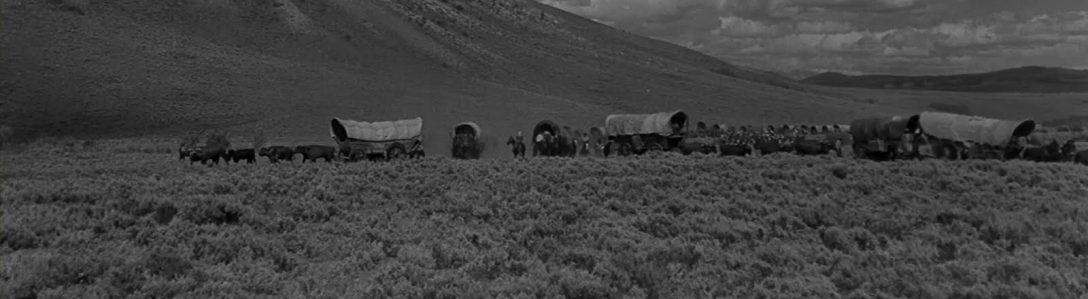
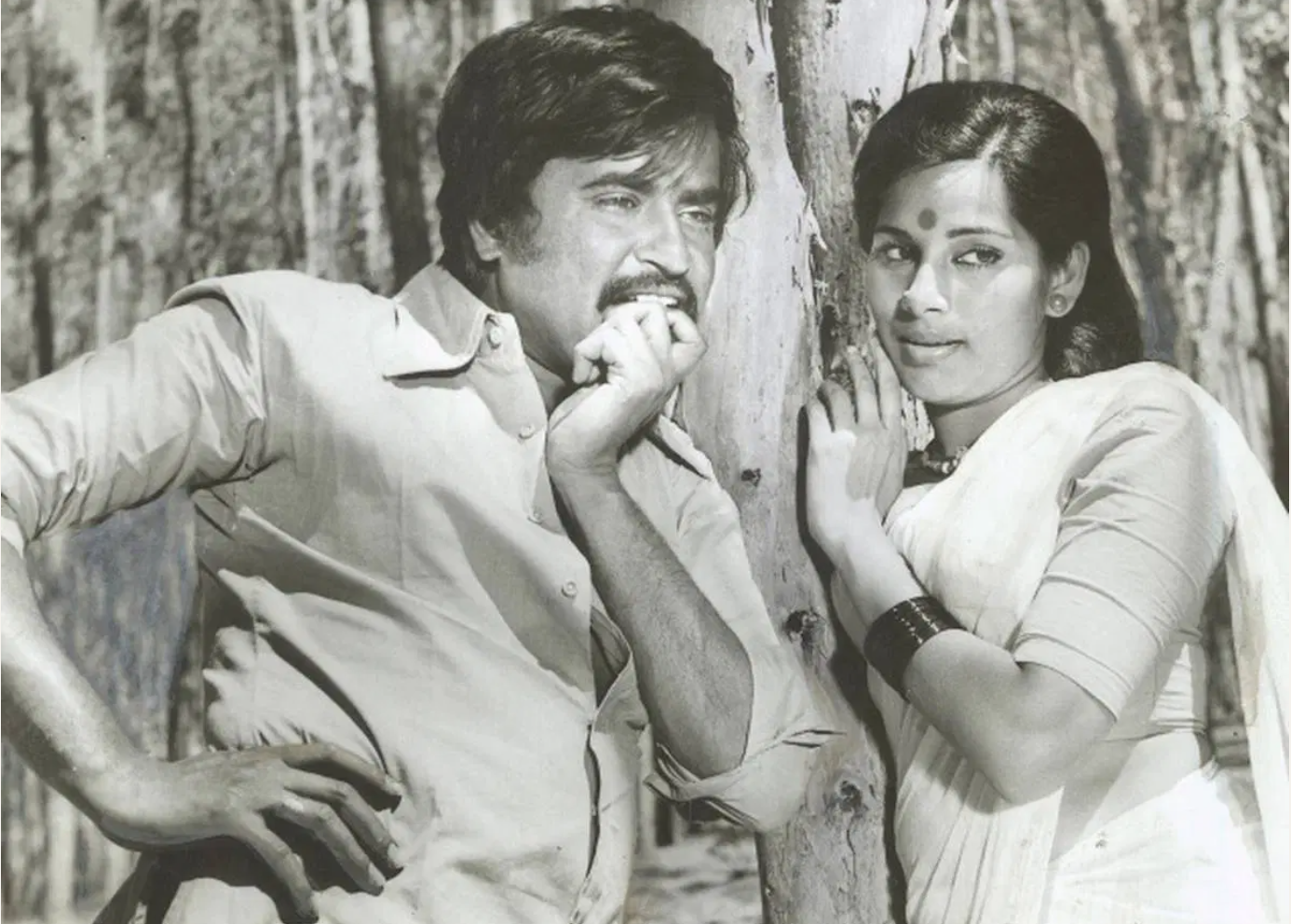



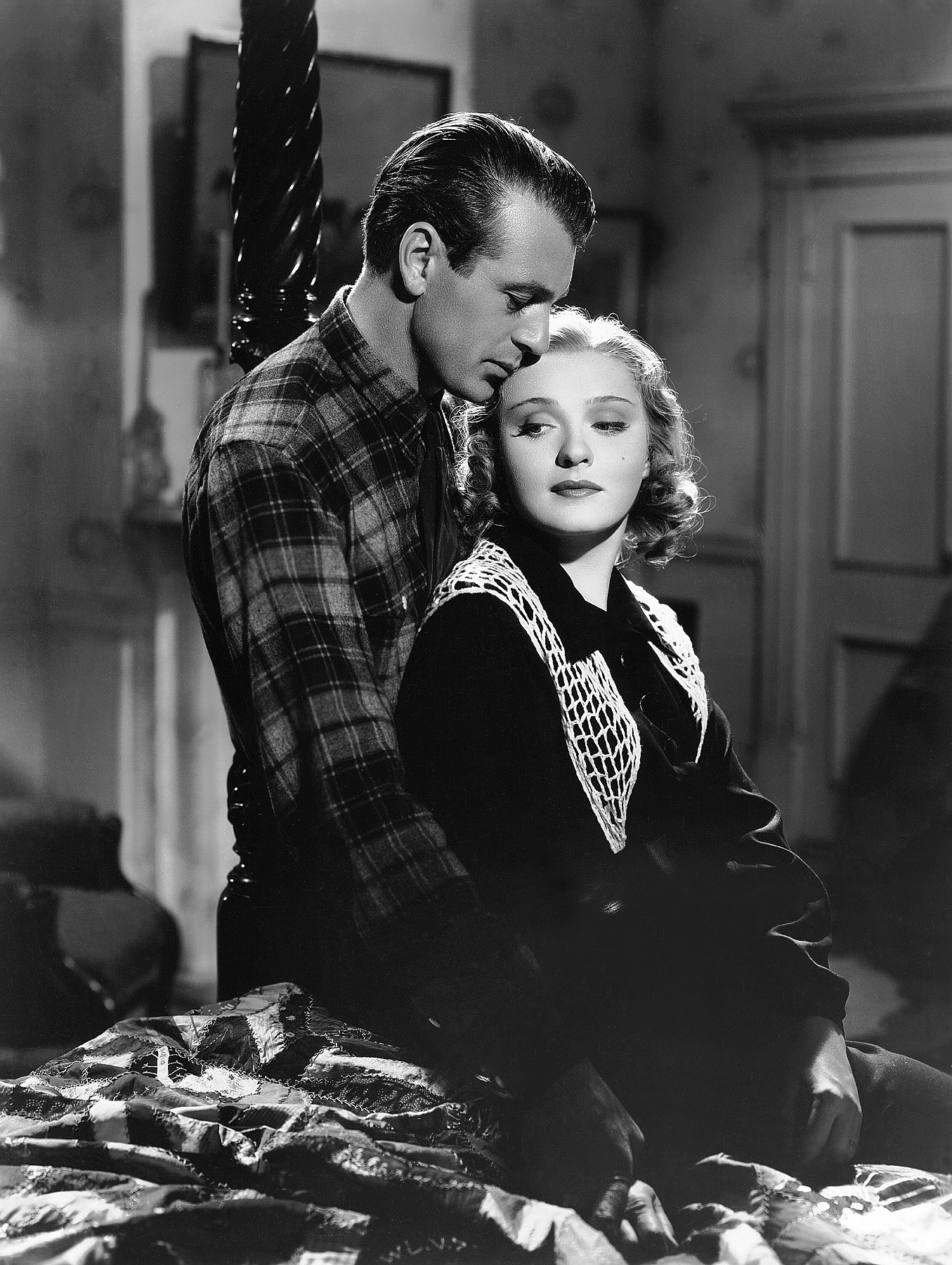
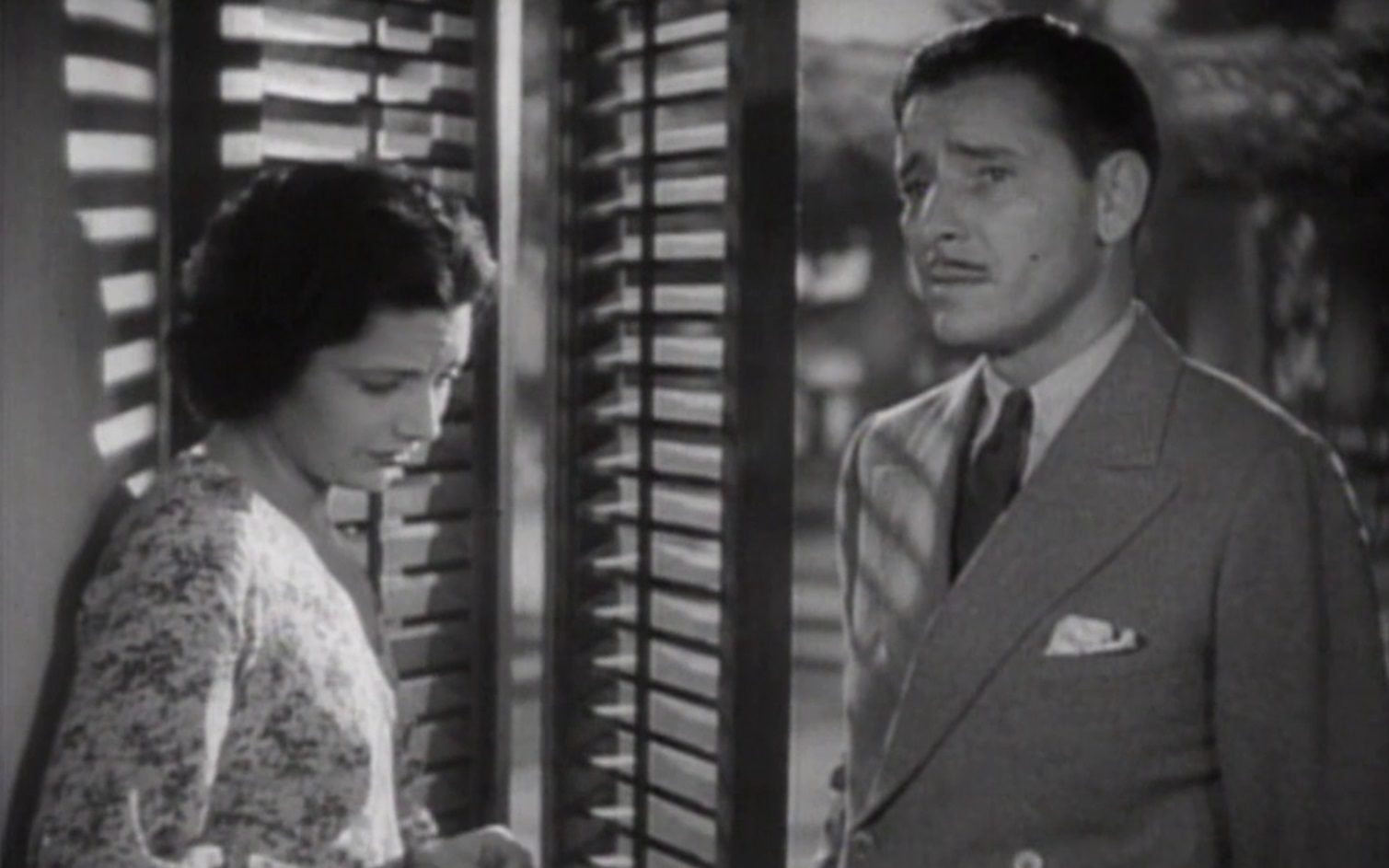


 R. Emmet Sweeney