Rotterdam Dispatch #3: The Prizewinners

By R. Emmet Sweeney

IFC News

February 4th, 2008

The 37th edition of the Rotterdam Film Festival is kaput after a low-key closing ceremony this past Friday night. The big prize was for the VPRO Tiger awards, which hands three first or second time filmmakers $15,000 towards future projects. The jury, headed by ace Iranian director Jafar Panahi (“Offside”), handed the prizes to the Malaysian underage comedy “Flower in the Pocket,” the Thai post-tsunami drama “Wonderful Town” and the Danish Sunni-Shiite thriller “Go with Peace Jamil.” “Wonderful Town” looks to be the breakout title of the three, with almost universal acclaim from critics (including myself in the previous dispatch), an award in hand from the Pusan Film Festival, and a slot in the upcoming Berlin Fest’s Forum section. With its subtle romance wedded to an undercurrent of post-disaster violence, it’s a haunting piece of work and a deserving winner.

The others had a more tempered reception. “Flower” director Liew Seng Tat belongs to a much-heralded, but little seen group of Malaysian directors who formed their own production company, Da Huang Pictures. A straight-up comedy effectively using the intimacy of DV, “Flower” gets strong performances from its child actors (latchkey kids with a mannequin factory workaholic father) and has an eye for the bizarre detail. Liew concocted the funniest scene I saw in the festival, involving an overly jolly doctor, a misplaced lock and key and a wayward X-ray. It’s this eye that keeps his story about outcast kids from descending into cliché, and turns it into an aggressively likeable piece of entertainment. It also nabbed a spot in Berlin.

“Jamil”‘s selection was a surprise, to put it mildly. A rather reductive tale of Sunni-Shiite violence in Denmark, director Omar Shargawi’s handheld opus stirred little support, and its selection suggests a compromise vote between two opposing titles. I hope one of them was Jose Luis Torres Leiva’s “The Sky, The Earth, and the Rain,” which ended up winning the FIPRESCI prize, selected from the Tiger competition films (I was a member of the FIPRESCI jury as part of a program for young film critics — six of us whippersnappers were given one combined vote). To wrap up the festivities, the Dutch Film Critics gave their award to Alexei Balabanov’s incendiary “Cargo 200,” and NETPAC, an institution promoting Asian film, awarded veteran Taiwanese actor Niu Chen-zer’s debut “What On Earth Have I Done Wrong?”.

If there were any trends to emerge out of this eclectic festival, it was simply to confirm that Asia is still the undisputed artistic center of the film world, with new talents emerging (“Wonderful Town”‘s Aditya Assarat) and the old masters still going strong, with Hou Hsiao-hsien (“Flight of the Red Balloon”), Jia Zhangke (“Useless”) and Tsai Ming-liang (with his excellent installation “Is it a dream?”) all in town. There’s one Japanese filmmaker questioning his own importance, however, and that’s Takeshi Kitano, in the midst of the mid-career crisis that began with his self-flagellating portrait in “Takeshis’” (2005). The same tendency continues in “Glory to the Filmmaker!” (2007), an often uproarious sketch comedy collection about what film Kitano should make next. Structured like a madcap clip reel, “Glory” makes use of a sarcastic narrator to lead us through a variety of failed projects, including an absurd parody of Kitano’s gangster films, a spot-on Ozu imitation, the self-explanatory treacle of “The Chauffeur’s Romance,” and, of course, “Blue Raven Ninja Part 2.” A sarcastic deconstruction of every plaudit tossed his way, the film reveals that Takeshi just wants to play the clown. It has the feel of a transitional work — but it’s one to revel in.

The last bits of celluloid I took in were of Abdellatif Kechiche’s epic about the North African community in southern France, “La Graine et le Mulet” (The Secret of the Grain). Kechiche uses streams of overlapping dialogue to track the lives of the Arab community in the southern French port of Sete. Kechiche has a wonderful ear for the textures of speech — his characters talk in the associative, digressive manner of families with decades old in-jokes and feuds. Arguments build and crescendo with operatic power — and Kechiche gives his actors plenty of room to perform, in every meaning of the word. You’ll know what I mean when you see the final scene — a tour de force which contrasts sex and death with startling equanimity.

Rotterdam Dispatch #2: A Luminous Masterpiece From Chile

By R. Emmet Sweeney

IFC News

January 31st, 2018

It’s a week into the Rotterdam Film Festival, and the one title that keeps popping out of the mouths of inebriated critics is “The Sky, The Earth, and The Rain,” a world premiere Chilean film directed by José Luis Torres Leiva. Part of the main Tiger competition for first and second time filmmakers, and by far the best of the bunch, Leiva’s contemplative debut captures the misty beauty of Valdivia, an isolated island town 1,000 miles south of Santiago. Blanketed in fog and constantly beset by rain, it’s a fetid landscape of soggy stumps, weighted down apple trees and placid swamps — you can almost smell the decay. Shot luminously on 35mm, the location is the star, but Ana is the solitary young woman who navigates these dense, dripping spaces. She takes care of her ailing mother and pays the bills by working as a maid for a local recluse, Toro. Her fraught relationship with him provides the main action, as they quietly circle each other in their own pockets of alienation. Their words are blunted and opaque, their emotions flashing in quick bursts before they return to the day’s chores.

Leiva and his DP, Inti Briones, told me the film was five years in the making, with most of the actors involved during that entire process, forging a tight bond. After discovering the area around Valdivia, Leiva re-wrote the script to fit its scenery, emphasizing its importance as a character. They selected locations surrounding Valdivia and into Bolivia to create a composite town that only exists in the hazy netherworld of the film. Ana does the ambulating through this fictional space, and Leiva captures these movements with long, elegant tracking shots, often holding the take even after Ana leaves the frame. This emphasizes the impassive grandeur of her environment, and sets up a secondary character’s impulse to annihilate herself in nature. Her death-drive haunts the rest of the small cast — the hypnotic nothingness of the landscape preferable to the daily grinds of civilization. Impeccably composed and edited, with oft-overwhelming sound design, “The Sky” is the major discovery of the festival.

Another Tiger entry with a strong sense of place is the lovely “Wonderful Town,” from Thai filmmaker Aditya Assarat. Set in the tsunami-ravaged Takua Pa area on the southern coast of Thailand, the film adapts Western genre tropes to examine the psyche of a small village recovering from tragedy, while also managing to be a convincingly tender romance. A Bangkok architect, the civilized outsider, comes to town to work on rebuilding a beachside hotel. He stays at an out-of-the-way motel where he is soon besotted with Na, the local virginal beauty. Her brother is the heavy, suspicious of the outsider and resentful of his incursion into this makeshift frontier. Beginning and ending with placid shots of the ocean that belie its monstrous force, the tender love story slowly shifts into a tale of class resentment that escalates into an act of shocking violence. The tonal shift is rather jarring, but it carries an ambiguous force and acts as an effective allegory about the psychic scars still remaining from the tsunami of 2004.

Another work concerned with a city’s spirit following disaster is Garin Nugroho’s “Teak Leaves at the Temples.” His producer, a jazz aficionado, persuaded Nugroho to throw a Nordic free jazz trio together with Indonesian folk groups, and had them perform improvisations in front of ancient Hindu temples at Borubudur and Prambanan, as well as at a Yogyakarta arts center after an earthquake hit the city. These concerts, experiments in controlled chaos shot in one take, are intercut with profiles of local artists and their communities, making this playful documentary more than just a multi-cultural gimmick. A follow-up to Nugroho’s epic Javanese musical “Opera Jawa,” “Teak Leaves” shows him examining similar themes in a lighter mood. Both films delve into issues of national mourning and Indonesia’s cultural history, using local art forms to investigate modern problems. “Jawa” used gamelan music and shadow puppetry, while this film utilizes stone sculpture, contrapuntal drumming, and ancient architecture. And at a sprightly 70 minutes, it gave me plenty of time to sprint to the next theater.

For those still harboring romantic thoughts of the Soviet Russian regime, Alexei Balabanov has some vitriol to send your way in the form of “Cargo 200.” The title refers to the caskets being sent back from the 1980s war in Afghanistan, but Balabanov is concerned with the horrors at home. Set in 1983, it’s a pitch black comedy featuring the most sadistic commie in film history. Moscow is filmed as an apocalyptic pigsty in washed-out greys and browns, presaging the moral degradation to come. Filmed with barely repressed rage, “Cargo 200” is often revolting in the depths of its violence, but it is also unforgettable, seared by authentic outrage at nostalgia for the old USSR.

To cleanse my palate, I took in Serge Bozon’s “La France,” an utterly unique WW1 film that contains four musical numbers. A group of French deserters are wandering through an endless no man’s land when Sylvie Testud, dressed as a boy, joins up with them to search for her husband. Shot in soft blues and highly diffused light, the image is ethereal and delicate, appropriate for the ghostlike visages of the male group. In the midst of their epic wanderings, they pause and sing a few songs, whipping out handmade instruments and crooning ’60s style psych-pop. Honoring the tunes that used to flood American genre pictures like “Rio Bravo,” Bozon’s bold and deeply romantic film risks looking foolish in order to reach for the sublime, and it succeeds beautifully.

Rotterdam Dispatch #1: Enigmas and Insanity From Japan and Thailand

By R. Emmet Sweeney

IFC News

January 28th, 2008

As I sit in the crowded hall of the International Film Festival Rotterdam’s main building, I’m drowning in an atmosphere of harried conviviality. At the table next to me, three ladies promoting “Lucky 7,” an omnibus Thai film, are exchanging information with a charming Texan whose short film is premiering at the fest. This is the scene all over this wet and windy city, as independent filmmakers the world over are making contacts and crossing their fingers for that one good Variety review that could lead to financing for their next project (or at least a future festival life for their film).

In its 37th year, this festival defines itself by its independence — specifically its focus on young filmmakers, many of whom are from developing nations. (As a result, Rotterdam devotes the Tiger Awards Competition to a group of 15 first or second time filmmakers lucky enough to make the main selection.) This maverick spirit was instilled by Hubert Bals, the festival’s founder, who encouraged an idiosyncratic mix of ambitious unknowns and experimental pioneers, and programs of high-wire genre freakouts and rare retrospectives. His legacy lives on through the Hubert Bals Fund, which gives money to young filmmakers in the developing world, helping to produce such films as Nuri Bilge Ceylan’s “Climates” and Carlos Reygadas’s “Japón.”

This year, the festival has a new director in Rutger Wolfson, but according to veterans of the fest, it seems little has changed. The Tiger Awards Competition is still the centerpiece of Rotterdam, but there’s an embarrassment of cinematic riches behind every program, including the auteur-driven Kings & Aces section, the midnight movie shenanigans of Rotterdammerung, and a raft of options I haven’t delved into yet, including the retrospective of fourth-generation Chinese filmmakers and the avant-garde Exploding Cinema sidebar (complete with a theater designed to ape Tsai Ming-liang’s Taipei cine-palace from “Goodbye, Dragon Inn”).

So far, I’ve seen five of the Tiger contenders, and the most impressive is “Waltz in Starlight,” directed by noted Japanese still photographer Shingo Wakagi. A shambling reminiscence about his witty grandfather and the lazy tempo of their beachside town, “Starlight” nimbly mixes documentary techniques with fiction to create the impression of a fine-tuned home movie. Koishi Kim, a veteran manzai performer (a stand-up comic in his native Japan), plays the acerbic gramps with studied cantankerousness and glimpses of grace beneath. The others competing for Tigers are less accomplished, including “Go with Peace Jamil,” a head-scratcher that reduces the Sunni-Shiite conflict to shopworn action film clichés.

Curiously placed in the Sturm und Drang section for up-and-coming filmmakers, Pen-ek Ratanaruang’s latest work, “Ploy,” was another early highlight. Known stateside for his 2004 release “Last Life in the Universe,” Ratanaruang has been making the festival rounds for a decade and would certainly seem more at home with the more established folks in Kings & Aces section. Regardless, his dreamlike reverie of marital breakdown (which premiered at Cannes in 2007) deserves to be seen. A couple who emigrated to the U.S. return to Thailand for a funeral and check into a modernist Bangkok hotel, where their somnambulistic mind games begin and banal jealousies erupt into violent revenge fantasies. With puzzle-like complexity, Ratanaruang infuses everyday objects, including a necklace, a cigarette lighter and an expensive suit, with the paranoias and euphorias of erotic couplings, creating an impressionistic, demanding, and entirely enigmatic ode to the mysteries of love.

After catching up with some New York Film Festival titles I’d missed (Ken Jacobs’ rapturous investigation into pre-cinema, “RAZZLE DAZZLE the Lost World,” and José Luis Guerin’s superb “In the City of Sylvia”), I sat down to the most purely entertaining title of the fest so far in Matsumoto Hitoshi’s brilliantly eccentric “Dai-Nipponjin” (or, “Big Man Japan”). A popular comedian on Japanese TV, Hitoshi’s persona is fully honed — he speaks with a halting delivery so deadpan it reaches beyond comedy into the realm of psychosis. He plays Dai Sato, the last remaining employee of Japan’s Department of Monster Defense. Employing a faux-documentary style, Hitoshi is questioned about his adoration of folding umbrellas (they get big only when they’re needed) and his distrust of America, giving plenty of room for long pauses. He leaves you hanging for the punchline, the humor arising from the lack of one.

The true insanity begins when Hitoshi begins fighting the monsters, with such evocative names as “The Strangling Monster” and “The Stink Monster.” Jacked up with electricity and standing inside of a giant pair of drawers, Hitoshi is super-sized and battles the beasts with a steel rod and a mightily hairy back. With surprisingly effective computer effects, Hitoshi dispatches the freaks with aplomb, but the TV ratings for his show are in the pits — so much so it airs at the prime slot of 2:40 in the morning and his agent splashes ads across his chest. The story takes a number of wild turns, eventually ending on a note of surreal televisual bliss — Hitoshi finding the answer to his depressive state in the rubber suits of old.

Foreign Borne Identities: The 2007 Human Rights Watch International Film Festival

By R. Emmet Sweeney

IFC News

June 11, 2007

Conspicuously absent at this year’s Cannes Film Festival, the subject of the Iraq War has slowly receded as the flashpoint topic of political filmmaking. Whether a matter of over-saturation or simply fatigue at the implacable pace of the ongoing tragedy in the Middle East, the war no longer dominates documentary film discourse. And such is the case with the 18th Human Rights Watch International Film Festival, being held at New York’s Walter Reade Theater from June 15th to the 28th. Of the 21 films and three shorts being screened, only one takes Iraq as its subject (James Longley’s short “Sari’s Mother”). While it’s not central to the program, the U.S. policies adopted because of the war (and 9/11) haunt the edges of a number of entries, including one of the opening night films, Lynn Hershman Leeson’s formally adventurous “Strange Culture.”

Documenting one of the most egregious breaches of civil liberties in post 9/11 America, Leeson tells the story of University at Buffalo art professor Steve Kurtz, suspected bio-terrorist. During one horrific night in 2004, Kurtz’s wife died unexpectedly from heart failure. When the medics arrived, they noticed (legal) bacteria cultures that Kurtz was to use for an art exhibit at the Massachusetts Museum of Contemporary Art. They called the FBI, Kurtz was held, and he entered a legal nightmare he hasn’t fully escaped from. With the case still ongoing, Kurtz isn’t allowed to speak on certain issues, so Leeson hired Tilda Swinton and Thomas Jay Ryan for re-enactments of that material. Eventually the two actors break character, inserting their own commentary and joking with their real life models. There’s a looseness to this structure that allows Kurtz’s nerdy humor and relentless optimism to shine through, making the film the story of an individual, not merely a trembling victim of incompetent government forces.

While President Bush’s domestic policies failed Kurtz, his broad foreign policy to democratize the Middle East offered a hope to many that has yet to be realized. Two elections fully backed by the U.S., in Afghanistan and Palestine, are investigated in “Enemies of Happiness” and “Hot House,” respectively. In the former, Danish filmmaker Eva Mulvad follows Afghani parliamentary candidate Malalai Joya in the run up to the 2005 vote, the first in 35 years. Joya is an extraordinary figure, a 28-year-old firebrand who had gained notoriety for being tossed out of the Grand Council of tribal elders for railing against corrupt warlords. In a country in which women’s rights is a new concept, Joya is hugely divisive, and has to employ a security team to escort her to nearby villages (outlying towns are too dangerous). She had already survived four attempts on her life by the time film picks up her story. As she urges rural women to vote, rescues a teen from marrying an 80-year old opium dealer, and shares tears with a 100-year old (female) veteran of the mujahedeen against the Russians, it seems like grassroots democracy has a chance to succeed. With the recent resurgence of the Taliban and the increasing weakness of the Karzai government, this hopeful sketch now looks like a mirage.

“Hot House” documents the 2006 Palestinian elections from a unique perspective — the inside of Israeli prisons. Fourteen Palestinian prisoners were elected to parliament, nine of which were members of Hamas. Director Shimon Dotan gained an incredible level of access to the inmates in the weeks before the election, eavesdropping on their discussions while outlining the martial discipline with which each subgroup runs their lives behind bars. Dotan’s basic premise is that the Israeli prison system politicizes extremists. The prisoners are given a free education from the Hebrew or Open Universities, and since two-thirds of the Palestinian population has been to jail, there’s a tightly knit network of support for any former or current inmate who runs for office. This is the network that helped thrust Hamas into a commanding majority in parliament, and forced the U.S. to withdraw all aid to the territory.

A country where free elections won’t occur anytime soon is Belarus, one of the most repressive governments in the world. “A Lesson of Belarusian” is a shot-on-the-fly account of the elections of March 2006, widely criticized by the U.S. and E.U. as unfair. President Alyaksandr Lukashenka changed the constitution so he could run for a third time — and used brutal strong-arm tactics to silence the opposition. The film follows the student movement centered around an outlawed school, the Lyceum. Banned for teaching the Belarusian language and its history (instead of the dominant Russian), the institution goes underground to agitate for the opposition leader Alyaksandr Milinkevich. A stunning indictment of Lukashenka’s regime, “A Lesson of Belarusian”‘s nervous cameras catch the pervasive fear and resentment of the populace, culminating in the massive demonstrations on Election Day and the ruthless beatings that followed. As with Joya, all the buoyant optimism of Election Day has come to naught. Lukashenka’s grip on power is as tight as ever, and the opposition is splintering. Just last month Milinkevich was voted out as leader, to be replaced by a rotating group of four that advocates engaging with the authoritarian government.

The most rigorous film in the series is “Manufactured Landscapes” (opening June 20th at Film Forum in NYC), directed by Jennifer Baichwal. It examines the effect China’s rapid industrialization is having on its landscape, seen through the eyes of Canadian photographer Edward Burtynsky. Graced by luminous photography of gutted ships, mountains of recyclable waste, and strip-mined valleys, it forces the viewer to confront the contradictions of globalization: these images of uncanny beauty, the result of great leaps in human intelligence, are also polluting the world that nurtures that same intelligence. The gargantuan scale of China’s modernization is embodied by the Three Gorges Dam, the largest ever planned, which has flooded numerous towns (one of which, Fengjie, is the subject of Jia Zhangke’s latest film, “Still Life”). With its energy needs outpacing its supply, China will do anything for help, including importing oil from the Sudan.

The closing night film, “The Devil Came on Horseback,” focuses on the genocide in Darfur as viewed by Brian Steidle, a Marine who took a job as cease-fire monitor with the African Union. Sadly, the film is in love with souped-up zoom-ins on maps and obviously staged scenes of Steidle popping off rounds. The basics of the conflict are covered adequately, with terrifying footage of a Janjaweed fighter reciting their slogan before an attack: “Kill the slaves.” Steidle became an impassioned advocate of U.S. intervention, and the film threatens to turn him into a hero, with far too much footage of him giving speeches and interviews stateside. When the Sudanese are finally allowed to speak for themselves, their eloquence erases any memory of the previous self-congratulation. For Steidle it’s the Iraq War that keeps the U.S. from stopping the slaughter. That’s a questionable proposition, but one indicative of the symbolic power the war still retains. It’s the open wound that bleeds through all current events.

THE 2015 NEW YORK FILM FESTIVAL

October 6, 2015

Originally published in Movie Morlocks, the official blog of Turner Classic Movies

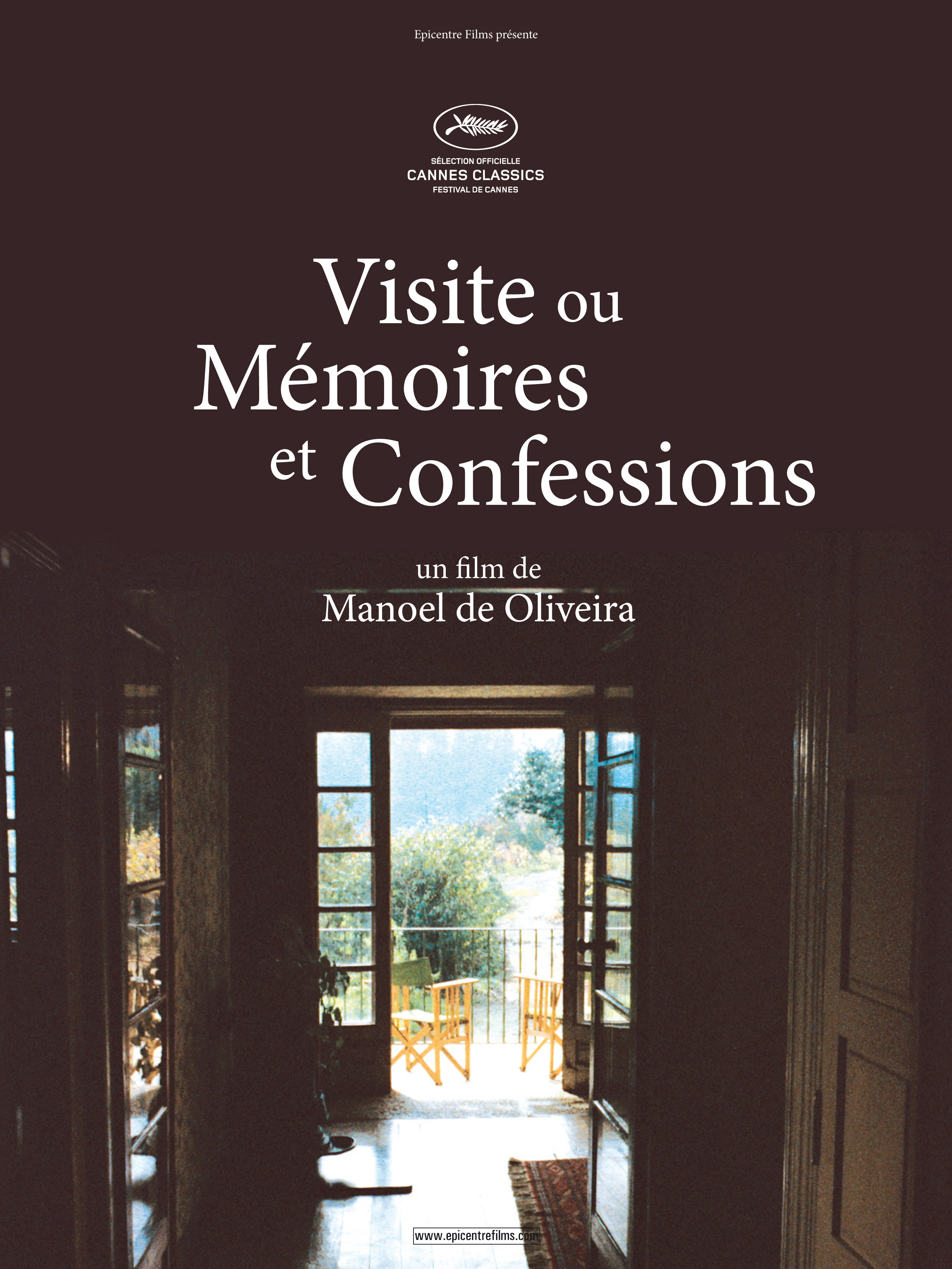
To stud its carpets with stars, the 53rd New York Film Festival has turned to the biopic. It opened with The Walk, Robert Zemeckis’ recreation of Philippe Petit’s World Trade Center tightrope walk, gave a centerpiece slot to Michael Fassbender as Steve Jobs, and closes with Don Cheadle’s Miles Davis movie, Miles Ahead. Though I haven’t managed to see those high-gloss productions, biographical approaches extended throughout the festival and into many of my favorites. Manoel de Oliveira’s Visit, Or Memories and Confessions is a wistful and austere reflection on his life, his career, and the house he lived in for forty years. Hong Sang-soo puts another of his wayward film director characters through a structural ringer in Right Now, Wrong Then, and the weight of history and mortality is felt in Apichatpong Weerasethakul’s Cemetery of Splendour, set in his hometown of Khon Kaen, Thailand, and which he has described as “a search for the old spirits I knew as a child.” Soldiers afflicted with sleeping sickness dream away their lives in a makeshift hospital, situated on top of ‘an ancient burial ground. Those sleepy spirits of history seem to have wandered throughout the festival and through the avant-garde Projections sidebar, much of which is on Weerasethakul’s somnambulant wavelength.

“It’s a film by me, for me. Maybe I shouldn’t have made it. Either way, it’s done.” So says Manoel de Oliveira near the start of Memories and Confessions, in a voice-over written by novelist and frequent collaborator Agustina Bessa-Luís. It is a film of reluctant revelation. Shot in 1982, Oliveira ordered it not be shown until after his death, which sadly occurred this past April. The NYFF screening was its North American premiere. The film is structured as a tour of Oliveira’s Oporto home, built for he and his wife Maria Isabel (still with us at age 97) after their marriage in 1940. An unseen male and female walk through its environs, comparing the garden trees to guardians and the house as a ship – to these interlocutors it is a shapeshifting landscape occupied by spirits. They hear noises of its previous inhabitants, one of them being Oliveira the friendly ghost, tapping away at his typewriter. He turns in an artificially startled manner toward the camera, as if on an awkward public access show, and tells the story of his life. He screens home movies of his four children, lingers over portraits of his wife, and walks us through the economic failure of his father’s hat factory that put him into debt, leading to the sale of the home. Maria Isabel is only shot outside in the garden, cutting flowers. Asked by an offscreen voice what it is like to be married to a filmmaker, she replies, “it is a life of abnegation”, with a hint of a Mona Lisa smile on her face conveying the years of stresses living with a “man of the cinema”. Manoel has numerous copies of Da Vinci’s masterpiece stashed around the house – perhaps it reminds him of his wife? Though only 72 at the time of shooting, the film seems like a summation, a wrapping up, as he strolls through a Portuguese film studio and reflects on his own insignificance as the roll of film ends, cutting to white screen and the sound of flapping celluloid. He would go on to shoot twenty-five more features.

Cemetery of Splendour is also about the energies and spirits that can adhere to a space. Apichatpong Weerasethakul grew up in the small town of Khon Kaen in Thailand, where his parents were doctors. For the film he merged all of his childhood landscapes into one: his wooden home, the patients’ ward where his mother worked, the school, and the cinema. The movie is about a temporary rural hospital that cares for soldiers with sleeping sickness that no other wards will take.  Their building is a rotting old schoolhouse that still displays remnants of its past: chalkboards, toys, and textbooks. The doctors utilize an experimental therapy using colored fluorescent lights that are said to tame the patients’ dreams, and perhaps ease them back to consciousness. Volunteer Jenjira (Weerasethakul regular Jenjira Pongpas) develops a close friendship with patient Itt (Banlop Lomnoi), who scribbles enigmatic koans in a notebook in between narcoleptic sleeps. An encounter with the psychic Keng (Jarinpattra Rueangram) forges a mental bond between Jen and Itt that traverses dreams and reality, with Itt guiding Jen into the world of warring kings, buried in the ancient cemetery underneath the hospital. At the same time Jen leads Itt through the ruins of the school where she once attended, weaving history and myth together, all part of a lost Thailand that Weerasethakul is mourning.

At the beginning of the short video Bring Me the Head of Tim Horton, Guy Maddin is mourning his career. Unable to complete funding for his next feature (what would become The Forbidden Room, part of the NYFF main slate), he decides to take a job as a director of a behind-the-scenes video for Hyena Road, a big-budget Afghanistan war movie. Maddin decries how Hyena Road’s catering budget could fund most of his features, so he soldiers on, even deigning to act as an extra corpse in one particularly humiliating long shot. But this being a Guy Maddin film (co-directed with Evan and Galen Johnson), things don’t stay linear for long. He decides to cobble together his own war movie with random shots of extras and and some lo-fi CGI lasers, morphing the hero-worshipping Hyena Road into some kind of subversive sci-fi freakout where the Afghan extras are the leads. Maddin makes it personal by pulling in his childhood hockey heroes Tim Horton and Guy Lafleur (he intones “Lafleur, Lafleur” as if the name itself held the key to the universe), and ends with Lafleur’s bumptious disco song “Scoring” while a talky drone interprets the lyrics.

Hong Sang-soo is a serial self-portraitist, always depicting sensitive male artist types in various states of self-examination or self-delusion. In Right Now, Wrong Then he follows famed art film director Han Chun-su (Jung Jae-young) the day before he is giving a post-screening lecture in the small town of Suwon. He spends it with painter Hee-jung (Kim Min-hee), who he is strenuously attempting to seduce. They have coffee, retreat to her workshop to discuss her work, have dinner, and attend a small party. Through it all Han is working from an established script, using practiced lines from old interviews to create the seamless patter of an intellectual pickup artist. Hee-jung is initially charmed, then slowly irritated by his insecure mansplaining. But this is not the end – as Hong cycles the timeline back to the beginning and replays each scene, with Han subtly altering his approach.  Each detail is magnified in this second go-round, each thread of conversation a possible fork in the narrative that sends it down new paths. Han displays more confidence in his own thoughts the second time around, speaking thoughtfully and honestly rather than relying on recycled ideas, baring his body and soul. As Han begins to listen to Hee-jung’s perspective, Hong shifts his camera to her – though it framed Han more centrally in the first half. It all sounds very simplistic and binary, but in action it is a marvel of subtlety of Jung and Kim’s performances. The first half was completed and screened for them before they shot the second, and their reactions seem to play off that first encounter, a teasing flirtation both with each other and with the movie itself.

The Projections programs of experimental films also dealt with the self, especially Laida Lertxundi’s Vivir Para Vivir, which attempts to render her body through cinema. Mountain peaks are connected to the peaks in her cardiogram, which are both seen and heard on-screen. It is a bold, sensuous kind of embodied cinema, ending with a blast of color timed to a recording of an orgasm. Alee Peoples’ Non-Stop Beautiful Ladies is a casual bit of urban photography, as Peoples documents an unusual marketing technique around her north Los Angeles neighborhood: busty female mannequins which hold motorized signs for a variety of small businesses – income tax accountants and gas stations alike. In an economically depressed landscape of empty billboard signs, these intrepid inanimate ladies still hawk their wares, absurd emblems of sexism that have held onto their jobs longer than most. The most unique and haunting work I saw in the festival was Lois  Patiño‘s Night Without Distance, another short playing in Projections. Shot in the mountains on the Galicia/Portugal border, it envisions the smuggling trade as ghostly emanations of the landscape. Patiño used color reversal stock and then presented it in negative, creating uncanny silvery images that look like they came out of the video game Metal Gear Solid. That impression is further solidified by how the spectral figures, speaking of secret meetings and escapes, use stealth like that game’s Solid Snake. The long takes of smugglers waiting in crevasses and by creeks take on depth and volume, with physical textures vibrating across the frame. The travelers seem to speak in code, traveling towards a point beyond time, ghostly smugglers wandering the borderlands of perceivable reality.  It conjures the same spell as Cemetery of Splendour, leaving me suspended in its waking dream of cinema.
THE REALITY PRINCIPLE: ART OF THE REAL AT THE FILM SOCIETY OF LINCOLN CENTER

April 14, 2015

TrueHeart00001

Before the start of his heartbreaking rural romance True Heart Susie (1919), D.W. Griffith asks in an intertitle, “Is real life interesting?” He implies that the answer is yes, expecting that you’ll sit through the ninety minutes to follow based on its adherence to the facts of everyday life. But there is no expectation of documentary truth, since the star is Lillian Gish and and the writer of the story, Marian Fremont, are named front and center. Instead, Griffith said, “I am trying to develop realism in pictures by teaching the value of deliberation and repose.” The Film Society of Lincoln Center’s second annual Art of the Real series, a wide-ranging survey of non-fiction (ish) cinema that runs through April 24th, is one that privileges the contemplative and dreamlike over works that only admit to one truth. Like Griffith’s work, the Art of the Real films (over twenty shorts and features), co-programmed by Rachael Rakes and Dennis Lim, think along with you, offering multifarious pathways to the “real”. The series will feature the North American premiere of the Lebanese portrait film Birds of September, Luo Li’s environmental doc/shaggy dog mystery Li Wen at East Lake and Luísa Homem & Pedro Pinho’s epic observational documentary of the Cape Verde tourist boom Trading Cities. Not to mention sidebars on The Actualities of Agnès Varda (with Varda introducing her films in person) and Repeat as Necessary: The Art of Reenactment, which takes the abused reenactment form and traces its storied history in documentary art.

i_kamikaze_still

The most affecting work in the series, though, might be its simplest. Masa Sawada’s I, Kamikaze is a seventy-five minute interview with the ninety-year-old former kamikaze pilot Fujio Hayashi. Hayashi sits behind a table, his glasses traveling up and down his nose, as he dredges up the memories from his time in the Japanese Imperial Navy. One of the original volunteers for the air suicide attack units, he was, and remains, a good soldier. He lost his mother at a young age, and the few words he spares for his father depicts a neglectful, distant figure (after he returned from WWII, he said, “I’m back. I’m sorry for losing the war.” His father did not respond, and they barely spoke the rest of their lives). Hayashi poured his soul into the unit, and was willing and able to give up his life for his country. Instead he was tasked with training the young kamikaze recruits, ordering their missions, and hence, their deaths. Hayashi takes long, considered pauses before many of his answers, opening up blocks of time to study his face, his posture and his too-large suits. These are silences filled with thought, for Hayashi and the viewer. His expressions are almost entirely impenetrable and thus open to interpretation, a stonewall even when discussing his good friend Nishio, whom he had to order on a suicide mission. His military bearing is still intact, emotions attaching to the meaning of the words, but none in the inflection of his steady, phlegmy voice. Hayashi is comfortable with death, and has lived with it all his life. He keeps repeating that for long stretches of his life living or dying made no difference to him. He was, in this sense, the perfect kamikaze -though he was never able to achieve his intended destiny. He describes that period as “memories bathed in light”, and that when it is his turn to leave on his final mission, he will have a smile on his face, just as the kamikaze pilots did on theirs as they were heading out into oblivion.

880349

Trading Cities depicts a journey of material and capital into and out of Cape Verde, the island country that lies off the coast of West Africa. The island has few natural resources, and the local government as been promoting itself as a tourist destination for Europeans. They joined the WTO in 2007, built a new international airport, and started developing beachside resorts. But they started to run out of sand. This essential element for creating concrete was being stripped bare from their beaches, turning sand thievery into a source of petty crime. Construction ceased while trade routes opened to import the concrete from nearby Mauritania, which in turn received boats from Lisbon. For Trading Cities, Luísa Homem and Pedro Pinho take an observational, direct cinema approach with their 16mm as they document this circulation of material. The film stars in Lisbon on a cargo ship, goes to Mauritania to depict the collection of sand and the firing and molding of concrete blocks. They pay close attention to the process of labor, the particular skills and peculiar rhythms that emerge in any workplace. The slow journey of a cargo ship, which has the abstracted beauty of one of Peter Hutton’s Hudson River films, is contrasted with the slow camel-ride a white European couple takes on their way to one of the resorts. This is where the concrete comes to rest, in the static packaged splendor of a middle-class resort, designed to channel the country’s colonized past. The majority Italian, German and Portuguese tourists laze in wading pools as a black African plays a native string instrument. Another Cape Verdean sings a canned “Redemption Song” to a group of bored tourists uninterested in freeing themselves from mental slavery, while in another show the locals paint themselves in tribal-looking  make-up for some community theater Lion King knockoff. The Cape Verdeans put their kitschy colonial-burlesque work in and go home, where the old subsistence farming economy proceeds at its edges, slowly fading into the future of the service economy.

503228524_640

Sarah Francis is after a more stylized kind of city portrait in Birds of September. She constructed a “glassed van”, a kind of vehicular bubble into which she invited random people from Beirut’s streets. She recorded interviews with them as the bubble drove slowly around the city, the locals’ daily anxieties percolating on the soundtrack as the city reveals itself behind their heads. Francis said she made the film because of “a claustrophobic feeling I had towards Beirut. I have always lived here and yet I always felt like I was not always fully part of things.” She is using the bubble to break the city down into component parts. She even separates the interview audio track from the video track, so the subject’s words play over their silent faces. Each element is only partially graspable – it’s possible to focus on the words, the face or the city behind them, but usually never all at once. At times it feels like tapping into Beirut’s unconscious, the streets and sky merging with anxieties about work, relationships and religion. The concept is stretched thin over its 100 minutes, but it’s a provocative and promising work.

li_wen_at_east_lake

Luo Li is another young artist on display at Art of the Real with Li Wen at East Lake, an shapeshifting shaggy dog thing that begins as a documentary about developers illegally filling in a lake to build the “Happy Valley” amusement park. About 35 minutes in it changes into a narcoleptic mystery as two misshapen detectives track down a vagrant who may or may not be spreading tales that a dragon will soon rise from the lake in anger. The investigation gets sidetracked into Cultural Revolution history, the detective’s fear of castration, and real estate conspiracies. It’s a series of dead-ends and false leads that recalls the proliferating melancholic mysteries of Inherent Vice. What lies beneath is the state’s micromanaging fear of the old, weird China. The McGuffin of this whole enterprise is a young eccentric who believes all the old timers’ myths about the lake – about its personality and the dragon who protects it. The whole state apparatus springs into action to shut this harmless guy down. The cop’s obsession with Cultural Revolution paraphernalia suggests the current era has replaced Mao’s little red book with technocrat babble.

Art of the Real is formidable, ear and eye-worm kind of programming. These are movies that burrow up into your cortex, laying eggs that will hatch for weeks afterward. Each film gets at the “real” in their own way, through unvarnished interview, direct observation, stylized portraiture or fictionalized documentary. Regardless of the process, they each glimpse their own facet of reality, which is, as D.W. Griffith must admit, interesting indeed.

“FIRST LOOK” AT THE MUSEUM OF THE MOVING IMAGE

VENTOS-IMAGEM-3_700

Movies are hard to see. That statement feels false, what with films all around you, available to stream at a keystroke. But distribution is a weird, half-hazard thing, a pseudo-science that pretends to know which products will sell and which not, a presumptive mind-reading of an imaginary audience that doesn’t get to choose for themselves. So many of the most challenging and strange films get left behind, mere rumors in festival reports and critic bull sessions. This is why festivals like the Museum of the Moving Image’s First Look series are so essential. I don’t have the time or the expense account to travel to far-flung locales and sample the outer edges of film festival programs. This is what we pay programmers (not much) for! Now in its fourth year, First Look provides a necessary catch-up for the most challenging work from the previous year, stuff too bold or bizarre to reach screens otherwise. Chief curator David Schwarz and assistant film curator Aliza Ma teamed up with FIDMarseilles, a similarly provocative French festival, and organized a wide-ranging program of too-hot-for distributor films. There’s a vital verite document of the Syrian civil war (Our Terrible Country), a lyrical portrait of rural Brazil (August Winds), and a Persian language lesson that opens up a swathe of Iranian history (I For Iran).

our_terrible_country

The “biggest” titles on display were Aleksei German’s mud-choked sci-fi dirge Hard to be a God (which has distribution from Kino Lorber) and Amour Fou, a studied depiction of Romantic writer Heinrich von Kleist’s suicide pact with his beloved Henriette Vogel, which premiered at last year’s Cannes Film Festival. But I go to First Look for the small and impossible to see — and was stunned by Our Terrible Country (screening January 17th at 7pm), a portrait of Syrian dissident Yassin Haj Saleh and his fraught journey into exile. Yassin had been imprisoned from 1980 – 1996  by Hafez al-Assad’s regime for what Yassin described as his membership in a “communist pro-democracy group”. Filmmaker/photographer Ziad Homsi wanted to capture Yassin’s experience in Damascus during the uprising against Hafez’s son Bashar, a rumination from one of the beacons of the revolution. But the film turned into something much darker, as the civil war created a vacuum of power that ISIS came in to fill, dreams of revolution getting snuffed by Islamic extremism. It begins in the liberated city of Douma, some 10km northeast of Damascus’ city center. Yassin and his wife Samira fled there after Damascus became too dangerous.

333089_img650x420_img650x420_crop

Douma’s “liberation” is pyrrhic, a crumbling ghost town that threatens to fall to the regime at any moment. Yassin keeps up a good face, organizing street cleaning teams to remove rubble from the streets. But the locals are wary of this community organizing, and one neighbor expresses a demand that the volunteer women should cover their faces. With a divided populace, a dwindling energy supply and no end in sight to the war, Samira expresses an “anger that I could explode the universe with”. Homsi stays close to Yassin who decides to search for a route out of Douma and into Raqqa, his hometown in the north of Syria. As they travel side roads and through deserts, avoiding the blazing sun by laying underneath canvas sheets, Yassin learns that ISIS has taken over his city and kidnapped his brothers. He travels on anyway, knowing his wife is in constant danger in Douma, and knowing ISIS meets him at the end of his journey. Every step seems weighted with doom, and the populace loses hope. The righteous revolution has caused endless bloodshed and created a foothold for ISIS, what Yassin calls “the cancerous growth of the revolution.”  The country is tearing itself apart, and it begins to seep into the emotions of its people. The owner of a falafel joint breaks down when Yassin questions the amount he was charged for a hummus plate, taking the question as a grievous insult to his dignity. He yells and wails to all the customers at this indignity, but after he calms down he tells Homsi’s camera that, “Assad is merely an illusion. The disaster is inside us.”

1417437098-image-Ourterriblecountry10

Yassin escapes to Istanbul using his brother-in-law’s passport, ensuring his own safety, but leaving Homsi and his wife behind. There is no safe route outside of Douma anymore – Samira is trapped, her image seen only in the Skype calls Yassin can make before Samira loses the last of her electricity. These sequences are unbearably painful to watch. Soon all hope is lost. Homsi’s father is in prison, but is desperate to spirit his mother out of the country. He simply states, “People who want to live should get out.” He finds his way to Yassin in Istanbul, and they fall apart together. Our Terrible Country is an urgent document of despair from a stalled revolution.

i-comme-iran-2014-sanaz-azari-001

I For Iran (Saturday, January 17th at 4:30) filters the 1979 Iranian revolution through a Persian language workbook. In this deceptively simple essay film, director Sanaz Azari sits in a classroom and has a teacher lecture her in the language on a blackboard. Azari was born in Iran, but raised in Belgium, and hopes to re-connect with her ancestral home through language. The teacher is another Iranian exile, a gray haired performer who shifts between nostalgia and sarcasm regarding their mutual lost home. Through simple language exercises fraught histories peek through, whether it’s the teacher’s cynical digression on the 2013 election of Hassan Rouhani, or the sample sentences used, like “Dad doesn’t give bread, because there is no work.” The images created for post-Revolution children in the workbook become portals through which Azari envisions the country, it’s beauties and repressions both.

august-winds

August Winds (Sunday, January 18th at 5:00) is another document of a place, though it is physical and tactile where I For Iran is cerebral, constructed in your head. An atmospheric portrait of the Northeastern Brazilian state of Alagoas, it uses narrative as an excuse to portray the lush atmosphere and monotonous day-to-day life of its inhabitants. Director Gabriel Mascaro is a documentarian at heart, though one who is hyper-aware of his privileged role in shaping the depiction of his subjects. In his documentary, Housemaids, he gave cameras to seven teenagers and asked to film their maids – he edited the footage after it was returned to him. In August Wind he takes more compositional control, using fixed camera compositions with narrowing vanishing points, whether it’s stream, lake or hallway. It opens with the camera on the back of a canoe, a bikini-clad local Shirley (Dondara de Morais) splayed out and listening to The Lewd’s punk anthem “Kill Yourself”. In suing Coca-Cola as a suntan lotion and blasting West Coast American punk, Shirley is looking for a way out of the traditional life of Alagoas, which is still dependent on the coconut harvest. She has a Nancy Drew interlude when her boyfriend finds a polished skull, buffed to a shine by the tides, and indicative of the tidal pull this town has on her, circling her and keeping her in place. The one envoy from the outside world, a young meteorologist studying wind patterns, seems to emerge and disappear with the waves, and may have washed up as a corpse. This hypnotic, repetitious work recapitulates many of the strategies of Lisandro Alonso, from its isolated locale, fixed camera set-ups, and slender death-drive narrative.

If you happen to be in the New York City area, you should gaze longingly at First Look, which gives screens to the screenless. And with Our Terrible Country, it is the only place to see one of the finest, and most vital documentaries of the year, poking its head under an ongoing human tragedy that retreats further into the back pages of the newspaper. Here’s hoping a distributor runs the numbers and decides to pick it up anyway.

TO SAVE AND PROJECT: THE 12TH MOMA INTERNATIONAL FESTIVAL OF FILM PRESERVATION

October 28, 2014

repeat+performance

Late last month, on the outrage machine known as Twitter, Variety tweeted the following: “Most films and TV shows are now available online legally, says a new study”. As with most provocative headlines, it turned out to be incredibly misleading. The “study” was commissioned by NBC Universal and performed by audit, tax and advisory firm KPMG. They only chose to track the most “popular and critically-acclaimed” films, which according to them comprises films with the “highest gross box office receipts” and those that won Oscar Best Picture awards. So this is a highly selective, entirely meaningless 808 film sample that overlooks the majority of film history. It’s not surprising then, that 94% of the films in their report were available on streaming platforms. Essentially it is saying that all the films you have already seen are available for you to watch again. 35mm is becoming an archival medium, more stable than digital in its constantly shifting technologies, but that makes archives more reluctant to ship prints to theaters, as Nick Pinkerton reported in his article on the DCP wars in Film Comment. A situation is growing where studios don’t want to ship prints of rare titles, but neither do they want to shell out the money for a decent HD transfer and clean-up, a very expensive proposition to enact on a large scale. Thus my dream of a 127-film 4K-scanned Edward L. Cahn retrospective will never come to pass.

That is why festivals like To Save and Project are so vital. In its twelfth year at the Museum of Modern Art, the series gathers recent restoration projects from around the world, and was organized by film curator Joshua Siegel, adjunct curator Dave Kehr, Adjunct Curator, and curatorial assistant Sophie Cavoulacos. For years a redoubt of celluloid, it has had to bow to the prevailing winds and present digital scans, including this year’s 4K restorations of The Cabinet of Dr. Caligari and A Fistful of Dollars.  But there are also more heroic instances of digital rescue, like the South African blaxploitation soccer-rigging curiosity Joe Bullet (1971, screening 11/8 and 11/13), banned by the government soon after its release but rescued by the Gravel Road African Film Legacy (GRAFL) initiative. I’ve always treasured the festival more for its oddities than its classics, which would emerge elsewhere anyway. Another one is Miss Okichi (1935, screening 10/31 and 11/4), with Kenji Mizoguchi credited as “supervisor”, though elsewhere he is listed as a co-director. It’s a tragic tale of doomed love that feels like a missing piece in Mizoguchi’s filmography, even if more detective work needs to be done about its origins. Then there is the bizarre It’s a Wonderful Life noir Repeat Performance (1947, screening 11/12 and 11/14), in which a murderous dame gets to re-live the year leading up to the moment she kills her husband.

1012895_917611501600337_560086513380542510_n

Joe Bullet was one of the first South African films with an all-black cast, a no-budget Shaft that opened briefly in Soweto before being pulled from theaters by the Apartheid government. Though not explicitly political, the image of star Ken Gampu brandishing a gun and enforcing vigilante justice must have struck a nerve. The story revolves around the Eagles soccer team, whose star players are getting attacked by thugs from an opposing squad. When the feud turns violent, the Eagles call on Joe Bullet to even the score. The film has a rough, unfinished quality, with poorly post-dubbed dialogue that was seemingly made up on the spot. But the film has a schlocky energy and DIY vibe, especially in its inventive fight scenes. Mr. Bullet has a sweaty staredown with a King Cobra, opens a door with a bulldozer, and chases the villain up a steel girder in the honest-to-goodness nail-biting finale, complete with a weighted mannequin tossed off the side. Complete with catchy theme song that repeats the main characters name ad infinitum, Joe Bullet has midnight movie screenings in its future. It is also valuable as a document of its own making, capturing the styles, hangouts and cultural scene of black Africans in the early 70s. Gampu sports a checked sportcoat and beige turtleneck ensemble that is the epitome of 70s cool. Gampu was one of the first black African actors to break into Hollywood, he was a “warrior” in The Naked Prey (1965), and later appeared in Zulu Dawn (1979) and The Gods Must be Crazy (1980), again in stereotyped “native” roles. In Joe Bullet Gampu’s unflappable cool was shunted off into shabby locations. The big nightclub scene, with a hard-driving funk band, looks to be shot in a clapboard shack, and the soccer manager’s office looks like that of a custodian’s. There is no physical white presence in Joe Bullet, although their impact is palpable in the economic disadvantages that are etched into every frame.

cap012-500-new

Miss Okichi (1935) is also about economic imbalance, and the criminal enterprises it encourages. Isuzu Yamada (Throne of Blood) stars as the ill-omened Okichi, whose parents are dead and whose brother is a wanted murderer. To keep her family’s hotel afloat she signs up with a gang in an arranged marriage scheme. The gang targets arranged marriages, and has the beautiful Okichi pretend to be the betrothed. Then they grab the dowry and disappear. Eventually Okichi gets disgusted with all of the deceptions and runs off with one of her marks. It is a dark, necrotic melodrama, steeped in darkness and death. These are the fatalistic  lyrics Okichi repeatedly sings to her beloved: “To meet is when parting begins.” The print of the film was housed at Shochiku and presented on Japanese television. David Bordwell writes that Mizoguchi “codirected it with Takashima Tatsunosuke for Dai Ichi Eiga, the production company he formed with Nagata Masaichi.” The MoMA notes list Mizoguchi as “supervisor”, so it’s unclear how much input he actually had in its production. But it features Mizoguchi settings and themes – female self-sacrifice in a patriarchal web, and, as Bordwell notes, scenes of “chiaroscuro melancholy”. Regardless of whether it can be labeled a Mizoguchi film or not, it’s a tough poison pill of a movie, filled with dark beauty.

rbaseart

Repeat Performance is a noir that borrows the plot of It’s a Wonderful Life, though to different ends. George Bailey saw what life would be like without him. For noted actress Sheila Page (Joan Leslie) in Repeat Performance, she has to live her life over again, only to see that she while she can change the path of fate, she cannot alter its destination (it’s a film noir Final Destination). The film opens with Sheila murdering her husband, the camera pushing into the grisly scene through the flapping front door in a bravura shot. While mounting the staircase to her producer’s apartment, she wishes she could live the previous year over again. With nothing other than a cut – there is no angel to guide her – she is thrust back a year, and so she begins to try to change the adulterous path of her husband, the transgression that led to the crime. But nothing Sheila does can change her destiny. This rather ambitious project was the first big budget foray by the Poverty Row studio Eagle Lion. Director Alfred L. Werker (He Walked by Night) replaced Jules Dassin just before filming, and it’s a workmanlike job that can’t overcome the repetitious nature of the material. Though it retains a chill for its downbeat closing scenes, where nothing has materially changed – for all of Sheila’s effort and foresight. Everyone is either dead or alone, and nothing can be done about it. Repeat Performance will screen in a 35mm print restored by the UCLA Film & Television Archive with funding from the Film Noir Foundation. To Save and Project runs through November 22nd at the Museum of Modern Art, so if you are in NYC make sure to attend and bear witness to some of the fascinating oddities of film history before they escape back into the vaults.

NYFF: THE TALES OF HOFFMANN (1951)

October 7, 2014

Originally published at Movie Morlocks, the official blog of Turner Classic Movies

For director Michael Powell, The Red Shoes was “mostly a sketch for The Tales of Hoffmann“. So far the sketch has eclipsed the full painting, with The Red Shoes a repertory film staple that plays regularly around the country (you can catch it in my cinema-starved hometown of Buffalo on November 17th!), while The Tales of Hoffmann has endured decades of neglect and chopped up film prints. Its relative obscurity should begin to lift, now that a new 4K scan of the original camera negative has been performed by the BFI, with support from The Film Foundation and StudioCanal.  The stateside premiere of the restoration occurred at the New York Film Festival, introduced by superfan Martin Scorsese and his long-time editor Thelma Schoonmaker (who was married to Powell until his passing in 1990).

The Tales of Hoffmann is a deliriously beautiful film about male fantasies of female perfection. Hoffmann (Robert Rounseville) invents women to match the romantic ideal he has of himself, all of whom emerge from a mediated perceptual and meta-cinematic schema. Olympia (Moira Shearer) is a mechanical doll who looks human when Hoffmann views her through ornate (3D?) glasses. Giulietta (Ludmilla Tcherina) is a devil’s handmaiden who steals Hoffmann’s soul by having him stare into a mirror.  Antonia (Ann Ayars) is a thwarted opera singer whose mother’s statue comes to life.  Absorbed in his own vanity, Hoffmann is not granted unmediated sight, and so ends up drunk and alone.

Michael Powell and Emeric Pressburger were after something they called a “composed film”, a gesamtkunstwerk of music, dance and film that grants each their individual freedom but operates in concert, working without dialogue, but through purely expressive gesture. Their test of this concept was the climactic dance in The Red Shoes, and The Tales of Hoffmann was to be its fruition. The choice of subject matter was brought to them by conductor Sir Thomas Beecham. According to Powell the original idea was to record with him “a wonderful performance of the singers of the opera, and then make a film of it with dancers . Simple as that.” They adapted the Jacques Offenbach opera into a new English translation (by Dennis Arundell), and hired both voices and bodies for each character. Powell wanted “a performance, not a recording”, so he strayed from operatic singers and chose singer-actors for the vocals to which the actors would lip-sync. Only Rounseville’s Hoffmann and Ann Ayars’ Antonia sung their own parts. They recorded the score separately, and then shot the film according to the music’s rhythms, giving the director of photography and actors more freedom than they had since the silent era. It is not just the camera movement that is calibrated to the music though, but equally the actor’s movement inside the frame (dance choreographed by Frederick Ashton), as well as the rhythmic editing of Reginald Mills.

Instead of trying to mitigate the artificiality,  of the enterprise, they emphasize it, with painted backdrops and fantastical set designs by Hein Heckroth. This overt “staginess” attracted significant criticism. Siegfried Kracauer called it “nothing but photographed theater”, and that seemed to be the prevailing viewpoint until the film became nigh impossible to see. Distribution was nonexistent through the 60s, and when prints did get out, they were in B&W and missing the third act. That’s how Scorsese first saw it on the “Million Dollar Movie” on local NYC television, beginning a lifelong obsession. He named Robert Helpmann’s face as an influence on Taxi Driver. Schoonmaker related how Scorsese would screen the film endlessly during the editing process of Raging Bull, and would get enraged when MoMA would ask for the print back, because another director was requesting it. It turned out George Romero was another Hoffmann fanatic, and was analyzing it in the run-up to his film about traveling renaissance fair/ motorcycle gang , Knightriders (1981).

Act 1, “Olympia”, takes place in a mechanical doll studio that Hein Heckroth gave a Fauvist explosion of color. Hoffmann is agog at the ingenuity of it all, lost in his own perceptual whirlwind. The inventor Coppelius (Helpmann) twirls him through demonstrations of his amazingly lifelike puppets, which come to life underwhen Hoffmann dons garish glasses, some with pearls stringing down. They are a cinematic talisman, allowing the inanimate objects to come to life under his gaze. The camera rises up into the rafters to display the puppet master pulling the strings – but what are wooden dolls up there turn into prancing humans on stage – and one in particular catches Hoffmann’s eye. To him she is too real to be fake, or simply too beautiful not to reflect his idea of reality. In any case, it’s Olympia (Moira Shearer) reclining on a hammock, her aquiline features and aerodynamic limbs lying still in anticipation. It is clear this is a body that can do damage. And she does, swirling like a top but needing to be constantly wound up by her handlers.  Shearer is a marvel, not just as a dancer but a comedian, able to execute lithe ballet maneuvers at one end of the stage, and then collapse like an accordion at the other. Hoffmann is helpless at her cold, inanimate beauty, a dumbfounded idiot who thought he found the perfect woman. He is humiliated at the revelation of her not-aliveness, and she is eventually torn limb-from-limb in a scene of sadistic doll violence.

Act 2, “Giulietta”, gets supernatural, and begins to bring out the German Expressionist strains in Heckroth’s designs and Robert Helpmann’s Nosferatu garb. It takes place in Venice, and Giulietta is a leggy siren luring Hoffmann towards her. In a disorienting sequence, Powell and Pressburger cut back and forth between Giulietta’s disembodied head superimposed on the canal singing a ghostly tune, and Giulietta’s physical body in a gondola rowing for home. Here again is the spirit/body split, the woman multiplied into parts that Hoffmann can then separate and filter through his own ego. In this fable of betrayal she steals his soul for a neck full of diamonds. His soul is taken when he looks into a mirror, and his image disappears. His sight is blinkered and uncertain, his love a delusion. It’s only when he skewers a man with a saber and cracks the mirror in two, that his soul is restored to him. It did not, however, give him intelligence.

Act 3, “Antonia” is Hoffmann’s best shot at capturing reality. There are no disruptions of his sight, only his empathy. Antonia is in ill health, and has been advised not to sing for fear of her weak constitution. Her father isolates her in the bedroom, alone with a statue of her late grande dame mother, once a famed opera singer. Hoffmann arrives to declare his love and burst into song, and the satanic Dr. Miracle (Helpmann, again, with his menacing widow’s peak) has similar designs to nefarious ends – he wants her to sing until she dies, so she can join her mother. Miracle is a weird amalgam of Dr. Caligari madman and Dracula force of nature, able to summon Antonia’s body to instantaneously appear at his examining couch when she is off in another room – yet more imagery of the segmented female body. She is not in control of herself  – and her mind starts cracking. Her hallucinations escalate until she is sharing a duet with her dead mother in a medieval wood, sharing a mournful duet before suffering the same fate – a brutally beautiful escape.

The restored Tales of Hoffmann will screen at NYC’s Film Forum in early 2015 and presumably tour the country after that. It’s a bewitching, profoundly strange work, both radically free and conservatively stagebound. Kracauer wrote that it is both “a spectacle that transcends the possibilities of the stage”, but “built from miraculous studio effects, it shuts out any miracle the camera may reveal. The ripple of a single leaf suffices to denounce its treacherous glamour.” It’s a gorgeously suffocating work, and there’s truly nothing else like it.

THE 2014 NEW YORK FILM FESTIVAL: GONE GIRL AND TWO DAYS, ONE NIGHT

September 30, 2014

GONE GIRL Movie HD Trailer Captures00004_1_1

The New York Film Festival opened this past Friday night with the sadistic comedy of remarriage Gone Girl  (which is released nationwide October 3rd). It trails success in its wake, adapted from Gillian Flynn’s blockbuster novel, which has occupied the majority of bedside end tables in the United States. It is the second straight bestseller that director David Fincher has adapted, following his glacial Girl With the Dragon TattooGone Girl is another story of female victimhood and bloody revenge, except this time the narrator is highly unreliable. If you are one of the zeitgeist-less few not to have read the story, it concerns the unraveling marriage of struggling writers Nick (Ben Affleck) and Amy Dunne (Rosamunde Pike). After Amy goes missing after an apparent home invasion, a massive investigation is launched to find her, with the evidence continuing to pile up against Nick. What follows is a thorough autopsy of their lives together, their union a sustained performance of mutual denial and dishonesty, an act that Amy internalizes to such a degree that she stages a much larger, more entertaining production in response. Fincher and Flynn jettison the balanced 50/50 POV split from the novel and filter the majority of the narrative through Nick’s perspective. This simplifies the story but also flattens Amy into a sociopathic cipher, one who can too easily be dismissed as a hysterical female. But Rosamunde Pike’s performance is ferociously controlled, betraying no loss of agency. If men want Amy to play a part to salve their fragile egos, she will oblige only until a better role comes along, whereupon she can trash their script and obliterate them.

Jean-Pierre and Luc Dardennes’ Two Days, One Night depicts a different kind of determined female. Sandra (Marion Cotillard) returns to work after a bout with depression, only to find her job at a solar panel factory will be eliminated. In an either/or vote, the union chose to receive a 1,000 EUR bonus over Sandra keeping her job. Sandra successfully lobbies for a re-vote after rumors of tampering, and has a weekend to convince each individual employee to forego the bonus and keep her on staff. The film is a kind of moral procedural, the question re-framed through each employees’ personal circumstances. Sandra troops through the Dardennes’ terrain of Seraing, Belgium on foot, bus and car, continually wilting and re-forming under the stress and humiliation of her position. The handheld camera sticks tight to Cotillard (who, with this and The Immigrant is in perpetual close-up this year), whose face is a Richter scale of emotional tremors.

gone-girl-nyff-press-conference-dl-image-630x420

Gone Girl is a David Fincher movie and is thusly a very good-looking one, working again with DP Jeff Cronenweth (The Girl With the Dragon Tattoo, The Social Network, Fight Club). Though it opens and closes with a shallow-focus close-up, the majority of the film emphasizes maximum visibility, with a lot of long shots that encompass glass, television monitors and security cameras. Much of the film has to do with the media frenzy that accompanies Amy’s disappearance, as she was the model for a popular children’s book series written by her parents. The tabloid talk shows push the trashiest and most outrageous narratives of the case, including at one point speculating on Nick and his twin sister Margo (an acerbic Carrie Coon) engaging in “twincest”. And though the movie runs a robust 150 minutes, Fincher and editor Kirk Baxter utilize a clipped editing style that always cut a beat or two before I expected. Even the opening credit titles flash on and off far quicker than usual. This clipped style kept me off balance  – as if the film was proceeding ahead of me and I was scrambling to catch up. It was fun to feel that off kilter, though the tempo distends in the climactic latter stages into something more conventional.

gone_a

The acting tends to be as controlled and clipped as the editing, especially the investigative team led by Kim Dickens as Detective Rhonda Boney. Dickens is a superb no-bullshit cop, forever with an oversized styrofoam coffee cup in her hand and a bloodhound twitch in her eyes  when clues passed her field of vision. She has no wasted gestures, words or syllables. She leaves those to her assistant (Patrick Fugit), who seems to speak entirely in pithy putdowns. The only one in the cast who lacks this tightness is Ben Affleck, whose Nick floats in a boyish fog. When Amy disappears he doesn’t so much as shrug, while at the station he speaks to the police with distanced deference, as if arguing a speeding ticket rather than helping a search for his missing wife. It is an impressive bit of smarminess for a major star, but he doesn’t manage to sustain it. As Nick takes on the mantle of victimhood, Affleck becomes a genial joker, instead of the self-regarding a-hole the movie needs to balance its battle of the sexes. When the couple reforms, the movie becomes less about how spouses deform themselves to sustain relationships, but about the subjugation of Affleck’s good ‘ol boy to Rosamunde Pike’s world-devouring wife.

2J1N_photo9_copyright-christine-plenus


In Two Days, One Night Sandra is no Amy. Living in a healthy relationship with husband Manu (Fabrizio Rongione), she has no ability to dissemble in front of her fellow workers. It takes her entire force of will to knock on each door, and put herself under their pitying, guilty glares. She knows that her question will instill guilt, and each bonus voter is a fount explanations and justifications, some understandable, others not. Each encounter has the tension of a heist sequence, just that the stakes are much higher. Money is tight all over, and Sandra is asking these people to give up a year of gas bills. It is the rare film where bills have a physical weight, that conveys the suffocating anxiety that money problems can instill – the complete helplessness. Her path through the town in Two Days, One Night is stop-start as that force of will crumbles, having to be built up again by Manu or her few encouraging co-workers. Then there are the brief moments of happiness. Timur (Timur Magomedgadzhiev) weeps at getting a chance to reverse his vote to Sandra – and as she walks away breaks into uncontrollable smiles, Cotillard’s body a brief lightning rod of joy. The other burst occurs inside of Manu’s car, as Van Morrison’s “Gloria” crackles over the radio. The whole car bursts into song, Sandra giving herself up to the chorus, trying to escape into the tune.