KID STUFF: MY LITTLE LOVES (1974)

Originally published at Movie Morlocks, the official blog of Turner Classic Movies

March 15, 2016

Jean Eustache’s My Little Loves (Mes petites amoureuses, 1974) is about a boy. Twelve-year-old Daniel climbs trees, flirts with girls, and punches classmates in the stomach. He is poised between youth and adolescence, and the film seeks to capture all the moments, and all the silences, of this befuddling transition. After Eustache’s coruscating The Mother and the Whore (1973), a logorrheic portrait of post-May ’68 despair, My Little Loves seems startlingly quiet and gentle. But each are after a kind of completism, of leaving nothing out. Discussing My Little Loves, Eustache told his fellow filmmaker, and Cahierdu Cinema habitue, Luc Moullet, that he wanted “to reconstruct [my] childhood: every wall section, every tree, every light pole.” With the help of cinematographer Nestor Almendros, All My Loves becomes a sensorial memory object. There isn’t much of a narrative – it drifts – but it builds up the fabric and texture of Eustache’s childhood in the small rural town of Pessac (outside of Bordeaux), and the industrial  city of Narbonnes, on the Mediterranean coast. My Little Loves is screening on 35mm in the Metrograph’s Jean Eustache series, one of the inaugural programs for this ambitious new theater on NYC’s Lower East Side.

Eustache had long wanted to make My Little Loves, but it was only after the relative success of The Mother and the Whore (which won the Grand Jury prize at the 1973 Cannes Film Festival), that he was able to secure funding. The film follows the loose outline of Eustache’s own youth: Daniel (Martin Loeb) begins the film living with his grandmother (Jacqueline Dufranne) in Pessac. His days unwind over long country roads, where he shoots cap guns at girls who ignore him, and at school, where he punches the tallest, and meekest, kid in class, just because he can. Then Daniel’s mother (Ingrid Caven) floats into town with her sullen new Spanish lover José (Dionys Mascolo). She is going to take him to Narbonnes, a gritty industrial town in which Daniel will be pulled from school and given a job as a handyman’s assistant. The wide open spaces of Pessac become cramped alleyways, and Daniel escapes into cinema and girl chasing with the layabouts at the nearby cafe. Pessac is a promise that is not kept, and My Little Loves is about Daniel adapting to his own solitude.

Moullet wrote in Film Comment that, “Grandparents played an important role in the lives of many French filmmakers during this period. The generation born in the Twenties often sent their children to the countryside to live with their grandparents: this allowed the children to be better fed during the German Occupation, and the parents to enjoy life immediately after the war. The result was a reverence for grandparents and a rejection of the father and mother – a crisis that fertilized a number of artistic careers.” As in the film, Eustache was born in 1938 in Pessac, raised by his grandmother, and moved to Narbonnes with his mother when he was around 12-years-old. The grandmother in the film is presented as a figure of love and light, indulgent and comforting. Sunlight streams through her rural home, one which is kept clean and precise with fastidious care. Daniel, feeling safe in this care, begins to push the boundaries of his childhood. His playfulness is getting ever more violent. Martin Loeb’s performance as Daniel is one of uncanny calm, his wide-set eyes surveying the scene. But even though we are given some of his thoughts in voice-over, they are always ambivalent or self-mortifying. He is as uncertain about his true self as we are – so we just look alongside him at his childhood haunts: there is a the perfect climbing tree in an isolated field, or the bustling market in the square with one precious ice cream vendor.

His mother comes to usher him out of this childhood reverie and into the harsh reality of his situation. As Eustache did, Daniel comes from a working class family, and his mother has hit hard times. His father is missing (or dead), and she is scrounging up money doing odd sewing jobs. José is a manual laborer in seasonal farm work, seeming too tired to speak. Daniel moves into their cramped one bedroom apartment, sleeping on a mat on the floor. He cannot attend school because his mom cannot afford the textbooks. The wallpaper is curled and the smell of mildew emanates off the screen. They are too busy working to take notice of him, so Daniel takes refuge in the streets and in the cinemas – places where you can be alone in groups. He sits in the balcony for the rapturously romantic Pandora and the Flying Dutchman, a makeout spot for idle teens eager to work out their tongues. His other bad influence are the layabouts at his neighborhood cafe, including one slickly rich dick who carries 5,000 francs on him at all times in a leather satchel, enough for two “peppermint jet” drinks a day and for wooing random girls who pass by.

If he’s not at the movies or slouching at the cafe, he’s at work tinkering with motor bikes at a repair shop operated by José’s brother. Daniel is paying some kind of family debt he is never privy to, working as a virtual servant for little to no pay, all for the pleasure of put downs by the owner and his friends, including a cameo by Maurice Pialat (a similarly dyspeptic director – read Nick Pinkerton on “The Second New Wave” at Metrograph’s lovely site for more on their relationship), who weeps for the immature, uneducated youth of the day. For the most part Eustache and Almendros keep the camera unobtrusive, letting the locations and the actors tell their story – but occasionally they are enraptured by faces. There are two bravura sequences that slow down Eustache’s process of remembrance, as if he is stopping and savoring these pockets of time. One is a slow dolly of the cafe, rolling past the bored, antsy, dissolute young men waiting for the day to pass or an event to happen (there is usually a dance, or a party, or a pinball game). The later, more extended one happens at a performance of a girls’ choir, which Daniel happens to stumble into on a lazy afternoon. Eustache pans past the faces of the choir, and their faces encompass the world: there is irony, joy, boredom, studiousness, and passion. Though Eustache obsessively details this moment, Daniel can only see the girl to his right, and the opportunity to briefly caress female flesh. His mind has been taken over with lust, and it is pursued with religious intensity (early in the film, Daniel presses himself up against a girl during his Communion procession). The final sequences find Daniel back home in Pessac, on vacation. His old friends are still kids, while Daniel has aged irrevocably into adolescence. This is a loss that cannot be recovered, and Eustache renders it with eloquent, bone-deep sadness.

JULIEN DUVIVIER IN THE THIRTIES

November 10, 2015

duvivier00034

“If I was an architect and I had to build a palace to the cinema, I would put at its entrance a statue of Duvivier.” – Jean Renoir

Julien Duvivier is a memorable name, phonetically speaking. It rolls lyrically off the tongue, sounding like a foppish count in a Lubitsch operetta. The memory of his career, though, has faded. Duvivier was a distinguished director for forty years, one who popularized the French poetic realist style in Pepe le Moko (1937), starring Jean Gabin. In his time he was admired by Jean Renoir, Orson Welles and Graham Greene, but was part of the old guard roundly rejected by the Cahiers du Cinema critics in the 1950s, and continued to be dismissed by the American brand of auteurism imported to the U.S. by Andrew Sarris. Outside of Pepe, he was rarely discussed in English until a 2009 retrospective mounted at the Museum of Modern Art, organized by Joshua Siegel. And now the Criterion Collection has released a fascinating DVD box set, in their no-frills Eclipse series, entitled Julien Duvivier in the Thirties, which includes David Golder (1930), Poil de Carotte (1932), La Tete d’un Homme (1933), and Un Carnet de Bal (1937). These films, unknown to me previously, approach four different genres with a dark romanticism expressed through a restless, roaming camera.

duvivier00002

Duvivier was born in 1896 in the city of Lille, in Northern France. His father was a traveling salesman, and the arts were not an emphasis at home. Duvivier recalled that, “I had a passion for the theatre, although I don’t know where I got it from, since, through my childhood, I was never allowed to go there” (quoted in the Faber Book of French Cinema by Charles Drazin). He was a painfully shy child, and his initial attempts at a theatrical life were disastrous. He made his stage debut during WWI at the Odeon Theatre in Paris, where, according to his friend Maurice Bessy, “Not a word escaped his lips. The prompter whispered his lines, whispered them again, almost shouted them to him. But it was no use. He had fallen into a black hole. They had to lower the curtain. This was his first and last appearance.” The director of the Odeon, André Antoine, told him “This is not a career for you…Come with me. Work with me in the cinema.” So Duvivier got his start as an assistant to Antoine, who directed a number of realist films during WWI. Duvivier was also the AD for Louis Feuillade on his adventure serial Tih Minh (1918), and  would direct his first feature in 1919 (Haceldama or Blood Money).

duvivier00001

After working steadily through the silent era, and directing a genuine hit with Poil de Carrote (1925), Duvivier was quick to adapt to soundevident in his first feature with the new technology, David Golder (released by Gaumont in 1931). In the first sequence he experiments with off-screen audio, focusing on a butler’s impassive face as the industrialist Golder (Harry Baur) reminisces about his humble origins as a poor Jewish immigrant. The film, adapted from the novel by Irene Nemirovsky, is a melodrama about Golder coming to terms with those origins, after years of escape into the distractions of new money. His wife and daughter are both shallow conspicuous consumers, so when Golder’s health gives out, there is no one to give him solace except his memories of home. Baur was a frequent Duvivier collaborator, a large, pear-shaped fellow with an air of insularity, he emits an anxious avuncularity,  kindness wrapped in insecurity. From the start Duvivier and his cinematographers Georges Perinal and Armand Thirard experiment with different visual approaches. That same sequence that includes the close-up of the butler’s face ends in an extreme long shot, with Golder’s broke ex-partner standing alone in a living room doorway, while Golder sits down to his latest feast in the dining room on the opposite side of the frame. In addition to these static, highly choreographed tableau are more kinetic traveling shots that emphasize the decadence of Golder’s one-percenter buddies. The camera circles around a bar pouring champagne and lilts across a table covered in meat and booze, following the path of a check as being passed down to Golder. The characterizations are overly broad – Golders’ wife and daughter are little more than screeching harpies – but Golder’s loneliness is conveyed with desolate finality.duvivier00017

duvivier00018

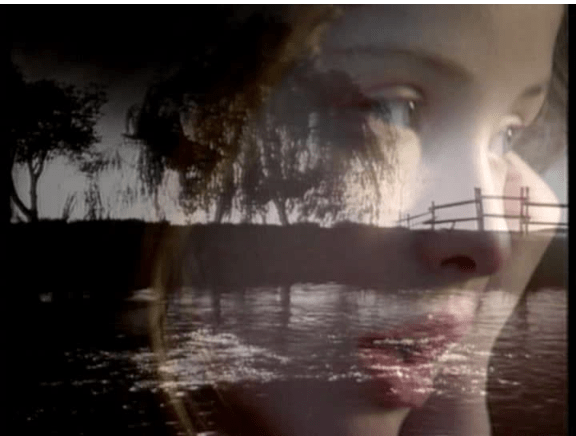
In 1932 Duvivier remade Poil de Carotte, the story of a freckled kid  nicknamed “Carrot Top” desperate to escape from his family. His mother Madame Lepic (Catherine Fonteney) is an abusive nag, while his father Monsieur Lepic (Harry Baur) is an absent-minded guardian who pays more attention to the newspaper than his children. What threatens to become a schmaltzy coming-of-age tale turns out to be much darker, as Carrot Top is not just exasperated by his family but driven to suicidal thoughts. Once again the wife and mother is depicted as a monster, heaping work and slaps on her defeated little boy. Duvivier depicts Carrot Top’s internal struggle through superimposition, turning a trip to feed the livestock into a harrowing encounter with ghosts, to nighttime arguments where Carrot Top’s multiple personalities argue the appropriate way to end his life. The contrast of idyllic farm landscapes with the cute kid’s death fantasies makes for an unusually unsettling kid’s movie. This mix of fairy tale and nightmare becomes most pronounced in a beautiful shot by a lake, where Carrot Top and his little girlfriend stand by the water. He tells her he cannot marry her because he is going to kill himself. She agrees it is the right decision.

duvivier00022 duvivier00021 duvivier00026

Death and love are again intertwined in La Tete d’un Homme (A Man‘s Head, 1933), an intense adaptation of the Georges Simenon novel (1931) of the same name (translated into English as A Battle of Nerves). The first Simenon film was Jean Renoir’s La Nuit du Carrefour (Night at the Crossroads, 1932), which I wrote about here. Harry Baur plays Commissioner Maigret, who is involved in the murder of an eccentric American millionaire. A gangly fool named Joseph Heurtin (Alexandre Rignault) left bloody foot and hand prints all over the scene of the crime, and is swiftly arrested. Maigret is convinced this poor simpleton has been framed for the job, so he allows Heurtin to escape, in the hopes of following him to his employer, the real killer. The path leads to the dissolute heir of the American’s fortune (Gaston Jacquet), his regal wife Gina  (Edna Reichberg), and a neurasthenic Czech named Radek (Valery Inkijnoff) who only has six months to live. With no motive other than a Raskolnikovian nihilism, Maigret is hard pressed to find any evidence to put Radek behind bars. Armand Thirard’s camera is again very mobile, exploring each space with a detective’s curiosity. In a cafe that is central to the murder plot, Thirard executes a 360 degree pan to inspect each face around the bar, a roll call of sorts for the investigation to come. There is also a resourceful use of back projection. A beat cop is canvassing for witnesses, and instead of cutting from one set-up to another, Duvivier has the policeman stand in one spot while the back projected image cuts between locations instead. I’ve never seen anything like it, and it conveys the idea that the city is contorting itself to serve the police – the investigation somehow changes the face of the urban space. The only one who can resist this power is Radek – who Valery Inkijnoff embodies with a charismatic disdain. Radek, under investigation for murder, is a guy who will refuse to pay a bill just so he can waste the police’s time. Counting the days until he dies from a mysterious disease, he wants to make his mark before he goes. Maigret’s whole existence depends on erasing these marks, but Radek cuts deep, and the incantatory closing scenes are a delirious mixture of extreme close-ups, a back projected light show, and the revelation of a passion that seems to be wasting Radek from within.

duvivier00033

The last film in the set, Un Carnet de Bal (Dance Card, 1937), was released the same year as Pepe le Moko, and was a huge hit that year. Utilizing the portmanteau structure he would return to often (Tales of Manhattan, Flesh and Fantasy), it is a melancholy trip through a widow’s past. Christine (Marie Bell) is recovering from her husband’s death, and reminiscing about her youth. She recalls her first ballroom dance when she was sixteen, and the diverse group of suitors who once declared their love to her, and whom she rejected. In order to close out the narratives from her past and open new futures, she decides to visit all the men on her dance card from that night. They include a criminal night club owner, a depressive priest, a one-eyed alcoholic, a magician barber, and a dead man who haunts his mother’s addled brain. Her memories all dissipate in the face of reality, and the dance she fetishizes so much she can see the shadows dancing on the wall of her bedroom, turn out to be nothing but phantoms. Duvivier is anticipating the late films of Max Ophuls here, with his twirling camera imitating a doomed waltz. At 130 minutes there are at least two too many vignettes – but this is a beautifully bittersweet film, anchored by Marie Bell’s sensitively crestfallen performance.

duvivier00030

These are only four films from the seventy he made in his extended career, but they all display a formidable visual intelligence, an atmosphere of doomed romanticism, and a bit of overwriting. La Tete d’un Homme, with that tight-as-a-drum Simenon plotting, would have to be my favorite in the Criterion set. These are films of lost or withheld love, of characters so deprived they mine their own past for any vein of compassion, usually coming up empty. Even Carrot Top is nostalgic, though only for the time before he was born. They are, at their core, about failure, something Duvivier felt deeply from his first and only appearance on stage – and that petrified emptiness seems to have went its way throughout his 1930s work, trailing an air of voluptuous resignation.

RENOIR NOIR: NIGHT AT THE CROSSROADS (1932)

September 9, 2014

LA NUIT DU CARREFOUR (1932)

“Every detail, every second of each shot makes La Nuit du carrefour [Night of the Crossroads] the only great French thriller, or rather, the greatest French adventure film of all.” -Jean-Luc Godard, Cahiers du Cinema (December 1957)

Night of the Crossroads was the first film adaptation of Georges Simenon’s phenomenally popular Inspector Maigret novels, and was lent a thick, hallucinatory atmosphere by director Jean Renoir. Yet, sandwiched as it is between Renoir’s classics with Michel Simon, La Chienne (1931) and Boudu Saved from Drowning (1932), it has escaped much serious critical attention. It does not even get an entry in Andre Bazin’s collected writings on Renoir. Anthology Film Archives arranged a very rare screening of the feature this past weekend, with Simenon’s son John in attendance to discuss the production beforehand. It’s a traditional whodunit, except all of the motivations are missing. Instead of attributing the crime to a single perpetrator, the whole town becomes culpable through their xenophobia and greed. As Renoir’s character Octave says in The Rules of the Game, “everyone has their reasons”. To that Night of the Crossroads would add, “for murder.”

La-nuit-du-carrefour-1932

This narrative opacity was originally attributed to missing reels. Godard wrote that Jean Mitry “lost three reels after shooting was completed.” Renoir was asked to confirm the rumor, and said, “It’s possible, but even at the time, you know, it wasn’t very clear. I don’t think anyone of us understood anything. Least of all me.” As Renoir implies, the legend is not necessarily true. In Richard Brody’s article on the film for The New Yorker, he reports that the “fragmentary construction” was due to “his running out of money during production.” The project was all improvising – working around the financial limitations. Andre Brunelin wrote that the production was “a business of make do and mend. Decor had to be made out of anything at hand, it was all painting and knock-up.” This was no unauthorized fly-by-night operation, however. It had full support of Georges Simenon, who was friends with Renoir and collaborated on the screenplay.

B607

The story concerns a murder in a small town outside Paris. A local insurance agent (Jean Gehret) discovers his car has been swapped with another. When the locals search the neighborhood, they find his vehicle with a corpse behind the wheel. It is stowed inside the garage of a Danish brother and sister who are already despised in the community for their eccentricity and foreignness. Inspector Maigret is brought in and stirs up all of the local resentments, putting more lives at stake.

carrefour01

It was shot from January – March of 1932, three weeks at a crossroads near Bouffemont, outside of Paris, and the remaining time at the Europa Films studio in Billancourt. The location was choked with fog and rain –  perfect for the tale of secret identities and cloaked motivations. Before the screening, John Simenon confirmed that his father approved of the project, and especially of the casting of Pierre Renoir, Jean’s brother, as Maigret. He had the right height and bearing, if not the described muscularity of the book’s Inspector. With his prominent widow’s peak and hawk like face, Pierre Renoir strikes a strange figure, one of bookish, watchful intensity. His role is an observer that lets the villagers stumble into their confessions. His main move is to listen attentively, his interrogation method one of waiting out silences. The Danish man is Carl, a gangly Frankenstein’s monster type with an appropriately ghastly artificial eye, who happens to paint commercial art for a living. He keeps house for his sister Else (Winna Winifried), a hothouse flower quick with come-ons. One of the more perverse shots has a her flirting with her pet tortoise in an overhead shot. Their house is a dusty catacomb of ash, useless tchotchkes, and secret hiding places. One of them slides open when Else leans in to to kiss a nonplussed Maigret. Her shoulder pushes a painting across the wall, revealing a bottle of Veronal and a gun.

nuit-du-carrefour-1932-cine-sonoro

The street is hidden in fog, drugs are secreted behind paintings, and whole backstories are missing because of the budget shortage. But this expository lack fits the whole theme of the film – one which renders the last act revelations truly surprising, since we don’t know who half the characters are. Renoir uses this chaotic situation to experiment with a variety of techniques. There are deep focus shots with characters posed in background doorways in windows, winding tracking shots executed by mounting cameras onto cars, and a grand experiments in sound, in which audio acts as a kind of metronome. In his interrogations, Maigret knows the time is up when his empty glass is filled up by his dripping office faucet. To compress the time of the original investigation, Renoir cuts back and forth from Maigret running down leads to shots of commuters feet shuffling in front of a newspaper vendor. Their yelling out of “Morning edition!”, “Afternoon edition!” and “Evening news!” keeps the timing down. The abstracted shot of legs is then rhymed later with the hidden assailant, seen as a pair of feet stomping through mud puddles, and as an arm placing a poisoned beer onto a table. Some of these spy game machinations recall Feuillade, which Renoir was undoubtedly familiar with, though on a much simpler scale.

nuit-du-carrefour-1932-02-g


Renoir also had the advantage of more mobile cameras, and he used them to the fullest extent. There is a camera-mounted car chase sequence of unbelievable beauty. All is shrouded in darkness as two Model-Ts chase each other around the turns, the brightest illumination provided by the exploding muzzles of gunfire. It is thrilling to be plunged into darkness, and felt like I was riding Space Mountain at Disney World for the first time. Except this thrill is not a celebration of modernity, but a resigned condemnation of it. All of the town is implicated in the murder. The bourgeois insurance company family , the artistically inclined Danes and the group of working class mechanics all pursued their self-interest into criminality.Maigret offers some hope – telling Else, “in two years [of jail time] you will be truly free.” Though what she will do with that freedom is seriously in doubt. All Maigret can do is grin and bear it, and wait for the next case.

FATHER AND SON: THE WATCHMAKER OF ST. PAUL (1974)

July 1, 2014

6147watchmakerOPT

The last outpost of the retail cinephile shrine Kim’s Video is shutting down this year. I made one last pilgrimage to its lower east side redoubt in NYC to experience the disappearing pleasure of browsing. The simpleminded algorithms at Amazon and Netflix want to give you more of the same, regurgitating films from the same genre, actor or director. What they miss is the pleasure of turning down an aisle and entering a different world. I had no title in mind when walking in, only knowing I needed to make one last purchase before Kim’s was replaced by an upscale frogurt shop or whatever. At first I pawed the BFI DVD of E.A. Dupont’s Piccadilly (1929), the raucous silent starring Anna May Wong. Netflix’s “More like Piccadilly” section offered random unrelated silents, from Chaplin to Pickford, while Amazon’s slightly more helpful recommendations were a Wong biography and a few of her films on public domain DVD. At Kim’s, in the Region 2 DVD section, I stumbled upon Bertrand Tavernier’s debut feature The Watchmaker of St. Paul (1974, aka The Clockmaker). I have had Tavernier idly on the mind for a few years, as I have much admired his last two features (The Princess of Montpensier and The French Minister) while being mostly unacquainted with his earlier work. Thus I gently placed Piccadilly on the shelf, and brought The Watchmaker of St. Paul to the knowledgeable cashier, who had seen a screening of the film at Anthology Film Archives, though seemed underwhelmed. The clerks at Kim’s had a reputation for being snotty, but I’ve always found them to be remarkably informed and helpful – though perhaps they could spot that I was one of their own grubby tribe.

The_Clockmaker_of_St_Paul_AKA_The_Watchmaker_of_Saint_Paul-396714396-large

Born in Lyon, France in 1941, Bertrand Tavernier was a movie-mad youth who soaked up projector rays in repertory houses, preferring the American Westerns and melodramas of William Wellman, Delmer Daves, and other unsung Hollywood directors. A writer for his student paper, he interviewed Jean-Pierre Melville, who was so impressed with Tavernier that he hired him to be his assistant director on Leon Morin, Priest (1961), which let him drop law school for cinema. Tavernier called Melville his “godfather in film.”:

He would give me an appointment, and he’d show up four hours late. Then he’d arrive in his big convertible Cadillac, with electric windows, and driving through Paris telling stories about the French underground, the resistance, showing you where famous gangsters had been killed. He’d take me to dinner, take me to films, and he’d keep me up all night, because Melville could not sleep.

Melville re-assigned Tavernier from assistant director to press agent, a job in which he went on to promote numerous members of the French New Wave on the films of Godard, Chabrol and Varda, among others. He spent years learning the business as a publicist and as a critic. Starting around 1960 he began contributing regularly to Positif and Cahiers du Cinema, a run I would dearly like to see translated into English, if this bibliography is any way accurate. He would go on to write comprehensive tomes on Hollywood, first with Jean-Pierre Coursodon in 50 ans de cinéma américain (never translated into English) and his massive book of director interviews Amis américains (ditto).

1917WatchmakerOPT

In an interview included on the Optimum DVD I purchased, Tavernier said he waited until 1974 to make his debut feature because he “needed to learn about life.” His first project would be an adaptation of the Georges Simenon novel The Watchmaker of Everton (1954). It tells the story of a habitually-minded watchmaker in a small town in New York State whose son is suddenly wanted for murder. In a 1974 interview Tavernier claimed that the novel had grabbed his attention with the father’s line, “I stand behind my son”, during a murder trial. Despite their estranged and non-communicative relationship, the strange familial bond forces the father to veer out of his etched path and express his emotions. At this time Tavernier was a loosely affiliated member of the OCI (Organisation Communiste Internationaliste), and reconfigures the plot to express contemporary political concerns. He would quit the organisation by 1976, fed up by the Stalinist factions “rigid and totally reactionary rules”. The Watchmaker of St. Paul  changes Simenon’s murder victim from an anonymous motorist to a thuggish factory manager who may have abused the son’s girlfriend. The son is then used as a political tool by both the publicity machines of the left and right, though the boy’s act ultimately seems to be one of less of politics than of passion. The story’s focus is on how the father Michel Descombes (Philippe Noiret) processes his son Bernard’s act, and how he comes to “stand by” him, despite the emotional gulf that separates them. The film also stands as a documentary of Lyon in 1974, the film being shot on the streets and inside the courtrooms of Tavernier’s home city. It is distinctly an insider’s view of town, focusing on the side streets and alleyways that one treasures of home, the places not shared by the wider city at large.

6710bwatchmakerOPT

Tavernier is a committed progressive, but he often look into the past for aesthetic inspiration. He hired Pierre Bost and Jean Aurenche to write the screenplay for The Watchmaker of St. Paul, two of the central figures in France’s 1940s-1950s “cinema of quality” that Truffaut eviscerated in his “A Certain Tendency of the French Cinema” broadside, in which he said Aurenche and Bost “have made the works they adapt insipid”. With the rise of the New Wave, the duo of Aurenche and Bost (Forbidden Games) had stopped receiving work in features. Tavernier claims he was making no point in hiring them, just that they were the best men for the job.  His decision was also based on his experience as a press agent, when he decided he would “avoid all the people who were fashionable”, since they were so busy they could devote little time to each project. The generation gap between Tavernier and the two screenwriters would match that of the father and son, and that tension would be appropriate for the material. It would also fit a line Billy Wilder had told him, that the “screenwriter should be the minister of opposition.” Each line should be a battle. Bost passed away soon after The Watchmaker, but Aurenche would go on to be Tavernier’s minister of opposition on three more films.

horloger-de-saint-paul-73-7-g

The Watchmaker of St. Paul is an intricate, multi-layered and tactile thing. It is anchored by Philippe Noiret, who made the film possible. His presence attracted funding, and he cut his salary in half to lower the budget. When Tavernier asked him later on why he chose to help, Noiret responded, “I gave you my word.” As the father in Watchmaker, Noiret is not that upright and just. Noiret plays Descombes as a watchful outsider, taking seats at ends of tables and joining conversations instead of starting them. He prefers to circulate than to be centered, and Noiret emphasizes the character’s ungainliness and uncertainty. He says very little, and usually regrets what he does say. His opposite number is the investigator Guilboud (Jean Rochefort), a dashing, drily witty intellectual who offers a self-satisfied smile when he correctly attributes a quote by Paul Claudel. Guilboud is nevertheless attracted to Descombes for the insights he may have into the opaque actions of the younger generation. Each older man is baffled by the rhetoric of revolt. Guilboud sees it as a fad, or a phase – burning cars as the fashionable new thing. Descombes comes to a deeper understanding, or at least a detente, with his preternaturally calm Bernard. He is sickened by Guilboud’s condescension, disheartened by the manipulations of the legal system, and suffused with love. Descombes stands by his son.

THE HAND THAT ERASES: JEAN-LUC GODARD’S HISTOIRE(S) DU CINEMA (1988 – 1998)

Originally published at Movie Morlocks, the official blog of Turner Classic Movies

December 6, 2011

histoire

It is now possible to hold Jean-Luc Godard’s Histoire(s) du Cinema in your hand, after remaining a rumor in the years following its completion in 1998. It was caught in a snarl of copyright issues that lasted almost as long as the ten years it took Godard to make it, with Gaumont not able to clear the fusillade of music and film rights until 2007. Olive Films took the gamble to license the film for a U.S. DVD release, and now Godard’s grand cinematic convulsion can finally be grappled with in the relative privacy of your mortgaged home, starting today.

One of the first on-screen texts reads, “May Every Eye Negotiate For Itself”, and that is as good a guide as any for this deeply idiosyncratic history of moving images, which is also, per Godard, necessarily a history of the 20th Century. Throughout the 8 episodes (totaling 266 minutes), Godard provides densely and playfully layered super-impositions of film clips, paintings, newsreels, texts and voice-overs, attempting to create a dialogue between art and history, word and image. It is an overwhelming torrent of cultural material, which the viewer has to navigate for themselves. Approach with a computer close at hand (a necessity here to look up quotes and historical figures), and let your eyes wander, finding your own way through Godard’s argumentative thickets and ecstatic epiphanies.

I found my way in through pictures of hands. In Part 1 (Episode 1A: All the (H)istories), Godard slows down a shot from Fritz Lang’s M, in which a concerned citizen writes the eponymous chalked letter on his palm, which he will later smack on the back of Peter Lorre’s child murderer. The citizen discreetly wipes off his hand afterward. Layered over the image of this close-up is a paraphrased quote from 13th century mystic Meister Eckhart: “Only the hand that erases can write”. Godard lops off the last two words, “the truth”, not one to deal with absolutes. In its immediate context Godard uses this gnomic quote to express how works of art are capable of erasing their subjects. Who remembers the actual bombed landscape of a Basque town? It is only Picasso’s Guernica that lives on in cultural memory. Or, Godard continues, we forget Valentin Feldman (a French Resistance fighter executed in 1942) but remember Goya’s etchings and paintings of prisoners. In Part 7 (Episode 4A: The Control of the Universe) he spins a similar argument about Hitchcock’s work, that he was able to turn “shapes into style”, imbuing everyday objects with uncanny power. Godard claims we forget Ingrid Bergman’s motivations in Notorious, but remember the champagne bottle and key. The latter is arguable, but continues to set up the larger point of artistic erasure. All of it leads to the essential failure of the 20th century, of how the world, and the art inside of it, could not put a stop to the Holocaust.

Near the close of Part 1 (Episode 1A), Godard drops one of his most famous and controversial statements: “If George Stevens hadn’t used the first 16mm color film in Auschwitz and Ravensbruck, Elizabeth Taylor’s happiness would never have found a place in the sun.” After this statement, he superimposes Taylor over footage from the Holocaust, and then, in the middle of a devotional painting, with an image of Mary reaching her arms downward toward Liz. A bitterly ironic and startlingly beautiful image, as Taylor’s star power ascends to the heavens, with the image of the camps dissolving behind her. Godard has Stevens and Taylor commit the ultimate erasure.

As Mary’s hands grace downward in an embrace of the great Hollywood star, Part 2 (Episode 1B: A Single History) documents fissures and separations, cinema as the “history of loneliness/loneliness of history”. The defining image of hands here is a desiccated Giacometti figure; fingers pointed rightward, which dissolves into the human hand of a prisoner, touching the ground.  This segment begins with a flash of Gauguin’s painting of a French Polynesian woman, artist and subject separated by a wide gulf of race and culture. Godard then layers images of cinema’s capacity for depicting solitude, including clips from Victor Sjostrom’s The Wind and a long excerpt of Jennifer Jones crawling in the desert in Duel in the Sun. Images of people boxed in and controlled, the camera frame as prison.

Godard opens things up in Part 3 (Episode 2A: Only Cinema), which concerns itself with the technological wonder of cinema – what makes it unique. It opens with images of eyes, a woman at a microscope, a man behind a camera, and a giant Cyclops. Godard tries to provide context to these images, giving a disquisition on French mathematician and engineer Jean-Victor Poncelet, who provided the groundwork for projective geometry while inside a Moscow prison. Godard extrapolates that he came up with the “mechanical application of the principles of projection”, giving a scientific backing behind the microscope and camera, and provides a correlative to the Cyclops by using a long clip of the canoe ride The Night of The Hunter, including a shot of the monstrous Robert Mitchum performance. Godard has Julie Delpy, shown puttering around her Paris apartment, reading Baudelaire’s “The Voyage” over the clip from the Laughton film, which suitably enhances the movie’s infernal beauty. She reads, “The world is equal to the child’s desire, who plays with pictures by his nursery fire.”

It is with Part 4 (Episode 2B: Fatal Beauty) that Godard returns to the theme of an art that annihilates. Here it is the way men have devoured women in the arts over the centuries. In a discomfitingly funny bit, Godard is shirtless during this segment, wearing a tinted visor and smoking his ever-present cigar, looking like a dissolute Hollywood producer, as, I’m sure, he intended. It begins with a montage of women running and falling, from Shirley MacLaine in Some Came Running to Anna Magnani in Rome, Open City, with a return performance by Jennifer Jones in Duel in the Sun. He ends this flurry with a return to the shot from M, and the art that erases, this time of feminine subjectivity. Returning to the theme of erasure, means a return to the horrors of the Holocaust. Godard speaks: “And Friedrich Murnau and Karl Freund. They invented the Nuremberg lighting, when Hitler couldn’t even afford a beer at a Munich café. With his table lamp casting a sufficiently Germanic shadow on the wall he says, “Dirty Hands.” This is an allusive reference to Siegfried Kracauer’s cultural study From Caligari to Hitler, which drew a line between German Expressionism and Nazism. Images of Conrad Veidt in The Hands of Orlac flash by, followed by the text, “Think With the Hands”. In that movie, Veidt’s hands are transplanted from a killer, and he fears those hands might think to kill again.

This thought manifests itself differently in Part 7 (Episode 4A: The Control of the Universe), in which Godard shows an image of two hands reaching towards each other into a clasp. Over this, he says, “The spirit is only real when it manifests itself, and it manifests through the hand. Love is the epitome of the spirit. And the love of one’s fellow man is an act. Which means a hand held out. Not a covered feeling. An ideal that crosses on the road to Jericho, in front of the man robbed by bandits.” This is a hopeful vision of Palestinian-Israeli amity, the current crisis that he cannot allow art to erase. It anticipates a similar image of trapeze artists joining bodies in a segment on Palestine in Film Socialisme (2010), indicating that no matter how much art has failed him, he still stubbornly dreams of its triumph, of a hand that restores:

“If a man walked thru paradise in his dream, and received a flower as a sign of his visit, and found the flower in his hand when he woke up, what can we say? I was this man.”

THE PROLIFERATING FICTIONS OF RAÚL RUIZ

August 30, 2011

Screen Shot 2020-01-31 at 3.44.57 PM

“In true travel, what matters are the magical accidents, the discoveries, the inexplicable wonders and the wasted time.” -Raúl Ruiz, paraphrasing Serge Daney in Poetics of Cinema

No director wasted time more spectacularly than Raúl Ruiz, who passed away last week at the age of 70. The restively prolific Chilean, who fled to Paris after Augusto Pinochet’s rise to power, made over 100 films, and was working on two at the time of his death (the Australian film journal Rouge compiled an invaluable annotated filmography through 2005). Obsessed with the multiplicative nature of storytelling, his work branched narratives, opened up parallel worlds and rendered dreams more real than reality. They often feel like a serial drama happening all at once, the plot twists layered one on top of the other in a dissolve or superimposition. Raised on robust American trash like Flash Gordon, Ruiz’s films are overflowing with wild incident (he later wrote scripts for the brash anti-realism of Mexican telenovelas). He embraced their  irruptions of logical narrative order, and also found delight in the “mistakes” of higher-budgeted productions :

For years I watched so-called Greco-Latin films (toga flicks, with early Christians devoured by lions, emperors in love, and so on). My only interest in those films was to catch sight of planes and helicopters in the background, to discover the eternal DC6 crossing the sky during Ben Hur’s final race, Cleopatra’s naval battle, or the Quo Vadis banquets. That was my particular fetish, my only interest. For me all those films, the innumerable tales of Greco-Latinity, all partook of the single story of a DC6 flying discreetly from one film to the next.

Ruiz always followed the plane, that is, he let the image determine the story, rather than vice versa. If a plane entered the frame, that dictated that a new tale had to be written: “It [the image-situation] serves as a bridge, an airport, for the multiple films that will coexist in the film that is finally seen.”

Ruiz did not emerge with this theoretical grounding in place, however. In watching a few of his early works, the influence of Neorealism and the American Independent Film of Cassavetes comes through stronger than Flash Gordon. His first short film, La Maleta (The Suitcase, 1963) is a grim Kafkaesque tale revealing a violently competitive Chilean society. It was presumed lost, but resurfaced at the 2008 Valdivia Film Festival, re-edited by Ruiz. It follows a gaunt silent man as he cleans up his spartan apartment. Ruiz follows him in tight handheld 16mm shots, registering the actor’s perpetually sour visage. He cheerlessly labors with unintelligible grunts (there is almost no dialogue), hauling a trunk on his back to another grim-looking room. Ruiz reveals another sallow businessman trapped inside the case, who then exacts an ironic revenge for his unusual imprisonment. There is one Ruizian moment within this social commentary, though, involving human experimentation with plastic tubing and water bubbles. This eruption of an inexplicable dream-image presages his bolder leaps from narrative.

His first feature, Los Tres Tristes Tigres (Three Sad Tigers, 1968), named after a Spanish tongue-twister, continues the handheld, back to the street aesthetic. It follows Tito (Nelson Villagra), a lower middle-class hustler who pimps out his sister Amanda (Shenda Roman) while doing errands for a struggling real estate developer. This is a hang-out movie, with Ruiz clearly influenced by Cassavetes’ Shadows (1959). Tito and Amanda stumble around Santiago, setting up men to fall for Amanda’s charms while failing at landing any bigger scores. The loose structure allows Ruiz to string together a series of short stories, a more straightforward version of his later re-combinatory approach to storytelling. There is also a striking scene at a strip club, in which empty bottles cover the floor, and Tito’s drunken friend instructs the lighting guy to direct his lamp towards this field of debauchery. The bottles are too intricately arranged to be natural, a shot of pure artifice in this otherwise “realist” drama. It won the Golden Leopard at the 1969 Locarno Film Festival, and the unvarnished performances of the two leads still effectively bear witness to the wounds of everyday disappointments.

After the CIA-aided overthrow of Salvador Allende in 1973, Ruiz moved to Paris, where he would continue to elaborate his theories of storytelling. I have only managed a glancing familiarity with his work (having seen 9 of his wide-ranging corpus), but the trio of Hypothesis of a Stolen Painting (1978), Three Crowns of the Sailor (1982) and City of Pirates (1983) seem to give full flowering to his experiments in narrative fracturing. Hypothesis was made for French television, and is on the surface a parody of stuffy masterpiece gazing (the on-air host, Jean Rougeul, falls asleep at one point), but becomes an elaborately proliferating mystery. That is, Ruiz, along with writer/artist Pierre Klossowski, invented a painter (Tonnerre) and his cycle of historical canvases, which contain a puzzle that Rougeul and an anonymous announcer try to solve. Re-enacting the paintings with live models, secret patterns emerge. Rougeul urges that the only way to see them is to ignore the story and simply examine the image, which reveals hidden symbols and matching gestures in the un-looked at segments of the frame. The visible narratives of the painting mutate under each inspection, revealing troubling absences and cloudy motivations in each composition. One of Tonnerre’s works has been stolen however, thus much of the mystery is speculative, and thereby unreliable.

The narrator of Three Crowns of the Sailor is equally unreliable. Ruiz took the stories of his merchant seaman father, Coleridge’s “The Rime of the Ancient Mariner” and Erich Maria Remarque’s “A Night in Lisbon” and placed his Sailor (Jean-Bernard Guillard) as the protagonist of all of them. The Sailor cannot re-board his beloved phantom ship, the Funchalense, until he receives three Danish crowns. He intends to earn them from Tadeusz, a theological student who has just murdered his teacher and is eager to leave the country. The Sailor will grant him passage if Tadeusz will listen to the story of his life, leading up to his requesting of the crowns. What ensues is a convulsion of myth and bullshit and braggadocio, as the logorrheic Sailor recounts his adventures with whores, reverse-aging doctors and men who sweat worms. The various stories overlap, details leaching from one to the next. The Sailor even tells a variation in which he dies in a car crash. The stories are shot in rich candy colors, while the present day scenes are shot in Bela Tarr black and white. Ruiz develops a fun house visual style that uses extreme foreground close-ups in between his already-patented circling tracking shots. Faces loom absurdly large, the lines in their faces as prominent as the waves in the sea, human folly and imagination shaping the world to their own ends.

While Three Crowns is still moored in reality because of its flashback structure, City of Pirates proceeds entirely on dream logic, with the images dictating the story. It is the purest example of Ruiz’s approach to cinema that I’ve seen. The centering force is Isidore (Anne Alvaro), a wide-eyed, perpetually perplexed woman who drifts through landscapes like Maya Deren in Meshes in the Afternoon. She is first seen as part of a family unit, in a resort house by the sea. Images of the uncanny abound, including a ball that can hear, a séance that summons the police, and a POV shot from inside her dad’s mouth. This pileup of unnatural visuals unsettles Isidore, and she desires escape. After she does an I Walked With a Zombie stutter down the seaside, she elopes with a serial-killing Peter Pan who becomes her fiance. His face is angelic, so his story is irrelevant. She floats with him through white laundry and into the Isle of Pirates, where again her reverie breaks down and she must confront images of imprisonment and decay. Shot in soft, glowing pastels by Acacio de Almeida, and with Ruiz slowing down the pace to a REM sleep crawl, it’s a film that will live in your dreams.

One of his more approachable puzzle boxes (albeit at 4 hours and 20 minutes) is Mysteries of Lisbonin theaters now,  a grand melodrama about an orphan’s convoluted parentage.  Adapting the 1852 Portuguese novel by Camilo Castelo Branco (also a favorite of Manoel de Oliveira, who put Branco’s Doomed Love on screen), Ruiz stays within a stable narrative world, but it is a world of constantly shifting identities and slippery truths, changing with each character’s perspective. Joao is the child in search of his parents, the result of a forbidden union in the aristocracy. This act instigates a cascade of conspiracies, kidnappings and murder that has reverberations over thirty years. Mini-dramas open up inside the grand narrative, digressions within digressions, where Ruiz can have his play with story and reveal his characters as constructions, their personalities cogs in the story-machine. Father Denis (Adriano Luz) acquires no less than three of his own – to prolong the story and his own survival. Mysteries of Lisbon is an expansion of similar ideas he explored in his Proust adaptation, Time Regained (1999), which also pushes his restlessly arcing camera around characters of brittle and fungible identities.

The loss of Raúl Ruiz is an immeasurable one, and the sole consolation is the presence of more new Ruiz movies. Before his untimely death, he had completed La noche de enfrente (The Night Ahead), which, according to Screen Daily, is “a Chile-set film inspired by his childhood.” Whether or not this is his last film to be discovered, his work is inexhaustible, revealing as it does the secret life of stories, the forking paths tales could proceed down, each leading to a parallel world. Instead of taking the road less traveled, he took them all.