Muscle Memory: Heidi Moneymaker of 87Eleven Action Design Traces the Moves Behind the Stunts

Originally Published in the January-February 2018 issue of Film Comment

By R. Emmet Sweeney

The stunt studio 87Eleven has transformed the way action is produced in Hollywood. Formed in 2004 by future John Wick filmmakers and former stuntmen Chad Stahelski and David Leitch, it has become a one-stop shop that combines choreography, physical training, stuntwork, and second-unit filming. For them stunts are storytelling by other means, so they emphasize learning cinematography along with jiujitsu (they are now also a production company). It is something they took from working for choreographer Yuen Woo-ping on The Matrix, bringing the Hong Kong style to Hollywood in a more systematic way–an influence made clear in their celebrated gun-fu nightclub shootout in the first John Wick. Heidi Moneymaker is the only female member of the 87Eleven team, a gymnast who parlayed her athleticism–and some study of Tony Jaa movies–into a career as a stuntwoman. She has been Scarlett Johansson’s stunt double since Iron Man 2, and she spoke to Film Comment about her life of haymakers, lucha libre, and car crashes.

Can you take us through the process for working on an action sequence in a film?

Generally you come in early on with the fight coordinators. Sometimes we spend months designing a sequence [only] to have it changed last minute. It is hard to throw two months of work out the window and create something just as good on the fly, unless you are already prepared. Luckily, a lot of times I’ve worked with people for a long time, and they give me a lot of leeway to give my input and to help with the character, because I have a background and set of talents that fight coordinators who aren’t gymnasts don’t have.

With the Marvel movies I’m usually brought in months in advance, and we read the script and go over the fights and collaborate for weeks and weeks and weeks until they’re perfect. With John Wick 2, I originally came in earlier in the movie for a different squence, and then that sequence got cut, and we moved to reshoots to do that whole sequence at the end with the violin fight. I was there for a week, worked with Keanu a bit, running the choreography back and forth. Pretty straightforward stuff. Keanu is so trained and well-prepared that he can pick things up really fast.

How much do you have to study the actor you are performing stunts for?

You definitely adapt to the way that the actor moves. I’ve been working with Scarlett Johannson since 2009, so I have had a lot of chances to be with her and watch how she talks and how she moves, walks, and runs, and how she stands. With Ruby Rose [in John Wick: Chapter 2] I didn’t have much time, only a few weeks, and luckily she had a pretty good boxing background, so she had strong movements which were easier for me to copy. Every time we’re on set standing around, or you see the actor moving around inside a scene, you really do want to pay attention and become one with their character too.

For Iron Man 2, I was hired by Tom Harper, the stunt coordinator, to come in and double Scarlett. He brought in me and another really good stuntwoman and gave Scarlett the choice: “Who do you think would be a better double? They’re both great, they both can handle it.” She decided I would work for her. We had a great relationship on that film, and we moved onto The Avengers. Now it’s just seamless.

What skills have you learned specifically for a film?

When I first started doubling Scarlett, the style of fighting we were doing there was definitely new. Some of it was based off of Mexican wrestling, lucha libre stuff, and after that, I got into judo and jiujitsu, something very similar to what we were doing with Black Widow. There are a lot of moves where she is running and swinging around people and throwing them down on the ground. Like a jungle gym basically, if you go on YouTube and type in “lucha libre” and you watch Mexican wrestling, they’re doing a lot of those moves. We’d go take a look at them and then alter them for the fight, and do stuff that’s inspired by some of those moves. They became the “Widow moves.” Usually we have at least one or two perfight or per movie. On Captain America: Civil War I have a couple of those moves at the beginning of the opening sequence in Lagos. I jump onto one guy and squeeze him with my legs and I swing around upside down and grab the other guy and throw them both.

If there’s a different style of martial arts or fighting, it’s something you should be working on. When a film comes up like The Hunger Games, for example, which 87Eleven did, Katniss has a bow and arrow so we all got bows and arrows and started shooting with them. For The Lone Ranger I did a sequence in a hoop, like an acro hoop that’s hanging from the ceiling.

Have any stunts made you nervous?

You get a little adrenaline. Mostly I want to make sure I make the stunt look amazing and I don’t want to ruin the shot. And not all directors do a lot of takes on things, so you might only get one or two tries. I definitely had nerves in the days building up to the stunt where I flipped a car with a cannon in it, for The Host with Saoirse Ronan. It was the first time I’d ever done it. It was a big deal. There was the potential for myself and for others to get hurt seriously. Luckily we had a lot of rehearsal time, and I felt confident in the roll cage and the cannon.

I am really proud of the car flip. One of my favorite stunts I’ve ever done. Basically she’s driving down the road in the middle of the desert. In the movie it’s like she’s schizophrenic–whoever is talking to her inside her head is telling her to turn around. She’s pulling the steering wheel back and forth and back and forth, and at the end she veers off the road and flips the car four times in the desert. That’s the actual storyline. I basically drove down the road and I threw a 45 [-degree turn] at my mark and hit a button, and there’s a cannon down at my back and it flipped my car up in the air. I flipped four times. And I came out of it OK and we got the shot and no one got hurt.

What about working with CGI? Is it hard to fight something that’s not there in front of you?

It’s fine. If you’re fighting somebody that’s not there, it’s like doing a martial arts kata [movement practice], so it’s not the worst thing in the world. Usually when you have someone in front of you, you’re feeding off their energy. Sometimes when I’m jumping on people and swinging around them, the things I do in the Marvel stuff, it’s harder, because you really do need someone physically there.

Growing up, did you admire certain action scenes, or was this something you came to later in life?

One of my favorite characters ever is the character Linda Hamilton played in Terminator 2. I remember watching that movie and just thinking, “Wow, this woman is a badass.” You felt it. I saw a woman doing pull-ups. I don’t know how old I was back then, I was young, but I did pull-ups, I was a gymnast, and I didn’t know any other women who could do pull-ups and were that physically strong. I just remember thinking, “She’s amazing, I want to be like her.” I liked action films for sure. When I was really little, I remember watching The Bionic Woman, Wonder Woman–I remember gravitating toward those women who were really strong physically.

How would you describe your style?

I like to think of it as grace meets strength.. I like the idea of women being strong but also graceful, like a ballerina, having that rhythm and flow. Not just the brute strength.
List: The Five Greatest Pratfalls of 2008

By R. Emmet Sweeney

IFC News

December 30th, 2008

A pratfall can be a work of art, a study in disruptive motion, a klutz’s ballet. This choreography of humiliation is perhaps the least garlanded act in contemporary film, as no Oscars will ever be won for kicks to the groin or tumbles down the stairs, regardless of their originality. Only in retrospect have the golden slapstick silents gained credibility and the brilliant purveyors of today’s guffaws are suffering the same critical fate (although the hurt, it must be said, is not felt in their checkbooks). So here is my list of the top five pratfalls of 2008, some of the strongest and strangest feats from an otherwise lackluster year. Some are from masters of the form (Will Ferrell, Anna Faris), while others seamlessly blend the side-splitting spill into their respective and respectable narratives (Robert Downey Jr., Mathieu Amalric, Pixar). All show a clumsy physical grace (as do their stuntmen), a healthy respect for their audience and a blissful embrace of the stupid. (Click on the images below to see them full size.)

1. “WALL-E”
Directed by Andrew Stanton
Pratfall: Handholding Gone Wrong

“WALL-E” is packed with brilliantly conceived falls, but my favorite is perhaps the smallest, and its bittersweet tragedy is worthy of Chaplin. It occurs after our trash-compacting tramp’s beloved Eve begins hibernating, and he tries everything in his power to wake her up. After surviving lightning strikes and shopping cart attacks, he’s determined to get romantic with the fembot, conscious or not. He leashes her with Christmas lights and rows her through a river of sludge to a prime sunset viewing spot. With visions of “Hello Dolly”‘s handholding climax in his CPU, he pries open her arm slot and grabs for dear life. Then her arm snaps back, pinning his hand inside her body’s shell. As he tries to pull himself out, he tumbles off the bench and crashes into a neighboring garbage can. It’s a quick, painfully funny gag that effortlessly encapsulates WALL-E’s innocent, desperate loneliness.

2. “Step Brothers”
Directed by Adam McKay
Pratfall: Christmas Eve Sleepwalking

Sure to be the bane of sober-minded critics for decades to come, the works of Adam McKay and Will Ferrell are unabashed odes to anarchy that have consistently been dismissed for their immaturity and childishness. “Step Brothers” literalizes this complaint, presenting Ferrell and John C. Reilly as man-children joined by their parents’ remarriage, and it’s by far their most surreal and senseless (in the best sense) work. In one of the film’s many improvised sequences, these already regressive brothers are shown sleepwalking on Christmas Eve, shouting gibberish and piling presents in their parents’ bedroom, before finally hoisting the tree and shoving it onto the bed. By this point, their increasingly aggrieved father, played with manic glee by Richard Jenkins, vows to wake them up out of their hysteria. Bad move. The two sons turn barbaric, screaming and clawing at their father until they aggressively toss him down the stairs. André Breton would approve.

3. “A Christmas Tale”
Directed by Arnaud Desplechin
Pratfall: Henri’s Curbside Face-plant

Mathieu Amalric creates a strange kind of alchemy with director Arnaud Desplechin, turning despicable characters into adorable eccentrics — a coup achieved in “Kings & Queen” and now “A Christmas Tale.” Amalric’s Henri Vuillard is a loudmouth drunk who’s been banished from his family by an uptight sister. At his lowest ebb, walking tipsily down an abandoned sidewalk and softly muttering to himself, he pauses at the edge of the curb, staring into his own private abyss. He slowly tips forward, until, in a long shot, he falls face first into the pavement, his back ramrod straight all the way down. He later learns to unload his bile with a smile on his face, like the rest of the Vuillards, but this wonderfully depressing acrobatic feat is an apt representation of the psychological hole he’s fallen into and can’t escape, but which he later cleverly redecorates.

4. “The House Bunny”
Directed by Fred Wolf
Pratfall: Header in Outdoor Café

In an attempt to look smart for her nice guy crush, Anna Faris’ ex-Playboy Bunny hits the books, dresses conservatively and dons Coke bottle glasses that bug her eyes out to Tex Avery proportions. Working off notecards, she dishes on nuclear proliferation before knocking tea onto her date’s lap. A little woozy from her non-prescription specs, she gets up for napkins but then takes a header over the nearest table and smacks her crown again while standing up, unexpectedly finding a thick rope of gum affixed to her head in the process. As she races shamefacedly away after apologizing for “all that gravity,” the gum snaps as the chew flails to the ground. It’s another fearless, hilarious performance from Faris, whose breathy, wide-eyed and aging ingénue provokes pity, fear and admiration, usually at the same time.

5. “Iron Man”
Directed by Jon Favreau
Pratfall: Iron Man Armor Mishaps

Jon Favreau, emerging as an ace director-for-hire, wisely gave Robert Downey Jr. plenty of latitude to riff on his signature snarky motormouth persona in “Iron Man,” providing an oasis of comic invention in this otherwise rote superhero saga. The peak of this improvisation is a well-crafted, slow-burning series of pratfalls as Downey’s Tony Stark is testing his new and improved Iron Man armor. After instructing his robot-arm buddy to watch for a flameout, Stark’s first attempt at flight rockets him into the ceiling and then to the floor — and his robotic fire marshal is quick on the extinguisher trigger. After threatening his mechanical assistant with the prospect of community college, Stark’s second attempt is moderately successful aside from some light charring of his vintage car collection. With the final trial, he speeds outdoors in full regalia, a triumphant moment and a cue to expect an action extravaganza to begin. But upon returning home, he crash-lands in his spacious abode, destroying three floors, a grand piano, and a luxury car in his lab. And in the final humiliation, he’s pathetically blasted with the fire extinguisher by his downtrodden mechanical pal. With a tight structure (the callback of the cars and extinguisher), canny timing, and sneaky misdirection in the final section, the sequence could stand on its own as a slapstick sci-fi comedy short.

2007: The Five Best Retreads

By R. Emmet Sweeney

IFC News

December 17th, 2007

Every year a slew of newspapers run trend pieces about the lack of originality in Hollywood, citing the flood of remakes and sequels. This year, the blathering reached a numbing level of regularity — as if recycling material hasn’t been the backbone of Hollywood and every other mixture of art and commerce from time immemorial. From the silent period when film serials were the rage, whether it be “The Perils of Pauline” to “Les Vampires,” to the “Charlie Chan” and “Mr. Moto” cycles of the 1930s, the “Thin Man” films of the 1940s, and all the way up to the James Bonds and Jason Bournes of today — the film business is built on regurgitation — and the key is in how it is presented rather than what. There were plenty of imaginative retreads this year. Here’s a list of my five favorites.

Two Wrenching Departures

Directed by Ken Jacobs

A devastating memorial to the physical presences of dearly departed friends (and former collaborators), Ken Jacobs’ “Two Wrenching Departures” was first presented as a live performance at the Museum of the Moving Image in 1990. After the deaths of Jack Smith (“Flaming Creatures”) and Bob Fleischner in the October of 1989, he prepared one of his Nervous System pieces, a series of improvised works featuring dual 16mm projectors that deconstruct images into writhing shards. In 2007, he rejiggered it for DV, and it’s a masterpiece. He slows down and loops individual movements to create a throbbing, elegiac ode to the expressive power of gesture and of cinema itself.

I Think I Love My Wife

Directed by Chris Rock

One of the most intelligent Hollywood films of the year was, sadly, one of the worst reviewed. No matter, as this remake of Eric Rohmer’s “Chloe in the Afternoon” (1973) will last longer than any number of pithy pans. In updating Rohmer’s elegant classic, Rock artfully honors the spirit of the original while infusing it with his own acidic wit and an especially insightful examination of black middle-class life. Rock’s dilemma of whether to enter into an affair with an ex-flame or stay true to his wife is pure cliché, yet his treatment of it drips with ambiguity — as his faithfulness is borne almost as much out of maintaining his social status as it is out of love. Filled with pungent vulgarities and an ending of shocking sublimity, it’s a viciously underrated work of art.

3:10 to Yuma

Directed by James Mangold

James Mangold’s crisp western is a textbook example of how to successfully update a Hollywood classic by expanding the original without cheapening it. Delmar Daves’ 1957 original is a taut psychological duel fought with words in a cramped hotel room. The remake enlarges the scope to include a few more chases and gunfights to fulfill the whiz-bang needs of modern audiences, but all of it emerges organically from the original film’s plot and much of it deepens the theme of masculine pride. Anchored by nuanced, gritty performances from Russell Crowe and Christian Bale, this is top shelf entertainment — an oater that doesn’t feel out of place alongside the Manns, Boettichers, and Fords.

Belle Toujours

Directed by Manoel de Oliveira

A slender sequel to Luis Bunuel’s “Belle du Jour” (1967), “Belle Toujours” focuses on aging cad Henri Husson, a role reprised by Michel Piccoli. Piccoli, whose bird-like intensity has turned jowly and ruminative, takes a leisurely tour around Paris, searching town for Severine, the blond trophy wife and occasional prostitute he knew those many years ago. It’s an offhandedly graceful essay on aging, as Husson remembers the sexual escapades of his youth and wistfully glances at an oil painted nude. When he finally catches up with Severine (now played by Bulle Ogier, replacing Catherine Deneuve), he finds he still has the energy left for one more act of deviltry — and de Oliveira doffs his cap to Bunuel with a final, surreal visual flourish.

Live Free or Die Hard

Directed by Len Wiseman

A welcome blast of muscular irrationality, this immensely entertaining fourth entry in the “Die Hard” franchise finds John McClane once again caught in the path of a wily psycho about to wreak havoc during a national holiday — only this time, it’s Independence Day. Fully aware of McClane’s superfluity in an age of remote-controlled missiles, Wiseman and screenwriter Mark Bomback have created a self-reflexive spectacle that cracks so wise even the big action blowups seem to be shot with a giant smirk. This frees them to think up the most outrageous stunts possible, including a taxicab missile and a duel between a big rig and a fighter plane. Reality is of no concern, and with Willis willing to play along, the narrative percolates even when things don’t go boom.

The Many Movie Lives (and Deaths) of Jesse James

By R. Emmet Sweeney

IFC News

September 14th, 2007

When Bob Ford shot infamous outlaw Jesse James through the back on April 2, 1882, James the man turned into James the myth, a martyr to Unionist repression, corporate greed and one man’s cowardice. He was trumpeted as the Robin Hood of the South, and that’s the image that endures in the cinema. All those less savory details of his life were brushed aside, like the fact that he was a member of the brutal Missouri bushwhacker gang led by “Bloody” Bill Anderson, that he participated in the 1862 Centralia massacre of unarmed soldiers, and that all he gave the poor was lip service, never cash. The legend-mongering didn’t spring entirely out of his dramatic death — James had carefully cultivated his public image throughout his career. He jotted press releases that he’d leave at the scenes of his crimes, and agreed to long interviews with newspaperman and proud Confederate John N. Edwards, his mentor and informal P.R. rep.

In 1872, busy denunciating President Grant’s “corrupt, tyrannical administration,” Edwards penned an editorial in the Kansas City Times entitled “The Chivalry of Crime,” a puff piece on James that set the template for the idolization that would follow. Quoted in T.J. Stiles’ invaluable biography “Jesse James: Last Rebel of the Civil War,” Edwards says that a recent robbery at the Kansas City Industrial Exposition was “a feat of stupendous nerve and fearlessness that makes one’s hair rise to think of it, with a condiment of crime to season it, becomes chivalric; poetic; superb.”

And that’s how he was on-screen. The first documented James Gang film is “James Boys in Missouri” (1908), produced by the Essanay Company. It was such a success that two months later they released “The Younger Brothers,” about the other notorious members of the outlaw group. In 1921, Jesse James, Jr. was persuaded to portray his father in “Jesse James Under the Black Flag,” which was quickly followed up by “Jesse James As The Outlaw” that same year. “Black Flag” is one of the first films to make the argument that Jesse’s outlawry was caused by an incident in 1863 where Union troops invaded his home, strung up his father and whipped him in the fields. This event actually did occur, but it was perpetrated by the local militia who were searching for his brother Frank, already a feared guerilla fighter for Quantrill’s Raiders. Still, as a creation story, it explains and excuses James’ later behavior, making this hero’s crimes palatable to audiences (and more importantly, later on, the censors).

James’ sound film career started with the hugely successful 20th Century Fox Technicolor film “Jesse James” (1939). Directed with workmanlike efficiency by Henry King, it stars the blandly handsome Tyrone Power as Jesse, and a drawling, charismatic Henry Fonda as Frank. The film aimed for the widest audience possible, so all political affiliations are erased. The Union troops are replaced by an evil railroad agent who murders James’ mother — justifying his train robberies and violent revenge in one fell swoop. The figure of Edwards is caricatured by Henry Hull, who plays the ink-stained propagandist as a warm-hearted curmudgeon who gives his daughter away in marriage to James (who in reality married his first cousin Zee, named after his own mother).

The film was a box office hit, and Zanuck capitalized quickly, signing Henry Fonda to reprise the role of Frank in “The Return of Frank James” (1940). Henry King was replaced with the then-floundering Fritz Lang, who was attempting to recover from his massive (and underrated) Brechtian flop “You and Me” (1938). Eager to play nice and return to a studio’s good graces, Lang churned out a flavorless sequel indistinguishable from its predecessor. Despite Fonda’s tense relationship with the director, which went back to their work together on “You Only Live Once” (1937), he delivers a relaxed, charming performance in tune with the forced folksiness of the script, which throws history out the window fairly quickly, but neatly transfers the martyred hero complex over to Frank.

The greatest of the James films was made in 1949, in Samuel Fuller’s debut, “I Shot Jesse James.” It’s the first one that deals with the Ford-James relationship on a personal, rather than mythic, level. It’s more psychological drama than historical epic — and Fuller’s feverishly intense close-ups hammer this home. It focuses on Bob Ford in the years following James’ death, and the lies Ford tells himself to stay sane in the face of personal doubts and increasing public disdain. Motored by Fuller’s raw dialogue and invasive camera (Godard coined the term Kino-Fist after a viewing), it pulses with an energy the more whitewashed James stories lack. While hardly historically accurate, it channels the violent tenor of the period and intensely questions the concept of the “hero” well before the revisionist Westerns of the late ’60s and ’70s.

Fuller was able to pursue this rather uncommercial goal because he worked with an independent producer who didn’t impose the restrictions of a big studio. In 1957, Nicholas Ray had no such luck with “The True Story of Jesse James.” The remake of Henry King’s 1939 “Jesse James” was taken on as the assignment that sounded the least obnoxious in order to fulfill his contract with 20th Century Fox. The disappointments came early and often: he wanted to cast Elvis Presley as Jesse, but the studio forced their contract player Robert Wagner on him. He wanted to film it as a ballad, “Stylized in every aspect, all of it shot on the stage, including the horses, the chases, everything…” That idea was tabled immediately, and Ray soon lost interest as every decision of his was overruled. The result is a disjointed work with an awful tacked-on flashback structure, but which contains a few moments of inspiration, mainly at the expertly shot and paced Northfield Bank raid sequence.

The most acclaimed James film of the ’70s focused entirely on that robbery: Philip Kaufman’s “The Great Northfield Minnesota Raid” (1972). At this point, de-mythologizing American icons was de rigeur, so Robert Duvall’s James was depicted as a full-on Confederate ideologue, his murders payback for Union atrocities. The image of James had flipped from Robin Hood hero to near-psychotic villain. Neither is entirely convincing. Walter Hill’s “The Long Riders” (1980) continued the revisionist trend, a more formal work which avoided psychological motivations. It also cast three sets of brothers (Quaids, Carradines, and Keaches) to portray the sibling outlaws.

There has been no significant Jamesian film since… until this week’s release of “The Assassination of Jesse James by the Coward Robert Ford,” Andrew Dominik’s uneven character study that pilfers its visual ideas from “Days of Heaven” (1978). Brad Pitt slaps on the holsters this time, and depicts James as a mannered, gaunt paranoiac quite fond of licking his lips. His past is obscured, his politics absent. No longer hero nor villain, he’s simply a presence. Constantly framed against steam, sky and land by DP Roger Deakins, James is equated with nature, and is equally unexplainable. The legend of Jesse James has been so worn down and used up that Dominik doesn’t even engage with it — he just posits him as an enigma and leaves him be. He saves all his dime-store psychology for Bob Ford, a thin character given unexpected depth by Casey Affleck’s halting mewl of a delivery.

Jesse James has gone through infamy, idolization, deconstruction and dissolution in the Hollywood system. With his genre moribund and his legend fading, it might be time for the James myth to take a break. He can hide out in an abandoned Fox backlot until an intrepid/desperate producer calls his name, asking to remake Henry King’s “Jesse James” yet again — and he’ll crawl under the lights hoping there’s an iconoclast like Fuller to inject life into him again.

2006 Top Ten

By R. Emmet Sweeney

IFC News

December 18th, 2006

1. Inland Empire

2. Climates

3. L’Enfant

4. Pan’s Labyrinth

5. The Death of Mr. Lazarescu

6. Breaking News

7. Clean

8. Inside Man

9. La Moustache

10. Stick It

“Inland Empire” and “Stick It” would make a canny double bill. In their own ways, through muddy nightmare and candy-colored dream, they examine the use and abuse of the female body (by Hollywood and the gymnastic-industrial complex) while gleefully celebrating the performers’ reclamation of their own agency. Both are love letters to their actresses — with Lynch’s howling ode lifting Laura Dern to cinematic sainthood, while Jessica Bendinger’s sprightly hiccup of a movie turns Missy Peregrym into more of a sassy film girl scout leader.

Any of the following could have slipped into the bottom three depending on my mood: “Three Times,” Dave Chappelle’s “Block Party,” “Volver,” “The Proposition,” “The Hidden Blade,” “Miami Vice,” “Flags of Our Fathers,” “Borat,” “Running Scared” and “A Prairie Home Companion.”

The film event of the year, hands down, was the American Museum of the Moving Image’s screening of “Out 1,” Jacques Rivette’s legendary 12 1/2 hour whatzit. Only the sixth time it’s been shown in theatres since 1971, it pits two rehearsals of Aeschylus against a rapidly expanding conspiracy plot traced back to Balzac’s “The History of the Thirteen.” The fiction multiplies like a fungus and lingers in the brain for weeks.

What I’m looking forward to in ’07: Jia Zhangke’s “Still Life” (if any distributor is brave enough to pick it up) and “The Bourne Ultimatum.”

“Essential” Moviegoing

By R. Emmet Sweeney

IFC News

November 20, 2006

Seeing the Janus icon before a movie builds the same kind of anticipation for the art-house crowd that the hopping lamp of the Pixar logo elicits from amped-up children (and some adults). Janus has acquired the cream of the world’s art cinema for 50 years, cultivating a large library while adapting to each advancement in viewing technology, from 16mm to laserdiscs to DVD. The repertory houses in NYC have filled their schedules with Janus gems this autumn, from the Walter Reade’s comprehensive series that ran alongside the New York Film Festival to the IFC Center’s upcoming year-long Weekend Classics tribute. For those of you in the rest of the world, Criterion has released a handsome 50-film set entitled “Essential Art House,” the discs nestled alongside a 240-page book of comprehensive background notes. The ideal way to view these masterworks, though, is on the big screen. These are films to lose oneself in — pausing them to eat dinner or scold the kids could easily disrupt their subtle rhythms.

The IFC Center begins their series on November 22 with a new 35mm print of Agnès Varda’s “Cléo From 5 to 7,” a French New Wave wonder from 1961 — also the year of Francois Truffaut’s “Jules and Jim” and Alain Resnais’ “Last Year at Marienbad.” “Cléo” hasn’t established a foothold in the pantheon like those two, but it should. Corinne Marchand plays Cléo, a vain Yé-Yé pop singer (like Chantal Goya in Jean-Luc Godard’s “Masculin Féminin”), who impatiently wanders the Paris streets for two hours until she calls upon her doctor for the results of an unnamed medical test. She believes she has inoperable cancer. Taking place in an approximation of real time (it runs a little over an hour and a half), the film follows her encounters with friends, lovers and strangers as the clock winds down until she discovers the result. Considering the subject matter, it is improbably buoyant, as Varda expertly employs the language of the New Wave, from location shooting to jump cuts to multiple narrative digressions (most famously, Godard and Anna Karina act in a silent comedy short that Cléo watches at a theater).


Early on it’s not clear if she’s simply being dramatic — Varda packs the early scenes with mirrors: Cléo eyes herself at every diner, haberdasher, and shop window. This illness could be a childish ploy for attention — a conclusion her composer and lyricist come to when they crash her place, donning fake hospital attire complete with oversized syringe. Their arrival marks the first tonal shift, from mournful soul-searching to a light-hearted musical comedy. Scored by the great Michel Legrand, it soars with clever wordplay, hummable tunes, and an elegantly tracking camera. Then the lyricist suggests she sing his latest work, “Cry of Love,” whose opening piano trills foreshadow the swooping melodrama of Legrand’s work on Jacques Demy’s “The Umbrellas of Cherbourg” (Demy would marry Varda in 1962). The camera pans past the two guests and tilts up towards Cleo, framing her against a black background as she laments the death of a relationship. It’s a stunning moment — for me and for Cléo, as afterward she rips off her wig and stalks out, hiding her moment of self-realization underneath a tantrum. Her façade is breaking down.

The final third of the film completes her transformation, as she bends her will for the love of another — and there’s no more romantic meet-cute scene in history than when the hyper-articulate Antoine seals their fate over a bridge. The test result comes in — but by then it’s beside the point — the final shot of euphoric union could make any hardened pseudo-intellectual’s heart go pitter pat.

After “Cléo,” the IFC Center offers up the Japanese horror story “Kwaidan” (1964), Carlos Saura’s “Cria Cuervos” (1976), Ingmar Bergman’s “The Seventh Seal” (1957), and Jean Cocteau’s enchanting version of “Beauty and the Beast” (1946). More is promised, so happy viewing.

“Babel,” the new “Crash”

By R. Emmet Sweeney

IFC News

October 30th, 2006

It’s the scariest time of the year, and not only because of the healthy release of arterial spray in “Saw III.” Yes, Oscar season is upon us, where Hollywood’s self-important social conscience rears its bloated head for a few looks toward relevance. After the embarrassing Best Picture victory for “Crash” (the funniest movie of 05), the question arises of what “issue” film will bear the middlebrow crown of improbable success this year: Philip Noyce’s “Catch a Fire,” Ed Zwick’s “Blood Diamond” and Todd Field’s “Little Children” all have (or did have) a shot, but the film best positioned to repeat “Crash”‘s success is “Babel,” Alejandro González Iñárritu and Guillermo Arriaga’s latest multi-character network narrative. Iñárritu won the Best Director prize at Cannes, and Rex Reed has already deemed it a masterpiece. With the wrinkly visage of Brad Pitt, a seemingly resonant theme about inter-cultural miscommunication and the imprimatur of two hip Mexican auteurs, the Academy will adore it. Put it in the pantheon!

Unfortunately, it’s a massive failure as a film, despite being markedly better than “Crash.” Director Iñárritu and screenwriter Arriaga have cornered the market on the multiple overlapping stories structure ever since “Amores Perros” racked up festival awards in 2000. They’ve suffered diminishing returns since, with the flaccid “21 Grams” and now the dispiriting “Babel.” This latest film takes place in four countries and follows four different tales. Cate Blanchett is accidentally shot on a vacation in Morocco with her husband Brad Pitt; the two young shooters are chased across the desert by local police; in California Blanchett’s children are being watched by a nanny (Adriana Barraza) who takes them to her son’s wedding in Mexico; and a teenage girl, Chieko, (Rinko Kikuchi) mourns the death of her mother in Japan by rebelling against her morose father (Koji Yakusho).

The first three stories are directly linked, in plot and theme: they are concerned with the barriers of language and borders, and the violence rendered because of them. Pitt calls for medical help, no one comes, the nanny tries to reason with the Border Patrol, tragedy awaits. The fourth section’s narrative connection is tangential and revealed late in the film, and is also thematically separated, as Chieko represses her grief at the loss of her mother and channels it into acts of reckless sexuality. There’s no border of language or nation — just that old sentimental saw “the borders of the heart.”

It starts off well enough in the Pitt-Blanchett segment, the arbitrariness of violence framed by two bored Moroccan youths just shooting a little target practice. Inside of the bus where Blanchett is felled, a genuine sense of panic erupts as dust-caked Pitt rages impotently at uncomprehending passersby. Here the theme is organic to the action — something which becomes increasingly rare as the film rolls on. Arriaga and Iñárritu soon privilege grand statements over believable human behavior. As the shooting steamrolls into an international incident, “Babel” descends into self-parody (spoilers ahead).

Gael García Bernal, the nanny’s nephew, races past customs into the U.S. (because the guard was getting a little pushy) and dumps Barraza and the two children by the side of the road. This gives Iñárritu the opportunity to barrage the viewer with low-angle slo-mo shots of Barraza tottering in the desert sun, wailing and looking for the presumably starving kids. It’s completely over-the-top and a huge tonal shift from the relative social realism of the rest of the segment. Here action services theme, but what use is it if it detaches itself from the world we live in? The characters become automatons acting out rote scenarios (there’s no time to add depth with all of the cross-cutting) so Iñárritu can film garishly nihilist climaxes to prove his rather trite point — which runs something like: Rich Americans are miserable, Moroccan kids are miserable, Mexicans are miserable, and the Japanese are miserable and tremendously horny. Note the lack of elaboration — it’s the filmmakers’ fault, not mine.

Guy Maddin’s “Brand Upon the Brain!”

By R. Emmet Sweeney

IFC News

October 23rd, 2006

Guy Maddin’s latest fever dream of a film, “Brand Upon the Brain!,” descended upon the Walter Reade Theatre on October 15 to close out the Views From the Avant-Garde section of the New York Film Festival. In tow were an orchestra, a team of foley artists (for live sound effects), and Isabella Rossellini, who would perform the narration for the film, which was, as you may have guessed, silent. It went out with a bang, or to be more precise, a bang! No director today is as fond of the exclamation point as Maddin, the Canadian cinephile and creator of strange celluloid objects. His works are borne out of a mixture of silent movie melodrama and self-conscious camp — a mix of Frank Borzage and John Waters. The subjects range from incestuous psychodramas in the Alps (“Careful,” 1994) to Depression-era musicals starring beer-filled glass legs (attached to Rossellini in “The Saddest Music in the World,” 2003). The often outrageous material is played with absolute conviction, and is always tied to themes of family strife (recently it’s been missing fathers) and sexual repression, lending his films an unexpected emotional heft amid their giddy excesses.

His new film is no different. In the Fall issue of Cinema Scope, Maddin describes how the Seattle-based “The Film Company” offered him a budget to make a film before they even saw a script. They gave him complete freedom, the only restrictions being he had to shoot it in two weeks and use local actors. He had to scramble for a story, and earlier in the article he describes the image that spurred his imagination: “A lighthouse positively swollen with the unseemly sexual desires of children — and their parents!” From this charged thought a whole seamy narrative was woven, circling around the main character “Guy Maddin” (Eric Steffen Maahs) (after the screening the director claimed the film is autobiographical, like his hockey peep show “Cowards Bend the Knee” (2003)). The unseemly desires center around a teenage sleuth harpist, Wendy Hale (Katherine E. Scharhon), who’s investigating Guy’s overbearing mother for abusing the kids in her orphanage (and how!). Guy’s in love with Wendy, but she only has eyes for his Sis (Maya Lawson). Gender-bending, bosom-baring and slurpy sound effects filled the room until an orphan revolt, re-animation of the dead, and a barrel of brain nectar shuttled the film to its close. Maddin packs a whole serial’s worth of plot twists into its 95 minutes — and all of it is scored to the hypnotic tempo of Jason Staczek’s pulsing score and Rossellini’s formidable voice.

The actress, nattily decked out in a dark suit and red tie, deftly navigated the film’s hysteric rhythms without a wink of condescension while always returning to nail down its mournful refrain: “The past! The past!” (Rossellini has become a bit of a muse for Maddin, appearing in “Saddest Music” as well as the delightful short essay-film “My Dad is 100 Years Old,” which celebrates the work of her increasingly neglected father, Roberto). In the framing story Guy returns to the lighthouse after 30 years — and hallucinates visions of Wendy, including brief flashes of color (flowers! her lips!) in the midst of the grainy black and white Super-8 stock. Like Alain Resnais’ superb festival entry “Private Fears in Public Places,” which is diametrically opposite stylistically, it is an adult story about loneliness that leaves its characters adrift in the final scene, enclosed in Spartan spaces filled only with regret. Resnais opted out of the cannibalism scene, though. Both are without distributors as of this writing.

Affairs of the Heart: The Wedding Night (1935)

October 31, 2017

Annex - Sten, Anna (Wedding Night, The)_01

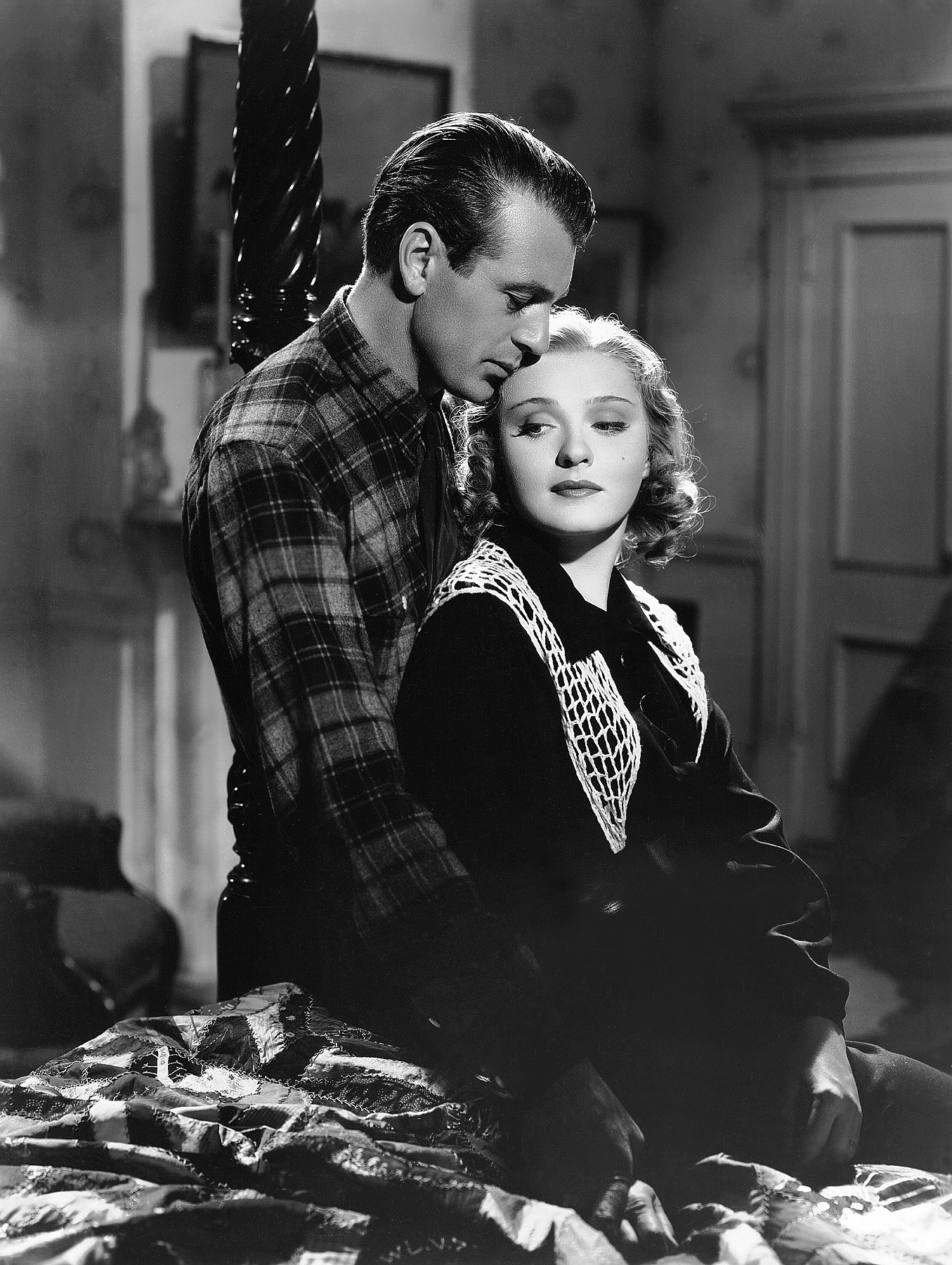
The Wedding Night was doomed from the start. It was producer Samuel Goldwyn’s final attempt at making the Ukrainian actress Anna Sten into a Garbo-level star, and his persistence had become something of a Hollywood joke. The Wedding Night became known around town as “Goldwyn’s Last Sten”, but though it failed as a star-making enterprise, it was another sensitively directed drama from King Vidor, detailing an unlikely romance between a dissolute big city writer and a Polish farm girl.

The story by Edwin Knopf and script by Edith Fitzgerald concerns down-on-his-luck writer Tony Barrett (Gary Cooper), a former wunderkind turned hack (supposedly based on F. Scott Fitzgerald), whose latest cash grab novel was declined by his publisher. Swiftly running out of money, he moves into a derelict house he inherited with his wife Dora (Helen Vinson). It is there he meets the Novak family, Polish farmers who are putting up tobacco acreage as far as the eye can see. Their only daughter Manya (Sten) is due to be wed to local yokel Fredrik (Ralph Bellamy, of course).

Tony is inspired by the Novak’s work ethic, and begins to write a new novel. Manya takes on the role of sounding board, and once all of Tony’s servants quit and Dora heads back to the city, of a romantic interest as well. When Dora returns, Tony must make a decision – to upend Manya’s carefully controlled life, or remain with his wife to repair their tattered vows.

Tony Barrett is introduced at a society party in a bathroom, pitching his publisher on a book when, he says, “I know its tripe.” He still expects it to be published based on the fumes of his former fame, but is soundly rejected. Tony and his wife Dora seem perpetually soused – their biggest concern about the move was the safety of their box of scotch. But while rural life bores Dora, it begins to rejuvenate Tony, who finds a focus and work ethic he had formerly abandoned.

Vidor was unenthused with the assignment from Vidor, as he found both Cooper and Sten to have severe limitations, as Cooper kept mumbling and muffing his lines, while Sten’s thick accent was another hurdle. Regarding Sten, Vidor wrote, “Her pantomime flowed quite easily and freely, but her dialogue was quite a different matter. Her words and syllables were never quite synchronized with her gestures. Rather than a director, I began to feel like a dentist trying to pull the syllables out of her mouth before the accompanying gesture had passed by.”

But once Vidor started looking at the rushes, he discovered that Cooper gave “a performance that overflowed with charm and personality…a highly complex and fascinating inner personality revealed itself on the projection room screen.” He was a performer who played well for the camera, not for the crew. Sten is unable to overcome a certain stiffness and formalism in her performance style, though it is appropriate for her character, a woman in a tightly-controlled patriarchal family unit who for the first time is granted a certain freedom of movement – inside Tony’s house. Sten’s buttoned-up coolness is an interesting contrast to Cooper’s anxious warmth, his puppy dog desire to be loved.

Tony re-ignites his will to write mostly due to his exposure to the Novak family, who have successfully avoided assimilation into the American way of life, for better or for worse. They maintain something of an agrarian existence, living off the proceeds of the land, but treat their women like slaves and their children like servants. They are completely alien to him, and are a rich source of character detail for his novel. They are content for him to exploit.

Early on Tony is invited for dinner, and Vidor sketches out the power structure through his blocking of the characters, keeping the women on the periphery, rotating around the male Novaks, rarely puncturing the center of their frame. It is only on the night of her wedding that Manya stands in the center of the kitchen, isolated in dramatic overhead lighting as the other women work around her, sewing and cooking and preparing for her wedding party. Manya stands alone, more isolated than ever, miserable in the thought that she is being given this privileged moment, this space as the center of attention, only because she is to marry Fredrik, played with utmost buffoonery by Ralph Bellamy (king of the buffoons). The film was shot by the great Gregg Toland in a naturalistic, evenly lit style, though he is already experimenting with the deep focus that would get so much attention in Citizen Kane in the next decade.

Tony believes that Manya is aiding his work, but not through any Muse-like inspiration from the gods, but simply for re-instilling in him a work ethic. She is out there milking cows every day, because if not the job will not get done. So he takes to same attitude toward his writing, putting up the following sign at his desk: “YOU MAKE YOUR LIVING AT IT – YOUR PEN IS YOUR PLOW, YOU BLANKETY BLANK!” Vidor presents writing as just another form of labor, and that practicality is refreshing for this type of romance. And the love that emerges between them seems realistic because of this practicality, it is love not of the spirit but of the flesh. And with the flesh comes fathers-in-law, and this particular one is none too pleased that Manya had been spending so much time with a married writer from the city. And neither, of course, is Dora, who returns to mend their broken marital bonds. There is no villain, no wronged party, just the messy stuff of living.


The End of the Affair: Cynara (1932)

October 24, 2017

Cynara29-e1500016770187

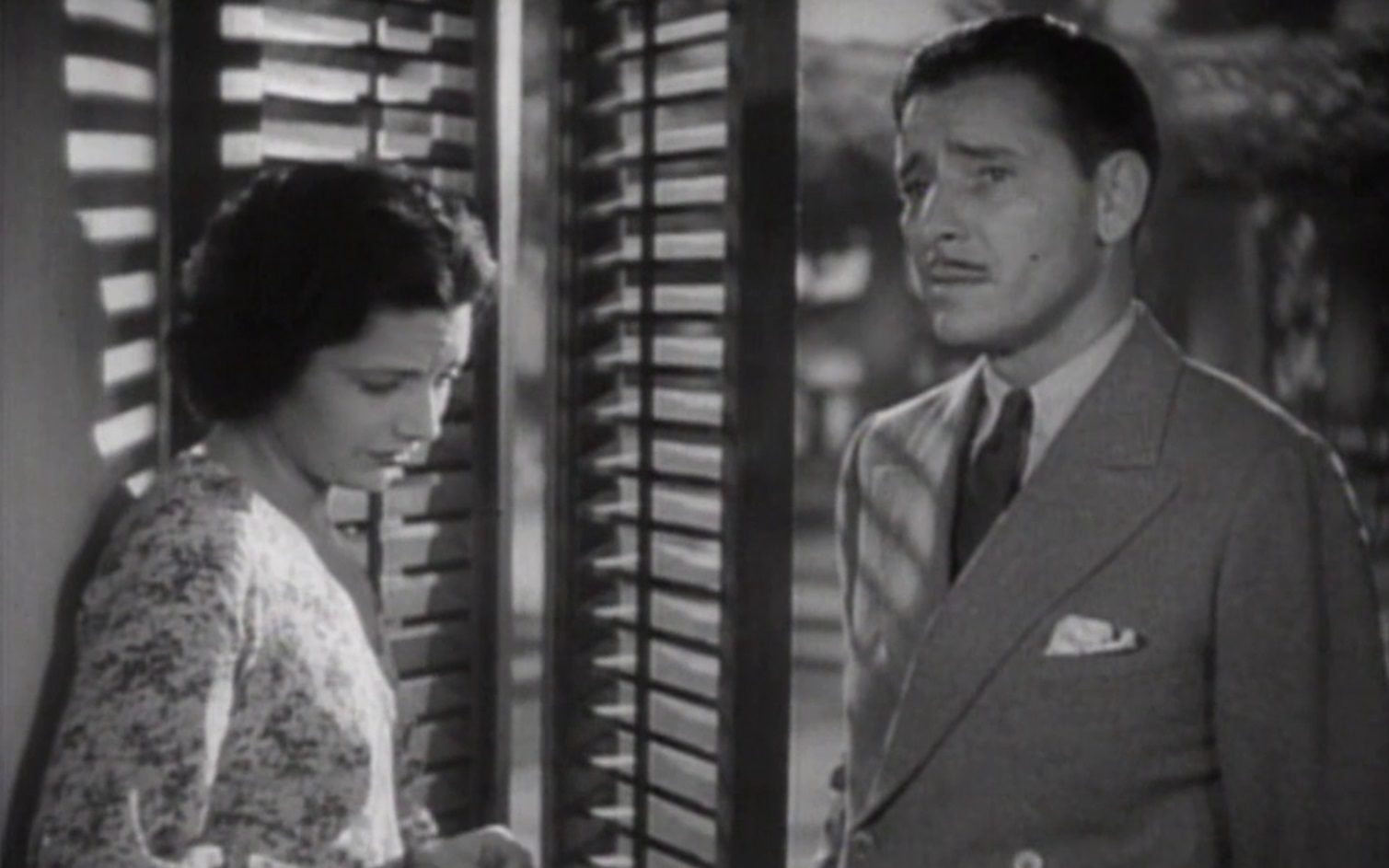
Ronald Colman signed as a contract player with the Samuel Goldwyn Company in 1924, cranking out heart-tugging romances all the way through the transition to sound, as  in the 1932 production Cynara. A particularly “adult” pre-code drama, it frankly discusses extramarital affairs and suicide in a tone of disarming directness. Adapted from a hit play, Goldwyn wanted faithfulness to the material, though director King Vidor and writer Frances Marion sought ways to make this stagebound scenario more cinematic. The resulting film leads one to think that Goldwyn won most of the battles, as it is ends up as a very well-acted filmed play, though Vidor does find ways to be inventive at the edges. Ronald Colman, in his penultimate performance for Goldwyn, plays against type as a boring barrister who falls into an affair with a young shopgirl. He is no great lover, as he portrayed in a series of hit silents with Vilma Banky, but a nervous, guilt-ridden, self-flagellating one. Colman wasn’t happy with the film because it clashed with his established persona, but that is what makes the film so fascinating today.

Cynara originated in Robert Gore-Brown’s 1928 novel An Imperfect Lover, which was adapted into the play Cynara, a stage success in 1930. Goldwyn was in a perpetual search for quality material to funnel Colman into, wanting to build off of John Ford’s Arrowsmith (1931), which was nominated for Best Picture at the Oscars. The search lasted for months, and was so consuming that one evening, according to Harpo Marx, he visited the Goldwyn home to find their son Sammy reading the funny pages. Harpo asked what he was doing, and Sammy responded, “I’m looking for a Ronald Colman story, Mr. Marx.” With its suggestive subject matter and stage pedigree, Goldwyn eventually settled on Cynara as Colman’s next film, and lined up Vidor and Marion as his directing and writing time, fresh off of their triumph The Champ (1931). Marion agreed to do the job on one condition – that Goldwyn hire Lois Weber to assist in the adaptation. Weber, one of the pioneering female directors of the silent era, had fallen on hard times, and hadn’t worked on a film in five years, taking on a job as an apartment manager to make a living. Goldwyn agreed to the arrangement, both respecting Weber’s accomplishments and wanting Marion on the job.

Told in flashback as a confession from the misleadingly named barrister Jim Warlock (Ronald Colman) to his wife Clemency (Kay Francis), Cynara is an apologia for male infidelity. Jim is a homebody whose horny old bachelor pal John Tring (Henry Stephenson) is always encouraging to join him on extra-curricular outings. So when Clemency goes on an impromptu trip to Venice with her sister, Tring encourages Jim to explore the London nightlife, specifically its females. One night at an Italian restaurant, they run into two shopgirls named Doris (Phyllis Barry) and Milly (Viva Tattersall). Milly uses the flirtation as an excuse to enjoy Tring’s money, but Doris falls for Jim’s awkward sincerity, and concocts a plan to meet up with him again at a swimming exhibition that Jim would be judging. Jim tears up a note with Dori’s address, and in a beautiful transition, Vidor dissolves from the bits of torn-up note to pigeons flying in Venice, connecting Jim’s two loves in a poetic bit of montage. Despite his seemingly abiding love for Clemency, Jim begins a whirlwind affair with Doris, which ends just as abruptly when Clemency arrives home early. The whole affair ends in tragedy, threatening Jim’s marriage and the entire life he had built up until that point.

Though the film is centrally focused on Jim and Clemency’s marriage, it finds time to give the shopgirl’s perspective – showing how Doris doesn’t have the same societal protections as Jim’s upper class bubble. Milly repeatedly warns her about how working class girls are tossed away by men like Jim, but Doris refuses to hear it. She is in love, and pays the price. It is unclear how much influence Weber had on the script, but she dealt with the double-standard between married men and single women in the fallout of an affair in films like What Do Men Want? (1921) and Shoes (1916). That double standard definitely applies in Cynara, as while Jim’s reputation is tarnished, he is still free to make a new life wherever he’d like, while Doris is jobless and spiraling in depression.

The most thrilling scenes in the film occurs when Jim and Tring deign to visit the blue collar district – there is a remarkable sequence set inside a movie theater showing Chaplin’s A Dog’s Life (1918). Vidor has a camera boom swoop from the back of the theater down to the front, capturing the full-body laughter of a theater audience losing its mind to Chaplin. In a clumsy if effective visual metaphor, Chaplin shoves a dog down his pants to sneak into a dancehall, and the animal pokes through Chaplin’s pants, causing some awkward encounters. It is after this that Doris takes Jim’s hand in hers, and for the first time Jim exhibits what looks like lust. The sequence presents a Chaplin short as an erotic experience, both for the other revelers laughing their heads off in full body convulsions, and Jim and Doris, who find the film’s loosening of social codes a way to free themselves from their guilt, and towards their disastrous affair.