UGLY AMERICAN: RUN OF THE ARROW (1957)

July 28, 2015

Run00010

In the summer of 1956, Sam Fuller took a 50% stake in Globe Enterprises, an independent production company that would strike deals with RKO, Twentieth-Century Fox, and Columbia for financing and distribution. He received creative control over his projects, and though this setup only lasted through 1961, he made six strong films with Globe: Run of the Arrow, China Gate, Forty Guns, Verboten!, The Crimson Kimono, and Underworld U.S.A. His first Globe production, Run of the Arrow (’57), is now available on a long-overdue DVD from the Warner Archive, and reflects the unusual freedom Fuller secured himself in this period. It is a prickly, jumpy Western in which a post-Civil War Confederate loyalist named O’Meara (Rod Steiger) joins the Sioux in order to fight against the United States. It depicts America as a land of perpetual warfare, one in which race and cultural hatreds are reconfigured to justify the current battle, whether without or within. It is a film of jagged rhythms, its chase scenes broken into extreme long shots and close-ups, which are then followed by minutes-long takes of two-shot conversations. At no point does one feel settled or comfortable regarding a character’s motivations or their position in space, and that is how Fuller wanted it.

Run00003

In the June 24, 1956 issue of the New York Times, Sam Fuller talked to Oscar Godbout about his new production, then called “Arrow”:  “This is a post-Civil War frontier story that will contain, according to Mr. Fuller, parallels between that period and the difficult social transition now roiling the South. He will be disappointed if it does not provide thinking material for the intellectually committed on both sides of the Mason-Dixon line.” From the beginning Fuller conceived it as a story about Southern Whites, and their violent reactions against threats to their power. In the film O’Meara fires the last shot of the Civil War, which just misses the heart of Union Lt. Driscoll (Ralph Meeker). While his family encourages him to return home and accept the Confederate defeat, O’Meara wants to fight on. He figures the enemy of my enemy is my friend, so he heads West into Sioux territory, where he befriends the returning Indian scout Walking Coyote (Jay C. Flippen). They are captured by renegade Sioux warrior Crazy Wolf (H.M. Wynant), and in order to avoid execution, agree to try the (invented by Fuller) “Run of the Arrow”. It is a barefooted chase where they receive a head start based on the distance of an arrow shot by the pursuers.  O’Meara survives through the help of Yellow Moccasin (Sarita Montiel, who’s voice is dubbed by Angie Dickinson), the inevitably beautiful young Sioux who falls in love with him. For surviving the run, he is granted safe passage by Chief Blue Buffalo (a bronzed Charles Bronson), but instead O’Meara chooses to stay with the tribe and become a member of their society, taking Yellow Moccasin as his wife and the orphaned mute kid Silent Tongue (Billy Miller) as his son. But the U.S. Army wants to build a fort in Sioux territory, and they send Lt. Driscoll to protect U.S. interests. O’Meara is sent as the Sioux emissary, to guide Driscoll to build on neutral ground. But Driscoll is an irritable, racist warmonger, and rattles his saber until he gets the fight he was begging for.

Run00005

The head of RKO, William Dozier, was an admirer of Fuller’s newspaper drama Park Row, and gave him the green light to make the project. These were the last days of RKO as a producer/distributor, and by the time Run of the Arrow was ready for release, it was Universal-International that handled it. While Fuller had control of his script, he needed Dozier’s approval for the cast. They had a stark disagreement for the lead actor. Dozier wanted Gary Cooper, while Fuller argued strenuously for the young method actor Rod Steiger. Steiger had made an impression in supporting roles in On the Waterfront and a slew of television dramas, and Fuller felt he was perfect for the part: “I need the opposite of Cooper. The character’s hateful, a misfit. I want this newcomer, Steiger. He’s got a sour face and a fat ass. He’ll look awkward, especially when he climbs up on a horse. See, my yarn’s about a sore loser, not a gallant hero” (from Fuller’s autobio, A Third Face). Dozier caved, and Steiger got his first starring role. Fuller had a tense relationship with his leading man, who, the director noted, “tended to overact”.  And one’s opinion of the film can hinge on the reaction Steiger’s performance, which is mannered, mumbly and admirably off-putting.

Run00015

One of the more remarkable sequences occurs about an hour in, a conversation between O’Meara and Captain Clark (Brian Keith), who is leading the Army engineers to build a new fort. In an unbroken shot that lasts 4 minutes and 25 seconds, DP Joseph Biroc captures a relatively simple two-shot in which the formerly warring duo discusses the future of their country. It begins with everyday concerns, Clark complaining about his saddle, and tracks a few feet to a rest area with covered wagons and a table. “You’re not the only Johnny Reb fighting a one-man war against the United States, you know. Some of them went down to South America.”, Clark says, as he stares down into a few coffee mugs, tossing the old brew out of a few before he finds a clean one. He sits at the right edge of the frame. O’Meara standing off to the left,  claims that this part of the country isn’t part of the United States, and sits down with the words, “we had a right to fight for our rights”, while accepting a cup from Clark. The camera pushes in as O’Meara inveighs “The Union be damned, the Union be damned…we don’t like you makin’ up laws…We’ll go down like a free, White, Christian country.” Clark laughs, “Free, white and Christian, eh. Burning crosses and hiding under pillowcases and terrorizing families. Free, white and Christian!” Brian Keith delivers that devastating line with a smirk, eyeing Steiger to his right. Steiger clenches up, raises both hands to his cup and says, as if a chastened child, “I don’t know anything about that, sir.” Clark sarcastically responds with, “It’s always the other guy.”

Run00017

The word “black” or “slave” is never uttered, but the righteous fire briefly dims in Steiger’s eyes, quickly acknowledging and then repressing what underlies a white Southerner’s freedom in post-Civil War America. Or a Northerner’s, for that matter. Captain Clark doesn’t last long, and Lt. Driscoll takes over. If Clark is dreaming of a better Union, Driscoll dreams only of colonization and subjugation. Every power structure in the film is split, internal battles spilling out into exterior ones. The Sioux are riven with dissension between the pragmatic Red Cloud (Frank de Kova) and the warlike Crazy Wolf, and the South has O’Meara’s mother preaching reconciliation with the North, while her son is a staunch separatist. These coalitions are repeatedly jumbled until alliances become meaningless, and all that’s left are the hatreds left undissipated by years of war and bloodshed. Fuller ends the film with the on-screen exhortation, “The end of this story can only be written by you!” Looking back at race relations in the United States in the 58 years since the film’s release, it now reads like an accusation.

MARTIAL ART: PEDICAB DRIVER AND THE GOLDEN HARVEST LIBRARY ON WARNER ARCHIVE INSTANT

July 14, 2015

Last week Warner Archive snuck out a minor announcement with major implications. Six martial arts films from Golden Harvest studios were made available in HD on their Instant streaming service, in their original language and aspect ratios. Golden Harvest was the proving ground for Bruce Lee, Jackie Chan,  Sammo Hung and Jet Li, producing some of the most enduring kung fu films from the 1970s through the ’90s. These days Golden Harvest has segued from production to exhibition, and their classic titles remain frustratingly hard to see in decent transfers. Warner Brothers owns the U.S. rights to part of their catalog, and the initial six titles are only the beginning. On their Twitter feed Warner Archive promised, “we’re just starting to tackle the domestically unreleased Golden Harvest library”.  Available now to stream on Warner Archive Instant are: Downtown Torpedoes (1997), Big Bullet (1996) , The Blade (1995), Blade of Fury (1993), Pedicab Driver (1989)  & Terracotta Warrior (1989). While many of these titles are far overdue for release on DVD and Blu-ray, the fact that WB is preparing HD masters of these films is reason for optimism. I started the month-long free trial of their Instant service to check out Sammo Hung’s Pedicab Driver, an irresistible showcase for his knockabout acrobatics that packs in a public transit war, human trafficking, and Triad gangs into its 90-odd minutes.

Golden Harvest was formed in 1970 by Raymond Chow and Leonard Ho, two former employees of the Shaw Brothers studio. Shaw Brothers was then the largest production operation in China, specializing in historical martial arts films like King Hu’s Dragon Inn (1967) and Chang Cheh’s One-Armed Swordsman (1967).  Golden Harvest would become their main competitor, poaching director King Hu and most importantly Bruce Lee, who was on the cusp of superstardom. The gargantuan success of Lee’s The Big Boss (1971), The Chinese Connection (’72), The Way of the Dragon (’72) and Enter the Dragon (’73) secured the company’s financial future, allowing them to invest in talents like Sammo Hung. Hung came up through the brutal training of the Peking Opera, enrolling in Yu Zhanyuan’s China Drama Academy at the age of nine, studying acrobatics, martial arts, singing and dancing, along with future co-stars Jackie Chan and Yuen Biao. They endured painful tests like maintaining a handstand on a stool for one hour. Hung’s parents enrolled him, he told the New York Times, because, “I was never good at school and was always fighting in the streets. So they sent me to learn to fight.” He was a senior member of the “Seven Little Fortunes” performing troupe, and became known as “Big Brother” to Biao and Chan. In 1971 Golden Harvest hired him as a martial arts instructor on The Fast Sword, and thus began a two-decade association with the company, where he worked with everyone from King Hu (The Valiant Ones) to Bruce Lee (Enter the Dragon). He directed his first feature in 1977 with The Iron-Fisted Monk, and would gain success by working with Biao and breakout star Chan — directing hits like Winners & Sinners (’83) and Wheels On Meals (’84).

By ’89 Hung’s relationship with Golden Harvest was strained. His films were getting more ambitious and expensive, including the globe-hopping martial arts Western Millionaire’s Express (’86) and the post-Vietnam War commando movie Eastern Condors (’87), but the box office returns were not keeping pace. Pedicab Driver was a back-to-basics fight film set in 1930s Macau involving a group of pedicab operator friends who get mixed up with a Triad gang. There are few sets but plenty of brawling, and the tone ping-pongs from slapstick comedy to dark melodrama and back again, with the whipsawing speed representative of Hong Kong films of this period (and of pre-code Hollywood films). Sammo Hung plays Lo Tung, a leader of the pedicab union who bikes around town in a bowl cut, checked shirt and suspenders. He looks like an overgrown child in lumberjack costume, but when he throws down, his blows land like giant redwoods to the face. He pals around with a driver nicknamed Malted Candy (Max Mok) who thinks he has found his dream girl in Hsiao-Tsui (Fennie Yuen). However, she is paying off her debts to gang leader Master 5 (John Shum) by working at a brothel. When Malted Candy tries to buy Hsiao-Tsui’s freedom, he invokes Master 5′s wrath. Lo Tung, Malted Candy and their friends are faced with a fight for their lives. Approximately five hundred other things happen, including Lo Tung’s romancing of a bakery girl named Ping (Nina Li Chi), but that is the kernel of the digressive story.

Pedicab Driver contains some of the finest fight choreography of Hung’s career, combining Looney Tunes lunacy and more traditional sparring. The absurdity is stacked up front when the pedicab operators get into a brawl with rickshaw drivers in a cavernous restaurant. Hung makes his entrance by leaping over a rail with the ease of a man a fraction his size. There is supposed to be a negotiation, a splitting of work between the two tribes, but it soon devolves into fisticuffs involving Three Stooges-esque eye pokes and Star Wars parodies. At one point Yuen Biao pulls down a long fluorescent bulb from the ceiling and wields it like a lightsaber. His opponent does the same, and a brief saber duel occurs (with requisite sound effects) until both men get electrocuted  like Wile E. Coyote at an Acme Electrical Line.

The most thrilling bout in the film has no bearing on the plot. After an intensely dangerous pedicab car chase, Lo Tung and Ping crash into a gambling hall. The managers insist upon recompense until their the den boss (Lau Kar-leung) decides to settle it with a fight. This fight represents a generational battle, between a Shaw Brothers legend in Lau versus the more modern, manic and comical Golden Harvest performer in Sammo Hung. Hung begins with a sneak attack, trying to catch Lau unawares. But Lau has those quick, deep strikes that continually send Hung to the ground. Hung tries clowning for distraction, but is thrown through a wall of strategically placed bamboo. Then there is an intricate battle of dueling staffs that (see above) Hung attempts to use his acrobatic skill to evade. But again he is struck down. Eventually he is pinned with his feet over his head, and admits defeat. But Lau sets him free, admitting respect for Hung’s skill, and that he was the only fighter he ever made him afraid he might lose. It is a sweaty, sweet, passing of the torch.

The streaming video was sharp and clean, aside from some speckling during the slow-motion sequences. The subtitles had their fair share of typos, but nothing to distract from the presentation (be sure to click the CC button to turn them on).

The film shifts into darker territory with Malted Candy and Hsiao-Tsui. Master 5′s operation is built on total control of his rapt criminal network, from his indentured servants (prostitutes, hired thugs) to the addicts and johns that fill his coffers. Malted Candy initially reacts to the news of Hsiao-Tsui’s work with chauvinistic horror – she is a “bitch” for resorting to prostitution. But his friends argue him back to sanity, that it is the male populace who condones and perpetuates the sex worker trade, and that Hsiao-Tsui is just doing what she can to get by. Their brief reunion is thwarted by Master 5, who sends his anonymous top assassin (a lithe, hard-kicking Billy Chow) to erase them from his books. Billy Chow is the real villain here, a quiet psychopath who waits his turn after all the pawns have been cleared from the stage. In the climactic battle at Master 5′s mansion, he sits at a table slurping soup as Lo Tung annihilates what’s left of the hired goons. His patience comes from confidence, and the final bout between him and Lo Tung is a brutal succession of high-impact maneuvers. There is none of the subtlety and grace of the fight with Lau here, this one is all deliberately paced destruction set to the tempo of move/rest/strong move.  Lo Tung is victorious of course, a roly-poly hero beaten, bloodied, and exhausted. That’s the state of Sammo Hung after most of his features from this period, leaving it all up on the screen. Hopefully Warner Brothers and the Warner Archive will continue to create HD masters of Sammo Hung’s sacrifices.

APPASSIONATA: I’VE ALWAYS LOVED YOU (1946)

July 7, 2015

ivealwaysloved10005

“The color overshadows the plot.” – Frank Borzage on I’ve Always Loved You (’46)

In 1945 Frank Borzage signed a lavish five-year deal with the penurious Republic Pictures, and it granted him unusual autonomy over his projects.  I’ve Always Loved You was the first film he made for Republic, and he invested it with the full force of his religious romanticism, where love is the one true savior. Limited only by the restraints of the Production Code, the film has the barest of plots, its three main characters floating around each other on a plane of pure feeling, their shifting passions expressed through music and color scheme – it was the only film ever shot in three-strip Technicolor for Republic. Set in and around the classical music world of Carnegie Hall, the most impassioned contact occurs during cross-cutting between separate renditions of Rachmaninoff’s “Second Piano Concerto”. If you give yourself over to it (and you can on the Olive Films Blu-ray, out now), the last act miracle achieves an emotional intensity akin to that of Rossellini’s Voyage to Italy. French filmmaker and critic  Luc Moullet wrote it was “perhaps Borzage’s masterpiece….The excess of insipidness and sentimentality exceeds all allowable limits and annihilates the power of criticism and reflection, giving way to pure beauty.” In Film Comment, Kent Jones described it as an “extreme film brought to the brink of madness.” Beauty and madness are the son and the Holy Spirit in Borzage’s trinity, in which God is love.

13954472498_756f96812a_b

Republic Pictures was born as a conglomeration of six smaller Poverty Row studios, making money off of adventure serials and quickie B-pictures that cost little and turned modest profits. But as they grew they experimented with A-features, bringing in top talents for a couple of “Premiere” pictures a year, which were budgeted around $1 million. A few years later John Ford (The Quiet Man) and Orson Welles (Macbeth) would sign with studio head Herbert J. Yates. According to Herve Dumont’s biography Frank Borzage: The Life and Films of a Hollywood Romantic, Borzage’s five-year contract called for him to make one Premiere picture a year, “conceived in complete artistic freedom”, with a maximum budget of $1.5 million. He would be given his own production unit, with his choice of actors and technicians (he hired Tony Gaudio as DP, whom he last worked with on 1924′s Secrets), while his brother Lew Borzage was named associate producer. The most amazing part of the deal is that Borzage had an opt-out at the end of each year, so Yates had plenty of incentive to keep him happy. The first project Frank Borzage was attached to was the John Wayne Western Dakota, intended to be filmed in three-strip Technicolor. That project was eventually downsized to B&W and was directed by their “Deluxe”($300,000 budgets) filmmaker Joseph Kane.

ivealwaysloved1909

Charles Vidor’s A Song to Remember (1945), a biography of Frederic Chopin, was a recent hit for Columbia, so Yates and Borzage settled on a story set in the classical milieu. They also trucked $40,000 to Arthur Rubinstein to curate and play every piano performance heard in the film (he is credited as “The World’s Greatest Pianist”). They chose to adapt a short story by Borden Chase, entitled “Concerto”, first published in 1937 for American magazine. A former Brooklyn cab driver, Chase had written some WWII screenplays (The Fighting Seabees) and would go on to write classic Westerns like Red River (’48), so he was an unlikely chronicler of high culture. But it was personal for Chase, as he based the story on his wife, pianist Leah Keith, who had performed at Carnegie Hall at the age of eight. Borzage hired him to adapt his story into a screenplay – his advice was to “make me cry.” Concerto was the working title of the film late into the production, but in October 1945 Borzage and Yates decided to change it because, as quoted in the Los Angeles Times, the majority of exhibitors polled “were afraid the public wouldn’t know what ‘concerto’ means.”

large_ive_always_loved_you_05_blu-ray_

The story concerns Myra Hassman (Catherine McLeod, plucked from MGM bit players), a beautiful young piano prodigy who is discovered by the revered maestro Leopold Goronoff (Philip Dorn, a pre-WWII star in Germany), who whisks her away from her rural American home to the capitals of Europe with his mother (Maria Ouspenskaya) and assistant Nikolas (a fastidiously hilarious Fritz Feld). Eventually the sexist Goronoff becomes threatened by Hassman’s talent, and humiliates her at her Carnegie Hall debut. She is thrown out of Goronoff’s circle, and she returns home to marry her childhood sweetheart George (William Carter), a sympathetic slab of All-American blonde beef who recognizes that Goronoff – and her professional dreams – will always have a place in her heart. Their daughter Georgette (Vanessa Brown) shows some talent at the keys, and so Myra is thrust back into the classical world, ready for one last duet with Goronoff and a resolution to her divided self.

13954464760_61f9574c1e_h

The majority of action in the film are men and women standing in rooms and auditoriums either standing next to or caressing a piano. When they are not playing the piano they are eyeing it ravenously. It is the only means of communication – in the film it replaces speech as well as sex. Goronoff is entranced by Myra at an audition after she rejects his suggestion to play Rachmaninoff, and performs Beethoven’s “Appassionata” instead. She wears a light blue frock over a white blouse, her attire blending into the similarly colored wall. Their attraction is never stated, but envisioned as a combative creative union on stage, when at Carnegie Hall Goronoff drowns Myra out with his orchestra. He demands submissiveness, and Myra’s brilliant performance challenges his authority. As critic David Phelps noted to me, there is something of Dracula in Philip Dorn’s florid, hypnotic performance (and in the way Nikolas repeatedly refers to him as “Master” in a Renfield-ian manner). In this initial battle Myra is wearing blossoming pink chiffon against a wall of dark green. She literally stands out, and for one night becomes a star.  But she still yearns for approval, the sequence a series of desperate close-ups of Myra staring at Goronoff, desperate to know what set off this rage. After her split from Goronoff, his mother says of Myra, “her voice is the piano.” Borzage then cuts back and forth between Goronoff performing the Rachmaninoff Concerto on stage with Myra playing the same composition at home, their two renditions blending into one temporary bliss. That is, until George grabs Myra’s hands, and the link is broken. Goronoff is a shadow who only has power through his art, while George is artless but physically present – in the non-professional William Carter’s performance, he’s almost nailed to the ground.

large_ive_always_loved_you_13_blu-ray_

In the final performance, Myra once again joins Goronoff in the Concerto. Her hair is piled high, setting off her cheekbones, above a pink form-fitting gown. No more girlish chiffon. When Goronoff stares her away, she focuses on her hands or the crowd, communing with the music herself, secure in her own talents for the first time. Goronoff is humbled, and defers to her through his posture and orchestration. The concluding scenes, in which Myra actualizes her pianistic talents and declares her true love are intensely moving. She who could only speak through music, finally finds the words.

TECHNICOLOR DAZE: SCARAMOUCHE, CHAD HANNA, and APACHE DRUMS

June 30, 2015

scaramouche-janet-leigh-stewart-everettChad-Hanna-Half-Sheet20002

When I have an empty afternoon to kill, I go to the movies.  This past Saturday my hours were filled to bursting with the “Glorious Technicolor: From George Eastman House and Beyond” series at MoMA, which runs through August 5th. The way the schedule fell, my matinees were made up of MGM’s frothy swashbuckler Scaramouche (1952) and the kindly circus folk of 20th Century Fox’s Chad Hanna (1940), with the prime evening slot held by the dark, violent Universal-International Western, Apache Drums (1952). This is a series after my own heart, a 60+ feature cavalcade of movies classic and obscure from 1922 – 1955, all exhibited on film (a rarer and rarer pleasure). My random sampling spanned two decades, three genres, and a variety of approaches to Technicolor. Scaramouche is all gleaming candy colors — you are almost invited to go up and lick the screen. Chad Hanna and Apache Drums are more subdued in their palettes, both making use of darkness and chiaroscuro to capture folds in upstate New York circus tents and candlelight in a Southwestern church under siege, respectively.

scaramouche-02-g

Even in 1952, Scaramouche was something of a throwback. It is an adaptation of Rafael Sabatini’s 1921 novel, which had been adapted into a 1923 feature by Rex Ingram. Sabatini also provided the source material for Captain Blood (1924 and 1935), and it is the elegant ease of Errol Flynn’s ’35 swashbuckling that the film is trying to channel. It is resoundingly successful at doing so, a buoyant identity-swapping tale set in 18th century France, in which gentleman lover Andre Moreau (Stewart Granger) gets on the wrong side of Queen Marie Antoinette (Nina Foch) because his pal Philippe is spreading pseudonymous pamphlets advocating revolution (Richard Anderson). Moreau is a dashing man on the run, and hides out with a Parisian commedia dell’arte troupe along with his sometime girlfriend Lenore (Eleanor Parker). Moreau also has his eyes on Aline (Janet Leigh, garbed in Easter egg pastels), who is set to marry the Queen’s cousin Marquis de Maynes (Mel Ferrer), a master swordsman and sadist who Moreau is hell-bent on extracting revenge from.

maxresdefault

It all moves swiftly under George Sidney’s direction and Charles Rosher’s camera, who mount a number of rousing fight sequences. The capper is a near-7-minute bout inside of a crowded theater. Ferrer and Granger start on a balcony and parry down the lobby staircases and into the still-crowded seats, until they tumble through backstage matte paintings. The fight choreography is superb, and has been built up throughout. Ferrer is the more nimble, more experienced swordsman, and he uses his speed and intelligence to evade Granger’s clumsy lunges. Granger is built like a circus strongman, a double-barreled chest tottering over two spindly legs, while Ferrer moves like a dancer, the sword an extension of himself. All the seats and curtains are deep red, while Granger and Ferrer are costumed by Gile Steele in white and black. Ferrer is white hair/black vest/black pants, while Granger has black hair (with saucy ponytail) with white cape and white pants (with black trim). They are inverses of each other in a carpet of red.

zoom_1430339110_Scaramouche R6-3

Granger spends the whole movie reining in his aggressiveness until the final duel in the middle of the stage, where he declines to deliver the fatal blow, gaining power in their relationship for the first time. The whole cast sparkles, especially the ferocious Eleanor Parker (a blonde in a gorgeous red wig, dressed in “hot” colors to contrast with Leigh’s cool pastels), who battles Granger up and down the commedia dell’arte stage. There are some wonderful pratfalls in the extended theatre sequences, which taught me the lesson that 18th century French comedy was closer to the Three Stooges than I ever imagined.

78316264_p

Chad Hanna (1940) is more expressly about a performing troupe, this time a traveling circus in upstate New York in the mid-to-late 1800s. It was adapted from the Walter D. Edmonds novel of the same name, and followed the fluctuating fortunes of the troupe as two runaways, Chad Hanna (Henry Fonda) and Caroline Tridd (Linda Darnell), find their way in the world of ballyhoo. This would be the third Edmonds adaptation that Fonda would star in, following The Farmer Takes a Wife (1935, based on the novel Rome Haul) and John Ford’s Drums Along the Mohawk (1939). It’s a strange little coming-of-age tale with lots of local color, as Fonda is supported by Guy Kibbee, Dorothy Lamour and John Carradine. I savor upstate New York town names like Canastota, the backwater town that Chad and Caroline join the circus to get away from. The film follows their tumble into love (and jealousies over Chad’s attraction to Dorothy Lamour’s bareback rider), battles against competing circus thugs, and the joys of owning an elephant. Shot in a nostalgic golden hue by Ernest Palmer and Ray Rennahan, faces are plucked out and framed like portraits in cameo necklaces, especially in the luminous close-ups of Darnell and Lamour. But Palmer and Rennahan also provide pockets of darkness. Where Scaramouche is entirely visible, Chad Hanna keeps some things hidden.

Screen Shot 2013-09-10 at 7.34.31 PM

Apache Drums (1951) is a troubling Western that is shot like a horror movie, where American nightmares emerge from the dark. It is the final film produced by Val Lewton, and exhibits his talent for wrenching scares on the cheap, along with his collaborators, director Hugo Fregonese and DP Charles P. Boyle. At the beginning an off-screen narrator states:  “The hunger wolf chews on our strengths. Soon the warriors will be too weak to fight. Then the white man will thrust us away from the earth, and only the empty sky will know the voices of the Mescalero.” Then the scene shifts to the New Mexico town of “Spanish Boot”, where strapping blonde mayor Joe Madden (Willard Parker) is cleaning out the disreputable elements. This means buying out the dance hall and giving card sharp Sam Leeds (Stephen McNally) an ultimatum to get lost. But Leeds is a stubborn sort and in love with local waitress Sally (Coleen Gray). For the Whites in town the Apache tribe that lives outside their county lines is only a rumor, a spectre. But they are dying out there, starving to death, and in their desperation have started attacking stagecoaches running in and out of Spanish Boot, and are working their way towards the town itself. Much like Lewton’s monster movies  (The Leopard Man for one), the Apache are kept mostly offscreen, shown only as hands banging drums or arrows hitting burlap. This dehumanizes them, turns them into monsters. In the siege finale, with the villagers cowering inside a church, all the lights out except for a few candles, the Apache, in their war pain, appear out of the gloom like The Leopard Man or The Cat People. They are robbed of their individuality to become ghosts of a lost civilization. The final siege is oneiric, upsetting and unbearably suspenseful. Taking place almost entirely in the dark, with low-light outlining the square openings near the roof, the Apaches clamber through in waves, shot down by the dwindling villagers, made up of Leeds, Madden, a racist Reverend (Arthur Shields) and a sympathetic Lieutenant (James Griffith). It is a sequence of undeniable racism that acknowledges that racism, unspooling like America’s fever dream, trying to snuff out the unending army of its victims.

POSTWAR AMNESIAC BLUES: THE CLAY PIGEON (1949)

June 23, 2015

Clay-Pigeon

After the conclusion of WWII, the subject of the returning soldier became a popular one in B-movies, with the image of a dazed G-man wandering desolate back alleys becoming cinematic shorthand for post-traumatic stress. While the prestige pics explored how the soldiers’ physical toll left psychological scars (The Best Years of Our Lives, Pride of the Marines), the Bs were blunter in opting for amnesiac narratives, in which the veterans have lost all memory of their war efforts, and have to piece it back together, usually in a labyrinthine urban environment (Somewhere in the NightThe Crooked Way). These stories usually find a way to reconstitute these broken men and integrate them back into America. The Clay Pigeon (1949) is a particularly effective film noir of this type, directed by Richard Fleischer from a Carl Foreman script for RKO, soon after Howard Hughes took over. Released by the Warner Archive on DVD this month, its post-war America is one of paranoia and betrayal, where one is guilty until proven innocent.

pigeon-dargile-the-clay-pigeon-richard-fleisc-L-l1bjHj

Jim Fletcher (Bill Williams) awakens from a coma in a San Diego hospital to feel a blind man’s hands around his throat. “I just want to find out what a dirty traitor looks like”, the man says, and Jim is thrust into the mystery of his life. He remembers nothing after his internment in a Japanese prison, nor why the staff of the military hospital treats him with disdain. He asks his nurse, “Is the war over?” She responds, “For some people it’ll never be over.” Fletcher is set to be court-martialed for the the torture killing of his friend and fellow-soldier Mark Gregory. Unaware of his own guilt, Fletcher stumbles into an escape, and searches for the truth to his past, dragging along Gregory’s widow Martha (Barbara Hale) and his army buddy Jim Niles (future director Richard Quine). In San Francisco he spots his Japanese prison guard, who seems to be connected to a larger conspiracy fronted by a U.S. business.

hqdefault

Richard Fleischer and Carl Foreman had first collaborated on So This is New York (1948) , the debut film for Stanley Kramer Productions, in which Foreman was a partner. Fleischer was under contract to RKO, having only made two Sharyn Moffett cute-kid moppet movies up until that point. But Kramer had admired the first of those, Child of Divorce (1946), and one of the co-screenwriters, Hubert Baker, was a school friend from Yale. The head of RKO’s B unit, Sid Rogell, had nothing for Fleischer to do after the second Moffett film, Banjo (1947), bombed at the box office. So he lent Fleischer to Kramer to direct their Ring Lardner adaptation, So This is New York. Fleischer describes his relationship with Foreman in his autobiography, Just Tell Me When to Cry:

When So This is New York was finished and I had returned to RKO serfdom, there was a long hiatus for the Kramer Company, and Carl needed a job. He had an idea for an original story called The Clay Pigeon, and I convinced Rogell to hire him to develop it into a screenplay. Carl and I both lived in the San Fernando Valley at that time, so we drove to and from work together every day. It was on one of those drives that Carl came up with an interesting suggestion. He said, “Look, since we have to spend almost two hours a day in the car, why don’t we use that time to develop a story idea I’ve got in mind?” …So over the next eight weeks, Carl and I developed the story and characters for High Noon. When the script of The Clay Pigeon was finished, Rogell called me into his office. “This is pretty poor stuff,” he said…”I don’t think your friend is going to amount to much as a writer.” He then proceeded to replace the future author of such screenplays as High Noon, The Bridge on the River Kwai and The Guns of Navarone with Lilly Hayward, the author of Banjo. My RKO contract eventually kept me from directing High Noon, although I did get to do The Clay Pigeon. It was not what could be called a good trade-off.

Just Tell Me When to Cry is one of the more self-deprecating director autobiographies you’ll read, as he’s always quick to run down his own career. So though he contextualizes The Clay Pigeon as a stepping stone of Foreman’s way to High Noon, it’s a worthy film in its own right.

ClayPigeonStill3

Fleischer disorients us from the beginning, opening with a shot of a blind man’s hands ready to grasp Fletcher’s throat. Foreman’s script keeps the audience as equally in the dark as Fletcher – where even a sainted figure as the army nurse is antagonistic. Star Bill Williams still has the baby fat good-boy look of an approved American hero, so it’s jarring to see him as an accused war criminal, shown early on throwing Martha around in an attempt to stifle her screams. He is only trying to quiet her to beg his innocence, but in these early scenes there still exists an edge of danger, proof that extremes of violence do hide inside of him. Bill Williams was an athlete and performer from a young age, a professional swimmer and later an exhibition diver and Vaudeville adagio dancer. He enlisted in the Army and was discharged for medical reasons. He seems unusually stiff in his movements here, betraying his hoofer past, but he had been recovering from a back injury and had not acted in a year (his most enduring role was as the title character of the tv series The Adventures of Kit Carson).

the clap pigeon 1949

The turning point in Fletcher’s investigation is the appearance of Ken Tokoyama (Richard Loo) in San Francisco, who was the most vicious guard at the prison camp Fletcher and his unit were kept in. His presence triggers Fletcher’s memory and solves the mystery of his own guilt. This could easily have devolved into a racist narrative justifying the internment of Asian-Americans during WWII, but Foreman was a political progressive, at one time a card carrying Communist who would later refuse to testify in front of HUAC, and undercuts it with a moving scene of Japanese-American integrity. As Fletcher is running from both a criminal syndicate and the police, he rushes inside a city apartment, and begs the woman there to hide him. Helen Minoto (Marya Marco) is a Japanese-American war widow, with her decorated late husband’s photo displayed prominently on the mantelpiece. She speaks without the insulting accent of most Asians in Hollywood films, and chooses to hide him because she can tell the thugs outside are not cops. When Fletcher tells her he cannot thank her enough, she simply says, “then don’t try”, and escorts him out. It is a scene that movingly depicts the contributions of Japanese-Americans to the US war effort at the same time they were being persecuted at home.

Fleischer and Foreman might prefer you forget this relatively unknown programmer from 1949, which does indeed end by putting Fletcher together again and thrusting him back into the expected narrative of postwar American life (wife and expected child), but The Clay Pigeon is worth remembering for the steely look on Marya Marco’s face as she directs Bill Williams out the door, a secret smile crawling across her face, treating the tragedies that surround her as one grand, private joke.

OZARK ELEGY: THE SHEPHERD OF THE HILLS (1941)

June 16, 2015

Poster - Shepherd of the Hills, The (1941)_04

After the success of Stagecoach (1939), John Wayne was in demand. While still under contract to poverty row Republic Studios, he was lent out to United Artists for The Long Voyage Home (1940), Universal for Seven Sinners (1940) and Paramount for The Shepherd of the Hills (1941). While still making interesting features for Republic, including Raoul Walsh’s Dark Command (1940), he was positioning himself as prestige-picture ready. Shepherd of the Hills was a prime property adapted from a million-book-selling novel, to be shot in Technicolor by director Henry Hathaway and DPs Charles Lang and W. Howard Greene. Hathaway was an advocate for location shooting, and had already filmed Trail of the Lonesome Pine (1936) in Technicolor at Big Bear Lake in California, where Shepherd would end up as well. The ongoing “Glorious Technicolor” series at the Museum of Modern Art is screening both Trail of the Lonesome Pine and The Shepherd of the Hills as part of its sixty feature extravaganza. Shepherd is a delicate, strange and mournful drama of the breakdown of an insular Ozark Mountain community, one trapped in a cycle of intergenerational violence. John Wayne stars alongside his childhood Western hero Harry Carey, and the film acts as a series of lessons from Carey to Wayne, on and off screen.

John Wayne

The Shepherd of the Hills is based on the 1907 novel of the same name by Harold Bell Wright, whose book was so popular he gets top billing  on the theatrical poster (it was previously adapted to film in 1919 and 1928, and would be again in 1964) . The movie plots out the alignments and resentments of a small Ozark community. The Matthews family is a dark cloud, with matriarch Mollie Matthews (Beulah Bondi) spewing the thunder. Bereft since the death of her sister Sarah, she advocates retribution for any slight, a paranoiac shutting her family up behind their cabin doors guarded by a slobbering hound.  The sunshine is let in by the Lanes, Jim (Tom Fadden) and his daughter Sammy (Betty Field), peacemakers who bridge the at times warring town. Sammy is close to Matt Matthews (John Wayne), Sarah’s son and Mollie’s nephew, and his natural gregariousness seems like an opening that could break the Matthews gloom. A stranger, Daniel Howitt (Harry Carey), arrives offering to buy part of the Matthews land, a plot nicknamed “Moaning Meadows” that it is rumored to be haunted by the ghost of Sarah, or at least of the suffocating atmosphere left by her death. Matt is incensed that an outsider might buy this living memorial to his mother, but Daniel’s kindness, which extends to paying for medical bills to restore sight to Granny Becky (Marjorie Main), kindles a tentative friendship. But Daniel is hiding his true identity, the truth of which will force Matt to decide whether to embrace his family’s history of violence, or chart a new path.

Betty_Field-John_Wayne_in_The_Shepherd_of_the_Hills

Hathaway keeps the color palette muted, using earth tones more  than the succulent primary colors associated with Technicolor. The effect is in keeping with the characters. These are not chest-pounding pioneers welcoming civilization to the West, but a truculent group of recluses clinging to their allotted land. They are so isolated they speak in their own backwoods biblical poetry. Jack Pendarvis transcribed Sammy’s monologue about “Moaning Meadow”: “It’s where the haint comes from: frogs as quiet as grave-rocks, light coming from nowhere, and the trees don’t rustle, and the flowers grow big but they don’t have pretty smells.” Betty Field delivers these lines with wide-eyed sincerity, without a hint of irony that would have immediately turned the film into Southern kitsch. Instead it tumbles out as cockeyed truths, the town a bunch of inadvertent animists, worshipful, wary and grateful for each blade of grass that surrounds them.

Poster - Shepherd of the Hills, The (1941)_01

Folks there talk to animals more often than each other, as one summery evening Matt addresses an owl with, “Evening, brother!” Wayne prefers to sidle up to the knotty dialogue, pushing out the lines towards the end of his breath. When he goes fishing with Harry Carey towards the end of the film, his lines are barely audible, as he fidgets with his rod, dips his head, seemingly wanting to disappear into the dirt. He nearly exhales the lines,  “I got no right to love or marry. I gotta forget thinking about Sammy.” John Ford said he didn’t know the son of a bitch could act after watching Howard Hawks’ Red River, but Wayne was already an actor of great subtlety in 1941. This was during a turbulent moment in his personal life, as he was in the middle of an extra-marital affair with Marlene Dietrich, who he had met on the set of Seven Sinners, which wrapped just before Shepherd. Dietrich, after seeing Wayne at the Universal cafeteria, reportedly told director Tay Garnett, “Daddy, buy me that.”

duke9211

Everything is ritualized in Shepherd of the Hills. Mollie atones for her sins by turning her home into a funeral pyre. And when Daniel reveals his true identity, Matt immediately enters into Matthews manner of vengeance. He silently accepts his role in the Matthews narrative, sullenly grabbing his rifle and stomping to Daniel’s cabin, ready to murder for reasons he doesn’t even believe in. It is in his blood. The showdown is set up in long shots of Wayne stalking forward, emerging from the landscape. His arrival is scored to an ominous two note cello phrase by composer Gerard Carbonara that today sounds like the Jaws theme, appropriate for the carnage that Matt wishes to inflict. But Daniel is wiser and quicker with a gun, wounding Matt as an act of mercy. It is a lesson in failure. Matt has to chip away at his masculine pride to accept his loss, and that losing that pride may allow him to love Sammy. Losing that masculinity may allow him to become a man. On-screen and off, John Wayne was learning from Harry Carey. Harry and his wife Olive treated Wayne like family, and, as Scott Eyman writes in John Wayne: The Life and Legend, “offered something approaching unconditional love.” Wayne remembered:

[Carey] had a style of acting that has now become the way of acting in our business. He tried to play it down a little and be kind of natural. You have to keep things going and try and get your personality through, which is what Harry could do. I loved him, because I’d known him for years, and I was a young man and he was an older man. Anyway, he and his wife were around…and I was talking about how I wanted to play every kind of part. the big hero that did everything, the heavies, everything. I wanted to play it all. And Ollie Carey said, “Well, you big dumb  son of a bitch.” I said, what’s the matter?” She said, “Do you really mean what you said? That you’d like to play every kind of part? You think you’re Sydney Carton?” And I said , “Yes, I’d like to get the chance to play all those things.” And Harry was just standing there, and she said, “Do you want Harry Carey to be any different than he is in the movies?” And I said, “No, of course not.” And she said, “The American public [have] decided to take you into their homes and their hearts. They like the man they see. Forget all this other junk. Be like Harry.” That was something I never forgot.

THE HUMAN COMEDY: AN INTERVIEW WITH ROY ANDERSSON

June 9, 2015

When I interviewed Roy Andersson last week I was struck by how mischievous this 72-year-old still was, his moon-shaped face cracking into an impish grin whenever he belittled things inimical to humanity (including but not limited to: the monarchy, billionaires, and smart phones) . The Swedish director was in NYC promoting A Pigeon Sat on a Branch Reflecting on Existence, the final part of his trilogy “about being a human being” that is in theaters now from Magnolia Pictures. He has only made five features in his unusual career, with a seven year gap between the films in the trilogy: Songs From the Second Floor (2000), You, The Living (2007), and now, A Pigeon. Each film in the series is made up of absurd, deadpan sketches about the quiet desperation of everyday lives, something of a minimalist, formalist Laurel & Hardy. Each section is shot in long takes on a  single set, his actors wearing white face paint as if in Kabuki, speaking in an earnest monotone.  A Pigeon, for example, opens with a man having a heart attack after struggling to open a bottle of wine. His films are so sad you have to laugh, or so funny you have to cry. I spoke with Mr. Andersson about comic books, his switch to digital, and a visit from the Wachowski brothers.

RS: When you started SONGS FROM THE SECOND FLOOR, were you envisioning a trilogy at that time?

RA: I was not. It came up when I finished YOU THE LIVING, and I really wanted to make another movie, and it felt very unnatural to call it a trilogy, because the word trilogy is “respectful.” [Laughs] It awakens respect. They call it an epic number. You have number three, you have number seven. It’s a historic number. So, they are also quite similar to each other, thematically, so I saw them as in a family. I changed technique. The first time I used digital technique.

RS: Which one did you use digital on?

RA: This one [A Pigeon…]. Some commercials before. I tested it out. If it was possible to get it as good as with analog technique. And I found that, yeah, time had changed so, the technique, the quality, was so much better than, say, five years ago. I’m happy that I finally dared to go over to digital.

RS: Did you find that you were doing longer takes?

RA: Yeah, I did.

RS: Has it changed your style in any way?

RA: Not so much. But of course, this sequence with the king, Charles XII, it was not possible to do that analog. Because it’s eleven minutes long. You could make it with 16mm, you could, but not with 35mm. So… uh, I don’t know why it’s so long! [Laughs] But it was nice to have so many horses passing outside!

RS: I did want to ask about that sequence, because there’s two sequences that stretch back into the past, there’s the scene from 1943, there’s the scene with King Charles, and both of those are some of the more nostalgic sequences. It’s like I had the feeling that you felt that these scenes of the past were more communal that the scenes in the present. Do you think we’ve lost something, some kind of communality?

RA: Yeah. The king is, there’s two scenes. When he leaves Sweden for battle, it’s a typical example of so-called anachronism. And when I left realism, which I did after fifty years with realism, finally dared to go over to what I call “abstracted style”, purified, condensed style, I dared to do it finally, because I had grown up with the typical worker class environment, and my worker’s realism was the only one, they didn’t like the middle class or the upper class style.

RS: A Swedish Love Story…

RA: Love Story was…very realistic. So I guess, yeah, realistic. Regarded as realistic. And finally to switch over to this and I dared to mix old time with our time, typical anachronistic, and because it’s good to criticize this stupid creation of a monarchy — I hate it! So I want to address the respect for this period, this idea with the king, who’s only responsible to God, and the world has been ruled by this stupidity for many, many years. And even the stupid Swedes, they’re really, “Oh my king and my queen!” This is stupid. It’s fake actually.

RS: So the monarchy still has a hold over the Swedish people?

RA: Yeah, I think over 50% want to keep the [monarchy]. You have that in the Netherlands, Denmark, Norway, and England. I don’t know why these countries are so stupid.

RS: I wanted to ask you why you switched styles to a more “abstracted” style, what drove you to that. What appealed to you about that.

RA: Realism, it’s not that it’s not correct, but it’s… realism, is more limited than the abstracted style. For example the dream. I use dreams now. And I never dared that before. In dreams you are totally free. So when I switched over to this I felt so released. I dared to show dreams. And even this scene with the king, this anachronistic scene with the slave period, colonialism, that was possible with the help of the abstracted style. And I will continue with it also.

RS: I wanted to talk about the colonialism sequence. Is it that Sweden hasn’t fully reckoned with their colonialist legacy, or is it that something that isn’t spoken about a lot?

RA: Actually Sweden was not involved so much in that. Sweden had come here, to this continent, but not much. But the attitude is, even if we didn’t, we had the mental capacity for it. So Sweden has been very, very right wing for hundreds of years. It’s been ruined, Sweden has been ruined by the upper class, and the nobility. And on the top of that nobility there was a king. And I hate it.

RS: I guess I want to ask you now about how you build scenes, because a lot of them seem to come from everyday life. The guy opening the bottle of wine, everybody saying” I’m happy to hear you’re doing fine.” Are these things you hear, or do you write them down and build scenes off of that? Or do they just come to you?

RA: I like that daily life. Cause it started already in my movie. It’s a love story, it’s also a lot of daily life. Lower middle class and worker class. And my most important source of inspiration with that was the Czech [New] Wave, with Milos Forman, and Jiri Menzel, they could make such humoristic scenes about daily life, so I’m still a big fan of Forman and the Czech [New] Wave in the 60s. And I keep, okay I change the style, but I keep the content of daily life, I care about the same thing.

RS: And when you build these sequences, do you storyboard them, or do you figure it out on the set? Because they’re so precise, they’re choreographed.

RA: I make a sketch to every scene. And then I color them with watercolor to make them more attractive, and I put them on the wall, so our team members can look, and it’s possible to check the order of them. I think this should be the first one, or no, one week later I put the other… So that’s how I work. I sketch for every scene. Only one. One sketch for every scene.

RS: The way each scene is put into a box they almost look like dioramas, or comic book panels. Just curious if you like comic books.

RA: Yeah, I’m a big fan. I was when I grew up, of cartoons. And the cartoons had that quality, that they are timeless. And even not necessarily geographically specified. It’s more universal.

RS: Do you remember what cartoons you liked?

RA: All these cartoons about the Wild West in America! I don’t remember the names. And of course these more famous [serials], Tarzan, and The Phantom.

RS: It took seven years in between each feature in the trilogy, are you developing these the whole time? Are you taking breaks? How long is the development process on all these?

RA: It takes, it has taken, seven years. But the active period when I shoot, when I make the movie, three and a half to four years. So the rest of the time I do something else. So it will not take seven years the next movie we make because I’ve already started. So I will have the next movie released in 2018. That’s my plan.

RS: This is your adaptation of “One Thousand and One Nights.” And is it in the same style as the trilogy?

RA: I want to change a little, but I’m not exactly sure how I could do it because it has taken a long time to find this style, so I really want to find something that’s much better before I change. But you know Charlie Chaplin, he found his style after a lot of work, and people used to accuse him, “You repeat yourself all the time,” and he said, “Yes, and I tried to make something else. I tried. But it was worse.” So he went back to his old style.

RS: Was that the drama he made, A WOMAN OF PARIS?

RA: Yeah, I don’t remember now.

RS: So it will be something in the style that you’re currently doing? Do you have a story, or is it the same kind of sketches?

RA: I have left the linear narrative way of making a movie. I prefer what I call fragments. The fragmentary style. Because I find it richer. It’s inexhaustible. That way of making it. Fragments are inexhaustible.

RS: Regarding the main characters, the two salesmen, I mean, they’re very sad and lonely characters, but they’re trying, in their own clumsy way, to be entertaining…

RA: But they are so much inspired by Stan Laurel and Laurel and Hardy, and even Beckett was inspired by that. Waiting For Godot is Stan Laurel and Oliver Hardy.

RS: So did you watch Laurel and Hardy growing up?

RA: Very much when I was young. I loved it and I found them so tragic and also funny. Their ambitions to climb the social ladder, the social class order. And they fail all the time.

RS: Before the interview, you mentioned the Wachowski’s visited the set of A Pigeon…. What did you talk about?

RA: Yeah, they came to me because they loved my movie, YOU THE LIVING, and they had noticed there were some similarities with that movie and the painting history, Germany in the 30s. They came with fantastic gifts for me, two books, one about Otto Dix and one about George Grosz. They came, they passed me and said “We are stopping just to shake hands with you, because we are big fans.” It was very nice.

RS: Have you seen any of their movies?

RA: You mean, THE MATRIX? My young colleagues at my company, they have seen the THE MATRIX and they are admirers. But I have not seen these movies.

RS: I guess I wanted to go back to the film and talk about the bar scene in 1943 where they all sing the song together. Because the film is, it’s one of those films that’s very funny but also has this quiet desperation. But this one scene in the bar is the one that seems to be the most joyous. Do you have fond memories of that period, of the 40s?

RA: It was my birth year, 1943. And you know that was the start of how Nazi Germany was defeated, it was the starting ground. My father was very proud that I was born. He marched soon after they lost in Stalingrad and this sick army, I think it was around 700 soldiers that were surrounded, and were sent to Siberia. So that when they left I think that even Hitler understood that we will not win the war. And that time the people there was an extra military service, because normally it was one year, but they added another year and soldiers sitting there had very little money so it was a nice song about how generous “Limping Lotte” was, would give them a shot for a kiss. So that was a song that I sang myself as a kid.

RS: Did you know where the song came from? Is it based on a real person?

RA: No, no. Nobody knows. It’s a typical folklore.

RS: It was really striking when you go from that sequence with everybody singing to when you go to the bar in modern times, where everybody’s isolated and alone. Do you think we have lost some aspect of community?

RA: Yeah, I think so. It’s very sad. Because now we have all the resources to communicate, yet in spite of that people are very isolated. I think also that cell phones make you more isolated.  [Laughs]

RS: Do you have one?

RA: Yeah, though I forgot it on the plane!

RS: Did you get it back?

RA: No, no. When I come home I will buy a new one. A better one. So that was the meaning in it! [Laughs] However, there is the scene in the movie where a sad man is sitting in a restaurant and he’s trying to get into contact with the waiter who is cleaning the tables and so on. And the waiter doesn’t react at all. And the man says ” I understand that I have been ungenerous and greedy all my life. And that’s why I’m so unhappy.” [Laughs]

RS: It’s like the key to the whole movie. Yet also comic.

RA: The most dreadful thing I can see is a billionaire that is 90 years old. A 90 year old billionaire is the most tragic thing to see. [Laughs]

WHEN ALIENS ATTACK: IT! THE TERROR FROM BEYOND SPACE (1958)

June 2, 2015

Annex_-_Patterson,_Shirley_(It,_The_Terror_From_Beyond_Space)_01

The “It” in It! The Terror From Beyond Space (1958) is a lumbering thing, a slow-footed creature from a Martian lagoon terrorizing the crew of a rescue ship returning to Earth. Despite his violent blood-sucking tendencies, “It” is a lovable sort, blundering about in the spacecraft’s engine room with the stunned and disoriented gait of a medicated mastiff. Under the rubber suit was a soused Ray “Crash” Corrigan acting in his final film, a former serial adventure star battling alcoholism, the pathos of his performance pouring out his pores and through the mask designed by Paul Blaisdell. The human crew is less sympathetic, a slickly Brylcreemed group of technocrats who leave each other to die with nary a second thought. This efficient, vulgar, and remarkably suspenseful film was directed by Edward L. Cahn (one of his five 1958 credits). Once a promising director of high-toned genre fare for Universal in the 1930s (see: Afraid to Talk (crime), Law and Order (Western), Laughter in Hell (chain gang)), he descended the ranks at the studio to short subjects until he landed in 1950s B-pictures with independent producer Robert E. Kent.  It! The Terror From Beyond Spaceis their first and most famous film together, since screenwriter Dan O’Bannon lifted its scenario for use in Ridley Scott’s Alien (1979). And now it is the first Kent-Cahn movie to reach Blu-ray, thanks to Olive Films. It! The Terror Beyond Space should be more than a footnote in Alien oral histories, though, as it stands on its own as a resourcefully relentless scare flick.

IT-THE-TERROR-FROM-BEYOND-SPACE-landscape

Robert E. Kent was a screenwriter who bounced back and forth between Columbia Pictures and Warner Brothers from the late 1930s through the 1950s. His credits run from the “adaptation” of the Bela Lugosi comedy Zombies on Broadway to the same credit on Max Ophuls’ prestige drama The Reckless Moment. He started his own production unit in 1957 (going by various names: Vogue Pictures, Peerless Productions, Harvard Film Corp.), and landed a distribution deal with United Artists. Kent must have met Edward L. Cahn on the set of the immortal The Gashouse Kids in Hollywood (1947), a PRC feature for which Kent wrote the screenplay and Cahn directed. Cahn was respected for his speed and reliability, and Kent surely remembered and filed that away. So Cahn was brought on to direct It! The Terror From Beyond Space for Vogue Pictures, the first of 32 features they would make together in the next four years.

Poster - IT, The Terror From Beyond Space_16

The original screenplay was written by Jerome Bixby, his first. So he likely came cheap, a priority for Kent’s nascent production unit. But Bixby was building a resume as a prolific Western and Science Fiction author, having already published “It’s a Good Life” in 1953, which would later be adapted into the evil psychic kid Twilight Zone episode of the same name. His story has echoes of A.E. Van Vogt’s story “Black Destroyer”, but it’s also influenced by the locked room monster mystery The Thing From Another World (1951). Col. Edward Carruthers (Marshall Thompson) is the only surviving member of an original nine-person Mars mission. The United States Space Commission orders that a rescue ship led by Commander Van Heusen (Kim Spalding) be sent to bring the surviving members home. Upon arrival to the red planet, Van Heusen suspects that Carruthers murdered the rest of his crew, and places Carruthers under ship arrest until they arrive back to Earth, where he will be court-martialed. It is not long before the Colonel is cleared, as a scaled, lizard-like monster picks off the crew one-by-one, sucking them dry of blood (the working title was It, the Vampire From Beyond Space). The surviving crew keeps barricading doors and moving up in the ship until there’s no place left to run.

It

At a high-speed 69 minutes, there’s not much time for characterization, but sub-Hawksian attempts are made at a group breakfast. The crew debates Carruthers’ guilt and reminisces about life at home. Commander Van Heusen is adamant that Carruthers is a murderer, and treats him with barely disguised contempt. The female officers are more sympathetic, especially Ann Anderson (Shawn Smith), a combo nurse and waitress (the gender politics are not, let’s say, progressive) who grows closer to Anderson with each passing corpse. The narrative is simple and irresistible, and the higher the crew climbs, the slimmer their chances of escape. The geography of the ship (thin and skyscraper tall) limits their movement, and the monster will just keep tearing through the locked bay doors until it can get to the tasty liquid coursing through their circulatory systems.

Poster - IT, The Terror From Beyond Space_17

The key to the whole frightful operation is the creature design by Paul Blaisdell, a refugee from American International Pictures. An artist for Science Fiction magazines, he was drafted into monster making by Roger Corman, who paid him a pittance to design The Beast With 1,000,000 Eyes (1955). Totally self-taught, he would go on to create a dizzying bestiary of monsters for AIP and others before the Sci-Fi boom trickled out, and he retreated to a career in carpentry. Blaisdell was friendly with Bixby, recalling to biographer Randy Palmer that “Jerry Bixby wrote a hell of a script, in my opinion, and we had no problems figuring out what a Martian lizard-man should look like.” Palmer writes that Blaisdell “wanted to give the lizard-man an expanded, barrel-like chest to suggest the enormous lung capacity a living being would need to survive in the thin atmosphere.” And because it was a carnivore, he gave it needle like teeth. The flat nose and flaring nostrils were added, one assumes, because it looked cool. The problems arose with the casting of Ray “Crash” Corrigan. Blaisdell had almost always played the monsters he designed, fitting them to his own physique. But Ed Small thought Corrigan would add some name value to the marquee, as well as being an act of generosity to a struggling actor. But by all accounts Corrigan was in the midst of a terrible bender, and he never showed up to the costume fitting with Blaisdell. On a tight schedule, Blaisdell couldn’t wait, so he modeled the head on his own, which caused trouble later on, because Corrigan’s enormous sozzled melon stretched out the mask, to the point where his chin is visible in some shots in the movie. Blaisdell was also annoyed with Robert E. Kent and UA executive producer Edward Small, who kept giving him contradictory information about how they wanted the eyes to appear. After many revisions, he was able to please them both, but the experience was a frustrating one (for the full, sad story of his life, read this article by Vincent di Fate for Tor.com).

it_the_terror_from_beyond_space_xlg

Blaisdell’s friend and collaborator Bob Burns recounts similar stories, but also reveals how the set worked as organized by Cahn:

I think it was shot in about 12 days. It had a longer shooting schedule than most of the films Eddie worked on. He also knew the limitations of Crash [brought on by his drinking], and so he kept that in mind. Eddie Cahn, I’ve got to say, was probably one of the best directors I’ve ever seen work —and especially with those short shooting schedule things, where he didn’t have any time. He did his homework every night. He came in and he knew exactly what set-ups he wanted. And, if possible, he could do forty set-ups in a day. He’d just move on. He was even better at it than Roger Corman. Of course, he’d been around a lot longer. He used to do a whole lot of those “B” westerns.

It was an intense workload for the entire production team, which Cahn had to orchestrate under extreme time constraints while juggling the demands of an obstreperous lead monster. Corrigan began his career as a fitness instructor to the stars, climbed to become a leading man in spectacular serials and B-Westerns  (Undersea Kingdom, The Painted Stallion), but ended up in ape suits (Captive Wild Woman, Nabonga, White Pongo) and  one final “It” suit. One can understand his anger.  Through it all, Cahn’s organizational vigor, the strong narrative and geographic line of Bixby’s script, and the stretched-but-still-scary monster design of Paul Blaisdell contribute to a creature-feature that that retains its bite.

FINISHING THE OTHER SIDE OF THE WIND: AN INTERVIEW WITH PETER BOGDANOVICH AND FILIP JAN RYMSZA

May 26, 2015

 Our story is about a special group of these, the richest, smartest, the chicest. The jet-set ones. Has to do with a kind of voyeurism. I’d call it emotional parasitism. It has to do with the mystique of the he-man. This picture is against he-men. – Orson Welles

The above quote is from Orson Welles in Spain (1966), a 10-minute short made by Albert and David Maysles in which Welles woos potential investors about a bullfighting movie called The Sacred Beasts. The main character was Ernest Hemingway manqué Jake Hannaford, and after Sacred Beasts went bust Welles transferred Hannaford whole into The Other Side of the Wind. It is a kaleidoscopic portrait of another kind of machismo, that of a swaggering 70s auteur, with Hannaford now a doomed director (played by John Huston), his downfall captured in a densely edited collage of 35mm, 16mm and 8mm film. Welles would shoot from 1970 – 1976, but like much of his late work, post-production was never completed due to a tangled series of economic calamities, from a producer absconding with money, Welles’ absent business sense, and Iranian investments locked up because of the overthrow of the Shah. The negative was locked in a French lab with competing rights claims from Welles’ partner and collaborator Oja Kodar, his daughter Beatrice Welles, and the Paris film company Les Films de l’Astrophore, run by Mehdi Boushehri (one of the original investors in the project).

For decades now there have been teases that the film, which was completely shot and partially edited by Welles, would see the light of a projector. Today we are closer than ever to that tantalizing goal, thanks to the efforts of producers Filip Jan Rymsza, Frank Marshall and Jens Koethner Kaul, who helped to negotiate an agreement between Kodar, Beatrice Welles and Bousherhi to gain access to the negative. Now the work begins of resurrecting a feature left for dead forty years ago. So Rymsza and the production team (including advisor Peter Bogdanovich, Welles’s friend and a co-star in the film) has started an IndieGogo campaign to raise $2 million to complete the production of The Other Side of the Wind  (you can donate here: www.orsonslastfilm.com). They have much left to do, including logging all of the Welles’ voluminous notes, organizing and scanning the negative, editing based on Welles’ instructions, color-correcting, and producing and mixing the music and effects.

Filip Jan Rymsza and Peter Bogdanovich took some time to talk to me about Welles, The Other Side of the Wind, and the ongoing IndieGogo campaign, getting into the atmosphere on the set, Welles’ famous prudery, and why they chose crowdfunding to get The Other Side of the Wind into the world.

Peter, could you describe what the atmosphere was like on the set, and Welles’ state of mind going into the feature?

PB: He was very buoyant. He called me, this was when I was playing a different role. I started out playing a cineaste, writing a book about John Huston’s character, and the trick was, he wanted me to be asking these pseudo-intellectual questions, some of which he made up, or I’d have to make up. He wanted me to do it like Jerry Lewis, with the voice. So I would ask questions like [imitating Jerry Lewis], “Do you believe that the cinema is a phallus?” [Joseph McBride claims to be the one who uttered this line in his book What Ever Happened to Orson Welles? – we’ll discover who’s right when the film comes out]. The first day of shooting he called and said, “What are you doing Thursday?” I said, I’m going to Texas to shoot The Last Picture Show”, a script that he had read, and what he referred to as “a dirty picture”. He asked if I could go and shoot with him on Thursday, so I said, “What are you shooting? – I’m shooting a dirty picture. You’re shooting a dirty picture so I’m shooting a dirty picture.” And that’s how he would refer to it, jokingly of course. And I went down to Texas for Last Picture Show. By the time we were shooting again on Other Side of the Wind, some months later, I was playing a different part. I ended up playing a leading role. The atmosphere on the set, there wasn’t very many people there…Orson was very jolly, very happy. He was always in very good humor when he was shooting.

I’m curious about the tone of the film. Is it a satire of the film business?

PB: That’s hard to say because I haven’t seen it – nobody’s seen the whole film. There is a satirical aspect to it. There is also a tragic element too. It begins with his death. At the beginning Huston’s character dies at the end of his 70th birthday celebration, in a car accident. You see pictures of the burnt-out Porsche he was driving. So it begins right away with tragedy. And it’s funny at times. But it’s not really a comedy at all. When Huston asked him what the movie was about, he said, “It’s about us, John. About a bastard director.”

Do you think there’s anything autobiographical in there?

PB: Oh yeah. I’m sure of it. He really wanted to play the part himself. But he felt Huston was more right for it. He said,  “I should play the part. It’s a goddamn good part. But he’s right for it, damn it.”

What was his relationship like with Huston?

PB: They were long-time friends. They both made their first feature the same year, 1941, and Orson was in a couple of films that Huston made. They were friendly. John was particularly impressed with Orson’s method of shooting, because it was so unorthodox. So unlike the big studio pictures that John used to make. John found it refreshing to have a small crew, changing the dialogue a little bit every day. What seemed like a haphazard form of shooting but it wasn’t, because Orson knew exactly what he wanted to do.

Peter, you mentioned the unorthodox style of the film. He’s using 8mm, 16mm, it seems ahead of its time. The editing seems very dense. Did he tell you what style he was going for?

PB: I remember him saying that the editing would take a while. The kind of thing you can shoot in eight weeks but takes eight years to cut. It ended up more so [laughs]. The conceit of the picture is that you’re seeing a kind of documentary of Huston’s last day on earth. It’s put together from all this footage that was supposedly shot on the day of his birthday by various people. Students, TV news, all these different kinds of media were invited. In the story, after he died, the documentary of that last day is put together. That’s what we’re seeing. Interspersed with that, during the party sequence (the bulk of the movie), they stop and they show clips from the movie the Huston character is making. They show it in the projection room, and eventually in a drive-in screen. Which are also very densely cut. Shot in 35mm, and very, I guess, arty and complicated. Orson cut most of that stuff already.

I was going to ask, of all of the challenges of this film, the greatest would have to be editing the rest of it together, considering the existing footage. Have you hired an editor?

FR: Yeah, we have. Alfonso Gonçalves, who has worked with quite a few interesting filmmakers. He’s involved with the Todd Haynes, they did Mildred Pierce together. He did Winter’s Bone, Beasts of the Southern Wild, Only Lovers Left Alive. Even though he’s had success he’s chosen to remain in art cinema. With each film, his editing takes on the character of the film, so he’s somebody who has amazing intuition, and was malleable. We were very excited by the prospect of working and collaborating with him.

We’ve done a lot of due diligence in terms of going back through the script, the notes. There were five feet of scripts, an enormous amount of data to process. All the way from the beginning, through the very long process, as Orson would re-write. To the cutting script, which had a lot of annotations in it. Orson sent it back and forth, a lot of times across the Atlantic – he had his editors doing some work in Paris. There is a wealth of information.

 Filip, how did you first get involved?

FR: Six years ago. It started here in Cannes. I was simply told without any sort of detail that the rights were available, and that was my entry point. That plus the script. That was enough to plant the seed, to pique my curiosity, and then for the next three years I was trying to find my bearings, figure out what it is that that meant, that the rights were available. That was the biggest challenge. It was a very complicated title. That was how the process began, finding a way to acquire the negative and be able to finish the film.

The negative was at a French lab that went bankrupt?

FR: That is correct. It was under court order, because the French operate under Napoleonic law. So moral rights were split in a way where it was up to me to bring all the parties together, and figure out a way to lift that court order. Everybody had to agree to a method by which to finish the film, but also to allow us to do so.

Who were all of the parties that you had to bring together?

FR: Three main parties. Mehdi Boucherie, Oja Kodar [Welles’ partner and collaborator], and Orson’s daughter, Beatrice, who is in charge of the estate.

How difficult was it to get them on the same page?

FR: It was a challenge. Everybody is motivated by something else. The commonality here is everyone eventually wanted the film done. The emphasis now has shifted to getting the film done.

Why did you decide to go the crowdfunding route with Indiegogo?

FR: They approached us back in December, and we started talking about it internally. Everybody decided this was very much in keeping with the way that Orson went about his films. And being able to retain control, something that he fought for his entire career. We just thought it would be a wonderful thing to bring the film to his fans, and secondarily, it’s a very expensive undertaking, which bucks the independent film model. It’s a film that’s expensive to finish, also we had to account for the rights, and it would be different if this was a restoration or re-release, but this is a new film, that will have a 2015 release. We needed the extra money to be able to finish it and bring it to distributors, and that way we could retain control.

What stage are you at now? Have you scanned the negative?

FR: No, it’s still in the future. We’re still doing a lot of organizing. Once you start scanning you really have to go into it knowing exactly what you’re looking at. What we’ve been doing is cataloguing, and putting together the negative in a strategic way, putting it into scenes, and separating the camera negative from the inter-negative. So once it goes into the scan we’ll know where everything is. We’re also very much relying on the IndieGogo campaign because this will help us accelerate this process. These funds are important for us to finish the film in a manner we think is fitting of such a great piece of art.

PB: It’s a great help that Orson left so many notes, so that post-production is already organized for us. Orson would change things every day.

How detailed are the notes, do they include instructions from shot to shot?

FR: Yeah. Some of them address specific scenes he was working on, certain things he wanted printed. Quite a bit talked about the Lilie Palmer scenes [she plays Zarah Valeska, a ranch owner], specific things that he wanted. Even if you look at some of the rushes, certain scenes he had already blown up. They are fairly extensive.

If you do not get the full amount requested in the IndieGogo campaign, are you still confident you will get the film released?

FR: Yeah, we’re confident, but we don’t want to take any urgency from the campaign. It is not an arbitrary amount that we landed on. It’s part of a bigger budget. The budget for this is much bigger than two million, but that’s what we thought we would need to do it quickly. If we fall short of the goal, obviously we’re still going to finish the film, but the process could drag out. Now somehow we’ll have to find, whatever the shortfall is, will still have to be accounted for.

Does the film push anything content-wise for Welles? I’ve read that he was prudish when it came to sexual matters.

PB: That’s true, Orson was. I think Oja Kodar, his partner and writer, who worked very closely with him, she being European (Hungarian and Croatian), she had a different kind of attitude about sexual stuff. She was more open and free about it. Orson was usually amused by her. I wouldn’t say embarrassed, but she knew how to make him blush, which was quite charming. He was reticent about sexual stuff, but he made an extraordinarily sexy sequence in The Other Side of the Wind, in the front seat of a car. Quite an amazing sequence. Let me put it this way, he overcame his reticence, and came up with a very powerful sex scene.

FR: It’s interesting on the note of authorship. He could do it maybe because he was wearing the mask of the John Huston director, so that was liberating. It was something that he saw as taboo, and in this regard, could justify it in that manner.

How much input to Oja have on the script?

PB: They worked together on it from the beginning.

Was there improvisation on the set?

PB: No, he was very specific about what he wanted us to say. Usually he would come up with a slightly revised version of what was in the script. He would go to the typewriter and re-type it, give it to us, and say, “This is what I want you to say”. There wasn’t a lot of ad-libbing.

Peter, considering how many formats Welles was using for this film, and the density of the editing – how do you think he would’ve adapted to using digital tools?

PB: I think he would be absolutely thrilled with the digital process. I don’t know if he would do it himself, like he did with film. He did all the editing himself on a flatbed. With the digital he would love it, because it’s so fast. He would have welcomed this technology with open arms.

FR: He was very playful, I was told, from the various editors that we talked to. He wanted to see a lot of things. He would have various editors cut the same sequence in different ways. There was a playfulness to it, and obviously in an online editing system, he would be able to do that, backtracking the clips and stuff, having to print all that – it certainly would have made his process much easier.

PB: Oh God, yes.

You are still aiming to get the film released for 2015?

FR: If we can get the money it becomes realistic. But if we don’t, then less so. We never operated with a delivery date in mind. We always thought it was a process. There are so many unknowns. We certainly didn’t realize we would be going through so many scripts, which we’ve been going through since November. We certainly didn’t realize that with the negative, there would be so much material. 1.6 tons. And a lot of it is already cut up into tiny pieces. A lot of it will have to be reconstituted. And it’s all mixed up. Initially it wasn’t really well catalogued. Everyone was working off of a handwritten inventory from 1974. So having to go back and create something for a digital workflow – put everything in an Excel spreadsheet and make things searchable – these things take a lot of time. At first I thought we could knock that out in a few weeks, and here we are now, having started in November, and still doing parts of it. It’s labor intensive. The more resources we have, the better and faster we can do it.

So you intend to have a full theatrical run once the film is ready?

FR: Absolutely. That’s why we’ve been going through this process, to bring on a like-minded distributor, somebody who saw a theatrical life. We just think there’s a wonderful marketing opportunity to something like this. It’s not an obvious film, but we feel there’s a way that this can be done. Our whole approach has been to do this in the manner it would have been released in ’76 or ’77. So we hope it’ll have a nice long theatrical life.

PB: It’s not dated. The material isn’t dated. It’s a period piece now, because it was shot in the ‘70s, but I don’t believe it’s dated in any way. It’s very modern. And it deals with egos, deception, betrayal, and all the things that Orson was interested in.
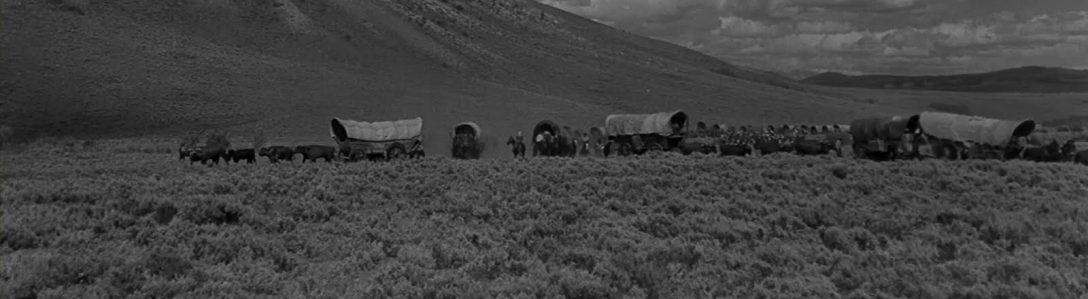
A MAN AND A MAID: MAKE WAY FOR TOMORROW (1937)

May 19, 2015

large_make_way_for_tomorrow_08_blu-ray_

In 1936 Leo McCarey drank some expired milk. It was part of an ill-advised publicity stunt that had the crew of the Harold Lloyd comedy The Milky Way (1936) imbibe daily amounts of dairy. One of those fateful sips incapacitated McCarey with undulant fever, after which he went to Palm Springs to get healthy. As part of his unique recovery process he visited a casino, which is where he met playwright Viña Delmar, who would go on to write the screenplays for both Make Way for Tomorrow (1937) and The Awful Truth (1937). So we have food poisoning to thank for two of McCarey’s, and thus Hollywood’s, greatest films. They are both acutely observed movies about marriage that deal with the sacrifices required to maintain that union, with Make Way taking a tragic viewpoint from that of old age, and Awful Truth a comic one from youth. It was the latter, of course, with its joyous happy ending, that won the Oscar and the accolades, while the devastating Make Way was also a critical favorite but a popular failure. But when a film is released on the Criterion Collection, it can no longer be called under-appreciated. Make Way For Tomorrow was released earlier this month on Blu-ray from Criterion, in a crisp transfer that faithfully renders the thick grain of William C. Mellor’s naturalistic photography.

tumblr_nktf22Uw2y1tpfnxzo1_1280

Make Way for Tomorrow was a very personal project for McCarey. While recovering from the milk-induced fever, his father passed away, and he was too ill to attend the funeral. McCarey told Peter Bogdanovich he got the idea for the film because, “I had just lost my father and we were real good friends; I admired him so much.” He settled on the Josephine Lawrence novel Years Are so Long (’34) as the basis of the story, which contained the basic outline of a group of siblings struggling to take care of their aged parents. While in Palm Springs, McCarey recalled, he went to a gambling joint, and:

there I saw a most attractive girl; I tried to start a conversation with her, and she snubbed me. Now, my wife had given me this very good Cosmopolitan story to read: it was about old folks, and because I’d just lost my father, my wife had said to read it. It was by a gal called Viña Delmar, and I called the studio and told them I’d like an appointment with her for an interview; they called back and said she’s in Palm Springs. And I said, ‘Well, run her down in Palm Springs — that’s where I am.’ So another exchange of phone calls and they said she’d be over to my hotel at such and such at time. The desk announced that “Miss Delmar is here” to see me, and you can imagine both our surprise when it turned out to be the girl I’d tried to get to know at the gambling place.

They “found a mutual wavelength” and worked together on the screenplay. Their meet-cute sounds like something out of a McCarey screwball comedy, but whatever motivated their collaboration it created uniquely complicated characters – all of them have mixed, believable motivations. The children are selfish as all children are selfish, and the parents are invasive, judgmental and crotchety. The story concerns Barkley (Victor Moore) and Lucy Cooper (Beulah Bondi), a kind-hearted, if absent-minded, old married couple whose house is slated to repossessed by the bank. They gather their five children in the hopes of coming to a long-term solution. But instead the parents are separated and passed from child-to-child like a game of filial hot potato. Lucy is ensconced with her son George (Thomas Mitchell), his wife Anita (Fay Bainter) and their daughter Rhoda (Barbara Read). A perennial fourth wheel, she ambles into Anita’s bridge lessons and interrupts Rhoda’s dates. She feels unwanted, while her son feels under siege.

0000227442

Barkley is living with his daughter Cora (Elisabeth Risdon) and her family. Cora is an overworked housewife who grows to resent the added burden of her father’s presence, treating him more like a tenant than a personal guest. There are idle plans to reunite Bark and Lucy, but the children can never come to an agreement, and the film ends with one final separation, but not before a dreamlike revivification of their love, a sequence of miraculous power that affirms their bond just before it is severed for good.

make-way-for-tomorrow-main-review

McCarey had little support at Paramount to film such a grim tale. He could only make the picture by tearing up his contract and working at a flat rate. Publicity was hard to come by because, according to a 1936 New York Times article, “the 250 correspondents and fan-magazine writers…shunned the sets during filming” due to a lack of star power. Beulah Bondi and Victor Moore didn’t move tabloids, but they give remarkable performances of a couple that live through and for each other. McCarey was a master of reaction shots since the slapstick days, from Charley Chase through Laurel & Hardy, and he could use the same technique for drama. Bondi and Moore’s looks are not deadpan reactions at a world collapsing around them, like Chase, but ones that build a life, moment to moment.

61lWqyxoEmL._SL1024_

Then there were poorly received test screenings. Again in the Times:

When the picture was completed it was taken 500 miles to Oakland for a sneak preview. There McCarey found he had been too faithful, that he had invested his story with too much reality. He had presented the problems without a suggestion of veneer and the audience resented it. “The children of the film reacted to situations just as the majority of children react, but the public isn’t ready for an excess of honesty yet.

He reshot entire scenes and “lightened the whole materially.” It is hard to conceive that Make Way for Tomorrow could be any more honest than it is now, but there is one scene of the children admitting their guilt that could be a sop to the masses. As their parents are taking one last cab ride together before their separation, the film awkwardly cuts to a nondescript living room, where daughter Nellie says, “If we don’t go to the station they’ll think we’re terrible.” George responds, “Aren’t we?”

Before Bark catches a train to California for a rest cure recommended by his doctor, and Lucy moves into a separate old folk’s home, they meet for one last time in New York City, where they retrace their honeymoon steps from decades before. The city opens up to them as if in a dream, as they are given a ride from a car salesman, free drinks from the hotel manager, and a waltz from the conductor. They drink, get a little tipsy, and are merry. Lucy recites an old anonymous poem about marriage, “A Man and a Maid” that closes:  “My dear, she said/the die is cast/the vows have been spoken/the rice has been thrown/into the future we will travel alone/With you, said the maid/I am not afraid.” Bark and Lucy use art and drink to delay reality, the excess of reality that so turned off viewers. But it seeps in anyway. Bark gets on a train, Lucy waves goodbye, with nothing left to sustain them but the memory of a transcendent love. The question is whether that is enough.