Carpenter Craft

Originally published at the BAM (Brooklyn Academy of Music) blog on February 5, 2015

By R. Emmet Sweeney
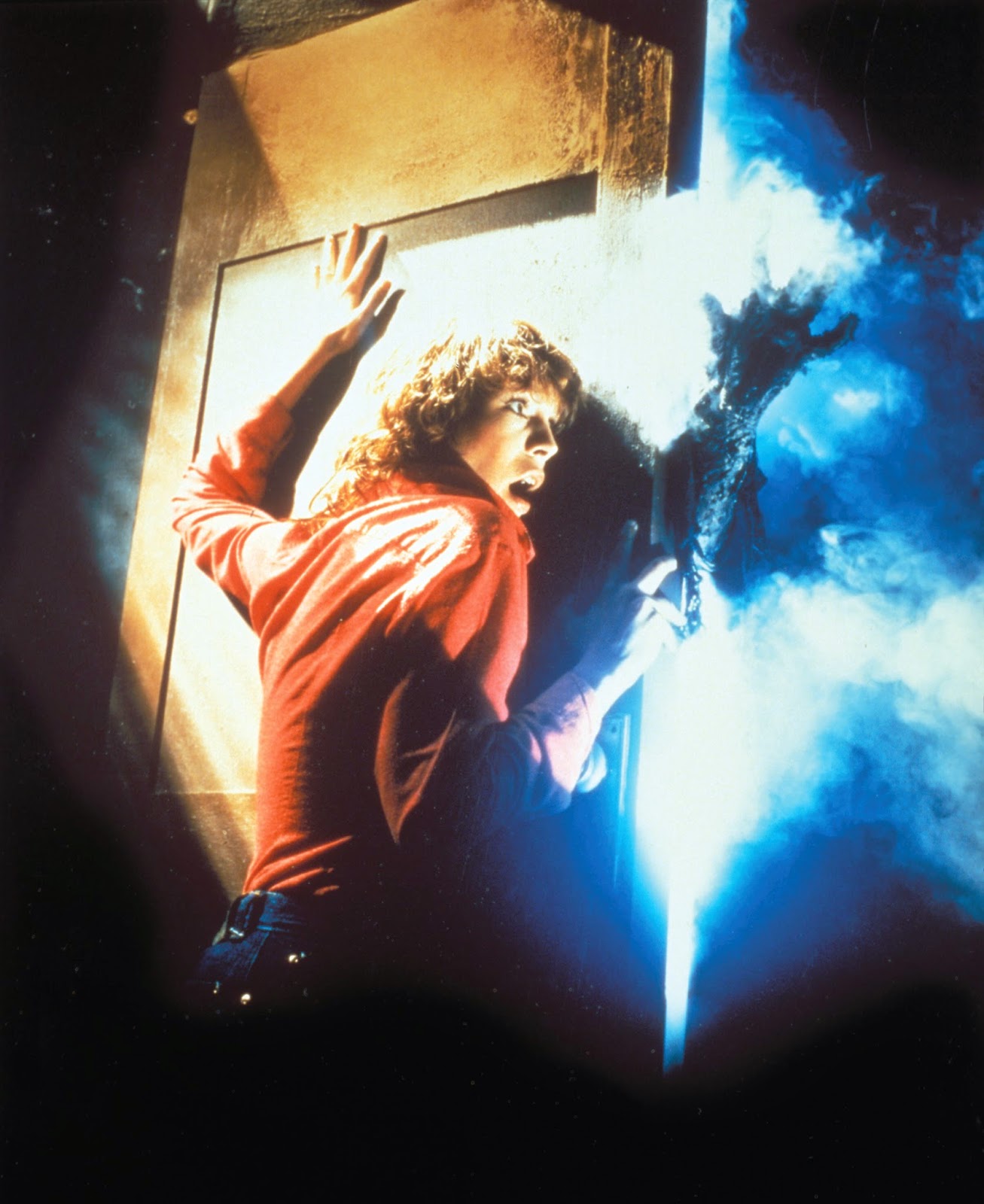
He came of age in film school at the same time as the Steven Spielberg/George Lucas “movie brats,” but John Carpenter is generally excluded from triumphal histories of 1970s New Hollywood cinema. Yet Carpenter’s genre reinventions have become as equally influential as those of his cinéaste brethren. While Lucas and Spielberg tried to supersize the 1930s adventure serial, Carpenter took the professionals-on-a-mission films of Howard Hawks and fractured them for the Reagan era. He developed a style of slow-burn—precisely choreographed widescreen features that were irresistible tension-and-release machines. But while Jaws and Star Wars appealed to all audiences, Carpenter’s subversive streak led to films deeply suspicious of the American dream, creating entertainments that stick in your throat.

John Carpenter was born into an artistic family on January 16, 1948 in Carthage, NY. His father Warren was a musician and teacher who moved the family to Bowling Green in 1953 after accepting a position teaching music history and theory at Western Kentucky University. After a few years of college at Western Kentucky, John transferred to USC to study filmmaking, where he co-wrote the Oscar-winning short The Resurrection of Broncho Billy (1970).

Carpenter would drop out of USC to complete production of his first feature, the absurdist space-madness comedy Dark Star (1974), written with future Alien scribe Dan O’Bannon. Shot on a shoestring with blinking cardboard sets and an alien made out of a beach ball, it skewers self-important space opera three years before Star Wars. His first fully-funded production was Assault on Precinct 13 (1976), a siege film loosely based on Hawks’ Rio Bravo in which a black cop, a white convict, and a no bullshit secretary hole up in an isolated prison to fight off a gang attack. Carpenter shows a mastery of the wide Panavision frame, making it a film of constricting horizontals: of shotgun barrels and gang members strung along a street like holes in a belt.

Then came the depth charge of Halloween (1978), conceived with Assault’s assistant editor Debra Hill (a producer through Escape From New York), which was well funded enough for Carpenter and DP Dean Cundey to play with a Panaglide Steadicam rig, which patiently tours the well-appointed bourgeois interiors soon to be sullied by Michael Myers.

Carpenter and Cundey then made a string of creeping-dread classics dependent on groups dissolving from within—collapsing the Hawksian ideal of creating a family out of the professional unit. The Fog (1980) pitted a collection of outcasts against leprous ghost pirates, out for vengeance for past colonialist sins. Escape from New York (1981) forces apolitical nihilist Snake Plisskin (Kurt Russell) to play nice with the authoritarian US government as well as the crazies on Manhattan island prison. (In the jokey, underrated 1996 sequel Escape from L.A., Plisskin turns into something of an accidental revolutionary). In Carpenter’s The Thing (1982, adapted from the same novella as the Hawks classic), an Arctic research team discovers a shape-shifting alien, and paranoia destroys them. It’s the first part of a loose “Apocalypse” trilogy that also includes Prince of Darkness (1987; Satan will end the world) and In the Mouth of Madness (1994; HP Lovecraft-inspired bestsellers will end the world).

The box office failure of The Thing led Carpenter to take assignment jobs, including the efficient if impersonal Stephen King killer car movie Christine (1983), and the beautiful alien road movie romance Starman (1984), in which the NSA is the villain. They Live (1988) provides his most explicit political statement, with aliens turning the Me Generation populace into literal consumerist zombies. It is urgent, blunt force pulp commentary that has Rowdy Roddy Piper slugging complacency in the face.

A narrative of decline has emerged around his post-1980s work, but that is why retrospectives like this are so necessary. The gonzo super-natural Western Vampires (1998) and Ghosts of Mars (2001) are gloriously scuzzy throwbacks to his Assault days, while The Ward (2010) is an elegantly composed haunted psych ward movie that entraps its inmates inside low-angle tracking shots.

Carpenter has retained his subversive vitality, taking archetypally American weird tales and investing them with a destabilizing dread.

SIEGE MENTALITY: ASSAULT ON PRECINCT 13 (1976)

November 19, 2013

assault-on-precinct-13-3

The violence in Assault on Precinct 13 is a result of simple geometry. Director and writer John Carpenter sets up four narrative lines that collide at a soon-to-be-shut-down police station. Taking advantage of the wide Panavision frame, Carpenter emphasizes horizontals, from long shotgun barrels to threatening gang members strung out across a darkened road like holes in a belt. This nearly wordless group of thugs has the station surrounded, its cowering occupants an uninspiring group of rookie cops, wounded secretaries and wiseass convicts. Enclosed and in the dark, these panicked heroes learn how to turn the space to their advantage, choking off the gang’s freedom of horizontal movement and funneling them into a narrow chamber that evens the odds. Reducing the action film to its basic elements, Assault on Precinct 13 still packs the force of a blunt object to the cranium. The textured transfer on the new Blu-Ray, out today from Shout! Factory, is the ideal way to re-acquaint yourself with its concussive impact.

ASSAULT-ON-PRECINCT-13-1976-poster

Carpenter’s first feature, the sci-fi comedy Dark Star, had started as a student film project during his time at USC, completed in stops and starts when money became available. Assault marked his professional debut, with a full cast and crew to go along with producer demands. The reported budget was $100,000, and he had twenty-five days to shoot it in. Originally titled “The Anderson Alamo”,  Assault was his homage to Howard Hawks’ Rio Bravo (1959). Unable to afford an editor, Carpenter cut the film himself, using the pseudonym “John T. Chance”, the name of John Wayne’s character in the Hawks Western. Without the resources or the acting talent at Hawks’ disposal, Carpenter reduces the earlier film’s leisurely story to its central siege sequence. John Wayne, , Dean Martin, Walter Brennan and Ricky Nelson hole up in the one-horse town’s prison to guard inmate Claude Akins, whose land-grabbing brother has sent his hired goons to break him out. The prison interior becomes a proving ground, where Martin battles his alcoholism and Nelson enters maturity, and Carpenter uses Precinct 13 to similar effect. Outside of the station house all the characters are ciphers, while inside their inner lives begin to leak out.

The four narrative strands are: Ethan Bishop (Austin Stoker) is a rookie cop sent to oversee the shutdown of Precinct 13; a local gang, who has stolen a large cache of weapons, stalks through the town; a father and daughter innocently prepare for their day; three convicts are being transported through town on a bus. A sick prisoner lands the bus at Precinct 13, while the father is chased in as well, as the only eyewitness to a cold-blooded murder. Shot in various locations in Los Angeles, from Watts to North Hollywood, the exteriors are wincingly bright, exposing vice in every shot. A bulbous warden lands a blow at cuffed inmate Napoleon Wilson (Darwin Joston) before he is transferred, while the silent gang commits random acts of violence. Anarchy is in the air.

Assault-on-Precinct-13-1976

Inside Precicnt 13, a Hawskian world blooms. Bishop is eager to honor and serve the city, despite being born black in the underprivileged neighborhood of the district. He’s cool and calm as the facade of law and order comes crumbling down around him. He’s aided by Leigh (Laurie Zimmer) a world-weary secretary who matches wits with Napoleon – a convicted murderer with a deadpan retort to every calamity, and who is always in search of a smoke. Carpenter fans the erotic flare between Napoleon and Leigh with moves from To Have and Have Not, the Hawks noir with Bogie and Bacall from 1944. The actors are limited in range, but Carpenter gets Laurie Zimmer to speak in a low, husky monotone, channeling Bacall’s slinky slow motion delivery. She is the only one able to puncture Napoleon’s armor of distanced cool. When she lights his cigarette with a flick of her wrist, a glimmer of recognition flashes across his face. She is, like him, a guarded loner.

IMG_7306

There is not much time for flirtation in Assault, with death literally at the door, so Napoleon fatalistically brushes off their attraction with a joke:  “In my situation, days are like women – each one’s so damn precious, but they all end up leaving you.” Then the bullets start quietly flying out of the gang’s silencers, and the group begins to get comfortable with the idea of death. It creeps closer as the gang pushes them into the basement, their last stand dependent on a  few bullets and a tank of gas. This finale borrows from The Thing From Another World (1951), a favorite from Carpenter’s childhood that Hawks produced (and likely directed, despite being credited to Christian Nyby). Where that film climaxes with its vegetal alien stumbling on fire through a cloistered hallway, Assault does the same with a multi-cultural group of gangland killers in the cellar of a police precinct. While on the streets outside they have every angle covered, down in the depths they are funneled into a shooting gallery. The more cramped Carpenter’s frames become, the more the attackers lose their edge. At this point all the narrative lines converge into one final conflagration.

Assault on Precinct 13, furtively released in the United States as a rote exploitation item, was rapturously received in England. Carpenter became the subject of an adulatory profile in Time Out London by Tony Rayns and Scott Meek in March, 1978, months before Halloween made him a household name. Clearly frustrated at a lack of studio support, Carpenter makes complaints that still ring true today: “The money has gone way up, and a lot fewer movies are getting made. And it’s because so much money is being gambled on individual films that so many hands get to finger each project. I wonder how many films that are personal to a director are going to be made in the years to come.” Carpenter had his run, and is now back to struggling to get projects off the ground. His last feature was the severely underrated The Ward (2011, reviewed here), for which the closing lines of the Time Out London piece would be apt: “Check out for yourself what America doesn’t know it’s missing.”