Where the Action Was: In an Age Decried for both CGI and Festival Pandering, R. Emmet Sweeney Presents the Best in Fight Scenes

Originally published in the January-February 2020 issue of Film Comment

By R. Emmet Sweeney

2010

Robot (Enthiran)

Androids Assemble

Proof that South Indian cinema could compete on the same level as Bollywood, this mind-bending sci-fi spectacular directed by S. Shankar, with stunt choreography by Yuen Woo-ping (!), is a robot-gone-bad Tamil blockbuster starring ageless Superstar Rajinikanth and Aishwarya Rai. The centerpiece is a cops vs evil robot battle in which the android, now replicated into hundreds of clones, arranges itself into different murderous shapes, including a ball of guns, a bullet-spitting snake, a drill, and in its final form, a skyscraper-sized giant who flips off the scientist who created him. It is a sequence of joyful, surreally mischievous destruction.

2011

Fast Five

Vault Heist

After Fast & Furious, Justin Lin wanted to ease back on CGI and put the emphasis on more practical car stunts. Wily veteran choreographer Jack Gill obliged with the most memorable sequence in the franchise, a daredevil heist in which Vin Diesel and Paul Walker drag a bank vault out of a building and onto the highway, connected to their souped-up Dodge Chargers with a length of cable. The vault model used weighed 10,000 pounds, and the stunt drivers make it swing into oncoming corrupt cop cars with jaw dropping precision.

2012

The Raid: Redemption

Hallway Machete Fight

The most influential action film of the decade is a relentlessly bloody low-budget fight film from Indonesia, directed by Welsh filmmaker Gareth Evans. It introduced Iko Uwais as both star and fight choreographer, along with the Silat style of martial arts (which necessitates close range to utilize the sharp edges of knees and elbows). Its structure of one never-ending fight was a model for John Wick, Timo Tjahjanto’s The Night Comes For Us, and endless knockoffs like Jailbreak. It’s hard to pick just one fight out of the endless flow, but I’ll go with the machete fight in a hallway, in which Iko is outnumbered 4 to 1, and out machete’d by the same amount. After a establishing shot of the bleak setup, Uwais swiftly closes the gap and delivers a blisteringly fast array of high knees and elbows to various faces, ending with an exclamation point as he slams the final opponents head into the ground like he is cracking a coconut.

2013

Drug War

Final Shootout

Drug War is an exacting and pitiless mapping of cops, informants, and drug dealers, all triangulating to a deadly fate. It is another of Johnnie To’s rigorously composed gangster films, but the first made with Mainland money. This one feels more mechanical than the Elections or Exiled, as if they are playing out predetermined fates. Timmy (Louis Koo) is the snitch, who forces a collision between the undercover cops who are controlling him and the drug gangs he has been attempting to infiltrate. To orchestrates the final shootout in near silence, punctuated by short staccato bursts of bullets as Timmy tries to orient the cops and gangs against each other in a mutually assured destruction of crossfire. But the geometry fails Timmy as well, who ends up handcuffed to his own deadly design.

2014

John Wick

Red Circle Club

For Hollywood action films the 2010s were defined by the ascendance of 87eleven Action Design. Founded by ex-stuntmen Chad Stahelski and David Leitch, their innovation was being a one stop shop, selling complete action sequences to films still in preproduction, providing the choreography, the stunt performers, and the 2nd unit direction. They would even train your star. Previously these were all separately staffed jobs, changing how blockbusters did business.

Stalhelski and Leitch, of course, went on to start the ongoing John Wick franchise, which was heavily influenced by Hong Kong choreographer Yuen Woo-ping, who they saw at work on The Matrix as members of the stunt team. The standout sequence in the first John Wick is the Red Circle nightclub shootout, an homage to Jean Pierre-Melville’s Le Cercle Rouge. Keanu Reeves is a model-like figure, like Alain Delon in the Melville film, who cuts through the Russian mob hangout with frictionless “gun-fu” and Brazilian jiu-jitsu takedowns. The muzzle flashes of the gunfight nearly matches the rhythm of the flickering disco ball lighting, and when Reeves emerges onto the nightclub floor, with undulating patterns projected behind him as the throbbing EDM fills the soundtrack, it momentarily embraces its destiny as a musical.

2015

Mad Max: Fury Road

Final Chase Back to The Citadel

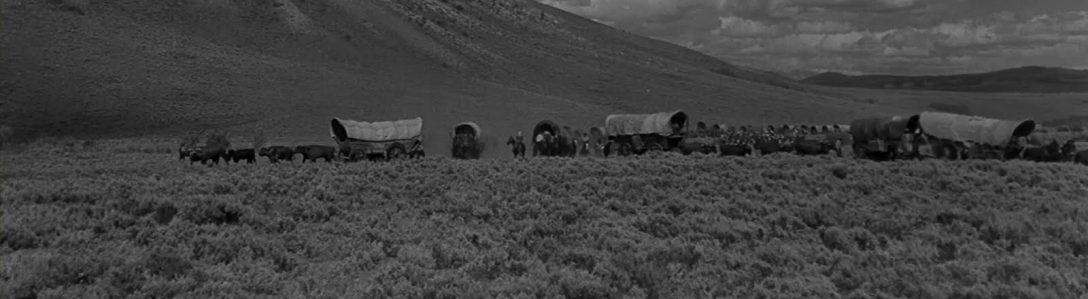
Like The Raid, this is one long action sequence, though a chase film rather than a fight, a rolling revue of malformed steampunk freaks, pole jumping maniacs, and one demented power chord-playing mascot, all driving armored muscle cars trying to take down a one-armed Charlize Theron and a mute Tom Hardy. An overwhelming work orchestrated by George Miller and his longtime stunt choreographer Guy Norris, it is a testament to the remarkable stunt performers who labored for five months to get their vision up on the screen. It all comes together with overwhelming force in the final chase, a gonzo act of action filmmaking in which there are spectacular car crashes, blooming explosions, obscenely risky stunts (especially on those bendy poles that dip into moving vehicles), and hand-to-hand combat atop speeding wrecks that is pure piston-pumping poetry.

2016

The Final Master

Series of Duels

Chinese director Xu Haofeng is also a martial arts historian, and his films reflect his studies. He believes that “A real kung fu battle lasts only seconds. And the results of a competition between top practitioners are decided even before opponents begin combat.” The Final Master is another of his intensely ritualized takes on the genre, and it ends with a hypnotic succession of duels as Liao Fan, who trained for two months before shooting, consecutively defeats the masters from nineteen schools of kung fu in Tianjin. Fighters are doomed by their choice of weapon, stance, or target before the bouts have even begun, giving these fights an abstracted quality, as if they had already taken place and these are re-enactments or, perhaps more accurately, how-to manuals. Liao Fan often pauses at the end of each encounter, holding the winning thrust in place for examination by willing students.

2017

Baahubali 2: The Conclusion

Pindari attack on Kuntal Desh

The biggest Indian movie of 2017 was this mythological action melodrama directed by SS Rajamouli and starring the dashingly shirtless Prabhas. A complex tale of a warring royal family and the titular Baahubali’s (and son’s) thwarted path to the throne, its action scenes have an inventive pulp sensibility that recently went viral on Twitter (people love soldiers getting slingshotted onto a castle). I found the most joy in the Pindari attack on Kuntal Desh, when Baahubali Jr first meets his great love Princess Devasena (Anushka Shetty). Their meet cute occurs as they turn a bloody archery fight against Pindari warriors into a giddy dance, spinning each other around into position to kill dozens of unlucky soldiers. It’s love at first archery bow sight.

2018

Mission: Impossible – Fallout

Bathroom Fight

The Mission: Impossible franchise has become a reliable source of insane Tom Cruise stunts for years now, and Fallout is no slouch with its 25,000 foot HALO jump out of a jet. But my favorite of the Wade Eastwood designed set pieces is the bathroom fight between Tom Cruise, Henry Cavill, and Liang Yang (an expressively intense stuntman getting his first extended acting job here) which is brutal, funny, and effortlessly conveys the personality of the characters. Cruise is mostly out of breath and a step behind, buying time to think his way out of it, while Cavill is a meathead monster who smashes Yang through a mirror and raises his fists as if he was in a golden gloves bout and not a black ops mission. Yang is the superior fighter to them both, and his face exhibits an intimidating sense of calm that will be pierced only when an unexpected fourth person enters the fray, rearranging the power dynamics for the last time in the fight.

2019

Avengement

Pub Brawl

The latest collaboration between British DTV kings Scott Adkins and director Jesse V. Johnson (their fifth in two years) is a bare knuckle brawler of a film. Adkins plays a small time London crook hardened by his time in the pen – someone put a price on his head so he is constantly getting into ugly, tooth shattering fights. The film tracks his revenge against the gang who put him into jail, holding them hostage at a grimy pub until his brother (Craig Fairbrass) shows up – and then all hell breaks loose. Adkins and fight coordinator Dan Styles opt for sloppy, inebriated violence, finding creative blood-spurting uses for 2x4s, crowbars, and conveniently placed pickled egg jars.

THE TOP TWELVE GENRE FILMS OF 2011

December 20, 2011

genre 2011

As the carcasses of prestige pics get picked over by awards committees and prognosticators, I like to distract myself from this pointless posturing by watching movies featuring actual corpses. After last year’s rundown of genre flicks received a good response, I return to the bloody well again, this time with twelve of my favorite action/horror/exploitation items released in the past year. Sure to be ignored by your local film critics circle, they are works of grim resourcefulness and ingenuity, deserving of more attention. I look forward to your criticisms, insults and recommendations in the comments. My picks are presented in alphabetical order.

Attack the Block, directed by Joe Cornish

With his origins in sketch comedy (the British “Adam and Joe Show”), one would expect Joe Cornish’s debut alien invasion feature to be episodic and tongue-in-cheek. While laced with humor, Attack the Block is instead a sleekly designed chase film, as a wanna-be gang of teens defend their South London project from the alien hordes. It was shot at the dilapidated Heygate Estate (which is now undergoing demolition), whose brutalist, prison-like facade emphasizes the kids’ status as second-tier citizens, convicts even in their freedom. They roam the streets and halls, led by Moses (played with sensitive stoicism, and shades of Gary Cooper, by John Boyenga), harrassed by cops while they harass (and rob) outsiders, as if outlaws in their own Wild West, Moses facing his own kind of High Noon.

***

Detective Dee and the Mystery of the Phantom Flame, directed by Tsui Hark

I devoted an entire post to this pulpy marvel back in April (read here), so I’ll be brief here. Suffice it to say that Hark combines martial arts, Sherlock Holmes and steampunk into one of the most deliriously entertaining films of the year. Reveling in the sheer joy of storytelling, it hearkens back to Poverty Row serials of the 30s and 40s, telescoping an entire season’s worth of incidents and cliffhangers into its 2 hour running time. And yes, the CGI looks fuzzy and second-rate, but for me, it only added to its ramshackle charm.

***

Fast Five, directed by Justin Lin

I had not seen any of the previous iterations of this revived testosterone oil slick of a franchise, attracted only by the presence of Dwayne “The Rock” Johnson, who enlivens whatever material he swaggers into. He is, of course, a magnetic presence in this one, his Diplomatic Security Service agent growling out orders with a starved pit-bull intensity. But the bombastic world that Justin Lin inflates around him is equally compelling – especially the turbocharged action sequences which are both outrageous and rigorously designed, from the moving train car heist to the torn-out bank vaults which are chained to cars and used as wrecking balls. Justin Lin is one of the few Hollywood directors to have firm control of the modern action film aesthetic, his quick cuts and mobile camera managing to convey a coherent geography (if this is “chaos cinema”, I’ll take it!). Examine the extended, wall breaking fistfight between The Rock and Vin Diesel for a meaty example.

***

Insidious, directed by James Wan

Finding creative solutions to monetary restrictions led James Wan to make one of the most profitable movies of the year. Insidious was made for $1.5 million and has since earned $97 million worldwide (figures from BoxOfficeMojo). Building tension off of long takes, smoke machines and a record playing Tiny Tim’s “Tiptoeing Through the Tulips”, this is an elegant shocker that also has the gall to build defined characters. Patrick Wilson is a distant, condescending husband and father, Rose Byrne an artistically frustrated songwriter turned housewife. Wan and screenwriter Leigh Wannell use the couple’s bad faith and turn it into the stuff of nightmares — their mutual resentments manifesting in the form of a vengeful wraith who absconds with their child. The second-half dimension-folding freak-out fails to exert the same slow-burn creep of the haunted first, but it still houses more indelible scares than any other film this year.

***

I Saw the Devil, directed by Kim Jee-woon

A cat-and-mouse revenge thriller where the roles of hunter and prey are continually reversible. The sociopathic killer Kyung-chul (Choi Min-sik) and secret agent Soo-hyun (Lee Byung-hun) engage in a pas-de-deux of sadism, each torturing the other in a game of gruesome one-upsmanship. Containing elements of fairy tales (a cannibal’s house reminiscent of Hansel and Gretel) and self-reflexive black humor, it attempts to encompass all forms of revenge narratives, seeming, as Dave Kehr wrote, to be “the natural endpoint in the revenge film cycle kicked back off by Tarantino.”

***

The Mechanic, directed by Simon West

The pick of the Statham platter this year (other options: Killer Elite and Blitz), this remake of the 1972 Michael Winner/Charles Bronson original is an effectively no-nonsense bruiser. Statham is upscale hitman Arthur Bishop, who takes on hard-headed Steve McKenna (Ben Foster) as an apprentice. Bishop is an ascetic aesthete, living in a gorgeous arts & crafts style cabin on the water, with a preference for high-necked cable-knit sweaters out of the J Crew for assassins catalog. McKenna is necessarily a bit of a drunk and a hothead, needing the guidance of Bishop’s meditative nowhere-man. Director Simon West, if not exactly a stylist, is at least efficient, and frames fight scenes of lucid brutality. Statham brings a coiled physicality and a reliably self-effacing charm, while Ben Foster continues his run of mannered, fastidiously manic performances, his McKenna exhibiting non-stop DTs. He pops off the screen with garrulous intensity, and he’s building a gallery of eccentrics worthy of the great character actors. He’s no M. Emmet Walsh yet, but he’s on his way.

***

Point Blank, directed by Fred Cavaye

A refreshingly brisk 84 minutes long, this breathless French thriller wastes no time on exposition and races headlong into a chase. Samuel (Gilles Lellouche) is a nurse in training who inadvertently interrupts the murder of a hood (Roschdy Zem) in the ER. Soon his wife gets kidnapped and he is forced to ally himself with Zem to save his wife and his reputation. They race through Paris city streets, with Cavaye’s camera following them in hurtling tracking shots. Structured as one epic sprint, there is no time to sketch in character detail or complicated plot maneuvers, so while there is no emotional investment here, it still packs quite a kick of adrenaline.

***

The Robber, directed by Benjamin Heisenberg

A resolutely anti-psychological heist film, it examines the daily routine of marathon runner and bank robber Johann Rettenberger with clinical detachment. The true story it is based on, of “Pump-Gun Ronnie”, a runner who also wore a Reagan mask during jobs, is more spectacular than what it is on screen. Heisenberg pares away any hint of backstory, forcing lead actor Andreas Lust to express everything through his sinewy body. Curling into himself, Lust rejects any outside help, even recoiling at the accidental touch of a stranger in a park. It is when he falls for his childhood friend Erika (Franziska Weisz) that he lets the outside world inside – which collapses his carefully manicured facades. Outside of this, it’s a terrifically staged action film, including an open air stunner in which Lust sprints from one bank robbery to another, weaving through hotel lobbies, parking garages and open fields – leaving the police huffing and puffing behind him. Using controlled handheld camera (no shaky cam here) in sinuous long takes, Heisenberg and DP Reinhold Vorschneider create one of the most propulsively exciting chase scenes of the year.

***

Stake Land, directed by Jim Mickle

My favorite vampire experience since Mel Brooks’ Dracula: Dead and Loving It. So it’s been a while. Set in a post-apocalyptic America ravaged by the pointy-toothed beasts, it’s part survivalist horror, part road movie, and anchored by a quietly charismatic performance by Nick Damici (who also co-wrote the screenplay with Mickle). Damici plays “Mister”, a crusty self-sustaining loner who has built his life around a violent routine: rifle abandoned shops for food and dust a few blood suckers. He picks up Martin (Connor Paolo) along his desultory journeys, the lone survivor of a slaughtered family. Mentoring Martin in the ways of survival and vamp-killing, Mister gains a purpose outside of himself, and is determined to ferry Martin to “New Eden”, a supposed safe zone in Canada. Mickle shoots the film in a dusky low-light, as if in a perennial twilight, where danger lurks in every unexplored nook and cranny, from vamps to the fundamentalist cult which worships them. With haunting makeup and creature design, these are not the dapper vampires du jour, but demons in decaying bodies, oozing goopy fluids which can only be replaced by fresh blood. It’s a genuinely unique vision – and one that aids the film’s subtle allegory of American intellectual decline (it’s no coincidence the promised land is in Canada).

***

Unknown, directed by Jaume Collet-Serra

Following up the cold precision of his ace horror flick Orphan, Serra again churns out a film of with strong compositional lines and an entertainingly ridiculous scenario. What stands out this time is his tactile sense of place, a multi-cultural Berlin of five-star hotels and seedy flop-houses. It’s a huge improvement on its model, Taken, the previous Liam Neeson Euro-sploitation outing, which was directed by Pierre Morel. While that film took place in a world of Eastern-European stereotypes and chopped its action sequences to bits, here the city still seethes with racial tension (a taxi dispatcher blames the city’s perceived decline on immigrants), but Neeson is assisted in his quest by a Bosnian cab driver (played convincingly by Diane Kruger) and her African immigrant pal named Biko (a nod to South African activist Steve Biko, played by Clint Dyer). As with Orphan, its actions sequences are concise bits of legible brutality . Bruno Ganz steals the movie as a proud former Stasi member who aids Neeson in his quest for identity. In what is surely to be one of the finest scenes of the year, Frank Langella swings by to cradle Ganz in his arms, as they discuss how to die with dignity.

***

The Ward, directed by John Carpenter

The unjustly derided return to the big screen for John Carpenter, who shows his talent for slow-burn scares is as sharp as ever. Working with a hacky script, Carpenter turns this story of a haunted insane asylum into an experiment in visual repetition, evoking the ritualized circular movements of these girls’ daily lives. An example of form triumphing over content. You can read my full thoughts in my post from June.

***

The Yellow Sea, directed by Na Hong-jin

Na Hong-jin’s follow up to The Chaser, is an operatic bloodbath about a poor Chinese immigrant in Korea, trying to find the wife who abandoned him years ago. There are no guns in this movie – everyone gets stabbed or bludgeoned by an axe-handle– and there are some epic battles here. With South Korea’s highly restrictive gun ownership laws, even the underworld has trouble obtaining firearms. Without shoot-outs, each death becomes more personal, because you have to get close and smell the sweat of your opponent before taking their life. It is a ritual bloodletting to rid the world of the infection of humanity.

Honorable Mentions: Drive AngryWreckedBurke & Hare (which I wrote about here).