Originally published in the January-February 2020 issue of Film Comment
By R. Emmet Sweeney
2010
Robot (Enthiran)
Androids Assemble
Proof that South Indian cinema could compete on the same level as Bollywood, this mind-bending sci-fi spectacular directed by S. Shankar, with stunt choreography by Yuen Woo-ping (!), is a robot-gone-bad Tamil blockbuster starring ageless Superstar Rajinikanth and Aishwarya Rai. The centerpiece is a cops vs evil robot battle in which the android, now replicated into hundreds of clones, arranges itself into different murderous shapes, including a ball of guns, a bullet-spitting snake, a drill, and in its final form, a skyscraper-sized giant who flips off the scientist who created him. It is a sequence of joyful, surreally mischievous destruction.
2011
Fast Five
Vault Heist
After Fast & Furious, Justin Lin wanted to ease back on CGI and put the emphasis on more practical car stunts. Wily veteran choreographer Jack Gill obliged with the most memorable sequence in the franchise, a daredevil heist in which Vin Diesel and Paul Walker drag a bank vault out of a building and onto the highway, connected to their souped-up Dodge Chargers with a length of cable. The vault model used weighed 10,000 pounds, and the stunt drivers make it swing into oncoming corrupt cop cars with jaw dropping precision.
2012
The Raid: Redemption
Hallway Machete Fight
The most influential action film of the decade is a relentlessly bloody low-budget fight film from Indonesia, directed by Welsh filmmaker Gareth Evans. It introduced Iko Uwais as both star and fight choreographer, along with the Silat style of martial arts (which necessitates close range to utilize the sharp edges of knees and elbows). Its structure of one never-ending fight was a model for John Wick, Timo Tjahjanto’s The Night Comes For Us, and endless knockoffs like Jailbreak. It’s hard to pick just one fight out of the endless flow, but I’ll go with the machete fight in a hallway, in which Iko is outnumbered 4 to 1, and out machete’d by the same amount. After a establishing shot of the bleak setup, Uwais swiftly closes the gap and delivers a blisteringly fast array of high knees and elbows to various faces, ending with an exclamation point as he slams the final opponents head into the ground like he is cracking a coconut.
2013
Drug War
Final Shootout
Drug War is an exacting and pitiless mapping of cops, informants, and drug dealers, all triangulating to a deadly fate. It is another of Johnnie To’s rigorously composed gangster films, but the first made with Mainland money. This one feels more mechanical than the Elections or Exiled, as if they are playing out predetermined fates. Timmy (Louis Koo) is the snitch, who forces a collision between the undercover cops who are controlling him and the drug gangs he has been attempting to infiltrate. To orchestrates the final shootout in near silence, punctuated by short staccato bursts of bullets as Timmy tries to orient the cops and gangs against each other in a mutually assured destruction of crossfire. But the geometry fails Timmy as well, who ends up handcuffed to his own deadly design.
2014
John Wick
Red Circle Club
For Hollywood action films the 2010s were defined by the ascendance of 87eleven Action Design. Founded by ex-stuntmen Chad Stahelski and David Leitch, their innovation was being a one stop shop, selling complete action sequences to films still in preproduction, providing the choreography, the stunt performers, and the 2nd unit direction. They would even train your star. Previously these were all separately staffed jobs, changing how blockbusters did business.
Stalhelski and Leitch, of course, went on to start the ongoing John Wick franchise, which was heavily influenced by Hong Kong choreographer Yuen Woo-ping, who they saw at work on The Matrix as members of the stunt team. The standout sequence in the first John Wick is the Red Circle nightclub shootout, an homage to Jean Pierre-Melville’s Le Cercle Rouge. Keanu Reeves is a model-like figure, like Alain Delon in the Melville film, who cuts through the Russian mob hangout with frictionless “gun-fu” and Brazilian jiu-jitsu takedowns. The muzzle flashes of the gunfight nearly matches the rhythm of the flickering disco ball lighting, and when Reeves emerges onto the nightclub floor, with undulating patterns projected behind him as the throbbing EDM fills the soundtrack, it momentarily embraces its destiny as a musical.
2015
Mad Max: Fury Road
Final Chase Back to The Citadel
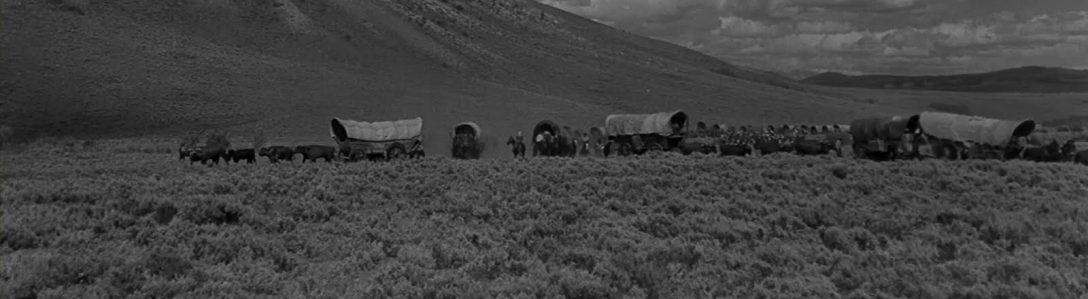
Like The Raid, this is one long action sequence, though a chase film rather than a fight, a rolling revue of malformed steampunk freaks, pole jumping maniacs, and one demented power chord-playing mascot, all driving armored muscle cars trying to take down a one-armed Charlize Theron and a mute Tom Hardy. An overwhelming work orchestrated by George Miller and his longtime stunt choreographer Guy Norris, it is a testament to the remarkable stunt performers who labored for five months to get their vision up on the screen. It all comes together with overwhelming force in the final chase, a gonzo act of action filmmaking in which there are spectacular car crashes, blooming explosions, obscenely risky stunts (especially on those bendy poles that dip into moving vehicles), and hand-to-hand combat atop speeding wrecks that is pure piston-pumping poetry.
2016
The Final Master
Series of Duels
Chinese director Xu Haofeng is also a martial arts historian, and his films reflect his studies. He believes that “A real kung fu battle lasts only seconds. And the results of a competition between top practitioners are decided even before opponents begin combat.” The Final Master is another of his intensely ritualized takes on the genre, and it ends with a hypnotic succession of duels as Liao Fan, who trained for two months before shooting, consecutively defeats the masters from nineteen schools of kung fu in Tianjin. Fighters are doomed by their choice of weapon, stance, or target before the bouts have even begun, giving these fights an abstracted quality, as if they had already taken place and these are re-enactments or, perhaps more accurately, how-to manuals. Liao Fan often pauses at the end of each encounter, holding the winning thrust in place for examination by willing students.
2017
Baahubali 2: The Conclusion
Pindari attack on Kuntal Desh
The biggest Indian movie of 2017 was this mythological action melodrama directed by SS Rajamouli and starring the dashingly shirtless Prabhas. A complex tale of a warring royal family and the titular Baahubali’s (and son’s) thwarted path to the throne, its action scenes have an inventive pulp sensibility that recently went viral on Twitter (people love soldiers getting slingshotted onto a castle). I found the most joy in the Pindari attack on Kuntal Desh, when Baahubali Jr first meets his great love Princess Devasena (Anushka Shetty). Their meet cute occurs as they turn a bloody archery fight against Pindari warriors into a giddy dance, spinning each other around into position to kill dozens of unlucky soldiers. It’s love at first archery bow sight.
2018
Mission: Impossible – Fallout
Bathroom Fight
The Mission: Impossible franchise has become a reliable source of insane Tom Cruise stunts for years now, and Fallout is no slouch with its 25,000 foot HALO jump out of a jet. But my favorite of the Wade Eastwood designed set pieces is the bathroom fight between Tom Cruise, Henry Cavill, and Liang Yang (an expressively intense stuntman getting his first extended acting job here) which is brutal, funny, and effortlessly conveys the personality of the characters. Cruise is mostly out of breath and a step behind, buying time to think his way out of it, while Cavill is a meathead monster who smashes Yang through a mirror and raises his fists as if he was in a golden gloves bout and not a black ops mission. Yang is the superior fighter to them both, and his face exhibits an intimidating sense of calm that will be pierced only when an unexpected fourth person enters the fray, rearranging the power dynamics for the last time in the fight.
2019
Avengement
Pub Brawl
The latest collaboration between British DTV kings Scott Adkins and director Jesse V. Johnson (their fifth in two years) is a bare knuckle brawler of a film. Adkins plays a small time London crook hardened by his time in the pen – someone put a price on his head so he is constantly getting into ugly, tooth shattering fights. The film tracks his revenge against the gang who put him into jail, holding them hostage at a grimy pub until his brother (Craig Fairbrass) shows up – and then all hell breaks loose. Adkins and fight coordinator Dan Styles opt for sloppy, inebriated violence, finding creative blood-spurting uses for 2x4s, crowbars, and conveniently placed pickled egg jars.
 R. Emmet Sweeney