FILM COMMENT SELECTS 2011 (PLUS A NOTE ON UNKNOWN)

February 22, 2011

Screen Shot 2020-01-28 at 4.59.07 PM

In its 11th year, the Film Comment Selects series at Lincoln Center, which runs February 18th – March 4th, is as staunchly idiosyncratic as ever. The slate is chosen by the venerable magazine’s contributors and editors, with an assist from the Asian genre aficionados at Subway Cinema, who are co-presenting three features. Pulling from brows both high and low, they open with the historical excavations of Jia Zhangke’s I Wish I Knew and close with the horror kicks of James Wan’s Insidious and the  morbid comedy of John Landis’ Burke and Hare. In between lies an entire range of obscure festival titles (El Sicario), forgotten repertory gems (Fassbinder’s I Only Want You to Love Me, Peter Yates’ Robbery) and the latest philosophical doc from Werner Herzog, the 3D Cave of Forgotten Dreams. Herzog’s film is one of the few with U.S. theatrical distribution (from IFC Films), so for many of these titles this series is the only opportunity to see them on the big screen.

I’ve seen five films in the program so far, and Jia Zhangke’s I Wish I Knew stands out. As Tony Rayns reported in CinemaScope, Jia was commissioned to make a film about Shanghai for that city’s World Expo in April 2010. As with his last documentary feature,  24 City (2008), Jia uses personal histories to explicate the wider story of his country, from the communist revolution through the introduction and explosion of capitalism. 24 City focused on the industrial city of Chengdu, in which the lifeblood of the town, Factory 420, was being torn down to build a gigantic condominium complex. In the midst of the documentary interviews he introduces a fictional story about the factory, starring Joan Chen.

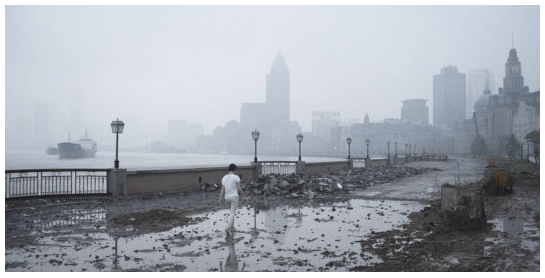
I Wish I Knew deals with a wider canvas, examining the Shanghainese diaspora created by the Communist victory in the Chinese Civil War. Jia talks to survivors in Shanghai, Hong Kong and Taiwan, whose entire lives were uprooted or destroyed, nationalists and communists both. Woven in between these interviews are wordless shots of actress Zhao Tao, Jia’s frequent collaborator, strolling through the ruins of old Shanghai, as skyscrapers get erected all around her. This is an extension of the Joan Chen sequence in 24 City, but also of Jia’s entire corpus, extraordinary documents of living history in which China’s economic miracle inevitably buries and denies the history of the country. From Platform on, Jia has been trying to capture the last breaths of bulldozed and drowned neighborhoods and memories  before they disappear under steel and glass.

The people Jia interviews are natural storytellers. There is Yang Xiaofo, whose father, leader of the Chinese Civil Rights Alliance, was assassinated upon the order of Chiang Kai-Shek. Yang remembers the days when he and his dad would stroll down Nanjing Road and look for coffee shops. Jia then takes his camera and strolls down the modern-day strip, slowly weaving his way through a cafe, until  he settles upon Zhang Yuansun. Zhang informs us his father was a hugely popular Peking Opera performer, and owned a yacht.  But during the Cultural Revolution, the Red Guards declared him a reactionary, ending his career and forcing him to live in poverty. Then Zhang attends a senior dance, twirling to Dick Haymes’ “I Wish I Knew”.

There is an endless list of lost fathers. The most devastating is the story of Wang Peimin, whose dad was executed by firing squad by the KMT weeks before her birth. She has photos of him shortly before his death, handled by impossibly young-looking guards, and with a beatific look on his face, defiantly proud. And despite all of the impossible trials of their youth, all of the subjects share this  stubborn refusal to give up on life, and Jia honors their incredible perseverance. Zhao Tao wanders through the rubble-strewn streets of their past, now abandoned by the city, as the film itself tries to inscribe these spaces back into history. The film is currently without U.S. distribution, but there is a Region 3, English subtitled DVD available at outlets including YesAsia.

***

Cave of Forgotten Dreams was the hottest ticket, as seeing Werner Herzog’s mischievous mug in three dimensions is apparently too provocative to miss. I even spied David Bordwell and Kristin Thompson in attendance, which hopefully means an extended blog post from them both looms in the future. But of course the main pull was seeing the 32,000 year old paintings that cover the interior of France’s Chauvet cave, which the government rarely opens to non-specialists. The spectacle of these ancient masterpieces can be overwhelming, especially the ingenious way in which they were adapted to the undulating surfaces of the walls. Many compositions were arranged in circular groups that lead the eye around the crevasses, imparting a sense of motion. This kinetic aspect appears in the figures themselves, as Herzog notes a bison drawn with eight legs, conveying an idea of speed, which he describes as “proto-cinema”, but which is more proto-Futurism, which is still pretty mind-blowing. The 3D image gives a wondrous sense of depth and curvaceousness inside the cave, but the large segments of interviews with scientists and researchers are a drag in the format. Herzog’s patented mystical madman commentary is pushing into self-parody, but in this case the footage alone is worth the price of admission.

***

QUICK TAKES

The Silence (2010) is a heavy-handed but refreshingly downbeat police procedural from Germany, directed with precision by Baran Bo Odar. A little girl is murdered in the same spot as another child was 23 years earlier, and a jowly retired detective with his burnt-out former partner try to link the two cases. The characters are thinly drawn, but the actors are superbly worn-down, committing completely to the ornately doom-laden scenario.

Sodankyla Forever (2010): this is only part one of four segments from Peter von Bagh’s history of  the Midnight Sun Festival in Finland, but it makes me want to watch the whole thing. Each section culls from the voluminous director interviews von Bagh has conducted over the years.This section focuses on a variety of directors’ experiences of war, with a lot of emphasis on Eastern Europe, with many pointed comments from Milos Forman, Jerzy Skolimowski and Ivan Passer, who all attended the same boarding school with Vaclav Havel. There was also a striking exchange between Krystof Zanussi and Dusan Makavajev as they discuss their refusal to attend a screening of Battleship Potemkin (those who celebrate it haven’t lived through its philosophy). Also, plenty of prime Sam Fuller.

I Only Want You to Love Me (1976): this little-seen Rainer Werner Fassbinder TV movie is an occasionally entrancing exercise in style. The narrative is a failed allegory about a kid who can never please his parents, and so in his marriage he constantly buys his wife presents, running up their credit and driving them into poverty. It’s poised between absurdism and realism but never settles into a coherent tone. He builds a house for his parents, and they forget about it two weeks later, a blackly comic sequence. But then the rest of the film is a starkly realist portrait of a working class family sliding into the poorhouse. It’s held together by Fassbinder’s dynamic compositions, lots of angled mirrors, smoked glass and foreground/background interaction, but in the end it feels like a test case for his future triumphs.

***

Unknown (2011): This is not a part of Film Comment Selects, but Jaume Collet-Serra’s sleekly beguiling thriller certainly belongs with that ragtag group. Following up the cold precision of his ace horror flick Orphan, Serra again churns out a film of with strong compositional lines and an entertainingly ridiculous scenario. What stands out this time is his tactile sense of place, a multi-cultural Berlin of five-star hotels and seedy flop-houses. It’s a huge improvement on its model, Taken, the previous Liam Neeson Euro-sploitation outing, which was directed by Pierre Morel. While that film took place in a world of Eastern-European stereotypes and chopped its action sequences to bits, here the city still seethes with racial tension (a taxi dispatcher blames the city’s perceived decline on immigrants), but Neeson is assisted in his quest by a Bosnian cab driver (played convincingly by Diane Kruger) and her African immigrant pal named Biko (a nod to South African activist Steve Biko, played by Clint Dyer). As with Orphan, its actions sequences are concise bits of legible brutality . Bruno Ganz steals the movie as a proud former Stasi member who aids Neeson in his quest for identity. In what is surely to be one of the finest scenes of the year, Frank Langella swings by to cradle Ganz in his arms, as they discuss how to die with dignity.

FOR THE LOVE OF FILM (NOIR) BLOG-A-THON: THE SOUND OF FURY (1950)

February 15, 2011

Screen Shot 2020-01-28 at 4.54.52 PM

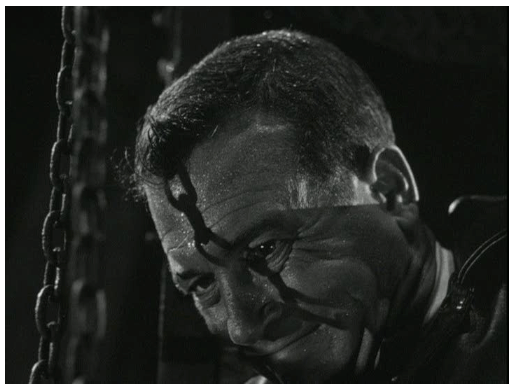
The For the Love of Film (Noir) Blog-A-Thon began yesterday, and it’s my turn to jump in. The monster-sized Lloyd Bridges stomping on a panicked populace gives my subject away: The Sound of Fury (aka Try and Get Me!, 1950).  This whole event is raising money for the Film Noir Foundation’s efforts to restore it. Cy Endfield’s 1950 scorcher about a botched kidnapping job and the mob frenzy that follows is available to watch now on Netflix Instant, so everyone can see how important it is to get pristine 35mm prints of this back into circulation.

Jo Pagano adapted his own 1947 novel, The Condemned, into the screenplay, which is a fictionalized version of the  murder of Brooke Hart in 1933. The same incident was also the basis for Fritz Lang’s Fury (1936). Hart was the son of a successful department store owner in San Jose, California.  Thomas Harold

Thurmond and John M. Holmes drove Hart to the San Mateo-Hayward Bridge, hit him over the head with a concrete block, and tossed him into the San Francisco Bay. They then called Hart’s parents, demanding $40,000 for his release. After they were caught, the local papers spread the news that Thurmond and Holmes would plead insanity, enraging the populace. The Lindbergh Baby fiasco occurred the previous year, part of a wave of ransom kidnappings that hit Depression-scarred America, and people were in a vengeful mood. On November 27th, an angry mob stormed the jail, pulled out Thurmond and Holmes, and hung them until they were dead.

The Sound of Fury centers the story on one of the kidnappers, here named Howard Tyler (Frank Lovejoy). In Cy Endfield’s hard-bitten world, everyone is in it for the money. Howard is an out-of-work father, who moved his family to California with the hopes of hitting it big. Instead he drinks by himself at a bowling alley bar in the afternoon, where he spies Jerry Slocum (a styling Lloyd Bridges) knocking down pins. Jerry, smelling desperation, hooks Howard with the promise of a job offer. In a scene of startling homoeroticism, Jerry brings Howard to his apartment and shows off his rippling pectorals, urges him to feel his silken shirts, and then drops the offer to be his wheelman on some gas station robberies.

Howard reluctantly agrees, with the shadow of poverty inching over his unshaven visage. He starts coming home flush with cash, promising his wife a TV of their own and a full bag of potato chips for his son, who is startled at such abundance. It soon becomes clear that Jerry is equally desperate, running on cologne fumes and his own braggadocio. He’s filled with class resentment, a clotheshorse who can’t afford the best.   He comes up with the kidnapping scheme, partly out of greed, but also malice. When their victim says he gets his suits tailored in NYC, the look of apoplectic rage on Bridges’ face is overwhelming. Later, when he snaps and smashes a guy’s face in with a cinder block, it’s no surprise.

These two petty thieves are contrasted with Gil Stanton (Richard Carlson), an upwardly mobile newspaper columnist whose outdoor BBQ would feed Howard’s family for weeks. It’s his columns that stoke the city’s rage regarding Jerry’s crime, including their possible insanity defense. Endfield’s repeated emphasis on economic issues makes Gil’s world almost grotesque. He only agrees to cover the case because his editor promises him a bonus, and the editor is chasing the story because blood moves papers. Everyone is corrupted, but because of his upbringing Gil doesn’t have to choose between crime and starvation.

Once Howard and Jerry are imprisoned, the film’s POV shifts to Gil, who undergoes a moral conversion upon seeing the violent rage his columns have provoked in the public. This section is problematic, simply a series of moralizing speeches about the humanity of everyone, even killers. The rich atmospheres of the first two-thirds give way to Gil’s tasteful living room. Endfiled was clearly not as invested in Gil’s milquetoast character, or the middle-class milieu he inhabits. The richly drawn, neurotic characters of Jerry and Howard are let go for cardboard cut-outs of moral propriety.

But thankfully this is just an interim, for the kicker is the nerve-jangling lynching scene, shot with little dialogue and unflinching brutality. In roiling chiaroscuro, the mob tears through the ineffecutal puffs of tear gas and battles their way into the jail cells. Lloyd Bridges wrenches his face into a beaming psychotic grin, an act of stunning bravado in the face of certain death, as the lynch mob ranges closer. Frank Lovejoy, as Howard, had played it quiet and morose throughout, as if he were already beaten in the opening frame. When they drag him away, past the mute, beaten faces of Gil and the police officers, there is no one left to help, and no cash to set him free.

MGM MOVIES-ON-DEMAND: 99 RIVER STREET (1953)

February 8, 2011

Screen Shot 2020-01-28 at 2.47.21 PM

With little fanfare, MGM re-started its moribund DVD burn-on-demand service last month. MGM originally offered 27 titles through Amazon’s CreateSpace service in early 2010, only to encounter complaints about cropped aspect ratios. Then last November, it was quietly announced that they were switching to Allied Vaughn’s MOD technology, and making it available to a variety of retailers (now including Movies UnlimitedOldies.comScreen Classics, and Amazon). It’s unclear whether the original MOD titles released in non-anamorphic or cropped versions (like Cold Turkey), will receive updates, but to be safe, I’d stick to the new releases and check the Home Theater Forum for news. The initial release slate is 50, with “an expansion plan to release more than 400 new-to-DVD titles within the next 18 months” (press release here). The first batch of these were rolled out in January, so to get a sense of this promising new venture’s quality, I picked up director Phil Karlson’s caustic film noir, 99 River Street (1953).

(Note:  The For the Love of Film Noir Blog-a-thon, hosted by Ferdy on Films and The Self-Styled Siren, takes place Feb. 14th – 21st to raise money for the Film Noir Foundation‘s efforts to restore Cy Endfield’s The Sound of Fury (1950). I’ll be contributing next week, so consider the following a teaser.  Donate here.)

Presented in a fine progressive transfer from a pristine inky black print, it’s clear MGM is taking their MOD program seriously this time around. [UPDATE: DVD Beaver found the transfer to be interlaced. I didn’t notice this in playback, but they’re always right about these things]. There are no extras. Amazon is offering it at a slight discount for $17.99, while the other sites have it pegged at $19.99.

Made a year after Karlson and lead actor John Payne teamed up for Kansas City Confidential (1952, where Payne’s ex-con is set up to take the fall for an armored car robbery), 99 River Street is a story of failure and provisional redemption. In this version Payne plays Eddie Driscoll, a washed up pug who ritualistically watches the highlights of his championship bout defeat, in which his eye was permanently damaged, hoping for a catharsis that never comes. Repeatedly shown in oblique angle close-ups, his right eye twitches like a maggot in a slab of beef. His wife Pauline, played with icy disdain by Peggie Castle, is a cinched-up former showgirl who yearns for the high life and sees an out in the machinations of  thief Victor Rawlins (Brad Dexter).

Eddie’s meat-headed obsessiveness and Pauline’s extravagant boredom are set up in the opening sequence. It begins on the title bout, a barrage of low-angle jabs that ends with Eddie knocked bloody, his face caressing the bottom rope. Then Karlson cuts to a close-up of the TV, the announcers talking about “The Great Fights of Yesterday.” The camera then dollies back to get the full TV on-screen, then swiftly pans to left to Eddie. Now robbed of his physicality, this has-been still winces at every blow. Kalrson then cuts to a reverse angle, revealing the rest of the shabby room, with Pauline, ignored, seething at the dinner table. Their eyes don’t meet until she turns off the TV, finishing the announcer’s phrase, “Next week…Driscoll will be driving a taxi.” Her words drip with venom, and understandably so, but she ends up in the arms of Rawlins, a reptilian creep who seems to devour her whole with his eyes.

Enraptured with visions of escape from her working class life, Pauline falls for Rawlins’ sordid designs. His attraction to her becomes increasingly sadistic, which only become clear in rhyming images of her scarf, at the beginning and midpoint of the film.

The cuckolded Eddie does drive that cab, barely making ends meet, and hangs out at a diner with another failure, an out-of-work actress played by Evelyn Keyes with intentionally grating brilliance, whose whole life revolves around performance. Her overactive eyebrows eventually sucker Eddie in to be an unwitting co-star in an elaborate performance. It’s an incredible sequence that pivots on a long take, close-up monologue of Keyes re-enacting a murder she claims to have committed, which Driscoll believes to be real. Then the hoax is revealed – it was all an an audition to convince a play’s backers of her skill – and Driscoll’s subterranean rage bursts, knocking out the play’s director and a few of its producers. Keyes, staring at the camera, was acting out a murder for the audience, which is then revealed to be an act. She spends the rest of the film trying to make amends for this betrayal.

99 River Street is a tale of middling talents who can never catch a break, having to repress their natural skills just to get by. Without the physical outlet of boxing, Driscoll is a man in the process of mastering his rage and never quite getting there. In the final showdown, when Driscoll is facing up to the scummy Victor Rawlins, a voice-over intrudes for the first time in the film, as Payne, shot in the arm and fading fast, repeats the mantra, “I have to get him”. It’s the climax to all of those intrusive close-ups showing his decaying exterior,  a jarring device that peeks into the mind of a man who defines himself by his body.

ALL THE WORLD’S A STAGE: JOHN FORD’S UPSTREAM (1927)

February 1, 2011

Screen Shot 2020-01-28 at 2.23.38 PM

“If life in general is a play, then a theatrical boarding house is a burlesque show.” -the epigraph to Upstream

This past Sunday, the Museum of the Moving Image presented a screening of John Ford’s Upstream in NYC for the first time since the film’s debut over 80 years ago. Long thought lost, a nitrate print was discovered in the New Zealand Film Archive in early 2009, part of a cache of 75 titles now being preserved by the National Film Preservation Foundation, in partnership with the Academy of Motion Picture Arts and Sciences, the George Eastman House, the Library of Congress, the Museum of Modern Art and the UCLA Film and Television Archive. The restoration work on Upstream was performed by Park Road Post Production in Wellington, New Zealand, under the direction of Twentieth Century Fox and the Academy Film Archive. The U.S. re-premiere occurred last September 1st at the Samuel Goldwyn Theater in Beverly Hills, and has been slowly touring the country since.

Upstream is an effortlessly delightful comedy set at a rooming house for struggling show people. It’s as if Ford populated an entire film with Alan Mowbray’s Shakespearean hams from My Darling Clementine and Wagon Master. The main blowhards are Eric Brasingham (Earle Foxe), described as “the last and least of a theatrical family” (the beginning of the John Barrymore gibes), and the Castilian knife-thrower Juan Rodriguez (Grant Withers), although the inter-titles wryly note he was born in the midwest as Jack. These two-bit entertainers stumblingly woo Gertie (Nancy Nash) to be their partners in acts and in the bedroom. Ford fills in the edges of this triangle with even more colorful types: the “star boarder” played by Raymond Hitchcock as a flirtatious monocled dandy; the aging, earnest dramatist Campbell Mandare (Emile Chautard); the permanently tipsy tap-dancing duo Callahan and Callahan; and the pushover landlady/fading Southern Belle Miss Hattie Breckenbridge Peyton (Lydia Yeamans Titus).

This setup, adapted by Randall Faye from Wallace Smith’s story, “The Snake’s Wife”,  indulges John Ford’s obsession with staging the chaotic joy of communal rites (his wondrous dances, parades and church-raisings). The film opens on a raucous lunch at the boarding house, as each member is stirred from their dingy apartment rehearsals by the bell. In its fevered bits of business and subtle revelation of character, it reminded me most of the dinner scene in The Searchers, after Ethan first returns home.

Through some snappy parallel editing Ford introduces all the main players and offers a thumbnail sketch of their personalities. In the first sequence Brasingham is shown cheek to cheek with Gertie in front of a chintzy tropical backdrop, in his favored nose-up profile attempting to convey the throes of romantic love. Then a knife flies in off-screen, flipping right in-between the actors. Ford pulls the camera back slightly, revealing the flophouse room beyond the backdrop, as well as Jack brandishing his tools. Here we get Brasingham’s empty pretension, Gertie’s doe-eyed infatuation with him, and Jack’s mulish aggression. This one shot encapsulates all the action to come.

Ford continues by cutting back and forth between the tenants in their rooms, the bellboy walking down the hallway  in a backward tracking shot, and then the guests sitting down at the dining room table. Mandare is shown disregarding his rent notice, but immediately latches on to a skull-shaped match holder to recite Hamlet. A medicine show huckster is shown brewing his swill (the same gig as the Mowbray character from Wagon Master), a mother-daughter “sister act” clomps out a high-kick routine, the “Soubrette” flaps her eyelids down the staircase, and the Callahans tap the ceiling plaster onto the dining room table. During the meal, the “star boarder” slides all the way down his chair in a vain attempt to play footsie with the Soubrette, as Ford cuts to an under-the-table angle of softshoe misdirection. This madness comes to a close when a theatrical manager comes to the door, stunning the loudmouths into a panicked titter. Ford then pans across their elastic faces in a long take across the table, marking the end of this extraordinary sequence.

This opening indicates a mastery of late silent Hollywood style, with the swift parallel editing of Griffith married to more exploratory camera movements. It was initially supposed that Upstream would reflect the influence of F.W. Murnau, who had wowed the Fox technicians during the filming of Sunrise, and whose expressionist style became evident in the chiaroscuro of Ford’s Four Sons of 1928. Ford had also visited Murnau in Germany after the completion of Sunrise, returning to the States in April 1927, according to Tag Gallagher.  Gallagher and Bill Levy both list Upstream’s release date as January 30th, 1927, which would put its production dates before the production of Sunrise, released later in ’27, and before his trip to Germany. Doug Cummings comes to a similar conclusion at his blog Film Journey.

In any case, the evidence is on-screen, with naturalistic photography throughout. There is no effort to emotionalize the space, aside from a few trick shots of superimposition that act to speed the story along rather than as poetic gestures. One example occurs after the theatrical manager hired Brasingham to play Hamlet in London:”it doesn’t matter that you’re a terrible actor, we just want the name.” Upon hearing the word “Hamlet”, he blocks out the rest, simply staring at himself in the dusty mirror behind the manager, his self-actualization as an insufferable narcissist, rather than as just a pitiable one. It is during the queasy moments before his premiere that Ford employs a visual trick that Cummings compares to the final scene of Nosferatu. As Brasingham tries to remember the lessons that Mandare taught him, a spectre of the latter emerges in a superimposition, a ghostly reminder that makes both a flashback or an inter-title unnecessary. This presence expresses Brasingham’s inner turmoil quite succinctly on its own, a conjuring of past education and emotion.

This ghostly image though, rhymes with one in the final scene, when Brasingham, now an international sensation, returns to the boarding house for a publicity stunt. But the day he arrives Jack is finally marrying Gertie (“How would you like to throw plates at me for the rest of your life?”) in another great communal scene, and Brasingham assumes the cameras are for him. A group photo is being taken, one in which the preening “Star” and Mandare both inch toward the center, blocking the bride and groom. When the flash goes off, and the smoke fills the room, Ford uses another dissolve to Brasingham’s silhouette etched into the smoke, his face coming into focus as it dissipates. This time Brasingham is the ghostly figure, a foolish specter disappearing into his own image.

From the few films I’ve seen from this period in his career, it ranks right with Three Bad Men (1926) as one of my favorites, and it’s truly a cause for celebration that it’s been found and restored.

The screening I attended also included a fragment from the trailer to the Strong Boy (1929), which was also restored, although the rest of this Ford film is lost. It starred Victor McLaglen as a hot-headed train valet, aka “baggage smasher”. The fragment contained some dangerous looking fight scenes and the kind of knockabout comedy Ford would insert in everything he made.

DVD ROUNDUP: 11 HARROWHOUSE (1974) AND LUCKY LADY (1975)

January 25, 2011

ll

Two reviled flops from 20th Century Fox have finally made their way to DVD on the brave shoulders of the Shout! Factory label. Charles Grodin adapted and starred in the heist film 11 Harrowhouse after the  success of his turn in The Heartbreak Kid (1972), only to be met with critical and audience indifference. Lucky Lady is the more infamous failure, the product of agent-turned-producer Michael Gruskoff’s ability to game the Hollywood system (both DVDs come out next Tuesday, February 1st.). Formerly the representative for screenwriters Gloria Katz and Willard Huyck, he bought the rights to their script for $75,000, and then sold it to Fox for $450,000. An impressive profit over the 10% he previously made from their services. By investing that kind of scratch, Fox had to inflate the story into a blockbuster, signing up Liza Minnelli, Gene Hackman and Burt Reynolds to star, and Stanley Donen to direct. It received vitriolic reviews, many noting Gruskoff’s ploy, and failed to make a profit (although Jonathan Rosenbaum indignantly reported in Movie Wars that it came close, with $12,107,000 in rentals, a half-million less than its budget, due to Fox’s forcing theaters to keep it for extended runs if they wanted it at all.)

Despite all of these shady backdoor dealings, I rather enjoyed both of them, the “bumbling and stupid romp” (Pauline Kael, New Yorker) 11 Harrowhouse and the “mirthless trumpery” (John Simon, NY Mag) of Lucky Lady. Seeing them outside the torrent of negative publicity both received upon their initial release, it’s easier to judge them on their own limited but amiable merits.

11 Harrowhouse was based on a novel of the same name by Gerald A. Browne, for which Grodin received the ambiguous “adapted by” credit, while Jeffrey Bloom is named as the screenwriter. It’s unclear how much input he had into Bloom’s script, but it at least indicates his investment in the material. Directing duties were handed to Aram Avakian, who had filmed another comic heist, Cops and Robbers, in 1973. Harrowhouse is deeply marked by Grodin’s laconic personality, delivered through his sarcastic voice-over that coolly belittles the events on-screen. It’s an odd distancing device that was apparently removed from some home video releases, turning it into a more conventional thriller. The new Shout! Factory DVD contains the original voice-over, thankfully, and the video transfer is strong. The original film element shows some wear, and the colors are slightly faded, but it shows nice texture and sharpness, probably the best it could look with the material they had. The only extra is the theatrical trailer.

Grodin plays Howard Chesser, a small-time gem trader hired by business tycoon Clyde Massey (Trevor Howard) to steal an enormous cache of uncut diamonds in London. With the help of his scrappy heiress girlfriend Maren (Candice Bergen) and Watts, their man on the inside (James Mason), they engineer a robbery of Rube Goldberg-esque intricacy. The owner of the fleeced diamond exchange, the fastidious Meecham (John Gielgud), is understandably peeved, and Chesser and Maren try to escape with the jewels and their lives.

The material is not a good fit for Grodin’s deadpan sad sack routine, which is presumably why the caustic voice-over was added. But the narration is so cutting it undermines the usual genre pleasures of the heist film. When Chesser’s voice drops out and the narrative picks up, the jaunty tone disappears and we’re back inside the thriller mechanics, which Avakian runs through at a dulled pace. This tension between tones drains the film of any suspense, as we are now viewing the actions through Chesser’s retrospective disdain. It’s an odd, discomfiting viewing experience, an experiment in POV that implodes its own narrative.

But there is plenty to savor amid the debris (see the grizzled faces above). While Grodin and Bergen both seem cold and affected for their supposedly suave characters, the supporting cast is superb. The three Brits inject reptilian evil (Gielgud), blowhard narcissism (Howard) and a weary nihilism (Mason) into their preciously scant screen time. These are actors who can evoke entire backstories with an inching up of an eyebrow. Mason’s aging diamond appraiser quietly shuffles off with the film, secreting tragedy in the midst of the procedural. Watts has been under the employ of Gielgud’s Meecham and suffered his silent censures, whether dismissive hand waves or a skeptical lip curl, for a lifetime. Mason is a mound of regret, with a slightly haunched back and a slow-motion manner. The way in which he delicately eats a sandwich in a secret meeting with Grodin expresses everything about him – his professionalism and exactitude as well as his fatalism, as  might be the last lunch he ever has. (Reviewers of the time also singled out Mason’s performance, including Kael, Stanley Kaufmann, and the NY Times’ Nora Sayre).

No saving graces were allowed for Stanley Donen’s Lucky Lady:

Pauline Kael: “an agent’s picture – everybody’s rip-off” (compiled in When the Lights Go Down)

Jonathan Rosenbaum: “conspicuously overproduced and under-nourished.” (quoted in Movie Wars)

Vincent Canby: “it’s ridiculous without the compensation of being funny or fun.” (NY Times)

The ever-misogynistic John Simon:  “As for Miss Minnelli, she is herself a perfect menage a trois in which lack of talent, lack of looks, and lack of a speaking voice co-habit blissfully. Donen sensibly concentrates on her best feature, her legs, but he unfortunately can’t wrap them around her face.” (New York Magazine, Dec. 29th, 1975)

And yet, I found it companionable and amusing, despite the vaseline-gauzed cinematography and the cramped framings necessitated by shooting everything on real boats at sea (it is, in terms of press, the Waterworld of its time). According to one of the two promotional shorts included on the DVD, the production took “a full year to make”, because of the stars’ schedules and the endless problems of shooting on rocking vintage boats. Fox also required re-shoots to include a happy ending (as Joe Baltake outlines here). But as important as production history is to criticism, it is no substitute, and I found Donen’s disaster to be a rather fleet and funny (albeit over-designed) vehicle that teased out the idiosyncracies of his actors.

Liza Minnelli (as Claire, a flapper), Burt Reynolds (as Walker, the dandy) and Gene Hackman (as Kibby, the hobo wiseacre) start up a rum-running business during Prohibition, running their boats up from Mexico. This cuts into the mob’s market, and soon they’re in a shooting war over territory.

The script is slangy and self-conscious without being arch, a pastiche of Jazz Age argot that the actors are able to thrum to life. The set-design is overstuffed art-deco, suffocating the already cramped spaces Donen has to work in, and the decision to use heavy soft-focus filters throughout the film is a failed attempt to go nostalgic, ladling every image over with a soupy haze (the DP was Geoffrey Unsworth, who also shot Liza in Cabaret).

In and around these production snafus the actors excel. Minnelli, the critics punching bag, is quite touching here as the dizzy dame love interest of both leads. Minnelli plays Claire, the intended bombshell, more like an antic Jean Arthur than the Harlow clearly intended. She’s the feather boa-clad ball of energy bouncing off the deft comic work of Burt Reynolds, who exhibits his flair for self-deprecating slapstick (Another bizarre John Simon sidebar, on Reynolds:  “[his] face looks like an armored car made, inexplicably, out of meat.” If someone can parse this, please let me know). Hackman has the knockabout trickster role, the gruff kind of asshole he could play in his rum-induced sleep. Together they form an improbably fun trio, and form one of the few successful polyamorous relationships on film.

The DVD of Lucky Lady is a fine anamorphic presentation, the soft image resulting from the original material (it’s remarked upon in the original reviews). The two vintage featurettes feature interviews with the cast and crew, and there are three theatrical and TV trailers.

AMERICANA: MEET JOHN DOE AND GO GO TALES

January 18, 2011

doego

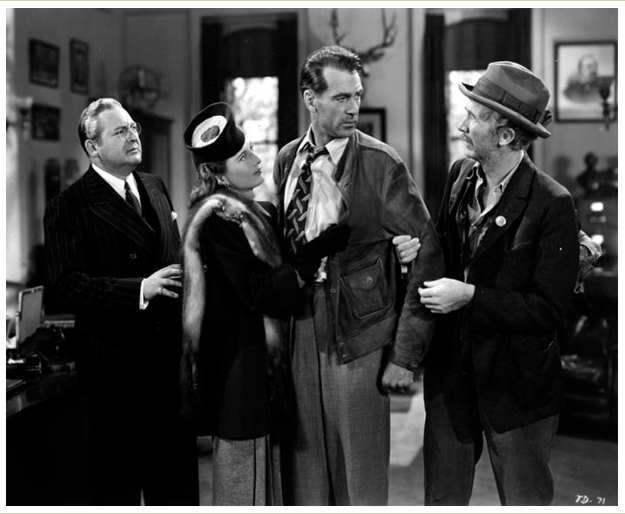
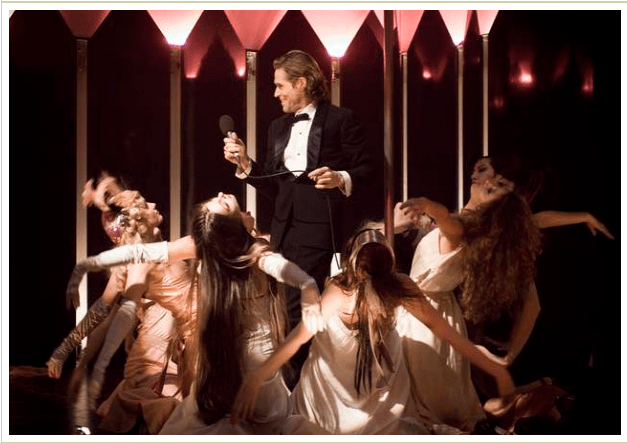
Two versions of the community-made man. Gary Cooper’s John Doe and Willem Dafoe’s Ray Ruby are nothing without their coterie of speech-writers, money-men and erotic dancers.  Meet John Doe (1941) and Go Go Tales (2007) each speak to the anxieties of being propped up by the labor of others, with main characters haunted by the possibility of losing their support and having to go it alone. They are paeans to American industriousness, satires of American greed and excess, and hum with the patter of the American workplace. Meet John Doe was recently released on a disappointing DVD by VCI (DVD Beaver has the specs here) and Go Go Tales is currently screening at Anthology Film Archives in NYC. It’s also available on an Italian Region 2 DVD.

John Willoughboy (Cooper) is a burnt-out ex-ballplayer with a bum elbow, in the days before Tommy John surgery. Living the hobo life with The Colonel (a zealous Walter Brennan), he’s hoping to make a quick buck at a newspaper when he sees a lineup outside. What tabloid journalist Ann Mitchell (Barbara Stanwyck) is after though, is a flesh and blood dope to embody the outraged John Doe whose letter of civil disobedience she forged in order to pump up circulation and save her job. Soon she builds up John into a folksy voice of the people, promoting neighborliness into a kind of small-town socialism. His immense popularity, represented in nationwide John Doe Clubs, is co-opted by his backer, millionaire D.B. Norton, in a scheme to install a pseudo-fascist state.

The film is strongest early-on, replete with Capra’s pungent dialogue and rich caricatures. The punchiness starts in the opening, with The Bulletin’s old motto, “A free press means a free people”, jackhammered off to make way for The New Bulletin’s tagline, “A streamlined newspaper for a streamlined era.” This visual joke is more relevant than ever, and sets up the knockabout opening where a baby-faced, Mickey Rooney type axes the staff in pantomime, with gestural throat slashes underlined by whistles. Capra captures the impersonal devastation of this corporate takeover in a few flicks of the assistant’s wrists.

Ann, desperate to salvage her job, invents the John Doe letter, whose anti-government, DIY tone loosely echoes the rhetoric of the Tea Party movement (aside from the community organizing he supports). Soon Willoughby is speaking to millions of people around the country, as Ann hones Doe’s image around the philosophy of her late father. The political message Capra is trying to send gets increasingly slippery, as he is both satirizing the gullibility of the American people, who immediately believe in this rather dopey Doe, while still managing to lionize the work ethic and morality of those same citizens. The latter impulse drains the former of any impact. Capra had trouble reconciling these ideas, and filmed five separate endings, and was never satisfied with any of them. In his autobiography, he said:

For seven-eights of the film, Riskin [screenwriter Robert] and I felt we had made The Great American Motion Picture; but in the last eighth, it fizzled into The Great American Letdown.

Whether or not the film coheres thematically (I agree with Capra, it does not), the figure of Doe is surprisingly similar to the character of Ray Ruby in Abel Ferrara’s Go Go Tales. Ruby is the proprietor of Ruby’s Paradise Lounge, a struggling NYC strip club facing massive debts and a restive work force. Ruby is the manic and disarmingly sensitive patriarch of this whirling world of sequins and exploding tanning beds. His wild hopes rest on the American standbys of gambling and conning: playing the lotto and convincing his brother to stay invested.

Doe and Ruby face similar threats, the hellish bureaucracy posed by The New Bulletin’s maxim is transposed by Go Go Tales into the screeching landlord’s (Sylvia Miles at her harpiest) gentrifying threat that she’ll sell Ruby’s building to Bed, Bath & Beyond. Both Doe and Ruby will themselves into believing that they are self-made and impervious to these deprivations,  but they are heavily indebted to a web of investors, politicians and relatives to stay afloat.  This denial also fuels their finest qualities, creating a naive, idealistic belief in the power of community. In Doe’s case it’s a nationwide mission of charity whose tenets he adopts for himself, and for Ruby it’s the idiosyncratic camaraderie of his Lounge’s denizens. There are his raspy host Bob Hoskins, berating the tourists who idly pass the door, his whimsical Irish accountant/partner-in-crime Jay (Roy Dotrice), and a web of bar squatting wiseguys who provide a never-ending squall of vulgar cracks. Near the end, as the strippers and bouncers put on their weekly talent show of Bronx-accented Shakespeare and interpretive dance, Ruby gives a rousing speech that exposes the philosopher inside the crabby capitalist, and is one that Capra could have used as the sixth ending to Meet John Doe:

Everyone in this room has a chance to become more than they think they are. Freedom of expression, creativity, passion, love for each other, that’s what this is all about.

ADVENTURES IN VOD: WILLIAM WITNEY & ROY ROGERS

January 11, 2011

witney

In December, a truckload of William Witney-directed Roy Rogers films were dumped onto Netflix Instant. I was clued into this trove by a conversation between Jaime Christley and Vadim Rizov on Twitter, an indication of why I’m addicted to this unruly microblogging service. As a source of cinephile news-gathering, it’s essential, and more than enough reason to endure the self-righteous posturing that flares up every so often.  Witney’s one of the anonymous artisans who pumped out movie serials for the Mascot and Republic studios, often in tandem with John English. He’s credited with 130 film and television projects at IMDB, and it’s a rather daunting corpus to approach without direction. With supporters as diverse as Quentin Tarantino and Dave Kehr, I took this Netflix cache as a sign I should dig in further (the only one I’d seen before is his so-so Apache Rifles, which I wrote about here). So I sat down with the earliest films on the list: Roll On Texas Moon (1946) and Home In Oklahoma (1946).


As usual, the quality control on these streams leaves something to be desired. First, the version of Roll on Texas Moon presented is the 53 minute television cut. The theatrical version runs 68 minutes. Poking through the site, it seems most of them contain the television versions, although there are a few full edits, which run closer to 70 minutes, including Home In Oklahoma. The first thing to strike me about these programmers is they’re deceptively dark tone. Roy Rogers is an aw shucks stand-up gentleman, and Dale Evans a bright-eyed sprig of independent femininity, but the world they inhabit is violent and strange.

In Roll on Texas Moon, there is a long standing feud between the sheep-herders and the cattle-men that once exploded into a bloody range war. Gabby Hayes, the lovable old coot axiom of the Rogers films, is a cow man, and can’t stand those “dag blasted woolies.” Someone is rustling the sheep on the Ramshead farm, threatening to escalate tensions into a shooting battle once again. Eventually an evening of dinner and song ends in a Mexican standoff. The culprits are eventually brought to justice, but not before a ram is shot in the face offscreen, and a vigilante force led by Rogers faces down the band of desperadoes. Each side suffers heavy losses in the shootout. These are remarkably grim images for a lightly comic Western-musical.

While it’s been cut down, it’s obvious Witney has a natural flair for framing action. When a chase ramps up, he lays down a blazing fast tracking shot (aided by some under-cranking) that pulls back right in front of a pursuing Rogers, or his stuntman pulling off some incredible side-saddle riding. Then he cuts to the reverse angle, zooming forward towards the dastardly evildoer. The sense of danger, for both the cameraman and the rider, is palpable. In isolating each figure in their tendon wrenching moment of tension, and by using an unusual head-on angle, he has the riders speeding right at (or away from) the audience. It’s an enveloping kind of action cinema.


This continues in Home In Oklahoma, which is presented in its uncut 72 minute length. This time the chases are necessitated because of the muckraking journalism of Rogers, here the editor of the Hereford Star. Evans is the city girl, an impulsive Torchy Blane type, from a St. Louis paper reporting on the death of a big-time ranch owner. The set-up is pure Nancy Drew, with the defining clue coming in the family hymnal. But the pleasures of these films are not in the story-telling, as Witney has to speed through gobs of exposition before he can break out an arcing crane shot of a rollicking ranch breakfast or capture Rogers crooning the bittersweet, unsatisfied tune, “I Wish I Was a Kid Again” (short form: as a kid I dreamed of adulthood, as an adult I dream of my childhood).

In keeping with the incipient brutality of the worlds Rogers and Evans must live in, the main villain, a lovely sadist named Jan (Carol Hughes), attempts to kill a small boy in order to inherit his ranch. She also ruthlessly shoots a few less-able men in the back. These hapless corpses take their tumbles in some extraordinary stunt work by Witney’s crew, who are seemingly game for anything. One brave soul falls over a small waterfall, while two bruisers take turns tackling each other on an open-air platform on a moving train. This is rough and tumble cinema made with fearlessness and charm, as well as the inimitable tones of the Sons of the Pioneers.

I’m very curious to explore the rest of his career – and if anyone has recommendations of essential titles, or a copy of Witney’s autobiography they’re able to sell at a reasonable price, I’m all ears. In a Door, Into a Fight, Out a Door, Into a Chase is only available at upwards of $40, and the samples available on Google Books are tantalizingly rich. Another exciting subject for further research.

HIDEKO TAKAMINE: NO CHARACTERISTICS

January 4, 2011

hideko

Hideko Takamine, who passed away on Dec. 28th at the age of 86, had a face worth puzzling over. In her films with director Mikio Naruse, she engineered an impassive, barely perceptible sag to her delicate kewpie doll features,  embodying the spiritual toll post-WWII deprivations had inflicted on her indomitable Japanese women. She expresses the sag with supreme subtlety in Floating Clouds (1955), and later, When A Woman Ascends the Stairs (1960) (both available on this BFI box). But this reduces her accomplishments to my limited view of what I’ve seen of her work, as she had a long career before and after the masterpieces I associate her with.

hideko2

She began her film career at the age of 5, with a part in 1929′s Haha (Mother)which is considered lost (sad, since it would make a stellar double bill with Hong Sang-soo’s recent Hahaha). She rapidly rose to become a child star, nicknamed Deko-chan, and garnered comparisons to Shirley Temple, although Hideko would often play both male and female roles (this according to Chris MaGee, whom I also gleaned the above photo from). From this period, she can be seen in Yasujiro Ozu’s Tokyo Chorus (1931), available on DVD from Criterion in the Silent Ozu box set.

In 1937 she would leave the Toho studios for Shochiku, where her persona of stubborn independence would be developed over the next 40 years. During WWII she transitioned into a sex symbol, as Dave Kehr writes in the NY Times, becoming a “popular pin-up girl for Japanese troops” while also performing a nightclub act. It is during the U.S. occupation that she really digs into emblematic roles of iron-willed perseverance.  In 1955, and married at the age of 31, she told a newspaper that she wanted to “create a new style of wife who has a job.” (quoted in Catherine Russell’s must read article in CineAction). She followed this thought through her life and her art – her characters who don’t have this kind of freedom are marked by dissatisfaction with their subservient role in life, and the frequent tragedy is that it is impossible for them to transcend these roles. Takamine’s reflects on her subtle approach in a conversation with Yukio Mishima, again quoted in Russell’s piece:

In a 1954 interview with Yukio Mishima, Takamine discusses her favourite Hollywood actors, Ingrid Bergman and James Stewart. Mishima suggests that “someone with strong characteristics has to be a supporting actor,” and they agree that Takamine has “no characteristics,” which is why she is so well suited to leading roles.

“No characteristics” implies a kind of blankness from which Takemine pardoxically is able to wrench unutterable emotions. There are inflections to her stone-face, either holding a glance a beat too long or deflecting it downward at the decisive moment, that are of a delicacy far more expressive than a more aggressively emotional style. This was aided, perhaps, by Naruse’s maddeningly hands-off approach. Takemine:

“More than merely reticent”, his “refusal to talk was downright malicious. Even during the shooting of a picture, he would never say if something was good or bad, interesting or trite. He was a completely unresponsive director. I appeared in about twenty of his films, and yet there was never an instance in which he gave any acting instructions.”

In my reading of this quote, Naruse wanted Takemine to act even less. His studied distance from his actors encouraged a pared down, more instinctual style, and despite her complaints, returning for close to 20 films says something about her opinion of the man and their work together.

For Japanese audiences, she is best known for her spunky work with director Keisuke Kinoshita, like her exotic dancer in Carmen Comes Home (1951, Japan’s first color film), and her school-teacher in the smash hit Twenty Four Eyes (1954, available on DVD from Masters of Cinema), who tends to her students from the rise of fascism through the after-effects of WWII.

Takamine retired from performing in 1979, and maintained an apathetic attitude toward her time on film, focusing instead on her late career as a writer, publishing travel articles as well as her memoirs . She described her first twenty years on-screen as nothing more than a “money making machine”, and her complaints of Naruse’s working methods are well-documented. This spirited indifference toward her remarkable career is not dissimilar from her characters, who vainly try to dismiss the past in order to capture a quicksilver moment of happiness in the present. Fortunately for us, Takamine’s past artistry is preserved (for the most part) on screen, and will speak to us for decades to come.

MY TOP TEN GENRE MOVIES OF 2010

December 28, 2010

genre

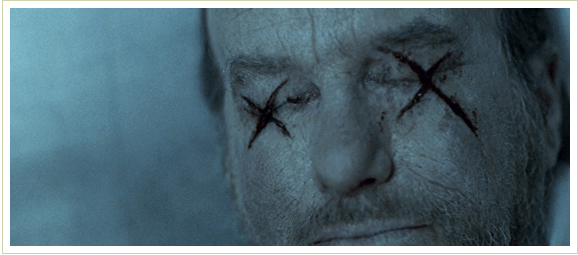
I was able to see more movies during the year than this guy. To honor him, I’m going to run down my favorite Genre Films of 2010. As top-ten lists rain down upon us, a general consensus emerges and recurring titles get chewed over like regurgitated cud. So while I greatly admire The Social Network (#2 on my year-end list here), I feel no need to spill more metaphorical ink over it. What doesn’t get recognized during the awards season hullaballoo are the disreputable action/sci-fi/horror movies that earn profits and low Rotten Tomatoes scores. I’m using the colloquial definition of “genre films”, of macho flicks with b-movie scenarios, but in reality everything that’s produced slots into one genre or another (David Bordwell persuasively argues that even the art film is one). So forgive my semantic fudging for the sake of headline-writing brevity. In any case, anonymous disfigured corpse from The Crazies, this is for you.

In Alphabetical Order:

Buried, directed by Rodrigo Cortes

Buried is a horror movie about thought processes, how the mind continually attempts to work itself out of danger, constantly running scenarios that will lead to the healthiest outcome. In this case, the problem is a casket, as Paul Conroy (Ryan Reynolds) has been buried alive by an Iraqi insurgent looking for ransom money. The camera never leaves the casket for the entire running time, and manages to sustain the tension of Conroy’s plight, endlessly cycling through possible rescue plans. Provided with a cell phone to stump for the money to be paid, he triangulates between family, work and the law as his desperation rises, marking up the wood panels with strategies of survival. In the end, it’s a tour-de-force about the limitations of technology and of thought itself.

***

Centurion, directed by Neil Marshall

Remnants of a slaughtered platoon of Roman Soldiers navigate their way back home through Northern Scotland while fighting their way through the rebellious Pict natives. Director Neil Marshall (The Descent) is a reliable hand for cogently framing bloody mayhem, and the climactic battle between the splinter of Romans and Pict warriors is smartly choreographed. The central battle stakes Michael Fassbender against Olga Kuryenko, and the final blow is established in wide shot as Fassbender somersaults toward his victim. Then in two percussive inserts Marshall ends the secondary fight (a spear to the undercarriage) and the main one, as Fassbender places downward pressure on the sword after his sprightly evasive maneuver. The way in which Marshall creates a rhythm and clarity to this sequence, out of boilerplate material, is indicative of the film’s scrappy ingenuity.

***

The Crazies, directed by Breck Eisner

A relentless remake of George Romero’s 1973 original, it outlines the chaos that ensues after a biological weapon crash lands in a small mid-western town, turning its residents into psychotic murderers. I prized this one for its pared down screenplay, which strips away backstory, revealing character only through action. The narrative is constantly pushing forward, just like Sheriff David Dutten (Timothy Olyphant), who tries to spirit his wife out of the newly quarantined hot zone. Olyphant has perfected a thoughtful stoicism in his work, playing heroes who do the right thing, but whose pauses and mutterings imply that he wishes doing good wasn’t so much goddamn work.

***

Devil, directed by John Erick Dowdle

Slightly roomier than Buried, this M. Night Shyamalan produced potboiler takes place almost entirely in an elevator. A group of abrasive city-folk get stuck in a lift and start turning on each other. So far, so realistic, but there’s a metaphysical morality play tacked on to justify the underlying savagery. While this is a bit of a cop-out, I’ll forgive anything to watch DP Tak Fujimoto wend his SteadiCam around a neon-lit office building, tracing the paths of fate.

***

From Paris With Love, directed by Pierre Morel

This ridiculous concoction is the jokey B-side to Taken, Morel’s humorless revenge drama from 2009. Instead of a brow-furrowing Liam Neeson, it’s a face-pulling John Travolta, who plays CIA agent Charlie Wax like a macho Jerry Lewis (his yammers are punctuated by nasal screams, and he leaves destruction in his wake, except with Travolta it’s intentional). The fight scenes have the physics of a Loony Tunes short and the plot is totally improbable. In short, it’s almost perfect. If only the lead-footed Jonathan Rhys Meyers subplot hadn’t kept diverting things from the aria of Charlie Wax.

***

Frozen, directed by Adam Green

Frozen is a fine lesson in theme and variation. The plot is minimal, three dopey college kids stranded on a ski lift, but writer/director Green elaborates an escalating series of reasons for his characters to be terrified. The calculus of escape shifts from avoiding frostbite to stanching blood loss to avoiding death-by-wolf over the course of the first hour. It is the patience with which Green allows each new variation to sink in, to allow the morbid thought processes of each vapid character to be drawn out, that nicely ratchets up the tension of this minimalist bit of indie-horror.

***

Resident Evil: Afterlife, directed by Paul W.S. Anderson

On a purely visual level, one of the most impressive films I saw this year. Fully embracing 3D technology, Anderson sets up shots to emphasize depth, from the multi-layered, multi-planar Umbrella headquarters to the relative simplicity of a hole in the ground (which Joe Dante also explored in 3D in his still-undistributed The Hole). In the opening sequence, the background and foreground planes of action are so clear there is no need for cross-cutting. And Milla Jovovich continues her superb run as Alice, working the stoic hero territory as well as, say, Timothy Olyphant.

***

Splice, directed by Vincenzo Natali

A disturbing entry in the mad (but adorable) scientist sub-genre, it finds Adrian Brody and Sarah Polly gene-splicing their way to unwanted parenthood. Their little lab-creature develops a major Electra complex, and soon ignites the relationship anxieties simmering below the surface. They explode in psycho-incestual images that are hard to shake.

***

Undisputed 3, directed by Isaac Florentine

Direct-to-video but none the worse for it, this is the third part of a series initiated by Walter Hill in 2002 (I wrote about the whole series back in June). It refreshes the fight tournament scenario by capturing a variety of attacking styles with a high-speed camera, from capoeira to taekwondo, and hires athletes rather than slumming actors. Marko Zaror steals the show as the villain, a Garcia Lorca-reading heroin addict who is my pick for cinematic asshole of the year.

***

Unstoppable, directed by Tony Scott

The pleasures of motion, rendered with lucidity. There’s a runaway train, and Denzel Washington and Chris Pine have to track it down. The forward movement is not just over lines of track but through lines of communication.  Scott’s nimble cross-cutting between CEOs, middle-managers and station chief Rosario Dawson lays down the social strata that Denzel and Pine are burning through in order to do their jobs. It is within this shorthand class structure that slam-bang montages of speeding trains raise the pulse and recall the original cinematic thrill of the Lumiere Brothers’ L’arrivée d’un train en gare de La Ciotat.

ADVENTURES IN VOD: NORMAN LEAR AND COLD TURKEY (1971)

December 21, 2010

cold turkey

That’s a lot of Van Dykes. This rather frightening menagerie was arranged by Norman Lear, who wrote and directed the slapstick satire Cold Turkey in 1971. A cult item that used to circulate solely on out-of-print VHS tapes, now MGM has released it through Amazon on a burned-on-demand DVD as well as through their video-on-demand service (rental is $2.99, purchase is $9.99). It’s amazing how quickly a film can go from rare to ubiquitous these days.

Lear had transitioned from variety show gag-man to more full-length narrative work by the time of Cold Turkey, which was shot just before he became an institution with All in the Family. His entry into show business had been greased when Jerry Lewis saw a blind date sketch he had written, and he was hired to produce material for the Martin & Lewis run on the Colgate Comedy Hour (1950 – 1953).  These extraordinarily raucous 60 minutes buzzed on the improvisatory bravado of the actors, but Lear set them up in scenarios primed for chaos. In one opener, a ballroom dance descends into a brawl when Jerry spritzes ink on a brute’s white shirt. An irate wife arm-drags Lewis to the ground, and then Dean socks her down with him. Then the whole set degrades into a brawl.

There’s a feeling the show could collapse at any moment, as Martin & Lewis constantly break character, inserting snide self-reflexive remarks in the middle of the sketches. In one bit, Lewis has trouble moving a suitcase through a doorway, so he simply steps off the stage set and around to the next room, breaking the fourth wall and delighting the audience. It’s unclear whether it’s staged or improvised, but it could be either in the anything goes atmosphere created by Lear, co-writer Ed Simmons and the actors. Many of these episodes are up on YouTube, as well as on a variety of public domain DVDs. A number are also on Netflix Instant, in faded prints.

Afterward, Lear bounced around variety shows, including The Martha Raye Show (1955) and The Tennessee Ernie Ford Show (1957-1958). Bud Yorkin was a producer on the latter, and he and Lear formed the Tandem production company together. This led to their coup of casting Frank Sinatra in their film adaptation of Neil Simon’s Come Blow Your Horn (1963). Yorkin directed and Lear wrote it, along with their follow up, Divorce American Style (1967). After being loaned out to William Friedkin for The Night They Raided Minsky’s (1968), Lear was handed the director’s job for the first and only time on Cold Turkey. In an interview with the Archive of American Television, Lear said Yorkin was busy with other projects, so he took the gig.

The story was adapted from a novel, I’m Giving Them Up For Good, by Margaret and Neil Rau, and it centers on an outrageous contest put on by a major tobacco company. Bob Newhart, as flaccid publicity flack Merwin Wren, has the inspired idea to offer a city $25 million dollars if every resident would agree to quit smoking for 30 days. Feeling confident no town could possibly succeed, it was an easy way to leverage public opinion in the tobacco business’ favor (herein lie similarities to the dire Thank You For Smoking).

One depressed Iowa town, Eagle Rock, takes up the challenge, however, led by Reverend Clayton Brooks (Dick Van Dyke), the golden boy former track star. He riles up the crowd with dreams of gleaming office buildings and all sorts of government cheese. Van Dyke plays him with stuttering obliviousness. He’s a do-gooder blind to his own ambition. Only his wife, the secret smoker Natalie (Pippa Lee) sees through his facade. As the town closes in on the prize money, it becomes a media sensation, bringing in tourist money and documentary film crews from across the country.

Filmed on location in Greenfield, Iowa, using many local residents in the cast, Lear aims for a wide angle take-down of corporate and small-town pieties. Newhart’s glad-hander is as officious as the mini John Birch Society clone, here called the Christopher Mott Society, that the Reverend placates by hiring to inspect cars for smokes as they enter the city. An especially aggressive older lady investigates for Commies, too. Money talks to all walks of life, and Lear’s favorite visual device is the grotesque close-up of citizens’ and CEOs’ greedy grimaces.

The touchstones seem to be Wilder and Altman. The bitter caricature of media exploitation is straight from Ace In the Hole, and the multi-character scope of the narrative, and clothesline compositions (TM Dave Kehr) seem reminiscent of MASH, which was released a year earlier (a few unreliable sources like Wikipedia say Cold Turkey was filmed in 1969 and held for release until ’71, out of concern for its box office potential, which would pre-date MASH).

Lear uses the close-up as a punchline constantly, often taking the air out of a slow-burning joke, not giving things adequate time to build. In his opening sermon, the Reverend reads from his notes, and starts mouthing the copy from a Peruvian tourism ad, an antecedent to Ron Burgundy’s instinctual reading of the teleprompter in Anchorman, but Cold Turkey muffs the setup. As the Reverend reads, it just scans as non-sequitur. But after the service, the joke is explained to be the mistake of his wife, who was transcribing when reading a magazine. If there was a slower setup before the speech, this could have killed, but instead it opted for ex post facto explanations, slowing the story in the process.

But because of its sprawl and the sheer volume of jokes, there’s plenty to get distracted by. There’s Randy Newman’s score (his first), Robert Downey’s slapstick work as second-unit director (where parents slap their babies), Bob Newhart’s reaction shots (sublime) and the endless list of  character actors: Edward Everett Horton in his final role as a flatulent mute cigarette king, Jean Stapleton as a harried wife, M. Emmet Walsh as a rabble-rousing socialist, Tom Poston as a drunk and Paul Benedict as a Buddhist therapist.