THE AGONY OF DEFEAT: FOUR FALLS OF BUFFALO (2015)

December 15, 2015

On January 3rd, 1993, the Buffalo Bills trailed the Houston Oilers 28 – 3 at halftime. I was 11 years old, and had gone to the Wild Card playoff game at Rich Stadium outside of Buffalo, NY with my father, uncle and grandfather. They were ready to pack it in and go home, to beat the traffic and avoid the humiliation of watching the end of a blowout defeat. There was no hope, what with franchise quarterback Jim Kelly on the bench with strained knee ligaments while his replacement Frank Reich scuffled. The opposing QB Warren Moon was calmly throwing lasers appropriate for his space age name, with his second TD pass going to one Webster Slaughter, and it certainly was. Better luck next year, we must have told ourselves, when Kelly would be healed and the team that went to back-to-back Super Bowls in ’91 and ’92 returned to full speed (their offense was based around the no-huddle, up-tempo offense). But I wanted to stay to the bitter end. I savored sitting on those aluminum benches, with my Bills Starter Jacket pulled over orange overalls, pinioned in between my beer-bellied family. It was 34 degrees but I was warm, there was still time to cheer and yell and let oneself go.

So we stayed, and a miracle happened. The Oilers went up 35-3 early in the 3rd Quarter, and then the Bills preposterously kept scoring, over and over again, until they pulled off the greatest comeback in NFL history, winning 41-38. It was a dream but I was there in my seat, it was impossible but there it was, right in front of me. The Bills would lose the ensuing championship, of course, as they would the following year as well, an unprecedented four-year feat of Super Bowl failure.These years are captured in all their depressing grandeur in the latest documentary in ESPN’s 30 For 30 series, Four Falls of Buffalo. 

The story of the Bills is a story of loss, and it could not be told without the cooperation of Scott Norwood, the most infamous loser in NFL history. He was the kicker who missed a 47-yard field goal wide right as time was winding down in Super Bowl XXV against the New York Giants. Many players made mistakes that game, as Hall of Fame defensive end Bruce Smith notes, including the coaching staff for failing to adapt to defensive coordinator Bill Belichick’s defensive scheme (two down lineman and a slew of coverage LBs and DBs), but it was Norwood who had the bad fortune of making his mistake at the end. Despite having a productive follow-up season, Norwood could never live down that miss, and was caricatured in Ace Ventura: Pet Detective as a lunatic and in Buffalo ’66 as a decadent perv. He is the heart of Four Falls of Buffalo, a calm, sensitive, deeply sympathetic figure who tears well up at that long-ago defeat, wishing he could have done more for the fans of Buffalo. After the Super Bowl XXV loss, the team gathered in Niagara Square to a crowd of more than 30,000. Norwood did not intend to speak, but the crowd started chanting “We Want Scott!” as a kind of group catharsis, so he took the podium and said, “I’ve never felt more loved than right now.”

The team was adored in Buffalo, and despised everywhere else. A narrative emerged that the Bills were ruining the Super Bowl by continuing to appear in it, and proto hot take artists like Mike Lupica took constant shots at the team. There were jokes on Beverly Hills 90210 and The X-Files, and even a self-lacerating commercial for Snickers. The real reason media types were disappointed at the Bills’ success was that they were a small market, and wouldn’t deliver the same ratings as any other franchise. But the media and the Bills were stuck together for four years, and the animosity between the team and the press is captured in gruesomely uncomfortable press conferences in which the players’ faces ash and crumble.

The most beloved figure in Buffalo was and remains Jim Kelly, a living totem to perseverance. He was a cocky QB in the vaunted draft class of 1983 (along with John Elway and Dan Marino), who had no intention of playing for small town Buffalo, not after enjoying the sunny climes of the University of Miami. So he skipped out on the NFL and suited up for the upstart USFL’s Houston Gamblers until that league folded two seasons later. It was only then that Kelly agreed to play for Buffalo, since they retained his rights and were the only league in town. It turned out Kelly’s go-go-go demeanor was ideal for the developing no huddle offense, later dubbed the “K-Gun”, that would drive the team’s success. Much of that story is detailed in the 30 for 30 doc Elway to Marino, directed by Ken Rodgers of NFL Films. It was during that production that Kelly suggested to Rodgers that he make a film about the Bills. Despite his original rebuke of the city, Kelly has now become one of its biggest proselytizers, and has lived in the area since the end of his playing days. The city has supported Kelly through a brutal series of tragedies, from the death of his son Hunter from Krabbe’s disease, to the cancer that spread through his jaw. Interviewed atop Niagara Falls, now cancer free, Kelly embodies the town’s battered, indomitable spirit.

My favorite player on those teams though, was probably Bruce Smith, one of the greatest sack artists of all time. He was a soft spoken type who had a gift for hoodwinking offensive lineman, slipping past with astonishing quickness. Director Ken Rodgers had Smith and Hall-of-Fame running back Thurman Thomas (who also still lives in Buffalo) sit on a comfy leather couch and watch all four Super Bowl games, and record their increasingly queasy reactions. Thurman Thomas famously lost his helmet on the bench during Super Bowl XXVI against Washington, forcing him to miss a critical series. It is revealed that a member of Harry Connick Jr’s band, who were performing at halftime, moved it while setting up (Connick is now dead to me). Rodgers does a cringe-inducing job of twisting the knife by showing a gaping hole that Thomas could have run through for a touchdown if only that fugitive helmet could have been found.

The Bills’ four-year run of Super Bowl futility generates endless what-if scenarios, but the reality we are left with is one of defeat. It is brutally sad, and remains so this many years later. The perennially insecure city could have used just one of those wins. Sometimes I wonder how a Super Bowl victory would have affected my personality – maybe I would be a swaggering hedge fund manager instead of a DVD producer and film blogger if Scott Norwood could have pushed that kick a few inches to the left. But he couldn’t, and I’m not. The city no longer seems to care about those Super Bowl losses. These teams are ingrained in the town’s psyche. When a Buffalo News article by Tim Graham revealed that Bills LB Darryl Talley was suffering from symptoms related to CTE and was struggling financially, Buffalonians set up a crowdfunding campaign and raised over $150,000 to give to his family.

There is an intimacy for Buffalo’s love of the Bills that runs deep. Mine was cemented in that Wild Card game against the Oilers, when I witnessed a miracle. So I, like so many other displaced Buffalonians, will watch and suffer as the team stumbles towards their sixteenth straight season without making the playoffs, the longest current streak in the NFL. It is a long, painful drought. This is what cheers up a Bills fan: clips of Jim Kelly zipping in a crossing route to Andre Reed,  Thurman Thomas crashing through a hole, or Bruce Smith spinning his way into a sack of Dan Marino (who will scream at his O-line after picking himself off the turf). This was a team of transcendent losers, and I can only hope to fail as beautifully as them.

TUNNEL VISION: UNDER PRESSURE (1935)

December 8, 2015

Screenshot (102)

Under Pressure is a swarthy, bellowing beast of a movie, burrowing its testosterone underneath the East River. Directed by Raoul Walsh in 1935, it depicts a race between two teams of self-described “Sand Hogs” who are digging a tunnel to connect Manhattan and Brooklyn. It is an insanely dangerous job, as they contend with fires, flooding, and the compressed air underground, which gives them the bends, or what they call “the itch”. The itch gives the teams a convenient excuse to act like gambling degenerates, so Victor McLaglen and Edmund Lowe revive their clashing brawn and brain routine from What Price Glory (’26), only this time shirtless and covered in river sludge.  Directed with swagger by Raoul Walsh, the camera keeps pushing in, in, in – until there’s a sock to the noggin’ or a natural disaster. Previously unavailable on home video, 20th Century Fox has added it in HD to iTunes, part of their 100th Anniversary initiative to release more of their library to digital platforms (I previously reviewed their iTunes release of John Ford’s The Black Watch here). 

motionpicturedai37unse_0169

Under Pressure was based on the novel Sand Hog by Frank G. Fowler and Edward J. Doherty, first published serially in Argosy magazine. Fowler helped dig the Holland Tunnel, and adapted his experiences into the book.  Once Sand Hog was optioned by Fox, Fowler changed his name to Borden Chase (after the milk and the bank) and went on to a prolific career as a Western screenwriter (Red River, Winchester ’73, Vera Cruz). But Chase received his first script credit on Under Pressure, along with co-writers Noel Pierce and Lester Cole (and an uncredited polish job by Billy Wilder).

Screenshot (107)

The story follows Jumbo (McLaglen) and Shocker (Lowe) as they lead the Brooklyn team in a tunnel digging race against the Manhattan scalawags fronted by Nipper Moran (Charles Bickford). Whoever fights their way into the opposite team’s tunnel wins $500. Newspaper gal Pat (Florence Rice) is sick of covering horse shows, so ditches the society pages and attempts to report on the feats and follies of the Sand Hogs. Her first pitch is denied by an uppity Manhattan editor, who says, right before firing her: “I wouldn’t be surprised if one of those rural editors over in Brooklyn didn’t fall for your yarn.” They did, and Pat gets the cover story she so desired. The Sand Hogs’ violent, brutish and short lives make for good circulation, but Pat starts to become part of their family. The mother would be Amelia Hardcastle, the owner of the favored Sand Hogs bar, and the one who keeps the peace in the hot-headed profession. But even she can’t heal the macho head games played by Jumbo and Shocker, who butt heads over the leadership of the Brooklyn Sand Hogs as well as the affections of Pat.

Screenshot (103)

Instead of confessing their feelings they go back to their dark holes and dig, or else they are stuck in the decompression chamber which eases them back into the above ground oxygen flow. Their whole job is enclosed, trapped and controlled.  One of the central images is the bubbling of water that indicates a healthy oxygen flow underneath. Amelia can read this bubbling like a novel, she can tell when there’s a fire or a containment leak based on the shape and intensity of the burble. This bubble is far more expressive than Jumbo and Shocker, who prefer to express themselves in grimaces and put-downs.

Screenshot (100)

The first thing Walsh shows before panning down some miniatures into the dank tunnel set (“a huge tube, nearly 500 feet long and seventeen feet in diameter, an exact replica of a vehicle tunnel during construction, was copied as a set from the Fulton Street tunnel in New York, which connects Brooklyn and Manhattan” – AFI Catalog), made up of wrought iron and glistening torsos . The biggest torso belongs to Jumbo, and Vincent McLaglen plays him with his usual aw shucks bravado, a gentle giant who bellows out of insecurity, he’s puffed up mainly with hot air. Walsh had previously worked with McLaglen on What Price Glory, and in his autobiography described McLaglen as “a great broth of a man and a fine actor who once fought Jack Johnson.” Edmund Lowe was “a matinee-idol type who was unpredictably able to transform himself”. He has an arch tone to his theatrical voice that fits the character of a know-it-all, while McLaglen bellows like a cow being led to the slaughter. Both men need each other to get through this job alive, as they provide a balance, one that keeps the Brooklyn Sand Hogs’ tunnel from collapsing.

Walsh finished shooting the film in under a month, finishing in October of 1934. But according to the notes in the AFI Catalog, re-shoots were ordered from December 3rd – 31st, with Walsh replaced by Irving Cummings. These were extensive and expensive, costing Fox an additional $200,000. Pat was originally played by Grace Bradley in the version Walsh shot, but her footage was cut and she was replaced by Florence Rice. So all of the scenes with the Pat character were replaced. It is unclear why Bradley provoked such an extreme reaction from Fox, but it means the surviving Under Pressure is only half of a Walsh movie. But it remains 100% a McLaglen and Lowe film, and their affectionate bravado and bluster carry through the movie.

Screenshot (105)

The movie was dismissed as another McLaglen-Lowe programmer, with the New York Times writing, “vehicles which the studio litterateurs arrange for the hulking needs of Victor McLaglen & Edmund Lowe are never notable for their IQ count.” Contemporary sources like Walsh’s biographer Marilyn Ann Moss dismiss it as “undistinguished”. But this film has a raw energy and a raging visual libido, an extended metaphor for sexual repression, with those energies only released when the two competing tunnel shafts touch in the middle and the Jumbo-Moran fistfight commences. Howard Hawks often said that A Girl in Every Port was a love story between two men, and the same applies to Under Pressure. Jumbo and Shocker care for each other, but they can only express it in the depths underneath the city.

THROWING HANDS: CLOSE RANGE (2015)

December 1, 2015

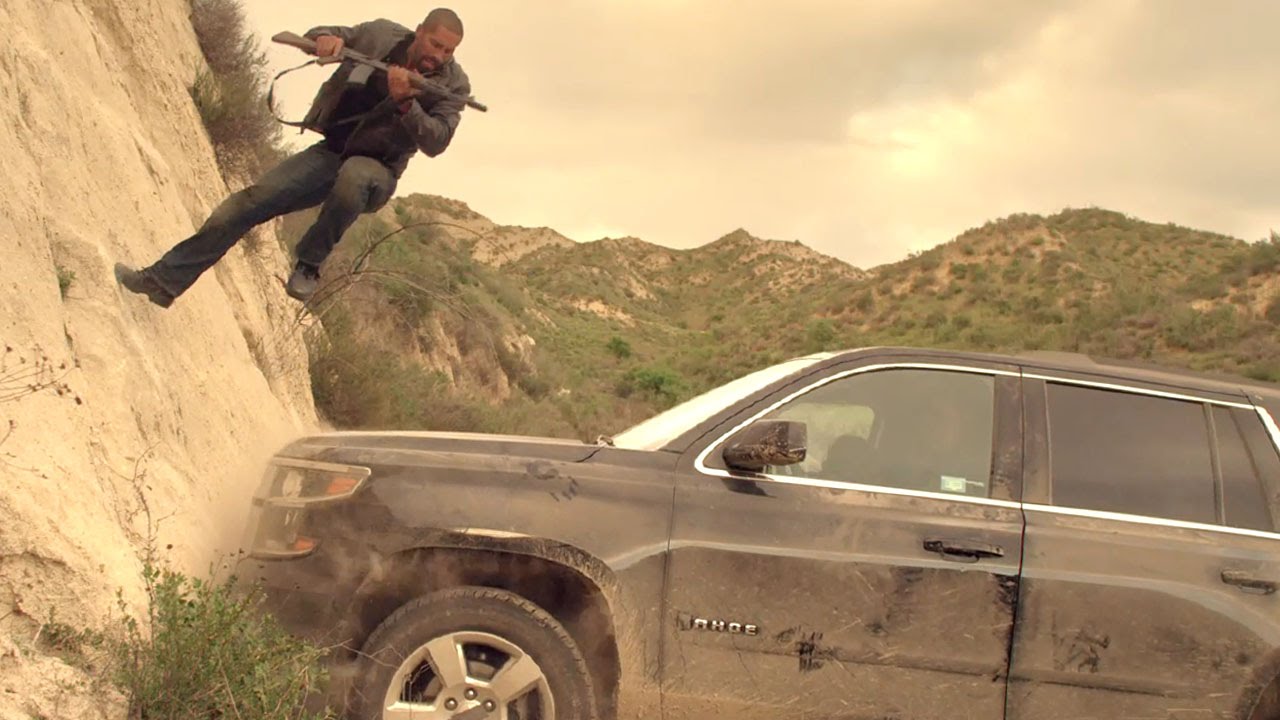
As with their blockbuster brethren, direct-to-video action movies thrive on previously existing brands. These cheaply made concoctions can’t afford to license comic books, so they market personas instead, whether it’s Van Damme,  Lundgren, or even Cuba Gooding Jr. While their careers as major stars were brief, fight fans flock to the familiar, so these nostalgia acts are essential to secure production funds, even if they only appear in a scene or two. This doesn’t account for the burgeoning cult surrounding actor-director duo Scott Adkins and Isaac Florentine. Adkins is the rare performer who has made himself a bankable star inside of the DTV universe, despite having only landed bit parts in major films outside of it (The Expendables 2, the upcoming Doctor Strange). He is unknown among the general public, but Adkins and Florentine’s defiantly old-fashioned attitude regarding the shooting and blocking of fight scenes have made them cult heroes among the small but vocal DTV action film fanbase. Close Range is their eighth film together, and it is distilled down to the basics. A revenge drama set on the U.S.-Mexico border, it pits Adkins against a drug cartel, whom he dispatches in a series of increasingly bloody showdowns. The action takes place mainly along one rural dusty road where Adkins goes one-on-one with an SUV and one-on-dozens during an extended siege. Available on VOD and iTunes December 4th, with a limited theatrical run December 11th, Close Range is a satisfying back-to-basics brawler.

Ninja: Shadow of a Tear (2013) was the most recent Adkins-Florentine collaboration, a spectacular throwback to the martial arts films Cannon was producing in the ’80s. Close Range has more of a Walking Tall vibe, of corruption eating away at a small town until a principled psycho tries to clean it up.  The script was written by DTV vet Chad Law (Van Damme starrer 6 Bullets) and Shane Dax Taylor, which sends sullen ex-soldier Colton MacReady (Adkins) on a mission to rescue his kidnapped niece Hailey (Madison Lawlor). She was nicked by a Mexican drug cartel led by Fernando (Tony Perez), who are using her as leverage to get money owed them from her stepfather Walt (Jake La Botz). During the rescue, Colton swipes a flash drive which contains all of the cartel’s records. So the gang follows him home, and the war will never end until one side is wiped out.

Adkins is still a work-in-progress as an emoter, but here he isn’t asked to do much other than glower and spin-kick, which is what the man was born to do. Trained in taekwondo and kickboxing, Adkins has the agility of a dancer, and once he gets those long-levered limbs going he is a joy to watch.  Fight choreographer Jeremy Marinas is the one pulling his strings, one of the many great talents coming out of 87Eleven Action Design, the stunt rigging/rental/training organization led by Chad Stahelski and David Leitch, the directors of John Wick. Marinas has Adkins work a lot in close brawling combat here, playing off of Colton’s presumed training as a soldier. This is not a martial arts showcase, but exhibits fights that are going for the quick kill. This is evident in Marinas’ cameo as a hired goon whom Adkins dispatches with a flick of his belt knife, a necessary accoutrement for any aspiring vigilante.

Florentine is not a flashy director but a cogent one, wanting his films to be showcases for the stunt performers (he is a trained martial artist himself). He often films in long shot so no body part is chopped off by the frame. His most attention-getting sequence is placed at the beginning, a long take of Colton fighting his way through a hallway and into the cartel’s office. Adkins told the Action Elite site that they had half-a-day to shoot the sequence, managing to get six or seven takes. It is more elaborate than a similar shot in Ninja: Shadow of a Tear, in which Adkins hip-tosses his way through a dojo. In Close Range the action is more fluid, a less-mechanical hitting of spots. But I vastly prefer the more traditional fight sequences in Florentine’s films, in which mini-narratives emerge of strikes and counters. These single take fights are Adkins as battering ram.

Though he has found success in DTV, Adkins is openly critical of the limitations it places on Florentine and himself. In the same Action Elite interview, Adkins says:

It pushes you more but I don’t think it elevates your game. You get really tired and with that comes lack of focus and you can’t concentrate like you should be. The action stuff is not easy, it’s always hard because we are pushing to do great stuff but it’s something I know like the back of my hand, but then you have to go from spending ¾ of the day doing a really intense fighting sequence in the heat and then have to go and deliver as an actor at a time when you are feeling just shattered and just want to go to bed. I want to deliver the action as much as I deliver the drama and if it’s a low budget you haven’t got the time to always do that – I wish we had more time to deliver on both fronts but that’s also the charm of some of these films. We are almost nostalgic in the way we make these movies. They are like a throwback to the eighties and early nineties.

He also admits that they had trouble reaching the required minimum running time for the feature, necessitating an incredibly long sequence identifying each member of the drug cartel, despite most of them having no lines or identifiable characters. These films consist of an endless series of artistic compromises, but these are the allowances the DTV action film fan makes for any Adkins-Florentine production. There will be stilted supporting actors, threadbare sets, and hand-me-down plots, but once the fists start flying, their artistry becomes as undeniable as a kick to the kidney.

TWILIGHT OF THE B-WESTERN: WHITE HORSE, BLACK HAT

November 24, 2015

51Fk1LohvCL._SX313_BO1,204,203,200_

C. Jack Lewis saw a lot in his 84 years. A Marine Corps veteran of three wars, he was also a self-described “reporter, drunk, editor and hobo” who spent decades on the fringes of Hollywood. A fan of Westerns since childhood, he broke into screenwriting just as the B-Western business was collapsing, thanks to the arrival of television. He managed to sell a few scripts for budget stars like Lash LaRue and Johnny Mack Brown, but would spend the majority his career as a journalist for horse and army publications (he was the founder of Gun World magazine). During that time he met all of the stars of his youth as they sank down the Hollywood food chain, making a living as extras on TV Westerns or as special attractions at traveling circuses. In his affecting memoir White Horse, Black Hat, published in 2002 by Scarecrow Press, Lewis wrote thumbnail portraits of these faded stars, a collection which captured the end of the B industry and the itinerant careers of the low-budget cowboy.

Lewis

Jack Lewis was born to a military family in 1924 Iowa. His father was an officer in the Army cavalry, and Lewis followed suit by enlisting with the Marines when he turned 18,. He saw action in WWII as a machine gunner, received a Bronze Star for bravery as a combat correspondent during the Korean War, and served as a Reserve Major for the Marine Amphibious Force in Vietnam. Throughout his service he was thinking up scenarios, specifically for the B-Westerns starring the likes of Tom Mix, Ken Maynard, and Hoot Gibson that dominated his youth. Lewis writes that “from the age of twelve, I insisted I was going to be in the Western movie business. My mother wanted me to be a lawyer and my old man just wanted me to seem reasonably sane.” As a kid he wrote a fifty page script for The Range Busters series and sent it to the Poverty Row studio Monogram Pictures. It was rejected for being too expensive to produce. This would be an early lesson in economics that Lewis would encounter throughout his career, as he struggled to get his work up on screen.

king-of-the-bullwhip-movie-poster-1950-1020488574

In 1945 Lewis was training in Pendleton, California for an invasion of Japan, but on his off days would hitchhike to Hollywood and talk his way onto studio lots. One day he weaseled his way into Eagle-Lion, and managed to speak to producer Robert Tansey and a young actor named Al LaRue. A few years later Al would be rebranded as “Lash” LaRue, for whom Lewis would write one of his first screenplays, King of the Bullwhip, It was produced and directed by Ron Ormond for his Western Adventures Pictures, Inc. for  $40,000. Lewis describes the pre-production:

I went to the Hollywood library and checked out a book on screenwriting. A week later, I was in Ormond’s office in the San Fernando valley, script in hand. “This isn’t bad, he said. “I think we can use it, but have you ever seen Lash act?” I admitted I had. “Then take it back and cut all of his lines to ten words or less. Otherwise we’ll never get the picture made!”

Ormond would become one of Lewis’ close friends and collaborators as they tried to make a living on the edges of Hollywood. LaRue, according to Lewis, became another sad story, getting fired from the Wyatt Earp TV show before moving on to appearances at country fairs and rodeos. He eventually hit the bottle, and “at one point, when a police officer drew a pistol on him, the old actor challenged him to fire and ‘put me out of my misery.’” This story is representative of the characters Lewis meets throughout the book, men discarded by Hollywood and clinging to the embers of their fame. What makes White Hat, Black Hat so engaging is the complete lack of judgment. Lewis is very upfront about his own troubles with alcoholism, and treats each story with a matter-of-fact distance. And LaRue’s story does not end in the gutter. He dried himself out , became an evangelist named “Doctor Lash”, and bounced around North Carolina and Los Angeles. Lewis stayed in touch until his last days, whereupon his ashes were lost by the cemetery. “I’m certain he has to be laughing like hell at the final excitement he created!”

il_570xN.435828911_y1dl

Death is everywhere in this book, there are more heart-attacks per page than the New York Times’ collected obituaries. Comedian Al St. John was in a motel room in Vidalia, Georgia eating grapes when “he just fell over and he was dead.” Charles King had started as an extra in the silents, and ended his life and career the same way, working background for TV’s Gunsmoke. The legend goes that he had just finished playing a corpse on-screen when he suffered the heart attack that killed him.  Tex Ritter had a heart attack in a Nashville jail cell, visiting a friend. Regarding Ritter, Lewis writes: “This was a man I wish I had known better.” The whole book is an attempt to resurrect an era from memory, and Lewis is open and regretful for the gaps therein. Of flight instructor and bit actor Dennis Moore he writes: “I felt a little relieved to find that I was not the only one who never really knew Dennis Moore, but it’s really too bad. No one should have to be that much of a loner.”

Lewis is the Forrest Gump of B-Westerns, seeming to have encountered every star who passed through Poverty Row.  Even if he met someone in passing, or in Tom Mix’s case, talked to his ghost, he makes room for them in this generous book. An empathetic collector of characters, White Horse and Black Hat opens up a lost world depicting the twilight of the B movie, and the real human consequences of its loss. The majority of people mentioned by Lewis will never have monographs written about them, but here their art, their lives and their deaths are made to matter. “They don’t really forget you in Hollywood”, according to prolific B-Western actor Frank Yaconelli, “They just park you beside the road so you can watch as the rest of them marched on.” With this book, Lewis looks to those left behind, and gives them their final fade-out.

OPENING THE VAULTS: JOHN FORD’S THE BLACK WATCH (1929)

November 17, 2015

Screenshot (96)

In the era of declining DVD sales, Hollywood studios are still experimenting with how to exploit their extensive libraries, if they choose to do so at all. With their Warner Archive line of manufactured-on-demand DVDs, and Warner Archive Instant streaming service, Warner Brothers has been the most aggressive in remastering, distributing and marketing their holdings. Universal, MGM, Sony and Fox have all started their own DVD-MOD labels, but with little-to-no publicity and questionable commitment to quality (Fox was notorious for releasing old cropped and pan and scan transfers to their MOD-DVDs). Some license titles to boutique labels like Twilight Time, Kino Lorber (my employer), and Shout! Factory, while Paramount has made the surprising step of launching a free YouTube channel with hundreds of titles, which they are calling “The Paramount Vault.” For now it is a branding exercise that doesn’t delve very deeply into their catalog, but Paramount starts dropping restored Republic Pictures films on there, I will take notice. Since Netflix has shown little interest in films made before Millennials were born, the one place that might turn a buck is iTunes and other transactional VOD providers (where you pay-per-movie), which have shown an insatiable desire for content regardless of the production year. And for their centenary, 20th Century Fox is releasing one hundred of their films to iTunes in HD, many of which have never been available on home video (you can see the full list at Will McKinley’s blog).  Announced in October, some of the rarer titles have recently appeared in the iTunes store, including John Ford’s first all-talkie feature The Black Watch (1929). Not included in the massive Ford At Fox box set and impossible to see otherwise except on fuzzy bootlegs, this is a promising development for the future accessibility of 20th Century Fox’s film library.

CaptureIn Variety the president of 20th Century Fox Home Entertainment, Mike Dunn, spoke about the opportunity digital streaming is presenting: “You’re not trying to hold shelf space in a retail outlet. It allows you to have more of your catalog readily available, because you put it on iTunes and it stays there. You’re not being judged by how many units it sells. Services like iTunes want to be a completist.” With lower overhead costs than DVD and Blu-ray, and less immediate sales pressure, it’s an attractive spot to place those HD transfers the studio archives have been stocking for a decade plus. While the quality will never match Blu-ray (my HD iTunes download of The Black Watch was 2.86GB, while a single-layered Blu-ray can hold 25GB), it is an acceptable substitute for those niche titles Fox would never release in a physical format. The first reel of The Black Watch is heavily scratched and worn, but the remainder shows clarity and depth, doing justice to Joseph August’s cinematography. It’s certainly worth a $4 rental.

Screenshot (98)

John Ford’s first sound film was a short, now lost, entitled  Napoleon’s Barber (1928), about an “anarchistic French barber who gives a shave to Napoleon on his way to Waterloo” (description courtesy of Joseph McBride’s John Ford: A Life). He would make two more silents (Riley the Cop and Strong Boy), before entering production on The Black Watch, which was something of a debacle. The film was based on the novel King of the Khyber Rifles (1916) by Talbot Mundy. The scenario by John Stone and dialogue by John K. McGuinness tell the story of Donald King (Victor McLaglen), a captain in England’s Black Watch regiment of Scotsmen. Just before the Black Watch is sent to fight in France at the start of WWI, King is selected to undertake a secret mission in India. His men think he is a coward for taking a cushy post, but his mission is to break up a group of Indian insurrectionists led by Yasmani (Myrna Loy), the so-called Joan of Arc of India, set to start a holy war against the British colonizers. King infiltrates Yasmani’s clan and attempts to break it up from within, which their growing attraction makes more difficult.

Screenshot (75)

Screenshot (76)

Ford filmed The Black Watch as a part-talkie, but Fox general manager Winifred Sheehan hired British cast member Lumsden Hare to direct additional dialogue sequences. Ford recalled that

Sheehan was in charge of production then, and he said there weren’t enough love scenes in it. He thought Lumsden Hare was a great British actor — he wasn’t, but he impressed Sheehan  — so he got Hare to direct some love scenes between McLaglen and Myrna Loy. And they were really horrible — long, talky things, had nothing to do with the story — and completely screwed it up. I wanted to vomit when I saw them.

Though they didn’t make me nauseous, there are some extended dialogue sequences of ponderous deliberation. It is as if Hare believed dialogue couldn’t be registered unless McLaglen and Loy have rests in between each line. These are jarringly static sequences, because Ford and August shot the rest of the film with group dynamics in mind.

The film begins with a classic Fordian dinner, soldiers arranged symmetrically around the table singing mournful melodies in between busting each other’s chops. There is a general clamor nonexistent in the added dialogue sequences. This clamor increases when the troops go off to war at the train station, in which lines of men wind through the concourse and the soundtrack crackles with drums, bagpipes, and the cries of parting families. In the New York Times Mordaunt Hall praised it’s realism: “Those who witnessed the trains carrying soldiers to the front during the black nights of London town, will be affected by these sequences, for they are without a doubt the most realistic thing of their kind that has come to the screen, and the fact that these scenes are presented with a variety of sounds such as singing, the tramping of fighters’ feet, the officers’ commands, the chug-chug of the locomotives, render them particularly vivid.”

Screenshot (78)Screenshot (79)

Things get even more elaborate once Captain King goes to India, and August has a field day shooting through latticework, curtains and lace. Yasmani is introduced in extreme close-up under a veil, Myrna Loy’s face just a suggestion. The representation of India doesn’t get beyond Indiana Jones levels of colonialist fantasy. Though in her early career she was positioned as an exotic object of desire (Across the Pacific, Desert Song), the Montana-born Loy is never quite convincing as a warrior who could command the loyalties of Indian subversives (who are depicted as a thoughtless mob that get gunned down in a gruesome Wild Bunch ending).

Screenshot (97)

The Black Watch remains strongest in its depiction of the war, and a short sequence showing the Black Watch battling through Flanders Fields is haunting. As the camera slowly tracks backward through a foggy landscape, the men pour forth with ill-fated enthusiasm, as their lives are cut down in the trenches. Peter Bogdanovich praised the back-lighting in this sequence to Ford, who responded with, “Well, we never had many people so I tried that way to make it look as though I had more.” Ford ascribes poetic results to practical problems, describing filmmaking as an issue of mechanics. The Black Watch is a transitional work that provided Ford and his crew an opportunity to work out the kinks in the sound film, poor Lumsden Hare aside. And with Ford’s Men Without Women (1930) also scheduled for release to iTunes in HD  from Fox, we will soon get a fuller picture of Ford and DP Joseph August’s development into the audible age.

screenland19unse_0352


JULIEN DUVIVIER IN THE THIRTIES

November 10, 2015

duvivier00034

“If I was an architect and I had to build a palace to the cinema, I would put at its entrance a statue of Duvivier.” – Jean Renoir

Julien Duvivier is a memorable name, phonetically speaking. It rolls lyrically off the tongue, sounding like a foppish count in a Lubitsch operetta. The memory of his career, though, has faded. Duvivier was a distinguished director for forty years, one who popularized the French poetic realist style in Pepe le Moko (1937), starring Jean Gabin. In his time he was admired by Jean Renoir, Orson Welles and Graham Greene, but was part of the old guard roundly rejected by the Cahiers du Cinema critics in the 1950s, and continued to be dismissed by the American brand of auteurism imported to the U.S. by Andrew Sarris. Outside of Pepe, he was rarely discussed in English until a 2009 retrospective mounted at the Museum of Modern Art, organized by Joshua Siegel. And now the Criterion Collection has released a fascinating DVD box set, in their no-frills Eclipse series, entitled Julien Duvivier in the Thirties, which includes David Golder (1930), Poil de Carotte (1932), La Tete d’un Homme (1933), and Un Carnet de Bal (1937). These films, unknown to me previously, approach four different genres with a dark romanticism expressed through a restless, roaming camera.

duvivier00002

Duvivier was born in 1896 in the city of Lille, in Northern France. His father was a traveling salesman, and the arts were not an emphasis at home. Duvivier recalled that, “I had a passion for the theatre, although I don’t know where I got it from, since, through my childhood, I was never allowed to go there” (quoted in the Faber Book of French Cinema by Charles Drazin). He was a painfully shy child, and his initial attempts at a theatrical life were disastrous. He made his stage debut during WWI at the Odeon Theatre in Paris, where, according to his friend Maurice Bessy, “Not a word escaped his lips. The prompter whispered his lines, whispered them again, almost shouted them to him. But it was no use. He had fallen into a black hole. They had to lower the curtain. This was his first and last appearance.” The director of the Odeon, André Antoine, told him “This is not a career for you…Come with me. Work with me in the cinema.” So Duvivier got his start as an assistant to Antoine, who directed a number of realist films during WWI. Duvivier was also the AD for Louis Feuillade on his adventure serial Tih Minh (1918), and  would direct his first feature in 1919 (Haceldama or Blood Money).

duvivier00001

After working steadily through the silent era, and directing a genuine hit with Poil de Carrote (1925), Duvivier was quick to adapt to soundevident in his first feature with the new technology, David Golder (released by Gaumont in 1931). In the first sequence he experiments with off-screen audio, focusing on a butler’s impassive face as the industrialist Golder (Harry Baur) reminisces about his humble origins as a poor Jewish immigrant. The film, adapted from the novel by Irene Nemirovsky, is a melodrama about Golder coming to terms with those origins, after years of escape into the distractions of new money. His wife and daughter are both shallow conspicuous consumers, so when Golder’s health gives out, there is no one to give him solace except his memories of home. Baur was a frequent Duvivier collaborator, a large, pear-shaped fellow with an air of insularity, he emits an anxious avuncularity,  kindness wrapped in insecurity. From the start Duvivier and his cinematographers Georges Perinal and Armand Thirard experiment with different visual approaches. That same sequence that includes the close-up of the butler’s face ends in an extreme long shot, with Golder’s broke ex-partner standing alone in a living room doorway, while Golder sits down to his latest feast in the dining room on the opposite side of the frame. In addition to these static, highly choreographed tableau are more kinetic traveling shots that emphasize the decadence of Golder’s one-percenter buddies. The camera circles around a bar pouring champagne and lilts across a table covered in meat and booze, following the path of a check as being passed down to Golder. The characterizations are overly broad – Golders’ wife and daughter are little more than screeching harpies – but Golder’s loneliness is conveyed with desolate finality.duvivier00017

duvivier00018

In 1932 Duvivier remade Poil de Carotte, the story of a freckled kid  nicknamed “Carrot Top” desperate to escape from his family. His mother Madame Lepic (Catherine Fonteney) is an abusive nag, while his father Monsieur Lepic (Harry Baur) is an absent-minded guardian who pays more attention to the newspaper than his children. What threatens to become a schmaltzy coming-of-age tale turns out to be much darker, as Carrot Top is not just exasperated by his family but driven to suicidal thoughts. Once again the wife and mother is depicted as a monster, heaping work and slaps on her defeated little boy. Duvivier depicts Carrot Top’s internal struggle through superimposition, turning a trip to feed the livestock into a harrowing encounter with ghosts, to nighttime arguments where Carrot Top’s multiple personalities argue the appropriate way to end his life. The contrast of idyllic farm landscapes with the cute kid’s death fantasies makes for an unusually unsettling kid’s movie. This mix of fairy tale and nightmare becomes most pronounced in a beautiful shot by a lake, where Carrot Top and his little girlfriend stand by the water. He tells her he cannot marry her because he is going to kill himself. She agrees it is the right decision.

duvivier00022 duvivier00021 duvivier00026

Death and love are again intertwined in La Tete d’un Homme (A Man‘s Head, 1933), an intense adaptation of the Georges Simenon novel (1931) of the same name (translated into English as A Battle of Nerves). The first Simenon film was Jean Renoir’s La Nuit du Carrefour (Night at the Crossroads, 1932), which I wrote about here. Harry Baur plays Commissioner Maigret, who is involved in the murder of an eccentric American millionaire. A gangly fool named Joseph Heurtin (Alexandre Rignault) left bloody foot and hand prints all over the scene of the crime, and is swiftly arrested. Maigret is convinced this poor simpleton has been framed for the job, so he allows Heurtin to escape, in the hopes of following him to his employer, the real killer. The path leads to the dissolute heir of the American’s fortune (Gaston Jacquet), his regal wife Gina  (Edna Reichberg), and a neurasthenic Czech named Radek (Valery Inkijnoff) who only has six months to live. With no motive other than a Raskolnikovian nihilism, Maigret is hard pressed to find any evidence to put Radek behind bars. Armand Thirard’s camera is again very mobile, exploring each space with a detective’s curiosity. In a cafe that is central to the murder plot, Thirard executes a 360 degree pan to inspect each face around the bar, a roll call of sorts for the investigation to come. There is also a resourceful use of back projection. A beat cop is canvassing for witnesses, and instead of cutting from one set-up to another, Duvivier has the policeman stand in one spot while the back projected image cuts between locations instead. I’ve never seen anything like it, and it conveys the idea that the city is contorting itself to serve the police – the investigation somehow changes the face of the urban space. The only one who can resist this power is Radek – who Valery Inkijnoff embodies with a charismatic disdain. Radek, under investigation for murder, is a guy who will refuse to pay a bill just so he can waste the police’s time. Counting the days until he dies from a mysterious disease, he wants to make his mark before he goes. Maigret’s whole existence depends on erasing these marks, but Radek cuts deep, and the incantatory closing scenes are a delirious mixture of extreme close-ups, a back projected light show, and the revelation of a passion that seems to be wasting Radek from within.

duvivier00033

The last film in the set, Un Carnet de Bal (Dance Card, 1937), was released the same year as Pepe le Moko, and was a huge hit that year. Utilizing the portmanteau structure he would return to often (Tales of Manhattan, Flesh and Fantasy), it is a melancholy trip through a widow’s past. Christine (Marie Bell) is recovering from her husband’s death, and reminiscing about her youth. She recalls her first ballroom dance when she was sixteen, and the diverse group of suitors who once declared their love to her, and whom she rejected. In order to close out the narratives from her past and open new futures, she decides to visit all the men on her dance card from that night. They include a criminal night club owner, a depressive priest, a one-eyed alcoholic, a magician barber, and a dead man who haunts his mother’s addled brain. Her memories all dissipate in the face of reality, and the dance she fetishizes so much she can see the shadows dancing on the wall of her bedroom, turn out to be nothing but phantoms. Duvivier is anticipating the late films of Max Ophuls here, with his twirling camera imitating a doomed waltz. At 130 minutes there are at least two too many vignettes – but this is a beautifully bittersweet film, anchored by Marie Bell’s sensitively crestfallen performance.

duvivier00030

These are only four films from the seventy he made in his extended career, but they all display a formidable visual intelligence, an atmosphere of doomed romanticism, and a bit of overwriting. La Tete d’un Homme, with that tight-as-a-drum Simenon plotting, would have to be my favorite in the Criterion set. These are films of lost or withheld love, of characters so deprived they mine their own past for any vein of compassion, usually coming up empty. Even Carrot Top is nostalgic, though only for the time before he was born. They are, at their core, about failure, something Duvivier felt deeply from his first and only appearance on stage – and that petrified emptiness seems to have went its way throughout his 1930s work, trailing an air of voluptuous resignation.

I AM ALSO A FUGITIVE FROM A CHAIN GANG: HELL’S HIGHWAY (1932)

November 3, 2015

hell00006

In 1932 the treatment of prisoners on chain gangs became an issue of national import. In January Robert Elliott Burns published I Am a Fugitive From a Georgia Chain Gang!, which recounts two escapes, eight years apart, from brutal prison camps. Warner Brothers would rush to adapt it into I Am a Fugitive From a Chain Gang for a November release. In June Arthur Maillefert died inside a “sweat box” at the Sunbeam Prison Camp in Florida, a chain wrapped around his neck and wooden stocks nailed around his feet. The camp’s captain was charged with first degree murder and found guilty of manslaughter, sentenced to twenty years imprisonment. Calls for reform reverberated across the country, and the film studios were eager to capitalize on the nation’s interest. Universal was developing Laughter in Hell (which I wrote about here), adapted from a Jim Tully novel, while RKO was fast-tracking Hell’s Highway, which combines Burns and Maillefert’s stories into a narrative they hoped not to get sued overPrizing speed above all else, RKO got Hell’s Highway into theaters first on September 23rd, beating Fugitive to screens by almost two months (Laughter in Hell didn’t arrive until January of 1933). Brought to the screen by the famously combative director Rowland Brown, Hell’s Highway is cynical and punchy, but compromised by studio meddling.  The Warner Archive has made Hell’s Highway available on DVD as part of “Forbidden Hollywood Volume 9″, the latest in their series of pre-code DVD sets (it also includes Big City Blues, The Cabin in the Cotton, When Ladies Meet, and Sell Anything).

HHighway

The sole reason for Hell Highway’s being was to beat Am a Fugitive From a Chain Gang into theaters, regardless how it accomplished that goal. Producer David O. Selznick and writers Samuel Ornitz, Robert Tasker, and Rowland Brown cobbled together a script culled from the Burns novel, the Maillefert story, and Agnes Christine Johnson’s Freedom, another book about chain gangs. Then Selznick cut out anything he thought might get them sued. This “original” tale focused on Duke Ellis (Richard Dix), a prisoner on a chain gang continually looking for an escape. He nearly breaks loose thanks to a distraction from the fortune-telling bigamist Matthew (Charles Middleton), but had to call it off when he discovers his young brother Johnny (Tom Brown) has been detained in the same camp. After a Maillefert-like prisoner dies in a sweatbox, the inmates start advocating for revolt. Johnny receives word that Duke is about to be extradited to Michigan to serve a life sentence, so Johnny decides to bust Duke loose. The attempted escape triggers an all out riot that burns the prison camp to the ground, and Duke and Johnny try to stumble their way to survival.

hell00003

Brown gets a lot of mileage out of symmetrical shots out of chained feet, men lined up at the cafeteria table and trudging to work to build a road. They are effectively dehumanized, herded like cattle and whipped like dogs. Duke is the one who can’t be broken, a hard-bitten cynic who seems to have been raised in jails and resents every authority figure he’s ever met. The warden and all the guards are depicted as ignorant goofs or sadistic fascists, not exceptions but representatives of a violent system. It is missing I Am a Fugitive From a Chain Gang’s  meticulous attention to detail and Laughter in Hell’s death-drive delirium, but it does have dirt and grime and an atmosphere of desperation, ably lensed by DP Edward Cronjager (Heaven Can Wait).

hell00009

Martin Scorsese was a fan, and wrote for TCM, “There are moments that you will never forget. There’s a remarkable scene that we included in my documentary on American cinema: the prisoner played by Richard Dix is about to be whipped by a guard, who suddenly flinches when he sees the tattoo on Dix’s back and recognizes that he’s a fellow WWI vet. And there’s another passage that is quite unlike anything else in American cinema of the period, in which the story of a cuckolded guard and his cheating wife is told in an impromptu Frankie and Johnny ballad.” The latter is a bizarre interlude unrelated to the rest of the action. There is a group of black prisoners, segregated from the whites, who sing spirituals in their off hours. But one of them is a talented caricaturist, and sketches out a few cartoon panels of one of the guard’s cheating wife. The story is told through song. It is graphic, funny, and a completely different tone from the quiet desperation of the rest of the feature. It’s hard to say why Selznick did not cut that sequence, when he did so many more, as well as re-shooting the ending. He had John Cromwell come in to shoot an absurdly upbeat ending that inserts a benevolent bureaucrat who punishes the staff and implicitly exonerates the prison-industrial system.

film-daily-sept-33-ad

Director Rowland Brown is one of those great Hollywood enigmas. He only directed three well-regarded films (Quick Millions, Blood Money and Hell’s Highway) before reportedly punching out a producer and never directing again, though he maintained a career as a writer up through the ’50s (he received a story credit on Kansas City Confidential (’52)). He was born in Ohio, and got his start in the arts as an illustrator and sports cartoonist. He eventually moved to Los Angeles and became a day laborer at the studios. According to James Curtis’ Spencer Tracy biography Brown, “turned to screenwriting under the auspices of the late Kenneth Hawks [Howard’s brother], went to Universal for a short while, then sold a grim mob story, “A Handful of Clouds”, to Warner Brothers, shot as The Doorway to Hell (1930, directed by Archie Mayo). Brown was reportedly involved with the mob, and was rumored to have made a living as a bootlegger during prohibition, and was said to have been an acquaintance of Bugsy Siegel. This all lent an air of legitimacy to his gangster films, and perhaps got him the opportunity to direct his script for Quick Millions (1931), a movie about a small time protections racket starring Spencer Tracy. What is remarkable about Brown is how much remains unclear. It doesn’t seem like anyone knows for sure his true relationship to the mob, or who he actually punched at RKO. It was rumored to be David O. Selznick or Frank Davis, the producer on The Devil is a Sissy, from which Brown was fired and replaced by W.S. Van Dyke. Let’s just say I will buy the Rowland Brown biography if it is ever published.

hell00011

Despite it’s beating I Am a Fugitive On a Chain Gang into theaters, the comparatively slim and cheap Hell’s Highway was soon overwhelmed at the box office, and it has disappeared from view aside from the chatter of a few Rowland Brown cultists. It is a strange, tough little film with a grim view of American incarceration, one that was kneecapped by Selznick’s re-shoots, but one that still retains its ability to shock.

DEATH WATCH: JOSEF VON STERNBERG ADAPTS AN AMERICAN TRAGEDY (1931)

September 8, 2015

In 1931 the Paramount Publix Corporation was eager to film an adaptation of Theodore Dreiser’s novel An American Tragedy, having failed to do so since acquiring the rights soon after its publication in 1925. They got close in 1930, when the visiting Sergei Eisenstein wrote an experimental script that was eventually rejected for being too long and uncommercial. So instead they assigned Josef von Sternberg, who was coming off three hits starring Marlene Dietrich (The Blue Angel, Morocco, and Dishonored), and seemed to have the box office touch for artier, offbeat material. The resulting film, now out on DVD from the Universal Vault (the transfer is likely from an old VHS master, soft but watchable), is an oneiric oddity, using dreamlike visuals to illustrate a story of true crime barbarism – murder by drowning. Water imagery abounds, in lap dissolves and superimpositions – it even breaks up Von Sternberg’s name in the opening credits. Von Sternberg turns Dreiser’s indictment of American society, one that created the conditions for murder, into something more subjective and opaque. Dreiser claimed that Paramount had turned his novel into an “ordinary murder story”, and sued to have the movie’s release halted. The New York Supreme Court judge ruled in favor of Paramount, and the film was released. Motion Picture Herald claimed the decision was, “likely to become an important part of legal tradition and precedent in the relation of the art of literature and the art of the motion picture.” So whenever Hollywood takes creative liberties with a novel, for better or worse, it has Paramount’s An American Tragedy to thank.

“I have just finished reading the Eisenstein adaptation of An American Tragedy. It was for me a memorable experience; the most moving script I have ever read. It was so effective, that it was positively torturing. When I had finished it, I was so depressed that I wanted to reach for the bourbon bottle. As entertainment, I don’t think it has one chance in a hundred. …Is it too late to try to persuade the enthusiasts of the picture from making it?” – David O. Selznick to B.P. Schulberg, October 8, 1930

In April of 1930 the Vice President of Paramount, Jesse Lasky, signed Eisenstein to a contract – he would receive $900 a week, out of which he would pay his cameraman Eduard Tisse and assistant Grigori Aleksandrov . They all arrived in Hollywood in May, and received the grand tour, visiting Disney, and attending a party at Ernst Lubitsch’s place at which Marlene Dietrich and Josef von Sternberg were guests. An American Tragedy was settled upon as the project. Dreiser’s story was based on the real murder of 20-year-old Grace Brown by Chester Gillette in Upstate New York in 1906. They were transposed into the novel and film as farm girl Roberta Alden and son of poverty Clyde Griffiths. Griffiths runs away from his hometown after witnessing a murder, and bounces around menial jobs (bellboy and dishwasher) until he lands a job at a printing and stamping factory. It is there he meets Roberta, and he believes he is in love until he sets his eyes on the upper class charms of Sondra, the hit of the society pages. Clyde will lose his job if his relationship with Roberta comes to light, so thoughts turn to making her disappear. Eisenstein became entranced with the idea of “internal monologue”, which was not simple voiceover but more like stream-of-consciousness audio montage that would ebb and flow with the intensity of the characters’ emotions. A snippet from his script treatment:

“As the boat glides into the darkness of the lake, so Clyde glides into the darkness of his thoughts. Two voice struggle within him — one: ‘Kill — kill!’ the echo of his dark resolve, the frantic cry of all his hopes of Sondra and society; the other: ‘Don’t — don’t kill!’ the expression of his weakness and his fears, of his sadness for Roberta and his shame before her. In the scenes that follow, these voices ripple in the waves that lap from the oars against the boat; they whisper in the beating of his heart; they comment, underscoring, upon the memories and alarums that pass through his mind; each ever struggling with the other for mastery, first one dominating then weakening before the onset of its rival.”

He had more abstract ideas too, in line with the work of James Joyce and Gertrude Stein that he admired: “Then in passionate disconnected speech. nothing but nouns. Or nothing but verbs. Then interjections. With zigzags of aimless shapes, whirling along with these in synchronization.” The script he delivered would run 14 reels (around 154 minutes), and Paramount had no intention of following his whims for such an obvious money losing project. Selznick’s view won out, and Paramount paid Eisenstein $30,000 to end their contract. They turned to von Sternberg to get the film made.

Sternberg claims to have seen nothing of Eisenstein’s treatment, and considered him a friend from their evenings together. In his autobiography Fun in a Chinese Laundry, he recalls, “I was approached by Adolph Zukor. He told me that the company had a dormant investment of half a million dollars in An American Tragedy, and pleaded with me to undertake to salvage this by making an inexpensive version of it. I eliminated the sociological elements [with screenwriter Samuel Hoffenstein], which, in my opinion, were far from being responsible for the dramatic accident with which Dreiser had concerned himself.” So gone was the precise detailing of Clyde’s social class, and, so, according to Dreiser, “instead of an indictment of society, the picture is a justification of society and an indictment of Clyde Griffiths (Phillips Holmes).” I would say the film does not justify society as much as ignore it, and it is not an indictment of Griffiths but an attempt to understand him. The film tries to get into his head through the atmospherics provided by DP Lee Garmes and sound recordist Harry D. Mills, who had both worked on Morocco and Dishonored. Though limited by the close attention being paid the project by the censors (Roberta’s (Sylvia Sidney) attempted abortion is implied rather than stated in the film), it tries to sketch out Clyde’s fantasy life.

The first we glimpse of Clyde’s factory job, he is overseeing his young female clientele, and Garmes’ camera tracks to the right, pausing when Clyde pauses, as the women stare up at him with theatrical flirtations. After Clyde returns to his Spartan office, the floor covered in rejected collars, there is an unusual cut to an extreme close-up underneath the factory tables, of women’s feet and ribbon. It is the only insert in the entire sequence — a peek inside his head, into his limited interests of his erotic imagination. Water is the overarching trigger for Clyde’s desires, however. His first date with Roberta is a canoe ride down a stream, and Von Sternberg utilizes long lap dissolves of water, with scenes melting into and layering on top of each other. In Spring time, the blossom of his love for Roberta, a close-up of the shimmering river is superimposed on top of a long-shot of the same river, creating an abstract image of glimmer, something of the sensorium exploding in Clyde’s head. Later when he hears the newsboy haranguing passersby with headlines of a drowned woman, murder arrives on the horizon of possibilities. Clyde’s hand hovering over a map is then dissolved over an image of a lake, as he begins to assert control over his own violent desires, starts to put them into action.

This intimate dreamscape, some of Von Sternberg’s most discomfiting work, asking the audience to identify with a fetishistic killer, ends abruptly in the extended courtroom sequence that ends the film, a marathon of stilted exposition. The slow, drowsy build into Clyde’s paranoid mindset turns flat and realist, the fog of mystery lifted in favor of legibility and half-hearted redemption. But a film with as complex a production history as this one couldn’t help but being compromised in the end, with so many demands coming from Paramount, the censors, and Dreiser’s lawsuit. It is two-thirds of a great film.

BAYOU BREAKOUT: CRY OF THE HUNTED (1953)

October 27, 2015

cryhunted00011

After a career of making B-pictures for Columbia and Poverty Row, Joseph H. Lewis signed a contract with MGM in 1950. His calling card was Gun Crazy (1950), a daring crime film whose location photography and long-take heist sequence created a buzz in Hollywood, if not at the box office. MGM executive Dore Schary screened the film at his home, and brought Lewis into the fold. They sold him on the idea of making a documentary portrait of Cuban immigrants, “no actors, done with all portable equipment”, but this bold experiment never materialized. The idea was recycled into the Hedy Lamarr vehicle  A Lady Without Passport (1950), which was Lewis’ directorial debut for MGM. Their artsy hire became just another contract director. But Lewis was used to working miracles off of threadbare scripts – he earned the nickname “Wagon Wheel Joe” on B Westerns by continually bisecting his compositions with wheel spokes. One of the most delirious examples from this period is Cry of the Hunted (1953), about the manhunt of an escaped prisoner through the Louisiana bayou, that Warner Archive has just issued on DVD. Lewis takes every opportunity to ratchet up the intensity: he pushes into extreme close-ups to emphasize flop sweat, lenses a fog-choked hallucination brought on by swallowing swamp water, and captures intense on-location footraces up the Angels Flight funicular in Los Angeles and long take brawls through the Louisiana Bayou. The characters don’t have time to take breaths, and in its svelte 80 minutes, neither does the viewer.

cryhunted00001

Cry of the Hunted was shot in September of 1952 in Los Angeles and the Louisiana bayou, an ambitious schedule for a B picture. But even MGM’s B films were done at budgets higher than Lewis was used to. He recalled to Peter Bogdanovich in Who the Devil Made It:  “At Metro, I found when I had a sequence to shoot with fog in it, they wanted to give me two huge stages and build a whole swamp set, put a boat in there and everything. I knew what that meant: you’d fog up the scene and after you made a shot, you’d have to wait for a half hour of forty-five minutes until the huge fans blew out all the old smoke. Right? Well, that was the Metro way. I wasn’t about to do that – I wanted to do it on the outside, which we did eventually.” Lewis was always trying to get outside and onto the streets and the dirt – thinking it was cheaper to find something ready-made than have it constructed. This was not quite the MGM way, and this made him an odd fit at the company, and he often regretted signing the deal.

cryhunted00005

The screenplay by Jack Leonard is fairly elemental. Jory (Vittorio Gassman), a petty Cajun criminal, has been imprisoned for driving the getaway car at a robbery. Lt. Tunner (Barry Sullivan) had been tasked with getting Jory to talk and incriminate his heist-mates. When Jory busts out of jail, he lams it for Louisiana. It is up to Tunner and his rotund partner Goodwin (a sardonic William Conrad) to wade through the swamps and the quicksand to find Jory and bring him back to justice.

cryhunted00006

The energy lags anytime there is a scene indoors, whether it’s at the prison Warden’s office handing Tunner his detail or it’s the Lieutenant at home, making nice with his improbably perky wife (she mixes him martinis for his manhunt picnic basket). These are script pages to plow through, an assignment to complete. But the film comes alive outside. The first galvanic scene is Jory’s escape, which happens during a car accident when they are transferring him back to jail. After being harangued in the backseat by Goodwin’s threatening banter (William Conrad plays his cop as a smiling sociopath), he springs loose on a Los Angeles street following a head on collision. Lewis seems to feel as suddenly free  as Jory, capturing Gassman hoofing it towards the Angels Flight funicular with the piston-like form of Tom Cruise. The funicular was a transport from Downtown to the working class neighborhood of Bunker Hill. The history and various incarnations of Angels Flight were dissected in Thom Andersen’s Los Angeles Plays Itself, a history of the city on-screen. This instance is particularly notable, for Lewis jams a camera into one of the cars as it travels up, and shots Conrad (or his stand-in) as they race up a staircase across the way.

cryhunted00014

The scenes shot on the Louisiana Bayou are less urgent and more atmospheric – sweaty, sticky sequences where everything seems to be sinking into a bog. Lewis’s use of extreme close-ups becomes even more prominent, pushing his camera straight into the sweat ridges on male foreheads. Forward motion becomes impossible through the thick swamp, dotted as it is by quicksand, crocs, and disfigured Cajun soothsayers who scream for their lost loved ones (“Raul! Raul!”, she yells, to no response). Tunner even hallucinates being choked by the fog (and by Jory), a fever dream of elongated giant shadows towering over him and his hospital bed – it’s an impossibly strange bit of surrealist cinema for a MGM programmer.  With all of this insanity, the easy thing for Tunner and Jory to do would be to sink and disappear, but they keep fighting until the swamps threaten to consume them. They are ready to be devoured until a miraculous last act of heroism by the previously self-serving Goodwin. It’s an improbable end to a story that seemed destined to dissolve in the muck, but that’s Hollywood for you. And that’s Joseph H. Lewis for you as well, finding visual intensities from script inanities.

PULLING THE STRINGS: WHAT EVERY WOMAN KNOWS (1934)

October 20, 2015

Woman00012

When Helen Hayes was cast in the 1926 Broadway production of What Every Woman Knows, she was not yet “The First Lady of the American Theater”. According to the show’s producer William A. Brady, she had previously been “deep in the high heels and lipstick business – flapper roles”. It was with the part of the pragmatic “Maggie” in J.A. Barrie’s 1908 play, a Scottish battle of the sexes, that she established the Hayes persona, her civilized veneer holding back a mischievous spirit. The show ran for 268 performances and rave reviews. After further Broadway successes in Coquette (’27) and The Good Fairy (’31), she signed with MGM in 1931 to extend her career into the movies. It seemed natural to have her return to her breakthrough role, and What Every Woman Knows was directed by Gregory La Cava in 1934 – available now on DVD from the Warner Archive. But it was a frustrating experience for all involved, hampered by poor test screenings and re-shoots. Hayes was so disappointed in the process she stopped acting in films for nearly two decades. Regardless of the off-screen dramas, the film itself is a charming comedy about a smart young spinster who manipulates the men in her life into prominence, becoming a behind-the-scenes power broker. It is a rare treat to see Hayes reprise her star-making role, and it is a layered performance built on hundreds of stage repetitions, in which every glance is like a conductor’s wand, controlling the men around her.

Woman00001

Hayes may have first become wary of cinema during that initial Broadway run of What Every Woman Knows at the Bijou Theater in 1926. As she was performing,  MGM’s epic WWI movie The Big Parade was screening next door at the Astor, and the live accompaniment was so loud it would reportedly startle the Bijou performers (per Ken Bloom’s BroadwayAn Encyclopedia). She would recover enough to take MGM’s money and immediately win a Best Actress Oscar for The Sin of Madelon Claudet (1931), and was radiantly innocent in Frank Borzage’s adaptation of A Farewell to Arms (’32).

Woman00003

What Every Woman Knows had already been filmed in a 1917 British version and a 1921 Paramount Production starring Lois Wilson. But enough time had passed for MGM to take their shot, and they had the definitive “Maggie” to go with it, so they paid Paramount $65,000 for the rights to J.A. Barrie’s play. It is set in the village of Kilburne, Scotland and concerns Maggie Wylie (Hayes), a plain, rather brilliant 26-year-old whose family fears she will become a spinster. With her mother passed on, she is surrounded by her father Alick (David Torrence), and her two brothers James (a delightfully dopey Dudley Digges) and David (a starchy Donald Crisp). A few betrothals have fallen apart, and the male Wylies become desperate to marry her off, while Maggie endures them with a twinkle in her eye. The family sees an opportunity in John Shand (Brian Aherne) when they catch him breaking into their library to study, for he’s too poor to attend school. So the Wylies propose to pay for his schooling if he signs a contract promising to marry Maggie after his graduation in five years. The contract is adhered to, and suddenly John is thrust into a race to become MP. Maggie is by his side, and his ear, guiding him to higher positions. The only threat to her ascent is the beautiful socialite and political operator Lady Sybil (Madge Evans), who has her own designs on John, but Maggie has a plan for her too.

Woman00004

Maggie operates in a suffocating patriarchy in which her only value to her family is through marriage, so while they love and adore her, they are desperate to get her out of the house. The early scenes are fascinating for how lightly Hayes plays them as her fate is decided by men sitting around a table. She blames her lack of “charm” for not getting a husband, and continues to flit around the house seemingly oblivious to the monumental changes her life is about to undertake. Whether she is accepting a present or a husband, her reaction is the same, with a benign, half-smiled acceptance. This false “lightness” is conveyed through her lilting Scotch burr as well as her walk. The one aspect of her that can’t lie is her eyes, and director Gregory La Cava, a wonderful director of actresses (Bebe Daniels in Feel My Pulse, Constance Bennett in Bed of Roses), has the blocking in the frame dictated by her gaze. Men are the filaments to her magnet, shifting around her as she tilts her head. While she cannot run for political office due to her sex, she can control their actions from her boudoir.

Woman00009

After a poor test screening in Los Angeles, La Cava brought the cast and crew back into the studio for retakes, saying, “every Joe Miller Scotch joke ever written” would be thrown in to please the audience (Joe Miller’s Jests was an English joke book from 1739), though Hayes recalled that none of the 18th century bon mots made it into the film. She was unhappy with the production, though it received decent reviews (the NY Times called it “heart-warming and decidedly effective”. She threatened to no-show her next assignment, Vanessa: Her Love Story (’35), but did the job to avoid getting sued. Through with Hollywood, she would devote the rest of her career to the stage, returning to TV and film intermittently (memorably so in Leo McCarey’s My Son John (1952)). What Every Woman Knows was a project La Cava and Hayes would both like to forget, but my job is to keep people from forgetting. It is a loose and amiable film with an alert, masterful performance at its center.