DTV ACTION ITEM: AN INTERVIEW WITH DIRECTOR JESSE V. JOHNSON

March 26, 2013

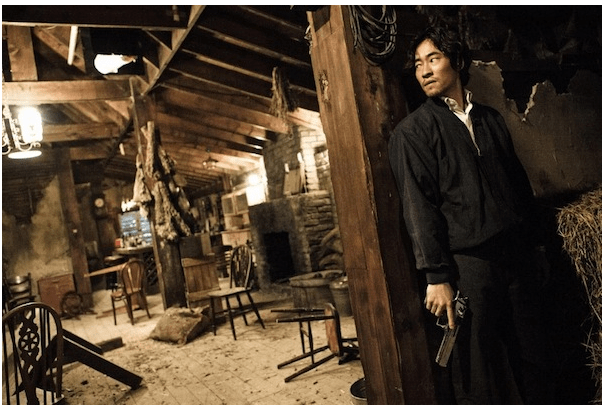
To make a thoughtful direct-to-video action movie is about as difficult as recovering from a meaty right hook to the jaw from Stone Cold Steve Austin. Working on shoestring budgets and two-week deadlines, most DTV product is a jumbled mess of plot holes and broken bones. So when a director is able to compose a coherent space and worldview out of such chaos, it’s a minor miracle. With The Package (2012), Jesse V. Johnson joins Isaac Florentine (Undisputed III) and John Hyams (Universal Soldier: Day of Reckoning) in accomplishing this magic act. It is a simple story well told, of a mob muscleman (Austin) tasked to deliver a mysterious package to a gangster known only as “The German” (Dolph Lundgren). Its contents are sought by a third gang, and what was a simple job for Austin turns into a war. Johnson strips down dialogue and establishes character through fighting styles: Austin is a deliberate and quiet thinker, waiting slowly for an opening for his devastating punch, while the flamboyant Lundgren speaks in long winding monologues before springing for a quick and outrageous kill. Johnson shoots fights up close but in wide angles, so the need for cutting is minimized and blows register with traumatic impact. Jesse V. Johnson has been a stuntman (The Amazing Spider-Man), a writer (The Butcher, 2009) and a director, and he took some time out to speak to me about his varied career adventures. We discuss Dolph Lundgren’s working methods, the fun and frustrations of working in DTV, and the motivation behind his viral Wonder Woman fan trailer.

One of the things I admire about THE PACKAGE is how the fight scenes tell an ongoing story. Steve Austin’s character moves slowly against quicker opponents, but maneuvers himself around them to deliver one of his knockout blows. Lundgren’s character is flamboyant and dramatic, and his brawls are equally showy.  Are you planning these fight scenes in the writing process, or does this action storytelling occur more on-set, with your stunt coordinator and actors?

I had planned to take my regular fight choreographer, Luke Lafontaine, to Canada with me, but that would have cost the production some of their tax incentive, so I was urged to hire a local Canadian, Paul Wu, a very capable young man. I didn’t write this script, but we discussed the various characters’ fighting styles at some length, and how they should reflect the physical size and fictional background of the key players.

There were two or three rehearsal sessions, where details were further refined, and then we shot.  Steve and Dolph are both so expert in this kind of business, that they adapt their choreography to what they know works for them and always operate within their comfort zone. I hired the adversaries, the other fighters, and was quite involved with Steve’s fights as to where and how they would escalate.

From that perspective, I wanted the adversaries all to look extremely energetic, highly technical and motivated to fight, while Steve’s character actually tries to talk his way out of every confrontation, or looks for a way to avoid the fight. It’s subtle, but I believe it makes him look like the more honorable man.  Without realizing it, you’re rooting for this battle-weary warrior with heart – he knows everyone he tangles with is going to end up in the hospital, there’s really nothing to prove anymore . I know guys like this, they are the calmest, gentlest souls, but God, you know if it came down to it, in a physical confrontation, you’d be hamburger meat in their hands.

With the actual choreography, I wanted to see Steve get punished, violently. I wanted the audience to be pissed, to accept that a line had been crossed and it was OK for this massive guy to get mad and get even. I feel many of these DTV movie fighters can end up looking like bullies – and if there is one thing I cannot stand, it’s a bully. If the supposed “good guy” overreacts, looks for trouble, uses guns that are bigger than everyone else, it’s all material that turns you against your protagonist.

Because of Austin’s incredible size, the audience would buy that he wasn’t going to get KO’d when he got beaten, taking this awful punishment. Then they root for him as he waits for the opportunity to throw this killer haymaker – few actors can get away with that, but if you’ve seen the size of Steve’s arms and hands, you know that is just not a bomb you want coming down on you.

Dolph Lundgren is very funny in THE PACKAGE. How much did you work with him in hitting this very theatrical tone?

We discussed it at length in pre-production — the silk dressing gown, hair, aged looking skin (to be honest I wasn’t at all convinced it was a good idea), but, when an actor is insistent, you know he’s going to be motivated, and more than anything I wanted him motivated.

When I saw what he was doing with the character, the slightly over the top take, I simply gave him enough room to do what he wanted.  That meant setting the stage in such a way that we could run his scenes as long takes, so the performance could build and remain in continuity – it would have been very difficult for him to have pulled this off without that methodology.

We’d shoot our coverage from the various angles that would allow me to cut in an artistic manner, but we ran all of the coverage as a complete take of the scene.  This sounds obvious, but it is rarely done, in these kinds of movies, it is laborious and will mean a lot more editing, and to a degree more time on set, but boy do your performances improve, and the actors know exactly where they’re supposed to be (emotionally, etc.,) at any time, so they have that look of belonging in their eyes – which can often be a lost, the kind of, “why am I here look” – if you’re not careful it’s all too easy to see it appearing on their faces on a short schedule.

The scene where he makes a fruit smoothie while interrogating a bleeding man really encapsulates the savagery and humor of Lundgren’s character. And also happens to be hilarious. Could you talk about shooting that scene? Did Lundgren improvise at all or was that exactly as written?

That scene was exactly as written by Derek Kolstad, as I mentioned before, there is almost zero improvising with Lundgren, he arrives ready to go and you set the stage in a manner that allows him to work most efficiently.

I feel it is my job as a director to gently feel out how to get the very best from my performers, and then make them feel like I am collaborating with them and watching, listening, able to bounce ideas back and forth, when the opportunity is right.  Compliment and applaud when the timing is favorable.  We talked about blocking (camera movement and placement) a lot.  I wasn’t allowed to show blood when the bullets hit people, so you notice the camera has to get all the way around behind the chair so we only see the back of the chair exploding – you imagine you’ve seen something violent, but there is actually no blood in those hits.

I saw the movie for the first time at a public screening, where there were a lot of WWE fans present. Steve was signing autographs afterward, and they starting laughing during that scene, I thought I was going to get beaten up when they found out who I was – then half way through the scene I realized they were laughing with us, not at us, it was really quite fun. It is very difficult to predict how straight-faced comedy will be received.

How much input do Lundgren and Austin have in their fight sequences? Is there a lot of give and take between them, fight choreographer Paul Wu and yourself?

These guys both know exactly what they can do well, and where they don’t look good. Lundgren has Barry Evans with him, Barry is a Kyokushin karate master, and has trained Lundgren for 40 years, he watches all of the choreography and has great insight.  Steve has been fighting for a living for thirty odd years, he knows what works best for him – these guys will say if they don’t like anything!

The choreography was quite straightforward, but the dialogue is always tricky, you’re trying to work it into the scene, without it seeming clunky or unbelievable, do you stop and chat (do your dialogue) or chat between punches? You rehearse and sometimes shoot it both ways if you can’t get a meter reading, but usually it is obvious.

With pros like Lundgren and Austin they get it quickly and we all nod our head and know it worked, other times you’re just not so sure.  With the fight itself [between them], we had about three hours, I wish I could have had three days. God, I’d have given you something epic!  But, these films are not laid out like that – they are a Rubik’s cube puzzle, how do you tell your story with flourish and some kind of artfulness in such a short amount of time?

I knew more than anything else I wanted to treat both these guys as mythic adversaries that require a certain kind of photography: low “tracking inwards” shots. The camera is always subservient, always catching up, you never look down on them, they always get the back light, the rim light – they never talk about themselves, have the other characters do that, in fact if at all possible have the other characters do all the talking.  With Steve, I treat him as I would if I were working with John Wayne, and I have read everything I can get my hands on, on that actor.

In the fight scene, they are evenly matched, but Lundgren is ill, and towards the end of the fight he loses steam, and with it the will to live. Austin capitalizes on this, but even then he doesn’t want to kill him, until he is left no choice.

The guys rehearsed this fight scene at quite some length, but, it all went in the trash when we ran out of time, and had to come up with the choreography for the second half of the fight on set – with the producers there, tapping their wrist watches, it was a real shame, but, we’ve all done it before. Lundgren was incredibly helpful, I cannot remember exactly what went down but he came up with a way of getting a chunk of the fighting shot without relighting, something really technical based but a simple solution that neither I or Kim Miles the DP had thought of, and it worked, it was pretty amazing really.

I thanked him profusely afterward, he laughed as he walked away saying something about fifty action movies, five that he directed himself, and that was that.

How has your relationship been with the producers on your DTV movies? Do you have freedom to shoot what you like as long as you meet your budget?

I had seventeen days to shoot the movie, we had heavy snow for half a day, and lost another half a day’s shooting to corrupted software.  The snow day allowed me to invent a scene with Darren Shahlavi’s character at the gas station, we just kept adding backstory, it was quite funny, we shot it about ten times, adding another line and another line each time, as we watched the snow slowly melt outside (where we were supposed to be shooting a different scene). I think we used the second-to-last take.  The last take was too much like Dr. Evil talking about his childhood in Belgium.

My relationship with my producers is usually good, or I tend not to do the project in the first place. I have become pretty good at judging character, my family are horse-traders and market men, so I think it is in my DNA. I look past the smiles and promises, and try to see what they’re like after the seventeenth hour on a day where we’re going into overtime, if I imagine they’re going to be destructive and spiteful, I move on, or continue with caution – if I can’t afford to turn down the job.

I have never had anything resembling creative freedom on these projects, but depending on how you align yourself with your employers from the start, you can attempt to make a movie close to your ideals, or something that matches the formula of what you would like to see in the theaters as much as is possible – it is bloody difficult, and not at all easy to do this by the way.

On The Package – I had to make a film with an overt killing or beating on every page into a TV safe movie, no blood, no swearing, no nudity, no profanity, or the film was going to be re-edited after my leaving. I knew this from the get go, and that was that, take it or leave it! I knew if there was a director’s cut, it would never see the light of day, so I decided to work within the system – The Dark Knight is a great example of smart violence in this respect – you think you’ve seen something that you really haven’t.  Cause and effect, sound effects, but no blood.  I’ve had people tell me they thought The Package was one of the most violent films they’d seen, I asked them to tell me which scene particularly, they usually describe a scene like the fruit smoothie scene where there is actually nothing shown at all, just implied.

I accepted this lack of blood as a great challenge, and am complimented in situations where people erroneously mention the amount violence in the movie.   It may sound corny and old hat, but given the right stimulus the human imagination is far more explicit than any fake imagery we can come up with.

I am not sure how many more DTV movies I want to make, I am positioning myself to move on to larger movies and intend to.  I am not a fan of watching many DTV movies on the whole, and prefer a film that reaches a larger audience, has greater production values associated with a larger budget and a recognizable cast of characters, but also a chance to work with the very best crews and technicians in the business. It is extraordinarily frustrating at times to work in DTV. We hire the cheapest talent available, while on a studio movie you hire the best available – that may not sound so very different, but it is exhausting to put your heart and soul into a project to be let down by shoddy sound design, or editorial incompetence, or a prop that looks awful, or any manner of other manageable issues.

However on The Package I was very lucky – it was one of those rare occasions when I able to work with a stellar technical crew. We were scheduled to shoot right after the Christmas holidays, so Justin Bursch and Jamie Goerhing were able to assemble a sensational team who otherwise might not have been available to us.  It did mean contending with the inclement weather, of course.  But, Kim Miles and his camera, grip, and lighting team are some of the very best working up there. Kim shot the Mortal Kombat series and always has great energy – I was very lucky to have him on board. My point is though, it is a gamble.

In many Hollywood action films, the shaky camera, quick edit aesthetic has made it harder to recognize the athleticism of stuntmen. Your work is clear and crisp in comparison. Does your experience as a stuntman inform your shooting and blocking of fight scenes? Do you feel an obligation to show these scenes with clarity so the stuntmen’s work can be truly appreciated?

No obligation to the stunt men per se, I just don’t find that technique very “of the moment”, it feels old hat and passe.  It was/is used a lot to hide the fact that actors didn’t really move very quickly, or look very good; a long lens and a bit of wobble and you try to inject some energy into it.

Handheld has its place for sure, and can be eloquent beautiful and artistic – just don’t use it as a cover for poor choreography. My personal credo is something Robert Capa supposedly said: “If your pictures don’t look good you’re not close enough to the action.” I like to put a wide lens on and get right into the action, where kicks are glancing off the Steadicam, and everyone starts getting irritated, that’s when the footage starts to look visceral and exciting for me.

I competed in martial arts as a teenager, and I loved feeling my heart race, stepping into the ring to fight, it was so intoxicating I was almost passing out before the first punch had been thrown, which was when I usually ended up on my behind.  I wasn’t a very spectacular fighter, but getting hit, and seeing the room spin, watching the guy with pure aggression in his eyes come at you, and not being able to move fast enough to do anything about it, how exhilarating is that?  That’s the surge of emotions I try to recreate in my movie fights. I don’t like watching from afar, there’s no thrill, it’s sometimes necessary of course within the context of the story – but my favorite place to be is within the action, getting spattered with blood and mud and beer.

I read that stuntwork runs in your family, starting with your grandfather. Can you discuss your family’s history in the business, and how you got started in it?

My grandfather was a racehorse trainer and had many wonderful horses, he traveled the world and had many adventures, a real man, quick with his fists but always generous with his time and money to the deserving.  He provided horses to movies as a way of making a little extra cash. He had a wild thoroughbred that a Hollywood movie wanted, and his son was the only person he trusted to ride it, so they gave my uncle Vic Armstrong his first job, doubling Sophia Loren.  He has gone on to have a pretty good career, with an Oscar and BAFTA award.  I started out carrying his stunt bag and storyboarding action for him to direct as he cut his teeth as a second unit (action unit) director.  I went about things slightly differently, I have Irish blood and am slightly bloody minded – obstinate, and like to do things my own way. There were times when I wished I could have kept my mouth shut, and just worked with him, but we have to do what our heart tells us, or we’re nothing but pawns.

How do you think the stuntman’s job has changed with the evolution of digital technology? What were the major differences between working on an analog blockbuster like TOTAL RECALL compared to THE AMAZING SPIDER-MAN?

Total Recall had many Vista Vision plate shots, very early CG work, so it wasn’t totally analog by any means.  Really, regarding the differences in stunts from then to now, you just have to understand what the effect is you need to give, and work within that technology.

For the individual performer, it is really no great change – there are always specifics to what you’re doing, stunt-wise; you have to fall here, miss the sharp edge, don’t knock over the actress, get through the candy glass, don’t go out of frame, and avoid the pyrotechnic effect that will blow up as you hit the ground – it’s very often the same now as it once was.

There is always room for error, and it is simply not an exact science – you do everything in your power to shift the odds to your favor. The survivors, the pros, the super stars within the stunt business know this and are disciplined, intelligent human beings, just as they were seventy years ago.

Wire work has become an incredible art, and is a technology all of its own. it was always there, but so slow and problematic, you’d have to use fine piano wire (Mary Poppins, etc.,). Now it’s easy to remove the wires in post – so there’s no need for many of the old stunt effects – air rams, high falls, Russian swings, these effects can all be achieved far more safely with wires – but they still require a stuntman to test the wire rigs, and more stunt men to rig and operate them.

You must evolve with the technology and embrace it, you keep learning, experimenting and challenging yourself. There’s always a place for the professional, who is willing to risk it all for the shot, he’ll do it within the realms of his experience and will have trained hard and rehearsed, but it’s still a stunt, and he is still a professional (If you cannot do a second take it’s not a stunt but an accident).

There is a great desire right now within Hollywood to go back to a more romantic era of action, to give the audience the impression that it is seeing real danger, to do the stunts without/with less CG, without blue screen, I like this, and think it’s cool, but frankly, I think the investment should be made in character and story telling. The action defines itself from these ingredients first and foremost.

What are the most dangerous stunts that you have been asked to perform? Have you ever turned down a job because of safety concerns?

There used to be a live show guy that would go through the stunt book calling people from A-Z to do ridiculous stunts for cash in hand, in Vegas, diving into six inches of water, dropping inside a car 200 feet onto a pile of cars. I turned those down, I have no interest in risking my life that way.

The stunts I have performed are all valid, but nothing particularly special. I am not a great fan of stunts with animals. Horses are problematic for me, as are diving near sharks, or scrambling through the Thai jungle with snakes and spiders.

Although I don’t remember often being “scared”, just focused – you have to realize you are truly living in these moments of fear, your senses are racing, you can think about seven things at once, and then shut everything down and focus like a laser pinpoint on the task at hand, and time does often feel like it is slowing down, it is a wonderful dynamic rush – your adrenaline is often surging, and you will feel bullet proof, all the rehearsals have created a muscle memory, and you come out of it on top, you’re not dead, and it’s over. Great fun.

I always feel the biggest sense of responsibility when I’m coordinating. I am very protective of my performers. Last year I was directing the action unit on a Russian movie in Utah  [Bilet na Vegas], and we had a ’67 Cadillac convertible careening backwards out of control on the wrong side of a freeway headed towards an eighteen wheeler. The Cadillac was then supposed to swerve, missing the eighteen wheeler, and perform a reverse 180, effectively correcting itself, and drive away.

I was very tense, we rehearsed for weeks, and knew how to do it safely, but there are so many troubling factors: should the Cadillac turn over, could the passengers (all stunt performers) pull their heads down into their laps using their straps and avoid being decapitated, would the eighteen wheeler hit them as they swerved around it….  It was nerve wracking, but it was a very nice one to pull off successfully.

How did you get involved in the Wonder Woman fan trailer (watch here)? There are still not a lot of strong female characters in the superhero world – did that factor into you taking the job?

I wanted to test a camera system [the Sony FS700] that I was planning to shoot a passion project feature on. I chose to make a short film about one of the most maligned super heroes there is. Talk about messing up a cool character.

She was an awesome hero created in the dark days of WWII to give hope to the women working in the factories, to inspire them to do their bit for the war effort, a woman who didn’t need a man, she was a warrior – great stuff, then in the 80′s they put a non-physical actress in high-heels and had her wobbling around, jumping and rolling, throwing punches like a seven year old (Yes, I realize she is sacred to many 40 year old men, but I have daughters, I’m looking for a role model for them, someone they can root for).

You cannot blend these two versions, so I decided to go back to the original, I put my spin on it, with the scars and bullet-scraped armor, but it was all in the spirit of the original (I laugh hard when people ask why I didn’t stick to the original Wonder Woman!). It was an extremely fun project that really hit a chord. I wish I could afford to do a short or fan trailer every month.

It has landed me more studio meetings than any of my features, so it has served its purpose – thank you, Wonder Woman.

IDENTITY THIEF: CHEYENNE (1947)

March 19, 2013

1947-Cheyenne-Raoul-Walsh-USA

I am a man of few principles, but when a Raoul Walsh film comes out on home video I am duty-bound to write about it. The Warner Archive has been a blessing for Walsh enthusiasts, and their latest gift is a handsomely restored DVD of his Western Cheyenne (1947). It is somewhat of a neglected film in his career, having been released in the same year as the highly regarded  The Man I Love and Pursued. Then its TV syndication title was changed to The Wyoming Kid, to stop people from confusing it with the long running series Cheyenne, and it’s road to oblivion was almost complete. It’s appropriate the film had its own case of mistaken identity, since that’s what the whole plot hinges on – a twisting thicket of shifting identities, doublings and double entendres. Walsh had vocal problems with the screenplay, which veers from bawdy sex farce to a violent adventure, and only seems fully engaged with the brutally efficient open air action sequences shot in Arizona. This friction gives the film an appropriately schizophrenic feel, from frothy banter to frothingly mad violence.

Walsh had been interested in the story since January 1945, having written to Jack Warner in a memo that: “I told Bogart the Cheyenne story the other night and he wants to do it. The girl’s part is a natural for [Ann] Sheridan and we might get [Errol] Flynn go play the bandit.” As biographer Marilyn Ann Moss reported, John Huston had agreed to write the script, but the project never coalesced, and Walsh went on vacation for a few months before embarking on The Man I Love with Ida Lupino in the fall. While that was shooting he pitched the idea again, and this time it got the green light. It was based on a story by Paul Wellman (Apache, The Comancheros) which had been brought to WB’s attention by novelist and screenwriter Alan Le May, who would later write the source novel for The Searchers.

cheyenne still2

The story circles around card sharp Wylie, who under threat of arrest is forced into tracking down the enigmatic heist artist The Poet, who had been knocking over Wells Fargo carriages across the Wyoming Territory. With The Poet’s identity a secret, even among outlaws, Wylie impersonates the robber in the hopes of finding his whereabouts. The Poet’s estranged wife Ann Kincaid agrees to help him in the ruse, although her ultimate loyalties remain unclear.

By the time the project got off the ground, none of Walsh’s original cast choices were available. So he went to work with the relatively low wattage Dennis Morgan (Wylie), Jane Wyman (Ann Kincaid) and Bruce Bennett (The Poet) instead of the charismatic triumverate he had envisioned. He also wasn’t happy with the script, sending Jack Warner a memo with suggestions for a new plot outline. Producer Robert Buckner reacted as if Walsh were hijacking his movie, responding that, “it should be remembered that I have done a great many more Westerns than Walsh and that I should certainly be consulted before Walsh’s changes are forced into the script. …I do not look forward to going into production on it with him.” Walsh raised no more objections, so with reservations on both ends, the film went ahead with a final script attributed to Le May and Thames Williamson.

Wylie is not a traditional self-destructively heroic Walsh hero, but a self-interested triangulator trying to please all sides while keeping himself alive. The plot is therefore busier than Walsh’s usual material, a cataract of double and triple crosses that muddies the clarity of his preferred “map movie” mode, as Dave Kehr has termed his penchant for “get from A to B” stories. Walsh doesn’t battle the script as much as resign himself to it, but while it is not one of his more personal works, it the theme of doubling and identity shifting is elegantly laid out by Le May and Williamson, while Walsh wrings every bit of tension out of the little traveling his characters embark upon.

The script is an endless series of reversals. It opens with a secondary gang led by Sundance (a snarling Arthur Kennedy) running down a carriage only to find one of The Poet’s singsong rhymes instead of the booty. Then before Wylie leaves Laramie for Cheyenne he mistakenly flirts with showgirl Emily Carson (a suggestively salacious Janis Paige), thinking she’s Ann. The trio then share a carriage ride, each putting on facades they shuffle among themselves as the movie goes on. Ann, presenting herself as prim and proper, turns out to be the morally compromised wife of a wanted criminal. Emily starts as a party girl and ends monogamous, while Wylie begins cheating at cards and concludes by helping the law.

Even when disengaged Walsh knew who to wring the most tension out of the material. Assistant Director Reggie Callow told Rudy Behlmer that, “he had a way, an absolute knack of placing his camera in the right position to get the greatest effect out of the stunt.” In one emblematic POV shot The Poet has Wylie in his gun sight, only before he can pull the trigger the cowardly Sherriff (the always welcome Alan Hale) jabs his own gun at Wylie, thinking he’s The Poet. Wylie is doomed and then saved by his own duplicity, stuck in a violent circle of his own design. Each character is stuck in a similar loop until they return to the carriage where they started their journey, where they reluctantly reveal their true selves, and the circle straightens into a line out of town.

Cheyenne

THE HORROR BLUS: TERRORVISION AND THE MONSTER SQUAD

March 12, 2013

Terrorvision 4

27 years after its theatrical release, TerrorVision (1986) was released on DVD and Blu-Ray for the first time by Shout! Factory last month. An outrageously garish horror-satire of 1980s consumer culture in the guise of a low-budget creature feature, it was savaged by critics and disappeared from public view.  The Monster Squad (1987) came out in a new Blu-ray from Olive Films on the same day in February, and that nostlagic ode to the classic Universal monster movies had been difficult to see before a DVD release in 2007. Both are steeped in horror film history and iconography, but while TerrorVision adopts old styles to investigate its present, The Monster Squad is only concerned with burnishing the past.

TerrorVision was a rushed production for schlockmeister producer Charles Band, head of the short-lived Empire Pictures (Trancers, Re-Animator). Based in Rome, he cranked out cheap horror and sci-flicks at the old Dino de Laurentiis studio that drafted off the success of Hollywood hits, releasing Ghoulies  a year after Gremlins (’84). He sold the studio in 1988, but went on to form the similarly Corman-minded Full Moon Features in 1989, which produced the Puppet Master series. Ted Nicolaou was an editor for Band in the Empire days, and was eager for an opportunity to direct.  Band didn’t have a backlog of scripts – instead he collected ideas for titles and poster images that he thought would someday make a sellable movie. So he showed Nicolaou the poster art (an eye poking out of a satellite), and assigned him to write and direct.

What Nicolaou created was not the usual straightforward Empire Pictures material, though, but a day-glo satire of an acquisitive yuppie family in Malibu, thrust into the maw of a blob-monster straight from a 50s Sci-Fi B. Working with the Italian set designer Giovanni Natalucci, Nicolaou emphasized the artificiality of their lives, from the cardboard sky down to the rainbow colored tower of hair on the Putterman daughter, Suzy (Diane Franklin). He then encouraged his actors to perform with as much artifice as the setting, leading to a hilariously grotesque film in form and content. Even the theme song is a head-spinner, a chirruping synth chant from art-rockers The Fibonaccis. Needing content no matter the style, Band let him go ahead with it.

Stanley (Gerrit Graham) and Raquel (Mary Woronov) Putterman are your normal everyday Americans living the dream, parents of Suzy and Sherman (Chad Allen), and owners of an ornate mansion decorated with cartoon erotica and classical statuary with water-spitting nipples. They are swingers, after all, and whose dress consists of an explosion of pleather, spandex and leisure suits. Concerned only with their libidos, they leave their kids to be raised by the new Satellite TV being installed. Suzy is a Cyndi Lauper clone whose aforementioned hair is sprayed into a conical totem, while Sherman plays at GI Joe, indulged by his survivalist ex-serviceman grandfather (Bert Remsen), keen on selling jerky lizard tails and sleeping in a reinforced bunker. The most tactile and real-seeming thing in the movie is the deformed alien Jabba the Hut that  is accidentally beamed into their dish. And as hungry as the Puttermans are for kitschy art, orgy technology (including a gigantic jacuzzi pool) and fast food, this monster is equally eager for the taste of human flesh. The consumers become the consumed, but they certainly enjoy themselves before they get masticated. Graham and Woronov go full camp, stretching their rubber faces into parodies of pleasure before they too get sucked down the hole of over-indulgence.

The Monster Squad (1987) is an entirely different animal, presenting a cheery Spielbergian suburb filled with harried but loving parents. The force threatening to undermine this all-American burg is not aliens but monsters awakening from hibernation: Dracula, The Mummy, The Wolfman, Frankenstein and the Creature From the Black Lagoon (Universal wouldn’t allow the use of they copyrighted makeup designs to Tri-Star, but they are passable approximations constructed by Stan Winston). Kind of a horror Avengers, they come back to life in order to destroy a magical amulet that would return them to the netherworld from whence they came.It’s up to the scrappy movie-obsessed horror kids to squelch their plans.

Director Fred Dekker wrote the script with Shane Black (whose Lethal Weapon was filmed the same year), and it has the usual array of coming-of-age cliches, from the self-deprecating fat kid (Brent Chalem) to the mettle-testing old dark house at the end of the block. There is nothing surprising here, except maybe one kid’s “Stephen King Rules” t-shirt, but Dekker clearly loves the material, and gets some Abbot and Costello Meet Frankenstein bumptiousness from the cast of young newcomers. Chalem steals the movie with a swift kick to the groin of the Werewolf (Jon Gries, also in TerrorVision), sealed by the immortal line, “Wolfman has nards!”. It’s the one scene I remembered from my childhood, a still-juvenile joke that also happens to neatly encapsulate how these kids are mastering their fears. It was inspiring stuff at the time, and as fondly as Monster Squad looks back at the Universal monsters, so do 80s kids like myself look back at the movie, creating a nostalgia-feedback loop.  Sadly Chalem didn’t go on to have much of a career, playing rote “fat kid” roles on TV with names like “Spud” (Punky Brewster, 1987) and  “Tubby” (Dance ‘Til Dawn1988). He moved on from acting to become a legal assistant, but died at the age of 22 from pneumonia: “Brent was one of those kids everybody knew,” said family friend Marsha Rosenblum. “He made friends with everybody he met.”


FLOP OF 1933: LAUGHTER IN HELL

March 5, 2013

For the past month, Film Forum in New York City has been screening a dazzling variety of Hollywood movies from eighty years ago. 1933 was the final flowering of the anything goes pre-code period, before the Production Code Administration was established a year later. While I was grateful to see masterful standbys like The Bitter Tea of General Yen on 35mm, the beauty in series like these is the forgotten films, ones that through chance or neglect haven’t survived into the home video era. I was particularly looking forward to one hard-to-see title: Edward L. Cahn’s Laughter in Hell. Although reported lost in a few publications, it was patiently sitting in the Universal Vaults and had screened in Los Angeles and San Francisco before making it to NYC. It is a nightmarishly violent fable inconceivable after the code that managed to exceed my unrealistic expectations.

Laughter in Hell was another entry in the thriving chain gang genre following the success of Was A Fugitive From A Chain Gang (WB, 1932). Forced convict labor had become a national political issue when a New Jersey teenager named Arthur Maillefert was found hanging from his own chain  in June of 1932 at the Sunbeam Prison Camp in Florida. The camp’s captain and one of its prison guards were charged with first degree murder. The story became a sensation, and calls for reform spread throughout the country. The movies were quick to pick up on it, and Universal Pictures attempted to cash-in on the trend by securing the rights to hobo-novelist Jim Tully’s book Laughter in Hell. Tully was a vagrant-turned-writer whose Depression scarred narratives became bestsellers. His writing was first adapted to the screen in 1928 by William Wellman, who directed Tully’s loosely autobiographical Beggars of LifeLaughter in Hell was released on January 12, 1933 to poor reviews. Mordaunt Hall of the New York Times wrote that, “Where ‘I Am a Fugitive From a Chain Gang’ was real and dramatic, this current contribution is clumsy and doleful. It is scarcely the type of picture to appeal to audiences during the holiday season.”

Laughter in Hell’s downtrodden inmate is Barney Slaney (Pat O’Brien),  a Tennessee train engineer whose well-ordered life collapses when he catches his wife playing footsie with long-time enemy Grover Perkins (Arthur Vinton). He reacts indelicately, and is sentenced to a lifetime of hard labor. He is imprisoned in what looks like zoo animal cages, and the work camp’s director turns out to be Grover’s’ sociopathic brother Ed, so Barney wisely plans an escape.

It starts as pastoral and segues into nightmare. The rural Southern town of his youth is initially presented as a nurturing community, cycling kids up the economic ladder from the mines to the trains. Barney is introduced as a soot-covered scamp working in a quarry when he receives word of his mother’s passing. Work is closely intertwined with death from the start.  His loss is mourned by the whole town, easing him back into civilization. Director Edward L. Cahn emphasizes this early unity by utilizing long shot pans of the quarry, taking in the groups of workers as they shout at each other to look for Barney. His childhood is a series of bumptious comedy following his initial loss, with old coot Civil War vets decrying technological advances (recorded discs of music) and his awkward shy guy routine winning over his sexually liberated wife Marybelle (Merna Kennedy).

Barney becomes increasingly paranoid about his wife’s erotic adventures, to the point of mental breakdown. Director Edward L. Cahn visualizes this breakdown in a series of complicated, almost experimental shots. He employs a hallucinatory montage of superimpositions during one of Barney’s train runs to convey his fracturing psyche. When he discovers his wife in flagrante delicto, Cahn uses repeated disorienting zooms to eliminate Barney from his surroundings. His violent actions have separated him from the community, and the film enters a somnambulistic state from here on out.

The actors begin speaking in foggy monotones, and the death drive takes over in some of the most despairing scenes in Depression-era cinema. His father promises to kill Barney in the courtroom if he is given the death penalty, but a life of hard labor is not a merciful fate. Barney’s pain is revealed to be just a drop in the oceanic horrors of the chain gang. It is the Black prisoners whose terror runs the deepest. Upon arriving, Barney witnesses a state-sanctioned lynching of four Black men. As the guards beat the other Black prisoners who are kneeling in prayer, Cahn begins a series of extreme close-ups of pug-faced White convicts who get one word each of these phrases in quick succession: “Ah, let ‘em pray,” “Yeah, it’s their religion.” Their faces blend together in a rictus of revulsion at the inhumanity of their captors. The final composition is of kneeling penitents in front of dangling legs, lead weights pulling them closer to the earth.

This pull of flesh towards the earth continues when the chain-gang is moved to a town stricken by the yellow fever. Their job is to dig a mass grave. Cahn picks out detail like the raised pickaxes and shuffling feet of the inmates, ritualized movements of the damned. Ed Perkins glowers at Barney and pal Abraham (a somber Clarence Muse), spitting at them that he’ll make them dig graves until they’re dead. In this literal pit of despair, the prisoners revolt, and Barney escapes into a kind of afterlife. On the road with a girl, he says he feels like a newly hatched eagle. That girl, Lorraine (Gloria Stuart), is also marked by death, her whole family having been killed by the fever. So they light out for the state line, with the assistance of a gimpy farmer who has no use for  Lincoln or Jefferson Davis. He is another unmoored soul, though one who has found a kind of groundedness in this borderland. It ends in mud and rain and a hope for a new beginning.

It is a fearfully intense and angry film, its revulsion with abuse of power and racism manifesting in Cahn’s unsettling use of zooms, extreme close-ups, and unorthodox framing. Its dreamlike atmosphere and violent, fable-like story continually reminded me of Charles Laughton’s Night of the Hunter (1955). Both are journeys from darkness into light that seem far more attracted to the former, the lure of obliteration only assuaged by the presence of saintly women who prove that the light is worth pursuing. Edward L. Cahn is mainly known as a prolific purveyor of no-budget 1950′s genre fare (It: The Terror From Beyond Space, 1959), but with Laughter in Hell and the equally astonishing corruption noir Afraid to Talk (aka Merry-Go-Round, 1932), he is clearly an urgent subject for further research.

EXPERIMENT IN TERROR, EXERCISE IN STYLE

February 26, 2013

8_larkin_street_4.jpg.scaled1000

Following the gargantuan success of Breakfast at Tiffany’s (1961), Blake Edwards acquired the freedom to develop his own projects. Typecast as a director of light comedies, he was eager to explore the stylistic opportunities offered by other genres. Experiment in Terror (1962) is the initial result, a thriller shot in stark B&W,  in which Edwards tries out a dazzling variety of styles, from baroque expressionism to naturalistic location photography of San Francsico. The plot, about a bank teller forced to rob her employer, is a dry procedural that moves from clue to clue with Dragnet terseness. Its main job is to move the protagonists around the city, so Edwards can light them in flamboyant chiaroscuro interiors or at Candlestick Park.   Experiment in Terror has the feel of a preternaturally talented kid playing with toys previously denied him. Twilight Time has released this bewitching oddity in a richly detailed Blu-Ray available through Screen Archives.

Edwards described that period of his life as one of “constant testing”. He wanted to “try something that was…away from the things that I was suddenly finding myself involved with.” The opportunity to do something different came when Columbia Pictures optioned the novel Operation Terror for $112,500, an astronomical sum at the time. The book and resulting screenplay were written by the husband-wife team of Gordon and Mildred Gordon, who spun Gordon Gordon’s experiences in the FBI (as a counter-intelligence officer during WWII) into crime fiction novels. This particular tale involves bank teller Kelly Sherwood (Lee Remick), who is forced to steal $150,000 from her job or a wheezing goon named Red (Ross Martin) will kill her sister Toby (Stefanie Powers). Kelly is able to contact the FBI, and Agent John Ripley (Glenn Ford) races against the clock to find the psycho before the money is lost or Toby gets snuffed.

The opening is a masterful bit of claustrophobic horror. To the strains of Henry Mancini’s wailing autoharp score, Remick pulls into the garage of her house near the Twin Peaks in San Francisco.  With shadows of plant fronds splayed across the wall behind her, she pauses as if hearing a noise. The camera pushes in, and the static shadows become a moving one, the darkened figure of Ross Martin sidles over and slides his hands around her neck. His face in darkness, what follows is an extended monologue of sexual aggression in extreme close-up, as he slides his hands down her body offscreen and ticks off her measurements. This is profoundly disturbing, made even more so by Edwards’ refusal to diffuse the tension with a long shot.

experiment-in-terror-ross-martin-as-red-lynch

Interiors become filled with grotesques, which Edwards forces in his frequent use of extreme closeups and canted angles, reminiscent of Orson Welles’ delirious Mr. Arkadin (1955). This motif reaches its climax inside the apartment of a mannequin designer and friend of the killer whose apartment is a necropolis of plastic appendages. When Red appears among this pile, he looks like just another mound of soulless molding. A creature more of sound than sight, his labored breathing is the only thing that identifies him as human.

experiment-in-terror

The usual thriller mechanics would demand Remick be piled with stress until she snaps into hysteria, waiting to be saved by a male interlocutor. Instead she is spooked but self-assured, as inflexible as the FBI and as fiercely independent as any criminal. She is completely self-sufficient, with no romantic interests and a cold-eyed intensity at getting the job done. She is so self-confident it rather drains the film of tension – there is no question she will succeed. The interest in the film lies in the how, and in what lighting scheme.

candlestick_park_5a.png.scaled1000

Gradually the film moves from baroque interiors to naturalistic exteriors, all shot on location throughout San Francisco, as if Edwards flipped the channel from Welles to Rossellini. Along with his DP Philip Lathrop, whom he worked with on the TV series Peter Gunn,  he captures the Twin Peaks neighborhood, the Fisherman’s Wharf and Candlestick Park with a mix of atmospheric long shots and handheld work. Outside the world is legible with nothing to fear. It is inside buildings and inside characters were there are stresses and manias and kidnappings.

Interiors and exteriors collide in the bravura final sequence at Candlestick Park, during a game between the Los Angeles Dodgers and the hometown Giants. While most films just use grainy stock footage of games, Edwards actually shot gorgeous footage on the field, and went to the expense of getting additional insert shots of the sweaty face of Don Drysdale before throwing a pitch (anticipating where network coverage was heading). While this is a boon to baseball nerds like myself, this extreme closeup is an indication that the claustrophobia of the opening sequence will reappear in this outdoor space. The climax occurs after the game ends and the crowd is filing out, the cover for Red’s takedown of Kelly and the money. The previous frames of looming faces and headless mannequins are here replaced by a mass drunken revelers. It is only when Glenn Ford can cut through this morass and empty out the film frame that the threat can be nullified. In the final shot a helicopter pulls up and away from Candlestick Park, out into nothingness.

Don Siegel pays homage to that final shot with his own in Dirty Harry, another story of a San Francisco psycho in which the camera pulls away from a blood-strewn stadium into the sky, as if revulsed by humanity. There are also a number of circumstantial echoes in David Lynch and Mark Frost’s landmark TV series Twin Peaks. The title is taken from the San Francisco neighborhood Lee Remick lives in, and Red’s full name is Garland “Red” Lynch. Perhaps tickled with the coincidence of sharing a name with the movie’s murderer, he also named a Twin Peaks character Garland (Major Garland Briggs) as well. So while the film is a compilation of Blake Edwards’ influence, his triumph of style over substance has had its own curious effect on the films that came after.

candlestick_park_8.jpg.scaled1000

DEATH DEFIERS: THE DAWN PATROL (1930)

February 19, 2013

Screen Shot 2020-02-07 at 4.59.42 PM

The aviation films of Howard Hawks are comprised of tightly knight groups of men confronting death. The bleakest entry, The Dawn Patrol (1930), also happened to be the first , a tale of a British Air Force outpost that acts as a waypoint between consciousness and the void, escorting young fliers into the blood-flecked air across the German lines. A pivotol work in the scope of Hawks’ career, it was his first sound feature, and introduces themes of professional obligation and facing up to mortality that appear throughout his career, reiterated most directly in Only Angels Have Wings (1939).  It has been difficult to see The Dawn Patrol in recent years until the Warner Archive released a fine looking edition on DVD last month.

fairbanks-hawks-barthelmess

Hawks’ first sound film was supposed to have been Trent’s Last Case (1929), and the director did extensive tests with the new technology, but Fox had failed to negotiate talkie rights when licensing the 1913 mystery story by E.C. Bentley. So instead it became his final silent, made in a market so hungry for sound that Fox didn’t even bother releasing it in the U.S. According to Hawks biographer Todd McCarthy, it only opened in Britain to poor notices, with Hawks regarding it as his worst film.

He wrapped filming on Trent’s Last Case in February of 1929, and was fired in May, after refusing to work on the titles Fox assigned him (Life’s a Gamble and Big Time).  Hawks and the studio sued and counter-sued over wrongful termination and failure to fulfill contracts, but all the litigation was dismissed with prejudice by the courts. He was free for the moment, and looking for a project. Hawks told Peter Bogdanovich that he got the idea for The Dawn Patrol from a story by Irvin Cobb, “about an evening with a British squadron that was being hit hard.”  Contra Hawks, Todd McCarthy found a sworn deposition from screenwriter John Monk Saunders that “he had dined with former war journalist Irvin S. Cobb…and had that night heard the story of ‘young British pilots.’” Whoever originally conceived the scenario, the script was a collaboration between the two men, both of whom were steeped in flyboy lore.

The_dawn_patrol

Saunders and Hawks had both entered the Army Air Corps during WW1, and became flying instructors in the states, neither of them seeing action. After hearing news of the Armistice, Saunders went “out alone onto the airfield and wept, his head resting on the wing of his plane.” Robbed of his chance to burn up in a war, Saunders lived vicariously through combat anecdote, soaking up stories from every pilot he met. He was a prolific writer in the 30s, his newspaper stories leading to the scenario for Wings and his Lost Generation novel Single Lady (1931), which he adapted for William Dieterle’s masterful Last Flight (1931, which I wrote about here). His wife Fay Wray described him as a man “who wanted to live dangerously and die young”, which he accomplished by hanging himself at the age of 44.

Hawks was a mechanically minded kid who drove race cars before entering the war, and flying became the latest of his obsessions. He did not acquire Saunders’ insecurity about missing combat action, but he was not unmarked with tragedy. The five friends he signed up for the Air Corps with were all dead by the time he started shooting The Dawn Patrol, all in plane accidents. His brother Kenneth was directing Such Men Are Dangerous when he perished in a plane crash during a failed stunt, mere weeks before The Dawn Patrol was set to film.

The_Dawn_Patrol2

If Hawks wanted to get a WW1 subject filmed in 1930, having Saunders on board would guarantee studio backing. First National (A Warner subsidiary) bought the rights with Richard Barthelmess slated to star. Howard Hughes was still working on the similarly-themed Hell’s Angels, and tried to disrput Hawks’ production at every turn, buying up any extra WW1-era planes and threatening to sue for copyright infringement. Nothing came of it though, and both titles had healthy success at the box office. Having already done sound tests before Trent’s Last Case, Hawks had the technical capacity for talkies, but he already had an aesthetic plan as well. He was intent on having his actors underplay, instead of projecting to the back of the theater. The conventional wisdom held that theatrical stage forms would take over, from performance to direction. But Hawks innately knew that cinema could bring you close with a whisper as easily as a shout.  Barthelmess was already well-versed in the subtle forms Hawks was looking for, since he had worked with the similar-minded D.W. Griffith.

Barthlemess plays Dick Courtney, a veteran British combat flier leading raids into German territory. His squadron bunks at a remote outpost led by Major Brand (Neil Hamilton), all exposed nerves as the death toll rises. As each mission team returns, he counts the sound of engines to determine the number of casualties. The dead disappear as quickly as the time it takes Courtney to wipe their names off the squad chalkboard. The pilots deal with this constant metronome of death through drink and camaraderie, gathering in the makeshift bar to talk of former flings and initiating group sing-alongs to their scratchy record player. These are necessary distractions, a way in which to immerse oneself in the present rather than stare at the abyss of the past. At one point a fragile Royal Air Force member, having just lost a friend, blows up at these callous displays. It’s a scene repeated by Jean Arthur in Only Angels Have Wings, after the air service fliers do their own carousing following the loss of a pilot. All female characters were cut from The Dawn Patrol, giving it its atmosphere of sweaty locker-room claustrophobia. Although it is similarly constrained to one location, Only Angels is more open and convivial, as the group teaches Arthur about how they cope, bringing her into their self-sustaining circle. The Dawn Patrol instead presents the group as a continuously disrupted family, little more than a replaceable collection of flesh.

dawn2

When the pilots do engage the reality of their fallen mates, it’s with the grim, mock-heroic acceptance of a song that Howard learned from his brother Ken:  “So stand by your glasses steady/This world is a world of lies/Here’s a health to the dead already/And hurrah for the next man who dies”. It’s hard not to read this as Hawks’ own attempt to react stoically to his brother’s passing, death as a liberation rather than a defeat. This is how the professional fliers stand it day after day, as new recruits arrive and then disappear. The only constants are Courtney and his pal Scott (Douglas Fairbanks, Jr.). But when Major Brand gets a promotion, Courtney becomes the squad leader, tied to a desk and unable to lose himself in flight. Now he is the one counting engine motors, made stir crazy by inaction and the crushing responsibility for so many lives. His job becomes that of a bureaucratic funeral director, and he can only free himself by disobeying orders and taking on a daredevil solo mission himself. There he can lose himself in the present, never to return.

The Warner Archive presentation has remarkably clear audio for a production of this period, and though the print they transferred is a bit worn and fuzzy, it’s likely the best this film has looked in ages. At this early stage, it’s the home video release of the year.

dawn

HAPPY RETURNS: RECENT BOX OFFICE HITS IN CHINA AND KOREA

February 12, 2013

Screen Shot 2020-02-07 at 4.56.27 PM

While the first quarter of the year has generally been a quiet time for Hollywood’s coffers, the rest of the world has been packing them in to their local multiplexes. Two of the bigger recent international successes are receiving limited U.S. releases, China’s Lost in Thailand (2012) and Korea’s The Berlin File (2013). Lost in Thailand has already become the highest grossing film in China’s history after only two months in release. An amiable odd couple road movie made for a reported $4.8 million, it has made an astounding $215 million domestically, and snuck into a NYC theater in time for the Chinese New Year. The Berlin File was more groomed for success, with a relatively large $10 million funding four big stars in an international spy thriller, with the talented director Ryoo Seung-wan (The Unjust) at the helm. It had the third highest opening weekend on record in Korea (from 2/1 – 2/3), and arrives stateside in a limited release this Friday.

Ryoo has ranged through many genres, from the male weepie Crying Fist (2005) to the amped up action of City of Violence (2006) to the savage corruption drama The Unjust (2010), but he applies his sharp social criticism and pulsating rhythmic sense to all of them.  His characters are either economically disadvantaged or on the make, the action arising from their guilt or underclass rage. Ryoo wrote and directed The Berlin File, but it’s the first that feels like a purely commercial venture – an impersonal technical exercise set to capitalize on the success of the first Korean spy blockbuster, Shiri (1999). It’s a cold war nostalgia piece that swaps the U.S. and Russia for South and North Korea (Ryoo too clearly tips his hand with a close-up of a John le Carre novel). Jong-seong (Ha Jung-woo) is a North Korean agent in Berlin who gets stranded in an arms deal gone bad. Suspected of being a double agent, DPRK spook Myung-soo  (the director’s brother Ryoo Seung-bum) is sent to test Jong-seong and his wife’s loyalty.  All are under investigation by South Korean intelligence chief Jin-soo (Han Suk-kyu), who tries to puzzle out their movements with the help of the CIA.

Ryoo Seung-wan’s  script gets bogged down in plot mechanic minutiae, with almost an hour of stop-start exposition before the nut of the conflict becomes clear. Part of the problem is in trying to make the film English friendly. His stars are visibly strained when they are asked to speak the language, and the Anglo actors he has hired to play Mossad and CIA agents are a couple of smirking stiffs. This throws off the ping-pong beats of his usual scene-building, and doesn’t pick up again until the movie gets monolingual. Then Ryoo is able to display his prodigious talent – including a crisply shot  apartment shootout that ends with Jong-seong wrapped up in electrical cords and bouncing through space like a Cirque du Soleil acrobat. Ha plays him with blank professionalism, trained within an inch of his life, while Ryoo Seung-bum gets to have all the fun as grinning sociopath Myung-soo, gleefully torturing his way through Berlin. This is no jingoistic anti-North Korean job though, since Ryoo again displays his disgust for his own government as well, the South a craven profit machine, betraying its principles as quickly as any DPRK agent. With tensions at the DMZ ratcheting up due to the reported North Korean nuclear test, though, it will be interesting to see if the film gets any blowback.

Lost in Thailand has no such claim to current events, although it has become something of an event in itself. It re-teams  the comedy duo of Xu Zheng and Wang Baoqiang from their 2010 hit Lost On Journey. Xu is the white-collar straight man, an impeccably groomed account manager for a scientific research firm, who is desperate to run the account for their new “petroleum enhancer”. In order to close the deal, he has to track down his boss, who is on retreat in Thailand. With no first-class seats available, he is forced to fly in coach, where he meets Wang. With his shaggy bowl cut, disturbingly childlike naivete and fighting skill, Wang is an unholy mix of Jerry Lewis and Mo from the Three Stooges. Xu and Wang have hit on a team up of high and low class that clearly appeals to vast swathes of the Chinese population, comparable to Dean Martin and Jerry Lewis’ appeal in the 40s and 50sAlthough the film has been frequently compared to The Hangover, there is little of that film’s macho gross-out.

Like Lewis, Wang is a force of chaos, constantly destroying Xu’s plans, usually through his ignorance of technology. He pours water on a computer, tosses a flash drive out a window, and deletes the map to the boss’s temple. He’s a retrograde force, one the film condescendingly positions to be pitied, although of course his simple truths have much to teach the work-obsessed Xu. The film is much more fun when Wang is destroying than when Xu is learning, whether it’s giving a literally backbreaking massage or kicking gangsters in the face, but the film covers all its demographic bases, so we get maudlin scenes of a weepy Xu calling his estranged wife as well. Despite all the cliches, Xu and Wang have a prickly income inequality love-hate rapport that generates enough laughs to make me want to see more. And with those grosses, they’ll have plenty of opportunities to work on their schtick.

SEITER HOUSE RULES: MOVIETOWN BABY GROWS UP

On July 13th, 1934 the madcap RKO comedy We’re Rich Again was released, the sixth collaboration between director William A. Seiter and star Marian Nixon.  They married soon after, and five years later they collaborated in the birth of Jessica Seiter (now Jessica Seiter Niblo), whose Movietown Baby Grows Up is a breezily entertaining memoir of her upbringing in Hollywood. Published at an Espresso Book Machine at her local bookstore, it was intended as a gift for her family, but she is also selling it through Facebook for those interested in the careers and personalities of her talented parents.  Seiter Niblo has a warm conversational tone, relating her parents’ romantic foibles and career bumps as if she were flipping the pages of a family album with you over a mug of Irish coffee.

William A. Seiter was the heir to a silver, crystal and china shop in NYC before he found his first wife in bed with another man, whereupon he “flew out the door, onto a train, and headed for Los Angeles to start life anew.”  He paid the bills as a Western stuntman and a Keystone cop in Mack Sennett comedies before working his way up the ladder, directing his first silent feature, The Kentucky Colonel, in 1920. Seiter Niblo relates that “Bill’s private life moved along at a reckless pace, trying marriage again with Jill (I was never informed of her last name) who chased him around their cottage with a meat cleaver.” Maybe that harrowing slapstick experience informed the movies  he would later make with comedy teams Wheeler and Woolsey and Laurel and Hardy.

Following the more amicable split with third wife Laura LaPlante, Seiter tied the knot for an even number with Nixon, who at the time was dubbed “The Nicest Girl in Hollywood”. She was born in Wisconsin “in a year she would never reveal – but most likely 1904″, to a family of poor Finnish immigrants, and showed a talent for dance, taking lessons in ballet and tap. She joined a touring group at a young age, and was abandoned in L.A. when tour director Paisley Noone absconded with “some handsome young man in Hollywood.” Nixon refused to return home, and tried her hand at acting, getting her first break with a casting director noticed her “threading a needle with ‘notable vigor’”. She earned her first leading role in the Buck Jones Western Big Dan (1923) directed by a young William Wellman.nixon

Nixon had her own lovesick blues, with a short-lived marriage to boxer Joe Benjamin, who made the gossip rags by popping two bullets into Nixon’s home after a spat. She climbed the social ladder for her second marriage, to Chicago department store heir Edward Hillman, Jr., who never held down a job, but simply “drinks and plays polo”.  His alcoholism cracks up the marriage, and Seiter and Nixon get hitched mere days after both their divorces are finalized.

This one sticks, and a family sprouts up. Seiter Niblo relays the whirl of being a Hollywood brat, moving from house to house ten times according to the curve of her Dad’s career. As a 2-year-old she sings “Dearly Beloved” to Jerome Kern, and Delmer Daves gives her a book of his calligraphy. Nixon curtails her acting in order to raise a family, but remains fascinated with the business, sending her daughter Mike Connolly’s column from the Hollywood Reporter every week through Jessica’s four years at Stanford. Nixon is essential to maintaining the loose community Seiter created on set, delivering “personal Christmas gifts from my father to his ‘staff’, especially Glen Tryon and Sam Mintz, his right hand men.”

Dave Kehr discusses this communal spirit in his Film Comment essay (Jan/Feb 2012) on William A. Seiter, which is re-printed in the back of the book. He emphasizes that “the thrust of his work is not to dominate his performers but to enframe and enhance them”. He uses Ginger Rogers as an example, as her non-nonsense persona is perfected from Professional Sweetheart (1933) through In Person (1935).  Seiter Niblo has learned to do the same for her family, letting their lives and personality emerge through her tough and loving portrait of two charismatic Hollywood talents.

As she proudly notes, her children have continued the family’s string of success in Hollywood. Ted Griffin is a screenwriter whose worked on everything from the cannibal thriller Ravenous (1999, a personal favorite) to the broad Brett Ratner comedy Tower Heist (2011). He collaborated with his brother Nick on Matchstick Men (2003) and the short-lived but much loved TV drama Terriers. So while the Seiter name has long been absent from silver screens, his family still knows how to entertain.

AN INTERVIEW WITH DIRECTOR ROBERT DAY

January 29, 2013

Screen Shot 2020-02-07 at 4.43.56 PM

At the age of 90, British director Robert Day has seen it all. Starting as a London clapper boy in the 1940s, he became a highly sought after camera operator in the 50s, before settling into a long and varied directing career starting with The Green Man (1956). Working on everything from Boris Karloff monster movies to Peter Sellers comedies, he was a jack of all trades before love brought him to Hollywood in the late ’60s, where he became a prolific television director through the 1980s. I was able to have a telephone chat with the gregarious craftsman, where we touched on the different phases of his wildly productive life.

fugitive

What was your childhood like in London? Did you get into movies at a young age?

RD: My Dad was a scientist  and my mom took care of the kids. The first movie I remember watching was one with Charlie Chaplin, a talkie, it gave me a throbbing headache

From your time as a camera operator, you worked on the great film noir They Made Me A Fugitive (1947). It paints post-war London as a foggy and nightmarish place. How did you and director of photography Otto Heller create this atmosphere?

RD: It was all in the lighting. I did over 20 movies with Otto. He came from Czechoslovakia and I was the first one to work with him in Britain.

You also worked with directors Carol Reed and Edward Dmytryk as a camera operator. What did you learn from these two that aided your own career as a director?

RD I learned a lot of technical things from both Carol Reed and  Edward Dmytryk. They liked me so they helped me a lot.

You worked with Dmytryk in the UK soon after he was blacklisted in Hollywood. What was your opinion of the blacklist, and were you politically involved in this period?

RD  The blacklist was awful. I was working so much I didn’t have time for politics.

How did you land your first directing job on The Green Man?

RD: Well, I was working as a cameraman with Sidney Gilliat, the director. I talked with him about directing a movie myself, and he said maybe one of these days you will. And sure enough, months later, I had this offer from him.

Were you nervous?

RD: I was overwhelmed – flabbergasted. Alistair Sim, the star of the movie, offered suggestions. He was a very erudite man and helped me a lot.

Later you worked on two horror movies with Boris Karloff (The Haunted Strangler and Corridors of Blood, both 1958), produced by Richard and Alex Gordon. How was it working with Karloff?

RD: A wonderful man, very low key. He was always willing to take advice about anything. He always did what I wanted! We remained friends forever. When Boris was working he was really into the film. He was always prepared.

 Now you had a different experience with Peter Sellers on Two Way Stretch (1960)

RD: I didn’t like him very much as a man. I had various arguments with him, but I always got my way, through various tricks. I would bring him around to my way of thinking. Sometimes very difficult. But I always got my way and wouldn’t relax until I did. Peter Sellers was extremely neurotic and at the core very insecure. He was really best at impersonating characters, rather than being a good actor. Two Way Stretch was really early in his working career. Halfway through the movie he was given a “star” complex. The film people felt he was up and coming.

At what point he refused to come to the set?

RD: Yes, because of one of the arguments we had. He kept me waiting four days.

What did you have to do to convince him?

RD: Wait. Just wait. I was chewing my nails. But eventually he came around. I wouldn’t give in. He had this cadre of people around him that would say one thing, and I was advising him to go in another direction. And finally he came around.

Did you ever work with him again?

RD: I would never work with him again. But he didn’t seem to hold anything against me. I couldn’t go through that drama again.

 What attracted you to the TARZAN series, which you made four of?

RD: Opportunity, I thought the films would broaden my experiences.

 What made you leave the UK for the U.S.?

RD:  I was working on a Tarzan film and Terry Thomas, an old friend from The Green Man, brought the American actress Dorothy Provine to the set. She had just finished an Italian film called Kiss the Girls and Make them Die (1966). She came to my set, and we enjoyed each other’s company so much, we then decided to get married. It was a wonderful relationship I had with her. We were married for 43 years.

What were the differences between working in U.S. and the U.K.?

RD: Things moved faster in America. Much faster. I preferred it. I really enjoyed working that way much more. But I think films at the time had a little more substance in the UK.

One of your telefilms is The Initiation of Sarah (1978), seemingly influenced by Carrie (1976). Were you aware conscious of Carrie’s influence, and what do you recall of the production?

RD: Regarding Carrie, I am not sure. Working with Shelley Winters was tough and not very rewarding, although it was late in her career.

One of your last movies was Higher Ground (1988) with John Denver. How did you decide which projects to take on at this stage in your career?

RD: I thoroughly liked working with John Denver.  For me making films was always about the people, the cultures, and the environment.


THE YOUNG ADVENTURES OF JOHN WAYNE

Originally published at Movie Morlocks, the official blog of Turner Classic Movies

January 22, 2013

Screen Shot 2020-02-07 at 4.40.16 PM

Marion Morrison had to work hard to become John Wayne. His earth-straddling lope and taffy-stretched line readings were not invented by John Ford or Howard Hawks, only finely exploited by them. The flood of Republic Pictures movies released on Blu-Ray by Olive Films illustrates this fact, filling in the blanks of the evolution of one of the screen’s most indelible personalities. Following the box-office failure of the Raoul Walsh masterpiece The Big Trail (1930), Wayne would have to wait nearly a decade before his delayed acceptance as part of Hollywood’s firmament in John Ford’s Stagecoach (1939). The period in between shows him sliding into obscurity, from Columbia and Warners down to the resourceful Poverty Row studios Mascot, Monogram and the slightly more reputable Republic. Olive has so far transferred sparkling editions of seven of the Republics, most of which finds him stepping in to play Stony Brooke, the leader of the long-running Western trio The Three Mesquiteers (he already played in a modern dress Three Musketeers for a 1933 Mascot serial – endless remakes are nothing new). Stony Brooke is lithe and quick where the classic John Wayne figures are slow-moving monuments, visible in Olive’s gorgeous 4K scan of The Quiet Man, out today on Blu-ray, but his Mesquiteers voice exudes the chummy warmth and presence of Wayne-ness, not yet weighed down with history.

The Mesquiteers films were Wayne’s second go-round at Republic, after a series of low-cost A action films at Universal failed to ignite audience interest. He told Maurice Zolotow that “the exhibitors wouldn’t touch a John Wayne movie with a ten-foot projector”, so when his Universal contract expired, he returned to Republic at a lowered salary. He considered his return the lowest point of his career, and was suitably dismissive of his work in this period, saying “Christ, they were awful. They were kids’ movies.” Secretary Mary St. John recalled that Wayne looked like a “wounded puppy — sad, frustrated and unhappy. He felt like his career has bottomed out.” Yet these are marvelously entertaining works, with spectacular stunts directed with speed and clarity by George Sherman, Joe Kane, and other Republic craftsmen. Wayne may have been in a depressive funk, but on film he registers with his lighthearted, almost lilting delivery, emitting from a powerfully angular frame knifing through the wilderness.

While John Ford’s Wayneare always haunted by the past, his step slowed to allow his pained memories to emerge around him, the Republic Wayne is engaged in the perpetual now of a chase. Stony is without past or future, each Mesquiteers film a new beginning. Paired mostly with fellow upright gent Tucson Smith (Ray Corrigan) and comic ventriloquist sidekick Lullaby Joslin (Max Terhune), these three earnest cowhands inevitably get roped in to save their community from evil land developers of one shade or another. These quickies are strongly pro-New Deal, pitting the Mesquiteers against a parade of oily land speculators and tin-pot dictators. In this series Wayne is, above all else, a community organizer.

Ostensibly a Western series, the constant need for stories (Wayne made 8 in less than two years) incorporated all manners of cliffhanging dramatics, from the crime procedural of Red River Range (where Stony impersonates a gangster) to the surreal circus comedy of Three Texas Steers. By the end of the Mesquiteers’ time-folding run, they were fighting Nazis. The most elaborately strange of the Wayne Republics would have to be The Night Riders (1939), which imports a Mexican revolution narrative onto the Western U.S. A disgraced cardsharp is convinced to impersonate a Spanish nobleman in order to claim a “Western Empire” of 13 million acres from forged land grants. So what starts as a riverboat gambling brawler ends up as a revolutionary war drama, complete with the Mesquiteers donning masks as a violent protest group, redistributing wealth with the verve of a 99-percenter. The vigilante trio even stumbles into the bedroom of a slumbering President Garfield, who can only offer back channel support against the Western Empire dictator, his hands tied by the isolationist mood of the government. Screenwriters Betty Burbridge and Stanley Roberts stole not only from pulp novels but from the headlines, as FDR was battling isolationist sentiments even as Hitler had invaded Czechoslovakia in March ’39. The Night Riders was released on April 12th.

Wayne’s career was at a standstill until his friend John Ford cast him in Stagecoach. Eager for the chance to star in an A picture, he accepted the part of Ringo Kid for the low salary of $3,000, barely above his Republic pay. In comparison, the female lead, Claire Trevor, would receive $15,000. Republic agreed to release him to film the project in return for $600 a week. Herbert Yates had no expectations that the film would raise Wayne’s standing. In fact, by the time Stagecoach was released in March of 1939, Wayne was already back making the Mesquiteers quickies Three Texas Steers, Wyoming Outlaw and New Frontier. But eventually the film’s overwhelming success, both critically and at the box office, made Wayne a valuable commodity, and he became their A feature star, for the one or two big budget features they produced each year. Dark Command (1940), one of the first results of this new contract, reunited Wayne with director Raoul Walsh, who had tapped him for stardom ten years previously in The Big Trail.

Wayne’s performances, perhaps chastened by the incessant insults Ford would throw at him on set, became more deliberate and thoughtful, as if he weighed each word before letting it loose. This makes Wayne’s characters seem haunted from the first frame in Ford’s works, even in the sprightly Irish romance The Quiet Man, in which Wayne is dogged by an accidental murder in his past. Winston Hoch’s luminous cinematography, which elaborates an endless palette of greens, can do nothing to prettify the striding husk of Wayne, who drags his violent history along with him into every frame. When he sees Maureen O’Hara emerge like a flame-haired ghost in the open plain though, some of that Mesquiteers lightness returns.