AMERICANA: MEET JOHN DOE AND GO GO TALES

January 18, 2011

doego

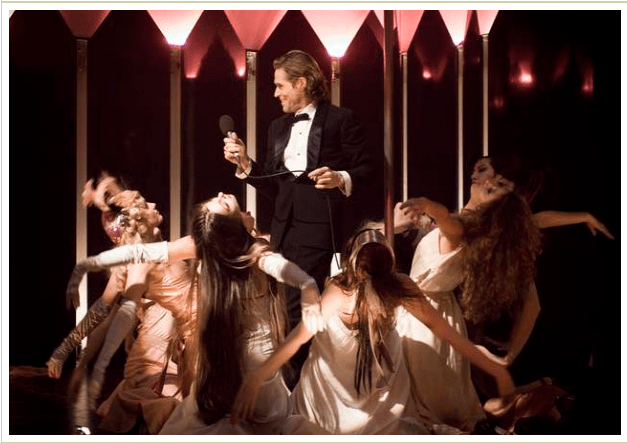
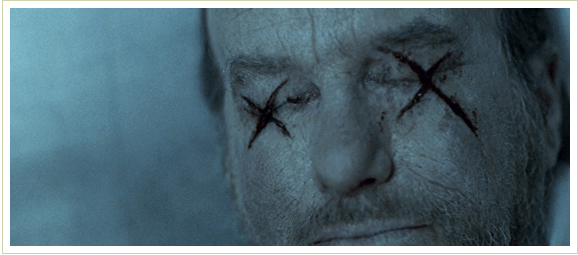
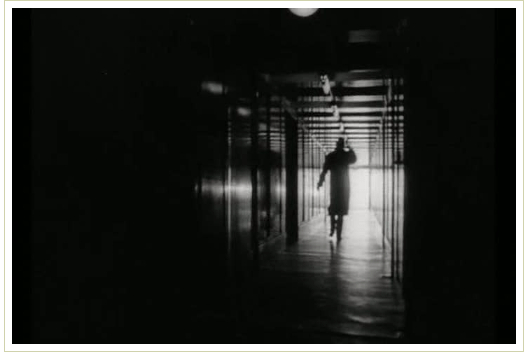
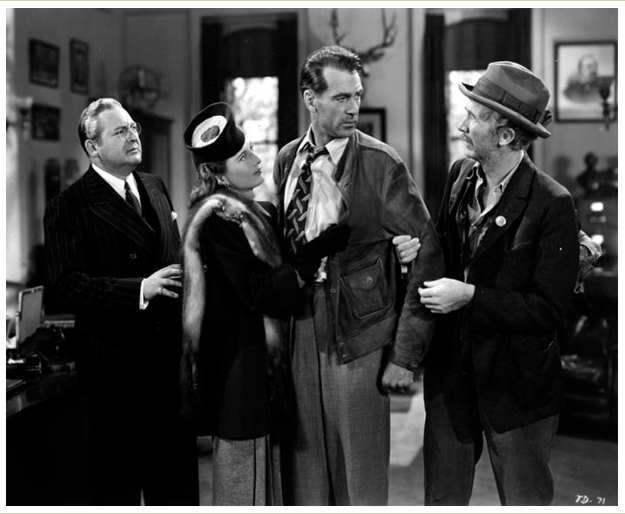
Two versions of the community-made man. Gary Cooper’s John Doe and Willem Dafoe’s Ray Ruby are nothing without their coterie of speech-writers, money-men and erotic dancers.  Meet John Doe (1941) and Go Go Tales (2007) each speak to the anxieties of being propped up by the labor of others, with main characters haunted by the possibility of losing their support and having to go it alone. They are paeans to American industriousness, satires of American greed and excess, and hum with the patter of the American workplace. Meet John Doe was recently released on a disappointing DVD by VCI (DVD Beaver has the specs here) and Go Go Tales is currently screening at Anthology Film Archives in NYC. It’s also available on an Italian Region 2 DVD.

John Willoughboy (Cooper) is a burnt-out ex-ballplayer with a bum elbow, in the days before Tommy John surgery. Living the hobo life with The Colonel (a zealous Walter Brennan), he’s hoping to make a quick buck at a newspaper when he sees a lineup outside. What tabloid journalist Ann Mitchell (Barbara Stanwyck) is after though, is a flesh and blood dope to embody the outraged John Doe whose letter of civil disobedience she forged in order to pump up circulation and save her job. Soon she builds up John into a folksy voice of the people, promoting neighborliness into a kind of small-town socialism. His immense popularity, represented in nationwide John Doe Clubs, is co-opted by his backer, millionaire D.B. Norton, in a scheme to install a pseudo-fascist state.

The film is strongest early-on, replete with Capra’s pungent dialogue and rich caricatures. The punchiness starts in the opening, with The Bulletin’s old motto, “A free press means a free people”, jackhammered off to make way for The New Bulletin’s tagline, “A streamlined newspaper for a streamlined era.” This visual joke is more relevant than ever, and sets up the knockabout opening where a baby-faced, Mickey Rooney type axes the staff in pantomime, with gestural throat slashes underlined by whistles. Capra captures the impersonal devastation of this corporate takeover in a few flicks of the assistant’s wrists.

Ann, desperate to salvage her job, invents the John Doe letter, whose anti-government, DIY tone loosely echoes the rhetoric of the Tea Party movement (aside from the community organizing he supports). Soon Willoughby is speaking to millions of people around the country, as Ann hones Doe’s image around the philosophy of her late father. The political message Capra is trying to send gets increasingly slippery, as he is both satirizing the gullibility of the American people, who immediately believe in this rather dopey Doe, while still managing to lionize the work ethic and morality of those same citizens. The latter impulse drains the former of any impact. Capra had trouble reconciling these ideas, and filmed five separate endings, and was never satisfied with any of them. In his autobiography, he said:

For seven-eights of the film, Riskin [screenwriter Robert] and I felt we had made The Great American Motion Picture; but in the last eighth, it fizzled into The Great American Letdown.

Whether or not the film coheres thematically (I agree with Capra, it does not), the figure of Doe is surprisingly similar to the character of Ray Ruby in Abel Ferrara’s Go Go Tales. Ruby is the proprietor of Ruby’s Paradise Lounge, a struggling NYC strip club facing massive debts and a restive work force. Ruby is the manic and disarmingly sensitive patriarch of this whirling world of sequins and exploding tanning beds. His wild hopes rest on the American standbys of gambling and conning: playing the lotto and convincing his brother to stay invested.

Doe and Ruby face similar threats, the hellish bureaucracy posed by The New Bulletin’s maxim is transposed by Go Go Tales into the screeching landlord’s (Sylvia Miles at her harpiest) gentrifying threat that she’ll sell Ruby’s building to Bed, Bath & Beyond. Both Doe and Ruby will themselves into believing that they are self-made and impervious to these deprivations,  but they are heavily indebted to a web of investors, politicians and relatives to stay afloat.  This denial also fuels their finest qualities, creating a naive, idealistic belief in the power of community. In Doe’s case it’s a nationwide mission of charity whose tenets he adopts for himself, and for Ruby it’s the idiosyncratic camaraderie of his Lounge’s denizens. There are his raspy host Bob Hoskins, berating the tourists who idly pass the door, his whimsical Irish accountant/partner-in-crime Jay (Roy Dotrice), and a web of bar squatting wiseguys who provide a never-ending squall of vulgar cracks. Near the end, as the strippers and bouncers put on their weekly talent show of Bronx-accented Shakespeare and interpretive dance, Ruby gives a rousing speech that exposes the philosopher inside the crabby capitalist, and is one that Capra could have used as the sixth ending to Meet John Doe:

Everyone in this room has a chance to become more than they think they are. Freedom of expression, creativity, passion, love for each other, that’s what this is all about.

HIDEKO TAKAMINE: NO CHARACTERISTICS

January 4, 2011

hideko

Hideko Takamine, who passed away on Dec. 28th at the age of 86, had a face worth puzzling over. In her films with director Mikio Naruse, she engineered an impassive, barely perceptible sag to her delicate kewpie doll features,  embodying the spiritual toll post-WWII deprivations had inflicted on her indomitable Japanese women. She expresses the sag with supreme subtlety in Floating Clouds (1955), and later, When A Woman Ascends the Stairs (1960) (both available on this BFI box). But this reduces her accomplishments to my limited view of what I’ve seen of her work, as she had a long career before and after the masterpieces I associate her with.

hideko2

She began her film career at the age of 5, with a part in 1929′s Haha (Mother)which is considered lost (sad, since it would make a stellar double bill with Hong Sang-soo’s recent Hahaha). She rapidly rose to become a child star, nicknamed Deko-chan, and garnered comparisons to Shirley Temple, although Hideko would often play both male and female roles (this according to Chris MaGee, whom I also gleaned the above photo from). From this period, she can be seen in Yasujiro Ozu’s Tokyo Chorus (1931), available on DVD from Criterion in the Silent Ozu box set.

In 1937 she would leave the Toho studios for Shochiku, where her persona of stubborn independence would be developed over the next 40 years. During WWII she transitioned into a sex symbol, as Dave Kehr writes in the NY Times, becoming a “popular pin-up girl for Japanese troops” while also performing a nightclub act. It is during the U.S. occupation that she really digs into emblematic roles of iron-willed perseverance.  In 1955, and married at the age of 31, she told a newspaper that she wanted to “create a new style of wife who has a job.” (quoted in Catherine Russell’s must read article in CineAction). She followed this thought through her life and her art – her characters who don’t have this kind of freedom are marked by dissatisfaction with their subservient role in life, and the frequent tragedy is that it is impossible for them to transcend these roles. Takamine’s reflects on her subtle approach in a conversation with Yukio Mishima, again quoted in Russell’s piece:

In a 1954 interview with Yukio Mishima, Takamine discusses her favourite Hollywood actors, Ingrid Bergman and James Stewart. Mishima suggests that “someone with strong characteristics has to be a supporting actor,” and they agree that Takamine has “no characteristics,” which is why she is so well suited to leading roles.

“No characteristics” implies a kind of blankness from which Takemine pardoxically is able to wrench unutterable emotions. There are inflections to her stone-face, either holding a glance a beat too long or deflecting it downward at the decisive moment, that are of a delicacy far more expressive than a more aggressively emotional style. This was aided, perhaps, by Naruse’s maddeningly hands-off approach. Takemine:

“More than merely reticent”, his “refusal to talk was downright malicious. Even during the shooting of a picture, he would never say if something was good or bad, interesting or trite. He was a completely unresponsive director. I appeared in about twenty of his films, and yet there was never an instance in which he gave any acting instructions.”

In my reading of this quote, Naruse wanted Takemine to act even less. His studied distance from his actors encouraged a pared down, more instinctual style, and despite her complaints, returning for close to 20 films says something about her opinion of the man and their work together.

For Japanese audiences, she is best known for her spunky work with director Keisuke Kinoshita, like her exotic dancer in Carmen Comes Home (1951, Japan’s first color film), and her school-teacher in the smash hit Twenty Four Eyes (1954, available on DVD from Masters of Cinema), who tends to her students from the rise of fascism through the after-effects of WWII.

Takamine retired from performing in 1979, and maintained an apathetic attitude toward her time on film, focusing instead on her late career as a writer, publishing travel articles as well as her memoirs . She described her first twenty years on-screen as nothing more than a “money making machine”, and her complaints of Naruse’s working methods are well-documented. This spirited indifference toward her remarkable career is not dissimilar from her characters, who vainly try to dismiss the past in order to capture a quicksilver moment of happiness in the present. Fortunately for us, Takamine’s past artistry is preserved (for the most part) on screen, and will speak to us for decades to come.

MY TOP TEN GENRE MOVIES OF 2010

December 28, 2010

genre

I was able to see more movies during the year than this guy. To honor him, I’m going to run down my favorite Genre Films of 2010. As top-ten lists rain down upon us, a general consensus emerges and recurring titles get chewed over like regurgitated cud. So while I greatly admire The Social Network (#2 on my year-end list here), I feel no need to spill more metaphorical ink over it. What doesn’t get recognized during the awards season hullaballoo are the disreputable action/sci-fi/horror movies that earn profits and low Rotten Tomatoes scores. I’m using the colloquial definition of “genre films”, of macho flicks with b-movie scenarios, but in reality everything that’s produced slots into one genre or another (David Bordwell persuasively argues that even the art film is one). So forgive my semantic fudging for the sake of headline-writing brevity. In any case, anonymous disfigured corpse from The Crazies, this is for you.

In Alphabetical Order:

Buried, directed by Rodrigo Cortes

Buried is a horror movie about thought processes, how the mind continually attempts to work itself out of danger, constantly running scenarios that will lead to the healthiest outcome. In this case, the problem is a casket, as Paul Conroy (Ryan Reynolds) has been buried alive by an Iraqi insurgent looking for ransom money. The camera never leaves the casket for the entire running time, and manages to sustain the tension of Conroy’s plight, endlessly cycling through possible rescue plans. Provided with a cell phone to stump for the money to be paid, he triangulates between family, work and the law as his desperation rises, marking up the wood panels with strategies of survival. In the end, it’s a tour-de-force about the limitations of technology and of thought itself.

***

Centurion, directed by Neil Marshall

Remnants of a slaughtered platoon of Roman Soldiers navigate their way back home through Northern Scotland while fighting their way through the rebellious Pict natives. Director Neil Marshall (The Descent) is a reliable hand for cogently framing bloody mayhem, and the climactic battle between the splinter of Romans and Pict warriors is smartly choreographed. The central battle stakes Michael Fassbender against Olga Kuryenko, and the final blow is established in wide shot as Fassbender somersaults toward his victim. Then in two percussive inserts Marshall ends the secondary fight (a spear to the undercarriage) and the main one, as Fassbender places downward pressure on the sword after his sprightly evasive maneuver. The way in which Marshall creates a rhythm and clarity to this sequence, out of boilerplate material, is indicative of the film’s scrappy ingenuity.

***

The Crazies, directed by Breck Eisner

A relentless remake of George Romero’s 1973 original, it outlines the chaos that ensues after a biological weapon crash lands in a small mid-western town, turning its residents into psychotic murderers. I prized this one for its pared down screenplay, which strips away backstory, revealing character only through action. The narrative is constantly pushing forward, just like Sheriff David Dutten (Timothy Olyphant), who tries to spirit his wife out of the newly quarantined hot zone. Olyphant has perfected a thoughtful stoicism in his work, playing heroes who do the right thing, but whose pauses and mutterings imply that he wishes doing good wasn’t so much goddamn work.

***

Devil, directed by John Erick Dowdle

Slightly roomier than Buried, this M. Night Shyamalan produced potboiler takes place almost entirely in an elevator. A group of abrasive city-folk get stuck in a lift and start turning on each other. So far, so realistic, but there’s a metaphysical morality play tacked on to justify the underlying savagery. While this is a bit of a cop-out, I’ll forgive anything to watch DP Tak Fujimoto wend his SteadiCam around a neon-lit office building, tracing the paths of fate.

***

From Paris With Love, directed by Pierre Morel

This ridiculous concoction is the jokey B-side to Taken, Morel’s humorless revenge drama from 2009. Instead of a brow-furrowing Liam Neeson, it’s a face-pulling John Travolta, who plays CIA agent Charlie Wax like a macho Jerry Lewis (his yammers are punctuated by nasal screams, and he leaves destruction in his wake, except with Travolta it’s intentional). The fight scenes have the physics of a Loony Tunes short and the plot is totally improbable. In short, it’s almost perfect. If only the lead-footed Jonathan Rhys Meyers subplot hadn’t kept diverting things from the aria of Charlie Wax.

***

Frozen, directed by Adam Green

Frozen is a fine lesson in theme and variation. The plot is minimal, three dopey college kids stranded on a ski lift, but writer/director Green elaborates an escalating series of reasons for his characters to be terrified. The calculus of escape shifts from avoiding frostbite to stanching blood loss to avoiding death-by-wolf over the course of the first hour. It is the patience with which Green allows each new variation to sink in, to allow the morbid thought processes of each vapid character to be drawn out, that nicely ratchets up the tension of this minimalist bit of indie-horror.

***

Resident Evil: Afterlife, directed by Paul W.S. Anderson

On a purely visual level, one of the most impressive films I saw this year. Fully embracing 3D technology, Anderson sets up shots to emphasize depth, from the multi-layered, multi-planar Umbrella headquarters to the relative simplicity of a hole in the ground (which Joe Dante also explored in 3D in his still-undistributed The Hole). In the opening sequence, the background and foreground planes of action are so clear there is no need for cross-cutting. And Milla Jovovich continues her superb run as Alice, working the stoic hero territory as well as, say, Timothy Olyphant.

***

Splice, directed by Vincenzo Natali

A disturbing entry in the mad (but adorable) scientist sub-genre, it finds Adrian Brody and Sarah Polly gene-splicing their way to unwanted parenthood. Their little lab-creature develops a major Electra complex, and soon ignites the relationship anxieties simmering below the surface. They explode in psycho-incestual images that are hard to shake.

***

Undisputed 3, directed by Isaac Florentine

Direct-to-video but none the worse for it, this is the third part of a series initiated by Walter Hill in 2002 (I wrote about the whole series back in June). It refreshes the fight tournament scenario by capturing a variety of attacking styles with a high-speed camera, from capoeira to taekwondo, and hires athletes rather than slumming actors. Marko Zaror steals the show as the villain, a Garcia Lorca-reading heroin addict who is my pick for cinematic asshole of the year.

***

Unstoppable, directed by Tony Scott

The pleasures of motion, rendered with lucidity. There’s a runaway train, and Denzel Washington and Chris Pine have to track it down. The forward movement is not just over lines of track but through lines of communication.  Scott’s nimble cross-cutting between CEOs, middle-managers and station chief Rosario Dawson lays down the social strata that Denzel and Pine are burning through in order to do their jobs. It is within this shorthand class structure that slam-bang montages of speeding trains raise the pulse and recall the original cinematic thrill of the Lumiere Brothers’ L’arrivée d’un train en gare de La Ciotat.

LESLIE NIELSEN, 1926 – 2010

Originally published in Movie Morlocks, the official blog of Turner Classic Movies

November 30, 2010

leslie

Leslie Nielsen always played off the beat. Before he delivered a punchline, there was a hitch, a pause, a dumbfounded look off-screen – that made him a devastatingly funny actor. When he finally delivered the deadpan kicker it was in a sonorous tenor drained of emotion, a hollow thud of obliviousness. With his granite-jawed, silver-haired good looks he could say any absurdity with a straight face and a straighter vocal tone, and in collaboration with non-sequitur artists like the Zucker brothers and Jim Abrahams, he created some of the most ingratiating buffoons in film history. And this after a long and overshadowed career as a genial and arrogant leading man on television.  Mr. Leslie Nielsen passed away yesterday at the age of 84, while being treated for pneumonia.

Frank Drebin (The Naked Gun) and Dr. Rumack (Airplane!) are the twin monuments of my youth. Their commitment to ignoring the outside world is so intense it is almost saintly, and I worshiped them with religious fervor. Without the distractions of other human beings, Drebin and Rumack misinterpret every conversation, translating it through their simple-minded narcissism. In The Naked Gun, when Ricardo Montalban offers him a cigar, Drebin takes it as a personal question of ancestry: “-Cuban? -Ah no. Dutch-Irish. My father was from Wales.” Nielsen clips off the words quickly, with the blithe assurance that every query concerns himself. The speed in his response belies a majestic false modesty: everything is about him, but he’ll rush through it to prove he doesn’t care.

Then there’s the legendary “Don’t call me Shirley” bit from Airplane, which results from a similar misinterpretation of an innocent turn of phrase, “surely” to “Shirley”, from the descriptive to the personal. And what makes the line canonical is Nielsen’s stone-faced line-reading, an immobile expressionless mask of  vapidity. It’s hard work to be that straight, and at NPR Marc Hirsh quotes Nielsen’s Saturday Night Live monologue from 1989 to prove the point:

He didn’t understand why he had been asked to host a comedy show, because he was neither a comedian nor a comic. A comedian, he explained, was someone who says funny things. A comic was someone who says things in a funny way.

Nielsen, on the other hand, was someone who said unfunny things in an unfunny way, and for some reason, people laughed. To demonstrate this, he delivered an innocuous line – something along the lines of “Mr. Jones, sit down, I’d like to talk to you about your son” – twice. The first time, he said it as though he were in a drama, and the response was muted.

Then he told us that he was going to say the exact same unfunny line as Lt. Frank Drebin, in an unfunny way, and he did exactly that, and the audience exploded. It wasn’t just indulging him as prompted, either. Without actually tilting his delivery in that direction, Nielsen made it genuinely funny. To underscore his point, he then broke character with a look of happy exasperation and basically said, “See?”

He didn’t sell jokes or wink to the audience, but played it blank. He’s the nowhere man of dramatic acting, working to disappear into banalities until his voice is a low purr and the sound of words becomes more important than their meaning. You pay attention to the surface of things with Nielsen’s jokes, the way he harrumphs and says “Well” before a police car bursts into flame in the distance, or the hard emphasis he puts on the “p” in “poopy pants” (from an epic verbal duel with Robert Goulet in Naked Gun 2 1/2).

But the arc of Nielsen’s career is so much vaster than his sublime work with ZAZ and the later parodies (all of which are underrated to some degree, especially Dracula: Dead and Loving It); I had to delve into his TV work to see where he began. The usual line is that Nielsen was a rather bland handsome leading man until ZAZ tapped his natural talent for deadpan. But there are some raucous early performances that tend towards paranoid men suffering from quiet desperation. Even when he went prematurely gray and became a stock network guest star he gives his roles edges of self-absorption and arrogance.

Tales of Tomorrow is an early gem, a science-fiction anthology show that aired live on ABC from 1951 – 1953. Nielsen acted in six episodes, three of which are available on the site. In “Ghost Writer” (1953) he’s a struggling novelist who takes a gig polishing stories for a successful author. Then his tales start coming true.  “Appointment On Mars” (1952) finds him on the red planet struggling to contain the paranoia of his crew and his own madness as Uranium deposit riches loom (it’s Treasure of the Sierra Madre in space). And “Another Chance” (1953) casts him as a desperately poor husband who steals a valuable brooch and then undergoes a memory erasure procedure to start life anew. In all of them he’s on the edge of madness, which the cramped sets and long takes of the live TV medium really enhance.

He’s only a few years out from his NYC training at the Neighborhood Playhouse, which was under the sway of Sanford Meisner’s version of Stanislavski’s “system”, now known as the Meisner Techniqueand similar to Lee Strasberg’s famous “method”. Nielsen’s tight, raging performance in  “Another Chance” is the closest to the method he’d ever get. It’s a bracing, moody piece where he’s knocking back liquor in the first shot and gets more disoriented from there, until he gets his mind wiped by a supercilious doctor. Eventually his repressed past starts drilling back into the present, with Nielsen’s language expertly slipping into the names and places of his former life. It’s a mannered but powerful performance in this surprisingly complex forerunner of  Eternal Sunshine of the Spotless Mind .

Even the lax Hitchcock Presents episode, “The $2,000,000  Dollar Defense” (1958), finds Nielsen self-destructing. Here he’s a cuckolded husband accused of murdering his wife’s lover. The method intensity has worn off, and the cool Nielsen persona is setting in, introducing hints of snobbery and elitism to his emerging suave demeanor. A similar scenario pops up over 20 years later in George Romero’s Creepshow (1982, the same year as his comedic breakthrough with ZAZ, Police Squad). In this theatrical horror anthology (he’s an unsung hero of the form), Nielsen plays another husband with revenge on his mind. This time he buries Ted Danson in the sand, hoping to drown him in the tide. In keeping with the self-reflexivity of the whole enterprise, he hams it up, whistling “Camptown Races” as he leads Danson to his doom, and bitchily snapping off lines like “She’s waiting for her knight in shining corduroy” before watching W.C. Fields on TV.

But that’s not nearly as jolting as his appearance on Rod Serling’s horror anthology Night Gallery in 1971 (“A Question of Fear”) as an eye-patched and mustachioed war veteran challenged to spend the night in a haunted house. Claiming to have never felt fear, Nielsen’s hyper-masculine Colonel swashbuckles his way into an old dark house. There is very little dialogue as he navigates soldier-ghosts with burning hands, swinging blades and probable poisons. The final act is expository lard, but the Colonel is another example to place in Nielsen’s hubris-filled menagerie.

There were undoubtedly instances of the stoic network hero during his long TV career, like on the Disney show The Swamp Fox, but they are not readily viewable. But what is available shows that he played far more than just the “earnest heroes” that the NY Times described early on in his career. Even the most straight-laced roles, like his two guest spots on Murder, She Wrote (both on Netflix Instant), contain hints of self-absorption and menace. In “My Johnny Lies Over the Ocean” (1986),  he plays a cruise liner captain with barely contained arrogance, hitting on the intrigued Jessica Fletcher with intransigent persistence. Then, in “Dead Man’s Gold” (1986), he plays a former flame of Jessica’s, but one profligate with money and in hock to a pair of well-mannered loan sharks. With a charismatic swagger barely masking his self-destructive tendencies, he gives Jessica a romantic kiss-off.

Nielsen’s genius was codified in Airplane!Police Squad and The Naked Gun, but there’s a whole swathe of work to happily sift through if we want a fuller picture of his career. In the shift from the method theatrics of Tales of Tomorrow to the suave horniness of his Murder, She Wrote cads lies the DNA of Frank Drebin, a process of wearing down to the essential blankness of the Hollywood leading man, and to a deadpan for the ages.

PHYSICAL EVIDENCE: WHITE MATERIAL (2009)

November 16, 2010

whitematerial

White Material opens with a shot of dogs crossing a headlight-lit road, followed by flashlights illuminating the well-appointed interior of an abandoned bourgeois home. The sequence ends with the image of an African revolutionary leader named The Boxer (Isaach de Bankole) lying dead, his face etched out in circles of light. It is a film about coming out of the darkness into this rather cursed light – what is revealed is dissolution and chaos. Claire Denis’ allusive and texturally beautiful film opens this Friday from IFC Films, and will appear on video-on-demand services starting November 24th. I participated in a round table interview with Denis and star Isabelle Huppert last week in NYC, and their insights will be liberally sprinkled in with my own below.

Huppert stars as Maria Vial, the sinewy-strong manager of a coffee plantation in an unnamed African nation (it was shot in Cameroon). A seductive voice crackles over the radio about armed unrest and the iron hand with which the government plans to put it down. Maria’s workers start fleeing en masse, and soon her ex-husband Andre (Christopher Lambert) urges her departure as well. Her father-in-law Henri (Michel Subor), the owner of the plantation, is a ghost-like presence, sickly and waiting for death (the fate of a white man’s burden), while her son Manuel (Nicolas Duvauchelle) shows signs of mental breakdown. Everything is falling apart, and yet Maria is obsessively intent on completing the year’s harvest. She exists in a state of willful ignorance, unable to accept the destruction of the only home she’s known.

Huppert and Denis emphasize the split nature of Maria’s personality. Together with DP Yves Cane (long time collaborator Agnes Godard was tending to her sick mother at the time), Denis frames Maria up close with a handheld camera, emphasizing her isolation. And yet within these spare framings, Huppert exudes an indomitable, intractable kind of fortitude. Her denial of reality doesn’t unmoor her from it, but makes her dig deeper inside of it. From the outside,  the perspective of the French soldiers in helicopters urging her to leave, she is fragile and soon to be victimized. But in the cocoon of close framing she is a warrior, her pink cotton dress, as Denis described it, a kind of armor. Denis again: “I remember a scene from the coffee plantation. There was this young man, young worker in the plantation, took his moto, raised his arms and said, ‘every morning when I go on my motorcycle I feel  free and strong’. I really liked that. She [Maria] was seen by the French soldier as a little fragile victim they came to rescue. A minute after riding the motorbike she starts feeling, ‘I will make it, I will manage to finish the harvest. I will not be a victim’.”

Huppert:  “As Claire was writing the script with Marie [author and first time screenwriter Marie N’Diaye], I remember she was giving me clues, she was something like a bionic woman, a super woman. By this exaggeration she gave me a clue of what she wanted. Not psychological, but a physical approach to the character. I remember when she said that to me. It really opened a whole world. A totally physical approach, and nothing else. So I started to learn how to ride a motorcycle, and when I got to Cameroon I started to learn how to ride the tractor. So the character was defined by resistance to the natural elements, and the whole situation against her.”

As self-destructive as her behavior is, Maria is still imbued with a kind of faded grandeur. She is fully committed to the colonial project even to the point of death. She identifies completely with the land, raking in the coffee cherries with the workers and focused only on keeping the farm open. It is a phenomenonally physical performance by Huppert, even standing still she seems like a natural part of the landscape, a stylish scarecrow.

Her principles are paternalistic and outmoded, but at least she has them. The violence that threatens the edge of every frame seems to have no principles except destruction. The rebels are terribly young, child soldiers drafted into a war they didn’t choose. The government is run by cynical profiteers, organizing militias for their own protection but caring little that the rest of the country will burn. In the midst of this chaos, Maria is a stabilizing presence. She is insane, but steady. This steadiness of belief is why Denis continually compares her visually to The Boxer, the mythical rebel leader, and the only other character who seems to believe in his own cause. The Boxer is also given intimate single close-ups like Maria, while the rest of the film uses medium to long shots set on a tripod.

His story is also one of dissolution. He is wounded, his life slowly draining out of him while the rebellion he once led spirals out of control. Like Marie with her family, the rebel forces are no longer under his command. And yet he remains impossibly serene, his face an imperturbable mask. Their destinies are intertwined through these visual, thematic and structural rhymes. Structural, because the opening shot of his death immediately precedes the introduction of Maria, riding a bus to nowhere, before it moves back in time to establish what led her to get that empty look on her face (She meets The Boxer briefly in this middle section). This flashback structure establishes the entropic direction of the narrative – we know things will fall apart, but not how. White Material was shot before 35 Shots of Rum, but was released a year later, not just due to the vagaries of distribution, but also because she spent so much time establishing the structure. In the interview she said the script was written in chronological order, but that the bus scene got stuck in her mind, because she wanted, “To have Maria appear in the broad daylight, already lost, already too late.” The opening shot of the Boxer was necessary because she wanted,  “Dark night preparing her to walk into daylight. I cannot explain why.”

NOT A SUPERSTITIOUS SUCKER: NIGHT OF THE DEMON (1957)

October 26, 2010

night of the demon

“I detest the expression ‘horror film.’ I make films on the supernatural and I make them because I believe it.”  – Jacques Tourneur, Positif

The lead character in Tourneur’s Night of the Demon, psychiatrist Dr. John Holden (Dana Andrews), declares that he is “not a superstitious sucker.” He is a sardonic skeptic of mystical powers and things that go bump in the night. Unfortunately for him, Tourneur is a master of visualizing dread, at uncanny images that disturb the orderly corridors of consciousness. So Night of the Demon, my selection for this week of supernatural selections at Movie Morlocks (it airs on TCM on October 29th at 6PM), finds Holden’s self-righteousness crumble in the face of Tourneur’s terrifying control of the medium. As Raymond Bellour wrote, Holden’s “problem is trying not to believe in the devil, while ours is trying to accept belief in the cinema.”

All inquiries into Tourneur run through Chris Fujiwara’s critical study, The Cinema of Nightfall, and the following is deeply indebted to his essay on the film. If you have the time, ditch this essay and read the book.

Holden flies to London to study the activities of a Satanic cult led by the urbane Julian Karswell (a coldly charismatic Nigel MacGinnis). He was to join Professor Harrington (Maurice Denham) in the venture, but the latter died under mysterious circumstances, torn apart as if by wild animals. Soon Karswell is warning Holden against investigating any further, and predicts his death in three days’ time. Beginning to suffer from auditory and visual hallucinations, Holden accepts the help of Harrington’s niece Joanna (Peggy Cummins), and attempts to uncover the truth behind Karswell’s morbid declaration (the ending was strikingly re-purposed in Sam Raimi’s Drag Me to Hell).

The film was based on the short story “Casting the Runes”, by M.R. James (available to read here). Charles Bennett, the scriptwriter on many of Hitchcock’s British films (Blackmail, The 39 Steps) bought the rights and worked with executive producer Hal E. Chester to bring it to the screen.  Chester was reputed to have re-written parts of Bennett’s script, and cut around 13 minutes out of the 95 minute British feature for the American release, re-titled Curse of the Demon (both versions are available now on DVD). Chester also had producer Frank Bevis re-shoot scenes to feature the title monster more prominently, alienating Bennett and Tourneur in the process. Tourneur:

The scenes in which you really see the demon were shot without me. The audience should never have been completely certain of having seen the demon.

He went on to tell Joel E. Siegel that he only wanted “four frames” of the monster to be shown in the film, during the ending on the train tracks. “People would have to sit through it a second time to be sure of what they saw.” Tourneur wanted very fleeting glimpses of the monster, to let the horrors unfold off-screen, in the viewer’s mind, as in his superb work with producer Val Lewton (Cat People, The Leopard Man). This strategy would also keep doubt alive about the ultimate reality of the creature. For while Tourneur believed in the supernatural, he wanted his viewers to come to their own conclusions.

The monster, modeled on demonology books from “3,400-year-old prints copied exactly”, was created by art director Ken Adam. Adam: “I designed the monster, but under protest. I agreed completely with Tourneur.” (from Christopher Frayling’s Ken Adam and the Art of Production Design). The demon looks grotesque enough in stills, but its immobility on film gives it the unfortunate rubber-suited ridiculousness of a Godzilla knock-off. It does not tonally fit into Tourneur’s elegant frames.

From Harrington’s first appearance it’s clear the characters in the film will be at the mercy of their environment, and that the world is disturbingly outside of their control. His car appears as a halo of light in between a thatch of dark forest, he mops his nervous brow in a medium-shot profile, and then a cut to a POV shot looking up, as branches emerge into his headlights and descend back into blackness (Bellour compares this opening flicker effect to film running through a projector). Once he arrives at the Karswell’s, to tell him he’s giving up the investigation, fearful for his life, Tourneur cuts to an extreme high angle, with Harrington dwarfed by a gaudy chandelier in the foreground. He is already swallowed up by the world, the darkness ready to take him next. After he leaves the demon makes its first, and very controversial, appearance.

It is from this sequence that Fujiwara, contra Tourneur,  makes an intriguing case for the demon’s presence, that it “fits into the film’s structural play with ambiguity of point of view.” That is, Harrington first spies the creature in a POV shot, but then there is a cut to a long shot, with Harrington in the frame watching the monster. The latter backs away from subjective identification with Harrington, taking an exterior perspective, and, “his [Harrington’s] presence in the frame splits the viewer’s gaze into two – one that identifies with Harrington’s look and one that frames Harrington himself and the image constructed by this other gaze.” Fujiwara notes a similar play with POV in the rest of the feature, including Holden’s optically wavering hallucinations, and the uncanny appearance of an aging hand that is seen by no-one in the film’s universe. The viewer is constantly weighing the verity of each shot, as well as the idea that it might be impossible to determine the difference between what the characters see or imagine.

Holden ends as dazed and confused as the viewer, no longer safe in his assumptions about a rational world, or in man’s ability to discover absolute truths. His last line is, “it’s better not to know”, and then he disappears behind a passing train.

THE CLAUSTROPHOBIC CINEMA OF PAUL W.S. ANDERSON

September 24, 2009

the-rotting-corpse-paul-w-s-anderson-more-movies-81221f817c

The old Hollywood studio-hand W.S. Van Dyke — who directed, amongs countless other things, “The Thin Man” — once advised a young Orson Welles to “just keep it close, and keep it moving.” And an unlikely inheritor of this wisdom is Paul W.S. Anderson, whose latest work to hit screens is this week’s “Pandorum,” which he executive produced, leaving the directing to German up-and-comer Christian Alvart. Rivaled only by Uwe Boll for the title of worst-reviewed director of the past decade, Anderson’s also been one of the most resourceful. Working with the flimsiest material (video game adaptations and remakes) in the least respectable of genres (sci-fi, horror), he’s managed to construct a remarkably coherent body of work. With his longtime producer Jeremy Bolt and a loose coterie of actors, he’s created a series of films that focus on the expressiveness of claustrophobic spaces and the physical grace of his (mainly) female protagonists.

Anderson’s interest in confined spaces may have come to him in childhood. He was born and raised in Newcastle upon Tyne, in the northeast of England, which was a major coal mining town through the first half of the 20th century. He told the New York Times’ Dave Kehr about “the lure of going down there into the dark. It’s in my blood. My grandfather, who brought me up, was a coal miner. I visited the mines with him. I remember it vividly. It was horrible. I’m glad I didn’t go into the family business.” Instead, he went to school, graduating from the University of Warwick with a degree in film and literature. He continued on to earn an MBA, with the hopes of running his own production company.

Anderson’s entrée into show business was as head writer for “El C.I.D.,” a wonderfully titled ITV cop drama starring Alfred Molina. Then he met up with Bolt, a philosophy student at the University of Bristol, Ken Russell’s driver and a fledgling film mogul. In 1992, they formed the production company Impact Pictures, and started looking for cash for their first feature, “Shopping.”

A strange mélange of rebellious youth drama and dystopic sci-fi, “Shopping” cast an angelic Jude Law in his first starring role across from his future ex-wife Sadie Frost. Gleefully amoral, Jude (as Billy) and Sadie (as Jo) head a group of homeless “ram-raiders,” kids who crash cars into storefronts, and steal whatever tickles their fancy. Anderson (no W.S. yet) envisions the city as a succession of inky black tunnels, smoky warehouses and abandoned industrial sites. He explores these spaces with all his film school tricks, including canted angles, extreme chiaroscuro lighting, and circling camera movements to underline Billy and Jo’s aimless self-destruction.

Their rebellion is cultural more than political: after rifling through a stolen car, Jo brandishes a cassette tape with religious fervor and screams, “Billy Joel, fuck that!” Then, they blare some Jesus Jones over the radio. Billy’s brooding is in stark contrast to Jonathan Pryce’s enigmatic police chief, the first in a parade of fascistic government figures to make an appearance in Anderson’s films. This central drama is under-written, but Anderson successfully captures a mood of bruised teenage romanticism. Banned in some U.K. theaters for its violence, “Shopping” still managed to nab a spot at the Sundance Film Festival. Despite only receiving an edited, direct-to-video release in the U.S., the film earned enough attention for Anderson to move across the pond.

In a 1992 article at the Independent, Anderson said, “I get very angry when I go to Leicester Square and all the movies are American.” Three years later, he went to Hollywood, never to return to his native England. His big break came with the adaptation of “Mortal Kombat,” an incredibly bloody video game that Anderson played at arcades while he was in college. It was a self-consciously silly film — he said he wanted to make it a cross between “Enter the Dragon” and “Jason and the Argonauts.” It reflects the hand-made, amateur ethos of that combination, maintaining a jokey, self-reflexive tone not unlike “Big Trouble in Little China.” (The 2006 Impact Pictures-produced “D.O.A.:Dead or Alive” has a similar spirit). The main set is a labyrinthine, fantastical underground lair, where the tournament’s fighters wander with bemused nonchalance, even when they stumble upon a Ray Harryhausen-esque six-armed behemoth planning their demise. Here, Anderson utilizes his constricted set as a genre playground, mutating to throw fighters together or supply the material for a clunky bon mot from the dry-witted Johnny Cage (Linden Ashby) or the gun-toting Bridgette Wilson. It made over $120 million worldwide.

The film’s success gave Anderson the leverage to bring over Bolt, and the Impact Pictures logo has been slapped on all of their subsequent features. Having a producer’s credit doesn’t equal freedom, however, and Anderson’s next two films, “Event Horizon” (1997) and “Soldier” (1998), suffered from bad luck and studio interference. “Horizon” contains another classic Anderson setting, an abandoned spaceship that is manifesting a malevolent force from within, the first of his sets that is a character in itself. With glowering performances from Sam Neill, Lawrence Fishburne and Jason Isaacs (a member of Anderson’s nascent stock company), menacing production design from Joseph Bennett and a restrained, longer-take style from Anderson (still no W.S.), it has all the elements of a quality slow-burn chiller. But it’s saddled with a shaky third act made even more incomprehensible by studio-mandated cuts, and it ends up a compromised failure.

The “Soldier” shoot was even more harrowing. Intended as Anderson’s first landscape movie, it was slated to shoot outdoors until the El Niño hurricane swooped in and pushed everything into studio soundstages. This changed the entire visual scheme of the film, which takes place in the same world as “Blade Runner” (both scripts were written by David Webb Peoples). Star Kurt Russell broke his ankle the first week of shooting, compounding the difficulties. The visual palette is drab greens and browns, and the sets have an airless, slapped together feel, which is devastating for a filmmaker of Anderson’s interests. Kurt Russell’s grizzled, monosyllabic performance is a compensatory pleasure.

After “Soldier” flopped, Anderson went back to his basics, a video game adaptation set in the tight quarters of an underground biological warfare lab. The result was “Resident Evil” (2002), for which he wrote his first screenplay since “Shopping.” He received a modest $30 million budget from the German company Constantin Films (a relationship that has continued through “Pandorum”), and he churned out a beautifully controlled piece of zombie mayhem.

An amnesiac Alice (Milla Jovovich) goes down a corporate rabbit hole to a facility that produces the T-Virus, an experimental weapon that happens to turn dour government types into drooling brain eaters. Aided by a brusque security team and an enigmatic artificial intelligence named the Red Queen, Alice tries to lead the troops back to the surface. Anderson told Collider that “I’ve always liked strong women characters in films. When I first came to Hollywood, there was this kind of rule that was expounded by several people within the industry that I heard many times that female led action movies don’t work.” He continues to prove them wrong.

The casting of Jovovich was especially fortuitous. Her piercing blue-green eyes open the film, while her brusque line readings and lithe athleticism carry it to its close. You can’t blame W.S. (this is where he adopts the initials, the same year as that other Paul Anderson’s “Punch-Drunk Love”) for falling in love with her. (They were married in real life this past August.) Successful enough to inspire two sequels, the “Resident Evil” trilogy is a bloody, oozing love letter to Ms. Jovovich, keeping the camera close to her expressively stony face as she dropkicks zombie dogs, incinerates mutated crows and slices through the rest. She bottles her desperation up into a twinge at the side of her mouth, and grows increasingly jaded in each iteration of the series as the world edges closer to dissolution. It’s a profoundly pessimistic franchise.

Anderson wrote all three entries, but handed off directing duties to the sequels as the landscapes expanded beyond his favored darkened corridors. He carefully matched locales with genres, so 2004′s “Resident Evil: Apocalypse”‘s action-film ethos is set in the teeming urban warfare of Raccoon City, handled with speed and aplomb by Alexander Witt, a second unit director for “The Bourne Identity” and “Casino Royale.” For the third film, 2007′s “Extinction,” Anderson pairs the wide-open desert spaces surrounding Las Vegas with a spaghetti western element (as well as a thrilling “Birds” homage), outfitting Jovovich in a duster and leather boots, and bringing back “Mortal Kombat”‘s Linden Ashby to play a sharpshooting cowboy. Russell Mulcahy (“Highlander”) was tapped as the director, and his visual scheme of airy long shots, subordinating the characters to the emptied out horizon lines, is very effective in conveying the debilitating spread of the virus.

The “Resident Evil” trilogy is Anderson’s greatest accomplishment, and appropriately for his aims, it’s a modest one. They are nasty, brutish and short pieces of genre business, infused with lively character performances, resourceful production design and a bracingly downbeat worldview, all anchored by the unfussy bulldozer performances of Jovovich. His other directorial project in this period, 2004′s “Alien vs. Predator,” brought in more money than any of the “Evils,” but it’s a muddle in comparison, a joyless exercise in geometrical gore. “The Dark,” a ghost story he produced in ’05, is a far superior slice of Andersonian claustrophobia. Directed by John Fawcett, it’s a classically structured horror film that moves with sinuous tracking shots around a collapsing family, constructing a vision of hell out of candle wax and unlit rooms.

He found himself on solid footing again with “Death Race” (2008). With a small budget, dour stars (a superb Jason Statham and Joan Allen), a minimum of CGI and a maximum of twisted steel, it’s as fleet footed as “AvP” is sluggish. The booby-trapped race track might be his most sadistic work in a confined space yet, centering on a demolition derby with video game inspired power-ups to juice the carnage. Allen is especially menacing as another of Anderson’s fascistic overlords, leaning in to intimidate her prey with a low, gruff whisper before flipping the switch that snaps their necks. This is also what Mr. Paul W. S. Anderson does best. He keeps it close, keeps it moving, and then something goes boom.


DIMENSIONAL MUSINGS: JACKASS 3D, THE HOLE, AND RESIDENT EVIL AFTERLIFE

October 19, 2010

3D

Jackass 3D had a gigantic opening weekend, bringing in $50 million, almost twice as much as its predecessor. Two weeks previously I watched Joe Dante’s The Hole 3D at the New York Film Festival, which is still without a distributor. The bump in the Jackass money is not only attributable to the 3D premium pricing, it attracted more admissions than its first two entries as well, as Ben Fritz reported in the L.A. Times.  Regardless of the flak the technology receives from critics like Roger Ebert, it draws crowds, and thus will be a part of the cinematic landscape for some time to come. And while muddy-looking 3D conversions will surely mar theaters in the future, there are plenty of productions that are producing fascinating depth effects with the new technology.

Let’s start with Jackass 3D and The Hole. I enjoyed both films, although they approached the technology from vastly differing positions. Jackass, a non-narrative parade of scatalogical slapstick, is a return to early silent filmmaking and the “cinema of attractions” that Tom Gunning identified. Gunning:

Rather than early approximations of the later practices of the style of classical film narration, aspects of early cinema are best understood if a purpose other than storytelling is factored in. Cinema as an attraction is that other purpose. By its reference to the curiosity-arousing devices of the fairground, the term denoted early cinema’s fascination with novelty and its foregrounding of the act of display.

All of Jackass 3D is the act of display pushed to its perverse limit, vaudeville huckster versions of Marina Abramovic. Both work at exposing the limits of our bodies, Jackass through shots to the groin, Abramovic through exchanged slaps with her lover, among endless other examples. I tend to think her humor and the Jackass crew’s intelligence are both underrated. In another echo, Abromovich had a smashingly successful retrospective at MoMA this year, which is where Jackass 3D held its premiere. MoMA curator Josh Siegel says that Johnny Knoxville and company’s work is, “merely the climax — or the lowest depths, if you prefer — of a tradition that dates back to 1895, when the Lumière brothers drenched a poor sap with a garden hose and filmed it.” (from Dennis Lim’s primer in the NY Times). My favorite bits involved fun with a harrier jet’s exhaust and a delightfully revolting stunt involving a sweat cocktail.

3D is the shiniest new weapon in their toolbox, and so they gleefully push the technology to purely presentational ends. Gunning again, “The attraction directly addresses the spectator, acknowledging the viewer’s presence and seeking to quickly satisfy a curiosity.” 3D is another delivery system in satisfying this curiosity, of how a tooth could be pulled by a Lamborghini, or what a “poop cocktail supreme” could possibly entail. For most of the film, the technology is cheaply utilized. The crew used their normal prosumer cameras for their mixture of planned/improvised shenanigans. Then it was processed into 3D in post. For these sections, it is just a gimmick. However, in the beginning and closing minutes there are sequences filmed stereoscopically in super slow motion with Phantom HD Gold Cameras. As the men are knocked down by dildos and other implements, their skin ripples like plasticene waves, and the split-second fear before the blows are noticeable in these aging stunt-men’s eyes.

The Hole is another story, a family-oriented horror movie that was entirely filmed in stereoscopic 3D, using the Dolby process. Joe Dante is a student of the form, having watched almost every 3D film ever made during the previous boom in the 1950s and 60s (his lifetime of research can be watched at his fiendishly entertaining site Trailers From Hell). The film’s title implies physical depth, and Dante takes advantage of the narrative device at every turn. The top-lining photo gives an impression of his work here, with constant use of entrances and exits, with the kids grouped and choreographed so there is constant motion back and forth from background to foreground. The film is an eyeful. In the Q&A following the screening at the NYFF, Dante said he thought the Dolby process was too dark, preferring the RealD system which most big-budget releases use. But RealD needs a special silver screen to be projected on, and for a low-budget film in which theater space would at a minimum, the Dolby process was necessary, as it can be projected onto regular screens.

Dante also discussed 3D dos and dont’s including avoiding cuts on quick motion, because the level of eyestrain involved. The film flew along, a combination of classic Dantaen elements like a suffocating suburbia, coming-of-age subtexts, a Dick Miller sighting, and a rich intertextual conversation with film history. The major touchstone here seems to be German Expressionism, from the hat tip to Hands of Orlac in the cheekily named “Gloves of Orlac” factory, to the vertiginous, Cabinet of Dr. Caligari inspired set design in the finale.

It’s unbelievable that the film, about kids who discover a portal into their own subconscious in their basement, has no distributor. It’s wildly entertaining and reliably scary (a harlequin puppet had my wife gripping my arm), and contains some of the most imaginative uses of 3D that I’ve seen all year.

The other great 3D film this year, is, believe it or not, Resident Evil: Afterlife. I am an admirer of Paul W.S. Anderson’s genre chops (I did an overview of his career for IFC News), and I think it’s his best film. There is a superb use of depth effects throughout. From the start it was shot in 3D, with Anderson saying that, “I wrote things into this script that I knew would work well in 3D, like lots of sets with depth-like tunnels, elevator shafts, and big wide landscapes.” That alone gives him more awareness  of how to shoot in depth than the botched 3D conversions on Piranha 3D (which I enjoyed regardless) and Clash of the Titans (read this interview with James Cameron for some interesting notes about that conversion). Along with the simple, effective use of locations, there is a sense of choreography that utilized 3D to its fullest extent. In the opening sequence, clones of Milla Jovovich are fighting their way through an underground lab, making their way to the villain. As he barks orders in the foreground, in the extreme background the brawling Jovoviches tear their way through a lower floor, creeping their way higher. Anderson dispenses with parallel editing, marking her progress by cutting back and forth, and presents it in one economical and incredibly tense 3D image. It’s a marvel of narrative economy and speaks to the ingenuity possible with the technology.

Although to be honest, the finest 3D film I saw this year was still Raoul Walsh’s Gun Fury, from 1953. Nothing has effected me more than the simple use of dust kicking up in the foreground as Rock Hudson plots his revenge behind it. Maybe such simple pleasures would come back to the current 3D wave if The Hole found some success, and encouraged more mid-budgeted, modest 3D productions to get made. Here’s hoping.

DOUGLAS SIRK: FILMMAKER COLLECTION

October 12, 2010

sirk

The Tarnished Angels (1957) is one of Douglas Sirk’s greatest accomplishments, and it was not available on DVD in the United States until last month (one had to nab Region 2 DVD editions in France and England previously).  TCM released it on September 31st (in partnership with Universal) as part of the Douglas Sirk: Filmmaker Collection box set, along with Thunder on the Hill (1951), Taza, Son of Cochise (1954) and Captain Lightfoot (1955). It’s the latest production from TCM’s Vault Collection, which makes limited runs of hard-to-find studio titles, only available for purchase on-line.

Now is the time for the full disclosure bit. Since I’m writing for TCM, there’s a clear conflict of interest here. Proceed at your own peril, although all of the following thoughts are my own and are not influenced by my beloved corporate overlords (I promise).


Sirk made his reputation on the melodramas he directed for producer Ross Hunter,  but this set shows off his versatility. It contains a murder mystery (Thunder), a western (Taza) and a swashbuckling adventure (Lightfoot) in addition to the more familiar Sirkian drama of The Tarnished Angels. Thunder on the Hill is a stagy whodunit set in a convent, based on the play “Bonaventure” by Charlotte Hastings. It finds Claudette Colbert’s meddling Sister Mary trying to clear the name of convicted murderess Valerie Carns (Ann Blythe). Valerie is being escorted to a prison to be executed, when a dramatically convenient storm maroons her in Sister Mary’s domain. The scenario is creaky but the actors are game, with Colbert’s earnest moon-shaped face beaming out of her nun’s habit. Sirk wasn’t happy with the project, complaining to Michael Stern that, “only on Thunder did I have a producer who was interfering with my work. He was the only one at Universal. After that film I believe they fired him.” A quick look at producer Michael Kraike’s IMDB page confirms it was the last film he worked on for the studio.

Despite the fraught working conditions, Sirk still displays his impeccable sense of composition,  with DP William Daniels setting up B&W shots in depth, analyzing the power relations between characters. The triangle above finds Colbert flanked by a jealous nurse and the passive doctor, who will both be serious impediments to her investigation. Later, there’s a striking sequence where Colbert commiserates with Sister Josephine (Connie Gilchrist, a delightful busybody) about the case while the loyal town idiot Willie (Michael Pate) eats in the corner. The diagonal lineup of characters rhymes with the staircase in the background, a more harmonious arrangement for her informal deputies.

Taza, Son of Cochise is less satisfying, but does contain stunning color CinemaScope photography from Russell Metty. It’s an informal sequel to Broken Arrow (1950) and The Battle at Apache Pass (1952), where Jeff Chandler portrayed Cochise against James Stewart and John Lund, respectively. Here Chandler appears in an uncredited cameo as the Apache Chief, turning over his responsibilities to his son, Taza (Rock Hudson), who battles his brother Naiche (Rex Reason, a name for the ages) for control of the Apache tribe.  The script is a tired reiteration of the Cochise story, and the film, which was originally shot in 3D, fails to display Sirk’s usual visual dynamism in 2D. The colors certianly pop, though.

Captain Lightfoot is an enormously entertaining comic adventure filled with revolutionary skirmishes in 1815 Ireland. It was the first Hollywood feature film to be entirely shot in the Emerald Isle (The Quiet Man just shot exteriors there), and Sirk and DP Irving Glassberg glory in the rolling hills and elaborate period finery for the color ‘Scope frame. Rock Hudson excels as young rebel Michael Martin, a small-time hood taken under the wing of Captain Thunderbolt (Jeff Morrow), a legendary Robin Hood resistance fighter and bon vivant (the scenario was lifted for Michael Cimino’s Thunderbolt and Lightfoot. Captain Lightfoot’s screenwriter W.R. Burnett was not kind to the remake: “He stole it. Son-of-a-bitch. I’m glad Heaven’s Gate flopped.”).


Burnett, an irascible sort, was also not pleased with his director (from Backstory 1): “Sirk was a very bad job of miscasting. He had no sense of humor.” I beg to differ. While Sirk does not opt for out-and-out slapstick, there is a tender, amused tone throughout, from Hudson’s dance lesson to his strategic cigar smoking in a duel. The compositions here are packed, often overstuffed with action and reactions. Thunderbolt’s elaborate ball is masterfully staged and executed, with Hudson continually framed near the center in his eye-grabbing matte-gray suit. When he’s interrogated by the inspector, all stares remain on him, as ladies gather expectantly behind a window. This cements his transition from the one who looks up to Thunderbolt to the one being looked at.

The centerpiece of the box set is The Tarnished Angels (1957) a downbeat study of a family of stunt-flyers in Depression-era New Orleans. Adapted from William Faulkner’s novel Pylon, it was a treasured project of Sirk’s. Screenwriter George Zuckerman recalled to Gary Morris of Bright Lights film journalthat, “But after the success of Written on the Wind, in conversation with Sirk, I suggested Pylon. His face turned white. He said it was exactly the property he had in mind.” He re-teamed Robert Stack and Dorothy Malone from Written on the Wind, now as the doomed couple Roger and LaVerne Shumann. Roger was a decorated WWI pilot, now reduced to winning dangerous prop plane races at county fairs. LaVerne does the parachute drops, her buffeted skirt giving the guys on the ground a thrill (Sirk: “[Producer Albert Zugsmith] didn’t want her to wear anything underneath!”). Roger’s constant circling around the pylons is a metaphor for their lives: always moving, never going anywhere. With their son Jack (Chris Olsen) and mechanic Jiggs (Jack Carson), they travel the world seeking nothing other than their own anihilation.

Rock Hudson plays a reporter, Burke Devlin, who trolls for a human interest story amidst their wreckage and ends up in love with LaVerne and aghast at the society that produced their infernal little group. Sirk ironically layers images of Mardi Gras and the county fair over their travails, note the ferris wheel behind Dorothy Malone’s head in the group shot above, or the empty chasm of bleachers that opens up next to Hudson in the top-lining still. Then there is the motif of skull masks, which follow LaVerne throughout the film. During her first kiss with Burke, Sirk inter-cuts their clumsy romance with a raucous party next door, where a leotard-clad woman kisses and bites a man in a skull mask. They are instantly associated with death. And when a plane crashes later in the film, another masked man leads her away. The film swoons with metaphorical decay, and in Sirk on Sirk, the director recounts how he read T.S. Eliot’s The Wasteland to Robert Stack and Eliot’s Prufrock to Hudson, to drill in their respective destructiveness and isolation.

The camera is constantly moving on short tracking shots, similar to Roger’s peripatetic nowhere man. I’ll close with Luc Moullet’s provocative disquisition on these dollies, which rise above the level of narrative and celebrates the pure artifice of Sirk’s art (quoted in Jonathan Rosenbaum’s Goodbye Cinema, Hello Cinephilia):

The whole film is made of short tracks, usually lateral, almost invisible, the camera perpetually strolling five or six meters above the ground. Why? No reason. Just Sirk’s pleasure in making the camera move…In art, there is only artifice. Let us therefore praise an artifice that is cultivated without remorse, which consequently acquires a greater sincerity rather than artifice masked by itself as by others under hypocritical pretexts. The true is as false as the false; only the archi-false becomes true. (Cahiers du Cinema no. 87, September 1958).

***

For a look at the technical quality of the set, DVD Beaver has reviewed it here.

***

I have no more words to spare on the New York Film Festival, but please check out David Bordwell here and Michael J. Anderson here on my co-favorite film of the festival (tied with Uncle Boonmee)Raul Ruiz’s magisterial The Mysteries of Lisbon.

THE 48TH NEW YORK FILM FESTIVAL, PART 2

September 28, 2010

nyff2

The Social Network, the opening night selection at the 2010 New York Film Festival (and opening nationwide October 1st), consists of men (and one girl) talking in rooms and around tables. Facebook founder Mark Zuckerberg (Jesse Eisenberg)  is the reluctant participant in these discussions, hunched over and bristling, much preferring the inscrutable company of his own mind. The essential opacity of these thoughts to his friends and foes, Zuckerberg’s intractable isolation, is the nexus around which director David Fincher and screenwriter Aaron Sorkin spin their tale of mis-communication and betrayal.

Sorkin frames the story of Facebook’s founding through legal depositions of two concurrent lawsuits facing Zuckerberg. One from his supposed best friend and former CFO Eduardo Saverin (Andrew Garfield), the other from three schoolmates who proposed a similar social networking site called The Harvard Connection.  Their competing testimony shifts the point of view between all three of these perspectives, offering differing visions of Zuckerberg’s character, Citizen Kane style (Sorkin referenced Rashomon at the press conference, but the focus on the unstable image of one man, as opposed to an event, is far more indebted to Kane – for a further elaboration of the comparison, see Michael J. Anderson’s essay here).

The dialogue is read in staccato bursts of defensive manuevers, everyone protecting their intellectual territory. Eisenberg zooms through the script with brittle intensity, a man of supreme arrogance, intelligence and insecurity insulating himself with words. It’s a bravura performance, in which Zuckerberg’s mask of intellectual impassivity is cracked for a few brief moments, introducing doubts about how much of an asshole he really is. The puzzled, crestfallen expression on his face after his final split with Saverin is tantalizing in its ambiguity. Joined by a truly Mephistophelean turn from Justin Timberlake as Napster founder Sean Parker (look at his manipulations in the photo above), the wide-eyed innocence of Andrew Garfield, the blue-blood hauteur of Armie Hammer as both Winklevoss Twins (using the facial motion-capture technique Fincher pioneered in the underrated Curious Case of Benjamin Button), and a scene-stealing demolition job by Douglas Urbanski as former Harvard president Larry Summers, The Social Network is brimming with revealing put downs, glances and asides.

That it’s taken me this long to get to Fincher says a lot about his role here, a true collaborator with Sorkin and his cast (along with DP Jeff Cronenweth and the fine pulsating score from Trent Reznor and Atticus Ross). But the film, like all of Fincher’s work, is beautiful in strange ways. There is the infernal darkening red hues in which he shoots the Harvard sequences, a simmering hormonal pool of class resentments and hard-ons. One sequence, in which he inter-cuts a Dionysian “final club” party with Zuckerberg coding his early “FaceMash” site is revealing of the unreliability of Zuckerberg’s POV. As he builds his site, an ode to a male’s wounded ego, which allows campus libidos to vote on female students’ hotness, we get visions of stripped down co-eds cavorting in the aristocratic party that Mark would never be invited to. The party seems like his resentful projection, but it’s presented as a simple cross-cutting sequence, or his version of the truth. All three POVs should be treated as unreliable, or at least as clouded by self-interest. By the end, when Zuckerberg’s every move seems both justifiable and monstrous, I could only think of Marlene Dietrich’s closing summation in Touch of Evil: “He was some kind of a man. What does it matter what you say about people?”

***

The other triumph in the main slate was Apichatpong Weerasethakul’s Uncle Boonmee Who Can Recall His Past Lives (coming to theaters in the U.S. in  March 2011 from Strand Releasing)Set in a small farming village in the Northeastern part of Thailand, it tracks the last days of Uncle Boonmee (Thanapat Saisaymar) during which he is visited by the curious ghosts of his relatives. It is a film of permeable borders, between Laos, Cambodia and Thailand, between life and death, man and animal, and ultimately, between possible worlds. Boonmee’s caretaker, Auntie Jen (Jenjira Pongpas, from Weerasethakul’s previous Syndromes and a Century), complains about the Laotian caretaker of his farm, worried that he doesn’t bathe. Later, Boonmee is afraid that he created bad karma because “I’ve killed too many communists.” This speaks to the crackdown on Communism in the region following the war in Vietnam, in which peasants informed upon and fought against Communist cells or were accused themselves. The monkey ghosts which haunt the film can be read as the spirits of the Communists who fled into the forest, although that is only one, much too reductive interpretation.

And yes, the monkey ghosts arrive as naturally as the disfigured princess, who arrives in a deliriously beautiful set-piece that Joe staged as an homage to the royal costume dramas of his youth, although I doubt they contained the amorous catfish in his version. But they should have. Boonmee’s procession into death is also a procession into Weerasethakul’s personal memory and history, as well as the history of his films. Along with Pongpas, Sakda Kaewbuadee returns from Syndromes, as Boonmee’s nephew, and later as the monk from the previous film, as the personal blends with the artistic and historical. There are endless strands to analyze and untangle, but there are also the manifest pleasures of lolling in his gentle, comic rhythms and sparklingly beautiful compositions (it was shot on Super-16 and blown up to 35, often using day-for-night). By the time it descends into Plato’s cave and encompasses the whole history of moving images, I knew I had seen a masterpiece. And I want to watch it again right now.

***

As space is running short, some quick notes on other defining moments from the festival:

Film Socialisme, directed by Jean-Luc Godard (no distribution, screens Sep. 29th at 6PM and Oct. 8th at 3PM)

A lament for Europe, in layers of video and text. HD images of a decadent cruise through the Mediterranean are interrupted by degraded and pixelated footage of mobbed dance floors and YouTube videos of mewling cats. He gets incredible effects from reducing the video resolution, getting cubist collages of capitalist excess and moments of incredible, uncanny beauty. One image, a hand placed on a window, then pulled back, obscured by the degraded image and made ghostly and strange, spoke more to me about the cultural losses he refers to so incessantly. The cruise ship docks, replaced by a family owned gas station, whose parents (and then children) are running for election, chased down by a relentless news team. A young boy, adept at slapstick, scares them away with a stick and then conducts an invisible symphony with it. So referentially dense, it would ideally be watched with hyperlinks attached to all the quotes and film clips, as well as the concrete poetry of the partially-translated subtitles, which he puckishly described as “Navajo English”.

The RobberDirected by Benjamin Heisenberg (no distribution, screens Sep. 29th at 9:15PM)

In this propulsive genre workout, a prisoner trains in his cell to be a long-distance runner. Upon release he wins a marathon, but, alas, keeps robbing banks. Incredibly, it’s the true story of Johann Kastenberger (changed to Rettenberger in the film, and played with wiry athleticism by Andreas Lust), or “Pump Gun Ronnie”, who wore a Reagan mask during his reign of terror. The superbly controlled action sequences are shot in sinuous steadicam long takes, and one heist in particular stands out. Lust, after holding up one bank, sprints to another one, as the cop cars are busy investigating the first. Setting his camera up across the street, Heisenberg resolutely keeps his distance from any kind of psychologizing, he’s just here to emphasize the physical feats. Then Lust bursts out of the second, and a chase erupts when a cop car foolishly tries to run him down. Racing up a parking garage, and then down and outside through a cellar, it’s a white-knuckle affair shot with daredevil fearlessness. The steadicam operator was sprinting down hallways as fast as Lust, with little cutting and total spatial coherence.