2007: The Five Best Retreads

By R. Emmet Sweeney

IFC News

December 17th, 2007

Every year a slew of newspapers run trend pieces about the lack of originality in Hollywood, citing the flood of remakes and sequels. This year, the blathering reached a numbing level of regularity — as if recycling material hasn’t been the backbone of Hollywood and every other mixture of art and commerce from time immemorial. From the silent period when film serials were the rage, whether it be “The Perils of Pauline” to “Les Vampires,” to the “Charlie Chan” and “Mr. Moto” cycles of the 1930s, the “Thin Man” films of the 1940s, and all the way up to the James Bonds and Jason Bournes of today — the film business is built on regurgitation — and the key is in how it is presented rather than what. There were plenty of imaginative retreads this year. Here’s a list of my five favorites.

Two Wrenching Departures

Directed by Ken Jacobs

A devastating memorial to the physical presences of dearly departed friends (and former collaborators), Ken Jacobs’ “Two Wrenching Departures” was first presented as a live performance at the Museum of the Moving Image in 1990. After the deaths of Jack Smith (“Flaming Creatures”) and Bob Fleischner in the October of 1989, he prepared one of his Nervous System pieces, a series of improvised works featuring dual 16mm projectors that deconstruct images into writhing shards. In 2007, he rejiggered it for DV, and it’s a masterpiece. He slows down and loops individual movements to create a throbbing, elegiac ode to the expressive power of gesture and of cinema itself.

I Think I Love My Wife

Directed by Chris Rock

One of the most intelligent Hollywood films of the year was, sadly, one of the worst reviewed. No matter, as this remake of Eric Rohmer’s “Chloe in the Afternoon” (1973) will last longer than any number of pithy pans. In updating Rohmer’s elegant classic, Rock artfully honors the spirit of the original while infusing it with his own acidic wit and an especially insightful examination of black middle-class life. Rock’s dilemma of whether to enter into an affair with an ex-flame or stay true to his wife is pure cliché, yet his treatment of it drips with ambiguity — as his faithfulness is borne almost as much out of maintaining his social status as it is out of love. Filled with pungent vulgarities and an ending of shocking sublimity, it’s a viciously underrated work of art.

3:10 to Yuma

Directed by James Mangold

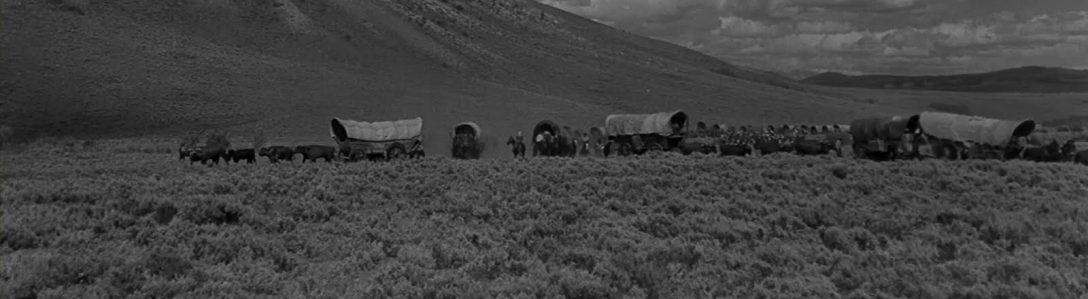
James Mangold’s crisp western is a textbook example of how to successfully update a Hollywood classic by expanding the original without cheapening it. Delmar Daves’ 1957 original is a taut psychological duel fought with words in a cramped hotel room. The remake enlarges the scope to include a few more chases and gunfights to fulfill the whiz-bang needs of modern audiences, but all of it emerges organically from the original film’s plot and much of it deepens the theme of masculine pride. Anchored by nuanced, gritty performances from Russell Crowe and Christian Bale, this is top shelf entertainment — an oater that doesn’t feel out of place alongside the Manns, Boettichers, and Fords.

Belle Toujours

Directed by Manoel de Oliveira

A slender sequel to Luis Bunuel’s “Belle du Jour” (1967), “Belle Toujours” focuses on aging cad Henri Husson, a role reprised by Michel Piccoli. Piccoli, whose bird-like intensity has turned jowly and ruminative, takes a leisurely tour around Paris, searching town for Severine, the blond trophy wife and occasional prostitute he knew those many years ago. It’s an offhandedly graceful essay on aging, as Husson remembers the sexual escapades of his youth and wistfully glances at an oil painted nude. When he finally catches up with Severine (now played by Bulle Ogier, replacing Catherine Deneuve), he finds he still has the energy left for one more act of deviltry — and de Oliveira doffs his cap to Bunuel with a final, surreal visual flourish.

Live Free or Die Hard

Directed by Len Wiseman

A welcome blast of muscular irrationality, this immensely entertaining fourth entry in the “Die Hard” franchise finds John McClane once again caught in the path of a wily psycho about to wreak havoc during a national holiday — only this time, it’s Independence Day. Fully aware of McClane’s superfluity in an age of remote-controlled missiles, Wiseman and screenwriter Mark Bomback have created a self-reflexive spectacle that cracks so wise even the big action blowups seem to be shot with a giant smirk. This frees them to think up the most outrageous stunts possible, including a taxicab missile and a duel between a big rig and a fighter plane. Reality is of no concern, and with Willis willing to play along, the narrative percolates even when things don’t go boom.

DELVING INTO DELMER DAVES

May 14, 2013

jubal-italian-poster-alfredo-capitani

Delmer Daves is having a moment. The Criterion Collection, the closest thing the U.S. has to a cultural gatekeeper, just released 3:10 To Yuma (1957) and Jubal (1956) on DVD and Blu-ray, while the Anthology Film Archives in New York City is holding a mini-retrospective of rarely screened Daves titles, including Pride of the Marines (1945) and The Red House (1947). I had never delved into the director’s work because the ambivalent words of Andrew Sarris and Manny Farber were ringing in my head. Sarris thought his films had “stylistic conviction in an intellectual vacuum”, while Farber positioned Daves against the Spartan “Hawks-Wellman tradition” as  “a Boys Life nature lover who intelligently half-prettifies adolescents and backwoods primitives.” While encapsulating their writing approaches, Sarris’ lucidity versus Farber’s contradictory collisions, they both convey images of shallow postcard beauty. Then I saw Daves’ extraordinary The Hanging Tree (1959, on DVD from the Warner Archive), which uses a cliffside cabin as a visual metaphor for Gary Cooper’s moral atrophy, and realized his use of landscape is far more complex than Boys Life kitsch. Eager for more, I watched five Daves films over the weekend, which revealed a sensitive director of actors drawn to tales of regeneration both spiritual and physical.

On the surface Pride of the Marine appears to be a basic WWII propaganda programmer, telling the true story of working class Philadelphia boy Al Schmid (John Garfield) and his path to winning the Navy Cross for his actions in a battle at Guadalcanal, which blinded him. But Daves and screenwriter Albert Maltz (later blacklisted) are more concerned with Schmid’s fragile psyche than his kill count (200 in one night, reportedly). Much time is spent on location in Philly with Schmid’s combative courtship of Ruth (Eleanor Parker), establishing the cocoon atmosphere of life in the pre-War States. The scene in which news of the Pear Harbor bombing breaks on the radio is one of blithe self-absorption. It’s during a dinner party with Schmid and his friends and they think Pearl Harbor is located in Jersey, their whole world limited to the northeast U.S. After the battle, shot like a horror movie in quiet and shadow, Schmid is forced to discover the world anew as a blind man. He becomes bitter and withdrawn, resentful of the U.S. for sending him into that abattoir, and awakening to the racial inequalities of American life. His best pal Lee is Jewish and informs him that as a blind man Schmid would have an easier time getting a job than himself. It is only Ruth’s compassion that can re-integrate him into society, and prevent him from succumbing to nihilism. Schmid is one of many emotionally enclosed Daves protagonists forced to open up due to physical debility.

the_red_house_edward g robinson

The same is true of Edward G. Robinson in The Red House (’47), a delirious farmhouse thriller in which Robinson ritualistically intones, “don’t go into the woods”. An aging patriarch with a wooden leg, he lives with his spinster sister (Judith Anderson) and his adopted daughter Meg (Allene Roberts). Living in an isolated cabin (as alone as Cooper’s cabin in The Hanging Tree), they rarely venture into town, causing rumors to swirl. Robinson is repressing a terrible secret, and he moves with such coiled deliberation it seems he’ll break into a sweat with each utterance. The film locks into such a hypnotic rhythm it could be mistaken for tedium – it’s a series of seized-up Robinson warnings followed by Meg and her young boyfriend Nath (Lon McCallister) searching the woods for a mythical “Red House”. The landscape takes on a menacing character, as filled with traps as the world outside Philly is for Schmid. Once the circular plot breaks open and Robinson’s secret is revealed, a preternatural calm sweeps across his face as death rises to greet him.

broken1

Broken Arrow (1950) returns the social concerns of Pride of the Marines, with a script from the now blacklisted Albert Maltz fronted by Michael Blankfort, who received the credit. It is generally regarded as the first Hollywood film to give a sympathetic portrayal of Native Americans, although numerous Bs as well as John Ford’s Fort Apache (1948) could also make that claim. It displays Daves’ obsession for historical detail (he consulted his grandfather’s diaries, who crossed the country in a covered wagon), shooting the story of Cochise close to where he actually lived, on the Apache White River Reservation and the Coconino National Forest in Arizona. The setting is overwhelmingly beautiful in Technicolor, shot by Ernest Palmer, that does have a picture postcard prettiness, a fantasy land for this alternate history in which Apaches and Americans live in peaceful assimilationist harmony.

Jubal_essay_Current

The Criterion release Jubal (1956) returns to Dave’s theme of renewal, the first of three such Westerns he would make with Glenn Ford. Daves co-wrote the screenplay about vagabond cowboy Jubal (Ford) found starving in the woods by  thriving farm owner Shep (Ernest Borgnine). Jubal builds up his strength and self-respect until he becomes foreman, and begins to woo the daughter of a Mormon minister. Shep’s bored housewife Mae (Valerie French) wants a renewal of her own, leading to a destructive jealousy. This is another of Daves’ isolated locales, a tight grouping of Shep’s home, work bunks and stables nestled in the Grand Tetons of Wyoming. These buildings are together but separate, the crossing their boundaries causing dissension among the farmhands. The main dissenter is Pinky, played with perverse artifice by Rod Steiger.As Kent Jones notes in his DVD booklet essay, “It’s odd to watch the actor stretch every syllable as far as it can go (“nothing” becomes “nuh-thiiiiiihn”)”. This method madness is a poor fit for the naturalistic presences of Ford (deliberate and reticent) and Borgnine (who is spectacular as a garrulous innocent), but is still fascinating to watch to see how he chews off each particular scene.

6835081416_e3306d959c_z

Jack Lemmon also seems like a poor fit for the Daves universe, but in Cowboy (1958) he gives a nuanced performance as another damaged Daves loner sliding into self-pity. He stars alongside Ford in a cattle drive odd couple. Lemmon is a Chicago hotel clerk ready to light out for Mexico to chase a girl. Ford is an arrogant, usually rich cattle trader who agrees to take on tenderfoot Lemmon after a generous cash investment. Ford suffers the physical ailment, getting punctured by an arrow, while Lemmon suffers a spiritual malaise, his clumsy urban neurotic becoming a self-destructive wretch after completing his first drive, his romantic dreams of cowboy life dissolved in cow shit and snake bites.  Again concerned with the textures and rhythms of that historical period, Daves adapted Frank Harris’ semi-autobiographical 1930 novel On the Trail: My Reminiscences as a Cowboy. The film is littered with process, from how to put on chaps to how to make a steer stand up in a moving train car. Showing a light touch he would use in his 1960s romances, the film turns into a love story between Ford and Lemmon, as they recognize each other’s frailties in themselves. It ends with a shot of them in matching bathtubs, equality achieved at last.