FRAME UP: BONJOUR TRISTESSE, THEY LIVE and TWILIGHT’S LAST GLEAMING

November 13, 2012

Screen Shot 2020-02-05 at 5.24.15 PM

From the multiplicity of locations to place a camera, the director and his collaborators have to settle on one. This decision, born of practical training and on-set instinct, can turn a routine shot into an extraordinary one. Three recent Blu-ray releases display the talents of the canniest of decision makers: Otto Preminger’s Bonjour Tristesse (1958), John Carpenter’s They Live (1988) and Robert Aldrich’s Twilight’s Last Gleaming (1977). Preminger and Carpenter are naturals in the CinemaScope sized frame, both alternating between B&W and color to emphasize their images’ deceptive surfaces. Aldrich uses the boxier 1.85 ratio, but chops it up into split-screens which convey a dizzying information overload that accompanies the creeping surveillance state of that film’s USA.

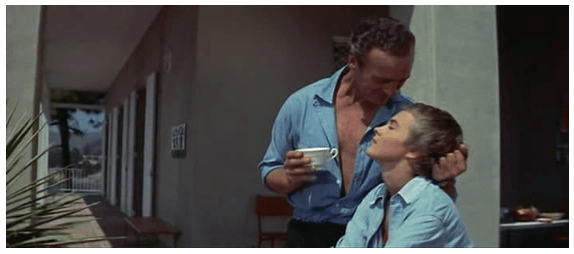
In Jean-Luc Godard’s Contempt, Fritz Lang famously said that CinemaScope was only fit for snakes and funerals, so his character clearly hadn’t yet seen Bonjour Tristesse (1958). Out today on Blu-Ray in a sublime transfer from Twilight Time (available through Screen Archives), Otto Preminger’s film uses the wide frame to emphasize surfaces, whether it’s of Jean Seberg’s impassive face or the doorways and windows that promise a depth that never materializes. Preminger bought the rights to Francoise Sagan’s novel in 1955, and gave S.N. Behrman a crack at the screenplay before turning it over to Arthur Laurents, who received sole screen credit. The story tells of Cecile (Jean Seberg), a carefree teen spending a summer on the French Riviera with her playboy  father Raymond (David Niven, with chest hair perpetually flared). They act more like swingers than family, urging each other into wild romantic escapades and laughing at the wreckage.  But when Raymond falls for their old pal Anne (Deborah Kerr), Cecile becomes wildly jealous and aims to break them up. Her efforts, tragically, succeed.
Screen Shot 2020-02-05 at 5.25.37 PM

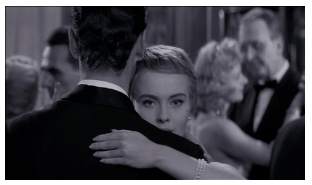
The story is told in flashback, with the present-tense Cecile in black and white, a joyless mannequin twirling through the nightclubs of Paris. She stares dead-eyed into the camera, her arm around another interchangeable Lothario, as she speaks of happier times in voice-over. This is when the color starts to peek through, a strikingly melancholy optical printing effect, as sections of the frame next to her head burst into the color of the Riviera, flickerings of memory coming to life. B&W gives way to hot reds and shimmering blues. The effort already shows in the flashback of Raymond and Cecile’s mirthmaking, having to constantly remind each other that they’re having fun.

Screen Shot 2020-02-05 at 5.25.45 PM

Exteriors are what matter. Early on Raymond’s chirpy French girlfriend Elsa (a hilarious Mylene Demongeot) gets badly sunburned, and this reminder of physical deterioration makes Elsa not long for Raymond’s world. Soon he ignores her for the regal Anne. Preminger emphasizes the openings and closures in their Riviera cottage, where windows, doors and hallways are made visible in every shot, intimating the depths beneath the skin that Raymond and Cecile fear to tread. They are almost always outside, whether on the beach or out on the town.

Screen Shot 2020-02-05 at 5.25.54 PM

The first assistant director Serge Friedman recalled that Preminger did not have the shot choreography planned out, but would have “to do a lot of thinking before he could find the right place.” One of the most memorable shots utlilizes the full ‘Scope frame at a dinner party. A maid is arranged in the  far left edge foreground, secretly chugging a beer behind the bar, while Raymond and his clan are grouped to the right, in the middle distance, nattering on about a casino. Their total obliviousness to the world around them is encapsulated in that slyly funny frame.  Chris Fujiwara, in his Preminger study The World and its Double, writes that “the floor of the set was treated with gelatin to allow the camera to move as freely as possible”, regardless of where he chose to move it. His method is improvisatory, but the result is controlled and structured – even Elsa’s skin troubles are rhymed in the devastating final shot, when Cecile rubs in face cream to preserve her beauty, which is all she has left.

Screen Shot 2020-02-05 at 5.26.01 PM

Another film of deceptive surfaces is John Carpenter’s They Live (1988),  now out on Blu-Ray from Shout! FactoryA scathing  sci-fi satire of Reagan-era America, Carpenter uses the CinemaScope-equivalent aspect ratio (2.35:1) make his compositions as herd-like as the zombified consumer society he is depicting, of crowds and lines and glimmering store lights. The hero in this debased trickle down society is, appropriately enough, played by mulleted (and likely roided) pro wrestler Rowdy Roddy Piper. An unemployed drifter who still believes in the American dream, he is introduced as a hero from a Western, dropped off by a train in a dynamic diagonal composition, as did Charles Bronson in Once Upon a Time in the West.

Screen Shot 2020-02-05 at 5.26.09 PM

He realizes the truth upon donning some magic shades, which reveal a B&W world of alien brainwashing. Billboards scream OBEY and WATCH TV, hidden messages that are also beamed through TV screens to lull the populace into consumer comas. As with Bonjour, the sober B&W represents brute reality, and color the world of exteriors. Carpenter’s project is not one of subtlety, but a kind of satiric shock and awe. Piper’s pal, played by Keith David, is introduced behind a line of iron rebar, and they live in a smoggy abandoned lot across from a church.  They Live is a proto-Occupy Wall Street in its emphasis on extreme income inequality, visualized in alternating rows – of Piper and David’s construction sites and the aliens’ tuxedoed gentry imbibing champagne at a gala dinner.

Released today on Blu-ray from Olive Films, Twilight’s Last Gleaming may be even more timely in its visualization of image overload. A paranoid political thriller still haunted by the death toll of Vietnam, it places Burt Lancaster as a dissident Army vet who breaks into and gains control of a nuclear missile silo. Unless President Charles Durning releases a secret National Security Council memo to the public that reveals the cynical reasoning behind the war, Lancaster will fire the nukes.  A furious film, director Robert Aldrich finds an equally furious style. Instead of parallel editing between the White House, Richard Widmark’s hawkish general (modeled after Curtis LeMay) and the silo, Aldrich uses an increasingly complicated series of split screens (of two and four), in which actions unspool simultaneously, as if you are watching the live feed from the President’s Situation Room. The footage of Durning sitting with his cabinet (which includes an avuncular Melvyn Douglas and a sepulchral Joseph Cotten) as they watch a special forces raid on the silo recalls the photograph of Obama’s team watching the raid on Osama Bin Laden. Or maybe it’s the first found footage movie, a scarier version of The Blair Witch Project in which the bogeyman isn’t one pissed off ghost but the entire social and political system in which we live and work.

CREATURE COMFORTS: TERROR TRAIN and THE FUNHOUSE

October 23, 2012

Screen Shot 2020-02-05 at 5.11.15 PM

Every Halloween, what’s old is made new again as Hollywood pumps out horror franchise sequels (Paranormal Activity 4, Silent Hill 2) and re-packages their money-making library scare flicks. The major home video release this season is the Universal Classic Monsters: The Essential Collection set, which includes HD upgrades of eight of that studio’s classic creature features. But along with that big ticket item are some smaller cult curiosities that merit closer attention. Shout! Factory licensed  Terror Train (1980) and The Funhouse (1981) from Universal for their Scream Factory imprint, and put them out on well-appointed Blu-Ray editions last week. Both films were relatively cheap affairs set out to capitalize on the slasher box office boom initiated by Halloween, but manage to wring visual and thematic interest out of the venerable psycho killer and inbred freak genres.

In the early 1970s Roger Spottiswoode had become the favored editor for Sam Peckinpah’s slow-motion farragos (on Straw Dogs, The Getaway and Pat Garrett & Billy the Kid), and was later brought on as a kind of “editor doctor” to various troubled productions. Sandy Howard was one of the producers who hired him for such surgery, and later remembering the favor, hired Spottiswoode for his directorial debut on Terror Train. Spottiswoode recalled that he was initially asked to write the script and refused, only to discover that his name was included on promo material anyway. Howard wanted the film to be a Canadian production, presumably hoping to get state funding, and Spottiswoode was born in Ottawa. Then, Spottiswood says, “I pointed out to Sandy that this really wasn’t going to work. I couldn’t take someone else’s writing credit. It wouldn’t work. So my name came off it and he said, “Why don’t you direct it?” And I thought, well, this I might do…”

It was a seat-of-the-pants kind of operation, as Spottiswoode reworked the script by T.Y. Hilton into a shape he could live with before starting on the 25-day shoot. The key was to get another Jamie Lee Curtis slasher film onto screens before the fad kicked off by Halloween (1978) had passed, and the harried nature of the project shows in its clunky exposition and flat performances. The college guys are interchangeable lugs, while the estimable Ben Johnson (Wagon Master) dutifully cashes a paycheck as the genial engineer. Jamie Lee plays Alana, a popular college co-ed whose boyfriend holds a raucous New Year’s Eve party aboard a train. One by one her pals (and a magician played by a helmet-haired David Copperfield) get picked off by a masked psycho. There is no mystery as to killer’s identity, as his backstory is revealed in the opening scene, of a pencil-necked nerd who gets brutally hazed by a gaggle of frat brothers.

What makes Terror Train watchable is the low-light cinematography of John Alcott, who had just come off an incredible series of collaborations with Stanley Kubrick. He began as an assistant on 2001: A Space Odyssey (1968) and became a cameraman on A Clockwork Orange (1971) before being promoted to director of photography on Barry Lyndon (1975) and The Shining (1980). Instead of a light meter, Alcott just watched the light reflect off of his hand before determining the f stops of his cameras. Spottiswoode recalled to the Terror Trap:

I was proud to meet him but frankly, I wondered why he would want to do Terror Train. So I met with John and I asked him. I said, “Look, I’ve got twenty-five days to shoot this. I’m going have to shoot thirty set-ups a day. I’m gonna have to go like the wind. And he responded, “Well, Roger, if you can shoot thirty set-ups a day, you’ll make me a very happy man. I’m not used to that. On The Shining, I did ONE set-up a day.” It was the same with Barry Lyndon. It was often one or two set-ups a day and he thought it was boring! “I adore Stanley,” he said, “but thirty set-ups a day means a lot of fun for me.” (Laughs.)

Alcott’s work on Terror Train is kind of Lyndon by nite-light instead of that film’s famous candle light. The cabin interiors are quite dark, but instead of the warm flicker of lit wicks, the figures are etched in by the warm ceiling lights which Aclott had electricians install, while he highlighted eyes with pen lights he would shine himself. The movie is all edges of bodies and dumbstruck pupils, creating the feel of eternal night.

Tobe Hooper’s The Funhouse is a more complete film, with a witty screenplay from Lawrence Block (not the great crime fiction writer), the hot colors of DP Andrew Laszlo (The Warriors) and the classical slow-burn tension that Hooper elicits from his balanced widescreen frame. Where the opening of Terror Train dispenses with backstory, The Funhouse sets up a whole world of resentments. An homage to Psycho, Hooper re-stages that film’s famous shower scene as a psycho-drama between brother and sister. Universal horror fiend Joey (Shawn Carson), whose poster of Frankenstein crowns his bedroom, stalks his older sister Amy (Elizabeth Berridge) into the bathroom, and gives her the fright of her life with a rubber machete. This frightful joke, set up with POV tracking shots through a suburban hallway, is the rehearsal for the horrors to come, as the monsters on Joey’s wall manifest themselves at the local carnival, where Amy goes on a double date with her pot-smoking pals.

Amy wants escape from the ‘burbs, from her creepy brother and her boozy, inattentive mother, who is half in the bag for the entire feature. Instead of Jamie Lee’s blank slate in Terror Train, Amy has a fully sketched out life, one in which her urge for adventure and escape becomes sadly believable. Hooper had an entire working carnival built in Florida, on the old set of the Flipper TV show, so he could display the event’s shabby glory in full with the help of a 150-foot crane, which provides vertiginous shots of the seedy bacchanal. The parade of hammy grotesque includes a gloriously debased turn from Sylvia Miles as a fake-Gypsy fortune teller who rasps at her callow teen clients and offers rough sexual favors on the side. The creepiest carnies though, are embodied by Kevin Conway’s gloriously skin-crawling performances as three different carnival barkers. They are all varieties of desiccated perverts, whose lascivious lowered-eye stares don’t make your skin crawl as much as gallop.

It’s his Funhouse barker though, who emerges as the bogeyman, a drunken abusive father, whose malformed son is forced to wear a Frankenstein mask while operating the ride. Behind the mask is one of makeup artist Rick Baker’s great creations, of what looks like a predatory naked mole rat with a deviated septum. But as with Frankenstein’s monster, it is the master has unleashed evil, not his benighted creature. Prodded and cajoled into a life of abject misery, the son’s violent actions are those of a wild animal absent of any human traces. This unbalanced freak’s connection to Joey is unsettling, as both are seemingly sociopathic boys with absent parents (Joey easily sneaks out to the carnival alone), yet only Joey has the face of a human, easier to blend in with the rest of polite society, continuing the cycles of neglect and reprisal.

THE BATTLE HYMN OF REPUBLIC PICTURES

July 3, 2012

Screen Shot 2020-02-04 at 2.55.14 PM

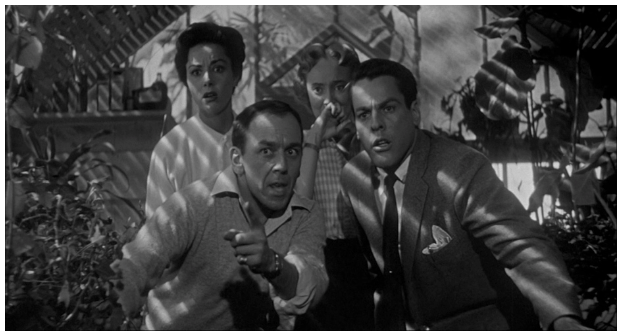
On July 18th, Olive Films will begin their roll-out of the Republic Pictures library with DVD/Blu-Ray releases of High Noon (1952) and Invasion of the Body Snatchers (1956). Republic has long been one of the most underutilized holdings in the home video market, passing from corporation to corporation with little concern for the treasures it contained. But upstart Olive has closed a massive licensing deal with Republic parent Paramount Pictures, and is set to release a flood of material (from B-Westerns to prestige pics) in 2012 that had mostly been overlooked in the digital age. While these first two releases have been well-represented on DVD, it is their premiere on Blu-Ray, and there are plenty of rare gems coming down the pike (all transferred in HD), including Nicholas Ray’s Johnny Guitar,  Fritz Lang’s Secret Beyond the Door and Orson Welles’ Macbeth.

Herbert J. Yates began his career in film processing in 1915. By the 1930s his Consolidated Film Laboratories was a major developer of B-film. As the Great Depression sent many Poverty Row studios into the red, Yates took them over, combining six companies (Monogram, Mascot, Liberty, Majestic, Chesterfield and Invincible) into one Republic in 1935. They made money off of disreputable serials and Westerns, giving daredevil action directors like William Witney endless opportunities to hone their craft on a shoestring budget.

Witney started his career at Mascot, riding horses in films for his brother-in-law, and director, Colbert Clark. Witney directed his first film, The Painted Stallion (1937), for Yates, and remembers the set-up in his autobiography, In A Door, Into a Fight, Out a Door, Into a Chase:

Republic’s main office was in New York where taxes were lower than in California, and Consolidated Film Industries, which made all the release prints, was located next door in Fort Lee, New Jersey. The office in New York City was located at 1776 Broadway…

Then, after Yates bought out the last of the executives from the six former companies, Witney writes, “I will say one thing for him. He screwed a lot of very smart men.” Witney wasn’t one of them, working productively for the company in serials (Daredevils of the Red Circle, The Adventures of Captain Marvel), Roy Rogers Westerns and teen-sploitation (Juvenile Jungle, Young and Wild) until the company was sold in 1959. It was because of money-making B-pictures like Witney’s that Yates had the money to invest in prestige productions like Orson Welles’ Macbeth and John Ford’s The Quiet Man and (the less expensive) The Sun Shines Bright. Yates rubbed Ford the wrong way, as the curmudgeonly director told biographer Joseph McBride, regarding The Sun Shines Bright:

Well, they didn’t ruin it, they couldn’t ruin it. But they cut a lot out of it. You’re working with a stupid lot of people, the executive producers, so what the hell, you’ve got to expect it.

But whatever his shortcomings as a producer and a shameless money-grubber, Herbert J. Yates, through accident or circumstance, funded some of the glories of the Hollywood Classical Cinema, both the high art of Ford and the low of Witney, and for that he deserves our reluctant thanks.

Yates sold his company’s library in toto to National Telefilm Associates (NTA) in ’59, bowing to the rising dominance of television. They had severely curtailed production, and were mainly making their money selling TV rights anyhow.  A Dec. 23rd, 1957 issue of Billboard announces the sale of syndication rights to NBC of 218 features and 15 serials for $3,5000,000, with the writer noting that, “the move by Republic to put its package in active sales is concurrent with reports that the studio is in the process of terminating film production.” At this point the demand for B-pictures had disappeared, as the 1948 anti-trust Paramount Decision had divested the studios of their theater ownership. They could no longer “block-book” their product and force theater managers to run whatever they sent them.

NTA made money syndicating the TV rights, with the rise of cable TV in the 1980s reinvigorating profits, leading them to change their name to Republic in 1986, and producing their own TV shows like Beauty and the Beast (1987). In 1994, Aaron Spelling Productions purchased NTA/Republic, and essentially used it as a distribution arm, and as a name to sell its own projects, completely divorced from the low-budget studio it once was. Now Republic Pictures Home Video would release a Spelling mini-series like James Michener’s Texas on VHS, while Johnny Guitarlanguished in the vaults. This was followed by some swift multinational swallowings, as Blockbuster purchased Spelling, and then Viacom bought Blockbuster. The Republic library then became the custody of the Viacom-owned Paramount Home Entertainment, all by the end of 1995.

There had been sluggish attempts to release the Republic library on home video during this period. Spelling licensed it to Artisan Video in 1995, who released The Quiet Man and a few others until the company was gobbled up by Lionsgate in 2003. Artisan’s rights expired in 2005, reverting briefly back to Paramount, but Lionsgate then decided to renew this license for another six years, starting in 2006. For what must have been effective but arcane accounting reasons, Lionsgate effectively sat on the Republic library. They released the comparatively unknown Arch of Triumph (1948), Only the Valiant (1951), and One Touch of Venus (1948) on DVD, but left the vast, and vastly better known, titles sitting on the shelf.

Once Lionsgate’s laissez-faire reign ended this year, Olive Films leapt into the fray, manically licensing Republic titles from Paramount, and almost immediately putting them into production. In the first few months of their stewardship, Olive will have released more of the Republic library than Artisan, Lionsgate and their forebears combined. As fast as they are releasing them, there are some quality control concerns, but the early returns are encouraging.  Both High Noon and Invasion of the Body Snatchers have received high marks from tech review site Blu-Ray.com, as well as my own eyes. The transfers are clean and sharp with rich contrast. Paramount’s archival wing had obviously had done strong HD transfers on these, and Olive presents them with no digital blow-drying. High Noon comes with a making-of documentary, while Invasion contains no extras, which is the norm for the company. And while Olive has had notoriously poor cover art in the past, their Republic discs all seem to have original poster artwork – a huge improvement over some of their early Photoshop jobs.

While it would have been ideal for Paramount to push its massive resources behind the restoration and release of the Republic library, perhaps it’s more appropriate for the scrappy and relatively under-funded Olive Films to do the job. Releasing its discs quickly, efficiently and with little marketing muscle, the Republic Pictures library has finally found a licensor that can match its huckster spirit, and that has the smarts to take advantage of other companies’ mistakes.

HOME VIDEO ROUNDUP: BELL, BOOK AND CANDLE and WESTWARD THE WOMEN

April 17, 2012

Screen Shot 2020-02-03 at 4.23.54 PM

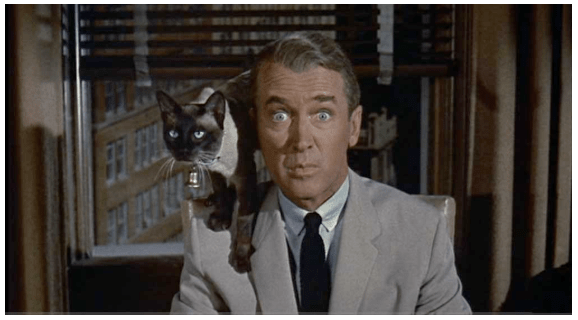
I had a similar reaction to Mr. Stewart when I watched Kim Novak purr her way through Bell Book and Candle, just released by Twilight Time on a gorgeous blu-ray.  He also might have been agog at Westward the Women (1951), the William Wellman femme-Western released in a well-appointed DVD from the Warner Archive, which includes an audio commentary from film historian Scott Eyman. They are two films that focus on female desire, a rare occurrence in the generally leering male gazes of post-code Hollywood (pre-code films were replete with sexually independent women – check out Baby Face (1933) for a bracing example). Bell Book and Candle is set in motion because of Novak’s uncontrollable lust for Stewart, and Westward the Women kicks off because of hundreds of ladies’ self-sacrificing desire for a better life out in California, a gender bending variation on Horace Greeley’s advice to, “Go west, young man”.

Originally, Bell Book and Candle was a stage play written by John Van Druten and produced by Irene Mayer Selznick in 1950. Although her divorce to David O. Selznick had been finalized in ’49, she sold the rights to him in 1953. He intended to cast his next wife, Jennifer Jones, in the lead, but the project never got off the ground, and the rights were eventually purchased by Columbia. After initially considering Rex Harrison for the lead, the studio and producer Julian Blaustein decided to re-team Kim Novak and Jimmy Stewart, who had both wrapped shooting on Paramount’s Vertigo in January of 1958. Since Columbia had lent Novak for that project, Paramount returned the favor in allowing Stewart to film the supernatural romantic comedy, which started shooting on February 3rd. The exuberantly talented Richard Quine (My Sister EileenIt Happened To Jane) was slated to direct, and the legendary James Wong Howe handled the indecently saturated Technicolor cinematography.

Reversing the polarity of obsession from Vertigo, in Bell Book and Candle it is Novak who is the stalker, Stewart the stalked. Novak plays Gillian Holroyd, a stir-crazy witch in the West Village of NYC who deals in African and Oceanic art as a lucrative front. Stewart is the endearingly uptight Shepherd Henderson, the editor-in-chief at an upscale publisher who lives above her storefront. Bored with her hep wiccan lifestyle spent at the Zodiac nightclub (where warlock Jack Lemmon plays the bongos), she yearns for something different. So indeed she indulges in some hoodoo and wraps Shep in her spell. When he finds out his attraction is not entirely natural, Gillian has some explaining to do.

Novak gives a smoldering performance, shooting looks at Stewart of devouring lust as she slowly pours herself onto the couch to accentuate each curve in her body. She even modulates her voice into a low purr, emulating the vocal rhythms of her beloved pet cat. Costume designer Jean Louis puts her in inflammatory red, from a bohemian-chic smock to a scoop-necked sweater, a siren intent on snagging her prey. The colors in James Wong Howe’s cinematography veritably pop off the screen, from those gleaming reds to the sharp pinks of Gillian’s mother Queenie (Elsa Lanchester) and the rich creams and grays of Shep’s sharply lined attire. Richard Quine, always a sharp caricaturist, lets Lanchester and Lemmon loose as the impish do-badders, providing islands of comedy amidst the torrents of Gillian’s pheromones, which course through this intoxicating Technicolor dream.

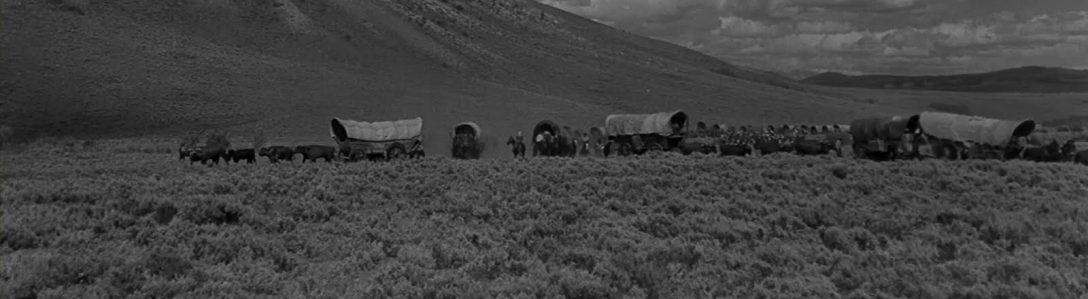
Where Bell is fantastical, Westward the Women (1951) is elemental. Based on a story by Frank Capra, it tracks the travails of hundreds of women traveling from Chicago to California, lured by the promise of hard-working husbands and the open air. According to Capra’s biography, he intended to direct the film with Gary Cooper to star, but eventually had to table it, and ended up selling the rights to his neighbor, William Wellman, who had recently finished his Clark Gable western, Across the Wide Missouri (also 1951).

Ostensibly the lead is Robert Taylor as trail master Buck Wyatt, but the film spends most of its time dutifully tracking the intense labor of the women on the drive, as early on most of the cowboys cut loose, unwilling to drive further into unforgiving territory. But the women endure, as Wellman depicts them in extended montages of work, seemingly inspired by the major drive in Raoul Walsh’s The Big Trail (1931), and perhaps an influence on Kelly Reichardt’s Meek’s Cutoff (2011), other Westerns obsessed with process. These processes are inevitably group efforts, lending these sequences a bit of communal proto-feminism, together doing the jobs of men with little fuss and unspoken teamwork. The gritty heart of the film is Patience (Hope Emerson), the Ward Bond of the movie, whose brute physicality inspires the rest of the ladies to self-abnegation and ultimate triumph, but who secrets a sensitive soul behind all the bluster. She is joined by a cross-section of personalities, from the sharpshooting farm girl Maggie, the still-mourning Italian widow Mrs. Maroni, and the two ex-prostitutes Fifi and Laurie, eager for some vision of country life.

Many women suffer and die, but the rest endure, the vast middle section is a grim kind of survival horror movie, as carriages crash and hostile Native Americans chase them down. Pared to the bone of back-story, the film operates by the familiar Wellman method (although only intermittently witnessed in his post-30s work), of showing character through action. All of the women in the film gain a personality through the attention Wellman pays to their faces, instead of lugubrious scenes of exposition.These roll calls of expressions (similar to the montage of faces before the cattle drive in Red River), intimate more in images of their lined brows than any speech could convey.

Never an emotional director, Westward the Women is nonetheless an unexpectedly moving film. When the women finally meet their prospective husbands in California, it’s a scene that could easily become droopingly sentimental, but instead is reticent and ambiguous, a skittish embrace of an uncertain future, one in which the freedoms of their drive West will likely disappear in their return to male dominated society. It is this melancholy undertone that makes Westward the Women a fascinating object, as the seams and contradictions in Hollywood’s depictions of womanhood poke through thanks to Wellman’s distanced, unvarnished approach. In a similar way, Novak’s voracious sexual appetite, that the movie never indexes as negative, undercuts the usual Madonna-Whore complex of romantic comedy that persists today (see, if you must, the dire What’s Your Number for a current example). Both these films are remarkable in that they show women who can fuck and fight with with the best of them, with no apologies.

HOME VIDEO ROUNDUP: CHRISTMAS EDITION!

December 13, 2011

nickel ride

It’s that festive time of year again, when family ties are maintained through the ritualized exchange of fabrics, wrought plastics and optical discs. This joyous occasion ensures that husband and wife, or parent and child, can contentedly ignore each other until the next wallet-busting holiday. I am here to ensure the smooth operation of this essential human activity, providing an idiosyncratic list of new DVDs and Blu-Rays that, if wrapped in glossy paper, will blind your favored loved one to your significant shortcomings. To prove my goodwill, my wife and fellow writer Andrea Janes will close out the list with her thoughts on a movie I asked her to watch, as a distraction from my lax grooming habits. Seasons Greetings!

The Nickel Ride (1975, DVD)

Released today on DVD from the canny studio library raiders at Shout! Factory (in a set with John Frankenheimer’s dire 99 and 44/100% Dead), this gorgeously elegiac gangster film should be exhibit #1 when making an over-enthusiastic case for the work of director Robert Mulligan. Remembered mainly for his adaptation of To Kill a Mockingbird (1962), he was an elegant craftsman who could completely inhabit a character’s point-of-view. In Mockingbird and The Man in the Moon (1991) he restricts it to children through low-angles and gliding, youthfully quick tracking shots. In Nickel Ride Mulligan depicts the decaying mental state of an aging paranoiac through cinematographer Jordan Cronenweth’s palette of rotting browns, and lead actor Jason Miller’s remarkable ability to deflate himself into the posture of a crumpled paper bag. Miller plays Coop, a low-level fixer for the Los Angeles mob who is getting pushed out of his position by a young, sweetly psychotic Southerner (Bo Hopkins, channeling Jon Voigt in Midnight Cowboy). One of Eric Roth’s (Forrest Gump) earliest scripts, it is also his most effective, a film about the cruelty of time’s passing and the crueler tricks of an addled mind.

***

Tora! Tora! Tora! (1970)

For the 70th Anniversary of the Pearl Harbor bombings, 20th Century Fox released a handsome Blu-Ray edition of this sober, ambitious docu-drama of Dec. 7th, 1941. Darryl Zanuck was eager to recreate the box-office bonanza of The Longest Day (1962), and takes that film’s gimmick of telling the historical event from different points of view, and with entirely different crews, an idea which Clint Eastwood adopted for his WWII diptych, Flags of Our Fathers and Letters From Iwo Jima. In this case, Richard Fleischer was tasked to direct the American side, and Akira Kurosawa the Japanese (Joseph McBride notes that John Ford was eager to take on the project, but was never considered for it). Kurosawa dropped out early in the production, after endless disputes with American production supervisors. Fleischer, in his autobiography, writes that Kurosawa, “felt this was a gross intrusion and an insult to national honor.” He was used to total artistic freedom, and that wasn’t the Hollywood way. Toshio Masuda and Kinji Fukasaku (Battle Royale) took over. Fleischer claims the only scene in the film shot by Kurosawa was one of the American ambassador in the U.S. embassy in Tokyo, and “it is the worst scene in the picture.” The film was hugely expensive to make, and was a massive failure at the box office. Part of the problem was that The Longest Day dramatized a victory, and Tora! Tora! Tora! an ignominious defeat, hardly an audience grabber. As a film, it is fascinatingly dry, a top-down version of history, in which gray-suited men sit in mahogany chairs and make history. Massive amounts of research went into the film, with Dr. Gordon Prang, appointed by General Douglas MacArthur as the official historian of the Pacific War, hoarding material at the University of Maryland. Fleischer, Masuda and Fukasaku create some pleasing diagonals out of the lines of secretaries, functionaries and soldiers, but for the most part the film plays as a luxuriously illustrated lecture.

***

Rapture (1965)

John Guillermin is not a director whose work I had sought out, although The Day They Robbed the Bank of England (1960) lingers in the memory as a bracingly cold-hearted and fleet-of-foot heist film. (In)famous for the cheap thrills of The Towering Inferno (1974) and the King Kong remake (1976), I was totally unprepared for the psychosexual  intensity of Rapture, which Twilight Time has just released in an excellent Blu-Ray, available through Screen Archive. Shot in silvery B&W CinemaScope on location off the coast of Brittany, it’s an easy movie to get lost in. The novel Rapture in my Rags was initially adapted by frequent Fellini collaborator Ennio Flaiano (8 ½), although the final script credit goes to Stanley Mann (Conan the Destroyer). It follows the blighted life of Agnes (Patrica Gozzi), a young girl who lives in a crumbling mansion with her eccentric, haunted father Frederick (Melvyn Douglas) and blowsy blonde maid Karen (frequent Bergman actress Gunnel Lindblom). Frederick is an ex-judge who writes crackpot newsletters in his study, while Agnes’s only wish is to build a scarecrow so she can have a friend to call her own. Agnes’ married sister recommends she be confined to an insane asylum. But after she builds her scarecrow, a soulful escaped prisoner (Dean Stockwell) appears wearing its clothes, and it looks to Agnes like her sexual desires have blossomed violently to life. While it has its narrative lulls and repetitions, this is the rare coming-of-age film that captures the inchoate madness of adolescent lust.

***

Fright Night (1985)

Recently re-made with Colin Farrell, the original is an amiable bit of Hammer horror nostalgia graced with a delightfully mischievous Roddy McDowall performance. Another lovely Blu-Ray from Twilight Time, it shows high-schooler Charley (William Ragsdale) discovering a vampire-next-door, played with evident self-regard by Chris Sarandon. Ragsdale and his girlfriend Amy (Amanda Bearse from Married, With Children) seek out Peter Vincent (McDowall) for help, an ex-star of Hammer-style gothic vampire flicks who now hosts a late-night horror movie show. Recently fired and facing eviction, Vincent readily accepts Amy’s cash to flush out the would-be demon, which he assumes is Charley’s childish fantasy. When Chris Saradon’s flowing locks and insatiable thirst for blood prove to be all-too-real, the trio has to fight for their lives. The imaginative creature design from the team under visual supervisor Richard Edlund (Raiders of the Lost Ark, Ghostbusters) is refreshingly physical, and an appropriate homage to the menacing effects of the Hammer titles writer/director Tom Holland (Child’s Play) is clearly so enamored with (Christopher Lee is even glimpsed on TV). McDowall is the main reason to see the film though, adding unexpected layers of pathos to this beaten down ham.

***

Special Capsule review by Andrea Janes:  Night Watch (1973, Warner Archive)

At first Night Watch evokes such circa-70s portmanteau films as Tales from the Crypt, with its Gothic tale of a rich neurotic housewife obsessed with the decaying house behind hers (which she views from a Rear Window-esque vantage point through the back garden). Then the 1973 thriller — stuffed with creepy neighbors, incredulous policemen, remote husbands, and resentful housekeepers — froths into a soapy, pulpy revenge drama. Ellen Wheeler (Elizabeth Taylor) navigates this labyrinth of menace in a haze of cigarette smoke, her trembling hands restlessly rearranging the pieces of the enormous jigsaw puzzle perennially strewn across her parlour table, while the haunting memory of her dead former husband keeps her nerves unstrung and her beautiful cameo face blanched with worry. At long last, though, the smoke clears and, as Ellen says of her jigsaw puzzle, “It’s easy to figure out once you see where all the pieces should be.” A third-act reversal is none the less enjoyable for being somewhat expected, and Taylor hammers it home with good old fashioned bloody delight.

2010: A FIRST QUARTER VIEWING CALENDAR

January 5, 2010

It’s time to stagger into the new year with eyes thrust forward. No more list-making and list-arguing and dwelling on the decade that was. Let us break free from our immediate history and nostalgia’s uncomfortably warm grip to embrace the rambunctious year to come. We’re going to squeeze out its tender juices one month at a time, with a touch too much enthusiasm that will emit a pungent, ripe scent of dreams yet to be dashed. Yes, these are the images I will rush to imbibe in the first quarter (and a bit more) of 2010:

January-ish

A Sixth Part of the World (1926) & The Eleventh Year (1928) (DVD, Edition Filmmuseum)

(DVD, Edition Filmmuseum)

Available now from the Edition Filmmuseum, this damnably seductive looking package contains the films Dziga Vertov made immediately prior to his epochal Man With a Movie Camera. The Filmmuseum describes the first as a “poetic travelogue”, and the second as a “visual symphony.” Michael Nyman provides the score, and bilingual booklets are included. This is an all-region release, and is 29.95 Euros, which is more USD than I can afford. I take donations.

Sweetgrass(Theatrical, Cinema Guild)

I’ve been aching to see this elegiac nature film ever since it premiered at the New York Film Festival. Opening this week in NYC and then slowly rolling out across the country in limited release, it tracks two modern-day cowboys as they drive a herd of sheep through the Montana mountains. Recently it nabbed the cover of my favorite film magazine, Cinema Scope, which has a fascinating interview with the director, Lucien Castaing-Taylor, an assistant professor in Visual and Environmental Studies at Harvard. Cinema Guild is looking like the film distributor of the year. Along with Sweetgrass, they’ve also acquired Jacques Rivette’s superb Around a Small Mountain and critical favorite Everyone Else

***

January 22

Legion (Theatrical, Screen Gems)

Ever since the ridiculously pulpy trailer hit a few months back, I’ve been intoxicated with its possibilities. Visual effects guru Scott Stewart (Iron Man, Sin City), graduates to the director’s chair and opts for total insanity. God deems the human race a lost cause, and sends his angels to destroy the world. Paul Bettany still has love for the flesh, so he swoops in, tears off his wings, and defends the denizens of a roadside bar (including Dennis Quaid and Charles S. Dutton) from annihilation. Somehow flamethrowers are involved.

***

January 26

King Lear (DVD, E1)

Orson Welles performs as Lear for this episode of “Omnibus” broadcast live on CBS in 1953.

***

February 15

British Noir Double Feature: The Slasher & Twilight Women (DVD, VCI)

Ever since Film Forum in NYC held a retrospective of British film noir a few months back, I’ve wanted to dig in further. I know nothing about these two other than this: The Slasher stars Joan Collins and received an IMDB comment of “Risible”. Twilight Women stars Laurence Harvey as a nightclub singer accused of murder. Sounds promising enough for me…

Also on this date:

*Clint Eastwood: 35 Years, 35 Films at Warner Brothers (DVD, Warner Brothers)

*Contempt (Blu-Ray, Lionsgate)

*Lola Montes (Blu-Ray, Criterion)

*Ran (Blu-Ray, Lionsgate)

***

February 19

Shutter Island (Theatrical, Paramount)

Scorsese’s adaptation of Dennis Lehane’s insane asylum ghost story was pushed out of Oscar season into the dumping grounds of February. This looks more like horror movie material than award-bait, which leaps this entry up the list. DiCaprio is a Boston cop investigating the disappearance of an asylum inmate. Then he starts to go crazy himself, presumably, with shades of Shock Corridor. From the trailer it looks like Scorsese is having fun – working with waking hallucinations and impish performances from Max Von Sydow and Ben Kingsley.

***

February 22

A ridiculous booty of home video releases:

*City Girl (Blu-Ray, Masters of Cinema)

*M (Blu-Ray, Masters of Cinema)

*Make Way For Tomorrow (DVD, Criterion)

Note: Make Way for Tomorrow is one of the greatest movies ever made, and its image heads this post.

*There’s Always Tomorrow (DVD, Masters of Cinema)

***

March 12

Greenberg(Theatrical, Focus Features)

Going in blind because of my fondness of Ben Stiller and respect for Noah Baumbach (The Squid and the Whale). It reads like a rote mid-life crisis comedy, but I’ll have some faith in the combined talent here.

***

March 19

Vincere(Theatrical, IFC Films)

My good friend assures me this is a sub par work from Marco Bellocchio, and its melodramatic trappings don’t sound suited to his bitterly sardonic gifts. It’s the story of Ida Dalser, the wife whom Benito Mussolini discarded and ignored. But having thoroughly enjoyed his last three features: The Wedding Director, My Mother’s Smile, and Good Morning, Night, I’m going to have an open mind.

***

March 22 (the day my wallet begs for mercy)

*Bigger Than Life (Blu-Ray, Criterion)

*Days of Heaven (Blu-Ray, Criterion)

***

March 29

*Red Cliff (Blu-Ray [2-Disc International Version], Magnolia)

One of my favorites from last year was released in a truncated version stateside, which cut out over 2 hours of material. Magnolia is releasing the whole behemoth on Blu-Ray, where the scope of Woo’s accomplishment becomes more apparent. Every element is essential to this ancient war epic. You can read my more ponderous thoughts on this film at Moving Image Source.

Letters From Fontainhas: Three Films by Pedro Costa (DVD, Criterion)

One of the most important and divisive filmmakers working in the world finally gets his home video due in the U.S. This includes Ossos (1997), In Vanda’s Room (2000), and Colossal Youth (2006). A trilogy of films where Costa charts the lives of immigrants living in the slums of Fontainhas, near Lisbon. I’ve only seen Colossal Youth, which is a monumental, demanding work. I only saw it on a muddy screener, so I don’t even feel like I’ve truly experienced its languorous rhythms. Anyway, sure to be one of the most important releases of the year.

***

April 5

Piranha (DVD, Shout! Factory)

My Joe Dante education proceeds apace. I continue to think Matinee is a masterpiece.

***

April 16

Piranha 3D (Theatrical, Dimension)

After I receive my Joe Dante education, I can try Alexandre Aja’s (High Tension, The Hills Have Eyes (’06)) take on the material. In 3D. With an out-of-retirement Christopher Lloyd and my new favorite character actor, Adam Scott.

***

April 23

MacGruber (Theatrical, Universal)

In this SNL-derived parody of MacGyver, Val Kilmer plays a villain named Dieter Von Cunth. That’s enough for me. Also, director Jorma Taccone is part of the “Lonely Island” trio that produces all of SNL’s digital shorts, for a long time the only worthwhile part of the show.

***

May 1

Piranha (Blu-RayShout! Factory)

Oh, Shout! Factory, you’re really playing with my emotions here. Wait until May just to watch the Blu-Ray? OK, fine. But I’m seeing the Aja version first.