HOME VIDEO ROUNDUP: BELL, BOOK AND CANDLE and WESTWARD THE WOMEN

April 17, 2012

Screen Shot 2020-02-03 at 4.23.54 PM

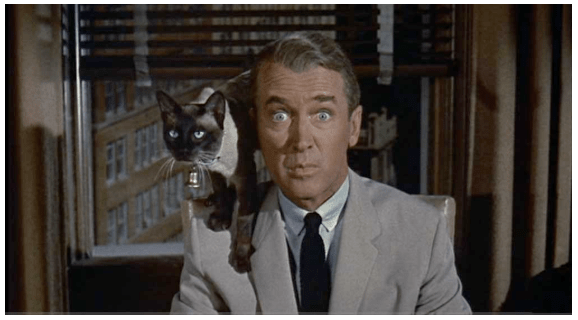
I had a similar reaction to Mr. Stewart when I watched Kim Novak purr her way through Bell Book and Candle, just released by Twilight Time on a gorgeous blu-ray.  He also might have been agog at Westward the Women (1951), the William Wellman femme-Western released in a well-appointed DVD from the Warner Archive, which includes an audio commentary from film historian Scott Eyman. They are two films that focus on female desire, a rare occurrence in the generally leering male gazes of post-code Hollywood (pre-code films were replete with sexually independent women – check out Baby Face (1933) for a bracing example). Bell Book and Candle is set in motion because of Novak’s uncontrollable lust for Stewart, and Westward the Women kicks off because of hundreds of ladies’ self-sacrificing desire for a better life out in California, a gender bending variation on Horace Greeley’s advice to, “Go west, young man”.

Originally, Bell Book and Candle was a stage play written by John Van Druten and produced by Irene Mayer Selznick in 1950. Although her divorce to David O. Selznick had been finalized in ’49, she sold the rights to him in 1953. He intended to cast his next wife, Jennifer Jones, in the lead, but the project never got off the ground, and the rights were eventually purchased by Columbia. After initially considering Rex Harrison for the lead, the studio and producer Julian Blaustein decided to re-team Kim Novak and Jimmy Stewart, who had both wrapped shooting on Paramount’s Vertigo in January of 1958. Since Columbia had lent Novak for that project, Paramount returned the favor in allowing Stewart to film the supernatural romantic comedy, which started shooting on February 3rd. The exuberantly talented Richard Quine (My Sister EileenIt Happened To Jane) was slated to direct, and the legendary James Wong Howe handled the indecently saturated Technicolor cinematography.

Reversing the polarity of obsession from Vertigo, in Bell Book and Candle it is Novak who is the stalker, Stewart the stalked. Novak plays Gillian Holroyd, a stir-crazy witch in the West Village of NYC who deals in African and Oceanic art as a lucrative front. Stewart is the endearingly uptight Shepherd Henderson, the editor-in-chief at an upscale publisher who lives above her storefront. Bored with her hep wiccan lifestyle spent at the Zodiac nightclub (where warlock Jack Lemmon plays the bongos), she yearns for something different. So indeed she indulges in some hoodoo and wraps Shep in her spell. When he finds out his attraction is not entirely natural, Gillian has some explaining to do.

Novak gives a smoldering performance, shooting looks at Stewart of devouring lust as she slowly pours herself onto the couch to accentuate each curve in her body. She even modulates her voice into a low purr, emulating the vocal rhythms of her beloved pet cat. Costume designer Jean Louis puts her in inflammatory red, from a bohemian-chic smock to a scoop-necked sweater, a siren intent on snagging her prey. The colors in James Wong Howe’s cinematography veritably pop off the screen, from those gleaming reds to the sharp pinks of Gillian’s mother Queenie (Elsa Lanchester) and the rich creams and grays of Shep’s sharply lined attire. Richard Quine, always a sharp caricaturist, lets Lanchester and Lemmon loose as the impish do-badders, providing islands of comedy amidst the torrents of Gillian’s pheromones, which course through this intoxicating Technicolor dream.

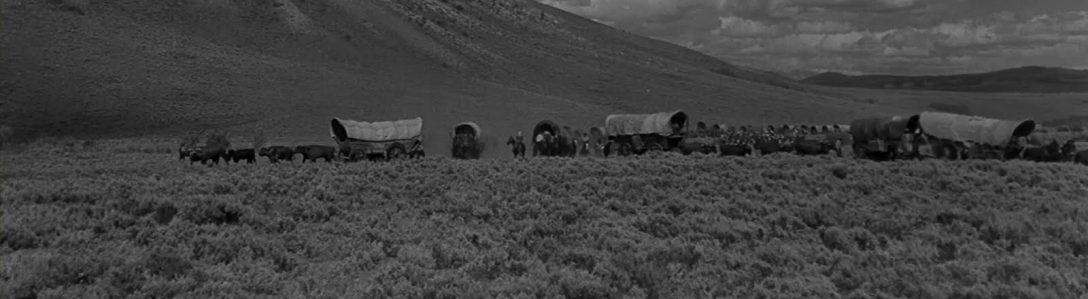
Where Bell is fantastical, Westward the Women (1951) is elemental. Based on a story by Frank Capra, it tracks the travails of hundreds of women traveling from Chicago to California, lured by the promise of hard-working husbands and the open air. According to Capra’s biography, he intended to direct the film with Gary Cooper to star, but eventually had to table it, and ended up selling the rights to his neighbor, William Wellman, who had recently finished his Clark Gable western, Across the Wide Missouri (also 1951).

Ostensibly the lead is Robert Taylor as trail master Buck Wyatt, but the film spends most of its time dutifully tracking the intense labor of the women on the drive, as early on most of the cowboys cut loose, unwilling to drive further into unforgiving territory. But the women endure, as Wellman depicts them in extended montages of work, seemingly inspired by the major drive in Raoul Walsh’s The Big Trail (1931), and perhaps an influence on Kelly Reichardt’s Meek’s Cutoff (2011), other Westerns obsessed with process. These processes are inevitably group efforts, lending these sequences a bit of communal proto-feminism, together doing the jobs of men with little fuss and unspoken teamwork. The gritty heart of the film is Patience (Hope Emerson), the Ward Bond of the movie, whose brute physicality inspires the rest of the ladies to self-abnegation and ultimate triumph, but who secrets a sensitive soul behind all the bluster. She is joined by a cross-section of personalities, from the sharpshooting farm girl Maggie, the still-mourning Italian widow Mrs. Maroni, and the two ex-prostitutes Fifi and Laurie, eager for some vision of country life.

Many women suffer and die, but the rest endure, the vast middle section is a grim kind of survival horror movie, as carriages crash and hostile Native Americans chase them down. Pared to the bone of back-story, the film operates by the familiar Wellman method (although only intermittently witnessed in his post-30s work), of showing character through action. All of the women in the film gain a personality through the attention Wellman pays to their faces, instead of lugubrious scenes of exposition.These roll calls of expressions (similar to the montage of faces before the cattle drive in Red River), intimate more in images of their lined brows than any speech could convey.

Never an emotional director, Westward the Women is nonetheless an unexpectedly moving film. When the women finally meet their prospective husbands in California, it’s a scene that could easily become droopingly sentimental, but instead is reticent and ambiguous, a skittish embrace of an uncertain future, one in which the freedoms of their drive West will likely disappear in their return to male dominated society. It is this melancholy undertone that makes Westward the Women a fascinating object, as the seams and contradictions in Hollywood’s depictions of womanhood poke through thanks to Wellman’s distanced, unvarnished approach. In a similar way, Novak’s voracious sexual appetite, that the movie never indexes as negative, undercuts the usual Madonna-Whore complex of romantic comedy that persists today (see, if you must, the dire What’s Your Number for a current example). Both these films are remarkable in that they show women who can fuck and fight with with the best of them, with no apologies.

LOOK HOMEWARD, STANWYCK: NO MAN OF HER OWN (1950)

March 27, 2012

Screen Shot 2020-02-03 at 4.08.45 PM

Onscreen, Barbara Stanwyck was rarely the nurturing type. She became an icon because of her persona of fearsome independence, her justifiably shameless arrogance next to godliness. So it’s jolting to investigate the byways of her career, in which she played off type, including her elegiac performance in Mitchell Leisen’s noir, No Man of Her Own (released on DVD today by Olive Films). Playing the vulnerable and doomed Helen Ferguson, Stanwyck exhibits a touching passivity in the face of a world continually conspiring against her.

The movie was based on a Cornell Woolrich short story, “They Call Me Patrice”, that he published under the pseudonym William Irish in Today’s Woman magazine. He later expanded it into a novel entitled I Married A Dead Man. Optioned by Paramount, it was adapted into a script by Sally Benson. Leisen later claimed he rejected Benson’s version, and wrote an entirely new screenplay himself, with help from Catherine Turney. Benson and Turney receive the only on-screen credit, since Leisen was not a member of the Screen Writer’s Guild. In the American Film Institute’s notes on the film, it is stated that the PCA refused to approve the script, as supposedly Helen was a prostitute in the original. It would only be passed if Leisen agreed to kill her off at the end, to pay for her “sin”, so instead any reference to her streetwalking was eliminated.

Helen Ferguson is pregnant and penniless after getting dumped by her playboy boyfriend, Stephen (Lyle Bettger), his parting gift a train ticket out of town. The train crashes, and in the confused aftermath Helen is identified as Patrice Harkness, a pregnant newlywed who died in the disaster with her husband. Desperate to start a new life for her child, Helen pretends to be Patrice, whom the Harkness family had never met in person. She passes off her ignorance as trauma from the crash, which raises the suspicion of Bill Harkness (John Lund), Patrice’s brother-in-law. When Stephen reappears and begins blackmailing Helen, she will have to choose between revealing the truth – or remain forever in his oily grip.

Stanwyck exudes helplessness and inertia from the opening frames, as she speaks in resigned tones in a voice-over, with the camera slowly dollying forward toward an idyllic home. “Summer nights are pleasant in Caulfield… But not for us. Not for us.” The camera continues to track through the interior of the home, its progress slow and funereal, the empty, shadowed hallways as quiet as a mausoleum. In the first glimpse of human life, Stanwyck stills her face into the soullessness of a wax figure, while Bill is sweatily reading Thomas Wolfe’s Look Homeward, Angel. Stanwyck: “I love him, and he loves me. I know he does. But someday he’ll pack and leave.” She says these lines with calm resignation, accepting her role as the plaything of fate, her tragedy as destiny.

To initiate the flashback which will describe how she came to this state, Leisen blacks out the screen except for her tired eyes. Stanwyck is always on the edge of exhaustion, moving slowly and deliberately, approaching everything with circumspect weariness. Leisen emphasizes this with the dreamy unreality of his style, which truncates scenes with enigmatic ellipsis and pumps up background noise to unreal levels, the world constantly having its say over the characters in its sway, the rattle of the train tracks insinuating themselves into Helen’s skull.

With the crash, what had been a tragedy turns also to nightmare, with Leisen’s imagery becoming more unhinged. The camera twirls 360 degrees upon the smash-up,  enters  Helen’s unconscious POV as she is anesthesized before giving birth, from which she will awake as Patrice, and a rich woman. Bill tells her, “You were born the day I met you”, but as what? For Helen/Patrice, the mask continually slips, and it’s unclear whether she’d want either face anymore, one a poor wastrel and the other an anxiety-ridden liar. Stanwyck’s passivity shades into nihilism, the turn coming when she realizes that her only way out of her predicament is cold-blooded murder, which she accepts with equanimity. The too-happy ending absolves her of these crimes, but the glint in Stanywck’s eye is far more troubling than what the Production Code Administration presumably censored.

In his New York Times review, the reliably condescending Bosley Crowther said that, “This sort of female agonizing, in which morals are irresponsibly confused for the sake of effect, makes diversion for none but the suckers, we feel sure.” Count me among the suckers. It is a profoundly unsettling film, and proof positive that Stanwyck could play crumbling facades as well as gleaming monuments.

HOME VIDEO ROUNDUP: CHRISTMAS EDITION!

December 13, 2011

nickel ride

It’s that festive time of year again, when family ties are maintained through the ritualized exchange of fabrics, wrought plastics and optical discs. This joyous occasion ensures that husband and wife, or parent and child, can contentedly ignore each other until the next wallet-busting holiday. I am here to ensure the smooth operation of this essential human activity, providing an idiosyncratic list of new DVDs and Blu-Rays that, if wrapped in glossy paper, will blind your favored loved one to your significant shortcomings. To prove my goodwill, my wife and fellow writer Andrea Janes will close out the list with her thoughts on a movie I asked her to watch, as a distraction from my lax grooming habits. Seasons Greetings!

The Nickel Ride (1975, DVD)

Released today on DVD from the canny studio library raiders at Shout! Factory (in a set with John Frankenheimer’s dire 99 and 44/100% Dead), this gorgeously elegiac gangster film should be exhibit #1 when making an over-enthusiastic case for the work of director Robert Mulligan. Remembered mainly for his adaptation of To Kill a Mockingbird (1962), he was an elegant craftsman who could completely inhabit a character’s point-of-view. In Mockingbird and The Man in the Moon (1991) he restricts it to children through low-angles and gliding, youthfully quick tracking shots. In Nickel Ride Mulligan depicts the decaying mental state of an aging paranoiac through cinematographer Jordan Cronenweth’s palette of rotting browns, and lead actor Jason Miller’s remarkable ability to deflate himself into the posture of a crumpled paper bag. Miller plays Coop, a low-level fixer for the Los Angeles mob who is getting pushed out of his position by a young, sweetly psychotic Southerner (Bo Hopkins, channeling Jon Voigt in Midnight Cowboy). One of Eric Roth’s (Forrest Gump) earliest scripts, it is also his most effective, a film about the cruelty of time’s passing and the crueler tricks of an addled mind.

***

Tora! Tora! Tora! (1970)

For the 70th Anniversary of the Pearl Harbor bombings, 20th Century Fox released a handsome Blu-Ray edition of this sober, ambitious docu-drama of Dec. 7th, 1941. Darryl Zanuck was eager to recreate the box-office bonanza of The Longest Day (1962), and takes that film’s gimmick of telling the historical event from different points of view, and with entirely different crews, an idea which Clint Eastwood adopted for his WWII diptych, Flags of Our Fathers and Letters From Iwo Jima. In this case, Richard Fleischer was tasked to direct the American side, and Akira Kurosawa the Japanese (Joseph McBride notes that John Ford was eager to take on the project, but was never considered for it). Kurosawa dropped out early in the production, after endless disputes with American production supervisors. Fleischer, in his autobiography, writes that Kurosawa, “felt this was a gross intrusion and an insult to national honor.” He was used to total artistic freedom, and that wasn’t the Hollywood way. Toshio Masuda and Kinji Fukasaku (Battle Royale) took over. Fleischer claims the only scene in the film shot by Kurosawa was one of the American ambassador in the U.S. embassy in Tokyo, and “it is the worst scene in the picture.” The film was hugely expensive to make, and was a massive failure at the box office. Part of the problem was that The Longest Day dramatized a victory, and Tora! Tora! Tora! an ignominious defeat, hardly an audience grabber. As a film, it is fascinatingly dry, a top-down version of history, in which gray-suited men sit in mahogany chairs and make history. Massive amounts of research went into the film, with Dr. Gordon Prang, appointed by General Douglas MacArthur as the official historian of the Pacific War, hoarding material at the University of Maryland. Fleischer, Masuda and Fukasaku create some pleasing diagonals out of the lines of secretaries, functionaries and soldiers, but for the most part the film plays as a luxuriously illustrated lecture.

***

Rapture (1965)

John Guillermin is not a director whose work I had sought out, although The Day They Robbed the Bank of England (1960) lingers in the memory as a bracingly cold-hearted and fleet-of-foot heist film. (In)famous for the cheap thrills of The Towering Inferno (1974) and the King Kong remake (1976), I was totally unprepared for the psychosexual  intensity of Rapture, which Twilight Time has just released in an excellent Blu-Ray, available through Screen Archive. Shot in silvery B&W CinemaScope on location off the coast of Brittany, it’s an easy movie to get lost in. The novel Rapture in my Rags was initially adapted by frequent Fellini collaborator Ennio Flaiano (8 ½), although the final script credit goes to Stanley Mann (Conan the Destroyer). It follows the blighted life of Agnes (Patrica Gozzi), a young girl who lives in a crumbling mansion with her eccentric, haunted father Frederick (Melvyn Douglas) and blowsy blonde maid Karen (frequent Bergman actress Gunnel Lindblom). Frederick is an ex-judge who writes crackpot newsletters in his study, while Agnes’s only wish is to build a scarecrow so she can have a friend to call her own. Agnes’ married sister recommends she be confined to an insane asylum. But after she builds her scarecrow, a soulful escaped prisoner (Dean Stockwell) appears wearing its clothes, and it looks to Agnes like her sexual desires have blossomed violently to life. While it has its narrative lulls and repetitions, this is the rare coming-of-age film that captures the inchoate madness of adolescent lust.

***

Fright Night (1985)

Recently re-made with Colin Farrell, the original is an amiable bit of Hammer horror nostalgia graced with a delightfully mischievous Roddy McDowall performance. Another lovely Blu-Ray from Twilight Time, it shows high-schooler Charley (William Ragsdale) discovering a vampire-next-door, played with evident self-regard by Chris Sarandon. Ragsdale and his girlfriend Amy (Amanda Bearse from Married, With Children) seek out Peter Vincent (McDowall) for help, an ex-star of Hammer-style gothic vampire flicks who now hosts a late-night horror movie show. Recently fired and facing eviction, Vincent readily accepts Amy’s cash to flush out the would-be demon, which he assumes is Charley’s childish fantasy. When Chris Saradon’s flowing locks and insatiable thirst for blood prove to be all-too-real, the trio has to fight for their lives. The imaginative creature design from the team under visual supervisor Richard Edlund (Raiders of the Lost Ark, Ghostbusters) is refreshingly physical, and an appropriate homage to the menacing effects of the Hammer titles writer/director Tom Holland (Child’s Play) is clearly so enamored with (Christopher Lee is even glimpsed on TV). McDowall is the main reason to see the film though, adding unexpected layers of pathos to this beaten down ham.

***

Special Capsule review by Andrea Janes:  Night Watch (1973, Warner Archive)

At first Night Watch evokes such circa-70s portmanteau films as Tales from the Crypt, with its Gothic tale of a rich neurotic housewife obsessed with the decaying house behind hers (which she views from a Rear Window-esque vantage point through the back garden). Then the 1973 thriller — stuffed with creepy neighbors, incredulous policemen, remote husbands, and resentful housekeepers — froths into a soapy, pulpy revenge drama. Ellen Wheeler (Elizabeth Taylor) navigates this labyrinth of menace in a haze of cigarette smoke, her trembling hands restlessly rearranging the pieces of the enormous jigsaw puzzle perennially strewn across her parlour table, while the haunting memory of her dead former husband keeps her nerves unstrung and her beautiful cameo face blanched with worry. At long last, though, the smoke clears and, as Ellen says of her jigsaw puzzle, “It’s easy to figure out once you see where all the pieces should be.” A third-act reversal is none the less enjoyable for being somewhat expected, and Taylor hammers it home with good old fashioned bloody delight.

LUCILLE BALL AT RKO

August 16, 2011

Screen Shot 2020-01-31 at 3.36.03 PM

To celebrate Lucille Ball’s 100th birthday on August 6th, Warner Archive released three films from her time as “Queen of the Bs” at RKO. She appeared in 21 films for the studio between 1938 and 1942, nabbing seven credits in ’38 alone. Made quickly and forgotten even faster, these occasionally flat farces are enlivened by Ball’s bracingly physical performances and the brisk pacing instilled by a trio of talented studio directors.  The Lucille Ball RKO Comedy Collection, Vol. 1,  includes Go Chase Yourself  (1938), Next Time I Marry (1938) and Look Who’s Laughing (1941).

After being let go from Columbia after a string of bit parts, Ball was brought to RKO upon the recommendation of producer Pandro S. Berman, who gave her supporting roles in the Astaire-Rogers musicals Roberta (1935), Top Hat (1935) and Follow the Fleet (1936). She continued in small roles in “A” pictures, memorably in Stage Door (1937), but with her salary bumped to $2,000 a week, RKO ramped up her schedule to include B productions in between her prestige jobs. The first of these was Go Chase Yourself(1938), a Joe Penner vehicle directed by veteran Edward F. Cline, who had started out with Mack Sennett and Buster Keaton.

Penner was a Hungarian-born comic who hit it big on the radio in the early ’30s. In Radio’s Forgotten Years Elizabeth Mcleod described his work as, “utter slapstick foolishness, delivered in an endearingly simpering style that’s the closest thing the 1930s had to Pee-wee Herman.” By 1938 his popularity had faded, and he would die of heart failure three years later at the age of 36.

His shtick does not translate well in Go Chase Yourself, in which he plays a gullible bank clerk who unknowingly gets mixed up in a robbery. He has a slow, mewling delivery that is out of step with the manic tempo, with scenes flitting by before he can land a punchline. And with his shy, shuffling gait he seems to recede into the frame. He is not helped by director Cline’s disinterest, composing everything in flat frontal shots.

Somehow Penner’s foundling has a wife, and Lucille Ball invigorates the drab proceedings with her lightbulb flashing eyes and brassy insouciance. Her character has had enough of the Penner character’s idiocies, understandably, and rails at him with superova-strength nags. It’s a small, thinly sketched role, but Ball enlarges her henpecking wife into somebody more righteous and destructive, an inkling of the chaos Lucy would later unleash.

She gets more room to stretch out in the charming It Happened One Night (1934) knockoff, Next Time I Marry (1938). In this class-jumping marriage comedy, Ball gets her first starring credit as Nancy Crocker Fleming, a dizzy heiress who has to marry an American to earn her inheritance. Her fiancee is the mincingly European Count Georgi (Lee Bowman), so Nancy looks for an All-American doofus to get the cash.

The eye-opening opener finds Nancy cruising by a WPA ditch-digging project in New Jersey, asking each worker if they’re married. She hits her jackpot with Anthony (James Ellison), a philosophical bum (he quotes Omar Khayyam) curious to see where this adventurous dame will lead him. He is friskier than she had expected, brandishing their marriage license and forcing her to go on an RV trip across the Southwest, with Count Georgi and the press corps on their tail.

Packed with incident and surprisingly rich characterizations, it’s a worthy imitator of the Frank Capra classic. The NY Times agreed, saying, “No student of the motion picture in its more thoughtfully budgeted branches can afford to miss it.”  Ball is given a juicy screwball character and she runs with it, flipping from an impudently immature socialite into a lovestruck klutz with aplomb. Both run on nervous energy, they just flow in different directions. James Ellison’s rough-hewn masculinity is a good foil for Ball’s machinations, the calm before her storm. Next Time I Marry was Garson Kanin’s second film as a director (he would be best remembered for his screenwriting career with his wife Ruth Gordon, which produced Adam’s Rib), and his work is swiftly paced and sensitive to his performers’ talents. In her biography Lucille, Kathleen Brady interviewed Kanin about the film:

She [Lucille Ball] was extremely inventive to the point I was surprised she didn’t want to write. Like most good actresses, she did not like to be directed. She did not need to be. She was her own self.

This self isn’t very evident in Look Who’s Laughing (1941), a radio star corralling exercise for ace director Allan Dwan. Ball is shunted into an admiring girlfriend role here, as Edgar Bergen and “Fibber McGee and Molly” take up most of the screen time. Here is Dwan in an interview with Peter Bogdanovich:

“M.C.A. wanted to get their people into motion pictures – they were beginning to build into this giant outfit they eventually became. And they did it by making packages. Instead of just representing people, they put people together. They had Edgar Bergen and ‘Fibber McGee and Molly’ – big radio stars – and they bought me away from my agent so I’d be one of their clients and part of a package. And so when they went to RKO, they supplied the whole works – stars, director and everything.”

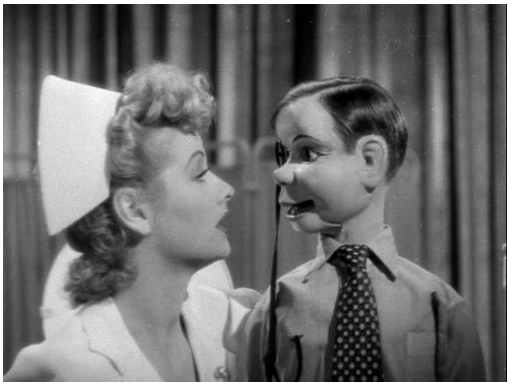
After the studios were divested of their movie theaters in the 1948 Paramount Decision, this became the normal way of doing business, and remains so today. The agency delivered RKO a package, and the studio agreed to fund it. Look Who’s Laughing is an excuse for viewers to see these still wildly popular radio personalities in the flesh, so the plot conceives a way for Bergen (playing himself) and his dummy Charlie McCarthy to crash the world of Fibber McGee and Molly in Wistful Vista, somewhere in the Midwest.

After wrapping up another season on the radio, with Lucille Ball as his loving assistant Julie, Bergen and McCarthy fly out on vacation, but crash land in Wistful Vista. Fibber McGee is scheming to get an airplane manufacturer into the town, and Bergen’s business contacts could be the deciding factor. But of course there are some backdoor shenanigans by the theatrically villainous Gildersleeve (Harold Peary), and it takes a bit of deceptive seduction from Julie to right the wrongs.

The leads were radio stars for a reason. The Charlie McCarthy doll has more screen presence than the mono-tonal Bergen (and says the best line, “What fools we morons be”, to a soda jerk), while  Fibber McGee and Molly’s gentle bickering couple routine is anodyne and forgettable, the template for so many of today’s sitcoms in which a incompetent husband is indulged by a wise woman (they are the real life husband and wife Jim and Marian Jordan). I have no doubt their work is stronger over the airwaves.

Lucille Ball, while given little to do except look alluring in a nurse’s outfit and yearn after Bergen’s dead-eyed stare, pushes against the boundaries in her character. As with the other titles in the box set, she was assigned a type and invigorated it, this time injecting a frank sexuality and clumsiness to the stock “His Girl Friday” character. Lucille said, “I started as a model because I looked like a model, and ‘the other woman’ or ‘the career girl’ because I have a deep aggressive voice that has no softness or romance to it.” She took the talent at her disposal, sharpened them, and then tripped over them for a laugh.

DVD ROUNDUP: SHOUT! FACTORY AND WARNER ARCHIVE

July 5, 2011

Screen Shot 2020-01-31 at 2.24.06 PM

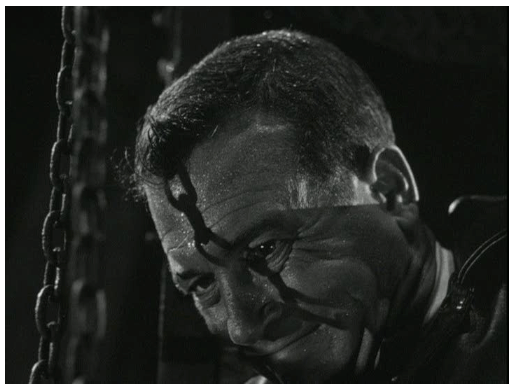
Edmond O’Brien enjoys a post-Independence Day fireworks display in Rio Conchos, the 1964 Western just released by Shout! Factory on DVD. With all my squawking about studios cutting back on library titles for home video, there are still plenty of rare and strange items sneaking onto those glimmering circular discs. Over the past few weeks, Shout! Factory and Warner Archive have shown they’re still fighting the good fight, and I’ll run down a few of their most intriguing recent renovation jobs.

I’ll start with Mr. O’Brien. Rio Conchos (1964) is paired with another 20th Century Fox film, the Blaxploitation-Spaghetti Western Take a Hard Ride (1975), encoded onto one dual-layered DVD. Directed by Gordon Douglas in sun-scorched CinemaScope, Conchos is a nasty job in which its ostensible hero, ex-Confederate soldier Jim Lassiter (Richard Boone), cold-bloodedly slaughters a group of Native Americans in the opening. It’s his bad luck that the repeating rifle he used was part of a cache stolen from the U.S. Army. He soon has Army Captain Haven (Stuart Whitman) and sullen Buffalo Soldier Franklyn (Jim Brown, in his first movie role) on his tail. Haven needs Lassiter to lead him to the rifle seller, so this unlikely trio heads south to Mexico, with the fast talking ex-con Juan (Tony Franciosa) as their guide.

Douglas, whose haunting Only the Valiant I wrote up earlier this year, again utilizes gothic imagery, this time setting Lassiter against imagery of decay and death. In the opener, in which Lassiter’s face is never seen, Native Americans are recovering their dead from a field of gnarled and petrified trees. These civilians are gunned down by a dot in the far background, and fall dead with their brothers. All we see of Lassiter is a reverse angle of his hat and gun, and then a pan down to the shells hitting the ground, a visual rhyme to the men he killed. The next time we see Lassiter, he is sitting, fat and happy, in a burnt out husk of a home, with the sun hollowing out the wrinkles in his jowly face – a satanically jolly figure.

He becomes a hero by default, with the passivity of Haven and the apathy of Franklyn unable to take the lead. Or perhaps because he is so familiar with evil he is the only one comfortable enough to confront it. In the infernal climax, Lassiter is right at home. In Chihuahua he meets his old Colonel Pardee (O’Brien), who has gone mad with dreams of establishing a new South in Mexico, and his half-built plantation house is the misshapen manifestation of that insanity. This time Lassiter enters another man’s decay, and fulfills the promise of those opening scenes, but destroys Pardee along with himself in a scene of grandiose self-immolation.

Speaking of grandiosity, there is Warner Archive’s handsome-looking remastered release of Dark of the Sun (1968), Jack Cardiff’s rollicking men-on-a-mission gloss that nails all of that genre’s pleasures with irresistible efficiency. You’ve got a shirtless Rod Taylor and Jim Brown, an evil German guy (Peter Carstein), and Yvette Mimieux wearing tight pants. Taylor and Brown are mercenaries hired by the Congolese government to recapture uncut diamonds in rebel-held territory, and things do not go as planned. Add chainsaws, gruff cynicism, an anthemic score and $25 million in diamonds, and you’ve got a movie out of Quentin Tarantino’s wet dreams (and he did sample the score for  Inglorious Basterds).  What makes this more than camp fodder is Cardiff’s slashing compositions, whose brash diagonals point to further adventures off-screen. Another unusual aspect to this Dirty Dozen clone is its frank depiction of violence. While it has its share of cartoon shootouts (see above), there are also awkward, grotesque deaths impossible to cheer – here civilians do die and consciences remain decidedly unclean. Rod Taylor is superb as the no-nonsense mercenary, a granite he-man who still sweats like an ox.

Another kind of masculinity is on display in Warner Archive’s The Breaking Point (1950), Michael Curtiz’s faithful adaptation of Hemingway’s novel To Have and Have Not. A spare and relentless noir about how unemployment can reduce a man to neurosis and petty crime, it bears no relation to Howard Hawks’ heavily reworked version of the story. In the Curtiz film, Harry Morgan is played by a hunched and fidgety John Garfield, in one of his finest performances. Morgan is a fishing boat captain with a wife and kids, but his business is floundering. His wife Lucy (Phyllis Thaxter) wants him to quit and work on her family’s lettuce farm (Garfield: “What’s so great about lettuce?”). Stubborn to a fault, and loyal to his partner Wesley (Juano Hernandez, whose quiet dignity was also present in Stars in My Crown the same year), he makes some extra cash by ferrying revelers over the border to Tijuana. One of those passengers is Leona Charles, a man-eater played by Patricia Neal with a knee-buckling purr. After her date abandons both of them in Mexico, Morgan doesn’t have the money to pass through inspections to get back home. So he takes on a job smuggling illegal Chinese immigrants back into the states. It is the beginning of his troubles.

Curtiz makes it a film about foreground and background interaction, with his expert blocking allowing for constant motion in every segment of the frame. It’s when the background moves forward, and into Morgan’s space, that his world starts to disintegrate. Harry and Wesley have calm spatial relations, as seen in the first photo, each carving out their own domain. It is the same way in Harry’s home, in which Lucy and his kids occupy background spaces, and approach with his tacit permission. But the entrance of Leona into his life is the breach that brings him down. Expecting just a single man, he spies a couple in extreme long shot, walking down the pier. Once they arrive, the separation between background and foreground breaks down, with Leona inviting them to puncture the space.

Within these setups, Garfield’s unraveling takes place behind his tense jaw clenches and repressed desires. He repeatedly forces himself close to Leona, only to deny himself her body again and again. It is a masochistic maneuver, testing the boundaries of his guilt. He represses his sexual urges and releases his neuroses in violence instead — taking a getaway boat driver job on a horse racing heist. By that point his doom is pre-ordained. But in the culmination of Curtiz’s work with foregrounds and backgrounds, the final shot is reserved for a wandering supporting character, pushed to the fore. Wesley’s son is seen searching the pier for his father, unseen and unknown.

***

I ran out of time this week, but Shout! Factory has also released an inspiring two-disc set of three Roger Corman Women-In-Prison movies (with a Blu-Ray slated for 8/23): The Big Doll House (1971), Women in Cages (1971) and The Big Bird Cage (1972). Fun for the whole family.

DVD TUESDAY: ROPE OF SAND (1949)

April 12, 2011

Screen Shot 2020-01-29 at 3.26.28 PM

Olive Films continues to raid the Paramount vaults, this time with William Dieterle’s 1949 Casablanca clone Rope of Sand. Released on April 5th, along with Edward Dmytryk’s The Mountain (1956), it’s another strong DVD presentation from the company. The spotless print is presented in a progressive transfer that showcases the inky blacks of cinematographer Charles Lang. Producer Hal B. Wallis left Warner Brothers in 1944 to form his own production company, Wallis-Hazen, and was eager to recreate his biggest hit for his new distributor Paramount. He bought Walter Doniger’s Casablanca-esque script and wrangled three of that film’s actors: Paul Lorre, Paul Henreid and Claude Rains. The leads were given to Burt Lancaster, who was under contract to Wallis, and Corinne Calvet, a French siren the producer hoped to mold into the next Ingrid Bergman. The result is a prickly bit of entertainment, a threadbare and more nihilistic version of its model.

There is much less at stake in Walter Doniger’s screenplay. In Casablanca Bogart wrestles with aiding the French Resistance, and in Rope of Sand Burt Lancaster is trying to steal a cache of diamonds from a South African mine. Lancaster plays Mike Adams, a former hunting guide turned depressive. A few years back one of his clients wandered off onto the protected area of the mine, hoping to strike it rich. He succeeded in in finding a rich vein of jewels, but dies of dehydration. Davis is then caught by the mine’s security force, led by Paul Henreid’s Commandant Vogel. Vogel tries to beat the location of these diamonds out of him, but to no avail. Stripped of his license, and unable to obtain a passport, Davis is a man adrift. He returns to the mine to rip off the diamond load and get his revenge on Vogel. Claude Rains plays Arther Martingale, a mine functionary who plays both sides off each other, with the help of Corinne Calvet as the ambitious prostitute Suzanne Renaud.

Davis is a stridently unlikeable character: selfish, brutish and a little dense. Lancaster was evidently unhappy with the production, as his biographer Kate Buford reported that it was “he one he would remember as the worst movie in which he ever appeared.” Eager to play out the string of his Wallis contract, he gives Adams a cold, dumb brutality that hedges against the threat of audience identification. There are no anti-heroics here, just a profoundly unconvincing happy ending.

Director William Dieterle and cinematographer Lang follow Casablanca‘s visual template, of cluttered baroque interiors and roving tracking shots inside bustling nightclubs. Lang uses lower light than the earlier film, perhaps compensating for the lack of background activity. While Casablanca has an expressive face sitting on every barstool, the world of Rope of Sand is relatively de-populated. Peter Lorre, who crawls into the film as a philosophizing fence, enters an empty frame. With less to explore, Dieterle’s camera movements are adumbrated compared to Curtiz’s long traveling shots down the bar. What Dieterle emphasizes instead are power relations, mainly expressed through a simple but effective method of blocking his actors along with alternating camera angles.

Screen Shot 2020-01-29 at 3.28.54 PM

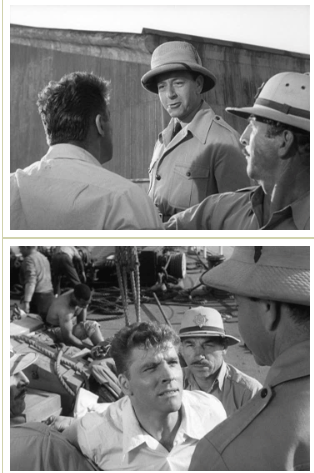
When Mike Davis returns to South Africa on a freighter, Vogel is there to meet him with plum-voiced taunts. Davis is physically restrained by a pair of strapping deck hands, as Vogel looks imperiously downward. The camera peeks down at Davis, and upward at Vogel, quickly sketching their respective positions in the narrative. By the end, they are framed on equally level angles as their fortunes meet in the middle. Dieterle’s framing of Corinne Calvet undergoes a similar shift, tracking her transformation from a tool of Martingale’s to a woman who asserts her will.

The image that top-lines this post shows Calvert posing for Claude Rains, an erotic puppet that he’ll use to arouse the jealousies of Henreid and Lancaster. This becomes visualized in a poker game, before which Rains whispers devious nothings into Calvert’s ear. When she sits down, Rains is placed behind and to the right of her, his mouth still in visual range of her ear. Then the camera slowly dollies forward, and Calvet moves her head to the right, obscuring Rains’ face – the puppeteer lost in his art. Then there is a cut to Lancaster, with empty space around him – the only man outside of all human entanglement.

The controlling imagery surrounding Calvet continues when she goes home with Henreid, who pins her in-between two hanging canvas frames. She is a decoration to Henreid’s narcissistic martinet, window dressing to his tin-horn dictatorship. Little does he know that she’s under Rains’ employ, or that she is rapidly falling in love with the brusque Lancaster, for reasons that remain obscure aside from narrative necessity. By the end of the film the imagery of control and display fall away in Calvet’s scenes, and she shares equal screen space with Lancaster.

With thoughtful little stylistic strategies like these, Dieterle is able to lift his second-run scenario into something with a semblance of vitality. And thanks to the shit-eating grin of a performance by Claude Rains, as well as the reliably creepy work by Peter Lorre, Rope of Sand pulls itself together to be a diverting shadow of Casablanca.

MGM MOVIES-ON-DEMAND: 99 RIVER STREET (1953)

February 8, 2011

Screen Shot 2020-01-28 at 2.47.21 PM

With little fanfare, MGM re-started its moribund DVD burn-on-demand service last month. MGM originally offered 27 titles through Amazon’s CreateSpace service in early 2010, only to encounter complaints about cropped aspect ratios. Then last November, it was quietly announced that they were switching to Allied Vaughn’s MOD technology, and making it available to a variety of retailers (now including Movies UnlimitedOldies.comScreen Classics, and Amazon). It’s unclear whether the original MOD titles released in non-anamorphic or cropped versions (like Cold Turkey), will receive updates, but to be safe, I’d stick to the new releases and check the Home Theater Forum for news. The initial release slate is 50, with “an expansion plan to release more than 400 new-to-DVD titles within the next 18 months” (press release here). The first batch of these were rolled out in January, so to get a sense of this promising new venture’s quality, I picked up director Phil Karlson’s caustic film noir, 99 River Street (1953).

(Note:  The For the Love of Film Noir Blog-a-thon, hosted by Ferdy on Films and The Self-Styled Siren, takes place Feb. 14th – 21st to raise money for the Film Noir Foundation‘s efforts to restore Cy Endfield’s The Sound of Fury (1950). I’ll be contributing next week, so consider the following a teaser.  Donate here.)

Presented in a fine progressive transfer from a pristine inky black print, it’s clear MGM is taking their MOD program seriously this time around. [UPDATE: DVD Beaver found the transfer to be interlaced. I didn’t notice this in playback, but they’re always right about these things]. There are no extras. Amazon is offering it at a slight discount for $17.99, while the other sites have it pegged at $19.99.

Made a year after Karlson and lead actor John Payne teamed up for Kansas City Confidential (1952, where Payne’s ex-con is set up to take the fall for an armored car robbery), 99 River Street is a story of failure and provisional redemption. In this version Payne plays Eddie Driscoll, a washed up pug who ritualistically watches the highlights of his championship bout defeat, in which his eye was permanently damaged, hoping for a catharsis that never comes. Repeatedly shown in oblique angle close-ups, his right eye twitches like a maggot in a slab of beef. His wife Pauline, played with icy disdain by Peggie Castle, is a cinched-up former showgirl who yearns for the high life and sees an out in the machinations of  thief Victor Rawlins (Brad Dexter).

Eddie’s meat-headed obsessiveness and Pauline’s extravagant boredom are set up in the opening sequence. It begins on the title bout, a barrage of low-angle jabs that ends with Eddie knocked bloody, his face caressing the bottom rope. Then Karlson cuts to a close-up of the TV, the announcers talking about “The Great Fights of Yesterday.” The camera then dollies back to get the full TV on-screen, then swiftly pans to left to Eddie. Now robbed of his physicality, this has-been still winces at every blow. Kalrson then cuts to a reverse angle, revealing the rest of the shabby room, with Pauline, ignored, seething at the dinner table. Their eyes don’t meet until she turns off the TV, finishing the announcer’s phrase, “Next week…Driscoll will be driving a taxi.” Her words drip with venom, and understandably so, but she ends up in the arms of Rawlins, a reptilian creep who seems to devour her whole with his eyes.

Enraptured with visions of escape from her working class life, Pauline falls for Rawlins’ sordid designs. His attraction to her becomes increasingly sadistic, which only become clear in rhyming images of her scarf, at the beginning and midpoint of the film.

The cuckolded Eddie does drive that cab, barely making ends meet, and hangs out at a diner with another failure, an out-of-work actress played by Evelyn Keyes with intentionally grating brilliance, whose whole life revolves around performance. Her overactive eyebrows eventually sucker Eddie in to be an unwitting co-star in an elaborate performance. It’s an incredible sequence that pivots on a long take, close-up monologue of Keyes re-enacting a murder she claims to have committed, which Driscoll believes to be real. Then the hoax is revealed – it was all an an audition to convince a play’s backers of her skill – and Driscoll’s subterranean rage bursts, knocking out the play’s director and a few of its producers. Keyes, staring at the camera, was acting out a murder for the audience, which is then revealed to be an act. She spends the rest of the film trying to make amends for this betrayal.

99 River Street is a tale of middling talents who can never catch a break, having to repress their natural skills just to get by. Without the physical outlet of boxing, Driscoll is a man in the process of mastering his rage and never quite getting there. In the final showdown, when Driscoll is facing up to the scummy Victor Rawlins, a voice-over intrudes for the first time in the film, as Payne, shot in the arm and fading fast, repeats the mantra, “I have to get him”. It’s the climax to all of those intrusive close-ups showing his decaying exterior,  a jarring device that peeks into the mind of a man who defines himself by his body.

DVD ROUNDUP: 11 HARROWHOUSE (1974) AND LUCKY LADY (1975)

January 25, 2011

ll

Two reviled flops from 20th Century Fox have finally made their way to DVD on the brave shoulders of the Shout! Factory label. Charles Grodin adapted and starred in the heist film 11 Harrowhouse after the  success of his turn in The Heartbreak Kid (1972), only to be met with critical and audience indifference. Lucky Lady is the more infamous failure, the product of agent-turned-producer Michael Gruskoff’s ability to game the Hollywood system (both DVDs come out next Tuesday, February 1st.). Formerly the representative for screenwriters Gloria Katz and Willard Huyck, he bought the rights to their script for $75,000, and then sold it to Fox for $450,000. An impressive profit over the 10% he previously made from their services. By investing that kind of scratch, Fox had to inflate the story into a blockbuster, signing up Liza Minnelli, Gene Hackman and Burt Reynolds to star, and Stanley Donen to direct. It received vitriolic reviews, many noting Gruskoff’s ploy, and failed to make a profit (although Jonathan Rosenbaum indignantly reported in Movie Wars that it came close, with $12,107,000 in rentals, a half-million less than its budget, due to Fox’s forcing theaters to keep it for extended runs if they wanted it at all.)

Despite all of these shady backdoor dealings, I rather enjoyed both of them, the “bumbling and stupid romp” (Pauline Kael, New Yorker) 11 Harrowhouse and the “mirthless trumpery” (John Simon, NY Mag) of Lucky Lady. Seeing them outside the torrent of negative publicity both received upon their initial release, it’s easier to judge them on their own limited but amiable merits.

11 Harrowhouse was based on a novel of the same name by Gerald A. Browne, for which Grodin received the ambiguous “adapted by” credit, while Jeffrey Bloom is named as the screenwriter. It’s unclear how much input he had into Bloom’s script, but it at least indicates his investment in the material. Directing duties were handed to Aram Avakian, who had filmed another comic heist, Cops and Robbers, in 1973. Harrowhouse is deeply marked by Grodin’s laconic personality, delivered through his sarcastic voice-over that coolly belittles the events on-screen. It’s an odd distancing device that was apparently removed from some home video releases, turning it into a more conventional thriller. The new Shout! Factory DVD contains the original voice-over, thankfully, and the video transfer is strong. The original film element shows some wear, and the colors are slightly faded, but it shows nice texture and sharpness, probably the best it could look with the material they had. The only extra is the theatrical trailer.

Grodin plays Howard Chesser, a small-time gem trader hired by business tycoon Clyde Massey (Trevor Howard) to steal an enormous cache of uncut diamonds in London. With the help of his scrappy heiress girlfriend Maren (Candice Bergen) and Watts, their man on the inside (James Mason), they engineer a robbery of Rube Goldberg-esque intricacy. The owner of the fleeced diamond exchange, the fastidious Meecham (John Gielgud), is understandably peeved, and Chesser and Maren try to escape with the jewels and their lives.

The material is not a good fit for Grodin’s deadpan sad sack routine, which is presumably why the caustic voice-over was added. But the narration is so cutting it undermines the usual genre pleasures of the heist film. When Chesser’s voice drops out and the narrative picks up, the jaunty tone disappears and we’re back inside the thriller mechanics, which Avakian runs through at a dulled pace. This tension between tones drains the film of any suspense, as we are now viewing the actions through Chesser’s retrospective disdain. It’s an odd, discomfiting viewing experience, an experiment in POV that implodes its own narrative.

But there is plenty to savor amid the debris (see the grizzled faces above). While Grodin and Bergen both seem cold and affected for their supposedly suave characters, the supporting cast is superb. The three Brits inject reptilian evil (Gielgud), blowhard narcissism (Howard) and a weary nihilism (Mason) into their preciously scant screen time. These are actors who can evoke entire backstories with an inching up of an eyebrow. Mason’s aging diamond appraiser quietly shuffles off with the film, secreting tragedy in the midst of the procedural. Watts has been under the employ of Gielgud’s Meecham and suffered his silent censures, whether dismissive hand waves or a skeptical lip curl, for a lifetime. Mason is a mound of regret, with a slightly haunched back and a slow-motion manner. The way in which he delicately eats a sandwich in a secret meeting with Grodin expresses everything about him – his professionalism and exactitude as well as his fatalism, as  might be the last lunch he ever has. (Reviewers of the time also singled out Mason’s performance, including Kael, Stanley Kaufmann, and the NY Times’ Nora Sayre).

No saving graces were allowed for Stanley Donen’s Lucky Lady:

Pauline Kael: “an agent’s picture – everybody’s rip-off” (compiled in When the Lights Go Down)

Jonathan Rosenbaum: “conspicuously overproduced and under-nourished.” (quoted in Movie Wars)

Vincent Canby: “it’s ridiculous without the compensation of being funny or fun.” (NY Times)

The ever-misogynistic John Simon:  “As for Miss Minnelli, she is herself a perfect menage a trois in which lack of talent, lack of looks, and lack of a speaking voice co-habit blissfully. Donen sensibly concentrates on her best feature, her legs, but he unfortunately can’t wrap them around her face.” (New York Magazine, Dec. 29th, 1975)

And yet, I found it companionable and amusing, despite the vaseline-gauzed cinematography and the cramped framings necessitated by shooting everything on real boats at sea (it is, in terms of press, the Waterworld of its time). According to one of the two promotional shorts included on the DVD, the production took “a full year to make”, because of the stars’ schedules and the endless problems of shooting on rocking vintage boats. Fox also required re-shoots to include a happy ending (as Joe Baltake outlines here). But as important as production history is to criticism, it is no substitute, and I found Donen’s disaster to be a rather fleet and funny (albeit over-designed) vehicle that teased out the idiosyncracies of his actors.

Liza Minnelli (as Claire, a flapper), Burt Reynolds (as Walker, the dandy) and Gene Hackman (as Kibby, the hobo wiseacre) start up a rum-running business during Prohibition, running their boats up from Mexico. This cuts into the mob’s market, and soon they’re in a shooting war over territory.

The script is slangy and self-conscious without being arch, a pastiche of Jazz Age argot that the actors are able to thrum to life. The set-design is overstuffed art-deco, suffocating the already cramped spaces Donen has to work in, and the decision to use heavy soft-focus filters throughout the film is a failed attempt to go nostalgic, ladling every image over with a soupy haze (the DP was Geoffrey Unsworth, who also shot Liza in Cabaret).

In and around these production snafus the actors excel. Minnelli, the critics punching bag, is quite touching here as the dizzy dame love interest of both leads. Minnelli plays Claire, the intended bombshell, more like an antic Jean Arthur than the Harlow clearly intended. She’s the feather boa-clad ball of energy bouncing off the deft comic work of Burt Reynolds, who exhibits his flair for self-deprecating slapstick (Another bizarre John Simon sidebar, on Reynolds:  “[his] face looks like an armored car made, inexplicably, out of meat.” If someone can parse this, please let me know). Hackman has the knockabout trickster role, the gruff kind of asshole he could play in his rum-induced sleep. Together they form an improbably fun trio, and form one of the few successful polyamorous relationships on film.

The DVD of Lucky Lady is a fine anamorphic presentation, the soft image resulting from the original material (it’s remarked upon in the original reviews). The two vintage featurettes feature interviews with the cast and crew, and there are three theatrical and TV trailers.

VCI. DVD. OMG.

September 7, 2010

vci

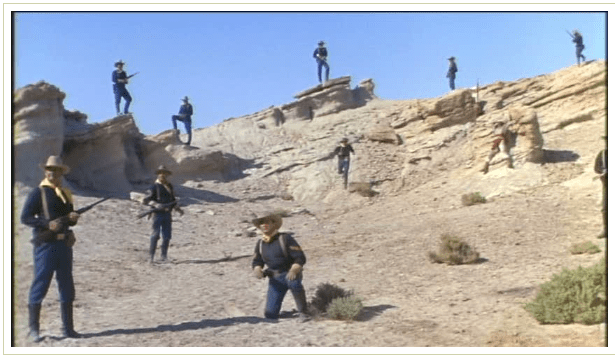
Last week VCI Entertainment released two obscure DVDs into the wild: William Witney’s Apache Rifles (1964, above) and Four in the Morning (1965), which features Judi Dench in her first leading role. Neither are deathless masterpieces, but each are valuable in their own inimitable way. Witney, a prolific director of movie serials for Republic Pictures (he specialized in Roy Rogers and Dick Tracy films, among scores of others), has a small (and growing) auteurist cult, receiving plaudits from Quentin Tarantino in recent years. In 2000, he told the NY Times that, “William Witney is ahead of them all, the one whose movies I can show to anyone and they are just blown away.”

A blunt descendant of The Searchers, it casts Audie Murphy as an Indian-hating U.S. Calvary Captain thrown into a moral quandary when he falls in love with a woman who is half Comanche. Making good use of the desert landscape, Witney starts off with wide shots during Murphy’s vengeful phase, and slowly closes in until the psychologically wrought final sequences take place in intimate two-shots. The first half is shoot outs, the second half fistfights (including a particularly brutal one with L.Q. Jones).

Released the same year as John Ford’s Cheyenne Autumn, Witney’s film is a smaller-budgeted effort to improve the representation of Native Americans on film, although the Apache “Red Hawk” is played by the Italian-American Michael Dante, and the unfortunate ending has him embracing the tribe’s forced relocation to Texas. But the rest of the film is a no-nonsense actioner that pragmatically diagnoses the causes of ethnic violence. That is, the Apache’s land equals money for the town’s miners, and so a higher standard of living for the community. So the “savagery” of the Native Americans is played up by the town leaders in order to provoke a fight. Murphy negotiated a truce with the Apaches mandating that work cease on the local mines, but it swiftly collapses when an Apache is falsely accused of murder. Self-interest always wins out.

Audie Murphy does not have the tools to navigate the minute psychological turns of his character – his bland handsomeness rather dulls the edge of his supposedly violent nature, tempering the drama of his shift in attitude to the Apaches. Witney surrounds him with capable bit players (Jones, Ken Lynch, Bob Brubaker), and matches cuts on action to keep things moving, a whirling film without a center.  To compare Murphy to John Wayne in The Searchers is to see the greatness of John Wayne.

Four in the Morning is a morose bit of British kitchen sink realism, following three tales of working class woe through a single evening. Judi Dench is a harried young mother tending to her wailing and teething infant while her husband gets loaded (she won the “Most Promising Newcomer” award at the BAFTAs). Ann Lynn plays a lonely nightclub gal who strolls the London docks with the eagerly flirtatious Brian Phelan, and they soon alienate each other with a series of power-shifting mind games. In between these two stories, director Anthony Simmons details the fate of a female corpse that washed ashore, documenting the bureaucratic wrangling to send her to the grave.

As a narrative it’s overdetermined and suffocatingly miserabilist, but the stark B&W images of the mud-spattered London ports by DP Larry Pizer subtly expresses the aimless malaise of its characters (Pizer also shot Mannequin 2: On the Move. It’s a job, after all). The scuffed top of the coffin that carries away the Jane Doe says far more, and carries more metaphorical weight, than the overwrought script. If Simmons trimmed the overly theatrical dialogue and let the camera speak, Four in the Morning might be known as more than a footnote in Dench’s career.

The only relationship between these two films is that, luckily, VCI got their industrious hands on them. Of the innumerable companies that release public domain titles, VCI is the only one to put care into their releases. Apache Rifles, as you can see, looks a bit soft, while Four in the Morning has nice sharpness, but exhibits some digital artifacts while in motion. But they are eminently watchable presentations, considering that VCI is dealing with original materials of questionable quality and working on a low budget. Apache Rifles is also festooned with an interview with Michael Dante, and a short, informative documentary about the film.

VCI started in 1961 as a non-theatrical booking company known as United Films, distributing studio titles to college campuses and ships at sea. In 1976 the owner/founder Bill Blair started up a division he named Video Communications, Inc., and they claim to be the first business to sell films directly to home theater owners. They clearly have a strong sense of film history, having also released Douglas Sirk’s Summer Storm and Lewis Milestone’s A Walk in the Sun earlier this year. A rescuer of orphaned films otherwise languishing in flickering boxes on YouTube, VCI is doing cinephilic yeoman’s work, and they should be thus honored.

DIGGING INTO THE WARNER ARCHIVE: …ALL THE MARBLES (1981)

Originally published at Movie Morlocks, the official blog of Turner Classic Movies

July 13, 2010

Screen Shot 2020-01-24 at 1.06.24 PM

The Warner Archive continues to empty out WB’s library onto their premium-priced burned-on-demand DVDs, and it’s impossible to keep up. I currently have my wavering cursor over the buy button on Sam Fuller’s Verboten (reviewed in this Sunday’s NY Times by Dave Kehr), and the double-feature disc of Hell’s Heroes (1930) and Three Godfathers (1936, Boleslawski, not Ford). But one of the releases I have nabbed is of Robert Aldrich’s final film, …All the Marbles (1981). Released in a strong transfer, which faithfully reproduces Joseph Biroc’s elegiac grey-blue photography of industrial decline, it is, without hyperbole, the greatest women’s wrestling movie of all time. Please correct me if I’m wrong.

Peter Falk plays Harry Sears, the manager and crusty philosopher king of the California Dolls tag team (Vicki Frederick and Laurene Landon) who are slowly punching their way up the ranks. Driving their beat up sedan through decaying Midwestern factory towns, and hustling their way around shyster promoters and county fair pervs, it’s a genial tour of the areas hardest hit by the early 80s recession. The early scenes were shot in Youngstown and Akron, Ohio, and Aldrich films their travels in long shot, images of a car rolling past idling factories and roadside dives, as the team’s conversations are piped in on the soundtrack. At one point Iris (Frederick), after her partner Molly (Landon) complains about the rigors of the road, looks at a passing steel foundry and says, “how’d you like to work in there?”

While on the surface the film follows the normal sports film trajectory (defeat, recovery, victory), visually the film presents a panorama of working class types blowing off steam and struggling to survive. It’s a bracingly bittersweet combination, embodied in Falk’s folksy and violent performance. His Harry Sears is an engaging huckster, raised, as he tells the Dolls, on a combination of Will Rogers and Clifford Odets. Constantly on the phone trolling for gigs, he uses his quote repository to keep his marks off-balance, and as a shield against revealing his own tattered emotions. He’s always spouting lines like how their journey will last “longer than a breath, shorter than a life”, trying to keep his team focused on the present moment, ignoring the failed past and fragile future.  When asked who Rogers and Odets are, he deadpans, “a dance team,” before popping in the cassette tape of Pagliacci’s aria “Vesti la giubba.” Then he’ll pivot from his aesthete mode by playing craps with fixed dice and flashing intense spasms of rage, destroying a promoter’s Benz with a baseball bat and even coming to blows with Iris. An autodidact, father figure and inveterate con man, he’s the perfect character for Falk’s gravelly bravado.

Molly and Iris are less well-defined, more women of action than drama. Molly is a benumbed blonde, addicted to painkillers but still emitting a heartbreaking type of child-like innocence. She’s using the Dolls, more than the others, as a family unit. In the ring she has a more mat-based game, whereas Iris takes more technical risks. Iris is world-weary and hard-working, resigned to working with Harry but desirous of a life above his penny ante tricks. Frederick does fine work summoning up Iris’ patchwork dignity, grasping on to the wispy strands of integrity in her sport to prop up her fading hopes (the film only hints at how fixed pro wrestling is).

It’s Harry who again drags her back down to reality, pulling off a variety of semi-dirty tricks and mounting some old Hollywood razzle dazzle to swing the crowd and nab the Tag Team title. The final fight takes place at the MGM Grand, and the rhinestone-encrusted, child-choir scored entrance seems a tongue-in-cheek homage to MGM Musicals of yore. He even gets former Pittsburgh Steeler Mean Joe Greene and Laker announcer Chick Hearn to narrate the bout, escalating the event to a level of legitimacy heretofore unknown to female fisticuffs. Iris has to accept that image sells and accommodation is integral to that sale.

Both actresses are tall and athletic, and clearly game enough to hold their own in the ring, so the high-angle shots Aldrich uses to spot in the stunt doubles flow seamlessly into the rest of the fights. The matches themselves are crisply edited and shot at a distance. In addition to the geometric overhead shots, Aldrich cuts in to POV shots for impact and medium shots for the majority of the slaps and falls. The action is fast-paced and as passable as the women’s division in the WWE these days. Iris even whips out some impressive aerial maneuvers in the final bout, landing a hurricanrana to gain an early advantage. The convincing nature of the fights was thanks to the help of advisor Mildred Burke, the World Women’s Champion from 1937 – 1957.

The Pagliacci aria plays throughout in what seems like another of Sears’ pretentious affectations of knowledge, until he explains to the gals the story of the opera. Pagliacci was a traveling performer like themselves, and, in his interpretation, the lesson of the character is to “hang in there, even if your heart is breaking.” This sentiment could be ascribed to some of Aldrich’s other conflicted heroes, including the idealistic Lt. Debuin (Bruce Davison) in Ulzana’s Raid, or even Charles Castle in The Big Knife (which Aldrich adapted from Odets). In any case, …All the Marbles is an eccentric, moving, and profoundly appropriate close to Aldrich’s career.