TO WED OR NOT TO WED: ILLICIT (1931) AND EX-LADY (1933)

May 28, 2013

Illicit00006gene_raymond-bette_davis-ex_lady1Today’s Hollywood has a reputation for unoriginality, but the classical era was also rife with recycling. Before Robert Riskin became Frank Capra’s favorite screenwriter, he was a struggling playwright with co-writer Edith Fitzgerald. When their 1930 sex comedy Many a Slip became a modest hit and was adapted at Universal, Warner Brothers optioned one of their un-produced plays and cranked out two movie versions in three years. Illicit (1931) and Ex-Lady (1933), both available on DVD from the Warner Archive, reveal a studio in flux, scrambling to grab the audience’s waning attention during the Great Depression. Both cast energetic young ingenues in the role of a liberated woman who thinks marriage is a prison, but gets hitched anyway for the sake of the man she loves.   Illicit stars Barbara Stanwyck and opts for escapism, taking place among the leisure class of NYC, from Manhattan townhouse hangars to Long Island mega mansions. The story gets downsized in Ex-Lady, with Bette Davis given a middle-class  job as an illustrator for an ad agency. The shift is an early and unsuccessful attempt (Ex-Lady was a flop) at Warners’ downmarket move to court blue-collar dollars, which would pay dividends soon after with saucy Busby Berkeley backstage musicals and gritty James Cagney gangster flicks.

Illicit00007Barbara Stanwyck had become a hot commodity following her breakthrough role in Frank Capra’s Ladies of Leisure (1930), and Warner Brothers ponied up $7,000 a week to Columbia Pictures to secure her services for Illicit and director Archie Mayo. Stanwyck was a self-described “party girl” in Ladies of Leisure, and in Illicit she has no life outside of night clubs and boudoirs – Annie (Stanwyck) opens the film in her lover’s airy loft and ends it begging to go back. Despite her quick wit and initial refusal to get married, any sense of freedom is illusory. What’s real are the monotonous interior two-shots that Mayo frames, in which Annie is either aside her lover Dick (James Rennie) or crying for his return. So regardless of the ebbs and flows of the plot, which presages the slapstick comedies of re-marriage in decades to come (epitomized by The Awful Truth), there is no doubt it will end in marriage.

Illicit00003

What pleasures there are derive from Stanwyck and her supporting cast, including Joan Blondell (as “Duckie) and Charles Butterworth as alcoholic comic relief. Stanwyck, still only 23 years old, is lends a mischievous unpredictability to her underwritten character. As she teasingly runs down a list of her ex-lovers to Dick, she lowers her voice into that of a sober news anchor and conducts her words with a jabbing index finger, hoping to bore jealousy straight into his heart. There is too little of Blondell, but she lends her usual wide-eyed effervescence, while Butterworth works in slow motion. His drunk looks as pallid as a corpse but with slightly faster reaction time, a character that would be dreadfully sad if he wasn’t so funny.

Louella Parsons called Illicit, ““as smart as next year’s frock, as modern as television, and as sophisticated as a Parisian hotel clerk”, so it did well enough for Warners to revive the material in 1933, re-titled Ex-Lady and directed by talented journeyman Robert Florey. Florey worked as an assistant director to Louis Feuillade, Chaplin and von Sternberg, and made a name for himself with the experimental short The Life and Death of 9413 – A Hollywood Extra (1928,), made with Slavko Vorkapich and Gregg Toland. A mournful satire of an artist getting chewed up by the movie business, Florey would go on to have a long career in the Bs and then on television. Whether it was Florey’s influence or screenwriter David Boehm (Gold Diggers of 1933)Ex-Lady provides a far more nuanced portrait of a woman’s position in society. It was Bette Davis’ first starring role, after receiving raves in a supporting part in Michael Curtiz’s Cabin in the Cotton (1932). She plays Helen, a more aggressive version of Stanwyck in Illicit. She carries on an affair with Don (Gene Raymond), but is also a highly sought after advertisement illustrator. She has a life and career outside of romantic entanglements. So when Don proposes awkwardly, “Let’s get married so I’ll have the right to be with you”, Helen retorts, “What do you mean…right? I don’t like the word ‘right’. No one has any rights about me, except me.”

Annie framed her objection to marriage as a way to keep a relationship fresh, whereas for Helen is expressly a matter of personal freedom, which is why Jeanine Basinger writes in A Woman’s View: How Hollywood Spoke to Women, 1930 – 1960 that Ex-Lady, “is a liberated statement to its audience.” This liberation also extends to her sexual desires. During a trip to Cuba, Helen is visibly aroused by a nightclub act and raises an eyebrow to Don – they slink out to a nearby bench while the camera tastefully descends behind it. Davis is clad in revealing deshabille throughout, but she gives the initiative in the most explicit scene in the film. Her desires and her abiding love for Don lead to a temporary union, built on ever-shifting compromise, overturning one of Helen’s earlier zingers that “compromise is defeat.”

There is no stability in Ex-Lady, even in its conclusion. Where in Illicit Annie says, “What have theories to do with love”, destroying her previously stated princples, the climax of Ex-Lady provides a more complicated, bittersweet view. After Helen and Don have both drifted towards other lovers, Helen opines that open relationships and marriage both hurt, but that she guesses marriage hurts less.

NATURE AND NURTURE: WOLF CHILDREN

May 21, 2013

Screen Shot 2020-02-11 at 5.06.49 PMScreen Shot 2020-02-11 at 5.06.58 PM

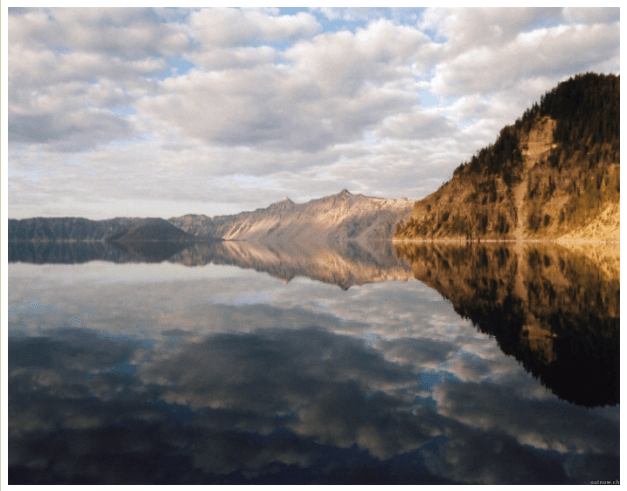
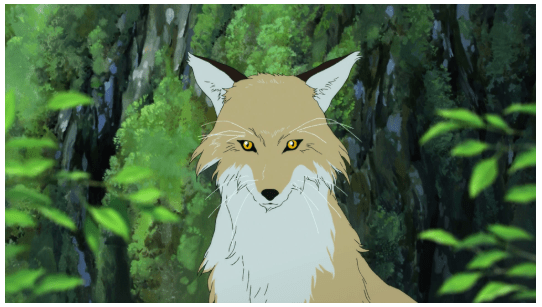
One of these images is from James Benning’s long-take experiment in landscape photography, 13 Lakes (2004), and the other is from the hit Japanese anime of 2012, Wolf Children. I’ll let you figure out which is which. Outgrossing Pixar’s Brave in its home country, Wolf Children crowned director Mamoru Hosoda as a legitimate heir to Hayao Miyazaki (for whom he initially developed Howl’s Moving Castle), and is now available to English speakers on Hong Kong Blu-ray and DVD. Both directors are concerned with the relationship between nature and civilization, but while Miyazaki’s eco-parables soar into faraway lands, with Wolf Children Hosoda had directed his focus on the miniature dramas of everyday life. Wolf Children uses lycanthropy as an excuse to mount a gorgeous melodrama about the hard work of motherhood, and the resulting heartbreak when children heed the call to the wilds of adult life, away from home.

Mamoru Hosoda was born on September 19, 1967 in Toyoma Prefecture, Japan. His father worked for the railroads, while he spent much of his time indoors drawing. He recalled to New People Travel that, “When it rains and snows a lot you don’t go outside, bekins07_MamoruHosoda-artbonaturally. You read books, become introverted, and you face yourself.” He graduated from the Kanazawa College of Art with a degree in oil painting. His first job was at Toei Animation, where he made what he calls “minimum wage”, but learned his craft from veterans like Sailor Moon director Kunihiko Ikuhara. It was there he made his first feature, Digimon: The Movie (2000), adapted from the popular TV show and “virtual pet” toy. The following year he was tapped by Miyazaki’s Studio Ghibli to direct Howl’s Moving Castle, but departed the project after a few months. Mark Schilling reported that Hosoda failed  “to come up with a concept satisfactory to his Studio Ghibli bosses”. It was the first time an outsider to Ghibli was tapped to produce one of their films, and Hosoda did not fit their mold. Eventually Miyazaki would come out of retirement to direct it himself. Hosoda says he didn’t get along with the staff, but that he learned a valuable lesson:

When I worked at Toei, I had a teen state of mind: I wanted to direct complicated things, really dark. I thought to deliver a message I had to make tortured works. But in fact, while working on Howl’s…, I’ve realized being simple and clear was more satisfying.

His career seems to be a series of paring downs and simplifications. From Toei he would go to Madhouse animation, where he worked from 2005 – 2011. He chipped in on long-running film series One Piece before he finally wrested creative control of a project from start to finish. Instead of the castles in the sky of Miyazaki, Hosoda was inspired by the views outside his door. The Girl Who Leapt Through Time (2006), although a loose sequel to a 1967 novel, takes place at Nakai Station in Shinjuku, 20 minutes from his Madhouse studios. Summer Wars was conceived after Hosoda got married and discovered his in-laws’ city of Ueda, Nagano, and became fascinated by their deep family ties and that it “always has blue skies”, so different from his extreme weather home of Toyoma.

Wolf-Children1

He would return home for Wolf Children, setting the feature in the rural areas of Toyoma, and using its varieties of precipitation as an elegant visual metaphor. Water is the implacable natural force that marks the moments of terrifying change in the lives of Hana and her two children, Ame and Yuki, as they grow up from little werewolf kids into ferocious adolescents. Hana had loved and lost Ookami, her Wolf Man husband, during a rainstorm. The film is not a love story but depicts the aftermath of one, and the tough work required of a single mother.  With a mix of line drawing and photorealistic CG, the mode is hyper-real with moments of lyrical beauty, as when Ame bounds into the forest with his fox companion, settling on a reflective pond. Hosoda will rhyme this reflective pond with that of a puddle, as Hana stands alone in a parking lot, having lost Ame to the animals and Yuki to the world outside. There are constant movement between rain squalls and tears and waterfalls as the family pushes and pulls between the cocoon of familial love and the lure of independence.

wolf-children-height-check

Hosoda left Madhouse to make Wolf Children, the first film his own Studio Chizu (meaning “Map”). While set in his hometown of Toyoma, he got the idea for the film in the Kichioji district of Tokyo. he told New People Travel that:

There is a Starbucks by the park with a terrace that allows me to smoke, so I go there often. One time I was sitting there gazing at the people walking to the park. There were certainly many people with children and dogs… and I came up with that idea while watching the kids and dogs, who were about the same height, coming and going, crisscrossing in front of my eyes. That is how it happened.”He returned to his home of Toyoma to tell the story of single mother Hana and her two werewolf children, Ame and Yuki.

It is this grounding in observable fact that makes Wolf Children so powerfully moving. The supernatural is incidental to Hosoda, a delivery system for the brute facts of life. Whether it’s Hana nodding off at the dinner table from overwork or Ame asking to be “comforted again” after one his numerous frights, the film is lined with the sympathetic details of raising children (Hosoda’s first child was born soon after the film was completed). This ability to simplify and focus on behavior instead of grand mythical back stories is what makes Wolf Children work so well, rich in sentiment without being sentimental.

wolfchildren1Screen Shot 2020-02-11 at 5.08.33 PM

DELVING INTO DELMER DAVES

May 14, 2013

jubal-italian-poster-alfredo-capitani

Delmer Daves is having a moment. The Criterion Collection, the closest thing the U.S. has to a cultural gatekeeper, just released 3:10 To Yuma (1957) and Jubal (1956) on DVD and Blu-ray, while the Anthology Film Archives in New York City is holding a mini-retrospective of rarely screened Daves titles, including Pride of the Marines (1945) and The Red House (1947). I had never delved into the director’s work because the ambivalent words of Andrew Sarris and Manny Farber were ringing in my head. Sarris thought his films had “stylistic conviction in an intellectual vacuum”, while Farber positioned Daves against the Spartan “Hawks-Wellman tradition” as  “a Boys Life nature lover who intelligently half-prettifies adolescents and backwoods primitives.” While encapsulating their writing approaches, Sarris’ lucidity versus Farber’s contradictory collisions, they both convey images of shallow postcard beauty. Then I saw Daves’ extraordinary The Hanging Tree (1959, on DVD from the Warner Archive), which uses a cliffside cabin as a visual metaphor for Gary Cooper’s moral atrophy, and realized his use of landscape is far more complex than Boys Life kitsch. Eager for more, I watched five Daves films over the weekend, which revealed a sensitive director of actors drawn to tales of regeneration both spiritual and physical.

On the surface Pride of the Marine appears to be a basic WWII propaganda programmer, telling the true story of working class Philadelphia boy Al Schmid (John Garfield) and his path to winning the Navy Cross for his actions in a battle at Guadalcanal, which blinded him. But Daves and screenwriter Albert Maltz (later blacklisted) are more concerned with Schmid’s fragile psyche than his kill count (200 in one night, reportedly). Much time is spent on location in Philly with Schmid’s combative courtship of Ruth (Eleanor Parker), establishing the cocoon atmosphere of life in the pre-War States. The scene in which news of the Pear Harbor bombing breaks on the radio is one of blithe self-absorption. It’s during a dinner party with Schmid and his friends and they think Pearl Harbor is located in Jersey, their whole world limited to the northeast U.S. After the battle, shot like a horror movie in quiet and shadow, Schmid is forced to discover the world anew as a blind man. He becomes bitter and withdrawn, resentful of the U.S. for sending him into that abattoir, and awakening to the racial inequalities of American life. His best pal Lee is Jewish and informs him that as a blind man Schmid would have an easier time getting a job than himself. It is only Ruth’s compassion that can re-integrate him into society, and prevent him from succumbing to nihilism. Schmid is one of many emotionally enclosed Daves protagonists forced to open up due to physical debility.

the_red_house_edward g robinson

The same is true of Edward G. Robinson in The Red House (’47), a delirious farmhouse thriller in which Robinson ritualistically intones, “don’t go into the woods”. An aging patriarch with a wooden leg, he lives with his spinster sister (Judith Anderson) and his adopted daughter Meg (Allene Roberts). Living in an isolated cabin (as alone as Cooper’s cabin in The Hanging Tree), they rarely venture into town, causing rumors to swirl. Robinson is repressing a terrible secret, and he moves with such coiled deliberation it seems he’ll break into a sweat with each utterance. The film locks into such a hypnotic rhythm it could be mistaken for tedium – it’s a series of seized-up Robinson warnings followed by Meg and her young boyfriend Nath (Lon McCallister) searching the woods for a mythical “Red House”. The landscape takes on a menacing character, as filled with traps as the world outside Philly is for Schmid. Once the circular plot breaks open and Robinson’s secret is revealed, a preternatural calm sweeps across his face as death rises to greet him.

broken1

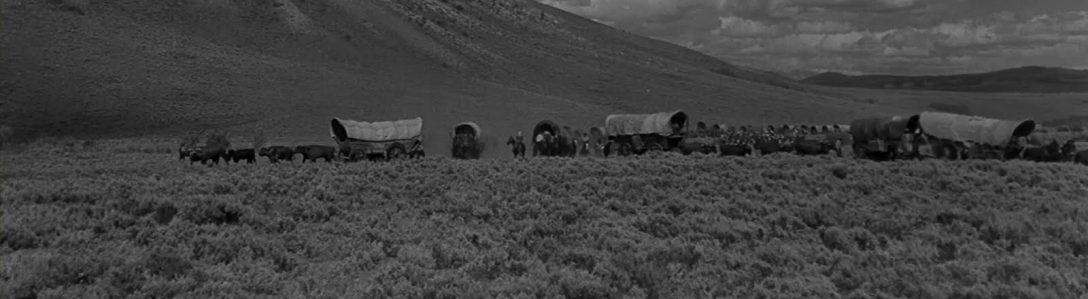
Broken Arrow (1950) returns the social concerns of Pride of the Marines, with a script from the now blacklisted Albert Maltz fronted by Michael Blankfort, who received the credit. It is generally regarded as the first Hollywood film to give a sympathetic portrayal of Native Americans, although numerous Bs as well as John Ford’s Fort Apache (1948) could also make that claim. It displays Daves’ obsession for historical detail (he consulted his grandfather’s diaries, who crossed the country in a covered wagon), shooting the story of Cochise close to where he actually lived, on the Apache White River Reservation and the Coconino National Forest in Arizona. The setting is overwhelmingly beautiful in Technicolor, shot by Ernest Palmer, that does have a picture postcard prettiness, a fantasy land for this alternate history in which Apaches and Americans live in peaceful assimilationist harmony.

Jubal_essay_Current

The Criterion release Jubal (1956) returns to Dave’s theme of renewal, the first of three such Westerns he would make with Glenn Ford. Daves co-wrote the screenplay about vagabond cowboy Jubal (Ford) found starving in the woods by  thriving farm owner Shep (Ernest Borgnine). Jubal builds up his strength and self-respect until he becomes foreman, and begins to woo the daughter of a Mormon minister. Shep’s bored housewife Mae (Valerie French) wants a renewal of her own, leading to a destructive jealousy. This is another of Daves’ isolated locales, a tight grouping of Shep’s home, work bunks and stables nestled in the Grand Tetons of Wyoming. These buildings are together but separate, the crossing their boundaries causing dissension among the farmhands. The main dissenter is Pinky, played with perverse artifice by Rod Steiger.As Kent Jones notes in his DVD booklet essay, “It’s odd to watch the actor stretch every syllable as far as it can go (“nothing” becomes “nuh-thiiiiiihn”)”. This method madness is a poor fit for the naturalistic presences of Ford (deliberate and reticent) and Borgnine (who is spectacular as a garrulous innocent), but is still fascinating to watch to see how he chews off each particular scene.

6835081416_e3306d959c_z

Jack Lemmon also seems like a poor fit for the Daves universe, but in Cowboy (1958) he gives a nuanced performance as another damaged Daves loner sliding into self-pity. He stars alongside Ford in a cattle drive odd couple. Lemmon is a Chicago hotel clerk ready to light out for Mexico to chase a girl. Ford is an arrogant, usually rich cattle trader who agrees to take on tenderfoot Lemmon after a generous cash investment. Ford suffers the physical ailment, getting punctured by an arrow, while Lemmon suffers a spiritual malaise, his clumsy urban neurotic becoming a self-destructive wretch after completing his first drive, his romantic dreams of cowboy life dissolved in cow shit and snake bites.  Again concerned with the textures and rhythms of that historical period, Daves adapted Frank Harris’ semi-autobiographical 1930 novel On the Trail: My Reminiscences as a Cowboy. The film is littered with process, from how to put on chaps to how to make a steer stand up in a moving train car. Showing a light touch he would use in his 1960s romances, the film turns into a love story between Ford and Lemmon, as they recognize each other’s frailties in themselves. It ends with a shot of them in matching bathtubs, equality achieved at last.

PARADISE LOST: TOP OF THE LAKE

May 7, 2013

TOP OF THE LAKE

Approximately every English-language publication in existence has run an “Is Television Better than the Movies” piece over the past few years. I will bravely buck the whims of headline writers and declare I don’t know why we have to choose. For every Louie or The Wire, there are eight billion CSIs, and a similar ratio holds for the silver screen, as long as your definition of “movies” expands beyond Hollywood. Part of the made-up race to declare TV king involves the influx of big-screen talent to the small,  including David Fincher (House of Cards), Kiyoshi Kurosawa (Penance) and  Michael Mann (Luck). The most successful auteur-to-TV transition I’ve seen so far though, is Jane Campion’s in her BBC/Sundance Channel miniseries Top of the Lake, starring Mad Men‘s Elisabeth Moss. Now available to stream on Netflix, it’s yet another police procedural, but the mystery is incidental to its exploration of the toll paid by women’s bodies in the hyper-masculine backwoods of Queenstown, New Zealand, where a young girl would prefer to disappear than endure it.

Jane Campion’s last feature film was Bright Star, a lovely evocation of the romance between John Keats and Fanny Brawne. It was made four years ago, and with funding tightening up worldwide, she decided to return to her roots. Campion got her career started on  television, directing the Australian Broadcasting Corporation show Dancing Daze (1986), which led to TV movies and eventually her theatrical debut, Sweetie (1989). So when BBC2 offered her the chance to develop her own series, she was ready, and with long-time writing partner Gerard Lee, created the vice-ridden town of Lake Top and placed it in the former setting of Hobbits and Orcs, the scenic tourist trap Queenstown.

top-of-the-lake6

Lake Top is lorded over by the Mitchum family, led by psychotic patriarch Matt (Peter Mullan) and his two lithe and punchy boys. Matt’s twelve-year-old daughter Tui (Jacqueline Joe) nearly drowns herself in the titular lake, and is found to be pregnant. A statutory rape investigation opens, and Tui runs off and disappears into the woods. Australian Detective Robin Griffin (Elisabeth Moss), a specialist in crimes of sexual abuse, is brought back to her hometown to help the case. While all this is happening, an enigmatic guru named GJ (Holly Hunter) starts a commune for burnt-out women in a collection of shipping containers by a plot of land by the lake called Paradise.

628x471

These ladies were initially going to be the focus of the series. Campion told the New Zealand Herald that:

I thought I would like to write a story about a post-menopausal women’s camp, where women went who felt … they had fallen out of social reality because they were un****able, or unsexy or whatever, and I think being un****able in our society is [to be] fairly invisible, because it’s such a sexualised society.

In the finished series, the camp becomes a fulcrum about which the characters pivot. At various stages Robin and Tui find solace in disappearing there, as their sexualization in Lake Top makes them intensely visible, both of them magnets for the animalistic males of the Mitchum clan and their backwoods buddies. For the Mitchums, the camp is a testing ground, to see how far they can push their power. Peter Mullan is a riveting grotesque, he looks like a hippie MMA fighter with his greasy gray shoulder length locks topping a brick shithouse body. Mullan is a holy terror, whipping himself in acts of sanctification, in penance for the drug-fueled short-fuse mania of his daily life, in which he receives any opposition to his will as a mortal threat.

Holly Hunter is done up in the straight gray hair of Campion herself, her bearing that of a mystic, but her advice is filled with brutal pragmatism. The word she says most frequently is “no”. No your man will not return and it’s possible your life will not improve. The therapy is in being and being together, the camaraderie of women living a daily life free of an objectifying eye, at least until they feel willing to be objectified.

top of the lake

Robin has no such choice. She is constantly on display, not just for her looks but for her past. She had left Laketop years ago because of a brutal crime she suffered as a teen. Her attackers still live and work in town, and Robin tries to use that attention to aid the investigation. She drinks at the local pub, rousing the hicks’ hackles, luring out the sickest and most violent of them. But it is not just the bogans (New Zealand slang for redneck) who circle her lustily – local Detective Al Parker (David Wenham) is a more civilized harasser. His hand-holding and concerning gazes are paternalistic until they are not. The fragility and permeability of Robin’s body is further emphasized by the cancer that is ravaging her mother’s brittle frame. All the women in town seem to be dissolving.

It is a feministTwin Peaks, even name-checking David Lynch’s Blue Velvet at one point, kicking up the unconscious pathologies and unspoken desires of the eccentric residents of a serenely beautiful town. Campion often films the characters in extreme long shot against the misty blue mountains, almost invisible except for their forward motion. That is the only way Tui can survive – keep moving before the men in town can erase her forever.

top

THE CAHN FILM FESTIVAL

April 30, 2013

Screen Shot 2020-02-11 at 4.48.05 PM

As May approaches, the film world turns its eyes to the Cannes Film Festival, which will host world premiere screenings from the likes of Jia Zhangke and Alexander Payne at its Grand Théâtre Lumière. I, however, will be celebrating the Edward L. Cahn Film Festival, taking place on my mustard stained IKEA couch in Brooklyn. No accreditation was necessary aside from an active Netflix account, and travel time was limited to trips to the bathroom. Cahn, born in Brooklyn, was a promising director of incendiary corruption dramas at Universal (Afraid to Talk, Laughter in Hell) before spinning his wheels for MGM short subjects in the late ’30s. He re-emerged as a pathologically prolific director of B-Westerns and gangster films in the 1950s, at AIP and the various companies of Robert E. Kent. Seventeen of these grim 1950s features are available to stream on Netflix, but all are due to expire from the service tomorrow [UPDATE: only OKLAHOMA TERRITORY and IT, THE TERROR FROM BEYOND SPACE expired, the other 15 were renewed], along with almost 1,000 other titles. So I attempted to watch Cahn’s films with as much speed and urgency as he made them.

the-music-box-kid-movie-poster-1960-1020253923

I began with The Music Box Kid (1960), a thinly veiled bio of Dutch Schulz, mob boss of the Bronx in the 1920s and 30s. Here he’s called Larry Shaw, and played by professional handsome man Ron Foster, who would later land a recurring role on the soap Guiding Light. He exaggerates his natural vanity into a monstrous maw of need, his hawk-like features pecking approval out of people. He tells his wife he is an insurance salesman, one of many double-lives led by Cahn characters, who are constantly throwing up false identities. Interior lives are more colorful than exterior ones in his movies, which take place exclusively in under-furnished office spaces and living rooms, this result of low budgets emphasizing the transitory nature of these thugs. Each room looks newly moved into, and just as easily could be left.

cage of evil 1

Foster plays a similar character in Cage of Evil (1960), although he starts out on the right side of the law. Scott Harper is an aggressive detective assigned to a jewelry robbery, first seen beating an innocent witness for his spotty memory. A chain-smoking skittish type, his cigarettes seem to act as vents to keep him from blowing his top. After he’s passed over for a promotion, even the smokes can’t temper his anger and he flips, drawing up a scheme to snag the jewels for himself and the impassive blonde he’s been investigating (Patricia Blair). More unstable than Larry Shaw, Harper is incapable of maintaining his double life for long, resorting to panicked spasms of violence that inevitably boomerang against his own vulnerable body.

Mamie Van Doren is the duplicitous vulnerable body in Vice Raid (1960), a Detroit prostitute flown into NYC to entrap a Vice cop (Richard Coogan). Van Doren was a Marilyn Monroe clone who had descended the Hollywood ladder from star player with Universal all the way down to Poverty Row and Kent’s Imperial Pictures. She was joined by former ace studio DP Stanley Cortez, who had gone from lensing the deep focus marvels of Orson Welles’ The Magnificent Ambersons to the flat planes of Vice Raid and, later that same year, Dinosaurus!. The first meeting between Van Doren and Coogan is the purest representation of Cahn’s films in this period. Vice cop Coogan is undercover as a photographer in a dingy hotel room, hoping to lure her into making an indecent proposal. Van Doren has an act of her own, as the faux-innocent whore waiting to get collared so she can later accuse him of abuse. It’s a roundelay of false fronts, their characters as fake as the flimsy hotel set.

noose-for-a-gunman-movie-poster-1960-1020253885

As Dave Kehr wrote, where Cahn’s crime films are personal, his Westerns are perfunctory, but strange continuities still emerged in my marathon viewing. One of the haunting set-pieces of Laughter in Hell (1933) is the death-by-hanging of a group of Black prisoners, and lynching recurs as a theme, although in the post-code 1950s, racial difference has been eroded from view. There is a thwarted lynching in the rote courtroom drama Oklahoma Territory (1960), but it becomes the central image of Noose for a Gunman (1960). Case Britton (Jim Davis) is introduced as destined for hanging. The first shot is of a noose in extreme close-up to the left, with Britton riding slowly into focus at the right. As he passes by there is a sign nailed to the tree, “Reserved for Case Britton”. The town has marked him for death, the latest in Cahn’s corrupted cities. This one is controlled by rich landowner Carl Avery (Barton MacLane), who had Britton’s son killed five years before. By the end the town is overrun by outlaws and close to dissolution. Only Britton and his friend Jim (Harey Carey, Jr.) can save it from oblivion. In one offhand moment, as the friends are gathered by a hotel door, Carey grabs his left bicep with his right. It is the same gestural tic that his father performed as a silent Western star, and made famous by John Wayne at the end of The Searchers. Here it is just a silent tribute from son to father, in a programmer lost to history but found in Netflix.

Cahn’s reputation will never fully revive until his 1930s work is made available, but his Robert E. Kent productions are addictive, relentless exercises in deglamorization. America becomes a succession of drab flophouses and emptied out apartments, populated by shadows eager to erase their selves for a shot at the good life. Hope to see you next year at the Cahn Film Festival 2014. I can comfortably seat three, and it looks like Amazon Prime still has plenty of his work on offer. See you then.

NON-LETHAL WEAPON: JACKIE CHAN’S POLICE STORY (1985)

April 23, 2013

Screen Shot 2020-02-11 at 4.45.28 PM

“Nobody can beat Bruce Lee, everybody can beat me” -Jackie Chan

Failing as a stoic Bruce Lee clone early in his career, Jackie Chan discovered that audiences preferred him as a cheery masochist, enduring abuse for fun and profit. His kung-fu clowning in Snake in the Eagle’s Shadow and Drunken Master (both 1978) established a persona he would tinker with the rest of his career. When he shifted from martial arts period pieces to modern day action thrillers in the 1980s, his drifting fool becomes professionalized, an innocent goofball in uniform. His masterpiece of this period is Police Story (1985), which was recently issued on Blu-ray by Shout! Factory, along with its initial 1988 sequel, Police Story 2 (1988). Chan has made five Police Storys to date, with a sixth in production set for release later this year, but the original remains his (and my) favorite.

Before starting work on Police Story, Chan suffered through an ill-conceived Hollywood project, The Protector. Although shot in Hong Kong, Director James Glickenhaus (The Exterminator) refused to work in the local style. Glickenhaus recalled, “They never shoot masters, they shoot very short sections and they do a lot of under-cranking to speed up the movement, which I refuse to do. I told him I wanted to shoot the fights in masters and then, if they didn’t work, go back and cover them.”   Chan preferred to shoot stunts in segments, allowing time to perfect each gesture. He went along with Glickenhaus’ plan, but re-shot sequences behind his back and inserted them into the version released in Asia. It was a box office failure, and Chan wouldn’t have stateside success until the 1990s.

Following that disheartening experience, Chan exerted complete control over Police Story, as actor-director-fight choreographer. The script was written by long time collaborator Edward Tang, who Golden Harvest assigned to work with Chan on Dragon Strike (1982, aka Dragon Lord), and who has become the caretaker of the Chan persona. While Chan’s bricolage fighting style, in which everyday objects are transformed into weapon, had been developed with Yuen Woo-ping in Drunken Master, his screen personality was still in flux.

While he was in Hollywood for his first busted project, The Big Brawl, Chan spent time watching a lot of silent films: “Buster Keaton, Harold Lloyd. And what they did was amazing. Buster Keaton gave me a lot of ideas, new things I could do that were physical or funny, but wasn’t fighting.” Like Keaton in vaudeville, Chan was raised in the entertainment business, his destitute parents dropping him off at the Chinese Opera Research Institute in Hong Kong when he was six to learn the art of Peking Opera tumbling. There are many silent film homages in his blockbuster Project A (1983), including a dangling clock face gag straight out of Lloyd’s Safety Last! (1923).  In Police Story, the influence becomes more internalized, the gags less referential and more tailored for Chan’s particular skills.

In Police Story he plays Chan Ka-kui, an impetuous cop protecting a reluctant witness (Brigitte Lin) against reprisal from crime lord Chu Tao (Yuen Chor). Chan naively believes in outdated concepts of heroism, eager to risk life and limb and acres of private property in order to catch his man. He is like a child living out a heroic fantasy, ignorant of the pragmatic compromises his colleagues and superiors agree to in order to protect their asses. There is a bit of Douglas Fairbanks Sr. in this, as his characters were also men out of time, as seen in A Modern Musketeer, in which his chivalric code nets him a slap to the face. Chan’s triumphant capture of Chu in Police Story gets him a demotion to traffic cop in the sequel, due to his spectacular destruction of a shanty town as well as an entire shopping mall.

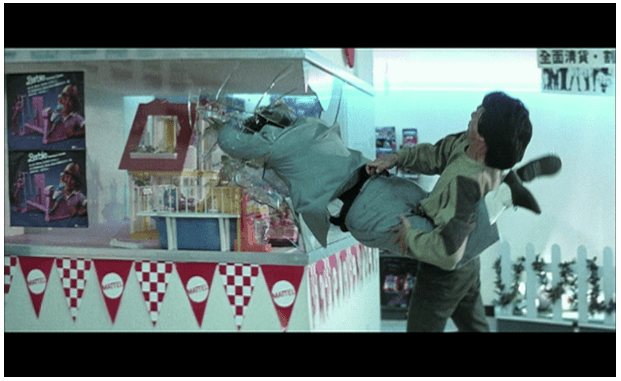
These are sequences of manic energy released into death-defying punchlines. Chan deflects violence with his body and turns it into humor, a flesh and blood Wile E. Coyote. The opening is a close-quarters shoot-out in an HK slum that escalates into a car chase/destruction derby that reduces the hovels to rubble. His car a wreck, he chases down the escaping bus by latching on to the bumper with the crook of an umbrella, feet dragging on the asphalt (the way he snaps himself onto the back of the bus recalls Yakima Canutt’s famous stagecoach stunt). In the shopping mall finale, he crashes through every available glass surface, some with the help of a motorcycle in a bit of conspicuous destruction.

These are all shot in segmented close-ups, the style so despised by Glickenhaus, but it gives Chan’s stunts a gestural clarity and immediacy absent from the usual master shot/close-up routine. This way his moves are linked, unfurling as if in one ribbon of movement, while the alternating focal lengths of Glickenhaus necessarily breaks up that rhythm. Chan’s style allows the impossible to occur with speed and fluidity, an ethos exhibited even in offhand moments. At the start of an extended telephone answering gag (he gets tongue-and-wire tied), Chan flips up a pencil with his foot and catches it with his hand. It takes a split-second of screen time but a lifetime to master, making the impossible look like a flick of the wrist.

The image quality on the Shout! Factory Blu-Ray is poor, as the prints they transferred are faded and worn. The Hong Kong release also received negative reviews, but the Shout! disc doesn’t exhibit any of the transfer artifacts mentioned there. I doubt there is better material to work with, so unless someone unearths a pristine negative, this new disc is likely the best the film can look right now.

SCENT OF DESPERATION: WHIFFS AND I WILL, I WILL…FOR NOW

April 16, 2013

10225

Since its inception Hollywood has been the plaything of the super rich, an ideal medium for ego stroking and favor doling. William Randolph Hearst famously bankrolled the career of his talented mistress, Marion Davies, while Howard Hughes worked out his fetish for flying machines and bra technology. Many of these captain of industry vanity projects have been forgotten, however, including the output of one-time Fabergé fragrance CEO, George Barrie. A born entrepreneur, he built up a cosmetics company from his garage and invented Brut cologne, allowing him to fund a series of sex comedies in the 1970s. An amateur songwriter, he used the films as excuses to promote his tunes, and received Oscar nominations for his work in A Touch of Class (1973) and Whiffs (1975). The Warner Archive recently released un-restored versions of Whiffs and I Will, I WillFor Now (1976) on DVD, both starring Elliott Gould, giving a sense of what corporations thought scent consumers wanted to watch in the 1970s.

Barrie was born in Brooklyn in 1912 and raised in Pittsfield, Massachusetts, and had to ditch his music education after marrying his first wife Lucille. His first job was selling door-to-door for Rayette, a hair products manufacturer, and started stashing money away. Before long he started up Caryl Richards cosmetics in a New Jersey garage, which he named after his two kids. He “took to the road and sold a line of products that hadn’t even been designed yet”, and by 1961 he had sales over $7 million. In 1964 the conglomerate purchased Fabergé, where Brut cologne became an international phenomenon – which Barrie stoked with a string of sports star endorsements, including Joe Namath, Billie Jean King and Muhammad Ali. Convinced that celebrity equaled sales, he was able to get Cary Grant to join the company’s Board of Directors.

Barrie produced his films under a “Brut Productions” shingle, while Brut Records put out albums by comedian Robert Klein and Brut Television co-produced the popular spy thriller series “The Protectors” starring Robert Vaughn. There was even a Brut Publishing imprint, whose initial offering People Magazine describes as “a manual on the psychology of marriage and sex”, clearly riding the ample coattails of The Joy of Sex (published in 1972). They were offering an entire Playboy lifestyle, not just a cologne, a more ambitious version of today’s Axe Body Spray’s frat boy chic.

The first Brut Production film was the downbeat Western, Cry for Me Billy (1972), but the first to register as a success was the 1973 sex comedy A Touch of Class, which netted Glenda Jackson the Oscar for Best Actress and Barrie (with lyricist Sammy Kahn) a nomination for best song for “All That Love Went to Waste”. After a couple of horror exercises (Night Watch and Laurence Harvey’s Welcome to Arrow Beach),  Whiffswas a return to comedy for Brut, a feeble attempt to 1365892634_2rekindle some anti-authority M*A*S*H magic. It shoves Elliott Gould into the role of Army chemical test subject Dudley Frapper, who is fired when his body breaks down. On his way out he steals some laughing gas and  joins up with civilian guinea pig Chops (Harry Guardino) to knock over some local banks. Wanting the patina of politics without offending anyone, Whiffs is too tame for satire,  and all that’s left is feeble slapstick. Director Ted Post (Hang ‘em High) is in check cashing mode, filming everything in flatly lit two shots, leaving Gould writhing on the floor in drawn out agony. It’s supposed to be chemical testing gag, but Gould is an ungainly physical comedian, and his flailing elicits pity rather than laughter.  Only Eddie Albert as a befuddled Army captain seems remotely engaged, and he sells the funniest line in this misbegotten enterprise: ““We don’t want to kill the enemy, we just want to make them…a little sick.”

picture

With that busted attempt at capturing the youth market, Barrie returned to the Touch of Class model of risqué rom-com for I Will, I WillFor Now (one of the most ungainly titles in film history). Like Whiffs, though, it wants to capitalize on counter-culture trends, like open relationships and sex counseling, but without any explicit behavior to turn off potential consumers. It’s another neutered project, although one composed with energy by old studio stalwart Norman Panama, who started out writing screenplays for Bob Hope. This time Gould plays Les Bingham, an executive for an urban development company, and recently divorced from his art student wife Katie (Diane Keaton). Gould seems to be a thinly veiled version of Barrie, stalking through a garish office of modeled white plastic out of 2001: A Space Odyssey. It looks exactly like Barrie’s digs as described in that People magazine piece:

His business quarters, tailored to his taste, are a space-age vision in mirrored walls, fluorescent colors, chrome and Lucite; his gleaming black, crescent-shaped desk stands cluttered with perfumes, hairsprays and records. Nearby is his “playroom,” equipped with two Baldwin pianos (there is an electric piano on Barrie’s company jet), an organ, bongos and drums, where he composes and holds jam sessions. By 5 p.m., when Barrie is in town, business associates begin arriving for the ritual “happy hour,” a designation Barrie rejects. “All my hours are happy,” he insists.

d25a16d1e7ecf98d608aa412f167ddd7.image.300x234All of Les’ hours are happy as well, at least until he runs into Katie again at her hippie sister’s wedding, and their attraction burbles to life once again. In this variation on the screwball comedy of remarriage, the duo choose to go sign a mutually binding contract instead of getting married again – they have the option to decline after 6 months. And so they go through the motions of a happy couple until their mutual antagonisms bubble again to the surface. Instead of calling it quits, they abscond to a beachside sex clinic – but instead of the promised raw sexual honesty you get feeble farce, including a accidental (and chaste) wife swap. Panama juices the pace to get the most out of the material (which he co-wrote), while the cast all seems to be having a blast, especially Paul Sorvino, who plays one of Katie’s suitors. After her final rejection, and pathetically holding a gun to his head, he bursts out with a creditable rendition of Pagliacci.

Both Whiffs and I Will, I Will…For Now are compromised, pre-test marketed material made to extend the brand of Brut cologne, and nobody went to see them. They are differing versions of what the Brut “lifestyle” was supposed to consist of, both mildly subversive and theoretically erotic. It’s about possibilities rather than realities, images rather than actions.  Neither were likely as effective as that simple Joe Namath ad, though, which has more sexual energy in Broadway Joe’s feathered mane than those two films combined. Perhaps recognizing the need for real danger in their product, Brut co-produced James Toback’s mob psychodrama Fingers (1978) before dissolving their film division soon after. In 1984 the McGregor Corporation purchased Fabergé, and George Barrie retired.

LOVE STREAMS: TO THE WONDER, UPSTREAM COLOR AND SPRING BREAKERS

April 9, 2013

to-the-wonder-movie upstream_newSpring Breakers

To the Wonder, Upstream Color and Spring Breakers have been speaking to each other in my head. I would rather they go away so I could do my taxes, but here we are. Terrence Malick’s To the Wonder, which opens in limited release this week, is a memory movie, swirling around a couple straining to recapture the ecstasy of love’s first blush. The couple in Upstream Color have nothing to recapture, their minds wiped by parasites, forced to forge new identities by pulling from the world and each other. Spring Breakers is also a kind of love story, one in which kids with dwindling Great Recession prospects escape into the sticky embrace of pop culture. All use a structure filled with repetitions and a slippery sense of time, with flash forwards and flash backs bending their linear timelines into circles.

To the Wonder opens with grainy cell phone video of Olga Kurylenko and Ben Affleck in the throes of dizzy silly passion on a European train ride. They are getting high off each other, each pawing advance  eliciting unselfconscious laughter.  In voice-over, Kurylenko whispers (in French): “Newborn”. It is an innocent state for which they will be unable to return, and Malick and his DP Emmanuel Lubezki trace their attraction-repulsion from the romantic heights of Mont St. Michel to their unadorned suburban home in Bartlesville, Oklahoma. The image of Mont St. Michel, a small tidal island off the coast of Normandy capped with a Romanesque church, acts as a talisman for their moment of bodily transcendence, when, as Kurylenko intones, “Two become one”.

It presents a natural progression of Malick’s late style, in which impressionistic fragments are edited together in symphonic arrangements, and where actors are broken down into their constituent parts: hands, necks, hair. There are mini-movements that swirl around the central romance,  of doorways and windowpane shadows (which eventually Kurylenko’s daughter hopscotches through), but also of muddy water, rhymed across the continent from the coast of Normandy to a stream of runoff that Affleck tests in Oklahoma. His actors have essentially become silent performers, a tactic that balances them with the world around them – the fluorescent light at a Sonic is as privileged as his actors. Malick was trained as a Heidegger scholar, but allow me to dust off my prized Bachelor of philosophy degree and propose that this approach is more reminiscent of Maurice Merleau-Ponty, a phenomenologist who arose in Heidegger’s wake. I’ll cherry pick a quote from his Phenomenology of Perception: “I am, thus, not separate from being, but rather ‘a fold’ in being where being touches itself through me.” Malick’s actors slip into this fold, conduits that the world flows through, instead of its center.

upstream color

Shane Carruth’s Upstream Color has been incessantly compared to Malick, and its editing patterns are similar with its looping repetitions. But while Malick came out of a Continental Philosophy background, Carruth is more concerned with the science of mind, how the brain might react if forced to construct a personality out of nothing but its own perceptions. The story concerns Kris (Amy Seimetz), who is implanted with a parasitical worm that erases her memory. The worm is part of an enigmatic organic cycle, as it emerges from the soil of orchids and finishes its life inside pigs, who maintain a psychic link to the parasite hosts. Kris tears down her old life and begins a new one, joining up with Jeff (Carruth), who has also been through the destructive process and is beginning life anew. They form a co-dependent bond in which memories flow back and forth, threatening their grip on individuality. Carruth is a builder of intricate systems who prefers to leave out the instruction manual, so connective tissue regarding the cycle is elided in favor of Kris and Jeff’s scramble back into humanity. Carruth is stilted and cold, his analytic personality unfit for a guy wiped by a worm. But Seimetz gives the movie its grounding, her transformation from consciousness to blank slate is a true metamorphosis, her bright energy dulled into cow-eyed sloth, her movements slowed as she were still mapping out the world in her head.

In Harmony Korine’s Spring Breakers, teenybopper darlings Selena Gomez, Ashley Benson and Vanessa Hudgens are adrift in college, racking up debts for an American Dream that is no longer viable. Their days are spent ignoring lectures and watching Kimbo Slice street fights on YouTube. Desperate for escape and something joyful, they rob a fried chicken joint in order to fund a trip to spring break in St. Petersburg, Florida. Korine, like Malick and Carruth, uses repetition to create a sense of circularity, characters caught in a loop. In Spring Breakers, though, it is a loop the characters have created for themselves, an ecstatic embrace of the vulgar as an escape from the mundane. If the film has a philosophy it would be directed by the Twitter feed @KimKierkegaard, which mashes up the Kardashian and the Danish existentialist. The girls have gone through the looking glass, except they’re not entering Wonderland but a Reddit thread. The film clicks from Girls Gone Wild debauchery to teen queen balladry to glamorized drug violence, an adventure into the unknown, but at least it gives the girls control. They meet the love of their lives in Alien (James Franco) a flamboyantly conspicuous consumer who has also decided to give up the life in the world for one self-made pop glamor. The most moving scene is a robbery montage set to Britney Spears’ heartbreak ballad “Everytime”, the girls done up in Pussy Riot gear – their self-willed self-destruction a private revolutionary act.

GEORGE SHERMAN, DIRECTOR OF WESTERNS

April 2, 2013

16_1939 Wyoming Outlaw

When director George Sherman passed away at the age of 82 in 1991, he was noted only for the quantity of his output. The obituaries in both the Los Angeles and New York Times pointed out the “175″ credits he had accrued as a director for screens both large and small (IMDb lists 126), although nothing as to their quality aside from their “low-budget” origins. I recently enjoyed some of Sherman’s Three Mesquiteers Westerns that he made for Republic (which I wrote about here), but a recent column by Dave Kehr has made me ravenous for more. Reviewing Dawn at Soccoro (1954, released as part of a TCM Vault Collection), Kehr describes him as “experimental”, and the film as,  “a western that might have been imagined by Kafka.” Fortuitously, more of Sherman’s work has been reaching home video. Last month Universal released a budget-priced“Classic Westerns” set of 10 films that include two Shermans: Comanche Territory (1950) and Tomahawk (1951), while Olive Films finished off their stash of John Wayne Mesquiteers films with Wyoming Outlaw(1939).

wyomin11

The Three Mesquiteers B-Western series ran from 1936 – 1943 at Republic, and necessarily followed stock scenarios of the three ranch hands thwarting the plans of evil homesteaders and other n’er do wells. Sherman managed to helm the outliers in the series, including the zoo animal burlesque Three Texas Steers and revolutionary fantasy The Night Riders. Wyoming Outlaw is the most downbeat entry of the bunch though, a despairing portrait of institutional corruption feeding poverty and violence. The Mesquiteers, including John Wayne as Stony Brooke, are shockingly passive onlookers, unable to stop the degradation of the Parker family. Because they refuse to pay a tribute to local boss Balsinger (LeRoy Mason), the patriarch Luke Parker loses his job, and his son Will is reduced to stealing and slaughtering cattle for food. Despite their efforts to help, including muscling in on Balsinger’s thugs, the Mesquiteers stand helplessly by while Will turns outlaw and falls in a hail of bullets. For a series built on action and resolution, this is a curiously static and morally ambiguous film, more interested in Will’s forced descent into murderousness than the Mesquiteers knockabout good guy routine.

comanche-territory-movie-poster-1950-1020537123

Governments hadn’t been cleaned up in Sherman films a decade later, when he was at Universal International for the Technicolor spectacles Comanche Territory (’50) and Tomahawk (’51). Both feature attempts to swindle Native Americans out of their land, stoking a free-floating paranoia that merits Kehr’s comparison to Kafka. Sherman also imbues their background characters, like Will in Wyoming Outlaw, with an unusual level of sympathy. Comanche Territory has Macdonald Carey play Jim Bowie, who is delivering a treaty to the Comanche to allow the U.S. to mine for silver on their land. He is waylaid en route, the treaty stolen by local townspeople eager to drive the Comanche out so they can stake their own claims. Katie Howard (Maureen O’Hara) is involved in the scheme, a prickly entrepreneur who is introduced by galloping a horse down the main drag while not spilling a drop of the beer she is holding. O’Hara’s  performance is made up of a flurry of quick-twitch movements of a woman whose mind is never at rest. She dominates every frame she is in, while Carey, embodying a Western icon, recedes into the background. Katie, introduced as a rapacious capitalist and land grabber, becomes the fulcrum of the film, hoping for a pragmatic peace with the Comanche, and thus splitting off from her brother’s gang. The climactic shootout depicts the Comanche and Bowie gunning down the gang, a rare triumphalist moment for Native Americans in Hollywood film.

l_44135_5da9df1c

The opening voice-over in Tomahawk (1951) presents the clearest example of Sherman’s instinct to investigate the motivations of his heroes and villains and everyone in between. He has internalized Renoir’s line in The Rules of the Game, “everyone has their reasons”.  The camera tracks down two diagonal lines. The first is of the U.S. cavalry, over which the sonorous voice-over describes the lives they have lost for what they consider to be “freedom”. The second diagonal is of a line of Sioux, who because of the White man “suffer starvation and sickness where once there was plenty.” In between them is Jim Bridger (Van Heflin) a long-time scout who was once married to a Sioux woman, before she was slaughtered by a Colorado vigilante group led by a preacher.  He is on hand to help negotiate an agreement for the Army to build a fort on Sioux land. The talks break down over the government’s bad faith, but the fort gets built anyway, and Bridger stays on as a scout. But when a Sioux boy gets shot in the back by a racist Lieutenant, there is nothing he can do to stop the slaughter to come.

Sherman sets the horizon line low throughout, filling the frame with sky in his frequent long shots of Rapid City, South Dakota. The figures are specks against the immensity of the blue, already lost to history before they lose their bodies. The Sioux line up on this horizon line near the end, unaware that advancements in repeating rifle technology will turn their battle plan into an abattoir. The final shootout is more like a Holocaust, Van Heflin’s severe face colored with nausea.

In these Westerns Sherman cannot film a victor without depicting the resultant loss. There are no heroes or villains, just flawed people with ingrained, unshakeable beliefs and perspectives that set them into conflict. That some pass on and others survive seems incidental to these works, which simply aim to see what makes people tick, and then stop. George Sherman couldn’t stop making films, but he was not only a prolific artist, but a profound one.

DTV ACTION ITEM: AN INTERVIEW WITH DIRECTOR JESSE V. JOHNSON

March 26, 2013

To make a thoughtful direct-to-video action movie is about as difficult as recovering from a meaty right hook to the jaw from Stone Cold Steve Austin. Working on shoestring budgets and two-week deadlines, most DTV product is a jumbled mess of plot holes and broken bones. So when a director is able to compose a coherent space and worldview out of such chaos, it’s a minor miracle. With The Package (2012), Jesse V. Johnson joins Isaac Florentine (Undisputed III) and John Hyams (Universal Soldier: Day of Reckoning) in accomplishing this magic act. It is a simple story well told, of a mob muscleman (Austin) tasked to deliver a mysterious package to a gangster known only as “The German” (Dolph Lundgren). Its contents are sought by a third gang, and what was a simple job for Austin turns into a war. Johnson strips down dialogue and establishes character through fighting styles: Austin is a deliberate and quiet thinker, waiting slowly for an opening for his devastating punch, while the flamboyant Lundgren speaks in long winding monologues before springing for a quick and outrageous kill. Johnson shoots fights up close but in wide angles, so the need for cutting is minimized and blows register with traumatic impact. Jesse V. Johnson has been a stuntman (The Amazing Spider-Man), a writer (The Butcher, 2009) and a director, and he took some time out to speak to me about his varied career adventures. We discuss Dolph Lundgren’s working methods, the fun and frustrations of working in DTV, and the motivation behind his viral Wonder Woman fan trailer.

One of the things I admire about THE PACKAGE is how the fight scenes tell an ongoing story. Steve Austin’s character moves slowly against quicker opponents, but maneuvers himself around them to deliver one of his knockout blows. Lundgren’s character is flamboyant and dramatic, and his brawls are equally showy.  Are you planning these fight scenes in the writing process, or does this action storytelling occur more on-set, with your stunt coordinator and actors?

I had planned to take my regular fight choreographer, Luke Lafontaine, to Canada with me, but that would have cost the production some of their tax incentive, so I was urged to hire a local Canadian, Paul Wu, a very capable young man. I didn’t write this script, but we discussed the various characters’ fighting styles at some length, and how they should reflect the physical size and fictional background of the key players.

There were two or three rehearsal sessions, where details were further refined, and then we shot.  Steve and Dolph are both so expert in this kind of business, that they adapt their choreography to what they know works for them and always operate within their comfort zone. I hired the adversaries, the other fighters, and was quite involved with Steve’s fights as to where and how they would escalate.

From that perspective, I wanted the adversaries all to look extremely energetic, highly technical and motivated to fight, while Steve’s character actually tries to talk his way out of every confrontation, or looks for a way to avoid the fight. It’s subtle, but I believe it makes him look like the more honorable man.  Without realizing it, you’re rooting for this battle-weary warrior with heart – he knows everyone he tangles with is going to end up in the hospital, there’s really nothing to prove anymore . I know guys like this, they are the calmest, gentlest souls, but God, you know if it came down to it, in a physical confrontation, you’d be hamburger meat in their hands.

With the actual choreography, I wanted to see Steve get punished, violently. I wanted the audience to be pissed, to accept that a line had been crossed and it was OK for this massive guy to get mad and get even. I feel many of these DTV movie fighters can end up looking like bullies – and if there is one thing I cannot stand, it’s a bully. If the supposed “good guy” overreacts, looks for trouble, uses guns that are bigger than everyone else, it’s all material that turns you against your protagonist.

Because of Austin’s incredible size, the audience would buy that he wasn’t going to get KO’d when he got beaten, taking this awful punishment. Then they root for him as he waits for the opportunity to throw this killer haymaker – few actors can get away with that, but if you’ve seen the size of Steve’s arms and hands, you know that is just not a bomb you want coming down on you.

Dolph Lundgren is very funny in THE PACKAGE. How much did you work with him in hitting this very theatrical tone?

We discussed it at length in pre-production — the silk dressing gown, hair, aged looking skin (to be honest I wasn’t at all convinced it was a good idea), but, when an actor is insistent, you know he’s going to be motivated, and more than anything I wanted him motivated.

When I saw what he was doing with the character, the slightly over the top take, I simply gave him enough room to do what he wanted.  That meant setting the stage in such a way that we could run his scenes as long takes, so the performance could build and remain in continuity – it would have been very difficult for him to have pulled this off without that methodology.

We’d shoot our coverage from the various angles that would allow me to cut in an artistic manner, but we ran all of the coverage as a complete take of the scene.  This sounds obvious, but it is rarely done, in these kinds of movies, it is laborious and will mean a lot more editing, and to a degree more time on set, but boy do your performances improve, and the actors know exactly where they’re supposed to be (emotionally, etc.,) at any time, so they have that look of belonging in their eyes – which can often be a lost, the kind of, “why am I here look” – if you’re not careful it’s all too easy to see it appearing on their faces on a short schedule.

The scene where he makes a fruit smoothie while interrogating a bleeding man really encapsulates the savagery and humor of Lundgren’s character. And also happens to be hilarious. Could you talk about shooting that scene? Did Lundgren improvise at all or was that exactly as written?

That scene was exactly as written by Derek Kolstad, as I mentioned before, there is almost zero improvising with Lundgren, he arrives ready to go and you set the stage in a manner that allows him to work most efficiently.

I feel it is my job as a director to gently feel out how to get the very best from my performers, and then make them feel like I am collaborating with them and watching, listening, able to bounce ideas back and forth, when the opportunity is right.  Compliment and applaud when the timing is favorable.  We talked about blocking (camera movement and placement) a lot.  I wasn’t allowed to show blood when the bullets hit people, so you notice the camera has to get all the way around behind the chair so we only see the back of the chair exploding – you imagine you’ve seen something violent, but there is actually no blood in those hits.

I saw the movie for the first time at a public screening, where there were a lot of WWE fans present. Steve was signing autographs afterward, and they starting laughing during that scene, I thought I was going to get beaten up when they found out who I was – then half way through the scene I realized they were laughing with us, not at us, it was really quite fun. It is very difficult to predict how straight-faced comedy will be received.

How much input do Lundgren and Austin have in their fight sequences? Is there a lot of give and take between them, fight choreographer Paul Wu and yourself?

These guys both know exactly what they can do well, and where they don’t look good. Lundgren has Barry Evans with him, Barry is a Kyokushin karate master, and has trained Lundgren for 40 years, he watches all of the choreography and has great insight.  Steve has been fighting for a living for thirty odd years, he knows what works best for him – these guys will say if they don’t like anything!

The choreography was quite straightforward, but the dialogue is always tricky, you’re trying to work it into the scene, without it seeming clunky or unbelievable, do you stop and chat (do your dialogue) or chat between punches? You rehearse and sometimes shoot it both ways if you can’t get a meter reading, but usually it is obvious.

With pros like Lundgren and Austin they get it quickly and we all nod our head and know it worked, other times you’re just not so sure.  With the fight itself [between them], we had about three hours, I wish I could have had three days. God, I’d have given you something epic!  But, these films are not laid out like that – they are a Rubik’s cube puzzle, how do you tell your story with flourish and some kind of artfulness in such a short amount of time?

I knew more than anything else I wanted to treat both these guys as mythic adversaries that require a certain kind of photography: low “tracking inwards” shots. The camera is always subservient, always catching up, you never look down on them, they always get the back light, the rim light – they never talk about themselves, have the other characters do that, in fact if at all possible have the other characters do all the talking.  With Steve, I treat him as I would if I were working with John Wayne, and I have read everything I can get my hands on, on that actor.

In the fight scene, they are evenly matched, but Lundgren is ill, and towards the end of the fight he loses steam, and with it the will to live. Austin capitalizes on this, but even then he doesn’t want to kill him, until he is left no choice.

The guys rehearsed this fight scene at quite some length, but, it all went in the trash when we ran out of time, and had to come up with the choreography for the second half of the fight on set – with the producers there, tapping their wrist watches, it was a real shame, but, we’ve all done it before. Lundgren was incredibly helpful, I cannot remember exactly what went down but he came up with a way of getting a chunk of the fighting shot without relighting, something really technical based but a simple solution that neither I or Kim Miles the DP had thought of, and it worked, it was pretty amazing really.

I thanked him profusely afterward, he laughed as he walked away saying something about fifty action movies, five that he directed himself, and that was that.

How has your relationship been with the producers on your DTV movies? Do you have freedom to shoot what you like as long as you meet your budget?

I had seventeen days to shoot the movie, we had heavy snow for half a day, and lost another half a day’s shooting to corrupted software.  The snow day allowed me to invent a scene with Darren Shahlavi’s character at the gas station, we just kept adding backstory, it was quite funny, we shot it about ten times, adding another line and another line each time, as we watched the snow slowly melt outside (where we were supposed to be shooting a different scene). I think we used the second-to-last take.  The last take was too much like Dr. Evil talking about his childhood in Belgium.

My relationship with my producers is usually good, or I tend not to do the project in the first place. I have become pretty good at judging character, my family are horse-traders and market men, so I think it is in my DNA. I look past the smiles and promises, and try to see what they’re like after the seventeenth hour on a day where we’re going into overtime, if I imagine they’re going to be destructive and spiteful, I move on, or continue with caution – if I can’t afford to turn down the job.

I have never had anything resembling creative freedom on these projects, but depending on how you align yourself with your employers from the start, you can attempt to make a movie close to your ideals, or something that matches the formula of what you would like to see in the theaters as much as is possible – it is bloody difficult, and not at all easy to do this by the way.

On The Package – I had to make a film with an overt killing or beating on every page into a TV safe movie, no blood, no swearing, no nudity, no profanity, or the film was going to be re-edited after my leaving. I knew this from the get go, and that was that, take it or leave it! I knew if there was a director’s cut, it would never see the light of day, so I decided to work within the system – The Dark Knight is a great example of smart violence in this respect – you think you’ve seen something that you really haven’t.  Cause and effect, sound effects, but no blood.  I’ve had people tell me they thought The Package was one of the most violent films they’d seen, I asked them to tell me which scene particularly, they usually describe a scene like the fruit smoothie scene where there is actually nothing shown at all, just implied.

I accepted this lack of blood as a great challenge, and am complimented in situations where people erroneously mention the amount violence in the movie.   It may sound corny and old hat, but given the right stimulus the human imagination is far more explicit than any fake imagery we can come up with.

I am not sure how many more DTV movies I want to make, I am positioning myself to move on to larger movies and intend to.  I am not a fan of watching many DTV movies on the whole, and prefer a film that reaches a larger audience, has greater production values associated with a larger budget and a recognizable cast of characters, but also a chance to work with the very best crews and technicians in the business. It is extraordinarily frustrating at times to work in DTV. We hire the cheapest talent available, while on a studio movie you hire the best available – that may not sound so very different, but it is exhausting to put your heart and soul into a project to be let down by shoddy sound design, or editorial incompetence, or a prop that looks awful, or any manner of other manageable issues.

However on The Package I was very lucky – it was one of those rare occasions when I able to work with a stellar technical crew. We were scheduled to shoot right after the Christmas holidays, so Justin Bursch and Jamie Goerhing were able to assemble a sensational team who otherwise might not have been available to us.  It did mean contending with the inclement weather, of course.  But, Kim Miles and his camera, grip, and lighting team are some of the very best working up there. Kim shot the Mortal Kombat series and always has great energy – I was very lucky to have him on board. My point is though, it is a gamble.

In many Hollywood action films, the shaky camera, quick edit aesthetic has made it harder to recognize the athleticism of stuntmen. Your work is clear and crisp in comparison. Does your experience as a stuntman inform your shooting and blocking of fight scenes? Do you feel an obligation to show these scenes with clarity so the stuntmen’s work can be truly appreciated?

No obligation to the stunt men per se, I just don’t find that technique very “of the moment”, it feels old hat and passe.  It was/is used a lot to hide the fact that actors didn’t really move very quickly, or look very good; a long lens and a bit of wobble and you try to inject some energy into it.

Handheld has its place for sure, and can be eloquent beautiful and artistic – just don’t use it as a cover for poor choreography. My personal credo is something Robert Capa supposedly said: “If your pictures don’t look good you’re not close enough to the action.” I like to put a wide lens on and get right into the action, where kicks are glancing off the Steadicam, and everyone starts getting irritated, that’s when the footage starts to look visceral and exciting for me.

I competed in martial arts as a teenager, and I loved feeling my heart race, stepping into the ring to fight, it was so intoxicating I was almost passing out before the first punch had been thrown, which was when I usually ended up on my behind.  I wasn’t a very spectacular fighter, but getting hit, and seeing the room spin, watching the guy with pure aggression in his eyes come at you, and not being able to move fast enough to do anything about it, how exhilarating is that?  That’s the surge of emotions I try to recreate in my movie fights. I don’t like watching from afar, there’s no thrill, it’s sometimes necessary of course within the context of the story – but my favorite place to be is within the action, getting spattered with blood and mud and beer.

I read that stuntwork runs in your family, starting with your grandfather. Can you discuss your family’s history in the business, and how you got started in it?

My grandfather was a racehorse trainer and had many wonderful horses, he traveled the world and had many adventures, a real man, quick with his fists but always generous with his time and money to the deserving.  He provided horses to movies as a way of making a little extra cash. He had a wild thoroughbred that a Hollywood movie wanted, and his son was the only person he trusted to ride it, so they gave my uncle Vic Armstrong his first job, doubling Sophia Loren.  He has gone on to have a pretty good career, with an Oscar and BAFTA award.  I started out carrying his stunt bag and storyboarding action for him to direct as he cut his teeth as a second unit (action unit) director.  I went about things slightly differently, I have Irish blood and am slightly bloody minded – obstinate, and like to do things my own way. There were times when I wished I could have kept my mouth shut, and just worked with him, but we have to do what our heart tells us, or we’re nothing but pawns.

How do you think the stuntman’s job has changed with the evolution of digital technology? What were the major differences between working on an analog blockbuster like TOTAL RECALL compared to THE AMAZING SPIDER-MAN?

Total Recall had many Vista Vision plate shots, very early CG work, so it wasn’t totally analog by any means.  Really, regarding the differences in stunts from then to now, you just have to understand what the effect is you need to give, and work within that technology.

For the individual performer, it is really no great change – there are always specifics to what you’re doing, stunt-wise; you have to fall here, miss the sharp edge, don’t knock over the actress, get through the candy glass, don’t go out of frame, and avoid the pyrotechnic effect that will blow up as you hit the ground – it’s very often the same now as it once was.

There is always room for error, and it is simply not an exact science – you do everything in your power to shift the odds to your favor. The survivors, the pros, the super stars within the stunt business know this and are disciplined, intelligent human beings, just as they were seventy years ago.

Wire work has become an incredible art, and is a technology all of its own. it was always there, but so slow and problematic, you’d have to use fine piano wire (Mary Poppins, etc.,). Now it’s easy to remove the wires in post – so there’s no need for many of the old stunt effects – air rams, high falls, Russian swings, these effects can all be achieved far more safely with wires – but they still require a stuntman to test the wire rigs, and more stunt men to rig and operate them.

You must evolve with the technology and embrace it, you keep learning, experimenting and challenging yourself. There’s always a place for the professional, who is willing to risk it all for the shot, he’ll do it within the realms of his experience and will have trained hard and rehearsed, but it’s still a stunt, and he is still a professional (If you cannot do a second take it’s not a stunt but an accident).

There is a great desire right now within Hollywood to go back to a more romantic era of action, to give the audience the impression that it is seeing real danger, to do the stunts without/with less CG, without blue screen, I like this, and think it’s cool, but frankly, I think the investment should be made in character and story telling. The action defines itself from these ingredients first and foremost.

What are the most dangerous stunts that you have been asked to perform? Have you ever turned down a job because of safety concerns?

There used to be a live show guy that would go through the stunt book calling people from A-Z to do ridiculous stunts for cash in hand, in Vegas, diving into six inches of water, dropping inside a car 200 feet onto a pile of cars. I turned those down, I have no interest in risking my life that way.

The stunts I have performed are all valid, but nothing particularly special. I am not a great fan of stunts with animals. Horses are problematic for me, as are diving near sharks, or scrambling through the Thai jungle with snakes and spiders.

Although I don’t remember often being “scared”, just focused – you have to realize you are truly living in these moments of fear, your senses are racing, you can think about seven things at once, and then shut everything down and focus like a laser pinpoint on the task at hand, and time does often feel like it is slowing down, it is a wonderful dynamic rush – your adrenaline is often surging, and you will feel bullet proof, all the rehearsals have created a muscle memory, and you come out of it on top, you’re not dead, and it’s over. Great fun.

I always feel the biggest sense of responsibility when I’m coordinating. I am very protective of my performers. Last year I was directing the action unit on a Russian movie in Utah  [Bilet na Vegas], and we had a ’67 Cadillac convertible careening backwards out of control on the wrong side of a freeway headed towards an eighteen wheeler. The Cadillac was then supposed to swerve, missing the eighteen wheeler, and perform a reverse 180, effectively correcting itself, and drive away.

I was very tense, we rehearsed for weeks, and knew how to do it safely, but there are so many troubling factors: should the Cadillac turn over, could the passengers (all stunt performers) pull their heads down into their laps using their straps and avoid being decapitated, would the eighteen wheeler hit them as they swerved around it….  It was nerve wracking, but it was a very nice one to pull off successfully.

How did you get involved in the Wonder Woman fan trailer (watch here)? There are still not a lot of strong female characters in the superhero world – did that factor into you taking the job?

I wanted to test a camera system [the Sony FS700] that I was planning to shoot a passion project feature on. I chose to make a short film about one of the most maligned super heroes there is. Talk about messing up a cool character.

She was an awesome hero created in the dark days of WWII to give hope to the women working in the factories, to inspire them to do their bit for the war effort, a woman who didn’t need a man, she was a warrior – great stuff, then in the 80′s they put a non-physical actress in high-heels and had her wobbling around, jumping and rolling, throwing punches like a seven year old (Yes, I realize she is sacred to many 40 year old men, but I have daughters, I’m looking for a role model for them, someone they can root for).

You cannot blend these two versions, so I decided to go back to the original, I put my spin on it, with the scars and bullet-scraped armor, but it was all in the spirit of the original (I laugh hard when people ask why I didn’t stick to the original Wonder Woman!). It was an extremely fun project that really hit a chord. I wish I could afford to do a short or fan trailer every month.

It has landed me more studio meetings than any of my features, so it has served its purpose – thank you, Wonder Woman.