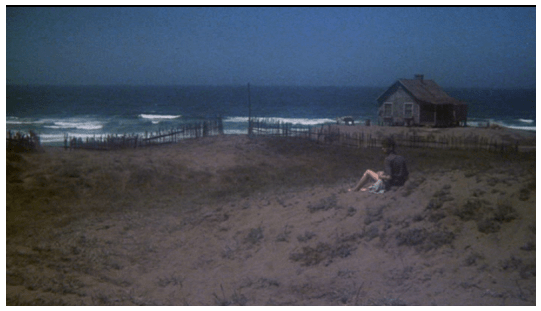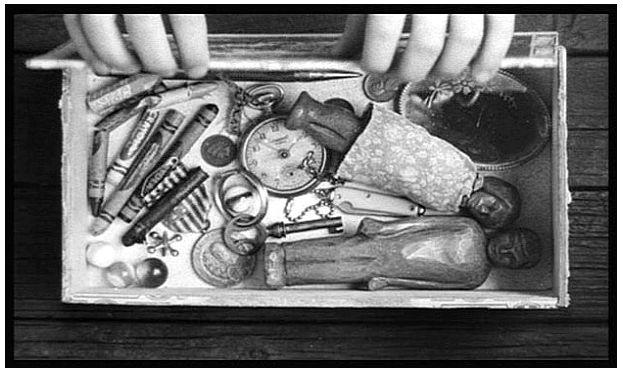
John Ford: A Biography

I wrote this biography of John Ford for TCM’s DVD box set John Ford: The Columbia Films Collection (2013)

ford columbia

In 1967 Kenneth Tynan asked Orson Welles which directors he most admired. Welles responded: “The old masters. By which I mean John Ford, John Ford, and John Ford.” In the short history of moving images, John Ford occupies a uniquely revered position. He won a record four Best Director Oscars while remaining as popular with moviegoers as critics. His films were rousing entertainments that also picked at the contradictions of American life, of individual freedom vs. community, civilization vs. wilderness. These contradictions settle in the person of John Wayne, who forges a new society in Stagecoach (1939), violently holds it together in The Searchers (1956), and exposes the lies of its construction in The Man Who Shot Liberty Valance (1962). Ford’s films are as American as apple pie and armed aggression, and Ford is a great enough artist to encompass both.

John Martin Feeney was born in 1894 in a two-story farmhouse in Cape Elizabeth, Maine to his mother Barbara and father John. He was their tenth child, but only the sixth to survive. Both of his parents had emigrated to the United States from Spiddal, Ireland. John Sr. worked for the gas company, and made extra cash by selling bootleg whiskey to sailors and dockworkers. He eventually saved up enough money to purchase what would become Feeney’s Saloon, the new family business. John Jr. was a poor student but a devotee of the Nickelodeon theaters, and found his way into the movies when he discovered his wayward brother Francis had changed his surname to “Ford” and become a successful actor and director. After graduating high school, he briefly attended the University of Maine in the school of agriculture. He quickly decided dredging pig slop wasn’t for him, and sent his brother a wire asking for a job at Universal. He left for Southern California by train in July 1914.

His first job was as a studio ditchdigger, but he pitched in wherever he could. He was a stuntman, prop wrangler, camera operator, assistant director and actor, learning the whole business from the ground up. He even nabbed a bit part in D.W. Griffith’s The Birth of a Nation (1915) as a hooded member of the Ku Klux Klan. He made his directorial debut on the two-reel Western The Tornado (1917), credited with his nickname, “Jack Ford”. The majority of the 40-plus films he directed for Universal have been lost. The greatest losses were the 24 films he made with Harry Carey, only one of which survives (Straight Shooting (1917)). Carey was known as the “Bronx Cowboy”, a rough-and-ready hero more realistic than the spic-and-span Tom Mix. Ford described the Carey persona as, “sort of a bum, a saddle tramp, instead of a great bold gunfighting hero.” The director would look back fondly on these films, dedicating 3 Godfathers (1948) to Harry Carey, and making Carey’s son Harry Carey, Jr. part of his stock company of actors. John Wayne would pay his own homage at the end of The Searchers (1956), by mimicking Carey’s famed gesture of gripping his right elbow with his left hand.

In 1920 Universal agreed to lend Ford’s services to Fox, the studio for whom he would make more than 50 features over 30 years. In another milestone that year, he would wed Mary McBryde Smith, a North Carolina native of Scottish and Irish descent. Their marriage was a rocky one, but like a good Catholic he never divorced. Together they had two children, Barbara and Patrick.

Ford’s first film for Fox was the lyrical small town comedy Just Pals (1920), and the last the WWI comedy What Price Glory (1952). As Harry Carey’s star waned in 1921, Ford left Universal for good and signed a long-term contract with Fox. The Iron Horse (1924) was his first big-budget spectacular, an epic  re-telling of the construction of the transcontinental railroad that movingly conveys the immigrant experience (it was inspired by John’s Irish uncle Mike). 3 Bad Men (1926) is a less triumphal version of American expansionism, an intimate tragicomedy about three outlaws who escort a grieving daughter to her land claim. Darkened with chiaroscuro lighting by DP George Schneiderman, it reckons with the price paid in blood by the push Westward. As the popularity of the genre sunk, Ford wouldn’t make another Western until Stagecoach (1939).

Fox at that time was under the spell of German master F.W. Murnau, who had come stateside to film Sunrise (1927). His mobile camera and expressionistic lighting deeply affected Ford, whose works in this period bear Murnau’s influence. It is most evident in Four Sons (1928), a WWI melodrama about a Bavarian widow whose children all enlist in the war, and it re-emerges in Pilgrimage (1933) and The Informer (1935). With the Western in eclipse and the emergence of sound, Ford experimented in a variety of genres, including gangster films (Born Reckless, 1930), underwater action (Men Without Women, 1930) and jailhouse comedies (Up the River, 1930). The last featured the debuts of Spencer Tracy and Humphrey Bogart.

His films of the mid-1930s can be split into the “serious” works he made for RKO, like the IRA drama The Informer and WWI morality play The Lost Patrol (1934), and his more commercial films for Fox, like his trilogy of bucolic small town comedies with Will Rogers: Doctor Bull (1933), Judge Priest (1934) and Steamboat ‘Round the Bend (1935). He netted his first Best Director Oscar for The Informer, but today the Rogers films seem more personal. They are visions of troubled melting pot communities held together by the folksy, open-minded progressiveness of Will Rogers, the kind of society that might have sprung up after the church raising in My Darling Clementine (1946). Ford later re-made Judge Priest as The Sun Shines Bright (1953), and named it the favorite of his films.

John Ford became the John Ford of legend with the release of Stagecoach in 1939. While the number of Westerns being produced was again on an uptick after over a decade of decline, the vast majority were cheap B-pictures. So when Ford started shopping his adaptation of the Ernest Haycox short story “Stage to Lordsburg,” it took him a year and a half to land the picture with Walter Wanger for distribution through United Artists. John Wayne, a former bit player for Ford who was making B-Westerns for Poverty Row studio Republic Pictures, was tapped for the lead. It was the first film that Ford shot at Monument Valley in Utah, the pockmarked moonscape that would become the testing ground of his Western protagonists for decades to come. A swiftly paced adventure that also pokes holes in classist bourgeois values, it helped to kickstart a new cycle of Western films and launched Wayne into the stratosphere. Orson Welles screened it repeatedly to learn film form before making Citizen Kane (1941).

The film’s success led to an astonishing burst of creativity, leading to what is informally known as Ford’s “Americana Trilogy”: Young Mr. Lincoln (1939), Drums Along the Mohawk (1939), and The Grapes of Wrath (1940). A mix of Popular Front politics and Ford’s brand of populist patriotism, they span the era from the Revolutionary War to the Dust Bowl, and etch Henry Ford as a symbol of American decency, which, in Drums and Grapes, has revolutionary implications. Ford would go back to his roots for How Green Was My Valley (1941), his melancholy portrait of industrial progress, as a Welsh mining family declines along with the ascent of mechanization. Famous for beating Citizen Kane for the Best Picture Oscar, it is one of Ford’s most emotionally wrenching works, and introduces a skepticism towards “progress” that he returned to throughout his career.

It was his last feature before the onset of WWII, during which he served as a Commander in the U.S. Navy, and led the Field Photographic Branch of the Office of Strategic Services, for whom he directed a number of propaganda films, from the syphilis scare flick Sex Hygiene (1942) to the harrowing battle footage of The Battle of Midway (1942). Midway and December 7th (1943) would win Best Documentary Feature and Short awards, respectively, but the bulk of his work for the OSS was secret, filming “guerillas, saboteurs, Resistance outfits.” After being discharged, he built the Field Photo Farm, a decked-out retreat where his Navy pals gathered every Memorial Day, and which had as its centerpiece a chapel in which the names of their deceased colleagues were etched. It remained in use until the end of his life.

His first feature after the war was They Were Expendable (1945), a downbeat portrait of a stretched-thin PT boat crew defending the Philippines from Japanese attack. The elegiac script was written by Ford’s Navy pal Frank “Spig” Wead, whose tragic life he captured in the bio-pic The Wings of Eagles (1957). After Ford’s immersion in the present, the rest of the 1940s find him grappling with the myths of the American West, beginning with Wyatt Earp and My Darling Clementine (1946). Henry Fonda, that paragon of virtue, turns the Earp role into that of a civilizing figure, clearing a path for community to rise in the violent go-it-alone ethos of the frontier. In the “Cavalry Trilogy” that begins with Fort Apache (1948), Fonda plays against type as an uptight martinet who leads his troops into a slaughter. Similar to the “print the legend” decision in The Man Who Shot Liberty Valance (1962), which covers up the real identity of the title’s shooter, Fonda’s folly is hidden and he is recast as a hero. John Wayne plays the scout who buries the truth and prints the legend. In She Wore a Yellow Ribbon (1949) and Rio Grande (1950), Wayne is an aging officerat peace with the moral compromises of the job. He is headed for retirement but is wary of the generation that will follow him, clashing with his subordinates and his children. Here again Ford is a skeptic of progress.

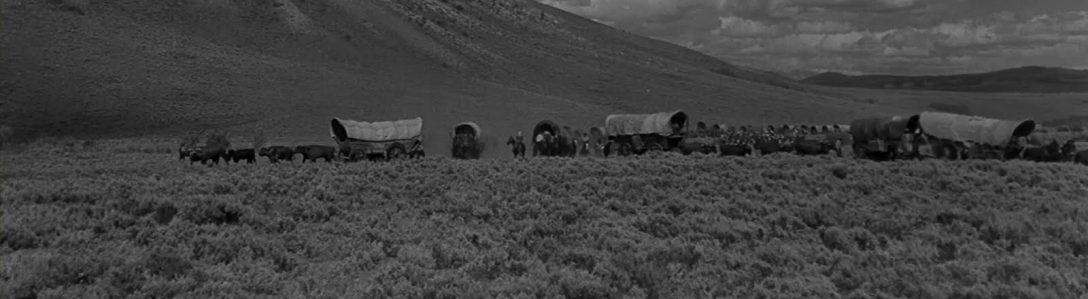
Wagon Master (1950) is one of his lesser known Westerns, but perfectly expresses Ford’s vision of community. Starring Ben Johnson and Harry Carey Jr., it follows a wagon train of Mormons and Medicine Show performers as they head west for the promised land. Ejected from every city they land in, together they create an outsider society of their own. In The Quiet Man (1952), John Wayne runs away from a violent past into the Emerald Isle, shot in eye-popping Technicolor by Winston C. Hoch. One of Ford’s passion projects, he had been trying to get it made since 1935, and finally convinced Republic Pictures’ Herbert Yates to back it after getting Wayne and Maureen O’Hara to accept pay cuts. Filled with knockabout Irish comedy and sweeping romance, it became one of Ford’s most popular pictures, and he won his final Best Director Oscar for his efforts. His other personal project for Republic, the Judge Priest remake The Sun Shines Bright (1953), disappeared quickly from theaters. A profoundly moving tale of tolerance, its plainspoken cornpone honesty did not connect with audiences.

Ford soon proved his box office bona fides with Mogambo (1953), an exotic big game hunting adventure with Clark Gable and Ava Gardner. On the shoot in Africa he contracted amoebic dysentery, which eventually led to cataract surgery and the donning of his trademark eyepatch. Always a heavy drinker, his alcoholism became chronic in this period, leading to the chaotic Mister Roberts (1955) production, for which Henry Fonda returned to the screen after eight years on Broadway. The two clashed, and the combination of drink and stress led to a ruptured gall bladder. Mervyn Leroy was called in to finish the production. The film was a hit in spite of itself.

Out of the chaos of Mister Roberts came Ford’s supreme masterpiece, The Searchers. Invigorated by his return to the Western genre and Monument Valley, it is an immersive journey into the dark heart of America. John Wayne plays Ethan Edwards, former Confederate soldier and mercenary gun for hire on a vengeful quest into Comanche territory to recover his kidnapped niece, whose parents were slaughtered. He is a virulent racist set on killing the niece sullied by the Comanche—Westward expansion envisioned as genocide. The ending is a miracle and a wish, a conversion into the communal America of My Darling Clementine and The Sun Shines Bright.

After a detour to Ireland and England with The Rising of the Moon (1957) and Gideon of Scotland Yard (1958), Ford returned to America and continued to feel his age, and make films about the process. The Last Hurrah (1958) tells the last days of a Boston politician, played with warmth by Spencer Tracy, and Two Rode Together (1961) is about an aging gunslinger Jimmy Stewart, exhausted and cynical about a town’s plan to recover their kidnapped children. Stewart returned for The Man Who Shot Liberty Valance (1962), a stately B&W memorial to the Western, in which, like Fort Apache, history is re-written to protect our country’s founding myths.

In his final decade Ford was engaging with the Civil Rights movement, reflecting on his own representation of Black and Native Americans (although personally he drifted toward Conservative Republican politics after WWII). Sergeant Rutledge gave Woody Strode a rare leading role in a chamber courtroom drama, playing a cavalry officer unjustly accused of raping a white woman. Cheyenne Autumn (1964) tells the tale of a Cheyenne tribe starved of resources by U.S. Indian Agents, and how they break through their reservation to take back their ancestral hunting grounds. Ford’s final film, 7 Women (1966), has the verve of a pulp adventure novel as Christian missionaries are besieged by Mongolian warriors, with only secular doctor Anne Bancroft to save them. It is like a feminist version of the Cavalry Trilogy, a siege narrative with nuns instead of soldiers (and with Vietnam the unspoken allegory, instead of WWII).

Ford’s health kept deteriorating, and in October of 1971 he was diagnosed with terminal cancer. While battling the disease he stayed in touch with his stock company and watched old Westerns on television. He died on August 31st, 1973, with Woody Strode holding his hand.

–by R. Emmet Sweeney
John Ford: The Columbia Films Collection

These are the liner notes I wrote for John Ford: The Columbia Films Collection (DVD, 2013)

ford columbia

The five features John Ford directed at Columbia Pictures are fascinating departures, a group of mostly city-set tragicomedies that reveal how this legendary director of Westerns was also a keen observer of his present day. From the neurotic split personalities in The Whole Town’s Talking (1935) to the  worn out politician in  The Last Hurrah (1958), these films  depict how industrialization was altering the civilization Ford  so movingly constructed in The Iron Horse (1924) and My Darling Clementine (1946), by privileging the individual above the community. This is also reflected in his late Westerns like Two Rode Together (1961), which presents the township as riven with hypocrisy. Made decades apart, these films present an alternate history of Ford as a gimlet-eyed chronicler of urban life .

 The Whole Town’s Talking was an agreeable assignment. In late 1934 Ford had finally convinced RKO to fund The Informer, after being turned down by the five major studios because of the film’s sensitive political content. To once again prove his box office bona fides, he made the lyrical Will Rogers comedy Steamboat Round the Bend (1935) for Fox, and was loaned to Columbia for The Whole Town’s Talking. Based on W.R. Burnett’s short story “Jail Breaker”, it was intended to be Edward G. Robinson’s return to box office glory.  Robinson was on suspension at Warner Bros., having rejected one script too many, and the studio was happy to loan him out to Columbia for some quick cash. Robinson biographer Alan L. Gansberg claims the actor rejected Alfred Santell as director, and demanded that Harry Cohn get John Ford from Fox.

Steamboat Round the Bend completed shooting in August of 1935, and The Whole Town’s Talking began rolling in October. Burnett’s story was adapted into a script by frequent Frank Capra collaborators Robert Riskin and Jo Swerling, and the film retains the Capraesque sensibility of a little man stumbling his way up the economic ladder. It tells the tale of mild mannered office clerk Arthur Ferguson Jones (Robinson) who just happens to be the spitting image of escaped gangster “Killer” Mannion (also Robinson). Jones is arrested, released and hired to pen a newspaper column about his brush with infamy, and when Mannion gets wind of it he leaks details of his violent exploits to his doppelganger. The column becomes a sensation, all while Jones is pining after Miss Clark (Jean Arthur), the sassy co-worker who acts as his de-facto agent and manager.

Ford presents the city as an undulating mass of humanity, people as indistinguishable suits and fedoras. The opening shot tracks through a city office, with hunched over workers typing at their clacking counting machines (perhaps a nod to King Vidor’s The Crowd (1928)). Later when Jones is arrested for looking like Mannion, he is subsumed by shouting police and press, left cowering in a corner chair. Jones yearns to disappear and be one of the mob, but his face betrays him. It is only Miss Clark who seems worthy of individuality. She is introduced in a nimbus of cigarette smoke at the office’s threshold. After taking a deep drag, she flicks away the butt, steps through the door and exhales an insouciant puff. Minutes later she is fired and rehired, and reacts to both as if it were a run in her stocking. She is, rather gloriously, her own woman.

The recessive Jones only catches her eye after getting loaded with the bosses and yelling, “so long, slaves!” to his co-workers,taking on the aggressive attitude of Mannion. The rest of the film finds Jones searching for balance, trying to say goodbye to servitude without subjugating others. Ford slowly empties out the frame, the madcap chaos of the office and police station scenes replaced by tense shotsof Jones and Mannion circling each other, deciding the ideal way to be free.

Ford would not return to Columbia for 20 years, until The Long Gray Line (1955). It is another story balancing the individual and the group, this time among the regimented life of soldiers at West Point. Producer Jerry Wald had wanted to produce a film version of West Point lifer Marty Maher’s autobiography at RKO. Bringing Up the Brass (1951) had strung together anecdotes from Maher’s 50 years as an instructor at the Point, but RKO declined to option it. Wald eventually took an executive producer position at Columbia, where he revived the project and hired Ford to direct and Tyrone Power to star.

It was Ford’s first feature since undergoing eye surgery for cataracts. During the Mogambo (1952) shoot in Africa, Ford contracted amoebic dysentry, and began suffering blurriness of vision. He stubbornly put off the operation until July 1953, when he started to fear going blind. Vision in his left eye would be impaired for the rest of his life, and necessitated that he wear his famous eye-patch. Ford biographer Joseph McBride quotes one of the director’s soundmen observing, “The Old Man can’t hear, he can’t see. All he can do is make good pictures.”

Now with only one good eye, the studio mandated he make The Long Gray Line in CinemaScope, his first experience with the new format. He was none too happy with the process, telling Peter Bogdanovich, “You’ve never seen a painter use that kind of composition. Your eyes pop back and forth, and it’s very difficult to get a close-up.” Despite his complaints, he took to the process naturally, using the film’s title as visual instruction, with rows of gray Marines set up like dominos across the wide frame. Irish immigrant Martin Maher (Power) is always set apart from these lineups, a waiter who works his way up to become an instructor of boxing and swimming, despite his lack of experience in both.

While intended as a tribute to West Point and its former graduate (and current President) Dwight D. Eisenhower (played by Harry Carey, Jr.), the film endures as a treatise on aging, as Maher watches as his boys who once lined up for lap swim end up on long lists of dead men during the two World Wars. He is helpless against these ravages of time and the violent world outside. He finds comfort in the regimented order of life at West Point, where he can always find everything in its place, usually put there by his wife Mary O’Donnell (Maureen O’Hara), who even brings over his father and brother from Ireland. O’Hara reportedly had vicious fights on the set with Ford, and her performance is equally vehement, depcting Mary as a hotheaded Irish lass who delights in needling Marty’s masculine insecurities. Early in their marriage Mary and Marty learn they can’t have children, so their love turns to the cadets. As classes come and go, and die overseas, Marty and Mary become walking memorials to the men they taught and loved. In one of the most moving scenes in Ford’s films, he shows Marty tottering through an empty kitchen, the soldiers’ absence far stronger his presence. But as Marty and Mary have built their own isolated community in West Point, it fills up again with young recruits, eager to hear Marty’s stories of the old days. It ends on a triumphal note, but as the vicious cycles of the rest of the film have made clear, these boys will also disappear.

Ford continued the theme of solitude within a crowd with the laid back police procedural Gideon of Scotland Yard (1958). The most obscure of his sound features, it follows the harried Inspector of Scotland Yard (Jack Hawkins) over the course of one day, tracking murderers as well as a fish he must bring home to dinner. It was adapted from the detective novel Gideon’s Day (also the British title of the film), the first of a series by J.J. Marric, one of the many pseudonyms of prolific pulp novelist John Creasey.

Ford was reuniting with producer Michael Kilcannin, who had helped put together the Irish anthology film The Rising of the Moon (1957) with WB the previous year. The studio system was breaking down, and with it Ford’s post-Searchers project The Valiant Virginians, which was killed when the producer pulled out his money to invest in a chain of television stations. Ford sought to ease his frustrations abroad. His interest in Gideon revived Columbia British Productions after a fourteen year layoff; the studio was last active on Alberto Cavalcanti’s Affairs of a Rogue (1948). Joseph McBride surmises that Ford took on the project because he wanted to help British actress Anna Lee, a member of his acting stock company, get off of the blacklist. In her first role since 1952, she plays Gideon’s wife, Kate. The shoot also conveniently killed time while Ford was waiting for Spencer Tracy to finish shooting The Old Man and the Sea, so he could use him in The Last Hurrah.

Shot at Elstree studios in Hertfordshire, England with an all-British cast and crew, it held little market appeal in the U.S., where Columbia treated it as a B-picture. They cut it by a third (to 54 minutes) and only distributed B&W prints of the film shot in Technicolor by DP Freddie Young (Lawrence of Arabia).

This doomed its reputation at the time, but it is overdue for rediscovery. Gideon is a clear stand-in for Ford himself, an abrasive workaholic attempting to bend an unwieldy bureaucracy to his will. Ford always called his films “a job of work”, and Gideon treats his job with the same gruff professionalism. Whether it’s catching a thrill killer or getting to his daughter’s violin recital, he is only concerned with completing the task at hand. In an expansive mood Ford once called star Jack Hawkins, “the finest dramatic actor with whom I have worked.” Trained on the London stage, Hawkins is a rumpled masculine totem who keeps his emotions sewn up underneath a begrimed suit coat. (great description!)

The film details the messy overlapping chaos of the everyday, where work bleeds into private life until it’s impossible to tell the difference. At one point Gideon has lunch with his wife, but brings an army of detectives along, literally bringing work home with him. Anna Lee puts on a brave face of indomitable domesticity, but near the end of the film instructs her daughter (Anna Massey): “Promise me one thing. Never marry a policeman.” Shot in a string of medium shots and cut at a breakneck tempo by Ford’s standards, it is the most televisual of his films. The Gideon series of novels was eventually turned into a series on the British network ITV, while Ford had moved on to film another man working inside a bureaucratic system in The Last Hurrah.

After Ford finished reading Edwin O’Connor’s novel The Last Hurrah (1956), he fired off a telegram to Harry Cohn saying he would make the film version for free (he actually did it for $125,000 and 25% of the net, according to Joseph McBride). The novel is a fictionalization of the life of James M. Curley (1874 – 1958), Boston’s Irish-American political boss. The Democrat Curley was a four-term mayor, a two-term Congressman, and a two-time convict. O’Connor named him “Frank Skeffington”, and detailed his failed campaign for a fifth term as mayor, reflecting the decline of machine politics as children of immigrants began to climb the economic ladder. Already folk heroized in O’Connor’s book (adapted to the screen by Frank Nugent), Ford buffed him further, with no trace of the mob ties or kickbacks that kept him in power. Instead he zeroed in on the character’s creeping obsolescence, as political campaigns shifted from the streets onto television. It is unreliable as history but, like The Long Gray Line, is deeply moving as a film about aging.

Ford had a tough time casting the lead role, cycling through names like James Cagney, John Wayne and even Orson Welles, before agreeing upon the common sense choice, Spencer Tracy. The two proud Irishman had not worked together since Tracy’s debut in Up the River (1930), where, McBride writes, “Tracy found the director overbearing and always resisted being part of his stock company.” After Tracy rejected a part in Ford’s The Plough and The Stars (1936), their relationship deteriorated. Katherine Hepburn interceded to secure the plum role of Skeffington for Tracy, who was then in poor health after the demanding and stressful shoot on The Old Man and the Sea (1958). Tracy was so drained during The Last Hurrah he was contemplating retirement, telling The New York Times: “Twenty-eight years is a long time. I started with John Ford and it has been suggested that since he is directing this film it might be an appropriate time for me to call it quits. You know, the beginning and the end with Mr. Ford.”

He would go on to make six more films, but this mood of melancholy retrospection was ideal for the role of Skeffington, who takes stock of the world that was and the one swiftly passing him by. Sensing that his fifth election will be his last, he asks his sportswriter nephew Adam (Jeffrey Hunter) to join him and observe the end of his era. His campaign is filled with pressing-the-flesh handshakes and ill-fitting suits. Ford usually shoots in long shot to frame Tracy in crowds, whether it’s his fluttering advisors or favor-peddling constituents. Ford compares that to his isolated young opponent, propped up by his WASP benefactors in hilariously awkward television spots. A young priest echoes what Ford himself may have thought of the coming generation: ”I prefer an engaging rogue to a complete fool.”

Adam is the only member of Skeffington’s family who might learn his traditions, as his son is an airhead playboy and his beloved wife passed on. Skeffington honors her by placing a rose in front of her portrait before leaving the house, reminiscent of Will Rogers conversing with his dead wife in Judge Priest (1934). Skeffington hearkens back to Ford’s films with Rogers, a folksy politician who is more concerned with people than power. The Last Hurrah acts as a memorial for men like Judge Priest as well as the artist who made it, with Ford perhaps reflecting on his own obsolescence. The cast is filled with old character actors from his past: Jane Darwell, John Carradine, Mae Marsh, Pat O’Brien, Donald Crisp and many more. They hover around Skeffington like friendly ghosts, easing him into the afterlife. When Skeffington loses the election, and strolls alone past the victory parade, it is a mournful inversion of the finale to The Sun Shines Bright (1953), Ford’s remake to Judge Priest. That film concludes with the whole town parading before the kindly judge, paying their respects. In this version he is rejected by the next generation, disappearing into the cheering crowds and ending up on his deathbed.

While he was filming Two Rode Together (1961) Ford was forced to bid farewell to Ward Bond, who died of a heart attack at the age of 57. He had directed Bond in over 20 features, and when he was informed of Bond’s death on the set by Andy Devine, he characteristically replied, “Well, I think you’re going to have be my horse’s ass now!” He would mourn after the shoot with an alcoholic bender that would land him in the hospital. Ford did not have fond memories of the film, calling it “the worst piece of crap I’ve done in twenty years”. His grandson Dan Ford said he made it solely for the money ($225,000 plus 25% net profits), yet, as disjointed as it is, it features darkly funny performances from Jimmy Stewart and Richard Widmark, flashing some of Ford’s gruff witWhere The Last Hurrah and The Long Gray Line mourn time’s passing, Two Rode Together is bitter about it. The story, adapted by Frank Nugent from Will Cook’s novel Comanche Captives,, follows cynical small town sheriff Guthrie McCabe (Jimmy Stewart) as he is asked to enter Comanche territory and reclaim kidnapped white children, some lost for years. Accompanying him is cavalry officer Jim Gary (Richard Widmark), a sometime friend appalled by Guthrie’s mercenary instincts to profit from parents’ desperation.

Jimmy Stewart is corrosively funny as Guthrie, as he skewers the townspeople’s misplaced hopes and casual racism against his Mexican girlfriend Elena (Linda Cristal), who once lived with the Comanche. He’s introduced tipping back in his chair in a dandified suit, his foot on a front porch post, a burlesque of Henry Fonda’s similar pose in My Darling Clementine. It’s clear from this visual rhyme that the simplicity of Fonda’s Wyatt Earp has curdled into decadence. The Comanches revert to the stereotype of simplistic savages, riven by petty jealousies and driven by the bloodlust of warrior chief Stone Calf (Woody Strode, who was part Native American).

The film is fueled by a palpable disgust with humanity, perhaps exacerbated when Ford got word of Bond’s passing. The film is at its calmest and most engaging when it focuses on the sniping friendship between Guthrie and Jim, a battle of clashing insecurities expertly deployed by Stewart and Widmark. Ford clearly enjoys watching them work, as the story slows down to a crawl to accommodate them. The highlight of the film is a nearly four-minute shot of the two men sitting creekside, where they argue about money, jealousy and the terrors of marriage proposals. Ford frames them from the ankles up, so they fill up the composition with their jousting gestures, their stogies brandished like rattling sabres. It’s a charming scene of pure performance, before the plot rears its ugly head.

Guthrie and Jim find a few of the children, but they are irredeemable, just like the townspeople. It acts as a blackly comic version The Searchers, similar to how Ford parodied The Grapes of Wrath (1940) with Tobacco Road (1941). In The Searchers Ethan Edwards is a necessary monster, brutally clearing the way for a nascent civilization, while in Two Rode Together Guthrie’s search proves him to be a wreck clearing the way for more of the same. Progress has stunted, and Guthrie’s only recourse, in the ostensibly happy ending, is to leave town with Elena for parts unknown.

Following this distorted little Western, Ford would make The Man Who Shot Liberty Valance (1962), which clarified and deepened his concerns about the narrative of progress in the old West. John Ford’s films with Columbia often have the feel of test runs for something greater, but it is that spirit of experiment that makes them so essential, with ideas flying out in every direction. Whether through CinemaScope or Academy ratio, snappy urban comedy or prestigious biopic, Ford vigilantly pursued his themes of freedom vs. conformity, nature vs. civilization, and the passage of time that would make them all obsolete. But these films will endure.


LIVES OF THE AIN’TS: IT’S A WONDERFUL LIFE (1946)

December 25, 2012

Screen Shot 2020-02-05 at 5.49.04 PM

It’s A Wonderful Life has screened so often it has become cultural wallpaper, the background noise to tree decorating and on-line discount shopping. When it shifted into the public domain in 1974, television channels could air it without paying fees, and it became program filler for twenty years before subsequent copyright battles (it is now owned by Viacom/Paramount). Familiarity can breed, if not contempt, then at least apathy, and It’s A Wonderful Life  is treated more like a nostalgia piece than a work of art. That was my ignorant attitude, at least, until I watched it again this past weekend, and for the first time fully appreciated its melancholic rendering of adulthood’s parade of dashed hopes and perpetually delayed dreams. It was Frank Capra’s  first narrative feature after four years of making propaganda films for the Army during WWII, and it feels like he imbued it with a life’s worth of disappointments, tagged with a vision of transcending these failures in an ending only Hollywood could provide.

The story for It’s a Wonderful Life was written by Philip Van Doren Stern, who sent it out in a 1943 Christmas card. A Civil War historian and sometime fiction writer, Van Doren Stern started work on his short story, then entitled The Greatest Gift, in 1939, but couldn’t find a publisher, so included it in his’43  holiday mailings. It somehow reached Cary Grant, who brought it to RKO’s attention. RKO bought the rights, and started to prepare a version in which Grant and Gary Cooper would star. After treatments by leftists Dalton Trumbo (blacklisted in 1947) and Clifford Odets (who testified before HUAC) were both rejected (were their versions too downbeat?), RKO sold the story rights to Liberty Films, a newly formed company started by Frank Capra, William Wyler, George Stevens and Samuel J. Briskin after their release from WWII service. Liberty would produce and RKO would distribute, with Jimmy Stewart, also freshly released from wartime service, to star. Liberty borrowed $1,540,000 from Bank of America to fund their first production.

Capra began shooting It’s a Wonderful Life in April of 1946, just as William Wyler began production on The Best Years of Our Lives, which dealt with the war’s aftermath more directly. Capra was not interested in memorializing the war. He told Richard Glatzer:

Yes, the war did affect me. I didn’t want to see another cannon go off; I didn’t want to see another bomb blow up. War lost its glamour for me. Just to see those trembling people in London during the Blitz, poor sick old ladies crying, crying in terror…children. There’s got to be something better than bombing old ladies and children. I lost…there’s nothing glamorous about war. I didn’t want to be a war hero, nothing. That’s why I made a movie about an ordinary guy.

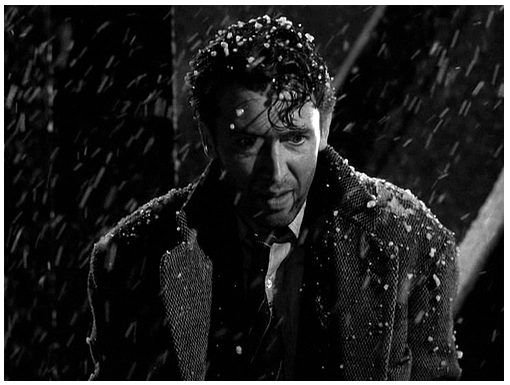
George Bailey (Jimmy Stewart) is listed 4F for the war because of his bad left ear. He is an outsider to his age, missing out on WWII as well as the post-war economic boom when he fails to invest in his old school buddy’s plastics business. His only dream is to travel, but with the death of his father and the entire Building and Loan company depending on him, he stays in the sleepy town of Bedford Falls, deferring his adventurous plans year after year. There is one devastating shot when this dream finally dies. George meets his brother Harry at the train station, and learns that Harry will not be taking over his job at the Building and Loan. Stewart’s face collapses in passing, before re-composing enough to congratulate his brother on his marriage and his new life. That expression is Bailey’s private funeral for his future, one now forever bound to be anonymously lower middle class. George is Capra’s ordinary guy, one who sacrifices his own life so his brother can join the stream of history and become the subject of Hollywood hagiographies. But at least in It’s a Wonderful Life, George is the star.

Capra emphasizes George’s subordination, keeping most action in the background while George is oblivious in the fore. As kids, Harry sleds right by George and into a crack in the ice. George has to save him, and loses part of his hearing in the process, setting up his sacrificial role for life. Then there is the school dance, in which George and his girl Mary (Donna Reed) dance without noticing that the gym floor is slowly cracking open, revealing the pool underneath. The rest of the party has noticed and stepped back, but George is again oblivious, and drags Mary along with him into the drink. Capra artfully deploys this water-as-oblivion metaphor throughout, culminating in the snowstorm that marks his decision to jump into the abyss one final time, a potential suicide leap off a bridge.

Disgusted with forever being on the periphery of the American dream, George decides to end it all, which triggers the appearance of Clarence (Henry Travers) the deus ex machina angel. Only through fantasy, through the construction of a George Bailey-less alternate reality, where Bedford Falls becomes a seedy juke-joint town called Pottersville, can his existence be justified. That is, through cinema itself, for what is Clarence if not the director of this nightmare, constructing it with the flick of his finger?  His grindhouse version of Bedford Falls has Bailey as agog as a gullible teen at an opening night of Paranormal Activity, wide-eyed with terror. But instead of glorifying Hollywood trickery, what makes It’s A Wonderful Life so unbearably moving is that it urges George to escape artifice and return to banal reality and celebrate what meager joys are left to us here.  It is the saddest of happiest endings.

WARNER ARCHIVE ROUNDUP: BORN TO BE BAD

October 30, 2012

BORNTOBEBADLC3

The Warner Archive continues to release an enormous amount of the WB back catalog, at a rate impossible to keep up with. Here is my vain attempt to catch up, covering a group of four films made up of bad men and one very bad woman. The most famous title is Nicholas Ray’s Born to Be Bad (1950), a devious noir/woman’s picture in which Joan Fontaine uses her seductive wiles to marry the heir to a family fortune. Then there is a trio of manly ne’er do wells, with Peter Graves leading a mercenary force in the spaghetti western The Five Man Army (1969), Robert Mitchum doing the same in a priest’s habit in The Wrath of God (1972), and Rod Taylor carousing his way through Dublin in Young Cassidy (1965).

Nicholas Ray shot what was then titled Bed of Roses in 35 days, from June 20th to July 30th of 1949. It was a project that the head of RKO, Howard Hughes, had indefinitely postponed in 1948, one of the provocations that caused the production head Dore Schary to quit. It had gone through seven screenwriters and five directors before Ray took over, with Joan Fontaine in the lead role. Even Fontaine was wary, with her husband William Dozier writing to Hughes, “I’m afraid Joan’s enthusiasm for this project has not heightened any with the passage of time.” It was an adaptation of the 1928 novel All Kneeling by Anne Parrish, divulging the seedy story of Christabel Caine (Fontaine), a manipulative ladder-climber eager to seduce every man she meets and then marry the one with the most money. Her target is Curtis Carey (Zachary Scott), the scion of a wealthy family already engaged to Donna (Joan Leslie), the whip-smart assistant to Christabel’s Uncle John, a publisher. Christabel also has the acidically funny Nick (Robert Ryan) on a string, who is one of John’s up and coming authors. Despite all the studio snags, Ray orchestrates a deliciously cynical melodrama of sexual power plays. It is a movie of lush upper class interiors, and Ryan has the characters constantly shifting in the frame, as seen in the bravura opening sequence, in which Donna is preparing a dinner party. Donna is a blur of preparatory focus, walking in and out of rooms while Ray returns to a fixed shot of the hallway. Eventually Donna is speedwalking toward the camera, and trips to the floor over a suitcase inconveniently placed in the hall. It is the introduction of Christabel, who is sitting patiently in a room to the right. In this clever bit of choreography, Christabel is visualized as a roadblock to Donna’s best-laid plans.

Ray is aided by richly layered performances from Fontaine and Ryan. Fontaine uses a girlish hair-flipping exterior to hide her designs, letting diabolical smiles slip out once the other characters leave the frame. Ryan is a wisecracking rogue who sees through Fontaine’s exterior, describing her dual personality to her face, and yet unable to tear himself away from her. In a damning kiss off at one of her ballroom parties, following her marriage to Curtis, Ryan tells her, “I love you so much I wish I liked you.” And yet a few scenes later he’s back in her arms, ready and willing to believe her latest bedside conversion.

If Born to be Bad exhibits the genius of the Hollywood studio system, then The Five Man Army is representative of that system’s decline. As the Paramount Decision dismantled the vertical integration of studios, they scrambled to find new ways to gain audiences. The spaghetti western was one such avenue, and as the success of these products became clear, studios cut in on the action. The Five Man Army is a U.S.-Italy co-production distributed by MGM. Although Don Taylor is credited with directing the film, various reports have producer Italo Zingarelli (the pseudonym of director Giulio Questi) and even the young co-screenwriter Dario Argento taking the reigns after Kelly had to depart early to take on a TV production. There is a marked difference between the early, dialogue heavy scenes and the epic, almost wordless train heist takes up nearly the entirety of the last half-hour of the film. I haven’t found any reliable sources on the matter, but whoever ended up sitting behind the camera, it’s an effective Seven Samurai/Magnificent Seven style mercenary film, capped by a surging Ennio Morriconne score and that extraordinary finale. Peter Graves, then famous for his role on Mission Impossible, headed the international cast, which was made up of mountainous Neapolitan tough guy Bud Spencer, the stereotyped silent Japanese “Samurai” (Tetsuro Tanba), tiny Italian firecracker Nino Castelnuovo, and Midwestern American James Daly. This roughshod group follows Graves’ immaculate white helmet hair in his attempt to rob an army train filled with gold.

The Wrath of God (1972) is a similarly post-Paramount Decision product, filled with aging Hollywood stars and shot in Mexico. Robert Mitchum, in a nod to his seminal psycho in The Night of the Hunter, plays a lapsed priest, only this time he’s a robber during the Mexican Revolution, using his priestly garb as a passkey through the country. It also features Rita Hayworth in her final feature performance, playing the mournful mother to Frank Langella’s psychopathic son. Mitchum is rounded up by a local strongman to take out Langella, aided by a feuding Englishman and Irishman – Jennings (Victor Buono) and Emmet (Ken Hutchison). Mitchum is as laid back as ever, his laconic priest passively taking in the casual indignities and random slaughters imposed upon the Mexican people. But when he finally rouses himself into action, and flings a tommy gun from behind his robes, it’s a deliriously entertaining moment.

There is nothing so daring about Young Cassidy (1965)a rote bio-pic about the early years of Irish playwright Sean O’Casey (named John Cassidy in the movie – one of O’Casey’s pseudonyms). Originally developed by John Ford, he had quite the job when assailed by a strep throat (and his usual alcoholism), and DP Jack Cardiff stepped into the director’s chair. Ford biographer Joseph McBride suggests that Ford was unhappy with the script and casting, and that his ailments were intentionally self-inflicted to get him off the film. The producers denied his request to shoot in black and white and refused to let him shoot in the old-fashioned Limerick instead of the modernized Dublin. Sean Connery was originally cast in the O’Casey role, but had to back out when he had to fulfill his contract in the James Bond film Goldfinger (1964, released before Cassidy). So instead of the Scot, the Australian Rod Taylor took over the role. He manages a decent Irish accent, but gets lost in the episodic script, which is a succession of disconnected macho escapades. The pleasures of the film are exclusively provided by the actresses – a luminous, playful Julie Christie as a Dublin prostitute, and a furtive, hesitant Maggie Smith as O’Casey’s patient girlfriend, until that patience runs out.

As ever, the Warner Archive is an essential resource for the curious cinephile, whether you’re an auteurist or a genre aficionado. This post hopefully suggests that it’s more fun to be both.

THE OLD & THE NEW: BYE BYE BIRDIE (1963)

Originally published at Movie Morlocks, the official blog of Turner Classic Movies

August 28, 2012

Screen Shot 2020-02-05 at 1.36.54 PM

Against a backdrop of retina-bursting blue, the 22-year-old Ann-Margret waves goodbye to the classical Hollywood musical in Bye Bye Birdie (1963). Director George Sidney seems prescient in expanding Ann-Margret’s role at the expense of intended stars Janet Leigh and Dick Van Dyke, considering the explosion of the youth market less than a year later, when The Beatles would appear on The Ed Sullivan Show (which also makes an appearance in Bye Bye Birdie), cementing rock band movies/concerts as the musicals of the near-future. Now available in a gorgeous limited edition Blu-Ray from Twilight Time (for purchase exclusively at Screen Archives), Bye Bye Birdie is an eye-popping transitional work, with the old and the new Hollywood brushing up against each other with both awkward and thrilling results.

As a Broadway show,  Bye Bye Birdie was a gently satiric take on the gnashing of female teeth caused by Elvis Presley getting drafted into the army, told mainly through an adult’s perspective.  It follows struggling songwriter Albert Peterson and his secretary and sometime girlfriend Rosie Alvarez as they try to get rock heartthrob (and Elvis stand-in) Conrad Birdie to sing their tune on The Ed Sullivan Show. The character of Kim McAfee, the teen girl plucked from Birdie’s fan club to receive his last kiss before he enlists, is a distinctly supporting part.

But when director George Sidney saw Ann-Margret’s ebullient performance, he expanded her role to include five musical numbers (up from two), and cut out Janet Leigh’s big “Spanish Rose” routine. This shifts the perspective to the teenage denizens of Sweet Apple, Ohio.  One of Sidney’s inventions was placing Ann in front of a blue-screen to open and close the picture, a showcase in which she exhibits a faux-naivete (clutching her skirt), only to be replaced by a self-aware come-hither stare, in a performance which, as Dave Kehr wrote in the New York Times, is “so charged with erotic energy that you can practically feel a nation’s toes curling. She plays Kim, the head of the Conrad Birdie fan club, and her scenes are supercharged with hormonal energy, including her “How Lovely To Be A Woman” solo, in which her playfully aggressive donning of a sweater dress completely undermines the squeaky clean sexism of the lyrics (“It gives you such a glow just to know/You’re wearing lipstick and heels!”). Kim is fiercely in charge of her own life, especially over her milquetoast boyfriend Hugo (Bobby Rydell), who unfortunately is tasked with trying to one-up her at a dance-off during the “A Lot of Livin’ To Do” number (he loses).

In between all of this, Dick Van Dyke and Janet Leigh valiantly attempt to keep the supposed A plot, that of Peterson and Rosie, percolating. But maybe because Sidney was too enamored of Ann-Margret, their work looks flat in comparison. Leigh was inevitably disappointed with the finished film, writing in her autobiography that, “George had changed as well. I couldn’t exactly define the difference. It might be accredited to the transference of his Svengali attitude from me to the new and young Ann-Margret. He saw, perhaps, an opportunity to mold another budding career. I was ‘old hat’ after the numerous pictures and tests we had made together. His dismissing behavior wreaked havoc with my already precarious stability.” The only relative oldster who comes off with an equal level of energy or verve, is, of course, Paul Lynde, who takes on his stage role of Mr. McAfee, Kim’s befuddled dad. Knocking out a venomous version of “Kids”, Lynde’s particularly nasal wit makes it seem like being an adult is not the bore Peterson and Rosie make it out to be.

One thing that brings all ages together in the film is their desire to be on television. From Peterson to Kim to the mayor, everyone kowtows to Ed Sullivan and his producer, hoping the idiot box will goose their businesses or make them a star. Television, and variety shows like Sullivan’s, was part of the reason for Hollywood’s decline in box office in this period, and spurred their desperate search for what audiences actually wanted. But the film reflects that all people wanted was more TV. The finale, which turns the Sullivan show into an amped up burlesque, thanks to the effective sabotage work of Peterson and Rosie, is an attempt to depict television as, even at this late date, as a kind of rough and tumble Wild West of entertainment. The sequence makes it look like a particularly poor night at a community college’s talent show – as contrasted with the slick musical sequences from earlier in the film.

It is a sparklingly polished film, like a lollipop licked to maximum sheen, the popping primary colors captured in smoothly arcing crane shots. None of the colors register as sharply as Ann-Margret’s personality. A musical star was born, but right at the beginning of the genre’s slow demise. She would co-star with the real Elvis in Viva Las Vegas (1964), but aside from the rock-opera Tommy (1974), wouldn’t star in a full-blown musical again.

PLEASURES OF THE PRE-CODE: FORBIDDEN HOLLYWOOD VOLUMES 4 AND 5

July 24, 2012

Screen Shot 2020-02-05 at 12.36.19 PM

This astounding publicity shot of a screwfaced James Cagney reluctantly probing the shoulder of a coolly admiring Claire Dodd should sell anyone on the value of Hard To Handle (1933), or of the two new volumes of WB’s Forbidden Hollywood DVD series that is releasing it. The way Cagney separates his left ring and pinky fingers – as if he couldn’t bear to put the effort into using all five digits – exemplifies his casual mastery (even in PR shoots!) in fleshing out the con-artist cads he played throughout this period. And this is only one of the pleasures found within volumes 4 and 5 of the series, which includes a trio of treats from director William Dieterle, and snappy banter from the likes of Barbara Stanwyck and Joan Blondell. The last edition appeared in 2009, containing a bevy of depression-scarred William Wellman films, but as DVD sales have continued to crater, so has the prominence of this series, with the new editions being released on WB’s movies-on-demand line, the Warner Archive.

Volume 4 includes Jewel Robbery (1932), Lawyer Man (1932), Man Wanted (1932) and They Call It Sin (1932). The first three were directed by William Dieterle in his first flurry of creativity after arriving from Germany in 1931. I have enthused about Jewel Robbery in this space before, but it is truly a marvel, an effervescent sex (and drugs) comedy that is also one of Hollywood’s rare explorations of female desire. Kay Francis wishes for adventure, and in swoops the slick-haired and slicker-tongued thief William Powell, waiting to sweep her away. Lawyer Man (shot in 21 days) finds Powell back as a smooth talker, this time as an idealistic New York City lawyer brought low by the corruption in the system and in his loins. His sole connection to his former straight life is his ever-loyal and plucky secretary Lola, played with usual verve by Joan Blondell.

Blondell is the star of Miss Pinkerton (1932), part of Volume 5, which also includes Hard To Handle (’33), Ladies They Talk About (’33) and The Mind Reader (’33). As with Kay Francis in Jewel Robbery, Blondell plays a gal eager for adventure, although instead of a society dame, she’s a gum-smacking nurse. While dressing down to her negligee in the employee lounge, she dreams of an escape from routine and the smell of chloroform. Then she is plucked to minister to a sick old crone in an old dark house. It turns out the crone’s nephew may have been murdered there, and the detective in charge (George Brent) has tapped Blondell to glean any info she can from its nervous inhabitants. The story is a third-rate whodunit, but it’s directed by the prolific pro Lloyd Bacon with speed and plenty of comically looming shadows, and Blondell is as charming as ever, blazing through the dusty plot mechanics with a brassy bravado.

Then there’s Hard To Handle, a breezy comedy about an endearing shyster. Cagney is loose and playful as Lefty Merrill, a two-bit scam artist who goes from promoting a phony “treasure hunt” (which causes a riot) to becoming the CEO of his own giant PR firm. The art of the con is essential knowledge for the advertising biz, as Cagney lies his way up the ladder. His rise is paralleled with his gal pal Ruth (Mary Brian), an aspiring model whose scheming mother Lil (Ruth Donnelly) plans to marry her to the richest husband possible. As Lefty’s fortune’s rise and fall and rise again, so does Lil’s interest. Everyone has an angle, but this is no cynical satire, but rather a bubbly romantic comedy. Director Mervyn LeRoy simply lets Cagney spin like a top, his machine-gunning speech patterns timed to nimble half-pirouettes, a man in constant motion, forever searching for a score. Scrounging for money was simply a fact of life, with no moral qualms attached.

Ladies They Talk About is saddled with moralizing speeches, by radio pedagogue David Slade (Preston Foster). A non-denominational preacher, he gains fame (and one assumes) fortune from railing against the vices pre-code Warner Brothers capitalized so heartily on. But while Slade wins in the end, there is plenty of titillation in between his hollow victory. The focus of his efforts is Nan Taylor (a particularly slinky Barbara Stanwyck), who got arrested for acting as a decoy for a gang of bank robbers. Initially posing as innocent, Slade sets up a PR assault to set her free, until she offhandedly admits her guilt, and Slade lets her go to jail. One of the earliest women-in-prison movies, Ladies They Talk About excels in scenes of female camaraderie, as Stanywck strikes up an instant friendship with another tough broad played by Lillian Roth. She takes her on a tour of the cell block, a hard-bitten crew of murderers and thieves given a roll-call in close-up, no innocents here. Directors Howard Bretherton and William Keighley give a sense of their daily routine in an impressive tracking shot across multiple cells. A particularly grim vision of femininity as imprisonment, Nan’s union with Slade retrospectively looks like she’s trading one cell for another.

Warren William’s characters, however, thoroughly enjoy the patriarchy and wring every advantage possible out of it. In The Mind Reader (shot in 22 days), William plays another con-artist of the carny kind, pulling teeth “painlessly” at a county fair, selling hair tonic on the road, and finally hitting the jackpot in the fortune telling business. He slaps a towel on his head, calls himself “Chandra”, and William has women pledging their bank accounts to him. Busy milking the rubes, he also finds time to fall in love with boring good-girl Sylvia (Constance Cummings), who only marries him if he promises to quit the con game. He agrees, and pathetically goes door-to-door selling wire brushes.  William tells a friend, “I’m on the straight and narrow…you know…the wife.” Bored and broken, William realizes he’s a cheat at heart, and returns to soothsaying even though he knows it could destroy his life. In the shattering penultimate sequence, William is shown drunk in Tijuana, the perfectly oiled William coiffure mussed into a mess. Overcome by self-loathing, he re-directs it toward the crowd, berating them for believing his lies of their future, believing that his own had all but run out.

A cornucopia of deviant money-grubbing borne out of the Great Depression, volumes 4 and 5 of Forbidden Hollywood are ideal viewing for our never-ending Great Recession, with the added value of sublime performances from Kay Francis, James Cagney, Joan Blondell and Barbara Stanwyck. There is no finer way to spend an economic apocalypse than in their company.

THE FILMS OF ROBERT MULLIGAN, PART 4

March 13, 2012

Screen Shot 2020-02-03 at 12.04.20 PM

This the final post in my series on the films of Robert Mulligan. Click for parts onetwo and three.

As much as Robert Mulligan is associated with the South, for To Kill a Mockingbird and The Man in the Moon, he was actually born in the Bronx. A few years after his tepidly received L.A. noir The Nickel Ride (1975), he adapted Richard Price’s Bronx-set second novel, Bloodbrothers, which was released in ’76 (the film came out in September of 1978). An epithet-laced trawl through an Italian working class family, Mulligan toned-down the language (from the book’s first page: “His hand smelled from that oily shit inside Trojans”), but captured the twitchy, carnal energies that fueled such texturally dirty talk.

Robert Surtees, who had shot Mulligan’s Summer of ’42 (’71) and The Other (’72), returns as the director of photography, although the the gauzy images of those films are replaced with hard-edged, dark blue tones. Clearly Mulligan was impressed with Jordan Cronenweth’s similarly detailed work in Nickel Ride. The film opens in a helicopter shot of a smoggy Bronx as night falls, crossing highways and subways until there is a cut to a crane shot that eases onto the facade of Banion’s Bar, seemingly the palpitating heart of the borough.  This amiable joint, the local watering hole for the construction worker’s union, is named after wheelchair bound Irish carouser/owner Banion (played with immense warmth by Kenneth McMillan) who trades handjob jokes and chummy backslaps with the volatile De Coco brothers, the insecure macho teddy bears whose family is the center of the film.

Banion’s is more home to the brothers than their walk-up apartments, filled as they are with the disheartening markers of adulthood like children, wives and bills. Tommy De Coco (Tony Lo Bianco) and his brother Chubby (Paul Sorvino) are the patriarch of a struggling clan, with Tommy’s wife Maria (Laila Goldoni) on the brink of a nervous breakdown, while his fragile, feminine youngest son has been browbeaten about his weight into anorexia. Tommy’s hope lies with his eldest, Stony (Richard Gere), a handsome, reassuringly hetero playboy who is about to enter the construction union. But alas, Stony has dreams of escape, implied in the cut from Banion’s to the elaborately outfitted cavern-disco he frequents, with faux-stalactites dripping from the ceiling in honor of his own raging, confused hormones. Focused by the straight talk of liberated chick Annette (an inflammatory Marilu Henner) Stony shirks construction for a job as a recreation assistant at the local hospital, fulfilling his dream of working with kids. Tommy is incensed, and Stony has to choose between family or freedom.

The script by studio veteran Walter Newman (Ace In the Hole) is overstuffed with incident (and received an Oscar nomination for it), and Mulligan embraces the abundance by pushing for an across-the-board hysterical style of acting. This is grating and invigorating in turn, with Tony Lo Bianco performing as an over-gesticulating stereotype, while Paul Sorvino’s papa bear routine secrets away layers of pain that well up in his often overfilled eyes (although he does have the benefit of the most emotionally naked monologue in the film). Richard Gere is effective in mumbly James Dean mode, a figure of naive charm starting to become aware of a world outside the Bronx. Although, as with all of Mulligan’s coming-of-age films, this knowledge is rife with dangers. Just as William and Jane fly away into uncertainty in The Pursuit of Happiness, so do Stony and his brother drive off into the unknown, with only a few bucks to their name, but a dream of independence just over the horizon.

There is none of this richly moving ambiguity in Same Time, Next Year, a stodgy farce that Mulligan cranked out quickly the same year. It was released in November of 1978, only two months after Bloodbrothers. It was based on a hugely successful Broadway play of the same name, about two lovers who meet once every year for a one-night stand. Written by TV scribe Bernard Slade (The Flying Nun, The Partridge Family), it ran for close to 1500 performances and netted Ellen Burstyn a Tony Award. For the film, Slade wrote the screenplay and Burstyn returned to play the role of Doris. Charles Grodin, who played George in the stage version, was replaced by Alan Alda.

It is nothing more than a filmed version of the play, taking place almost entirely in a hotel room, with little choreography inside the frame. It’s mostly Alda and Burstyn jawing back and forth at each other.  Robert Surtees returns as DP (his final film credit), and it contains the warm, nostalgic filtered light of Summer of ’42, but is only shown to its full beauty in a few exterior shots. The play itself is a clunky contraption, revisiting the lovers every five years or so, larded with cheap signifiers to denote each era. In the 60s, Burstyn dons Native American dress and talks about protesting, while Alda slides into a suit and talks about voting for Goldwater. The characters get lost in symbolism, and never crackle with erotic intensity (which comes with casting Alan Alda). The film was then of course nominated for four Oscars.

Mulligan, now deep into his 50s, began to slow down his working pace considerably. He had made ten features in the 60s, and six in the ’70s, but would go on to direct only two films in the ’80s, before capping his career with The Man In the Moon in 1991. He was still garnering awards and praise, so it is likely Mulligan could have been more productive if he so chose. But with the  turn to Jaws-imitating blockbusters, perhaps there were just not many appealing projects offered to him. His next feature, the supernatural romantic-comedy Kiss Me Goodbye (1982) would tend to affirm this theory.

Never one for “high-concept” plots, Mulligan has here agreed to direct a very loose adaptation of Dona Flor And Her Two Husbands (1976), about a woman whose dead husband begins to haunt her when she is to marry again. At the time of its release, the original was the most successful film in Brazilian history. It seems Mulligan could only make his kind of intimate drama if it had this kind of box-office goosing gimmick. And despite how ill-suited he was to this kind of genre mash-up, it ends up as a diverting treat, if not at the top-tier of his accomplishment.

He’s helped by a game cast, first and foremost Jeff Bridges, whose uptight Egyptologist at the Met Museum honorably channels Cary Grant’s similarly anal scientist in Bringing Up Baby. While not matching Grant’s athleticism and uncanny comic timing, Bridges does have a talent for embattled exasperation, his expression one of barely concealed disgust. And as Grant is drained by the  kookiness of Katherine Hepburn’s wealthy family, so is Bridges of his rich fiance, Sally Field. Field is innocuous in her usual chipper munchkin routine, so Claire Trevor (as her mother) easily sashays away with the show in her final feature film. It is worth watching just to see her grand industrial-strength bitchiness cut Bridges down to size. James Caan, as Field’s ghost husband, is woefully miscast as a charismatic Broadway choreographer, but he is nothing if not game, which could be said for this entire film, a modern contraption that Mulligan manages to make look towards the past. The film performed modestly at the box-office, finishing with $15.78 million, right in between Death Wish 2 and the re-issue of Star Wars (according to Box Office Mojo).

Then came the longest layoff in his career, six years, before he agreed to make Clara’s Heart (1988) for Mary Tyler Moore’s production company, MTM. He was clearly only willing to make films on his terms at this point, and this coming-of-age tale returns to his favored themes of maturation and disillusionment. Based on the novel by Joseph Olshan, it follows teenaged David (Neil Patrick Harris, in his first screen role), as he grapples with the death of his baby sister and the resultant crack-up of his parents’ marriage. He turns to his Jamaican nanny Clara (Whoopi Goldberg) for stability and strength. I harbored fears that this would devolve into one of those Hollywood wish-fulfillment fantasies where the kindly black character solves all of the rich white people’s problems, but thankfully, things simply get more complicated from there.

Mulligan had the good fortune to hire Freddie Francis (The Elephant Man) as his DP, and the film includes some of the most emotive set-ups of his career. In the opening sequence, Mulligan and Francis hold a close-up of David as a funeral ends, with flashes of black tuxedos passing him in the foreground. It is an image of a boy made scattered and incomplete by mourning. Later, they execute another shot of incompletion, during one of his parents’ arguments. In one long take, the mother is sitting screen right in a living room, the father to the left, in his study. The rooms are separated by a wall, so each are ensconced in their separate worlds. This image alone defines the dissolution of their union, and yet another rupture in David’s life.

His relationship with Clara is fraught, as he transitions from bratty teen to the realization that she is the only stable part of his life. They test and circle each other, waiting to expose each other’s vulnerabilities, as their racial and class boundaries are forefronted by Mulligan (the cut from David’s suburban mansion to the Jamaican neighborhood in Baltimore acts as a closure – there is not easy passing between these two zones). They develop their own wary love for each other, and by the time Clara reveals her own past traumas (that are as vast and unresolved as David’s), they accept each other for the imperfect, guilt-ridden creatures that they are. This is Mulligan’s kind of (ir)resolution, the recognition of limitations his own happy ending. So he ends it with another close-up of David, this time free and clear of all obstructions, aside from the ones in his memory. The film bombed, earning just over $5 million (right behind the Chuck Norris cheapie Hero and the Terror) and earned no Oscar nominations.

The Man in the Moon is a distillation of this theme of irresolution, one which opens with the idolized older sister saying, “sometimes things just don’t make sense, and all of a sudden, I get scared.” As with the opening shot of Bloodbrothers, Mulligan has his DP (Freddie Francis this time), crane his camera down into the film’s thematic heart, instead of a bar, it’s a screened in porch. This downward craning shot also has an echo in To Kill a Mockingbird, in which the camera descended a tree and outlined the main drag of the town, before backtracking to introduce Scout. The Man in the Moon‘s shot reveals another headstrong tomboy, Dani (Reese Witherspoon, who, like NPH, makes her screen debut. Mulligan was an ace talent scout). She is listening to Elvis’ “Loving You” for the umpteenth time, and is chastised by her older sister Maureen (Emily Warfield), who a few moments later will discuss her undefinable fear.

The story is utter simplicity, but rendered with subtlety in Jenny Wingfield’s original script (her first). Dani is in the process of trashing her Elvis posters and fixing her attentions on a real live boy – the dreamy new neighbor Court (Jason London). He literally crashes her childhood idyll, jumping into a swimming hole she had considered her own private domain. This rupture spurs Dani’s maturation, and engages her in a world of petty jealousies, shocking violence, and unutterable tragedy. All of Mulligan’s coming-of-age stories are steeped in death, the loss of innocence revealing the world in all its unresolved, unanswerable reality. Dani, as with Scout, or William (Pursuit of Happiness), or Hermie (Summer of ’42) has the veil removed from their childhood games, and they shift from a mythologized childhood to fraught adulthood. This transition is made visible Mulligan’s through subjective camera, the low-angles in Mockingbird and the idolizing slow-motion of ’42 changing to sober eye-line matches and close-ups.

Dani is visualized in tracking shots, speeding from house to lake in frolics of determined intensity. The first is seen before her initial encounter with Court at the lake, the last in a mournful sprint from her first funeral service. She opens by racing to something, and ends by sprinting away, into the unknown.  There is also a visual rhyme to that opening crane shot, which has its correlate in the shattering closer. The camera drifts towards the front of the house, reversing the opening shot, before cutting to the interior. It floats past the newborn baby and settles on their  Mom and Dad in bed, as Dani asks (offscreen): “Marie? Is it always going to hurt this bad?”. The implicit answer is in their father’s face, played so engagingly laconic by Sam Waterston, who has an inexplicable smile on his face as he turns and faces his wife, happy to be at home, regardless of the tragedies outside.

This reverie stops as Mulligan cuts to a static shot of the walled-in patio, where Maureen is combing Dani’s hair. Now the dreams are in the interior of the house, and the adolescents outside are growing into the no-nonsense world of static two-shots:

Dani:  “Sometimes, I think that nothing’s ever going to make sense again”

Maureen: “Maybe life’s not supposed to make sense.”

Dani: “Doesn’t that scare you?”

Maureen: [whispered] “Yes, it does.”

Maureen’s tossed-off lines at the beginning of the film, meant to assuage Dani’s own insecurities, are now repeated, and have accrued layers of resonance. It is one of those scenes that can reduce me to tears, regardless of how many times I’ve seen it, which has made this particular transcription particularly vexing.These lines are an acknowledgment that there is no governing logic to our lives, but whatever happens, that it can be endured with grace. There is no better way to encapsulate his extraordinary career than those words of Dani and Maureen, in their brave resignation.

So, watch some Mulligan.

THE FILMS OF ROBERT MULLIGAN, PART 3

February 28, 2012

Screen Shot 2020-02-03 at 11.56.26 AM

This is the third part of a series discussing the complete filmography of director Robert Mulligan. Click to read Part 1 and Part 2.

As the 1960s ended, so did Robert Mulligan’s collaboration with producer Alan Pakula. After seven films together, Pakula embarked upon a successful directing career of his own, beginning with the college romance of The Sterile Cuckoo in 1969 (which would earn Liza Minnelli her first Oscar nomination). Mulligan also tried his hand at courting the youth market,  starting production on The Pursuit of Happiness late that same year, although it was not released until 1971. It was the first coming-of-age story that Mulligan directed since To Kill A Mockingbird, and its melancholic sense of lost innocence pervades all of his work in the early 1970s.

As with all of the Pakula-Mulligan productions, The Pursuit of Happiness was adapted from a novel, this time by Thomas Rogers. The rights were purchased by David Susskind, a prolific producer of TV movies who re-entered theatrical features with this low-key story that was shot late in 1969 (he made the hit sex comedy Lovers and Other Strangers (1970) immediately afterward). Sidney Caroll (The Hustler) wrote the script, but a revision by George Sherman introduced so many changes that Caroll requested his name be changed to Jon Boothe. The final draft follows lapsed-radical William Popper (a morose Michael Sarrazin) as he argues with his student-activist girlfriend Jane (Barbara Hershey) and accidentally sulks his way into prison. There he decides to drop out of society for good.

Working on location in NYC with D.P. Dick Kratina, who had just shot seedier parts of the city in Midnight Cowboy, Robert Mulligan crafts a sympathetic, though distant, portrait of a disaffected ex-Leftist youth. Mulligan, who had joined the Marines at the tail end of WWII, was an outsider to the violent revolutionary stirrings of the 60s, saying that, “We were in the process of a nightmare that I didn’t understand. and that I didn’t feel anyone else understood. I mean, the riots were going on, the campuses were being burnt, the ghettos were being burnt, the marches were going on, people were being killed. It just didn’t make any sense.” Pursuit is his attempt to comprehend a generation he is entirely disconnected from, and the result is a film of great sensitivity and sadness, because he can never bridge that gulf.

Kratina and Mulligan open the film on a close-up of a toy sailboat, bobbing in a park pond, inter-cut with shots of William. He is instantly identified as adrift and alone, cutting through a sea of humanity, each protesting inaudible causes. Kratina’s camera roams with a cinema-verite freedom, the frames crammed with idealistic bodies that William swiftly navigates away from.William ignores them, Sarrazin’s face holding a persistent dopey calm, a smirk perpetually creeping up his lips. He slices his way to his girlfriend (an engagingly perky Barbara Hershey), who was originally inflamed by his passion, and now vaguely annoyed by his apathy and creeping nihilism. Their academic world is filled out by their Hippie pal Melvin (an adorably manic Robert Klein), who is seen mostly sleeping in William and Jane’s bed.

Their circumscribed world comes apart when William is involved in a car accident, and faces serious jail time. Then the world outside floods in, and with it the revelations that he comes from a rich, well-connected family, and political resentments ooze out of every corner. His aunt asks, “still a communist?”, while his grandmother bluntly states how her neighborhood declined once the “negroes and jews” moved in. Because of his wealth, he gets fine representation from a blustery E.G. Marshall, who pithily comments that “when you got in trouble, you came straight for the reactionary bastard.” The sense of class betrayal is ever-present, no more so in the painfully bittersweet scene when William declines his Grandmother’s offer to inherit the family mansion. She, like William Buckley Jr., wanted to “stand athwart history, yelling stop!”, but had to watch her grandson embrace the multi-cultural future instead.

When William decides to escape America once and for all, it should be a moment of triumph, and would be in a traditional counter-culture movie of the period. But Mulligan senses tragedy in this breakdown of society, no matter how nakedly corrupt he has shown it to be. Their departure sequence occurs in near-silence, after an uncomfortable barter with a smarmy pilot played by William Devane. The transaction is starkly capitalistic, as if the couple is swapping one exploitative system for another (one of crime). So when they take to the air, headed for Mexico, the overwhelming emotion is not one of release, but of unutterable sadness. The lovely Randy Newman song that plays under their escape captures this ambivalence perfectly:  “Let me go, let me go, let me go/Don’t give me the answer/cause I don’t want to know”.

Columbia Pictures delayed the release of The Pursuit of Happiness for over a year, perhaps because of how “square” the film would look next to Easy Rider (1969), and put it out to little fanfare in February of 1971. In the interim, Mulligan shot the deeply personal Summer of ’42, which Warner Brothers released to enormous box office in April of that same year. It’s a nostalgic coming-of-age tale of three young boys as they spend a summer on Nantucket. Seemingly tailored for Nixon’s so-called Silent Majority, with its loving evocation of small-town American life, it nevertheless retains the ambivalent melancholy of The Pursuit of Happiness, its youths also lost inside of different kinds of American myths.

Herman Raucher wrote the autobiographical script in the 1950s while as a TV writer, but he couldn’t get anyone to look at it. He was acquaintances with Mulligan from those days, and once the director gained enough clout, was able to get the picture funded for “a million dollars” (interview in the TC Palm). The story centers on Hermie (Gary Grimes) and his infatuation with Dorothy (a dreamy Jennifer O’Neill), the beautiful army wife whose husband is fighting during WWII.

It is Mulligan’s first collaboration with the great DP Robert Surtees (The Last Picture Show), and they opt for heavily filtered images of browns and greens, the beaches fading like old Polaroids. This sense of the movie as memory is enhanced by the voice-over, which is read by the director himself. The events are clearly past, mythologically so, with scenes of troops sailing off to war, first dates at the movie house, and fumbling over an old sex manual. These are scenes that could come out of a Budweiser commercial, but Mulligan invests them with such emotion and detail they become monumental. He shoots Hermie’s hand marching down the shoulder of his date as if he was conquering Normandy. One starts to notice the expressivity of clothes and objects, the gritty texture of Hermie’s beach shoes and rolled up slacks, as if a Victorian orphan in short pants, unfit to be seen in the presence of Dorothy’s snug cable sweaters and J. Crew yachtswoman wear. Through Hermie’s gaze, Dorothy is a mystical object.

The penultimate sequence, in which Dorothy falls into Hermie’s embrace, is a marvel of tonal ambiguity, as unexpected as the close of The Pursuit of Happiness. What should be Hermie’s glorious climax is a scene of mourning and cold comfort. Hermie enters her room, and Mulligan and Surtees isolate objects of her presence: a cigarette, a skipping turntable and a crumpled letter. The room is heavy with her presence, a ghostly atmosphere. Hermie resets the music, and Michel Legrand’s score fills the room, opening a space for Dorothy’s entrance. She enters, and it’s become clear her husband has died. The music ends and the clicking sound repeats with grief-stricken repetitions. Dorothy falls into Hermie’s arms, and Mulligan continues to focus on details: feet, hands, shadows on wallpaper. Neither are whole individuals, Dorothy is slowly collapsing, Hermie overwhelmed to keep her together. The lurid climax of the usual hetero sex comedy has turned into something tragic and uncertain. In the end, the ghostly Dorothy disappears, and Hermie is left to look at the ruins of his childhood, saying in retrospective voice-over, “I lost Hermie, forever”.

The Other (1972) is also about loss, but fudged into the Manichean machinations of a boilerplate horror tale. It’s adapted from actor-turned-author Tom Tryon’s best-selling novel about twin boys who have a penchant for astral projection, hallucinations and a few murders. It is 1935 and Holland and Niles Perry live an idyllic-Satanic life in Connecticut, stealing jam from the neighbors and a finger from their dead father. The family’s maid, Ada (Uta Hagen, in her first screen role), has been teaching the boys how to astral project their bodies, but has begun to suspect these lessons are not being used for good.

It retains the thrust of his other work in this period, of the tragic death of childhood illusions (and no viable afterlife), but the vehicle for this idea is a rickety one. Tryon’s script never develops a coherent character out of either twin, both just inexpressive conduits for a few slaughters, with no childhood left to mourn. Without this emotional undertone, the film becomes a slog of unmotivated plot twists. The child actors, Chris and Martin Udvarnoky, are eager but uncharismatic, never gaining the unaffected naturalness of the kids in Summer of ’42 or To Kill a Mockingbird. These tots are always over-emphasizing their lines, more or less pounding them flat. Despite all these dramatic flaws, the film still looks gorgeous, with Mulligan and Surtees bathing it in a golden-green glow, and pulling off some impressive subjective camera shots, which become fractured along with Niles’ psychology.

Mulligan followed up this misfire with one of his greatest works, The Nickel Ride (1974)Mulligan depicts the decaying mental state of an aging paranoiac through cinematographer Jordan Cronenweth’s palette of rotting browns, and lead actor Jason Miller’s remarkable ability to deflate himself into the posture of a crumpled paper bag. Miller plays Coop, a low-level fixer for the Los Angeles mob who is getting pushed out of his position by a young, sweetly psychotic Southerner (Bo Hopkins, channeling Jon Voigt in Midnight Cowboy). One of Eric Roth’s (Forrest Gump) earliest scripts, it is also his most effective, a film about the cruelty of time’s passing and the crueller tricks of an addled mind. Instead of youth passing into adulthood, it is about middle-age passing into death.

Originally called 50-50, Eric Roth recalled in Backstory 5 that it was supposed to be about “a man turning fifty, a film noir with intimations of mortality.” Robert Mulligan agreed to make it for producer David Foster, his first film after making McCabe & Mrs. Miller (1971), who had secured a distribution deal with 20th Century Fox. The lead was originally intended to be played by George C. Scott, but he had to drop out, leaving the part to relative newcomer Jason Miller, fresh off of The Exorcist. Miller is extraordinary, giving a performance of hollowed-out intensity. He painfully maintains his everyman persona at the local watering hole and with his painfully young wife (Linda Haynes), as his fears start to devour him. His speech becomes clipped and his face draws ever tighter into a skeletal mask. At his lowest point he is stalled by the side of the road, an infernal red tail light edging his body, sure that his life is about to end. He just sighs, “Things change.”

THE FILMS OF ROBERT MULLIGAN, PART 2

February 7, 2012

Screen Shot 2020-02-03 at 11.45.54 AM

This is Part Two of a four-part series that looks at the career of director Robert Mulligan. You can find Part One here.

After the success of To Kill a Mockingbird, Robert Mulligan and producer Alan Pakula made five straight films together to close out the 1960s, before Pakula departed to become a director himself. Using Mockingbird as a template, the duo chose projects that dealt with hot button issues (Love With the Proper Stranger and Up the Down Staircase), or were prestigious literary adaptations (Baby the Rain Must Fall and Inside Daisy Clover). Their final collaboration, The Stalking Moon, with a story taken from a Western novelis the exception. Regardless of their middlebrow origin, these are films sensitively attuned to the social and geographic landscapes of their subjects, to the ebb and flow of urban overcrowding and the oppressive emptiness of the open plains. These films also continue Mulligan’s interest in outsiders adapting to new realities, in “dramas of experience intruding upon innocence”, as Kent Jones eloquently put it.

Love With the Proper Stranger was filmed in March, 1963, just as To Kill a Mockingbird was opening nationwide, and was released that December by Paramount. The original script by Arthur Schulman is a downscale romantic comedy, about two struggling New Yorkers, one the out-of-work musician Rocky Papasano (Steve McQueen), the other Macy’s cashier Angie Rossini (Natalie Wood), who are thrown into a relationship after a one-night stand. Angie is pregnant and confronts Rocky, but only wants him to help pay for her abortion.

The musician role was originally offered to Paul Newman, but he turned it down to play the title role in Martin Ritt’s Hud. McQueen doesn’t look the part (he’s more Celtic than Italian-American), but his impassive, slightly hunched interpretation of his character’s protective cynicism is effective and affecting. He walks uncertainly, as if he depended on the city’s walls to hold him upright.

The movie came out a year after Helen Gurley Brown’s Sex and the Single Girl was published (and was filmed a month after The Feminine Mystique came out), and the film channels some tenets of this embryonic feminist text. Angie, when she learns she is pregnant, initially decides to get an abortion, and repeatedly refuses Rocky’s request to get married. Above all else, she wants to live on her own and have financial independence, one of Gurley Brown’s main tenets. Natalie Wood plays Angie with a childish impudence, her stand on women’s rights emerging out of foot-stamping temper tantrums. As the film progresses, and the power roles shift, Wood is able to direct McQueen’s actions with the power of her gaze.

Mulligan has Rocky and Angie continually navigate densely populated spaces (most of which were shot handheld, on location in NYC), going with and against the flow of crowds. In the opening, in which the musicians’ union hall is shown slowly filling to capacity, Angie has to squeeze through to track down Rocky, who doesn’t even remember her. Angie’s apartment is a jungle of mattresses, loud-mouthed brothers and spiteful mothers. Rocky is only seen in his mistress’ place, filled with a half-dozen dogs and cardboard cut-outs of her burlesque act. The world only empties out when they head to the Meatpacking district and meet the black-market abortionist on an abandoned street corner. The world subsides, and decisions must finally be made.

Mulligan re-teamed with McQueen for Baby the Rain Must Fall (1965), a Southern melodrama made for Columbia Pictures about a Texas rockabilly singer and his relationship with his estranged wife. Horton Foote, who wrote the To Kill a Mockingbird screenplay, adapted his own 1954 play, The Traveling Lady for the screen version. The film follows Georgette (Lee Remick) and her daughter as they travel to the small town of Columbus, TX, to see her husband Henry (McQueen), recently released from jail. He is a talented singer-songwriter and a dedicated drunk, unable to resist the lure of the juke joints. An orphan, Henry was raised by the dictatorial Miss Kate (Georgia Simmons), who beat and belittled him as a child. Henry has to overcome his personal and family demons to have any chance at a decent life.

Shot in B&W by veteran Ernest Laszlo (Kiss Me Deadly), the look is the drab grays and hard-edged realism of WPA photographers like Dorothea Lange, while Mulligan opts for contrasts of wide landscapes and looming close-ups. Henry and Kate are connected in the opening bus ride by match cuts on their faces looking off-screen, and their relationship is closed by looking away from each other in the final shot.

The visuals are reliably elegant, but the story is a bit overwrought, with the deeply felt story of Henry and Georgette’s relationship getting overshadowed by the bizarre Southern Gothic subplot of Miss Kate, whose arch-villainy provides a too-pat explanation for Henry’s self-destructive behavior. It’s better to shut your ears and just watch Mulligan and Laszlo go to work.

Mulligan and Pakula went to Warner Brothers for their largest project to date on Inside Daisy Clover, which Natalie Wood was eager to make. Wood had known author Gavin Lambert because of his association with Nicholas Ray, who had directed her in Rebel Without a Cause (1955). Lambert was a young film critic for the British magazine Sequence who later became Ray’s assistant and co-screenwriter on Bitter Victory (1957). Wood contacted him to adapt his own book, and the project started up.

Wood had a personal interest in the satirical tale of Daisy Clover, the young girl plucked from obscurity and groomed into a major studio star, a trajectory largely similar to Wood’s, who gained fame as a little girl in Miracle on 34th St.(1947). The story tracks Clover’s ascent from a celebrity photo stand in Angel Beach, CA, to the heights of Hollywood glory. Along the way she loses her mother and any sense of personal identity. Molded by Swan Studios head Raymond Swan (a deliciously supercilious Christopher Plummer), she becomes a sexless child-star into her late teens, a Mary Pickford of the ‘30s (when the film is set).

It was an odd project for Mulligan to take on, a campy, deeply ironic text put in the hands of an earnest, old-school dramatist. If directed by someone as gifted at caricature and exaggeration as George Axelrod, it would undoubtedly be funnier and more ruthless, however Mulligan does elicit fine performances from Wood, Robert Redford and Ruth Gordon (who received a Best Supporting Actress nomination as Daisy’s ditzy mother). Wood’s transition from smart-aleck street urchin to trembling neurotic is pitched at the same manic level, as if Daisy were hoping that if she kept moving she would never collapse. Redford’s Wade Lewis is the dashing leading man who marries Daisy and breaks her heart. Lewis was originally written as homosexual, although Redford didn’t want to play it that way:

“I wanted to play him as a guy who bats ten ways – men, women, children, dogs, cats, anything – anything that salves his ego. Total narcissism.”

He is Valentino-suave, a nimble seducer who can back men and women willingly into any corner. It is a impressively eroticizied performance for the young Redford, who was singled out for positive notices in the generally hostile reviews. It was also one of the few depictions of a homosexual, or bisexual, character in the 1960s that was not killed in the last reel (as Vito Russo writes in The Celluloid Closet).

Manny Farber described the film as a “thoroughly soft Hollywood self-satire”, but rightly points out the tragic heart of the film, the scene in which Daisy breaks down during a dubbing session. “One scene that is dynamite as anti-Hollywood criticism and the only scene in which Natalie Wood, snapping her fingers to get in time with a giant screen image of herself, is inside the Daisy role with the nervous, corruptible, teenage talent discovered years ago by Nick Ray.” With her image duplicated up on-screen, Daisy repeatedly tries to fill that screen icon’s mouth with her own words, but she can’t do it. The image up there no-longer represents the woman in the booth, and she breaks down, the first step in breaking free.

Inside Daisy Clover was Mulligan-Pakula’s first big failure at the box-office, so they retrenched with a smaller-scale movie, again at Warner Brothers. The two Bronx boys returned with a small high-school drama set in East Harlem, Up the Down Staircase. It was based on the novel by Bel Kaufman, and adapted for the movie by Tad Mosel. It was filmed in Benjamin Franklin High School (now the Manhattan Center for Science and Mathematics), and uses what looks like real students as extras.

In a return to the style of Love With the Proper Stranger, Mulligan uses a lot of mobile handheld cameras to get right into the chaotic flow of teenagers rampaging through hallways. He follows Sandy Dennis through the chaos, playing a teacher straight out of grad school and thrown into the English department. The movie, which opens in the morning herd, is all about organizing the herd into an efficient shape. The routine of the school is expertly plotted by Mulligan and his DP Joseph Coffee, looping in and around the main office as Dennis picks up the endless paperwork and adapts to the quick, repetitive rhythms of a NYC bureaucracy. Mulligan rarely slows down the speed, but when he does, it’s a stunner. He singles out one of Dennis’ students, Alice, for a particular investigation.

As in Proper Stranger’s Meatpacking District, the world empties out, and Alice wanders the hallways with a love letter in her hand. Keeping a respectful distance behind her, Mulligan follows her progress into the office as she drops it off, exits to the middle of the school, hesitates, and returns. She is aghast to see the “unpublished writer, and therefore dangerous” Paul Barringer (Patrick Bedford) holding her letter in his hand, with a smug smile on his face. This simple scene has psychological ramifications that radiate throughout the rest of the film. It is a sequence that tracks Alice’s movements as well as her thoughts, the hesitation revealing the worlds of emotion weighted beneath her surface.

The idea of “moving-as-thinking” is key to The Stalking Moon (1968), a spare Western with no social significance or literary pedigree (it was based on a book by Theodore V. Olsen). For their final collaboration, Mulligan and Pakula make a film that is simply pure cinema, a chase between reluctant hero Gregory Peck and the vengeful, displaced Salvaje (Nathaniel Narcisco). In 1881, Peck is working his last day as an Army Scout, but finds an American, played by Eva Marie Saint, who had been a captive of the Apaches for 10 years. Peck, after much harrumphing, agrees to help Saint and her child travel to Columbus, OH. When he discovers that the legendary Apache warrior Salvaje is the child’s father, he invites them to stay at his cabin, and protect them the best he can. It is an extended chase film, in which one side (Salvaje), is barely seen. The perspective is restricted to Peck, whose looks and hesitations express more than the minimal dialogue he is given.

There is a moment in the cabin, in the low-light of the room shot by DP Charles Lang, in which Peck sits and stares, waiting for Salvaje to enter. Everything is dark except for Peck’s face, the only point of contemplation, in this frame-as-sensorium, where every little movement or sound gives one away. In the end it is a sliver of light that marks Salvaje’s downfall, and the beginning of a new, protective family unit, awake to the world around them.

I am very indebted to Kent Jones’ article on The Stalking Moon in Film Comment.

THE FILMS OF ROBERT MULLIGAN, PART 1

January 31, 2012

Screen Shot 2020-02-03 at 11.37.34 AM

As part of the 100th Anniversary of Universal Pictures, the studio is remastering a series of classic library titles for Blu-Ray, including a 50th Anniversary edition of To Kill a Mockingbird (1962), which comes out today. The movie has become embedded in American culture, but the quiet craftsman behind the adaptation has been largely forgotten. Over the next four weeks I will be doing an exhaustive (but hopefully not exhausting) film-by-film analysis of Robert Mulligan’s directing career. You have Kent Jones to blame for this, who organized the revelatory 2009 retrospective at the Film Society of Lincoln Center, in which I discovered Mulligan’s masterful use of point-of-view and his innate, deeply affecting sympathy for society’s outsiders. He was trained in television like Sidney Lumet and John Frankenheimer, but his elegant style and temperament is straight out of the old studio system. Today I’ll cover his work from Fear Strikes Out (1957) through To Kill A Mockingbird (1962).

Robert Mulligan was born in the Bronx on August 23rd, 1925. After Navy service in WWII and completing a bachelor’s degree from Fordham University, Mulligan got a job as a messenger with CBS. He climbed the ladder to become a television director, most prolifically for “Suspense” (1949 – 1954), a live half-hour drama for which he directed 29 episodes. In 1957 Mulligan made his first theatrical feature, Fear Strikes Out, an adaptation of Boston Red Sox center-fielder Jimmy Piersall’s memoir. It was the first of seven films that Mulligan would make with producer (and later director) Alan J. Pakula (The Parallax View), who also hailed from the Bronx.

In the first of Mulligan’s neurotic protagonists, Fear Strikes Out (1957) stars Anthony Perkins as Piersall, an insecure outfielder who has a nervous breakdown soon after getting called up to the majors. After a year of therapy, and dealing with the excessive pressure pinned on him by his striving father (Karl Malden), Piersall returns to the bigs. He ended up playing parts of 17 years in the league, with two All-Star appearances and Gold Gloves to his credit (here is his Baseball Reference page). Paramount paid a modest $50,000 to secure the rights to Piersall’s pop-psych bestseller, with a production budget of just under a million dollars.

Production head Don Hartman assigned his old assistant Pakula to produce and Mulligan to direct, both first-timers. It is an assured debut for both, shot B&W in the VistaVision process (Paramount’s widescreen competitor to CinemaScope) by veteran DP Haskell Boggs (The Furies, The Geisha Boy).  The live TV shows in which Mulligan cut his teeth used a very mobile camera to create different set-ups on the fly, and Mulligan carries this over to Fear Strikes Out. In one striking sequence, the Piersall family’s poverty is expressed in a few wordless shots. Karl Malden walks inside their spartan home (that overlooks a baking factory), exchanging a bitter look with his wife. Then the camera follows as he walks to the sink, and starts doing the dishes. Mulligan pushes the camera closer to their backs until he finally starts speaking, and it becomes clear he had lost his job, equally embarrassed to tell the camera as his wife.

Anthony Perkins presents another wounded bird for his remarkable menagerie of neurotics, his Piersall a jangly-limbed obsessive who’d rather practice his slide than talk to girls. As Piersall’s world constricts to the one on the field, and his state-of-mind is determined by his batting average, Perkins taps into his inner psycho and rips out a freak-out more outsized than Norman Bates’ sneer. After a slump-busting home-run, Piersall races to the stands behind home plate, and in a full-throated roar asks a dumbstruck Malden if that was good enough, screaming the question until his body convulses into a spastic fit. Francois Truffaut was a young admirer, calling it one of the best of the year, describing it as a “bitter and disillusioned film that doesn’t make you want to live in America. But if there were French directors as lucid and talented as Mulligan…the image of our country on the screen would be a bit less simplified.”

The Rat Race (1960) is not likely to lead anyone to book an American vacation either. The first of two star vehicles Mulligan made with Tony Curtis, it an adaptation of a Garson Kanin play (again made for Paramount), for which Kanin also wrote the script. Curtis is a Midwestern jazz musician who moves to NYC hoping to join a big band, auditioning for the likes of Gerry Mulligan. Debbie Reynolds is his disillusioned roommate, her dreams of modeling already diminished into a job as a taxi dancer who endures harassment from her pervy boss (a menacingly seedy turn by Don Rickles). It’s a dark romantic comedy, with laughs derived from robbery, poverty and desperation. It is another portrayal of outsiders adapting to an antagonistic society, with Curtis and Reynolds forming a shell of defense through their rapport of wisecracking flirtation. Reynolds is especially affecting as a worn-down cynic in one of her first purely dramatic performances. Mulligan does seem hamstrung by the simple studio sets, making do with the materials of what is little more than a filmed play, but it is still a tough, affecting little farce.

Mulligan and Curtis moved to Universal to make The Great Impostor (1961), a comedy based on the true story of Ferdinand Waldo Demara, Jr., a talented con man who passed himself off as a doctor, a warden and a monk. Mulligan and screenwriter Liam O’Brien present Ferdinand as another disillusioned kid, using con-games and play-acting to deny the reality of his impoverished upbringing. While in the army, Ferdinand realizes he can’t get a commission because he lacks a high-school diploma, so he forges a whole illustrious educational career, and he’s off to the multiple-identity races.  While the characters of Fear Strikes Out and The Rat Race find ways to defend themselves from reality (through therapy or love), Ferdinand simply decides to ignore it.

The tone ranges wildly, from madcap farce (like the Novacane overdose teeth-pulling session) to sober melodrama (a prison riot). Curtis is an able chameleonic blank, turning off the charisma spout and turning on the sobriety where necessary.  Mulligan does a workmanlike job with this star vehicle, although unwisely tries to goose the antics with punchline zoom-ins that over emphasize jokes that work well enough on their own. The Great Impostor is a winning trifle that is major in its own way, for it was the first time Mulligan worked with legendary art director Henry Bumstead (Vertigo). A relentless hard-worker and polymath, Mulligan told Bumstead biographer Andrew Horton that the art director “knew infinitely more about the practical, nuts and bolts business of putting a story on camera than you did”. Bumstead had to quickly erect sets for all of Ferdinand’s professions, the most memorable being the arches of the Holy Cross monastery, which seeming recede infinitely into the distance, the sense of divine infinity nicely contrasting with Ferdinand’s get-identity-quick schemes. They would collaborate four more times, culminating in Bumstead winning an Oscar for his work on To Kill a Mockingbird.

The duo would work together again for Universal on Come September (1961) the first of two big-budget spectacles they would make starring Rock Hudson. This one is a frothy generation-gap comedy in which stinking rich capitalist Hudson sees his Italian mistress Gina Lollobrigida every September at his villa in Portofino. Unbeknownst to him, the villa’s caretaker turns the estate into a hotel the rest of the year. So when Hudson shows up unannounced for a summer dalliance, his place is stuffed with a busload of rebellious American teens in heat, including Sandra Dee and Bobby Darin.

Rock Hudson is presented as pretty adolescent himself, secretly sketching a scantily clad woman at a business meeting and expecting Lollobrigida to to be charmed by the scraps of attention he gives her. Considering that he is Rock Hudson, and wears form-fitting white suits, this works for a time, although eventually she rebels and reveals him to be the sniveling juvenile he really is.

Shot in CinemaScope and Technicolor by William H. Daniels (Some Came Running), the frame oozes with bright daubs of color to offset Hudson’s dazzling whiteness, which Lollobrigida obliterates in whirling dervish performance of screwball mania and lithe sexual intensity (her character’s last name is Fellini – coincidence?). Anytime she’s off-screen the pace lags, especially with the milquetoast Darin-Dee couple, but thankfully her absences are brief.

Alas, The Spiral Road (1962) is sans Lollobrigida, and is a long slog at 145 minutes without her. An awkward combination of medical soap opera and psychological thriller, it is about an atheistic young doctor who travels to Indonesia to learn about the containment of leprosy, and then shifts into a nonsensical adventure tale when he pursues (and is driven mad by) a voodoo medicine man. It is adapted from the novel of the same name by Jan de Hartog, and not even an early score from Jerry Goldsmith, cinematography from Russell Harlan (Gun Crazy) and a wily performance from Burl Ives (channeling his wacko survivalist routine from Wind Across the Everglades) can save it from its paternalistic moralizing and slack pacing.

By the time The Spiral Road was released in August of 1962, Mulligan had already shot To Kill a Mockingbird, which received its official premiere in Los Angeles on Christmas Day. Russell Harlan returns as DP, Henry Bumstead as art director and Alan J. Pakula as producer, with whom Mulligan had formed Pakula-Mulligan Productions, Inc. Graced with his finest script to date by Horton Foote, and very comfortable with his regular group of collaborators, Mulligan was free to experiment with his visual style, tinkering with subjective camera-positions for the first time since Fear Strikes Out, a technique he would hone the rest of his career.

After the credit sequence, Mulligan lays out the geography of a small Alabama street. In an elaborate crane shot, which starts high in the tree branches, the camera lowers to eye level and travels left along the turn in a road, before getting distracted by a horse and gliding back to the right. It is as if an impatient eye was diverted by the stout animal, and right as if on cue, Scout (Mary Badham) swings from one of those same tree branches off-screen right into the edge of the frame, announcing herself as the enunciating force of the movie.

Mulligan experimented with POV shots in Fear Strikes Out, memorably so in an aural hallucination of crowd noise, but with To Kill a Mockingbird he structures the whole movie around the technique (with a few necessary cheats in the courtroom scene). The movie exerts such an emotional pull because Mulligan masks the adult world from Scout’s view, choosing low-angles that peer half-obscured truths that she can not yet process. She is shown peeping into the courtroom (with no matching counter-shot), staring over a fence at the Radley home, which is lit like a haunted house of a child’s imagination, and when they get close, Boo Radley’s shadow passes over them like Nosferatu’s when he climbs the stairs – Scout and Jem’s own Universal horror movie.

When societal horrors come to the fore, and Atticus reveals the nature of his case, the POV subtly shifts, from a birds’ eye view of Scout in the balcony to Atticus’ eye-level view down on the courtroom floor. This shift in POV matches Scout’s maturation, that her stubbornly gained knowledge of life’s real terrors are often more awful than her imagination. It is a beautiful, trembling film, that all of the cast and crew bring to shuddering life, highlighted by Gregory Peck’s performance of exhausted virtue, each of his dignified acts becoming more wearying with age.

The Universal Blu-Ray is predictably pristine, the funereal grays of Harlan’s cinematography popping out in granular detail. This will likely be the only Robert Mulligan film to make the leap to HD, but it is only the beginning of his stylistic experimentation with the subjective camera – he uses it to brilliant ends in horror (The Other), gangster movies (The Nickel Ride) and coming-of-age tales (The Man in the Moon). Next week I’ll look at the rest of his films from the 60s, from Love With the Proper Stranger (’63) through The Stalking Moon (’68).