AMERICANA: MEET JOHN DOE AND GO GO TALES

January 18, 2011

doego

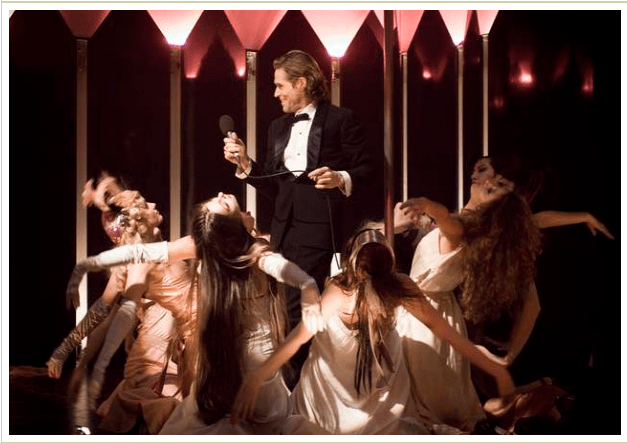
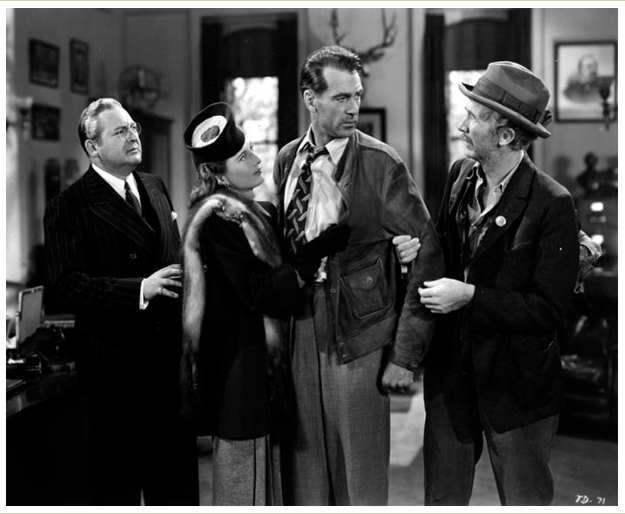
Two versions of the community-made man. Gary Cooper’s John Doe and Willem Dafoe’s Ray Ruby are nothing without their coterie of speech-writers, money-men and erotic dancers.  Meet John Doe (1941) and Go Go Tales (2007) each speak to the anxieties of being propped up by the labor of others, with main characters haunted by the possibility of losing their support and having to go it alone. They are paeans to American industriousness, satires of American greed and excess, and hum with the patter of the American workplace. Meet John Doe was recently released on a disappointing DVD by VCI (DVD Beaver has the specs here) and Go Go Tales is currently screening at Anthology Film Archives in NYC. It’s also available on an Italian Region 2 DVD.

John Willoughboy (Cooper) is a burnt-out ex-ballplayer with a bum elbow, in the days before Tommy John surgery. Living the hobo life with The Colonel (a zealous Walter Brennan), he’s hoping to make a quick buck at a newspaper when he sees a lineup outside. What tabloid journalist Ann Mitchell (Barbara Stanwyck) is after though, is a flesh and blood dope to embody the outraged John Doe whose letter of civil disobedience she forged in order to pump up circulation and save her job. Soon she builds up John into a folksy voice of the people, promoting neighborliness into a kind of small-town socialism. His immense popularity, represented in nationwide John Doe Clubs, is co-opted by his backer, millionaire D.B. Norton, in a scheme to install a pseudo-fascist state.

The film is strongest early-on, replete with Capra’s pungent dialogue and rich caricatures. The punchiness starts in the opening, with The Bulletin’s old motto, “A free press means a free people”, jackhammered off to make way for The New Bulletin’s tagline, “A streamlined newspaper for a streamlined era.” This visual joke is more relevant than ever, and sets up the knockabout opening where a baby-faced, Mickey Rooney type axes the staff in pantomime, with gestural throat slashes underlined by whistles. Capra captures the impersonal devastation of this corporate takeover in a few flicks of the assistant’s wrists.

Ann, desperate to salvage her job, invents the John Doe letter, whose anti-government, DIY tone loosely echoes the rhetoric of the Tea Party movement (aside from the community organizing he supports). Soon Willoughby is speaking to millions of people around the country, as Ann hones Doe’s image around the philosophy of her late father. The political message Capra is trying to send gets increasingly slippery, as he is both satirizing the gullibility of the American people, who immediately believe in this rather dopey Doe, while still managing to lionize the work ethic and morality of those same citizens. The latter impulse drains the former of any impact. Capra had trouble reconciling these ideas, and filmed five separate endings, and was never satisfied with any of them. In his autobiography, he said:

For seven-eights of the film, Riskin [screenwriter Robert] and I felt we had made The Great American Motion Picture; but in the last eighth, it fizzled into The Great American Letdown.

Whether or not the film coheres thematically (I agree with Capra, it does not), the figure of Doe is surprisingly similar to the character of Ray Ruby in Abel Ferrara’s Go Go Tales. Ruby is the proprietor of Ruby’s Paradise Lounge, a struggling NYC strip club facing massive debts and a restive work force. Ruby is the manic and disarmingly sensitive patriarch of this whirling world of sequins and exploding tanning beds. His wild hopes rest on the American standbys of gambling and conning: playing the lotto and convincing his brother to stay invested.

Doe and Ruby face similar threats, the hellish bureaucracy posed by The New Bulletin’s maxim is transposed by Go Go Tales into the screeching landlord’s (Sylvia Miles at her harpiest) gentrifying threat that she’ll sell Ruby’s building to Bed, Bath & Beyond. Both Doe and Ruby will themselves into believing that they are self-made and impervious to these deprivations,  but they are heavily indebted to a web of investors, politicians and relatives to stay afloat.  This denial also fuels their finest qualities, creating a naive, idealistic belief in the power of community. In Doe’s case it’s a nationwide mission of charity whose tenets he adopts for himself, and for Ruby it’s the idiosyncratic camaraderie of his Lounge’s denizens. There are his raspy host Bob Hoskins, berating the tourists who idly pass the door, his whimsical Irish accountant/partner-in-crime Jay (Roy Dotrice), and a web of bar squatting wiseguys who provide a never-ending squall of vulgar cracks. Near the end, as the strippers and bouncers put on their weekly talent show of Bronx-accented Shakespeare and interpretive dance, Ruby gives a rousing speech that exposes the philosopher inside the crabby capitalist, and is one that Capra could have used as the sixth ending to Meet John Doe:

Everyone in this room has a chance to become more than they think they are. Freedom of expression, creativity, passion, love for each other, that’s what this is all about.

MY TOP TEN GENRE MOVIES OF 2010

December 28, 2010

genre

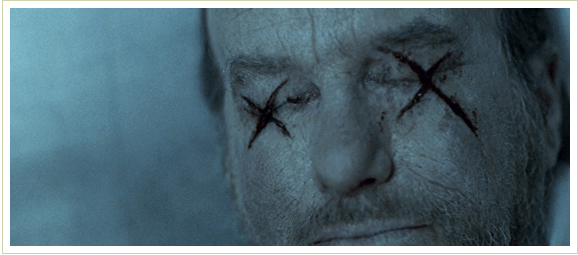
I was able to see more movies during the year than this guy. To honor him, I’m going to run down my favorite Genre Films of 2010. As top-ten lists rain down upon us, a general consensus emerges and recurring titles get chewed over like regurgitated cud. So while I greatly admire The Social Network (#2 on my year-end list here), I feel no need to spill more metaphorical ink over it. What doesn’t get recognized during the awards season hullaballoo are the disreputable action/sci-fi/horror movies that earn profits and low Rotten Tomatoes scores. I’m using the colloquial definition of “genre films”, of macho flicks with b-movie scenarios, but in reality everything that’s produced slots into one genre or another (David Bordwell persuasively argues that even the art film is one). So forgive my semantic fudging for the sake of headline-writing brevity. In any case, anonymous disfigured corpse from The Crazies, this is for you.

In Alphabetical Order:

Buried, directed by Rodrigo Cortes

Buried is a horror movie about thought processes, how the mind continually attempts to work itself out of danger, constantly running scenarios that will lead to the healthiest outcome. In this case, the problem is a casket, as Paul Conroy (Ryan Reynolds) has been buried alive by an Iraqi insurgent looking for ransom money. The camera never leaves the casket for the entire running time, and manages to sustain the tension of Conroy’s plight, endlessly cycling through possible rescue plans. Provided with a cell phone to stump for the money to be paid, he triangulates between family, work and the law as his desperation rises, marking up the wood panels with strategies of survival. In the end, it’s a tour-de-force about the limitations of technology and of thought itself.

***

Centurion, directed by Neil Marshall

Remnants of a slaughtered platoon of Roman Soldiers navigate their way back home through Northern Scotland while fighting their way through the rebellious Pict natives. Director Neil Marshall (The Descent) is a reliable hand for cogently framing bloody mayhem, and the climactic battle between the splinter of Romans and Pict warriors is smartly choreographed. The central battle stakes Michael Fassbender against Olga Kuryenko, and the final blow is established in wide shot as Fassbender somersaults toward his victim. Then in two percussive inserts Marshall ends the secondary fight (a spear to the undercarriage) and the main one, as Fassbender places downward pressure on the sword after his sprightly evasive maneuver. The way in which Marshall creates a rhythm and clarity to this sequence, out of boilerplate material, is indicative of the film’s scrappy ingenuity.

***

The Crazies, directed by Breck Eisner

A relentless remake of George Romero’s 1973 original, it outlines the chaos that ensues after a biological weapon crash lands in a small mid-western town, turning its residents into psychotic murderers. I prized this one for its pared down screenplay, which strips away backstory, revealing character only through action. The narrative is constantly pushing forward, just like Sheriff David Dutten (Timothy Olyphant), who tries to spirit his wife out of the newly quarantined hot zone. Olyphant has perfected a thoughtful stoicism in his work, playing heroes who do the right thing, but whose pauses and mutterings imply that he wishes doing good wasn’t so much goddamn work.

***

Devil, directed by John Erick Dowdle

Slightly roomier than Buried, this M. Night Shyamalan produced potboiler takes place almost entirely in an elevator. A group of abrasive city-folk get stuck in a lift and start turning on each other. So far, so realistic, but there’s a metaphysical morality play tacked on to justify the underlying savagery. While this is a bit of a cop-out, I’ll forgive anything to watch DP Tak Fujimoto wend his SteadiCam around a neon-lit office building, tracing the paths of fate.

***

From Paris With Love, directed by Pierre Morel

This ridiculous concoction is the jokey B-side to Taken, Morel’s humorless revenge drama from 2009. Instead of a brow-furrowing Liam Neeson, it’s a face-pulling John Travolta, who plays CIA agent Charlie Wax like a macho Jerry Lewis (his yammers are punctuated by nasal screams, and he leaves destruction in his wake, except with Travolta it’s intentional). The fight scenes have the physics of a Loony Tunes short and the plot is totally improbable. In short, it’s almost perfect. If only the lead-footed Jonathan Rhys Meyers subplot hadn’t kept diverting things from the aria of Charlie Wax.

***

Frozen, directed by Adam Green

Frozen is a fine lesson in theme and variation. The plot is minimal, three dopey college kids stranded on a ski lift, but writer/director Green elaborates an escalating series of reasons for his characters to be terrified. The calculus of escape shifts from avoiding frostbite to stanching blood loss to avoiding death-by-wolf over the course of the first hour. It is the patience with which Green allows each new variation to sink in, to allow the morbid thought processes of each vapid character to be drawn out, that nicely ratchets up the tension of this minimalist bit of indie-horror.

***

Resident Evil: Afterlife, directed by Paul W.S. Anderson

On a purely visual level, one of the most impressive films I saw this year. Fully embracing 3D technology, Anderson sets up shots to emphasize depth, from the multi-layered, multi-planar Umbrella headquarters to the relative simplicity of a hole in the ground (which Joe Dante also explored in 3D in his still-undistributed The Hole). In the opening sequence, the background and foreground planes of action are so clear there is no need for cross-cutting. And Milla Jovovich continues her superb run as Alice, working the stoic hero territory as well as, say, Timothy Olyphant.

***

Splice, directed by Vincenzo Natali

A disturbing entry in the mad (but adorable) scientist sub-genre, it finds Adrian Brody and Sarah Polly gene-splicing their way to unwanted parenthood. Their little lab-creature develops a major Electra complex, and soon ignites the relationship anxieties simmering below the surface. They explode in psycho-incestual images that are hard to shake.

***

Undisputed 3, directed by Isaac Florentine

Direct-to-video but none the worse for it, this is the third part of a series initiated by Walter Hill in 2002 (I wrote about the whole series back in June). It refreshes the fight tournament scenario by capturing a variety of attacking styles with a high-speed camera, from capoeira to taekwondo, and hires athletes rather than slumming actors. Marko Zaror steals the show as the villain, a Garcia Lorca-reading heroin addict who is my pick for cinematic asshole of the year.

***

Unstoppable, directed by Tony Scott

The pleasures of motion, rendered with lucidity. There’s a runaway train, and Denzel Washington and Chris Pine have to track it down. The forward movement is not just over lines of track but through lines of communication.  Scott’s nimble cross-cutting between CEOs, middle-managers and station chief Rosario Dawson lays down the social strata that Denzel and Pine are burning through in order to do their jobs. It is within this shorthand class structure that slam-bang montages of speeding trains raise the pulse and recall the original cinematic thrill of the Lumiere Brothers’ L’arrivée d’un train en gare de La Ciotat.

ADVENTURES IN VOD: NORMAN LEAR AND COLD TURKEY (1971)

December 21, 2010

cold turkey

That’s a lot of Van Dykes. This rather frightening menagerie was arranged by Norman Lear, who wrote and directed the slapstick satire Cold Turkey in 1971. A cult item that used to circulate solely on out-of-print VHS tapes, now MGM has released it through Amazon on a burned-on-demand DVD as well as through their video-on-demand service (rental is $2.99, purchase is $9.99). It’s amazing how quickly a film can go from rare to ubiquitous these days.

Lear had transitioned from variety show gag-man to more full-length narrative work by the time of Cold Turkey, which was shot just before he became an institution with All in the Family. His entry into show business had been greased when Jerry Lewis saw a blind date sketch he had written, and he was hired to produce material for the Martin & Lewis run on the Colgate Comedy Hour (1950 – 1953).  These extraordinarily raucous 60 minutes buzzed on the improvisatory bravado of the actors, but Lear set them up in scenarios primed for chaos. In one opener, a ballroom dance descends into a brawl when Jerry spritzes ink on a brute’s white shirt. An irate wife arm-drags Lewis to the ground, and then Dean socks her down with him. Then the whole set degrades into a brawl.

There’s a feeling the show could collapse at any moment, as Martin & Lewis constantly break character, inserting snide self-reflexive remarks in the middle of the sketches. In one bit, Lewis has trouble moving a suitcase through a doorway, so he simply steps off the stage set and around to the next room, breaking the fourth wall and delighting the audience. It’s unclear whether it’s staged or improvised, but it could be either in the anything goes atmosphere created by Lear, co-writer Ed Simmons and the actors. Many of these episodes are up on YouTube, as well as on a variety of public domain DVDs. A number are also on Netflix Instant, in faded prints.

Afterward, Lear bounced around variety shows, including The Martha Raye Show (1955) and The Tennessee Ernie Ford Show (1957-1958). Bud Yorkin was a producer on the latter, and he and Lear formed the Tandem production company together. This led to their coup of casting Frank Sinatra in their film adaptation of Neil Simon’s Come Blow Your Horn (1963). Yorkin directed and Lear wrote it, along with their follow up, Divorce American Style (1967). After being loaned out to William Friedkin for The Night They Raided Minsky’s (1968), Lear was handed the director’s job for the first and only time on Cold Turkey. In an interview with the Archive of American Television, Lear said Yorkin was busy with other projects, so he took the gig.

The story was adapted from a novel, I’m Giving Them Up For Good, by Margaret and Neil Rau, and it centers on an outrageous contest put on by a major tobacco company. Bob Newhart, as flaccid publicity flack Merwin Wren, has the inspired idea to offer a city $25 million dollars if every resident would agree to quit smoking for 30 days. Feeling confident no town could possibly succeed, it was an easy way to leverage public opinion in the tobacco business’ favor (herein lie similarities to the dire Thank You For Smoking).

One depressed Iowa town, Eagle Rock, takes up the challenge, however, led by Reverend Clayton Brooks (Dick Van Dyke), the golden boy former track star. He riles up the crowd with dreams of gleaming office buildings and all sorts of government cheese. Van Dyke plays him with stuttering obliviousness. He’s a do-gooder blind to his own ambition. Only his wife, the secret smoker Natalie (Pippa Lee) sees through his facade. As the town closes in on the prize money, it becomes a media sensation, bringing in tourist money and documentary film crews from across the country.

Filmed on location in Greenfield, Iowa, using many local residents in the cast, Lear aims for a wide angle take-down of corporate and small-town pieties. Newhart’s glad-hander is as officious as the mini John Birch Society clone, here called the Christopher Mott Society, that the Reverend placates by hiring to inspect cars for smokes as they enter the city. An especially aggressive older lady investigates for Commies, too. Money talks to all walks of life, and Lear’s favorite visual device is the grotesque close-up of citizens’ and CEOs’ greedy grimaces.

The touchstones seem to be Wilder and Altman. The bitter caricature of media exploitation is straight from Ace In the Hole, and the multi-character scope of the narrative, and clothesline compositions (TM Dave Kehr) seem reminiscent of MASH, which was released a year earlier (a few unreliable sources like Wikipedia say Cold Turkey was filmed in 1969 and held for release until ’71, out of concern for its box office potential, which would pre-date MASH).

Lear uses the close-up as a punchline constantly, often taking the air out of a slow-burning joke, not giving things adequate time to build. In his opening sermon, the Reverend reads from his notes, and starts mouthing the copy from a Peruvian tourism ad, an antecedent to Ron Burgundy’s instinctual reading of the teleprompter in Anchorman, but Cold Turkey muffs the setup. As the Reverend reads, it just scans as non-sequitur. But after the service, the joke is explained to be the mistake of his wife, who was transcribing when reading a magazine. If there was a slower setup before the speech, this could have killed, but instead it opted for ex post facto explanations, slowing the story in the process.

But because of its sprawl and the sheer volume of jokes, there’s plenty to get distracted by. There’s Randy Newman’s score (his first), Robert Downey’s slapstick work as second-unit director (where parents slap their babies), Bob Newhart’s reaction shots (sublime) and the endless list of  character actors: Edward Everett Horton in his final role as a flatulent mute cigarette king, Jean Stapleton as a harried wife, M. Emmet Walsh as a rabble-rousing socialist, Tom Poston as a drunk and Paul Benedict as a Buddhist therapist.

TRUE GRITS

December 14, 2010

true grits

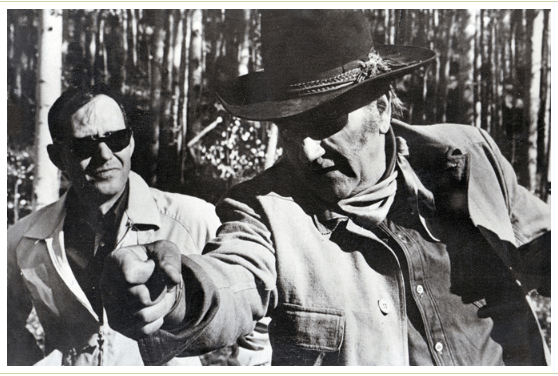
Regrettably, this post is not about the cookbook True Grits: Recipes Inspired By the Movies of John Wayne. My apologies to writers Lee Pfeiffer and Michael Lewis, although I do intend to make  “They Were Eggspendable” (p. 6) and “Hondocakes” (p. 12) for breakfast this weekend. No, instead I’ll be considering Charles Portis’ 1968 novel, True Grit, and the film adaptation by producer Hal Wallis and director Henry Hathaway the following year. All of this was spurred, of course, by the Coen Brothers’ take on the material, still named True Grit, which comes out on December 22nd.

Portis’ novel is anchored by the starched voice of Mattie Ross, a stiff-backed Presbyterian who recalls the grim events that followed the murder of her father, Frank. Narrating the tale as a prim spinster in 1928, she details, with stark Old Testament morality, how she earned her revenge as a young girl from Dardenlle, Yell County Arkansas (she intones her birthplace to strangers like a prayer) in 1873. She is decisive and declamatory, with an eye for irrelevant bits of history. When the trail of the murderer snakes through Indian Territory to a supply store , she dryly notes: “The store is now part of the modern little city of McAlester, Oklahoma, where for a long time ‘coal was king.’ McAlester is also the international headquarters of the Order of the Rainbow for Girls.” There is a bit of the schoolmarm in her, eager to educate as much as to “avenge her father’s blood.”

It is her voice that captivates, a preternaturally calm control stabbed with stubborn wit, rarely exhibiting the childishness of her age. As Ed Park wrote in his epic ode to Portis in The Believer, “Her steadfast, unsentimental voice—Portis’s sublime ventriloquism—maintains such purity of purpose that the prose seems engraved rather than merely writ.”  I could only detect one scene of playfulness – when she asks her two lawmen to act out a ghost story around the fire. These two men, Marshal Rooster Cogburn and Texas Ranger LaBoeuf (he prononunces it “LaBeef”), are far more immature than Mattie, at one point wasting a third of their corn dodgers for an impromptu shooting competition (not dissimilar to Montgomery Clift and John Ireland’s macho shoot-off in Red River).

Cogburn is an inveterate drunkard and former member of Quantrill’s Raiders, a Confederate guerrilla group. He’s also a Federal Marshal who had killed over 20 men since his short time wearing the badge, a fact which led Mattie to choose him to help her find the killer, Tom Chaney. Incapable of a domesticated life (“Men will live like billy goats if they are let alone”), he thrives on the deprivation of the outdoors. LeBoeuf is handsome, conceited, and a bit of a dandy. Upon first seeing him Mattie remarks, “His manner was stuck-up and he had a smug grin that made you nervous when he turned it on you.” Despite that, “he made me worry a little about my straggly hair and red nose”, one of the other rare notes of vulnerability in her bullish persona.

Mattie is a shifty, opaque creation, and endlessly fascinating. She’s a whip-smart girl who turns personal history biblical (her vengeance on Chaney, who is physically marked like Cain, recalls the Old Testament God), and biblical history local (she quotes verse to settle daily disputes). She stubbornly sits still on the ledge in-between, refusing to concede her pragmatism or her divine beliefs as rattlesnakes nip at her flesh.

Before the book was published, Portis’ agent passed out galleys to the major studios, setting off a minor bidding war. According to Randy Roberts and James Stewart Olson in John Wayne: American, Wayne’s production company, Batjac, submitted a bid of $400,000, but it was issued after the deadline had closed. The rights were awarded to Hal B. Wallis, whom Wayne soon wooed to land the part of Rooster Cogburn. The role of Mattie Ross was originally offered to Mia Farrow, who turned it down, supposedly on the advice of Robert Mitchum, and it was eventually given to Kim Darby, a little-known TV actress.  Robert Duvall snarls through the film as gang leader Ned Pepper, and Dennis Hopper has a bit part as a squealer at the same time Easy Rider was unspooling, a portentous straddle of Old/New Hollywood.  Wallis switched the shooting location from Arkansas to Montrose, Colorado, in the western slopes of the Rockies, over Portis’ objections.

Hathaway and Wallis lightened the tone of of Portis’ more fatalistically comic work, turning it into an agreeably swashbuckling affair centered on Cogburn, whose rough edges and thieving past are sanded down to an inoffensive nub (Dave Kehr opted to call it “cutesy-poo”). There is no voice-over, which eliminates many of Mattie’s idiosyncratic asides, and the ace DP Lucien Ballard’s cinematography here is made up of bright and airy postcard shots that looks like a well-funded autumnal Coors commercial. It lacks the textural menace of nature in the book, in which cold and hunger attack as much as Chaney.

Wallis’ True Grit, then, is an entirely new work, with only a surface relationship to Portis’, and shouldn’t be limited, or belittled, solely in comparison to the book’s greatness. It was transformed into a John Wayne star vehicle as he was transitioning into more cantankerous character parts, so the film was rigged up into a sturdy, eager to please example of old Hollywood craftsmanship. Stocked with stellar supporting performances from Duvall, Hopper, Strother Martin, and even Glen Cambpell as the preening pretty boy LeBouef, it’s a companionable if not resonant bit of Saturday afternoon entertainment.

In a revealing exchange, Henry Hathway recalled the arguments he had with Wayne over wearing the eye-patch:

When he was first put to it, Wayne told me, ‘I’m not gonna wear that patch on my eye.’ He said, “I’m not an actor to begin with, I’m a reactor, and no way will I wear a patch.”

This is a wonderful pocket self-analysis from Wayne of his work – he’s such a superb and sensitive performer because of how he reacts to the actors around him. Some of his best work is in backgrounds – think of his proud, fatherly gaze and reluctant gait in Rio Bravo as he stands outside his circle of friends singing in jail – maneuvering his bulky body to convey the resignation of old age and the burdens of leadership. He’s one of the finest collaborative actors, whether it’s sparking off Montgomery Clift in Red River or bending towards Maureen O’Hara in Rio Grande like a weed to the sun. In donning the eye-patch, he becomes the buffoon being reacted to, a gallumphing showboat rather indifferent to the performers around him (Kim Darby is unmoored and affectless as a result). But his self-parodistic grunting and hamming stirred the dozing Academy voters, who awarded him his first and only Oscar for best actor.

NETFLIX INSTANTS: HORIZONS WEST AND CHINA GATE

December 7, 2010

horizons

In November, Netflix introduced a “streaming only” option to their membership plan, for $7.99 a month, another marker in the slow death of the DVD. Their “Instant” offerings are frequently presented on faded and cropped masters likely made during the VHS days, but the rarity of their hodgepodge collection makes it a near-essential outlet for those interested in American film history. Unless one lives in a cinephilic megacity like New York or L.A., VOD offerings like Netflix Instant and DVD-on-demand outfits like the Warner Archive are the only (legally) easy way to view older titles.

The decline of art and repertory theaters make these services more important than ever. While driving around Buffalo during my Thanksgiving trip home, I passed by the marquee of the art theater I worked at as a disconsolate teen. It’s where I first saw In the Mood For Love and became aware of a cinematic world outside blockbuster-era Hollywood. The letters that greeted me were: Harry Potter/Morning Glory/Inside Job. Through my nostalgic prism this was a bile-inducing travesty, but if I was growing up there now I’d have a much vaster range of titles to watch through Netflix than what I was offered at the upstanding Dipson chain of theaters (you should all go to the old North Park movie palace if you drive through Buffalo).

To underline that fact, there has been a swift uptick in the amount of rare Golden Era Hollywood titles added to the Netflix Instant archives recently. Director Joe Dante posted a tantalizing list of newly available films in the comments section of Dave Kehr’s blog a few days ago. I watched two of them this week, Budd Boetticher’s Horizons West (1952) and Sam Fuller’s China Gate (1957).

I had only known Boetticher’s film previously as the title of Jim Kitses’ seminal critical study of the Western, which is required reading for most genre courses in college. It was made four years before he was paired with screenwriter Burt Kennedy and star Randolph Scott for Seven Men From Now, which kicked off their brilliant and psychologically tortured series of revenge Westerns. They are spare, interiorized dramas tinged with expressionist visual flourishes, like the hanging tree in Ride Lonesome. In comparison, Horizons West is more conventional, with a flatter visual scheme and more transparent character motivations. But there are intimations of his future masterpieces. It is presented in its correct 1.37:1 aspect ratio, in a faded but watchable color transfer.

It tells the story of the Hammond brothers, returning home to Austin from the defeated Confederate army. Robert Ryan is Dan, the older and bitter sibling (“I don’t like to lose”), while Rock Hudson is Neil, the optimist eager to take over the family farm. Dan soon joins a gang of deserters and thieves, and builds them up from cattle rustlers to very persuasive land speculators. Soon Dan imagines building a “Western empire”, where his wife Lorna can be his queen. But before all that he has to run roughshod over his family, and steal Lorna away from the uber-capitalist Northern dandy Cord (a bitchy, superb Raymond Burr).

It is a plot-heavy scenario, with little time for the slow-burn breakdowns of Randolph Scott, but Robert Ryan’s greedy megalomaniac gets the most screen time, and there is a doomed aura to his character that could have been investigated further in a more pared down script (“-I want to make money. -What changed you? -The war, I guess.”). Ryan is a disillusioned war veteran eager to exploit the wide open capitalism of postwar Texas, and succeeds wildly, only to become more violent. His slowly wrinkling face trends downward into a snarl, emphasizing a kind of resigned brutality that Ryan is a master at portraying. It’s a provocative sketch of the haunting leads that Burt Kennedy would crystallize in his later scripts for Boetticher.

Sam Fuller’s China Gate (1957) comes during one of his peaks, a few years after Pickup on South Street (1953) and the same year as Forty Guns and Run of the Arrow. It’s another of his slam-bang pulp plots laced with punchy dialogue, bravado camera movements, and a simmering social conscience. Shot in CinemaScope by Joseph Biroc, Netflix Instant presents it cropped in 1.33:1, something of a tragedy. But it is otherwise unavailable on DVD in America, so this bowdlerized version is all we have for now. In the opening paragraph of the chapter on China Gate in Fuller’s autobiography, A Third Face, he makes the characteristic statement:

Young writers and directors, seize your audience by the balls as soon as the credits hit the screen and hang on to them! Smack people right in the face with the passion of your story! Make the public love your characters or hate them, but, for Godsakes, never – never! – leave them indifferent!

In the opening sequence of China Gate, a young boy wanders through the ruins of a small village in North Vietnam during the First Indochina War. He hides a puppy inside his shirt, only letting him out to eat some scraps on the ground. Then a starving man spies the animal, and desperate for food, chases the boy with a knife wielded high. The kid hides in a nearby bunker housing soldiers and loses him. Fuller strategically wields swooping crane shots, moving in to create tension and then back out to establish the horrifically scarred landscape.

The boy is the child of “Lucky Legs” (Angie Dickinson), an alcoholic single mother of Chinese-Caucasian descent (“I’m a bit of everything and a lot of nothing”). She survives by smuggling booze across the border to China along with, it is strongly implied, prostitution. The French Foreign Legion hires her as a scout on a mission to bomb an major rebel arms cache. The detail is led by Sergeant Brock (Gene Barry), a racist who abandoned Lucky after he discovered their child looked Chinese. Also in this group of mercenaries is Nat King Cole (Goldie), who did the part for scale, simply because of his enthusiasm for the project, according to Fuller. Cole also sings the lovely, funereal theme song, written by composer Victor Young before his death (the lyrics were by Harold Adamson, and the film’s full score was completed by Max Steiner).

It is filled with the bitter, grotesque ironies of war, such as the former French gendarme getting gunned down after an extended monologue about his previous life, which closed with, “This is the way to live!” These soldiers of fortune are brutalized and scared, with one Hungarian suffering from hallucinations of Russian troops stalking him. Brock orders that he be killed. Another dies in a fluke accident, and whose last words are, “I hope there’s a heaven. It would kill me to have to come here again.”

It’s bleak and blackly comic, a desperate and prescient anti-war film made seven years before the Gulf of Tonkin incident and the ramping up of U.S. troops in the region. I’ll give Fuller the last word:

My tale is full of human foible and confusion. I deliberately wanted that confusion. I was still thinking of Clare Booth Luce’s remark that ‘anyone who isn’t thoroughly confused, isn’t thinking clearly.’

FLICKERS OF THE WEEK (ON DVD): ESCAPE FROM ZAHRAIN AND HE WHO GETS SLAPPED

November 23, 2010

ahrain

The wheezing, rickety looking vehicle you see above, silently mocked by the parallel oil pipeline, is desperately straining up the incline, hoping to reach the space outside the CinemaScope frame. Why the hurry? Because they’re trying to….Escape From Zahrain! This 1962 Paramount adventure film is being released on DVD by Olive Films on December 7th, and it delivers the ragtag-group-on-the-run goods. At age 51, it was director Ronald Neame’s first Hollywood production, after a lifetime in the British system.

An assistant cameraman on Hitchcock’s Blackmail (1929), he became a highly sought after cinematographer for 12 years, and worked frequently for David Lean (This Happy Breed, Blithe Spirit). After moving to producing duties on Lean’s Great Expectations and Oliver Twist, he segued into directing with the 1957 relationship drama Windom’s Way (1957). It wasn’t until the success of Tunes of Glory (1960), and its Oscar nomination for best adapted screenplay, that Paramount came calling. He’s mainly remembered now for The Poseidon Adventure‘s disaster theatrics, but his career seems to warrant further investigation. I’m sure there are readers out there more well-versed in Neame’s work, so please send recommendations my way.

The plot of Escape from Zahrain essentially re-locates Stagecoach to a made up Middle Eastern country, throwing together conflicting personalities into a tight space. Sharif (Yul Brynner) is the stoic imprisoned leader of a revolutionary group in Zahrain advocating the expulsion of the corrupt U.S. oil company. A student cell led by Ahmed (Sal Mineo) leads a bold jail-break scheme, springing Sharif as he is being transferred to another city. As they race away from government thugs to the border, they have to deal with the other inmates in Sharif’s car. Huston (Warden) is an arrogant American embezzler, while Tahar (Anthony Caruso) is a murderous, shifty local. When this suspicious group needs a new ride, they kidnap Laila (Madlyn Rhue) and her emergency vehicle in their rumble towards freedom.


Neame utilizes the CinemaScope frame to alternate sweaty cab interiors with epic long shots of desert and horizon, often bisected by jutting diagonals. These graphically unbalanced shots echo the shifting power relationship between the cranky travelers. Sharif stares bullets into the windshield while everyone else jockeys for position. Huston never shuts up but has his uses fixing cars, while Ahmed’s idealism smacks up against Laila’s humanist pragmatism, and Tahar is just an asshole. The actors are relaxed within the streamlined narrative, with Jack Warden especially resourceful as the cynical ugly American. The rest of the actors compare chest hair (Sal Mineo finishes last, James Mason wins in a landslide in his hilarious cameo), while Madlyn Rhue is appropriately confused. With taut storytelling, companionable characters and the expressive images, it’s a diverting gem from the waning days of the studio system.

***

He Who Gets Slapped (1924) marks another Hollywood debut, this time of the great Swedish director Victor Sjostrom, now on DVD from the Warner Archive (it’s also the first film produced under the MGM banner, and so the first to use Leo the Lion). Sjostrom’s Name the Man (1924) might have been filmed ahead of it, but Slapped beat it to screens. The film is in pretty rough shape, with shaking frames, heavy scratches and an overall softness, but at least it’s better than the version that’s streaming at Google Video.

Sjostrom was one of the pioneers in developing a language for narrative cinema. His Ingeborg Holm(1913) is a powerful melodrama about a family left destitute by the death of the father. But it’s important not just for its social conscience, but for the masterful way in which Sjostrom choreographs his actors in the frame, shifting the centers of action. David Bordwell has a brilliant post on this at his blog. He continued to have a brilliant career in Sweden, churning out outdoor adventures like The Outlaw and his Wife (1918) as well as the supernatural fable of The Phantom Carriage (1921), probably his most famous work. There he played with camera tricks, including the most complex double exposures seen up until that point, which probably caught the eye of MGM.

His visual experiments continue in He Who Gets Slapped, another monstrous melodrama starring Lon Cheney, a year after The Hunchback of Notre Dame. It’s adapted from a Russian play by Leonid Andreyev of the same name, about a brilliant unknown scientist whose discoveries (and girlfriend) are stolen by an evil Baron. As a cruel joke, the scientist, named Paul Beaumont in the film (Chaney), becomes a clown in order to laugh at his own bitter destiny. Soon he falls in love with the new acrobat Consuelo (Norma Shearer), who is also courted by the Baron who had betrayed him all those years before.

It’s scaled to the same tragic clown heights as Pagliacci, both protagonists subject to their own humiliating emasculation. But the grand emotions of the opera are not scaled down for the screen, and what is emotional when sung by a virtuoso becomes caricature and stereotyped when filmed as drama. The movie is populated with inert grotesques, with no shades of ambiguity or plausible motivation. Sjostrom imaginatively amps up his visual presentation, patterning large crowds as faceless mobs of judgment (as Fritz Lang would do in a few years later), but they are illustrating a story not worthy of his images. Despite this, Chaney manages a superb performance of a masked, bubbling breakdown, the only human element amid the burlesque, and one can see why it was one of his favorite performances, and one he recalls for his role in Laugh, Clown Laugh (1928).

Sjostrom would go on to make the magnificent The Wind (1928), another outrageous fugitive from home video. Also an MGM title, hopefully the Warner Archive can add it to their release schedule, and fill in another gap in the career of one of the great unsung directors in film history.

THE CLAUSTROPHOBIC CINEMA OF PAUL W.S. ANDERSON

September 24, 2009

the-rotting-corpse-paul-w-s-anderson-more-movies-81221f817c

The old Hollywood studio-hand W.S. Van Dyke — who directed, amongs countless other things, “The Thin Man” — once advised a young Orson Welles to “just keep it close, and keep it moving.” And an unlikely inheritor of this wisdom is Paul W.S. Anderson, whose latest work to hit screens is this week’s “Pandorum,” which he executive produced, leaving the directing to German up-and-comer Christian Alvart. Rivaled only by Uwe Boll for the title of worst-reviewed director of the past decade, Anderson’s also been one of the most resourceful. Working with the flimsiest material (video game adaptations and remakes) in the least respectable of genres (sci-fi, horror), he’s managed to construct a remarkably coherent body of work. With his longtime producer Jeremy Bolt and a loose coterie of actors, he’s created a series of films that focus on the expressiveness of claustrophobic spaces and the physical grace of his (mainly) female protagonists.

Anderson’s interest in confined spaces may have come to him in childhood. He was born and raised in Newcastle upon Tyne, in the northeast of England, which was a major coal mining town through the first half of the 20th century. He told the New York Times’ Dave Kehr about “the lure of going down there into the dark. It’s in my blood. My grandfather, who brought me up, was a coal miner. I visited the mines with him. I remember it vividly. It was horrible. I’m glad I didn’t go into the family business.” Instead, he went to school, graduating from the University of Warwick with a degree in film and literature. He continued on to earn an MBA, with the hopes of running his own production company.

Anderson’s entrée into show business was as head writer for “El C.I.D.,” a wonderfully titled ITV cop drama starring Alfred Molina. Then he met up with Bolt, a philosophy student at the University of Bristol, Ken Russell’s driver and a fledgling film mogul. In 1992, they formed the production company Impact Pictures, and started looking for cash for their first feature, “Shopping.”

A strange mélange of rebellious youth drama and dystopic sci-fi, “Shopping” cast an angelic Jude Law in his first starring role across from his future ex-wife Sadie Frost. Gleefully amoral, Jude (as Billy) and Sadie (as Jo) head a group of homeless “ram-raiders,” kids who crash cars into storefronts, and steal whatever tickles their fancy. Anderson (no W.S. yet) envisions the city as a succession of inky black tunnels, smoky warehouses and abandoned industrial sites. He explores these spaces with all his film school tricks, including canted angles, extreme chiaroscuro lighting, and circling camera movements to underline Billy and Jo’s aimless self-destruction.

Their rebellion is cultural more than political: after rifling through a stolen car, Jo brandishes a cassette tape with religious fervor and screams, “Billy Joel, fuck that!” Then, they blare some Jesus Jones over the radio. Billy’s brooding is in stark contrast to Jonathan Pryce’s enigmatic police chief, the first in a parade of fascistic government figures to make an appearance in Anderson’s films. This central drama is under-written, but Anderson successfully captures a mood of bruised teenage romanticism. Banned in some U.K. theaters for its violence, “Shopping” still managed to nab a spot at the Sundance Film Festival. Despite only receiving an edited, direct-to-video release in the U.S., the film earned enough attention for Anderson to move across the pond.

In a 1992 article at the Independent, Anderson said, “I get very angry when I go to Leicester Square and all the movies are American.” Three years later, he went to Hollywood, never to return to his native England. His big break came with the adaptation of “Mortal Kombat,” an incredibly bloody video game that Anderson played at arcades while he was in college. It was a self-consciously silly film — he said he wanted to make it a cross between “Enter the Dragon” and “Jason and the Argonauts.” It reflects the hand-made, amateur ethos of that combination, maintaining a jokey, self-reflexive tone not unlike “Big Trouble in Little China.” (The 2006 Impact Pictures-produced “D.O.A.:Dead or Alive” has a similar spirit). The main set is a labyrinthine, fantastical underground lair, where the tournament’s fighters wander with bemused nonchalance, even when they stumble upon a Ray Harryhausen-esque six-armed behemoth planning their demise. Here, Anderson utilizes his constricted set as a genre playground, mutating to throw fighters together or supply the material for a clunky bon mot from the dry-witted Johnny Cage (Linden Ashby) or the gun-toting Bridgette Wilson. It made over $120 million worldwide.

The film’s success gave Anderson the leverage to bring over Bolt, and the Impact Pictures logo has been slapped on all of their subsequent features. Having a producer’s credit doesn’t equal freedom, however, and Anderson’s next two films, “Event Horizon” (1997) and “Soldier” (1998), suffered from bad luck and studio interference. “Horizon” contains another classic Anderson setting, an abandoned spaceship that is manifesting a malevolent force from within, the first of his sets that is a character in itself. With glowering performances from Sam Neill, Lawrence Fishburne and Jason Isaacs (a member of Anderson’s nascent stock company), menacing production design from Joseph Bennett and a restrained, longer-take style from Anderson (still no W.S.), it has all the elements of a quality slow-burn chiller. But it’s saddled with a shaky third act made even more incomprehensible by studio-mandated cuts, and it ends up a compromised failure.

The “Soldier” shoot was even more harrowing. Intended as Anderson’s first landscape movie, it was slated to shoot outdoors until the El Niño hurricane swooped in and pushed everything into studio soundstages. This changed the entire visual scheme of the film, which takes place in the same world as “Blade Runner” (both scripts were written by David Webb Peoples). Star Kurt Russell broke his ankle the first week of shooting, compounding the difficulties. The visual palette is drab greens and browns, and the sets have an airless, slapped together feel, which is devastating for a filmmaker of Anderson’s interests. Kurt Russell’s grizzled, monosyllabic performance is a compensatory pleasure.

After “Soldier” flopped, Anderson went back to his basics, a video game adaptation set in the tight quarters of an underground biological warfare lab. The result was “Resident Evil” (2002), for which he wrote his first screenplay since “Shopping.” He received a modest $30 million budget from the German company Constantin Films (a relationship that has continued through “Pandorum”), and he churned out a beautifully controlled piece of zombie mayhem.

An amnesiac Alice (Milla Jovovich) goes down a corporate rabbit hole to a facility that produces the T-Virus, an experimental weapon that happens to turn dour government types into drooling brain eaters. Aided by a brusque security team and an enigmatic artificial intelligence named the Red Queen, Alice tries to lead the troops back to the surface. Anderson told Collider that “I’ve always liked strong women characters in films. When I first came to Hollywood, there was this kind of rule that was expounded by several people within the industry that I heard many times that female led action movies don’t work.” He continues to prove them wrong.

The casting of Jovovich was especially fortuitous. Her piercing blue-green eyes open the film, while her brusque line readings and lithe athleticism carry it to its close. You can’t blame W.S. (this is where he adopts the initials, the same year as that other Paul Anderson’s “Punch-Drunk Love”) for falling in love with her. (They were married in real life this past August.) Successful enough to inspire two sequels, the “Resident Evil” trilogy is a bloody, oozing love letter to Ms. Jovovich, keeping the camera close to her expressively stony face as she dropkicks zombie dogs, incinerates mutated crows and slices through the rest. She bottles her desperation up into a twinge at the side of her mouth, and grows increasingly jaded in each iteration of the series as the world edges closer to dissolution. It’s a profoundly pessimistic franchise.

Anderson wrote all three entries, but handed off directing duties to the sequels as the landscapes expanded beyond his favored darkened corridors. He carefully matched locales with genres, so 2004′s “Resident Evil: Apocalypse”‘s action-film ethos is set in the teeming urban warfare of Raccoon City, handled with speed and aplomb by Alexander Witt, a second unit director for “The Bourne Identity” and “Casino Royale.” For the third film, 2007′s “Extinction,” Anderson pairs the wide-open desert spaces surrounding Las Vegas with a spaghetti western element (as well as a thrilling “Birds” homage), outfitting Jovovich in a duster and leather boots, and bringing back “Mortal Kombat”‘s Linden Ashby to play a sharpshooting cowboy. Russell Mulcahy (“Highlander”) was tapped as the director, and his visual scheme of airy long shots, subordinating the characters to the emptied out horizon lines, is very effective in conveying the debilitating spread of the virus.

The “Resident Evil” trilogy is Anderson’s greatest accomplishment, and appropriately for his aims, it’s a modest one. They are nasty, brutish and short pieces of genre business, infused with lively character performances, resourceful production design and a bracingly downbeat worldview, all anchored by the unfussy bulldozer performances of Jovovich. His other directorial project in this period, 2004′s “Alien vs. Predator,” brought in more money than any of the “Evils,” but it’s a muddle in comparison, a joyless exercise in geometrical gore. “The Dark,” a ghost story he produced in ’05, is a far superior slice of Andersonian claustrophobia. Directed by John Fawcett, it’s a classically structured horror film that moves with sinuous tracking shots around a collapsing family, constructing a vision of hell out of candle wax and unlit rooms.

He found himself on solid footing again with “Death Race” (2008). With a small budget, dour stars (a superb Jason Statham and Joan Allen), a minimum of CGI and a maximum of twisted steel, it’s as fleet footed as “AvP” is sluggish. The booby-trapped race track might be his most sadistic work in a confined space yet, centering on a demolition derby with video game inspired power-ups to juice the carnage. Allen is especially menacing as another of Anderson’s fascistic overlords, leaning in to intimidate her prey with a low, gruff whisper before flipping the switch that snaps their necks. This is also what Mr. Paul W. S. Anderson does best. He keeps it close, keeps it moving, and then something goes boom.


DIMENSIONAL MUSINGS: JACKASS 3D, THE HOLE, AND RESIDENT EVIL AFTERLIFE

October 19, 2010

3D

Jackass 3D had a gigantic opening weekend, bringing in $50 million, almost twice as much as its predecessor. Two weeks previously I watched Joe Dante’s The Hole 3D at the New York Film Festival, which is still without a distributor. The bump in the Jackass money is not only attributable to the 3D premium pricing, it attracted more admissions than its first two entries as well, as Ben Fritz reported in the L.A. Times.  Regardless of the flak the technology receives from critics like Roger Ebert, it draws crowds, and thus will be a part of the cinematic landscape for some time to come. And while muddy-looking 3D conversions will surely mar theaters in the future, there are plenty of productions that are producing fascinating depth effects with the new technology.

Let’s start with Jackass 3D and The Hole. I enjoyed both films, although they approached the technology from vastly differing positions. Jackass, a non-narrative parade of scatalogical slapstick, is a return to early silent filmmaking and the “cinema of attractions” that Tom Gunning identified. Gunning:

Rather than early approximations of the later practices of the style of classical film narration, aspects of early cinema are best understood if a purpose other than storytelling is factored in. Cinema as an attraction is that other purpose. By its reference to the curiosity-arousing devices of the fairground, the term denoted early cinema’s fascination with novelty and its foregrounding of the act of display.

All of Jackass 3D is the act of display pushed to its perverse limit, vaudeville huckster versions of Marina Abramovic. Both work at exposing the limits of our bodies, Jackass through shots to the groin, Abramovic through exchanged slaps with her lover, among endless other examples. I tend to think her humor and the Jackass crew’s intelligence are both underrated. In another echo, Abromovich had a smashingly successful retrospective at MoMA this year, which is where Jackass 3D held its premiere. MoMA curator Josh Siegel says that Johnny Knoxville and company’s work is, “merely the climax — or the lowest depths, if you prefer — of a tradition that dates back to 1895, when the Lumière brothers drenched a poor sap with a garden hose and filmed it.” (from Dennis Lim’s primer in the NY Times). My favorite bits involved fun with a harrier jet’s exhaust and a delightfully revolting stunt involving a sweat cocktail.

3D is the shiniest new weapon in their toolbox, and so they gleefully push the technology to purely presentational ends. Gunning again, “The attraction directly addresses the spectator, acknowledging the viewer’s presence and seeking to quickly satisfy a curiosity.” 3D is another delivery system in satisfying this curiosity, of how a tooth could be pulled by a Lamborghini, or what a “poop cocktail supreme” could possibly entail. For most of the film, the technology is cheaply utilized. The crew used their normal prosumer cameras for their mixture of planned/improvised shenanigans. Then it was processed into 3D in post. For these sections, it is just a gimmick. However, in the beginning and closing minutes there are sequences filmed stereoscopically in super slow motion with Phantom HD Gold Cameras. As the men are knocked down by dildos and other implements, their skin ripples like plasticene waves, and the split-second fear before the blows are noticeable in these aging stunt-men’s eyes.

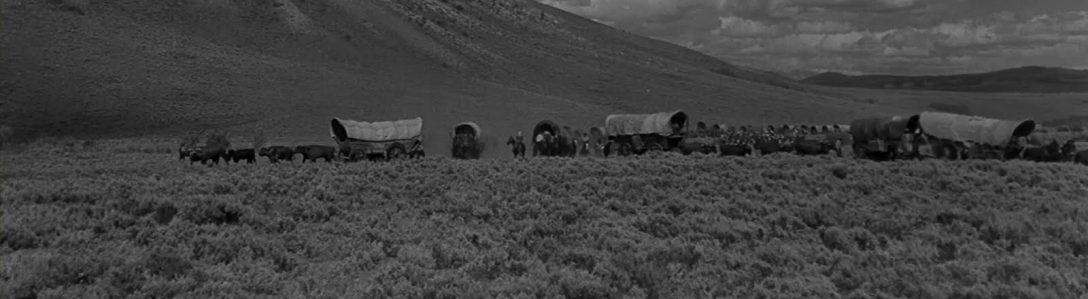
The Hole is another story, a family-oriented horror movie that was entirely filmed in stereoscopic 3D, using the Dolby process. Joe Dante is a student of the form, having watched almost every 3D film ever made during the previous boom in the 1950s and 60s (his lifetime of research can be watched at his fiendishly entertaining site Trailers From Hell). The film’s title implies physical depth, and Dante takes advantage of the narrative device at every turn. The top-lining photo gives an impression of his work here, with constant use of entrances and exits, with the kids grouped and choreographed so there is constant motion back and forth from background to foreground. The film is an eyeful. In the Q&A following the screening at the NYFF, Dante said he thought the Dolby process was too dark, preferring the RealD system which most big-budget releases use. But RealD needs a special silver screen to be projected on, and for a low-budget film in which theater space would at a minimum, the Dolby process was necessary, as it can be projected onto regular screens.

Dante also discussed 3D dos and dont’s including avoiding cuts on quick motion, because the level of eyestrain involved. The film flew along, a combination of classic Dantaen elements like a suffocating suburbia, coming-of-age subtexts, a Dick Miller sighting, and a rich intertextual conversation with film history. The major touchstone here seems to be German Expressionism, from the hat tip to Hands of Orlac in the cheekily named “Gloves of Orlac” factory, to the vertiginous, Cabinet of Dr. Caligari inspired set design in the finale.

It’s unbelievable that the film, about kids who discover a portal into their own subconscious in their basement, has no distributor. It’s wildly entertaining and reliably scary (a harlequin puppet had my wife gripping my arm), and contains some of the most imaginative uses of 3D that I’ve seen all year.

The other great 3D film this year, is, believe it or not, Resident Evil: Afterlife. I am an admirer of Paul W.S. Anderson’s genre chops (I did an overview of his career for IFC News), and I think it’s his best film. There is a superb use of depth effects throughout. From the start it was shot in 3D, with Anderson saying that, “I wrote things into this script that I knew would work well in 3D, like lots of sets with depth-like tunnels, elevator shafts, and big wide landscapes.” That alone gives him more awareness  of how to shoot in depth than the botched 3D conversions on Piranha 3D (which I enjoyed regardless) and Clash of the Titans (read this interview with James Cameron for some interesting notes about that conversion). Along with the simple, effective use of locations, there is a sense of choreography that utilized 3D to its fullest extent. In the opening sequence, clones of Milla Jovovich are fighting their way through an underground lab, making their way to the villain. As he barks orders in the foreground, in the extreme background the brawling Jovoviches tear their way through a lower floor, creeping their way higher. Anderson dispenses with parallel editing, marking her progress by cutting back and forth, and presents it in one economical and incredibly tense 3D image. It’s a marvel of narrative economy and speaks to the ingenuity possible with the technology.

Although to be honest, the finest 3D film I saw this year was still Raoul Walsh’s Gun Fury, from 1953. Nothing has effected me more than the simple use of dust kicking up in the foreground as Rock Hudson plots his revenge behind it. Maybe such simple pleasures would come back to the current 3D wave if The Hole found some success, and encouraged more mid-budgeted, modest 3D productions to get made. Here’s hoping.

DOUGLAS SIRK: FILMMAKER COLLECTION

October 12, 2010

sirk

The Tarnished Angels (1957) is one of Douglas Sirk’s greatest accomplishments, and it was not available on DVD in the United States until last month (one had to nab Region 2 DVD editions in France and England previously).  TCM released it on September 31st (in partnership with Universal) as part of the Douglas Sirk: Filmmaker Collection box set, along with Thunder on the Hill (1951), Taza, Son of Cochise (1954) and Captain Lightfoot (1955). It’s the latest production from TCM’s Vault Collection, which makes limited runs of hard-to-find studio titles, only available for purchase on-line.

Now is the time for the full disclosure bit. Since I’m writing for TCM, there’s a clear conflict of interest here. Proceed at your own peril, although all of the following thoughts are my own and are not influenced by my beloved corporate overlords (I promise).


Sirk made his reputation on the melodramas he directed for producer Ross Hunter,  but this set shows off his versatility. It contains a murder mystery (Thunder), a western (Taza) and a swashbuckling adventure (Lightfoot) in addition to the more familiar Sirkian drama of The Tarnished Angels. Thunder on the Hill is a stagy whodunit set in a convent, based on the play “Bonaventure” by Charlotte Hastings. It finds Claudette Colbert’s meddling Sister Mary trying to clear the name of convicted murderess Valerie Carns (Ann Blythe). Valerie is being escorted to a prison to be executed, when a dramatically convenient storm maroons her in Sister Mary’s domain. The scenario is creaky but the actors are game, with Colbert’s earnest moon-shaped face beaming out of her nun’s habit. Sirk wasn’t happy with the project, complaining to Michael Stern that, “only on Thunder did I have a producer who was interfering with my work. He was the only one at Universal. After that film I believe they fired him.” A quick look at producer Michael Kraike’s IMDB page confirms it was the last film he worked on for the studio.

Despite the fraught working conditions, Sirk still displays his impeccable sense of composition,  with DP William Daniels setting up B&W shots in depth, analyzing the power relations between characters. The triangle above finds Colbert flanked by a jealous nurse and the passive doctor, who will both be serious impediments to her investigation. Later, there’s a striking sequence where Colbert commiserates with Sister Josephine (Connie Gilchrist, a delightful busybody) about the case while the loyal town idiot Willie (Michael Pate) eats in the corner. The diagonal lineup of characters rhymes with the staircase in the background, a more harmonious arrangement for her informal deputies.

Taza, Son of Cochise is less satisfying, but does contain stunning color CinemaScope photography from Russell Metty. It’s an informal sequel to Broken Arrow (1950) and The Battle at Apache Pass (1952), where Jeff Chandler portrayed Cochise against James Stewart and John Lund, respectively. Here Chandler appears in an uncredited cameo as the Apache Chief, turning over his responsibilities to his son, Taza (Rock Hudson), who battles his brother Naiche (Rex Reason, a name for the ages) for control of the Apache tribe.  The script is a tired reiteration of the Cochise story, and the film, which was originally shot in 3D, fails to display Sirk’s usual visual dynamism in 2D. The colors certianly pop, though.

Captain Lightfoot is an enormously entertaining comic adventure filled with revolutionary skirmishes in 1815 Ireland. It was the first Hollywood feature film to be entirely shot in the Emerald Isle (The Quiet Man just shot exteriors there), and Sirk and DP Irving Glassberg glory in the rolling hills and elaborate period finery for the color ‘Scope frame. Rock Hudson excels as young rebel Michael Martin, a small-time hood taken under the wing of Captain Thunderbolt (Jeff Morrow), a legendary Robin Hood resistance fighter and bon vivant (the scenario was lifted for Michael Cimino’s Thunderbolt and Lightfoot. Captain Lightfoot’s screenwriter W.R. Burnett was not kind to the remake: “He stole it. Son-of-a-bitch. I’m glad Heaven’s Gate flopped.”).


Burnett, an irascible sort, was also not pleased with his director (from Backstory 1): “Sirk was a very bad job of miscasting. He had no sense of humor.” I beg to differ. While Sirk does not opt for out-and-out slapstick, there is a tender, amused tone throughout, from Hudson’s dance lesson to his strategic cigar smoking in a duel. The compositions here are packed, often overstuffed with action and reactions. Thunderbolt’s elaborate ball is masterfully staged and executed, with Hudson continually framed near the center in his eye-grabbing matte-gray suit. When he’s interrogated by the inspector, all stares remain on him, as ladies gather expectantly behind a window. This cements his transition from the one who looks up to Thunderbolt to the one being looked at.

The centerpiece of the box set is The Tarnished Angels (1957) a downbeat study of a family of stunt-flyers in Depression-era New Orleans. Adapted from William Faulkner’s novel Pylon, it was a treasured project of Sirk’s. Screenwriter George Zuckerman recalled to Gary Morris of Bright Lights film journalthat, “But after the success of Written on the Wind, in conversation with Sirk, I suggested Pylon. His face turned white. He said it was exactly the property he had in mind.” He re-teamed Robert Stack and Dorothy Malone from Written on the Wind, now as the doomed couple Roger and LaVerne Shumann. Roger was a decorated WWI pilot, now reduced to winning dangerous prop plane races at county fairs. LaVerne does the parachute drops, her buffeted skirt giving the guys on the ground a thrill (Sirk: “[Producer Albert Zugsmith] didn’t want her to wear anything underneath!”). Roger’s constant circling around the pylons is a metaphor for their lives: always moving, never going anywhere. With their son Jack (Chris Olsen) and mechanic Jiggs (Jack Carson), they travel the world seeking nothing other than their own anihilation.

Rock Hudson plays a reporter, Burke Devlin, who trolls for a human interest story amidst their wreckage and ends up in love with LaVerne and aghast at the society that produced their infernal little group. Sirk ironically layers images of Mardi Gras and the county fair over their travails, note the ferris wheel behind Dorothy Malone’s head in the group shot above, or the empty chasm of bleachers that opens up next to Hudson in the top-lining still. Then there is the motif of skull masks, which follow LaVerne throughout the film. During her first kiss with Burke, Sirk inter-cuts their clumsy romance with a raucous party next door, where a leotard-clad woman kisses and bites a man in a skull mask. They are instantly associated with death. And when a plane crashes later in the film, another masked man leads her away. The film swoons with metaphorical decay, and in Sirk on Sirk, the director recounts how he read T.S. Eliot’s The Wasteland to Robert Stack and Eliot’s Prufrock to Hudson, to drill in their respective destructiveness and isolation.

The camera is constantly moving on short tracking shots, similar to Roger’s peripatetic nowhere man. I’ll close with Luc Moullet’s provocative disquisition on these dollies, which rise above the level of narrative and celebrates the pure artifice of Sirk’s art (quoted in Jonathan Rosenbaum’s Goodbye Cinema, Hello Cinephilia):

The whole film is made of short tracks, usually lateral, almost invisible, the camera perpetually strolling five or six meters above the ground. Why? No reason. Just Sirk’s pleasure in making the camera move…In art, there is only artifice. Let us therefore praise an artifice that is cultivated without remorse, which consequently acquires a greater sincerity rather than artifice masked by itself as by others under hypocritical pretexts. The true is as false as the false; only the archi-false becomes true. (Cahiers du Cinema no. 87, September 1958).

***

For a look at the technical quality of the set, DVD Beaver has reviewed it here.

***

I have no more words to spare on the New York Film Festival, but please check out David Bordwell here and Michael J. Anderson here on my co-favorite film of the festival (tied with Uncle Boonmee)Raul Ruiz’s magisterial The Mysteries of Lisbon.

MAGNIFICENT RUIN: SECRET BEYOND THE DOOR(1948)

September 14, 2010

secret

Before I start this week’s blather, I wanted to acknowledge the passing of the great Claude Chabrol at the age of 80. Dave Kehr’s NY Times obituary is here, the AP’s is here, and David Hudson has an exhaustive collection of links at MUBI. His filmography is massive (near 70 titles), and I’ve barely made a dent, but from what I’ve seen his impish deconstruction of bourgeois morality is a joy to watch. I saw La Ceremonie for the first time this year (Jonathan Rosenbaum re-posted his review of the film today), and its perfectly controlled, distanced cinematography masks a wholly degraded moral universe. He unveils hypocrisy with every cut, making films you peer underneath with trepidation. And through it all he’s a supremely funny guy – just check out his bumptiously perverse turn in Sam Fuller’s Thieves After Dark. Now it’s time to watch more…

Next Monday, September 20th, TCM is airing a 24-hour marathon of restorations performed by the UCLA Film & Television Archive. I’d recommend the entire block, from The Exiles through Killer of Sheep, but today I’m focusing on Fritz Lang’s 1948 curiosity Secret Beyond the Door. An unmitigated disaster at the box office, it led to the dissolution of his production company (Diana Productions), which he had established with Joan Bennett and Walter Wanger. Their short-lived success on Scarlet Street ended in back-biting and recriminations after Secret tanked. And yet it is one of Lang’s most beautiful films, shot by Stanley Cortez in sharply angled shadows.

Lang was against hiring Cortez, as Patrick McGilligan writes in Fritz Lang: The Nature of the Beast. He wanted to work with Milton Krasner again, who shot Scarlet Street, but the scriptwriting process dragged on, and Krasner took another job. Cortez was under contract to Wanger, and having already shot the atmospheric interiors of The Magnificent Ambersons, seemed to be an inspired choice for this very architectural film. But Lang clashed with him immediately, as Welles did on Ambersons, complaining about his slowness in setting up shots.  Regardless of their personal relationship, the results on-screen are mesmerizing. It is a film of shadows in corridors, with Joan Bennett etched into narrow enclosures, endlessly searching for masked entrances and exits. The film is made up of these portals, which open into Bennett’s psyche (displayed in repeated shots of mirrors) and her neurotic husband Mark’s (symbolized by a locked door).

As Tom Gunning details in his essential study, The Films of Fritz LangSecret arrived in the middle of a series of Gothic women’s dramas kicked off by Hitchock’s Rebecca (1940). The introduction of Freudian elements was also common. Gunning: “Using Freudian themes as new plot enigmas and as an excuse for dream sequences with Expressionistic or surrealistic visual elements were aspects the popular women’s film and the new art house fare shared in such films as John Brahms’ The Locket of 1946, the British The Seventh Veil of 1947; or most influential of all, Hitchcock’s 1943 SpellboundSecret is firmly in this tradition.”

The script by Sylvia Richards (adapted from a serial in Redbook by Rufus T. King) tells the dream-like tale of Celia(Joan Bennett), who falls in love with the quixotic architect Mark Lamphere. They quickly marry after an intense flirtation in Mexico, and Celia soon discovers that Mark was previously hitched, and has an erudite, distant son named David. David accuses Mark of killing his mother, and Celia soon suspects that she could be next.

It is heavily influenced by Rebecca and Spellbound, and fails to match those films on a narrative level. The motivations of the supporting characters in Mark’s imposing household are never clearly mapped out, and the psychoanalytical interrogation of Mark is reduced to, as Gunning says, “simply a matter of clearing up false impressions.” Reveal the repressed memory, and Mark will be healed. This is pop-psychoanalysis, but if one is able to separate the images from the overwrought plot mechanics, it is hypnotic, troubling work. The visuals tell the story of Bennett gaining control over her own consciousness, as Gunning convincingly argues. This is traced to the use of voice-over, one of the major bones of contention in post-production work on the film.

Lang originally recorded Bennett’s voice-over with a different actress, intending to convey the idea that one’s unconscious is a completely different person. As relationships broke down after shooting ended, Wanger and Bennett (who were married at the time), decided to re-record the track with Bennett’s voice, making Lang’s film more conventional (this idea of representing a woman with two different actresses was later pulled off brilliantly in Luis Bunuel’s That Obscure Object of Desire (1977).

In any case, the voice-over is used repeatedly in the first 3/4 of the film, with Bennett intensely questioning Mark’s true feelings, as well as her own. It is a tentative, insecure and deeply neurotic voice. The disconnect she feels is visualized by Cortez and Lang through a series of shots in which Mark’s back is turned during conversations. It is his gestural defense against the intrusion that Celia’s love continually presents, a bulwark against female intrusion.

Her self-doubting voice-over stops, however,  when she finally breaks into Room No. 7, the locked door Mark would not allow anyone to enter (entering the Bluebeard fable as another major influence). Mark is a collector of “felicitous rooms”, in which he reconstructs the boudoirs of murders, using as many original elements as possible. He believes that there is something about the structure of these rooms, and their things, that pre-determined the murders, in all of which men kill women. For Mark, architecture is a bloody destiny, an attitude Lang is clearly sympathetic to (i.e., his obsessive mapping of imprisoning city blocks in M). Celia is initially attracted to this death-drive of his, as they first meet watching a bloody duel and exchange erotic gazes. That their dual psychological issues could be solved like a whodunit is silly, but the power of the images often transcends the flimsiness of the material. As Gunning wrote, “One might describe Secret Beyond the Door as the ruin of a great film, or the ruin of a great filmmaker. Through its collapse, structures are revealed that are more astonishing than the more structurally sound edifices of lesser filmmakers.”