ROMA MUSICAL: CARAVAN (1934)

October 22, 2013

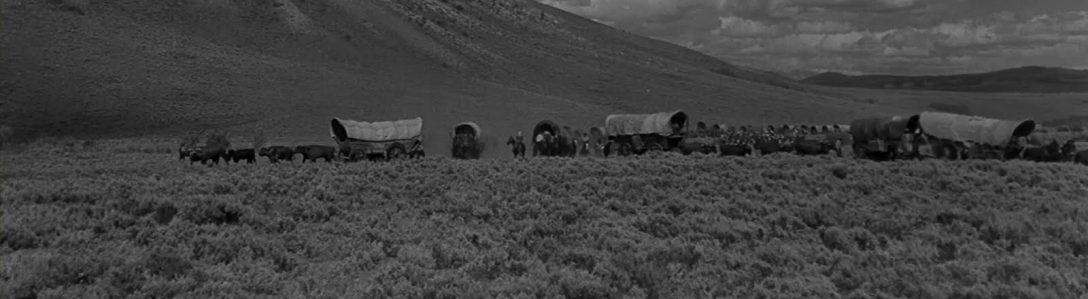
Poaching European talent has always been a popular Hollywood pastime, from Murnau to Lubitsch to Lang. Not every import had such an impact however, as proven by the reception of Caravana lavish 1934 roma musical directed by one Erik Charell.  Charell and his leading lady Lilian Harvey had become a hot commodity after the international success of their German film operetta The Congress Dances (1932). Fox decided to make Caravan a “super-special” with a budget over a million dollars, importing French heartthrob Charles Boyer as the male lead. It was a financial and critical disaster, with the NY Times moaning that it was  “an exceptionally tedious enterprise”.  Charell’s professional career was over – but what a way to go out (Harvey also flamed out in Hollywood after four films). Fully utilizing the emerging mobile camera technology, Caravan is a perpetually moving marvel, pirouetting through the romani like a fellow reveler. The average shot is thirty seven seconds long, so even expository conversations become epic journeys through the cavernous sets – providing an anarchic sense of freedom. Screening as part of MoMA’s “To Save and Project” series of film preservation, Caravan is a major re-discovery.

Caravan was based on an original story by Melchior Lengyel, a Hungarian writer who later wrote the scenarios for Lubitsch’s Ninotchka and To Be or Not To Be. Clearly hoping to generate some of that Lubitsch magic, Fox packed the creative team with Europeans, from Charell and Lengyel to art director Ernst Stern and composer Werner Richard Heymann. The story is a mistaken identity farce, with shades of Ninotchka, as Countess Wilma (Loretta Young) will inherit her family’s vineyard on her twenty-first birthday – as long as she is married. She has been promised to a dashing young Lieutenant (Phillips Holmes), but instead she grabs fiddling roma Lazi (Boyer) and gets him to sign on the dotted line. After Wilma takes on Roma garb, the Lieutenant falls for her, not realizing it is the Countess.The social structure is set on its head when the Countess marries Lazi, and then invites his whole clan to stay in the mansion. Through an increasingly manic series of reversals, soon the roma people occupy the mansion while the upper crust are out on the street (getting the cops, but still).

In a scene as subversive as The Last Supper sequence in Viridiana, the romani traipse into the marble be-decked mansion and proceed to turn it into their personal nightclub, shocking the waitstaff and sending the Countess’ wedding party guests home in a huff. With respectable civilization ousted, the libidos come unsheathed, hilariously so in the case of the Countess’ beloved governess (Louise Fazenda, a slapstick veteran and a thorough delight here) who makes eyes with a strapping, bare chested lothario. The cast is filled with brilliant character actors, including Fazenda, Eugene Pallette, C. Aubrey Smith, Charley Grapewin and Noah Beery. Pallette’s turn as a bewigged, nigh-criminal roma pops off the screen with its brazen idiosyncracy.

Charell uses a combination of crane and tracking shots to wend his way through this chaos. In a dream of revolution, armed guards arrive to roust them out, but they too get caught up in the music, and the rousing dance begins again.  Historian Tino Balio supposed he used the proto-Steadicam “Velocilator”, a Fox studio update of the Bell & Howell Rotambulator. The Rotambulator used a central column on a turntable, which could set the camera at any height between eighteen inches and seven feet. The camera could raise on the column for crane-like shots, and hydraulics could be used to control panning and tilting. The Velocilator reduced the weight of the machine, and replaced the column with an angled boom arm that could raise or lower the camera. No Hollywood feature fully explored the capabilities of the moving camera since Paul Fejos’ Lonesome , another European director whose experimentation shortened his career.

Charell was experimenting not just with camera movement though, but with editing in the midst of movement. In elegant flashback sequences, he cuts seamlessly from the present-day Countess and governess’ POV of her master bedroom to the entrance of a little girl – the Countess as a toddler behaving badly. When the camera swings back to the governess, there are tears in her eyes, remembering the days of youth. All this is accomplished without gauzy dissolves or other obvious markers of shifting time. It takes only a few seconds of screen time, but establishes the deep emotional bond between Loretta Young and Fazenda. It’s this offhand mastery that is so striking about the movie – every detail has been thought through to achieve maximum expressiveness.

Caravan was presented in a print restored by MoMA, but I only saw it because Dave Kehr recommended it at the end of his preview piece on the “To Save and Project” festival. In a bit of serendipity, Mr. Kehr has been hired as the new Adjunct Curator in MoMA’s film department. He told Scott Foundas at Variety that:

“My real concern in the last 10 years has been that, as much as we’ve made progress on the preservation and restoration of films, access to those films has really been slipping away,” Kehr said by phone Monday afternoon. “I hope one of the things I’ll be able to accomplish is to work on that idea, both at the Museum and elsewhere, and explore other ways of getting those films to the public, other kinds of distribution that don’t involve going to a nice auditorium on 53rd Street.”

So while it is difficult to see Caravan today, it sounds like Kehr is eager to get these titles back out into circulation through digital channels, or otherwise. While I will miss my weekly routine of reading his Sunday NY Times DVD column, it sounds like Kehr will be doing even more valuable work at his new position at MoMA.

TO SAVE AND PROJECT: THE 11TH MOMA INTERNATIONAL FESTIVAL OF FILM PRESERVATION

October 15, 2013

CRI_127105

For eleven years the Museum of Modern Art has been hosting “To Save and Project”, their international festival of film preservation, highlighting the major archival discoveries and restorations from the past year. An annual reminder of the vital work being done by preservationists the world over, it acts as a preview of the repertory year to come, presenting classic Hollywood titles hopefully headed for Blu-ray (Nightmare Alley) to epics from international auteurs receiving belated stateside attention (Lav Diaz’s Batang West Side). With nearly all of the 75-plus titles being screened on film, it’s also a polemical statement that celluloid remains the most stable and reliable format for preservation.Star

Take for example, Stark Love (’27), a Smoky Mountain docu-drama filmed with non-professionals that was thought lost until the export version was discovered in the Czech Film Archives in 1968. Rarely screened since, this favorite of James Agee approaches North Carolina mountain folk with an artful anthropological eye, displaying the influence of Robert Flaherty. As in Nanook of the North, director Karl Brown aimed for staged recreations of their daily lives, although Stark Love is far more melodramatic than its model. His representation of Smokey Mountain life is paternalistic and not without its exploitative aspects , as their “law of the wilderness” , the inter-titles say, “is expressed in the cruel principle MAN IS THE ABSOLUTE RULER – WOMAN IS THE WORKING SLAVE.”

stark-love-1927-granger

Brown started out as a cameraman for D.W. Griffith, and Way Down East seems to hold particular sway over the plot, in its tale of an abused young country girl given hope of a new life from an educated young man. In Stark Love Rob Warwick (Forrest James) is the resident nerd, whose reading on chivalry makes him think his community’s attitudes towards women is all wrong. He begins courting Barbara (Helen Munday, a 16-year-old Tennessean discovered in a cafe), but after Rob’s mother dies his father decides to take Barbara as his wife. The two young lovers revolt.

The casting, though advertised as authentically Smokey Mountain, came from all over the South. Forrest was a football player in Knoxville, Barbara a high school student in the same city. Brown was heavily influenced by Horace Kephart’s Our Southern Highlanders, which recounts his years living among the people of the Hazel Creek region of the Great Smoky Mountains. His images are intensely romantic, using long shots with low horizon lines, the people like underbrush against the grandeur of these landscapes. These are alternated with huge Griffithian close-ups of wrinkled faces, work etched into their brows, ready to be returned to the earth.

stark-love2

It should be noted that the surviving print is the export version, which often used variant, lesser takes. On the NitrateVille message board, film historian David Shephard recalls screening this print for Karl Brown after its discovery, with him dismissing it as “a very poor representation” of what was released domestically. The domestic version will likely never be seen, but even this export print has compositions of breathtaking beauty. One can draw a line from Flaherty and Stark Love straight through to Lisandro Alonso’s influential life of a logger La Libertad (2001, also screening in the festival) and the Harvard Sensory Ethnography Lab (Leviathan, Sweetgrass, Manakamana), which value the visual and tactile rendering of reality over the verbal recounting of facts.

hangover-square-2

John Brahm’s Hangover Square (1945) is also an intensely physical film, thanks to the lumberingly sensitive lead performance by Laird Cregar. It is a film noir about the unknowability of the self and the anxiety of creation. Cregar plays young composer George Harvey Bone, who enters a fugue state after hearing a particular tone in turn-of-the-century London. He loses hours at a time, with no memories of his actions. He is finishing a concerto (a grandiloquent, haunting piece composed by Bernard Herrmann) but is pricked by fears he might be a somnambulist murderer in the Caligari vein. Although he is not directed by a mad scientist, but his own subconscious.

Cregar had urged 20th Century Fox to purchase the rights to Patrick Hamilton’s novel, but screenwriter Barre Lyndon altered so much of the story that Cregar initially refused to appear in it.  Hamilton’s protagonist was a wannabe golf pro in 1939 London – shifting the job and time frame removes much of the wartime allegory. But the studio suspended Cregar until he relented to appear in it. The changes were demanded by Darryl Zanuck, likely wishing to avoid any political blowback, but also because it allowed them to re-use the sets from The Lodger, which Brahm had just finished shooting.

hangover square PDVD_023

This was to be Cregar’s first starring role, and his final performance. His weight was a source of agony to the actor, who had instilled a severe diet to get down to leading man weight. He died of a heart attack following abdominal surgery in December 1944, at the age of 31, one month after shooting on Hangover Square had wrapped. Our own Greg Ferrara wrote more about Cregar’s tragically short career back in July.

A visually extravagant film, Brahm uses every inch of his studio London, craning up and into dingy apartment pads and symphony halls. The fugue state is signaled by woozy POV shots, the lens smeared with vaseline. Cregar, with baby fat still padding his imposing frame, waddles through the film like a wide-eyed infant, too innocent and pure to survive in a mercenary world – embodied by gold-digging dancehall girl Netta (Linda Darnell). It’s all too much for his soul to handle, and the film ends in one of the grandest self-destructive acts in the noir canon, banging out the last chords to his composition as the music hall burns. The camera pulls up and away, as if afraid to look such abject depression in the face.

THE 2013 NEW YORK FILM FESTIVAL

October 8, 2013

secret-life-of-walter-mitty-ben-stiller-is-a-big-time-daydreamer

In its 51st edition the venerable New York Film Festival is testing its boundaries. While still a small, tightly curated affair compared to the industry bacchanals of Toronto and Cannes, they’ve been slowly increasing their scope. There are 36 official selection entries this year, thirteen more than 2011, and have expanded the Revivals and Views of the Avant Garde sections to the point where they could stand on their own. A mammoth Jean-Luc Godard retrospective is also running concurrently with the festival. The official selection was heavy on the Brits this year (with four, although I didn’t see any), and otherwise tried for their usual balance of star power (Captain Phillips) and experimentation (Norte, the End of History, all of Views).

The Centerpiece screening was the world premiere of Ben Stiller’s The Secret World of Walter Mitty, the second adaptation of James Thurber’s short story, following the 1947 Danny Kaye vehicle. Stiller’s directorial outings, from The Cable Guy (1996) to Tropic Thunder (2008), have been dark and masochistic comedies about pop culture’s corrosive power. Mitty, on the other hand, is a nostalgia piece, mourning the transition from analog to digital. Having little relation to Thurber’s moody miniature, Stiller’s Mitty takes the daydreaming office drone and shunts him into a world-hopping, mountain climbing  journey of self-discovery, kind of a middle-aged male’s Eat Pray Love. Where Thurber’s story ends with Mitty fantasizing about his own demise, Stiller’s closes with all of his dreams coming true.

DF-11070-Edit - Ben Stiller in THE SECRET LIFE OF WALTER MITTY.

It is bafflingly saccharine coming from Stiller, who had previously spent his acting capital to make scathing commentaries on self-help sludge such as this. Yet it is clearly a deeply personal work, sincere in its efforts to convince people to re-connect with the world. It is also very well crafted, especially the first third. The opening shot is wordless, with Stiller’s Mitty sitting at his laptop, stymied in his attempts to update his eHarmony profile. In one striking shot, he paces into the background and goes out of focus, forcing the audience to stare at an empty, perfectly quiet frame. It’s astonishingly bold for a $100 million would-be blockbuster. Fox hedged their bets by ladling on product placement. In addition to eHarmony, there are prominent cameos by Papa Johns and CinnaBon.

Mitty is the negative asset manager for Life Magazine, who is publishing their last issue before becoming online-only.  Prone to fantasies of action-movie heroics – he usually inserts co-worker Cheryl (Kristen Wiig) as his damsel in distress. While Mitty’s daily routine is framed in long shot with a smoothly tracking camera, when he leaps tall buildings the camera goes all Greengrass, turning into the handheld quick-cut style so favored by today’s action auteurs. The film is loaded with these clever visual ideas that contrast old and new, yet they are in service to a story that is thuddingly conventional. The reliably funny Wiig is reduced to arm candy, her role to prop up the self-pitying Sillter. The rest of the superb cast, including Adam Scott, Kathryn Hahn and Shirley McClaine, are equally underserved.

Norte 1

On the other end of the budget spectrum is Lav Diaz’s Norte, the end of history, a four-hour immersion into the Filipino justice system. Loosely based on Dostoyevsky’s Crime and Punishment, it tracks the parallel stories of a nihilistic law student dropout and a saintly laborer. Fabian (Sid Lucero) is disgusted with the state of his country, ravaged as it is by official corruption. He advocates violent revolution on the grassroots level, and puts his ideology into action when he murders the local money-lender he is indebted to. Unbeknownst to him, Joaquin (Archie Alemania) threatened the usurer with violence earlier in the day, and he is immediately arrested for the murder. Joaquin and his wife had planned to open a restaurant, but a leg injury sucked up their funds and put them in debt. Unable to afford a decent lawyer, Joaquin is convicted and sent to prison for life. Diaz shifts back and forth between these parallel tracks, as Fabian digs deeper into his ideological rabbit hole, where violence becomes an end in itself, while Joaquin works to salvage a life in prison, forging friendships through his selfless aid to others. Diaz captures a wide swathe of Filipino society, from lawyers’ cafe bull sessions to working class dinner preperation, all captured in Diaz’s patient long takes. There is a palpable tension as the two narrative lines bend towards each other, their joining a flashpoint that might put an end to it all. Norte was acquired by Cinema Guild for U.S. distribution, and it will be the first film by Diaz to be released in the United States – a true cause for celebration.

20137266_7_IMG_FIX_700x700

Hong Sang-soo movies also put me in a celebratory mood. This prolific Korean profiler of indolent man-children makes one of his chatty humiliation fests a year, and they keep getting funnier.  Nobody’s Daugher Haewon continues his shift towards featuring female characters, which started in Oki’s Movie (2010) and continues through the most recent Our Sunhi (2013). Haewon is at loose ends after her mother moves to Canada, her identity seeming to drift away with her. She’s only halfway present in all her relationships, from her intermittent affair with a married professor to her rapid infatuation with a teacher on vacation from San Diego. Even her consciousness is in doubt – the film is either a lucid dream or a sleepy reality.

MV5BMTc2NDM1OTY5NF5BMl5BanBnXkFtZTcwMTI4MzA1OQ@@._V1._SX640_SY268_

Also taking place in a liminal dream state is Stranger By the Lake, a minimalist thriller from French director Alain Guiraudie. An isolated stretch of shoreline is used as a gay cruising ground, where Franck (Pierre Deladonchamps) is a regular. He develops an intense crush on Michel (Christophe Paou), who looks like Tom Selleck circa 1985, but who is always engaged with other men. Franck returns day after day, Guiraudie depicting this daily routine as a kind of incantation, and the woods up on the hill as an enchanted fairy land, a mystery world of lush greenery and pitch black shadow. The sex is explicit but natural, outgrowths of the land. When Franck witnesses Michel soil this sacred space with a criminal act, he is attracted and repelled. Michel becomes a monster stalking through the once-sacred land, inviting all with him to disappear into the darkness. The film’s bewitching mix of naturalism and fable is inherent to Guiraudie’s work, which will hopefully gain a wider audience when Strand releases Stranger by the Lake early next year. See That Old Dream That Moves (2001) his lyrical short feature about the closing of a factory, if you can find it.

Also recommended with public screenings still to come: Corneliu Porumboiu’s hilarious meta-movie When Evening Falls in Bucharest or Metabolism (no distributor, wrote about it here); James Gray’s gorgeous turn-of-the-century melodrama The Immigrant (Weinstein); and Catherine Breillat’s autobiographical poison pill Abuse of Weakness (no distributor, wrote about it here).

OFF THE BEATEN TRACK: SHACK OUT ON 101 AND PLUNDER ROAD

October 1, 2013

large_shack_out_on_101_blu-ray_01

We associate film noir with cramped urban spaces, labyrinthine warrens of crime and vice. This slipperiest of genres, identified by French film critics years after its demise, also gained resonance by departing from the city and hitting the road. Often this takes the form of a last ditch attempt at salvation, as in the transition from city to country in On Dangerous Ground, when Robert Ryan’s cop finds humanity in the dead eyes of Ida Lupino. Olive Films recently released two curiously located 1950s noirs, the beachside diner of Shack Out on 101 (1955) and the highway heist film Plunder Road (1957). Both dispense their pleasures through their constrained locales, the first taken place almost entirely in a shabby eatery, the second inside a getaway truck. The first veers towards absurdist humor while the second is a straight-faced procedural, but both display how the noir ingredients could be combined in an endless variety of ways, and that there are always discoveries to be made in even this most picked over of genres.

shack_out_on_one_o_one_xlg

Shack Out on 101 is a delirious red scare item directed and written by one Edward Dein. It was his first English language feature, having only directed the English dub tracks on a couple of Spanish movies. He started out as a screenwriter for Poverty Row outfit Producers Releasing Corporation (PRC), and went on to write for RKO and Universal, his most notable credit for “additional dialogue” on Jacques Tourneur’s classic creeper The Leopard Man (1943). He hooked up with Allied Artists (formerly Monogram Pictures) for Shack, which he co-wrote with his wife Mildred. It’s a bizarre mix of Clifford Odets “realism” and hysterical McCarthy-era red-baiting, highlighted by a loose-limbed performance by a young Lee Marvin.

The movie focuses on a dingy seaside diner, owned by middle-aged manager George (Keenan Wynn), who carries a torch for his bite-sized blonde bombshell waitress Kotty (Terry Moore). She only has eyes for regular customer Sam (Frank Lovejoy), a nuclear scientist running experiments at a lab down the coast. All of them are harassed by line cook “Slob” (Marvin), a boorish pervert who just might also be a Soviet spy.

large_shack_out_on_101_blu-ray_09

The overheated tone is established in the opening shot, in which Kotty is splayed out in her two-piece bathing suit on an abandoned beach, her body ogled by Dein’s camera with leering prurience. In the distance, a figure slowly walks forward into focus. It’s Slob, who bends down and lathers on a sloppy kiss to her revolted face. Dein and DP Floyd Crosby (High Noon) is always shoving Slob into backgrounds and skulking in corners, a creature more than a man. If he emerges into the foreground, disaster is sure to follow. The opening sequence rhymes with one of the climactic sequences, a deep focus composition in which Marvin’s head is in the far background behind the kitchen counter, while Kotty blabs her suspicions over the phone in close-up. His slow approach next to her will shift the film into a more violent phase. Marvin oozes bad intentions, his body an uncontrollable herky-jerk of flapping limbs, as if he can’t control the hurt he is about the unleash.

Set almost entirely inside the diner, it’s overtly theatrical, and early one it feels like a kitchen sink comedy about George’s unrequited love of Kotty. There are some touching moments here, including George trying to enumerate why he should feel happy to be alive. His ex-GI friend reminds him of their tour at D-Day, where he, ” still remembered how choppy the channel looked through your chest.” This greasy spoon looks like heaven in comparison. These offhand character moments clash with the broad comedy, including a pantomimed scuba diving bit, and an uproarious weightlifting scene between George and Slob before opening the joint. Comparing pecs and calves, this extended bit of delusional beefcake ends with the shirtless duo comparing legs with Kotty (she wins). By the time the conspiracy mechanics kick in it’s hard to take it seriously, and it seems Dein felt the same way, as the various subterfuges make little sense, as if he were poking a little fun at the rise of Commie-hunting.

plunder-road-movie-poster-1957-1020679541

Plunder Road aims for a complete lack of subtext, for a simplicity of procedural presentation. A group of failed professionals (a race car driver, a stunt man) rip off the U.S. Mint in a bold rain-soaked train heist. After this elaborate opener, the movie splits off into four, following each getaway car as it races for freedom to the Mexico border. There is no exposition, only action. Director Hubert Cornfield is concerned only with the mechanics of the crime, and how the roads eventually swallow all of them up. The opening credit sequence, designed by Bob Gill, consist of an extreme close-up of white road markings speeding by. The idea is that the mechanical advancements that allowed this robbery to take place will also inexorably take them all down.

In order to pull off the job they need a crane and a highly unstable explosive that they transport in a spring-loaded trailer, a nod to Wages of Fear (1953). But this technological ingenuity will also trap them on their escape routes. Everything from a police scanner to a weighing station will give them away. The film, while not well known outside of noir aficianado circles, has been studied by those interested in urban planning, as the ironic finale finds the remaining heisters stuck in snarled traffic in the newly built Harbor Freeway, which ran from Los Angeles to San Pedro and points south. Released a year and a half after the passage of the legislation which created the interstate highway system, UC Irvine Professor Edward Dimendberg found Plunder Road to be a an “allegory of that epochal event.” That is, the federal government’s creation of these interstate highways restricts personal freedom in this film, because they aid the police in oversight and collaboration in setting up roadblocks. But there is also the highway’s failure to circulate traffic as it was intended – it is one of these snarled traffic jams that ultimately trip up the bandits. An old gas station attendant reminisces to one of the robbers, before knowing who he is speaking to, about the old days when gangsters could get away with robberies like theirs, before “radio” and modern detection technologies made it impossible. Seen through this lens, as well as being a tautly produced heist film, it’s a statement on the efficacy of federal intervention, and the existential dread that intervention instills in anti-authoritarian American souls.

plunder_road

LOST AND FOUND: AMERICAN TREASURES FROM THE NEW ZEALAND FILM ARCHIVE

September 24, 2013

14_woninacupboard

In 2009 The New Zealand Project was initiated, a collaboration between the New Zealand Film Archive, the National Film Preservation Foundation and private collectors to preserve and distribute American films housed in the NZFA’s vaults. They had stacks of American nitrate prints that had gone untouched for years, since the NZFA had focused their efforts on preserving their local film history. In 2010 nitrate experts Leslie Lewis and Brian Meacham were sent to investigate their holdings and assess which titles were most in need of help. What they discovered was astonishing, a cache of presumably “lost” films, including John Ford’s Upstream and the first three reels of The White Shadow, for which Alfred Hitchcock was the assistant director, editor, scenarist and art director. In total 176 films were shipped to the U.S. for preservation. Many of these rescued titles are streaming on the National Film Preservation Foundation website, and today the NFPF released a DVD with some highlights of this trove. “Lost and Found: American Treasures From the New Zealand Film Archive” includes the Ford and Hitchcock features, as well as a selection of shorts and newsreels that haven’t been seen since their original release over 90 years ago. TCM will air a selection of these titles on November 17th and 24th.

John Ford’s theatrical rooming house comedy Upstream (1927) is the centerpiece, an ingratiating charmer about the everyday performances of down at heel actors. As the film’s epigraph says, “If life in general is a play, then a theatrical boarding house is a burlesque show.” I already wrote about Upstream and The White Shadow (1924) in this space before, though, so today I’ll be focusing on the shorts and newsreels that fill out the package, and they contain multifarious charms of their own.

Lyman H. Howe’s Famous Ride on a Runaway Train (1921) is a literal thrill ride, as the camera puts the viewer at the head of a train seemingly careening into oblivion. Paired with the film’s soundtrack disc of clanging clamor, which was fortuitously held by the Library of Congress, it still retains its adrenaline jolting power. When an inter-title instructs you to, “Hold on to your seats! The train is running away”, it is impossible to disobey.

09_birthofahat

Birth of a Hat (1920) is a promotional short which tracks the production of Stetson’s fine felt hats from scrambling hares to topping the hair on your head. The company’s honesty about its commodity chain is a far cry from today’s manufacturers, whose processes are only revealed today through investigative reporting or muckraking documentarians. No muck was raked in The Love Charm (1928) a one-reel exoticized Polynesian romance shot as an excuse to test two-strip Technicolor.

07_dollyofthedailies

One of the recurring themes in the set is the increasing freedom of women. From the girl riding in an ostrich-drawn carriage in a tabloid Selznick Newsreel to serial heroine Dolly of the Dailies (1914) to writer-director-star Mabel Normand, women were flamboyantly asserting their strength. In addition to the ostrich ride, the newsreels include a “Co-operative Weekly Review” (1918) that features high-school girls learning war-time trades of carpentry and steel smelting, as well as a call for 25,000 Red Cross nurses. The set includes Episode #5 of the Edison Dolly series, entitled, ” The Chinese Fan”. The early silent period featured an explosion of plucky young female leads, from The Perils of Pauline to The Hazards of Helen. These cliffhanging crime-solvers are far more progressive figures than any of todays leading ladies (Milla Jovovich excepted). As embodied by Mary Fuller, Dolly is an ambitious young NYC reporter who gets caught up in dangerous scrapes. In this episode she infiltrates a Chinese gang (grim stereotype opium addicts), and rescues the kidnapped daughter of a local banker. Clearly shot on the fly, the short also acts as an inadvertent documentary of its making. In one revealing shot, a horse and carriage fire truck races out of a garage, but two men nearby are staring at the camera. As the horses race off, both tip their caps toward the lens, a friendly gesture that still warms the heart 100 years on.

Won in a Cupboard (1914) is the second film directed by Mabel Normand, and the earliest to survive. Only 21 at the time of its production, she had already become a Keystone comedy staple, the impish ingenue having starred in 100-something shorts for Mack Sennett. This manic 13 minute short is made even more nonsensical by some missing footage at the head. But it’s a farce of miscommunication. Mabel has found her “ideal” man, a goofball hick (Charles Avery), while she fends off some of the smoother operators in town. At the same time Mabel’s father, the constable, is in love with the hick’s mother. The mother and the constable get stuck in a closet, and fear the gossip that will occur if they are discovered. These two strands smash together in a wood splintering finale that leaves the entire town chopping up their closeted secret. It’s a burst of energy as pure as the huckster Runaway Train ride.


MATING GAMES: A GIRL IN EVERY PORT (1928)

September 17, 2013

01-hawks-a-girl-in-every-port-1928-louise-brooks

It’s hard to conceive of Howard Hawks without sound. His films are focused on work and its downtime, and it is in spurts of chatter in which his characters define themselves. As physical as their occupations may be, it’s always their words that reveal their true selves. Which is why watching Hawks’ silent films are so disorienting. The Museum of the Moving Image is in the midst of a full retrospective of Hawks’ work, and this past weekend they screened many of his silents, including A Girl in Every Port (1928), which manages to set up many of the director’s pet themes before the arrival of sound allowed his talents to fully emerge.

a-girl-in-every-port-louise-brooks-33768865-480-386

After Raoul Walsh’s What Price Glory? minted box office gold in 1926, the Fox Film Corporation was eager to produce more macho globetrotting comedies. Walsh’s film adapted the play by Laurence Stallings and Maxwell Anderson, which followed two army buddies, Flagg (Victor McLaglen) and Quirk (Edmond Lowe), as they battled over women in China, the Phillippines and France during the onset of WWI. Hawks wrote the original story for A Girl in Every Port in 1927, which is essentially What Price Glory? if you remove the dramatic war sections. At this early stage he’s already showing an interest in paring down genres to their basics. This reaches its apotheosis in Rio Bravo, in which the Western is reduced to a street, a jail and a hotel.  His story has two sailors, Spike (McLaglen) and Bill (Robert Armstrong), who joust over women on their worldwide jaunts, until a few brawls make them best friends. While Armstrong’s character is credited as “Salami” in the AFI Catalog, his nickname is not present in the print I saw. Maybe censors removed it for being too sexually suggestive? McLaglen is the hulking goofball, an overeager lothario whose telegraphed moves are no match for Armstrong’s low key mystery.

A number of writers were brought on to polish his scenario, but Seton Miller received the final screenplay credit. These later drafts introduced a vamp character (to be played by Louise Brooks) who seduces Spike and threatens to upend their relationship. This conventional bit of melodrama was imposed in these later drafts, over-complicating Hawks’ simple tale of friendship.

a_girl_in_every_port_1928_lowres-detail-main

Hawks famously told Peter Bogdanovich that the film was a “love story between two men”, and his depiction of their deepening platonic bond will achieve echoes in his later work. The act of lighting cigarettes will become an erotic emblem throughout his career, seen to charged effect in To Have and Have Not. In A Girl in Every Port, this gesture seals Spike and Bill’s bond. They are both soaked after an extended throwdown with some Keystone cops and an unintended dip in a bay. Bill’s pack of cigs is all wet, so Spike proffers his – and their bond is sealed. They are shown in a simple two shot, with close-up inserts for the lighting. A classical, maximally legible setup, although Hawks does show more camera mobility that we’re used to in his later work. There is a lovely tracking shot through the city streets as the two men look for an abandoned spot to slug each other. There’s also an expressionist touch in one shot, in which Hawks uses a low angle under Louise Brooks’ high diver, her body abstracted against the night sky as she soars down towards the camera. F.W. Murnau was in residence at Fox at this time, and exerted an influence over the whole studio. Even Hawks, an exemplar of Hollywood’s “invisible” style, was inspired to deploy some  visual tricks of his own.

Louise Brooks is stuck in the role of gold digger, without the vibrant independence of later Hawks heroines. She does fill the role though, of the feminine presence that sets the professional male world on tilt, whether Jean Arthur in Only Angels Have Wings or Barbara Stanwyck in Ball of Fire. When he had more freedom, Hawks gave more to his female characters. In A Girl in Every Port, Brooks is a narrative device, a carnival high diver who splits Spike and Salami’s indomitable bond. But whereas Arthur and Stanwyck challenged the masculine assumptions undergirding the boys clubs they crashed, Brooks’ obvious villainy only confirms the macho worldview of A Girl in Every Port. The film ends with Spike and Salami ready to continue their love ‘em and leave ‘em life.

10499459_1

Hawks knew Brooks because he was friends with her husband, actor/director Eddie Sutherland. He cast her because, as he told Kevin Brownlow, “she’s very sure of herself, she’s very analytical, she’s very feminine, but she’s damn good and sure she’s going to do what she wants to do.” That could describe all of his female characters following in the wake of Brooks. While he wasn’t able to provide her with a multi-faceted character, she certainly makes a visual impression, with her razor-sharp bob and form-fitting diving gear. She exudes a fearsome modernity which scares the hell out of every man around her – the shape of Hawskian women to come. Her small but pivotal role in A Girl in Every Port attracted the attention of G.W. Pabst, who cast her as the much-desired lead in Pandora’s Box – which turned her from an actress into an immortal image.

THE STORY OF FILM: THE CROWD (1928)

September 10, 2013

Screen Shot 2020-02-13 at 3.09.52 PM

Earlier this month Turner Classic Movies began airing The Story of Film, a 15-chapter documentary by Mark Cousins tracking the history of the moving image from 1895 – 2000s. Running from now through December,TCM will also air 52 movies that Cousins mentions in his work. To coincide with The Story of Film Chapter 2: 1918 – 1928, tonight TCM will air everything from Nanook of the North (1922, 8PM) to King Vidor’s silent masterpiece The Crowd (1928, 2AM). While Nanook was recently issued on Blu-rayThe Crowd is only available on out-of-print VHS, so this airing is a rare opportunity to see it in a decent edition. George Feltenstein, the Senior Vice President of Theatrical Catalog Marketing at WB, recently wrote that the home video future of The Crowd depends on the sales of Vidor’s The Big Parade, which comes out on October 1st. It was originally because of the The Big Parade’s massive success that Vidor was allowed to make the smaller, artier The Crowd, so maybe it will have the same effect on WB executives today. Like Murnau’s Sunrise (’27) or Paul Fejos’ Lonesome (’28), The Crowd depicts the trials of the everyday with expressionistic intensity, proving that the working man is as worthy of tragedy as royalty.

MGM producer Irving Thalberg asked Vidor what he would do to follow up the success of his WWI drama The Big Parade, and Vidor replied, “Well, I suppose the average fellow walks through life and sees quite a lot of drama taking place around him. Objectively life is like a battle, isn’t it?” He sketched out an original story with Harry Behn about the trials of an office worker who can never get ahead, but spent a long time searching for an actor who held the everyman qualities he was looking for. According to Vidor, he found  James Murray at the MGM casting office looking for employment as an extra. Murray had the hardscrabble background Vidor was seeking, having worked his way to California as a dishwasher and coal-shoveler. Though it seems Murray was plucked from obscurity, he had already secured lead roles in MGM’s In Old Kentucky (’27) for director John Stahl and the Joan Crawford drama Rose-Marie (’28). Regardless, he had a roughness that Vidor favored that he felt was ideal for The Crowd. Offscreen Murray struggled with alcoholism and depression, and following his soulful performance for Vidor, he descended into poverty, and was found dead in the Hudson River in 1936. Vidor was so affected by Murray that he attempted to tell his life story in a never-produced movie called The Actor as late as 1979.

In The Crowd, Murray plays John Sims, a tough-luck kid born into privilege but shoved into the underclasses after the death of his father. He moves to NYC with hopes of reviving his fortunes, and joins an advertising firm as a low-level accountant. That’s as far as he rises, having to scrimp and save to care for his wife and children. Tragedy lowers their income from precarious to poverty, and to Sims the world seems like an ever-tightening noose.

Crowd-Direction1

From the start Vidor depicts the city as a heaving mass, an active agent in thwarting Sims’ progress. When John learns of his father’s death, he is ascending a staircase, the camera pointing downward from a height, the crowd below a vertiginous blur. Height will be a destabilizing force throughout. When John first arrives in NYC, Vidor employs a series of superimpositions of traffic, crowds and trains that climaxes in a low angle of skyscrapers, sentinels staring down at the masses. In one of the most quoted shots in film history, Vidor than tracks the camera up the face of one of these buildings, with the use of a miniature, before plunging into a top floor window and peering into John’s new office, filled with ant-sized desks. The camera glides over the workers until it settles onto John, a member of the crowd for now, going with the flow. He coasts on this flow, even participating in the angles, he will peer up a doubledecker bus ladder up the skirt of the woman he will later marry.

crowd

He proposes marriage to Mary (Eleanor Boardman, Vidor’s wife) after seeing an advertisement on a bus saying, “You furnish the girl, we furnish the home.” His actions seem dictated by “the crowd”, his eagerness to fit in with an upwardly mobile society. But as soon as he takes those steps the world starts to conspire against him. It begins with everyday objects in his dingy one-bedroom apartment he shares with Mary. The Murphy bed won’t fold up and the bathroom plumbing springs a leak. The implied contract he signed with big city society is not being fulfilled – the advertisements promising a sun-filled “home” were telling lies. His initial joyousness at entering a loving relationship dissipates into bitterness, exemplified by a bottle of milk exploding in his face. The world is rebelling against him. It is here than he exclaims that “marriage is not a word, it’s a sentence.”

Separation is delayed by children. Both Mary and John decide to give their union another shot because of their son, and then their daughter. Their attempt is sincere, and Murray’s desperate search through a labyrinthine hospital to find his first-born is a nightmare of indifferent bureaucracy, the soulless efficiency of his workplace transplanted to a facility supposed to house his salvation. Murray pushes through a triangle of hospital beds to meet his wife and child, and the look of desperate beatitude on his face is heartbreaking.

Since their bond is with the child and not each other, John and Mary are always separated in the frame, until an untimely death shears them completely apart. In a funeral car they are pushed to extreme edges of the frame, eager to burst out of each other’s lives. Vidor struggled mightily over the ending, as seven were shot, and theaters were given two options to screen. One was a super-happy ending gathered around a Christmas tree, the other more ambiguous, with the family unit intact but still struggling. The latter is the one that survives in existing prints, with John crawling back into employment and buying his family tickets to a vaudeville clown act. The camera glides over the laughing crowd, ending by lifting straight up away into the sky, into the heavens the Sims can never quite reach. While it offers hope, it is a temporary one. For as the inter-titles state, “The crowd laughs with you always…but it will cry with you for only a day.” This laughter and this happiness, Vidor implies, will last only this night, until the hard work of living begins again.


PIGSKIN PSYCHOLOGY: SEMI-TOUGH (1977)

September 3, 2013

gal-football-films-23-jpg

The NFL regular season begins this Thursday night when the defending champion Baltimore Ravens face the Denver Broncos. It has been a tumultuous offseason for the National Football League, as they battled a lawsuit brought by 4,500 ex-players seeking liability payments for the long-term health effects of head trauma. Last week the league settled the suit, paying $765 million, a small price to pay for an organization that brings in $10 billion in yearly revenue. While that will temporarily quiet the calls for wider reform, the investigative PBS program Frontline will air “League of Denial” in October, which promises to show how the NFL “covered up how football inflicted long-term brain injuries on many players.” ESPN was originally a co-presenter, but backed out after receiving pressure from the NFL.

Hollywood has yet to catch up with these unsavory developments, still grinding out a cycle of post-Blind Side inspirational football dramas. It’s way past due for another dig in the dirt like North Dallas Forty (1979) or at least the amiable satire of Michael Ritchie’s Semi-Tough (1977), which is streaming on VUDU. North Dallas Forty was recently named the greatest football movie ever by NFL.com, although it was denied the league’s cooperation on its initial release. Now it’s pill-popping wide receiver is feted on the league’s website. Semi-Tough has not been so rehabilitated. Michael Ritchie’s follow-up to The Bad News Bears, it focuses less on the violence of the sport than its megalomaniacal personalities.

view_13_SemiTough_jpg

Semi-Tough was adapted from the novel of the same name by sportswriter Dan Jenkins, who expressed dismay at how much Ritchie and screenwriter Walter Bernstein departed from his original. There had already been a foiled attempt at a musical version, which Jenkins relays in a production diary for Sports Illustrated (Semi-Pro made the cover). They added an entire subplot about a self-help guru (modeled on Werner H. Erhard), shifting the story’s focus from bad boy athlete antics to a Design for Living love triangle. Billy Clyde Puckett (Burt Reynolds) and Shake Tiller (Kris Kristofferson) are Miami’s star running back and wide receiver, making a deep run into the playoffs and hotel bars. They are best friends with Barbara Jane Bookman (Jill Clayburgh), the daughter of eccentric team owner Big Ed (Robert Preston). The trio lives together in playful platonic harmony until Shake gets mystical, and proposes marriage to Barbara.

Semi-Tough

Michael Ritchie had already made a career out of competition. His films delineated the preening vanity required to win at all costs, which is a cardinal virtue in his vision of America.   Downhill Racer (1969) used skiing, The Candidate an election and Smile a beauty pageant, but all abided by Ricky Bobby’s maxim in Talladega Nights: “If you’re not first, you’re last.” The Bad News Bears opened a new path for Ritchie, the slackers who rust out the competitive machine. Semi-Tough is an amalgam of both of these approaches, because while Billy and Shake are both supreme narcissists, they are also incredibly lazy – too eager to drink and shoot the shit to care about career advancement. Early on Billy is introduced to a supercilious publisher (“Intellectuals are the jocks of the mind”) eager for a gossipy tell-all, requesting stories of drug use and excess.  Although it would be an instant best-seller, Billy could care less, leading him on with absurdist tales of pre and post-game orgies.  The only thing Billy and Shake seem to care about is Barbara.

5835653066_8eb9ec0aa3

Burt Reynolds is fabulous as Billy, using his snickering humor to undercut his matinee good looks. In her review for New York Magazine, Molly Haskell puts it better: “He can be subtle and ironic without betraying the basic simplicity of his character, and, with that total confidence that comes out as generosity rather than narcissism, he is one of the most effortlessly romantic male stars on the screen. His subtlety is in the tilt and tease of his swagger.” Jenkins recalls Reynolds improvising many of his lines on the set, “all of them in keeping with the spirit of the novel.” Jill Clayburgh does some teasing of her own, a footloose woman who can talk dirty with an innocent gleam in her eye. Kristofferson can’t compete with their layered performances, but his haggardly handsome mien is always a welcome presence regardless.

[Movie]Semi-Tough (1977)

For both men football is an afterthought. Billy is a Gene Autry fanatic, and Ritchie scores a muddy playoff game to Autry’s “You’re the Only Good Thing to Happen to Me”, as if the game were an extension of his leisure time. Ritchie pays little attention to game details, even placing Miami against Green Bay in the Conference Champoinship, even though those teams are in different leagues. The game is an afterthought. What Ritchie seems most fascinated by is the culture of continual self-improvement in the celebrity set, represented by a “Human Potential Movement” group called BEAT, of which Shake becomes a devotee. The opposing QB (Carl Weathers) espouses “Pyramid Power”, while Miami owner Big Ed is into “movagenics”, which involves crawling on the floor like a baby. The most uncomfortable program is espoused by Clara Pelf (Lotte Lenya), whose full body intrusion massage is a painful parody of “Rolfing”, a “soft tissue manipulation” fad.

BEAT is modeled on Werner Erhard’s est seminars, which professed “to transform one’s ability to experience living so that the situations one had been trying to change or had been putting up with, clear up just in the process of life itself.” It’s Zen Buddhism with a higher price tag, and Barbara is attracted to Shake’s emerging sensitivity. All of these self-help mechanisms replicate the win-at-all-costs mentality again, but instead of elections or football games, it’s infiltrated philosophy and religion. The priest at the climactic wedding offers money laundering tips as if he’s a numbers man in the mafia. When the even the spirit has become commodified, it’s time to blow it all up and start over. And so they do.

0434695_6946_MC_UTx360

KILLER Bs: WHERE ARE YOUR CHILDREN? AND KILROY WAS HERE

August 27, 2013

where_are_your_children_lobby_card_3

Falsely advertised as “The First Drama of Juvenile Delinquency to Reach the Screen”, Where Are Your Children (1944) was just another attention grabber for Poverty Row studio Monogram, who lured William Randolph Hearst into promoting their ruse. They took another tack with Kilroy Was Here (1947), leveraging the popular WWII graffiti meme into a college campus comedy starring the two ex-child stars Jackie Coogan (The Kid) and Jackie Cooper (The Champ). Though no-budget quickies, they were directed by the talented William Nigh and Phil Karlson (The Phenix City Story), respectively, the studio hiring a deep roster of talent both young and old. Both titles have been released in unrestored but watchable DVDs by the Warner Archive, and are fascinating documents of the resourceful Monogram standard operating procedure.

CCF05062012_0000Juvenile delinquency had been a popular topic for bourgeois hand-wringing since the early 1930s, resulting in films like the RKO melodrama Are These Our Children (1931). Proving the conversation had shifted little since then, a 1943 issue of LOOK magazine ran a photo essay with the same title: “Are These Our Children? – Can We Keep Them Out of Trouble?”. The Val Lewton unit at RKO, fresh off of Curse of the Cat People(’44), exploited parental nightmares by adapting the essay into Youth Runs Wild (1944). Eager to leap onto the trend, Monogram set Where Are Your Children (’44) into production concurrently, drafting former child star Jackie Cooper as the lead, just before his induction into the Army.

The Office of War Information was wary of these lascivious message movies, fearing, as the AFI Catalog reported, that, “they could be used as anti-American propaganda by the Germans.” Eventually they were cleared “in the interest of homefront welfare”, due to the intervention of the director of War Services at the Federal Security Agency, Charles P. Taft. The influence of William Randolph Hearst also must have been felt, as he was running a series on juvenile delinquency in his chain of newspapers, and was eager to fuel the hysteria. He instructed his editors to support the release of Where Are Your Children?, guaranteeing positive reviews and long runs at theaters. It’s unclear why he threw his weight behind the cheaper production, but it has merit even beyond its historical curiosity.

Cooper plays a version of himself, a rich kid close to entering the army. Partying away his last few free nights at a hot jazz club, he spies a poor hash waitress (Gale Storm) across the street and pitches woo. When military duty calls, Cooper flees and forgets, but Storm carries a torch, and falls in with a rough crowd while trying to track him down. Murder and mayhem ensues.

In the nightclub scenes Nigh uses chiaroscuro lighting to create an atmosphere of furtive pleasure, as well as to hide the flimsy set. The joint oozes pheremones as jitterbuggers jiggle and Nigh pushes his camera close to a handle of bootleg rye1146630_10151828220861563_1045652496_n hiding under a newspaper. When pockmarked teens exclaim, “let’s squirm, worm”, you know things are about to get dirty. As secretive decadance dominates the club, the diner is presented as transparent and pure. Storm is framed alone in the front window, as Cooper gazes from across the street. On the otherwise pitch black street, she seems to be performing on a stage built only for him. He considers it an invitation, and their flirt extends the performance. They practically dance out the door. When Storm is thrust into the teeth of the juvenile justice system, she’ll have to use fancier footwork to get out alive. Gutter girl Opal (Evelynne Eaton) is convinced Storm ratted her out, and corners her in a holding room brandishing a chair. Soon the whole joint erupts in chaos as a brutal brawl destroys every last splinter of wood in the area. A sexual release by other means, this violent spasm is a shocker even to modern eyes, and the requisite return to law and order doesn’t quite squelch its afterglow.

m56949

Kilroy Was Here (’47) is more straitlaced stuff, turning a ubiquitous bit of WWII graffiti into a plot hinge for an amiable college campus comedy. “Kilroy Was Here”, emblazoned under the figure of a large nosed peeper looking over a ledge, became a running joke for serviceman, who used it to mark their territory. A version even appears in the WWII Memorial in Washington D.C. Having entered the popular lexicon, Monogram decided to capitalize on it with a film, with the added bonus of teaming Jackie Cooper with Jackie Coogan, the two ex-child stars. That gave exhibitors multiple ways in which to promote it.

Coogan and Cooper play GIs and best friends who embark on diverging paths once out of the service. Coogan plays Pappy Collins, a streetwise scrapper happy to make his living as a taxi cab repairman. Cooper is the ill-fated Johnny Kilroy, eager to take advantage of the GI Bill and climb the social ladder. Kilroy goes to college, but is mistaken for the “Kilroy” the graffiti is based on, and becomes a local celebrity. This gains him entry into a blue nose frat and the attentions of gal reporter Connie (Wanda McKay). It also makes him lose touch with Pappy and his taxi hack pals, so the truth must be revealed.

Karlson is less inventive than Nigh with the Monogram limitations, framing everything in static master shots to keep ahead of the punishing schedule. There are odd bursts of energy here and there though, like a waltz in a parking lot and the stuffy frat ball that turns into a back alley slobberknocker. It was not enough to secure public attention. Kilroy Was Here was supposed to be the first of six in a series, but no sequels were ever produced. Where scary teens are eternal, inside Army jokes turned out to be ephemeral. No matter, as there were more films to make and trends to milk, as Monogram Pictures made 33 other movies in 1947.

YOU WERE MEANT FOR ME: PENNY SERENADE (1941)

August 20, 2013

Penny Serenade (1941) is the third and final film Cary Grant and Irene Dunne made together. The Awful Truth (1937) and My Favorite Wife (1940) are screwball comedies of re-marriage, and Penny Serenade is their tragic inverse, focusing on the work necessary to maintain a long-haul relationship. The first two are set in high society, produced by the improvisatory Leo McCarey, while Penny Serenade is working class and focused on the fear and trembling of young parents, made with stark realism by the more deliberate George Stevens.  Grant worried about audience expectation, the “people who are laughing already, in anticipation of another mad marital mixup”. Both actors were protective of this heart-tugging melodrama, and later in life Irene Dunne declared it the favorite of her films. It was a success, although not to the same blockbuster degree as The Awful Truth, and for years has circulated in beat-up public domain editions. Olive Films is releasing a spiffy Blu-ray of Penny Serenade next week, and it’s something of a revelation.

After parting with RKO, George Stevens signed with Columbia on May 14, 1940 to produce and direct two features. Harry Cohn wooed him with a promise never to speak to him on the set, which was reportedly honored. Stevens presented Cohn with the Martha Cheavens’ short story “Penny Serenade”, which was to be published in McCalls magazine. Columbia purchased the rights for $25,000 and hired Cheavens as a script consultant. Morrie Ryskind expanded her story into a feature-length screenplay, which tracks the travails of Julie (Dunne) and Roger (Grant) Adams, a married couple at the breaking point. Julie is about to leave him when she spies a scrapbook/record album that collected the history of their love alongside the hits of the day. In a series of flashbacks set to those pop hits, Stevens traces the bloom and decay of their bond, from the meet-cute at a record store to their grieving lows of poverty and irreperable personal loss.

In The Awful Truth, Leo McCarey would play a piano on set to loosen up his actors and stir improvisational ideas. When they cooked up something funny, they would shoot and move on. Stevens was a far more deliberate worker, who Dunne described as “just the opposite” of McCarey, “very slow. But he came well prepared…we would have rehearsals on the set, and…discuss details of how a scene would be played.” He was notorious for shooting a lot of coverage and running up film costs, waiting for the moment in his head to appear in front of the camera. Stevens uses crowded compositions in Penny Serenade, life a series of obstacles Julie and Roger must traverse. Before Roger can make his marriage proposal on New Year’s Eve, he has to navigate packed rooms in which he is continually interrupted. It is only when they squeeze onto the fire escape that Julie can say yes. At their most peaceful moment, when George gets a reporting job in Japan, an earthquake levels their home as Julie is pinned by debris on the staircase.

He also deploys intricately choreographed long takes in the parenting scenes. The camera is fixed, but Grant and Dunne are in constant motion. In one slow-burn gag, Dunne is freaking out about bathing her newly adopted baby, approaching as if it were a caged lion. Grant watches with queasy anticipation next to her, and both of them fail so badly in this simple task that their assistant Applejack (the wonderful Edgar Buchanan) has to take over. The film is unique in how it undercuts traditional notions of motherhood. Dunne does not instantly become nurturing, but has to learn how to care for the child. She is as terrified of hurting the baby as Grant, who handles the kid with goggle eyed terror.

This is one of Grant’s greatest performances, for which he was nominated for his first Best Actor Oscar (he lost to Gary Cooper in Sergeant York). Roger is a playboy crushed by the Depression, unable to provide for his wife and child. Grant has to divert his natural charisma into something darker as the film progresses, culminating in a pained monologue to a judge about to reject their adoption application. It is a plea of pure abjection, Grant bows his head and flexes his body inward, making himself looks small so his emotions seem enormous and true by comparison. It works beautifully, and as Orson Welles said of Make Way For Tomorrow, it could make a stone cry.

The Columbia publicity director at the time, Lou Smith, wrote in a private memo that “I cried three times during the showing and everyone around me was mopping up too…Instead of having actors jump off cliffs, this one will have the audience jumping off.” Penny Serenade is a traditional tearjerker, with a plot that turns on unthinkable tragedy and improbable coincidence. But Stevens, Grant and Dunne treat the material with utmost respect, etching a film of bone-deep melancholy about the terror of child-rearing and the greater horror of losing that child. By the end Stevens shoots the Adams home as a tomb, shadows creeping in on Julie and Roger. Only a miracle can save their marriage, and Penny Serenade is one of those movies that makes you want to believe.