THE GREAT TRAIN CLOBBERING: EMPEROR OF THE NORTH (1973)

January 12, 2016

emperor-of-the-north-pole-original

“1933, the height of the Great Depression. Hoboes roamed the land; riding the rails in a  desperate search for jobs. Spurned by society, unwanted and homeless, they became a breed apart. Nomads who scorned the law and enforced their own. Dedicated to their destruction was the Railroad Man who stood between them and their only source of survival — The Trains.” – opening scroll of Emperor of the North

In Emperor of the North (1973) the Hobo and the Railroad Man are respective avatars of chaos and order, bloody abstractions who engage in a near-wordless duel to the death on a train rumbling through the Pacific Northwest. They have no back stories or personal motivation, they simply fight because it is in their nature, and the other one is there. Though the film is set in 1933 during the Depression, the story seems to take place outside history on a plane of pure hatred. Director Robert Aldrich expertly channels this hate in an elemental chase film in which stars Ernest Borgnine and Lee Marvin tear out chunks of each other’s flesh to perpetuate their mutually solitary ways of life. It was released last year on a pristine-looking Blu-ray from Twilight Time.

emperorofthenorth

Originally titled The Emperor of the North Pole, the film had been developed by Sam Peckinpah and screenwriter Christopher Knopf for three years. Knopf was interested in the story of Leon Ray Livingston, a turn-of-the-century hobo who wrote a series of memoirs under the pseudonym “A-No. 1″, including From Coast to Coast with Jack London (1917), a remembrance of his tramping with the young author published after London’s death. This  became one of the source texts for the script. Knopf’s screenplay is a streamlined machine that pits A-No.1 (Lee Marvin) against a militantly anti-hobo train engineer named Shack (Ernest Borgnine). Shack is known for never allowing a tramp to successfully complete a journey on one of his cars, thanks to a series of gruesome weapons including ball-peen hammers and lead pipes. A-No. 1 announces that he will ride Shack’s train, Number 19, all the way to Portland, OR. An uninvited guest appears in the person of the hobo-initiate Cigaret (Keith Carradine), which was Jack London’s moniker from his tramping days. Cigaret is a spindly hot-head who A-No. 1 reluctantly takes under his wing, until he realizes that wing is being burned off. Shack, A-No.1, and Cigaret are then involved in a pitched battle as they ride the iron horse into the northwest.

20234_6

Producer Kenneth Hyman pulled the project away from Paramount and Peckinpah in 1971, and brought it to Aldrich and Twentieth Century Fox. Hyman had successfully worked with Aldrich on The Dirty Dozen a few years previously. Peckinpah wrote to Aldrich that, “I cannot say that I am happy about not doing it but I can say that I’m very happy that you are in charge. I have been a devoted fan of your pictures over the years and I feel that my adopted baby is in very good hands.” (quoted in What Ever Happened to Robert Aldrich?, by Alain Silver). Aldrich wouldn’t quite return the compliment. He said, “I think Peckinpah’s a fine director. I don’t think he’s as good as I am, but he’s a sensational director.”

6a00e5523026f5883401761641abe5970c-800wi

Ernest Borgnine and Lee Marvin seem like permanent parts of the landscape, hatchet-faced phantoms doing battle between Railroad Man and Hobo for all eternity. Borgnine’s Shack is wound as tight as his trusty stopwatch, from his death-rictus grin to his face-stompin’ boots. He is a Fascist figure whose role is to keep the trains running on time.  As described in his autobiography, Borgnine “developed a character based on the actor Jack Elam, who I’d worked with on Vera Cruz and Hannie Caulder. Jack was walleyed. Imitating him, I tried to keep one eye looking straight ahead and the other eye down on the ground.” This explains how pop-eyed he looks throughout the movie, as if his pupils were straining to escape his sockets. But the technique is appropriate for Shack’s high strung violence, his eyes looking to attack as much as the rest of his body.

Emperor_of_the_North_Pole-640399223-large

A-No.1 is an equally tough S.O.B (he knocks a child out with a live chicken), though he has brief flashes of humanity, as when he deigns to teach Cigaret a few tricks of the hobo trade, like how slathering oil on the tracks can delay a train’s departure. These moments of openness swiftly close once any shred of his independence is being encroached upon, at which point he will disappear in the foliage, having hidey-holes constructed all around the country. He’s less a community hobo organizer than a paranoid separatist militiaman, perpetually concerned about any and all impingements on his freedom, regardless of how necessary. He dumps friends as easily as he downs a beer. Christopher Knopf spoke with Marvin before the shoot, and recalled, “I met Marvin in Bob [Aldrich’s] office on the Fox lot before filming began on location. There was that squint in his eyes and the so familiar baritone voice as he held court, dissecting his role. ‘The guy’s a philosopher, a disciple of Kant’s metaphysics and ethics, right?’ I nodded. ‘Bullshit.’ The man was already in character.”

emperor-4

Aldrich and his regular DP Joseph Biroc shot the film on location on the Oregon, Pacific and Eastern Railway (OP&E). The basic division of the frame is Borgnine in high angle, and A-No.1 coming in low, as Shack is constantly on lookout perches, while A-No.1 is crawling into tubes or hanging onto the undercarriage.  There is a necessary balance here, and though they barely exchange ten words to each other, both men understand the essential role they are playing in this drama, and an unspoken respect goes along with this understanding. What A-No.1 cannot respect is Cigaret’s unbalancing presence. The jittery Cigaret gets bored with A-No.1′s lessons and starts improvising bum techniques, risking A-No.1′s life in the process. Cigaret is disrupting the natural process of Hobo vs. Railroad Man. For A-No.1, there is no bigger insult than, “Kid, you’ve got no class.” Class equals tradition, and Cigaret is not honoring the tradition of the hobo and engineer beating each other to death.

emperor-of-the-north-pole

The trains would be running 25-30 miles an hour, and Aldrich had Borgnine and Marvin running up and down the roofs of the trains during their epic final fight, in which the two battered icons break each other’s bones with axe handles and two-by-fours. The autumnal greens and browns of the Oregon forest are a fecund backdrop to a life-draining fight, one which seems to give Shack and A-No.1 a euphoric high. These two extremists have never been happier than to be stuck in a duel on a moving train, their mouths bleeding and their knees buckling, their whole way of life on the line.

THE TEN BEST ACTION MOVIES OF 2015

January 5, 2016

still_3
Since their inception the movies have been obsessed with fists hitting faces. In the testing phases of Edison’s Kinetograph in 1891, W.K.L. Dickson shot footage of sparring boxers, cementing the sweet science as one of cinema’s enduring subjects. Though the medium matured, its audience (myself included) did not, and the appetite to watch performers sacrifice their bodies for our amusement has never abated. For a century filmmakers have been trying to capture the perfect punch in action movies, whether it’s in globetrotting blockbusters with CGI blood spurts or no-budget brawlers with practical squibs. There were plenty of worthy  efforts in 2015, and since it’s list-making season, below you’ll find my top ten action movies of the last year.

no-escape-trailer

10. (tie) No Escape  (directed by John Erick Dowdle) and Survivor (directed by James McTeigue)

Pierce Brosnan has entered his dissolute character actor phase, and it is glorious. The first glimpse of it was in John Boorman’s Tailor of Panama (2001), in which he took the piss out of his James Bond character by playing this secret agent as a lazy, decadent fool. As he transitions out of leading roles and into the background, his characters get more seedy. In the critically reviled No Escape, Brosnan has a small part as a sex tourist in Hawaiian shirt and puka shell necklace (or so it seems) who helps Owen Wilson and Lake Bell spirit their family to safety after there is a violent revolution in an unnamed Asian city. The movie is bluntly effective, as when the parents have to engage in some kid-tossing off of rooftops, or when Wilson has to learn to kill a man with an office lamp. Brosnan is the reason for seeing it though, with his oily, self-destructive swagger and perpetual five o’clock shadow, he is something like James Bond after his fifth stint in rehab. It’s a character going through the motions of heroism because it’s what is expected, but all he really wants to do is embrace the death he’s been courting his whole life.

Survivor is preposterous nonsense, but it’s MY kind of preposterous nonsense. Brosnan is a shadowy mad bomber called “The Watchmaker” who wears those tiny jeweler eyeglass things and occasionally has a mustache. If that wasn’t enough, he’s being chased by U.S. immigration official Milla Jovovich, who spends most of the movie panting in exhaustion. She is framed-up as being an inside woman for a terrorist group, and is in turn chased around London and NYC by Brits and Yanks alike. Cast also includes Dylan McDermott, Angela Bassett (!), Robert Forster (!!) and in his final performance (as a maniacal Romanian “pharmaceutical gases” scientist), Roger Rees.


closerange_-mov-still439

9. Close Range, directed by Isaac Florentine

The latest collaboration of DTV dynamos Isaac Florentine and Scott Adkins is a simple showcase for Adkins’ ability to kick people very hard. Adkins is an ex-soldier and an ex-con whose niece is kidnapped by a Mexican drug lord. So Adkins does what he must, in a series of fights beautifully choreographed by Jeremy Marinas of 87Eleven Action Design. You can read my full review of the film here.


REDEEMER_Theatrical-STILL_4

8. Redeemer, directed by Ernesto Díaz Espinoza

This Chilean revenge drama is straightforward pulp, superbly executed. It stars Marko Zaror as the eponymous avenger, a haunted man in a hoodie trying to expunge his past sins. He focuses his redeeming powers against an American Bro drug lord (a very funny Noah Segan), and a specter from his past known only as “The Scorpion”.  Zaror is a physical freak (he is Adkins’ main opponent in Undisputed 3), and the fight sequences are very technical MMA-based grappling that proceeds at a slower speed than most fight films. This deliberate pace really allows you to see the development of the attacks and counter-attacks, making the film a reliable tension and release machine.


Wild Card Movie (4)

7. Wild Card, directed by Simon West

A laid back Jason Statham product that is a remake of Burt Reynolds’ Heat. This one debuted on VOD in January and swiftly disappeared without a trace. But it finds Statham playing around with his persona, trying on different poses that never quite stick: grouchy office worker, shooting-the-shit gladhander, and depressive, melancholy addict. When he snaps back into Statham the cannonball, the fight scenes are choreographed by the great Corey Yuen (The Transporter), and they do inventive, violent things with ashtrays and butter knives. I also wrote about this one at length over here.


Chris-Hemsworth-And-Tang-Wei-Movie-BlackHat-Wallpaper

6. Blackhat, directed by Michael Mann

An impressionistic smear of our hyper-connected age, with gunfights. Leonine Australian hunk Chris Hemsworth makes for an unconvincing hacker, but this is a movie in which the small details seem absurd but the grand gestures are entirely, overwhelmingly convincing. Hemsworth is an imprisoned hacker who is sprung loose to help the U.S. feds track down a cybercrime network around the world. As Hemsworth moves from city to city, country to country, the borders seem to blur along with Mann’s woozy images.


SPL2-1050x608

5. SPL2: A Time for Consequences, directed by Soi Cheang

This won’t be released in the U.S. until later this year (by Well Go USA), but it has been out everywhere in Asia and has screened in festivals throughout 2015. SPL2 is a sequel to SPL (2005, aka Kill Zone), although it bears no relation to the original. The main protagonists Donnie Yen and Sammo Hung are nowhere to be found, here replaced by Tony Jaa and Wu Jing. Wu Jing is an undercover police officer in deep cover inside a Thai prison, while Jaa is a guard at the prison. Both of them get entangled in the illicit organ trafficking operation of Louis Koo. This is an anxious film wracked with paranoia, and director Soi Cheang (of the Milkyway productions Accident and Motorway) sustains a tone of barely contained hysteria. People are profitable bloodbags for Louis Koo, and the movie continually emphasizes the brute limitations of the human body.


roguenation2-xlarge

4. Mission: Impossible — Rogue Nation, directed by Christopher McQuarrie

This is the slickest entry on the list, a sinuous series of set-pieces that never bogs down in exposition. Tom Cruise gets stranger and more robotic each year, but the Mission: Impossible series keeps improving. I was particularly impressed with the assassination games during the opera, a complex minuet of overlapping POVs that provides one of the many tense standoffs between Cruise and Rebecca Ferguson, the MI5 agent whose motivations are at cross-purposes with the Impossible Missions Force. Ferguson slinks away with the movie, her lithe athleticism perfect for the film’s clockwork mechanisms.


RAN-14095r

3. Run All Night, directed by Jaume Collet-Serra

A chase film between two old men sapped of energy. Ed Harris and Liam Neeson play two buddies from NYC’s Westie gang who turn against each other because of the sins of their children. That is, Neeson’s son has murdered Harris’ son. Due to the personal codes of conduct buried in their genes, they must hunt the other down. Neither seems to relish it. Let’s call it a reluctant revenge film. So they trudge through the outer boroughs looking for a kill, and on the way pass through all their old haunts, which are also on their way out. It provides everything it’s title implies: speed, exhaustion and darkness. I went longer on this film over here.


taking_tiger_mountain_still

2. The Taking of Tiger Mountain, directed by Tsui Hark

This Chinese epic has grandly orchestrated ski fights and tiger battles, while the framing story deftly deals with the slipperiness of historical truths. It’s about a Communist army unit who infiltrates a bandit gang and brings them down from within, an old-school adventure told with wit and feeling. But the framing story does much to question the propagandistic value of the film inside. It’s a complex, hugely entertaining film that was a massive hit in China and deserves a larger audience stateside. I would recommend reading Grady Hendrix’s highly informative article for further context.


heres-how-the-insane-vehicles-were-created-in-mad-max-fury-road.jpg

1. Mad Max: Fury Road, directed by George Miller

To Godard’s quote that all you need to make a movie is a girl and a gun, I would add that you should also include a double-necked flame-throwing guitar.

TROUBLE IN PARADISE: AFFAIR IN TRINIDAD (1952)

December 29, 2015

AFFAIRINTRNDD-SPTI-02

Affair in Trinidad (1952) marked Rita Hayworth’s return to the screen after a three-year absence. She had been suspended by Columbia Pictures following her marriage to Iraqi prince Aly Khan and relocation to Europe, which violated her seven-year contract.  Her reunion with Columbia was an uneasy one, and Affair in Trinidad was made with a half-finished script and a truculent star. The resulting film was widely regarded as a sloppy rehash of Gilda, but it was a hit at the box office anyway, as audiences were still devoted to their “Love Goddess” Hayworth. Director Vincent Sherman performed an admirable reclamation job on the nonsensical script, but the artistic successes lie elsewhere on the billing block. The film has two superb dance sequences choreographed by Valerie Bettis, who worked closely with Hayworth, and DP Joseph Walker (in his final film) conjures illicit atmospheres through his inky B&W cinematography. The film recently aired on TCM, and is available on DVD from the Sony Pictures Choice Collection.

affair-in-trinidad-glenn-ford-rita-hayworth-1952

Columbia exec Harry Cohn was eager to get Hayworth back on screen and squeeze the remaining value out of her contract. Gilda was her most successful feature, so Cohn hired that film’s co-star Glenn Ford as well as its screenwriter Virginia Van Upp, who was to prepare a script to recapture the old magic. She turned out 15 pages, and off of that Cohn hired Vincent Sherman to direct the picture. According to Sherman, a meeting was held with producer Burt Granet and Van Upp, during which the whole story was to be planned out. Van Upp had only written 25 or 30 pages with no idea how to finish, and was bottoming out on an alcoholic bender. Rita Hayworth was in town earning $3,500 a week with no script to shoot, and Cohn was putting pressure on Sherman to figure something out. Granet dropped out of the project but Sherman stuck around and hired James Gunn to rush the completion of the script (with some revisions by Oscar Saul). Sherman on working with Gunn:

He had a bright mind, not always very focused, he was drinking and very unhappy, but he was talented. The next day I sent for a copy of Notorious…. I stole a little from that film, a little from this, a little from that, and I put together a melodrama that took place in Trinidad.

AFFAIRINTRNDD-SPTI-06

Rita Hayworth plays Chris Emory, the featured act at a Trinidadian nightclub. Her husband Neal turns up dead in the bay, and she is under investigation for the murder, along with her decadent and rich friend Max Fabien (Alexander Scourby). Then Neal’s brother Steve (Glenn Ford) shows up, and starts to unravel the mysteries coursing through the town, as well as falling madly in love with Chris, who may or may not be guilty of the murder.

Affair_in_Trinidad_2_L

Hayworth was displeased by the delays, and refused to report to work until she received a script she could approve. Columbia suspended her from December of 1951 until January 1952, when she relented and agreed to work on the Sherman and Gunn script. By this point it was a production to endure, not to savor. Both Ford and Sherman remember Hayworth as being unhappy and distant on the set. Ford wrote in his journal that, “She had changed. She was still beautiful, still a marvelous girl, but the flame did not burn as bright. There was a tiredness about her now, a sadness in her eyes. She was unhappy a lot of the time. Those of us who loved her tried to bring her out of it but without a lot of success.” Sherman said that Hayworth was the “saddest girl I’ve ever known. She had been used by every man that ever worked with her.”

1952: Rita Hayworth (1918-1987) as nightclub singer Chris Emery in 'Affair In Trinidad', directed by Vincent Sherman. (Photo by Robert Coburn Sr.)

The one person Hayworth seemed to open up to was choreographer Valerie Bettis, who put together the two showstopping dance numbers that are the film’s sole reasons for existing,”Trinidad Lady” and “I’ve Been Kissed Before” (she also acts in a small supporting role as a loudmouthed alcoholic, Veronica, who hilariously slurs that she wishes she could dance like Chris).  Theirs seemed to be a true collaboration, and while the film around them was stilted and familiar, the dance numbers are confrontational and strikingly modern. Bettis called Hayworth, “the most cooperative artist with whom I have ever been associated” (quoted in Adrienne L. McLean’s Being Rita Hayworth).  Bettis was a product of the second wave of modern dance, having studied under German choreographer Hanya Holm, and was interested in folding all forms of media into dance. Her breakthrough solo was choreographed to a poem by John Malcolm Brinnin, while she later adapted Faulkner’s As I Lay Dying and Tennessee Williams’ Streetcar Named Desire into ballets. She became a success in Broadway in her “Tigerlily” number in the revue Inside USA in 1948, and spent the rest of her career oscillating between the stage, film and television.

Affair_in_Trinidad_film

On Affair in Trinidad, Bettis said that “every day there was a major crisis, but Rita and I won all our battles and and of course that gave us great satisfaction, no matter what the studio officials felt.” Cohn objected to Hayworth dancing “Trinidad Lady” barefoot feeling, Bettis said, that “it didn’t make [Hayworth] look attractive.” Perhaps not wanting to delay the production any longer, Hayworth and Bettis would get their way, and the “Trinidad Lady” number is a provocative, modern number in the middle of a retrograde drama. Hayworth’s character is doing her nightly show, unaware that the police have arrived to inform her of her husband’s apparent suicide. The routine, set to a light calypso rhythm (with vocals dubbed by Jo Ann Greer), is not your usual hip-swaying  seduction, but a forceful knifing through space. I am not a dance critic, but The New York Herald Tribune’s Walter Terry was suitably impressed, writing:

Here, there is no sense that a dance seems sensual simply because Miss Hayworth is decorating its measures with her sensual presence. Rather do these dances exploit and disclose new aspects of a very vibrant personality. …if you look closely you will see that the legs are but infrequently used to make steps for carrying the body from one geographical location to another but that the legs move because violent actions of the torso propel them forwards and backward and sideways.

She is not moving to get from one place to another but from a hidden force inside her core. This interiority is emphasized in extreme close-ups in which Hayworth stares with a sly grin into the camera. It is not a come hither stare, but more an aggressive announcement of her own sexual power.

The “I’ve Been Kissed Before Number” is set at a party, and is gliding and playful where “Trinidad Lady” is aggressive and confrontational. It is almost all sinuous arms and hands, faux-flirting with the gathered guests. It makes less of a visceral impact but serves its purpose to fire Glenn Ford’s jealousy.

Poster - Affair in Trinidad_02

Affair in Trinidad was a problem that had to be solved, and what could have been a disaster was molded into passable entertainment thanks to the two standout dance sequences. Valerie Bettis would speak highly of her collaboration with Hayworth years later, and they seemed to be the only two on the set who didn’t wish they were somewhere else. With Sherman and Ford Hayworth seemed distant and sad, seemingly defeated by the business. But for Bettis it was a cherished, joyous collaboration. Hayworth seemed to light back up around her (and they would collaborate again for the “Dance of the Seven Veils” sequence in Salome).  When the New York Times asked Bettis if Hayworth was a “truly good dancer by a reputable choreographer’s standards”, she responded: “She fed me…she was an Open Sesame. There she was, under a double-edged sword, so to speak, facing ‘the monster’ — the camera — for the first time in more than three years. I wanted her to loathe it. I wanted her to be so familiarized with the routines she would be contemptuous of it. And she was — like an angel.”

GHOST STORIES FOR CHRISTMAS

December 22, 2015

8694581874_768c56d47d_b

There must be something ghostly in the air of Christmas — something about the close, muggy atmosphere that draws up the ghosts, like the dampness of the summer rains brings out the frogs and snails.” – Jerome K. Jerome, Told After Supper (1891)

Late in the night on Christmas Eve from 1971 to 1978, the BBC would air an adaptation of a classic ghost story, dark tales of cursed crowns, spider babies, and heart-eaters preceding the broadcast of midnight mass. It is a tradition that goes back to the Victorian and Edwardian eras, when the dean of English ghost stories, M.R. James, would gather friends and colleagues to debut his latest chilling yarn after Christmas Eve revelries. The first five BBC productions adapt James’ work, and do justice to his clammy atmospheres. Director Lawrence Gordon Clark shot on location and on 16mm, able to conjure the fog-choked isolation of James’ doomed protagonists. All eight of BBC’s original Ghost Stories For Christmas, as well four from the series’ 2005 revival, are available in a haunting six-DVD set from the BFI (for those with Region 2 capable players).

Warning to the Curious figure

The English tradition of Christmas Ghosts emerged due to the boom in periodical publishing in the mid-19th century, after the repeal of the newspaper tax in 1855. The holidays were the best-selling season, so publishers would release year-end round-ups with the year’s most popular stories, many of which were supernatural. Charles Dickens was pivotal in pushing the ghostly, from his Christmas Carol in 1843 to his publishing scads of scary stories in the Christmas edition of his All the Year Round magazine. M.R. James would continue the tradition at Cambridge, where the scholar would debut one ghost story a year at his Christmas Eve party.

wtc2

The idea for the BBC series was conceived following the success of Whistle And I’ll Come to You (’68), an M.R. James adaptation filmed for BBC’s Omnibus. Director Lawrence Gordon Clark and DP John McGlashan were plucked from the BFI’s stable of talent and assigned to the new ghostly initiative. The first “Ghost Story for Christmas” was of M.R. James’ The Stalls of Barchester in 1971, concerning a cursed rural cathedral, and followed by A Warning to the Curious in ’72. The latter is a particularly haunting bit of antiquarian superstition come to life. James was once an assistant in archaeology at the Fitzwilliam Museum in Cambridge, and he used this background to concoct a bit of flim flammery surrounding the three Saxon crowns of East Anglia. James proposes that the crowns were buried along the coastline, and held powers that kept the country from harm. One neurasthenic  stumbles upon the remaining crown, and is stalked by the spirit of its protector. The story is a mournful piece, first published in 1925, that yearns for the age before WWI. James saw many of his students depart and die in that conflagration, and the story reads as something of a lament for the loss of an entire culture.

warning-curious

The BBC adaptation streamlines the story, dropping the nested flashback framework and also adds motivation to the man who finds the crown. Instead of stumbling upon it, he seeks it out, having just been laid off from his clerking position. This makes for an easier to follow narrative, but also robs the story of much of its allegorical power. Instead of standing in for a nation, in the TV episode the treasure hunting crown-stealer is only in it for himself. McGlashan’s cinematography of the Norfolk coastline still finds an analogue to James’ text, capturing the malevolent glow of an emptied out beach in the off-season.

A Ghost Story For Christmas: Lost Hearts

The 1973 entry, Lost Hearts, is one of my favorites, anchored by the jubilant sadism of  Joseph O’Conor as aspirant warlock Mr. Abney. Mr. Abney is a solitary “researcher” who lives with his maid (Susan Richards) and butler (James Mellor) on an isolated villa. With his shock of white hair and wide eyes he looks like Alastair Sim’s Scrooge from the ’51 Christmas Carol. But instead of parsimony, Abney has a penchant for eating children’s hearts to attain immortality. His first two victims, a carefree young girl and a wispy Italian hurdy-gurdy player, begin to haunt his home, scarring the walls with their elongated nails. Using nothing but practical effects: some makeup, fake nails and an elegiac hurdy-gurdy tune, Lost Hearts slow-burns Abney to a crisp.

tumblr_ntovoy2YrB1qeqypwo1_500

Sound is used smartly throughout the series. There are no insistent scores informing the viewers what to feel, but instead snippets of music are introduced that gain meaning in context. In A Warning to the Curious it is a breathy laugh that jumps out of the quiet soundtrack, shaking the treasure hunter to his core. In The Ash Tree (’75) Sir Richard (Edward Petherbridge) channels scenes from the life of his murdered cousin Sir Matthew (also Petherbridge), his voice a doomed chorus pushing Richard to his inevitable fate. See, Richard makes the mistake of moving the grave of an executed witch, and pays the price in an attack of grotesque monster-spiders with baby heads.

signalmn1

The Signalman (1976) is the most attentive to sound, as it follows a train track operator whose job is to respond to the bells and rings that inform him of the status up and down the line. When a specter appears at the tunnel and gestures wildly for danger, the signalman is at a loss. This is beyond the proscribed routine of his day, and the dangers beyond his ability to convey. Adapted from the Charles Dickens story, one he wrote after a near-death experience in a train crash, it’s a diabolical chamber piece whose tone of quiet dread is perfectly captured in the BBC film. The film stars Denholm Elliott as the lonely signalman, his monotony interrupted by a curious traveler (Bernard Lloyd) who takes breaks from his vacation to hear the train worker’s troubles.

dvd-ghost-signalman-inside

The specter has appeared three times – after the first there was a horrific crash in the tunnel, following the second a bride fell off and was killed upon landing. Now the signalman patiently awaits the third tragedy. Elliott plays him with quiet paranoia, seething beneath his professional surface. Everything on the screen becomes part of the orchestrated tension, each bell and innocent gesture a mark of death. The traveller’s first introduction, a hearty “Hello, down there!”, is revealed to be part of the final goodbye.

What better way to prepare for the joys of Christmas morning than to contemplate your own mortality on Christmas Eve? These are stories of vanity, loneliness, and death after which no present will disappoint you. Socks will seem like a gift from God. So this Christmas Eve put on BBC’s Ghost Stories For Christmas, it has enough fear for the whole family.

THE AGONY OF DEFEAT: FOUR FALLS OF BUFFALO (2015)

December 15, 2015

On January 3rd, 1993, the Buffalo Bills trailed the Houston Oilers 28 – 3 at halftime. I was 11 years old, and had gone to the Wild Card playoff game at Rich Stadium outside of Buffalo, NY with my father, uncle and grandfather. They were ready to pack it in and go home, to beat the traffic and avoid the humiliation of watching the end of a blowout defeat. There was no hope, what with franchise quarterback Jim Kelly on the bench with strained knee ligaments while his replacement Frank Reich scuffled. The opposing QB Warren Moon was calmly throwing lasers appropriate for his space age name, with his second TD pass going to one Webster Slaughter, and it certainly was. Better luck next year, we must have told ourselves, when Kelly would be healed and the team that went to back-to-back Super Bowls in ’91 and ’92 returned to full speed (their offense was based around the no-huddle, up-tempo offense). But I wanted to stay to the bitter end. I savored sitting on those aluminum benches, with my Bills Starter Jacket pulled over orange overalls, pinioned in between my beer-bellied family. It was 34 degrees but I was warm, there was still time to cheer and yell and let oneself go.

So we stayed, and a miracle happened. The Oilers went up 35-3 early in the 3rd Quarter, and then the Bills preposterously kept scoring, over and over again, until they pulled off the greatest comeback in NFL history, winning 41-38. It was a dream but I was there in my seat, it was impossible but there it was, right in front of me. The Bills would lose the ensuing championship, of course, as they would the following year as well, an unprecedented four-year feat of Super Bowl failure.These years are captured in all their depressing grandeur in the latest documentary in ESPN’s 30 For 30 series, Four Falls of Buffalo. 

The story of the Bills is a story of loss, and it could not be told without the cooperation of Scott Norwood, the most infamous loser in NFL history. He was the kicker who missed a 47-yard field goal wide right as time was winding down in Super Bowl XXV against the New York Giants. Many players made mistakes that game, as Hall of Fame defensive end Bruce Smith notes, including the coaching staff for failing to adapt to defensive coordinator Bill Belichick’s defensive scheme (two down lineman and a slew of coverage LBs and DBs), but it was Norwood who had the bad fortune of making his mistake at the end. Despite having a productive follow-up season, Norwood could never live down that miss, and was caricatured in Ace Ventura: Pet Detective as a lunatic and in Buffalo ’66 as a decadent perv. He is the heart of Four Falls of Buffalo, a calm, sensitive, deeply sympathetic figure who tears well up at that long-ago defeat, wishing he could have done more for the fans of Buffalo. After the Super Bowl XXV loss, the team gathered in Niagara Square to a crowd of more than 30,000. Norwood did not intend to speak, but the crowd started chanting “We Want Scott!” as a kind of group catharsis, so he took the podium and said, “I’ve never felt more loved than right now.”

The team was adored in Buffalo, and despised everywhere else. A narrative emerged that the Bills were ruining the Super Bowl by continuing to appear in it, and proto hot take artists like Mike Lupica took constant shots at the team. There were jokes on Beverly Hills 90210 and The X-Files, and even a self-lacerating commercial for Snickers. The real reason media types were disappointed at the Bills’ success was that they were a small market, and wouldn’t deliver the same ratings as any other franchise. But the media and the Bills were stuck together for four years, and the animosity between the team and the press is captured in gruesomely uncomfortable press conferences in which the players’ faces ash and crumble.

The most beloved figure in Buffalo was and remains Jim Kelly, a living totem to perseverance. He was a cocky QB in the vaunted draft class of 1983 (along with John Elway and Dan Marino), who had no intention of playing for small town Buffalo, not after enjoying the sunny climes of the University of Miami. So he skipped out on the NFL and suited up for the upstart USFL’s Houston Gamblers until that league folded two seasons later. It was only then that Kelly agreed to play for Buffalo, since they retained his rights and were the only league in town. It turned out Kelly’s go-go-go demeanor was ideal for the developing no huddle offense, later dubbed the “K-Gun”, that would drive the team’s success. Much of that story is detailed in the 30 for 30 doc Elway to Marino, directed by Ken Rodgers of NFL Films. It was during that production that Kelly suggested to Rodgers that he make a film about the Bills. Despite his original rebuke of the city, Kelly has now become one of its biggest proselytizers, and has lived in the area since the end of his playing days. The city has supported Kelly through a brutal series of tragedies, from the death of his son Hunter from Krabbe’s disease, to the cancer that spread through his jaw. Interviewed atop Niagara Falls, now cancer free, Kelly embodies the town’s battered, indomitable spirit.

My favorite player on those teams though, was probably Bruce Smith, one of the greatest sack artists of all time. He was a soft spoken type who had a gift for hoodwinking offensive lineman, slipping past with astonishing quickness. Director Ken Rodgers had Smith and Hall-of-Fame running back Thurman Thomas (who also still lives in Buffalo) sit on a comfy leather couch and watch all four Super Bowl games, and record their increasingly queasy reactions. Thurman Thomas famously lost his helmet on the bench during Super Bowl XXVI against Washington, forcing him to miss a critical series. It is revealed that a member of Harry Connick Jr’s band, who were performing at halftime, moved it while setting up (Connick is now dead to me). Rodgers does a cringe-inducing job of twisting the knife by showing a gaping hole that Thomas could have run through for a touchdown if only that fugitive helmet could have been found.

The Bills’ four-year run of Super Bowl futility generates endless what-if scenarios, but the reality we are left with is one of defeat. It is brutally sad, and remains so this many years later. The perennially insecure city could have used just one of those wins. Sometimes I wonder how a Super Bowl victory would have affected my personality – maybe I would be a swaggering hedge fund manager instead of a DVD producer and film blogger if Scott Norwood could have pushed that kick a few inches to the left. But he couldn’t, and I’m not. The city no longer seems to care about those Super Bowl losses. These teams are ingrained in the town’s psyche. When a Buffalo News article by Tim Graham revealed that Bills LB Darryl Talley was suffering from symptoms related to CTE and was struggling financially, Buffalonians set up a crowdfunding campaign and raised over $150,000 to give to his family.

There is an intimacy for Buffalo’s love of the Bills that runs deep. Mine was cemented in that Wild Card game against the Oilers, when I witnessed a miracle. So I, like so many other displaced Buffalonians, will watch and suffer as the team stumbles towards their sixteenth straight season without making the playoffs, the longest current streak in the NFL. It is a long, painful drought. This is what cheers up a Bills fan: clips of Jim Kelly zipping in a crossing route to Andre Reed,  Thurman Thomas crashing through a hole, or Bruce Smith spinning his way into a sack of Dan Marino (who will scream at his O-line after picking himself off the turf). This was a team of transcendent losers, and I can only hope to fail as beautifully as them.

TUNNEL VISION: UNDER PRESSURE (1935)

December 8, 2015

Screenshot (102)

Under Pressure is a swarthy, bellowing beast of a movie, burrowing its testosterone underneath the East River. Directed by Raoul Walsh in 1935, it depicts a race between two teams of self-described “Sand Hogs” who are digging a tunnel to connect Manhattan and Brooklyn. It is an insanely dangerous job, as they contend with fires, flooding, and the compressed air underground, which gives them the bends, or what they call “the itch”. The itch gives the teams a convenient excuse to act like gambling degenerates, so Victor McLaglen and Edmund Lowe revive their clashing brawn and brain routine from What Price Glory (’26), only this time shirtless and covered in river sludge.  Directed with swagger by Raoul Walsh, the camera keeps pushing in, in, in – until there’s a sock to the noggin’ or a natural disaster. Previously unavailable on home video, 20th Century Fox has added it in HD to iTunes, part of their 100th Anniversary initiative to release more of their library to digital platforms (I previously reviewed their iTunes release of John Ford’s The Black Watch here). 

motionpicturedai37unse_0169

Under Pressure was based on the novel Sand Hog by Frank G. Fowler and Edward J. Doherty, first published serially in Argosy magazine. Fowler helped dig the Holland Tunnel, and adapted his experiences into the book.  Once Sand Hog was optioned by Fox, Fowler changed his name to Borden Chase (after the milk and the bank) and went on to a prolific career as a Western screenwriter (Red River, Winchester ’73, Vera Cruz). But Chase received his first script credit on Under Pressure, along with co-writers Noel Pierce and Lester Cole (and an uncredited polish job by Billy Wilder).

Screenshot (107)

The story follows Jumbo (McLaglen) and Shocker (Lowe) as they lead the Brooklyn team in a tunnel digging race against the Manhattan scalawags fronted by Nipper Moran (Charles Bickford). Whoever fights their way into the opposite team’s tunnel wins $500. Newspaper gal Pat (Florence Rice) is sick of covering horse shows, so ditches the society pages and attempts to report on the feats and follies of the Sand Hogs. Her first pitch is denied by an uppity Manhattan editor, who says, right before firing her: “I wouldn’t be surprised if one of those rural editors over in Brooklyn didn’t fall for your yarn.” They did, and Pat gets the cover story she so desired. The Sand Hogs’ violent, brutish and short lives make for good circulation, but Pat starts to become part of their family. The mother would be Amelia Hardcastle, the owner of the favored Sand Hogs bar, and the one who keeps the peace in the hot-headed profession. But even she can’t heal the macho head games played by Jumbo and Shocker, who butt heads over the leadership of the Brooklyn Sand Hogs as well as the affections of Pat.

Screenshot (103)

Instead of confessing their feelings they go back to their dark holes and dig, or else they are stuck in the decompression chamber which eases them back into the above ground oxygen flow. Their whole job is enclosed, trapped and controlled.  One of the central images is the bubbling of water that indicates a healthy oxygen flow underneath. Amelia can read this bubbling like a novel, she can tell when there’s a fire or a containment leak based on the shape and intensity of the burble. This bubble is far more expressive than Jumbo and Shocker, who prefer to express themselves in grimaces and put-downs.

Screenshot (100)

The first thing Walsh shows before panning down some miniatures into the dank tunnel set (“a huge tube, nearly 500 feet long and seventeen feet in diameter, an exact replica of a vehicle tunnel during construction, was copied as a set from the Fulton Street tunnel in New York, which connects Brooklyn and Manhattan” – AFI Catalog), made up of wrought iron and glistening torsos . The biggest torso belongs to Jumbo, and Vincent McLaglen plays him with his usual aw shucks bravado, a gentle giant who bellows out of insecurity, he’s puffed up mainly with hot air. Walsh had previously worked with McLaglen on What Price Glory, and in his autobiography described McLaglen as “a great broth of a man and a fine actor who once fought Jack Johnson.” Edmund Lowe was “a matinee-idol type who was unpredictably able to transform himself”. He has an arch tone to his theatrical voice that fits the character of a know-it-all, while McLaglen bellows like a cow being led to the slaughter. Both men need each other to get through this job alive, as they provide a balance, one that keeps the Brooklyn Sand Hogs’ tunnel from collapsing.

Walsh finished shooting the film in under a month, finishing in October of 1934. But according to the notes in the AFI Catalog, re-shoots were ordered from December 3rd – 31st, with Walsh replaced by Irving Cummings. These were extensive and expensive, costing Fox an additional $200,000. Pat was originally played by Grace Bradley in the version Walsh shot, but her footage was cut and she was replaced by Florence Rice. So all of the scenes with the Pat character were replaced. It is unclear why Bradley provoked such an extreme reaction from Fox, but it means the surviving Under Pressure is only half of a Walsh movie. But it remains 100% a McLaglen and Lowe film, and their affectionate bravado and bluster carry through the movie.

Screenshot (105)

The movie was dismissed as another McLaglen-Lowe programmer, with the New York Times writing, “vehicles which the studio litterateurs arrange for the hulking needs of Victor McLaglen & Edmund Lowe are never notable for their IQ count.” Contemporary sources like Walsh’s biographer Marilyn Ann Moss dismiss it as “undistinguished”. But this film has a raw energy and a raging visual libido, an extended metaphor for sexual repression, with those energies only released when the two competing tunnel shafts touch in the middle and the Jumbo-Moran fistfight commences. Howard Hawks often said that A Girl in Every Port was a love story between two men, and the same applies to Under Pressure. Jumbo and Shocker care for each other, but they can only express it in the depths underneath the city.

THROWING HANDS: CLOSE RANGE (2015)

December 1, 2015

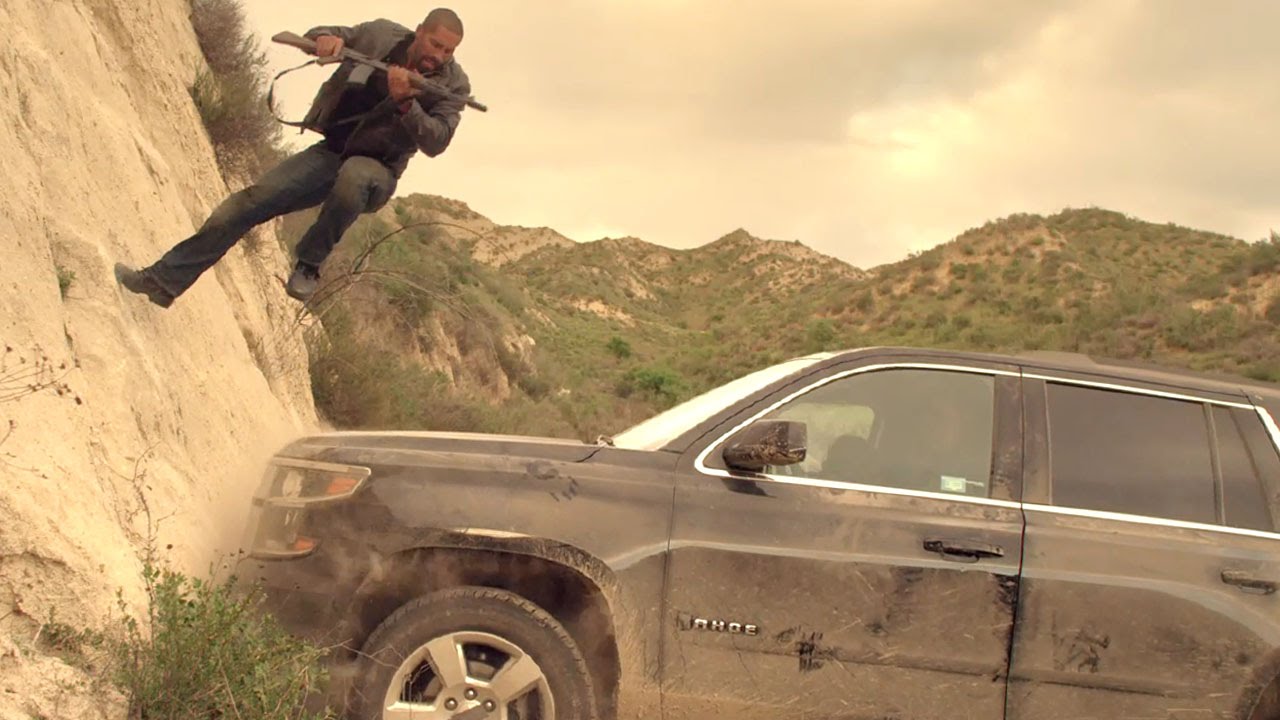
As with their blockbuster brethren, direct-to-video action movies thrive on previously existing brands. These cheaply made concoctions can’t afford to license comic books, so they market personas instead, whether it’s Van Damme,  Lundgren, or even Cuba Gooding Jr. While their careers as major stars were brief, fight fans flock to the familiar, so these nostalgia acts are essential to secure production funds, even if they only appear in a scene or two. This doesn’t account for the burgeoning cult surrounding actor-director duo Scott Adkins and Isaac Florentine. Adkins is the rare performer who has made himself a bankable star inside of the DTV universe, despite having only landed bit parts in major films outside of it (The Expendables 2, the upcoming Doctor Strange). He is unknown among the general public, but Adkins and Florentine’s defiantly old-fashioned attitude regarding the shooting and blocking of fight scenes have made them cult heroes among the small but vocal DTV action film fanbase. Close Range is their eighth film together, and it is distilled down to the basics. A revenge drama set on the U.S.-Mexico border, it pits Adkins against a drug cartel, whom he dispatches in a series of increasingly bloody showdowns. The action takes place mainly along one rural dusty road where Adkins goes one-on-one with an SUV and one-on-dozens during an extended siege. Available on VOD and iTunes December 4th, with a limited theatrical run December 11th, Close Range is a satisfying back-to-basics brawler.

Ninja: Shadow of a Tear (2013) was the most recent Adkins-Florentine collaboration, a spectacular throwback to the martial arts films Cannon was producing in the ’80s. Close Range has more of a Walking Tall vibe, of corruption eating away at a small town until a principled psycho tries to clean it up.  The script was written by DTV vet Chad Law (Van Damme starrer 6 Bullets) and Shane Dax Taylor, which sends sullen ex-soldier Colton MacReady (Adkins) on a mission to rescue his kidnapped niece Hailey (Madison Lawlor). She was nicked by a Mexican drug cartel led by Fernando (Tony Perez), who are using her as leverage to get money owed them from her stepfather Walt (Jake La Botz). During the rescue, Colton swipes a flash drive which contains all of the cartel’s records. So the gang follows him home, and the war will never end until one side is wiped out.

Adkins is still a work-in-progress as an emoter, but here he isn’t asked to do much other than glower and spin-kick, which is what the man was born to do. Trained in taekwondo and kickboxing, Adkins has the agility of a dancer, and once he gets those long-levered limbs going he is a joy to watch.  Fight choreographer Jeremy Marinas is the one pulling his strings, one of the many great talents coming out of 87Eleven Action Design, the stunt rigging/rental/training organization led by Chad Stahelski and David Leitch, the directors of John Wick. Marinas has Adkins work a lot in close brawling combat here, playing off of Colton’s presumed training as a soldier. This is not a martial arts showcase, but exhibits fights that are going for the quick kill. This is evident in Marinas’ cameo as a hired goon whom Adkins dispatches with a flick of his belt knife, a necessary accoutrement for any aspiring vigilante.

Florentine is not a flashy director but a cogent one, wanting his films to be showcases for the stunt performers (he is a trained martial artist himself). He often films in long shot so no body part is chopped off by the frame. His most attention-getting sequence is placed at the beginning, a long take of Colton fighting his way through a hallway and into the cartel’s office. Adkins told the Action Elite site that they had half-a-day to shoot the sequence, managing to get six or seven takes. It is more elaborate than a similar shot in Ninja: Shadow of a Tear, in which Adkins hip-tosses his way through a dojo. In Close Range the action is more fluid, a less-mechanical hitting of spots. But I vastly prefer the more traditional fight sequences in Florentine’s films, in which mini-narratives emerge of strikes and counters. These single take fights are Adkins as battering ram.

Though he has found success in DTV, Adkins is openly critical of the limitations it places on Florentine and himself. In the same Action Elite interview, Adkins says:

It pushes you more but I don’t think it elevates your game. You get really tired and with that comes lack of focus and you can’t concentrate like you should be. The action stuff is not easy, it’s always hard because we are pushing to do great stuff but it’s something I know like the back of my hand, but then you have to go from spending ¾ of the day doing a really intense fighting sequence in the heat and then have to go and deliver as an actor at a time when you are feeling just shattered and just want to go to bed. I want to deliver the action as much as I deliver the drama and if it’s a low budget you haven’t got the time to always do that – I wish we had more time to deliver on both fronts but that’s also the charm of some of these films. We are almost nostalgic in the way we make these movies. They are like a throwback to the eighties and early nineties.

He also admits that they had trouble reaching the required minimum running time for the feature, necessitating an incredibly long sequence identifying each member of the drug cartel, despite most of them having no lines or identifiable characters. These films consist of an endless series of artistic compromises, but these are the allowances the DTV action film fan makes for any Adkins-Florentine production. There will be stilted supporting actors, threadbare sets, and hand-me-down plots, but once the fists start flying, their artistry becomes as undeniable as a kick to the kidney.

TWILIGHT OF THE B-WESTERN: WHITE HORSE, BLACK HAT

November 24, 2015

51Fk1LohvCL._SX313_BO1,204,203,200_

C. Jack Lewis saw a lot in his 84 years. A Marine Corps veteran of three wars, he was also a self-described “reporter, drunk, editor and hobo” who spent decades on the fringes of Hollywood. A fan of Westerns since childhood, he broke into screenwriting just as the B-Western business was collapsing, thanks to the arrival of television. He managed to sell a few scripts for budget stars like Lash LaRue and Johnny Mack Brown, but would spend the majority his career as a journalist for horse and army publications (he was the founder of Gun World magazine). During that time he met all of the stars of his youth as they sank down the Hollywood food chain, making a living as extras on TV Westerns or as special attractions at traveling circuses. In his affecting memoir White Horse, Black Hat, published in 2002 by Scarecrow Press, Lewis wrote thumbnail portraits of these faded stars, a collection which captured the end of the B industry and the itinerant careers of the low-budget cowboy.

Lewis

Jack Lewis was born to a military family in 1924 Iowa. His father was an officer in the Army cavalry, and Lewis followed suit by enlisting with the Marines when he turned 18,. He saw action in WWII as a machine gunner, received a Bronze Star for bravery as a combat correspondent during the Korean War, and served as a Reserve Major for the Marine Amphibious Force in Vietnam. Throughout his service he was thinking up scenarios, specifically for the B-Westerns starring the likes of Tom Mix, Ken Maynard, and Hoot Gibson that dominated his youth. Lewis writes that “from the age of twelve, I insisted I was going to be in the Western movie business. My mother wanted me to be a lawyer and my old man just wanted me to seem reasonably sane.” As a kid he wrote a fifty page script for The Range Busters series and sent it to the Poverty Row studio Monogram Pictures. It was rejected for being too expensive to produce. This would be an early lesson in economics that Lewis would encounter throughout his career, as he struggled to get his work up on screen.

king-of-the-bullwhip-movie-poster-1950-1020488574

In 1945 Lewis was training in Pendleton, California for an invasion of Japan, but on his off days would hitchhike to Hollywood and talk his way onto studio lots. One day he weaseled his way into Eagle-Lion, and managed to speak to producer Robert Tansey and a young actor named Al LaRue. A few years later Al would be rebranded as “Lash” LaRue, for whom Lewis would write one of his first screenplays, King of the Bullwhip, It was produced and directed by Ron Ormond for his Western Adventures Pictures, Inc. for  $40,000. Lewis describes the pre-production:

I went to the Hollywood library and checked out a book on screenwriting. A week later, I was in Ormond’s office in the San Fernando valley, script in hand. “This isn’t bad, he said. “I think we can use it, but have you ever seen Lash act?” I admitted I had. “Then take it back and cut all of his lines to ten words or less. Otherwise we’ll never get the picture made!”

Ormond would become one of Lewis’ close friends and collaborators as they tried to make a living on the edges of Hollywood. LaRue, according to Lewis, became another sad story, getting fired from the Wyatt Earp TV show before moving on to appearances at country fairs and rodeos. He eventually hit the bottle, and “at one point, when a police officer drew a pistol on him, the old actor challenged him to fire and ‘put me out of my misery.’” This story is representative of the characters Lewis meets throughout the book, men discarded by Hollywood and clinging to the embers of their fame. What makes White Hat, Black Hat so engaging is the complete lack of judgment. Lewis is very upfront about his own troubles with alcoholism, and treats each story with a matter-of-fact distance. And LaRue’s story does not end in the gutter. He dried himself out , became an evangelist named “Doctor Lash”, and bounced around North Carolina and Los Angeles. Lewis stayed in touch until his last days, whereupon his ashes were lost by the cemetery. “I’m certain he has to be laughing like hell at the final excitement he created!”

il_570xN.435828911_y1dl

Death is everywhere in this book, there are more heart-attacks per page than the New York Times’ collected obituaries. Comedian Al St. John was in a motel room in Vidalia, Georgia eating grapes when “he just fell over and he was dead.” Charles King had started as an extra in the silents, and ended his life and career the same way, working background for TV’s Gunsmoke. The legend goes that he had just finished playing a corpse on-screen when he suffered the heart attack that killed him.  Tex Ritter had a heart attack in a Nashville jail cell, visiting a friend. Regarding Ritter, Lewis writes: “This was a man I wish I had known better.” The whole book is an attempt to resurrect an era from memory, and Lewis is open and regretful for the gaps therein. Of flight instructor and bit actor Dennis Moore he writes: “I felt a little relieved to find that I was not the only one who never really knew Dennis Moore, but it’s really too bad. No one should have to be that much of a loner.”

Lewis is the Forrest Gump of B-Westerns, seeming to have encountered every star who passed through Poverty Row.  Even if he met someone in passing, or in Tom Mix’s case, talked to his ghost, he makes room for them in this generous book. An empathetic collector of characters, White Horse and Black Hat opens up a lost world depicting the twilight of the B movie, and the real human consequences of its loss. The majority of people mentioned by Lewis will never have monographs written about them, but here their art, their lives and their deaths are made to matter. “They don’t really forget you in Hollywood”, according to prolific B-Western actor Frank Yaconelli, “They just park you beside the road so you can watch as the rest of them marched on.” With this book, Lewis looks to those left behind, and gives them their final fade-out.

OPENING THE VAULTS: JOHN FORD’S THE BLACK WATCH (1929)

November 17, 2015

Screenshot (96)

In the era of declining DVD sales, Hollywood studios are still experimenting with how to exploit their extensive libraries, if they choose to do so at all. With their Warner Archive line of manufactured-on-demand DVDs, and Warner Archive Instant streaming service, Warner Brothers has been the most aggressive in remastering, distributing and marketing their holdings. Universal, MGM, Sony and Fox have all started their own DVD-MOD labels, but with little-to-no publicity and questionable commitment to quality (Fox was notorious for releasing old cropped and pan and scan transfers to their MOD-DVDs). Some license titles to boutique labels like Twilight Time, Kino Lorber (my employer), and Shout! Factory, while Paramount has made the surprising step of launching a free YouTube channel with hundreds of titles, which they are calling “The Paramount Vault.” For now it is a branding exercise that doesn’t delve very deeply into their catalog, but Paramount starts dropping restored Republic Pictures films on there, I will take notice. Since Netflix has shown little interest in films made before Millennials were born, the one place that might turn a buck is iTunes and other transactional VOD providers (where you pay-per-movie), which have shown an insatiable desire for content regardless of the production year. And for their centenary, 20th Century Fox is releasing one hundred of their films to iTunes in HD, many of which have never been available on home video (you can see the full list at Will McKinley’s blog).  Announced in October, some of the rarer titles have recently appeared in the iTunes store, including John Ford’s first all-talkie feature The Black Watch (1929). Not included in the massive Ford At Fox box set and impossible to see otherwise except on fuzzy bootlegs, this is a promising development for the future accessibility of 20th Century Fox’s film library.

CaptureIn Variety the president of 20th Century Fox Home Entertainment, Mike Dunn, spoke about the opportunity digital streaming is presenting: “You’re not trying to hold shelf space in a retail outlet. It allows you to have more of your catalog readily available, because you put it on iTunes and it stays there. You’re not being judged by how many units it sells. Services like iTunes want to be a completist.” With lower overhead costs than DVD and Blu-ray, and less immediate sales pressure, it’s an attractive spot to place those HD transfers the studio archives have been stocking for a decade plus. While the quality will never match Blu-ray (my HD iTunes download of The Black Watch was 2.86GB, while a single-layered Blu-ray can hold 25GB), it is an acceptable substitute for those niche titles Fox would never release in a physical format. The first reel of The Black Watch is heavily scratched and worn, but the remainder shows clarity and depth, doing justice to Joseph August’s cinematography. It’s certainly worth a $4 rental.

Screenshot (98)

John Ford’s first sound film was a short, now lost, entitled  Napoleon’s Barber (1928), about an “anarchistic French barber who gives a shave to Napoleon on his way to Waterloo” (description courtesy of Joseph McBride’s John Ford: A Life). He would make two more silents (Riley the Cop and Strong Boy), before entering production on The Black Watch, which was something of a debacle. The film was based on the novel King of the Khyber Rifles (1916) by Talbot Mundy. The scenario by John Stone and dialogue by John K. McGuinness tell the story of Donald King (Victor McLaglen), a captain in England’s Black Watch regiment of Scotsmen. Just before the Black Watch is sent to fight in France at the start of WWI, King is selected to undertake a secret mission in India. His men think he is a coward for taking a cushy post, but his mission is to break up a group of Indian insurrectionists led by Yasmani (Myrna Loy), the so-called Joan of Arc of India, set to start a holy war against the British colonizers. King infiltrates Yasmani’s clan and attempts to break it up from within, which their growing attraction makes more difficult.

Screenshot (75)

Screenshot (76)

Ford filmed The Black Watch as a part-talkie, but Fox general manager Winifred Sheehan hired British cast member Lumsden Hare to direct additional dialogue sequences. Ford recalled that

Sheehan was in charge of production then, and he said there weren’t enough love scenes in it. He thought Lumsden Hare was a great British actor — he wasn’t, but he impressed Sheehan  — so he got Hare to direct some love scenes between McLaglen and Myrna Loy. And they were really horrible — long, talky things, had nothing to do with the story — and completely screwed it up. I wanted to vomit when I saw them.

Though they didn’t make me nauseous, there are some extended dialogue sequences of ponderous deliberation. It is as if Hare believed dialogue couldn’t be registered unless McLaglen and Loy have rests in between each line. These are jarringly static sequences, because Ford and August shot the rest of the film with group dynamics in mind.

The film begins with a classic Fordian dinner, soldiers arranged symmetrically around the table singing mournful melodies in between busting each other’s chops. There is a general clamor nonexistent in the added dialogue sequences. This clamor increases when the troops go off to war at the train station, in which lines of men wind through the concourse and the soundtrack crackles with drums, bagpipes, and the cries of parting families. In the New York Times Mordaunt Hall praised it’s realism: “Those who witnessed the trains carrying soldiers to the front during the black nights of London town, will be affected by these sequences, for they are without a doubt the most realistic thing of their kind that has come to the screen, and the fact that these scenes are presented with a variety of sounds such as singing, the tramping of fighters’ feet, the officers’ commands, the chug-chug of the locomotives, render them particularly vivid.”

Screenshot (78)Screenshot (79)

Things get even more elaborate once Captain King goes to India, and August has a field day shooting through latticework, curtains and lace. Yasmani is introduced in extreme close-up under a veil, Myrna Loy’s face just a suggestion. The representation of India doesn’t get beyond Indiana Jones levels of colonialist fantasy. Though in her early career she was positioned as an exotic object of desire (Across the Pacific, Desert Song), the Montana-born Loy is never quite convincing as a warrior who could command the loyalties of Indian subversives (who are depicted as a thoughtless mob that get gunned down in a gruesome Wild Bunch ending).

Screenshot (97)

The Black Watch remains strongest in its depiction of the war, and a short sequence showing the Black Watch battling through Flanders Fields is haunting. As the camera slowly tracks backward through a foggy landscape, the men pour forth with ill-fated enthusiasm, as their lives are cut down in the trenches. Peter Bogdanovich praised the back-lighting in this sequence to Ford, who responded with, “Well, we never had many people so I tried that way to make it look as though I had more.” Ford ascribes poetic results to practical problems, describing filmmaking as an issue of mechanics. The Black Watch is a transitional work that provided Ford and his crew an opportunity to work out the kinks in the sound film, poor Lumsden Hare aside. And with Ford’s Men Without Women (1930) also scheduled for release to iTunes in HD  from Fox, we will soon get a fuller picture of Ford and DP Joseph August’s development into the audible age.

screenland19unse_0352


JULIEN DUVIVIER IN THE THIRTIES

November 10, 2015

duvivier00034

“If I was an architect and I had to build a palace to the cinema, I would put at its entrance a statue of Duvivier.” – Jean Renoir

Julien Duvivier is a memorable name, phonetically speaking. It rolls lyrically off the tongue, sounding like a foppish count in a Lubitsch operetta. The memory of his career, though, has faded. Duvivier was a distinguished director for forty years, one who popularized the French poetic realist style in Pepe le Moko (1937), starring Jean Gabin. In his time he was admired by Jean Renoir, Orson Welles and Graham Greene, but was part of the old guard roundly rejected by the Cahiers du Cinema critics in the 1950s, and continued to be dismissed by the American brand of auteurism imported to the U.S. by Andrew Sarris. Outside of Pepe, he was rarely discussed in English until a 2009 retrospective mounted at the Museum of Modern Art, organized by Joshua Siegel. And now the Criterion Collection has released a fascinating DVD box set, in their no-frills Eclipse series, entitled Julien Duvivier in the Thirties, which includes David Golder (1930), Poil de Carotte (1932), La Tete d’un Homme (1933), and Un Carnet de Bal (1937). These films, unknown to me previously, approach four different genres with a dark romanticism expressed through a restless, roaming camera.

duvivier00002

Duvivier was born in 1896 in the city of Lille, in Northern France. His father was a traveling salesman, and the arts were not an emphasis at home. Duvivier recalled that, “I had a passion for the theatre, although I don’t know where I got it from, since, through my childhood, I was never allowed to go there” (quoted in the Faber Book of French Cinema by Charles Drazin). He was a painfully shy child, and his initial attempts at a theatrical life were disastrous. He made his stage debut during WWI at the Odeon Theatre in Paris, where, according to his friend Maurice Bessy, “Not a word escaped his lips. The prompter whispered his lines, whispered them again, almost shouted them to him. But it was no use. He had fallen into a black hole. They had to lower the curtain. This was his first and last appearance.” The director of the Odeon, André Antoine, told him “This is not a career for you…Come with me. Work with me in the cinema.” So Duvivier got his start as an assistant to Antoine, who directed a number of realist films during WWI. Duvivier was also the AD for Louis Feuillade on his adventure serial Tih Minh (1918), and  would direct his first feature in 1919 (Haceldama or Blood Money).

duvivier00001

After working steadily through the silent era, and directing a genuine hit with Poil de Carrote (1925), Duvivier was quick to adapt to soundevident in his first feature with the new technology, David Golder (released by Gaumont in 1931). In the first sequence he experiments with off-screen audio, focusing on a butler’s impassive face as the industrialist Golder (Harry Baur) reminisces about his humble origins as a poor Jewish immigrant. The film, adapted from the novel by Irene Nemirovsky, is a melodrama about Golder coming to terms with those origins, after years of escape into the distractions of new money. His wife and daughter are both shallow conspicuous consumers, so when Golder’s health gives out, there is no one to give him solace except his memories of home. Baur was a frequent Duvivier collaborator, a large, pear-shaped fellow with an air of insularity, he emits an anxious avuncularity,  kindness wrapped in insecurity. From the start Duvivier and his cinematographers Georges Perinal and Armand Thirard experiment with different visual approaches. That same sequence that includes the close-up of the butler’s face ends in an extreme long shot, with Golder’s broke ex-partner standing alone in a living room doorway, while Golder sits down to his latest feast in the dining room on the opposite side of the frame. In addition to these static, highly choreographed tableau are more kinetic traveling shots that emphasize the decadence of Golder’s one-percenter buddies. The camera circles around a bar pouring champagne and lilts across a table covered in meat and booze, following the path of a check as being passed down to Golder. The characterizations are overly broad – Golders’ wife and daughter are little more than screeching harpies – but Golder’s loneliness is conveyed with desolate finality.duvivier00017

duvivier00018

In 1932 Duvivier remade Poil de Carotte, the story of a freckled kid  nicknamed “Carrot Top” desperate to escape from his family. His mother Madame Lepic (Catherine Fonteney) is an abusive nag, while his father Monsieur Lepic (Harry Baur) is an absent-minded guardian who pays more attention to the newspaper than his children. What threatens to become a schmaltzy coming-of-age tale turns out to be much darker, as Carrot Top is not just exasperated by his family but driven to suicidal thoughts. Once again the wife and mother is depicted as a monster, heaping work and slaps on her defeated little boy. Duvivier depicts Carrot Top’s internal struggle through superimposition, turning a trip to feed the livestock into a harrowing encounter with ghosts, to nighttime arguments where Carrot Top’s multiple personalities argue the appropriate way to end his life. The contrast of idyllic farm landscapes with the cute kid’s death fantasies makes for an unusually unsettling kid’s movie. This mix of fairy tale and nightmare becomes most pronounced in a beautiful shot by a lake, where Carrot Top and his little girlfriend stand by the water. He tells her he cannot marry her because he is going to kill himself. She agrees it is the right decision.

duvivier00022 duvivier00021 duvivier00026

Death and love are again intertwined in La Tete d’un Homme (A Man‘s Head, 1933), an intense adaptation of the Georges Simenon novel (1931) of the same name (translated into English as A Battle of Nerves). The first Simenon film was Jean Renoir’s La Nuit du Carrefour (Night at the Crossroads, 1932), which I wrote about here. Harry Baur plays Commissioner Maigret, who is involved in the murder of an eccentric American millionaire. A gangly fool named Joseph Heurtin (Alexandre Rignault) left bloody foot and hand prints all over the scene of the crime, and is swiftly arrested. Maigret is convinced this poor simpleton has been framed for the job, so he allows Heurtin to escape, in the hopes of following him to his employer, the real killer. The path leads to the dissolute heir of the American’s fortune (Gaston Jacquet), his regal wife Gina  (Edna Reichberg), and a neurasthenic Czech named Radek (Valery Inkijnoff) who only has six months to live. With no motive other than a Raskolnikovian nihilism, Maigret is hard pressed to find any evidence to put Radek behind bars. Armand Thirard’s camera is again very mobile, exploring each space with a detective’s curiosity. In a cafe that is central to the murder plot, Thirard executes a 360 degree pan to inspect each face around the bar, a roll call of sorts for the investigation to come. There is also a resourceful use of back projection. A beat cop is canvassing for witnesses, and instead of cutting from one set-up to another, Duvivier has the policeman stand in one spot while the back projected image cuts between locations instead. I’ve never seen anything like it, and it conveys the idea that the city is contorting itself to serve the police – the investigation somehow changes the face of the urban space. The only one who can resist this power is Radek – who Valery Inkijnoff embodies with a charismatic disdain. Radek, under investigation for murder, is a guy who will refuse to pay a bill just so he can waste the police’s time. Counting the days until he dies from a mysterious disease, he wants to make his mark before he goes. Maigret’s whole existence depends on erasing these marks, but Radek cuts deep, and the incantatory closing scenes are a delirious mixture of extreme close-ups, a back projected light show, and the revelation of a passion that seems to be wasting Radek from within.

duvivier00033

The last film in the set, Un Carnet de Bal (Dance Card, 1937), was released the same year as Pepe le Moko, and was a huge hit that year. Utilizing the portmanteau structure he would return to often (Tales of Manhattan, Flesh and Fantasy), it is a melancholy trip through a widow’s past. Christine (Marie Bell) is recovering from her husband’s death, and reminiscing about her youth. She recalls her first ballroom dance when she was sixteen, and the diverse group of suitors who once declared their love to her, and whom she rejected. In order to close out the narratives from her past and open new futures, she decides to visit all the men on her dance card from that night. They include a criminal night club owner, a depressive priest, a one-eyed alcoholic, a magician barber, and a dead man who haunts his mother’s addled brain. Her memories all dissipate in the face of reality, and the dance she fetishizes so much she can see the shadows dancing on the wall of her bedroom, turn out to be nothing but phantoms. Duvivier is anticipating the late films of Max Ophuls here, with his twirling camera imitating a doomed waltz. At 130 minutes there are at least two too many vignettes – but this is a beautifully bittersweet film, anchored by Marie Bell’s sensitively crestfallen performance.

duvivier00030

These are only four films from the seventy he made in his extended career, but they all display a formidable visual intelligence, an atmosphere of doomed romanticism, and a bit of overwriting. La Tete d’un Homme, with that tight-as-a-drum Simenon plotting, would have to be my favorite in the Criterion set. These are films of lost or withheld love, of characters so deprived they mine their own past for any vein of compassion, usually coming up empty. Even Carrot Top is nostalgic, though only for the time before he was born. They are, at their core, about failure, something Duvivier felt deeply from his first and only appearance on stage – and that petrified emptiness seems to have went its way throughout his 1930s work, trailing an air of voluptuous resignation.