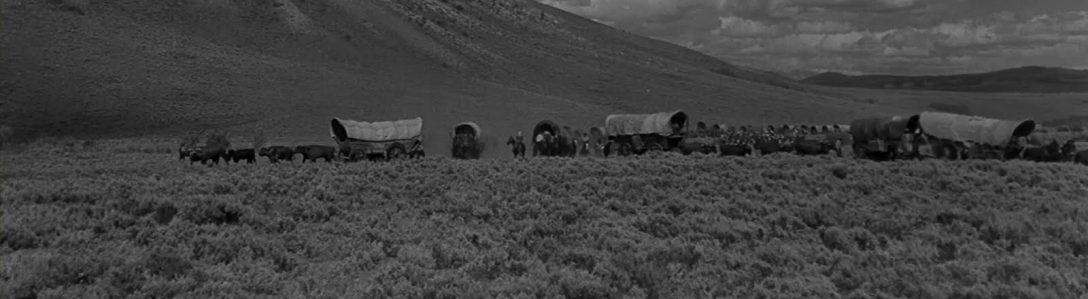
THE STORY OF FILM: THE CROWD (1928)

September 10, 2013

Screen Shot 2020-02-13 at 3.09.52 PM

Earlier this month Turner Classic Movies began airing The Story of Film, a 15-chapter documentary by Mark Cousins tracking the history of the moving image from 1895 – 2000s. Running from now through December,TCM will also air 52 movies that Cousins mentions in his work. To coincide with The Story of Film Chapter 2: 1918 – 1928, tonight TCM will air everything from Nanook of the North (1922, 8PM) to King Vidor’s silent masterpiece The Crowd (1928, 2AM). While Nanook was recently issued on Blu-rayThe Crowd is only available on out-of-print VHS, so this airing is a rare opportunity to see it in a decent edition. George Feltenstein, the Senior Vice President of Theatrical Catalog Marketing at WB, recently wrote that the home video future of The Crowd depends on the sales of Vidor’s The Big Parade, which comes out on October 1st. It was originally because of the The Big Parade’s massive success that Vidor was allowed to make the smaller, artier The Crowd, so maybe it will have the same effect on WB executives today. Like Murnau’s Sunrise (’27) or Paul Fejos’ Lonesome (’28), The Crowd depicts the trials of the everyday with expressionistic intensity, proving that the working man is as worthy of tragedy as royalty.

MGM producer Irving Thalberg asked Vidor what he would do to follow up the success of his WWI drama The Big Parade, and Vidor replied, “Well, I suppose the average fellow walks through life and sees quite a lot of drama taking place around him. Objectively life is like a battle, isn’t it?” He sketched out an original story with Harry Behn about the trials of an office worker who can never get ahead, but spent a long time searching for an actor who held the everyman qualities he was looking for. According to Vidor, he found  James Murray at the MGM casting office looking for employment as an extra. Murray had the hardscrabble background Vidor was seeking, having worked his way to California as a dishwasher and coal-shoveler. Though it seems Murray was plucked from obscurity, he had already secured lead roles in MGM’s In Old Kentucky (’27) for director John Stahl and the Joan Crawford drama Rose-Marie (’28). Regardless, he had a roughness that Vidor favored that he felt was ideal for The Crowd. Offscreen Murray struggled with alcoholism and depression, and following his soulful performance for Vidor, he descended into poverty, and was found dead in the Hudson River in 1936. Vidor was so affected by Murray that he attempted to tell his life story in a never-produced movie called The Actor as late as 1979.

In The Crowd, Murray plays John Sims, a tough-luck kid born into privilege but shoved into the underclasses after the death of his father. He moves to NYC with hopes of reviving his fortunes, and joins an advertising firm as a low-level accountant. That’s as far as he rises, having to scrimp and save to care for his wife and children. Tragedy lowers their income from precarious to poverty, and to Sims the world seems like an ever-tightening noose.

Crowd-Direction1

From the start Vidor depicts the city as a heaving mass, an active agent in thwarting Sims’ progress. When John learns of his father’s death, he is ascending a staircase, the camera pointing downward from a height, the crowd below a vertiginous blur. Height will be a destabilizing force throughout. When John first arrives in NYC, Vidor employs a series of superimpositions of traffic, crowds and trains that climaxes in a low angle of skyscrapers, sentinels staring down at the masses. In one of the most quoted shots in film history, Vidor than tracks the camera up the face of one of these buildings, with the use of a miniature, before plunging into a top floor window and peering into John’s new office, filled with ant-sized desks. The camera glides over the workers until it settles onto John, a member of the crowd for now, going with the flow. He coasts on this flow, even participating in the angles, he will peer up a doubledecker bus ladder up the skirt of the woman he will later marry.

crowd

He proposes marriage to Mary (Eleanor Boardman, Vidor’s wife) after seeing an advertisement on a bus saying, “You furnish the girl, we furnish the home.” His actions seem dictated by “the crowd”, his eagerness to fit in with an upwardly mobile society. But as soon as he takes those steps the world starts to conspire against him. It begins with everyday objects in his dingy one-bedroom apartment he shares with Mary. The Murphy bed won’t fold up and the bathroom plumbing springs a leak. The implied contract he signed with big city society is not being fulfilled – the advertisements promising a sun-filled “home” were telling lies. His initial joyousness at entering a loving relationship dissipates into bitterness, exemplified by a bottle of milk exploding in his face. The world is rebelling against him. It is here than he exclaims that “marriage is not a word, it’s a sentence.”

Separation is delayed by children. Both Mary and John decide to give their union another shot because of their son, and then their daughter. Their attempt is sincere, and Murray’s desperate search through a labyrinthine hospital to find his first-born is a nightmare of indifferent bureaucracy, the soulless efficiency of his workplace transplanted to a facility supposed to house his salvation. Murray pushes through a triangle of hospital beds to meet his wife and child, and the look of desperate beatitude on his face is heartbreaking.

Since their bond is with the child and not each other, John and Mary are always separated in the frame, until an untimely death shears them completely apart. In a funeral car they are pushed to extreme edges of the frame, eager to burst out of each other’s lives. Vidor struggled mightily over the ending, as seven were shot, and theaters were given two options to screen. One was a super-happy ending gathered around a Christmas tree, the other more ambiguous, with the family unit intact but still struggling. The latter is the one that survives in existing prints, with John crawling back into employment and buying his family tickets to a vaudeville clown act. The camera glides over the laughing crowd, ending by lifting straight up away into the sky, into the heavens the Sims can never quite reach. While it offers hope, it is a temporary one. For as the inter-titles state, “The crowd laughs with you always…but it will cry with you for only a day.” This laughter and this happiness, Vidor implies, will last only this night, until the hard work of living begins again.


PIGSKIN PSYCHOLOGY: SEMI-TOUGH (1977)

September 3, 2013

gal-football-films-23-jpg

The NFL regular season begins this Thursday night when the defending champion Baltimore Ravens face the Denver Broncos. It has been a tumultuous offseason for the National Football League, as they battled a lawsuit brought by 4,500 ex-players seeking liability payments for the long-term health effects of head trauma. Last week the league settled the suit, paying $765 million, a small price to pay for an organization that brings in $10 billion in yearly revenue. While that will temporarily quiet the calls for wider reform, the investigative PBS program Frontline will air “League of Denial” in October, which promises to show how the NFL “covered up how football inflicted long-term brain injuries on many players.” ESPN was originally a co-presenter, but backed out after receiving pressure from the NFL.

Hollywood has yet to catch up with these unsavory developments, still grinding out a cycle of post-Blind Side inspirational football dramas. It’s way past due for another dig in the dirt like North Dallas Forty (1979) or at least the amiable satire of Michael Ritchie’s Semi-Tough (1977), which is streaming on VUDU. North Dallas Forty was recently named the greatest football movie ever by NFL.com, although it was denied the league’s cooperation on its initial release. Now it’s pill-popping wide receiver is feted on the league’s website. Semi-Tough has not been so rehabilitated. Michael Ritchie’s follow-up to The Bad News Bears, it focuses less on the violence of the sport than its megalomaniacal personalities.

view_13_SemiTough_jpg

Semi-Tough was adapted from the novel of the same name by sportswriter Dan Jenkins, who expressed dismay at how much Ritchie and screenwriter Walter Bernstein departed from his original. There had already been a foiled attempt at a musical version, which Jenkins relays in a production diary for Sports Illustrated (Semi-Pro made the cover). They added an entire subplot about a self-help guru (modeled on Werner H. Erhard), shifting the story’s focus from bad boy athlete antics to a Design for Living love triangle. Billy Clyde Puckett (Burt Reynolds) and Shake Tiller (Kris Kristofferson) are Miami’s star running back and wide receiver, making a deep run into the playoffs and hotel bars. They are best friends with Barbara Jane Bookman (Jill Clayburgh), the daughter of eccentric team owner Big Ed (Robert Preston). The trio lives together in playful platonic harmony until Shake gets mystical, and proposes marriage to Barbara.

Semi-Tough

Michael Ritchie had already made a career out of competition. His films delineated the preening vanity required to win at all costs, which is a cardinal virtue in his vision of America.   Downhill Racer (1969) used skiing, The Candidate an election and Smile a beauty pageant, but all abided by Ricky Bobby’s maxim in Talladega Nights: “If you’re not first, you’re last.” The Bad News Bears opened a new path for Ritchie, the slackers who rust out the competitive machine. Semi-Tough is an amalgam of both of these approaches, because while Billy and Shake are both supreme narcissists, they are also incredibly lazy – too eager to drink and shoot the shit to care about career advancement. Early on Billy is introduced to a supercilious publisher (“Intellectuals are the jocks of the mind”) eager for a gossipy tell-all, requesting stories of drug use and excess.  Although it would be an instant best-seller, Billy could care less, leading him on with absurdist tales of pre and post-game orgies.  The only thing Billy and Shake seem to care about is Barbara.

5835653066_8eb9ec0aa3

Burt Reynolds is fabulous as Billy, using his snickering humor to undercut his matinee good looks. In her review for New York Magazine, Molly Haskell puts it better: “He can be subtle and ironic without betraying the basic simplicity of his character, and, with that total confidence that comes out as generosity rather than narcissism, he is one of the most effortlessly romantic male stars on the screen. His subtlety is in the tilt and tease of his swagger.” Jenkins recalls Reynolds improvising many of his lines on the set, “all of them in keeping with the spirit of the novel.” Jill Clayburgh does some teasing of her own, a footloose woman who can talk dirty with an innocent gleam in her eye. Kristofferson can’t compete with their layered performances, but his haggardly handsome mien is always a welcome presence regardless.

[Movie]Semi-Tough (1977)

For both men football is an afterthought. Billy is a Gene Autry fanatic, and Ritchie scores a muddy playoff game to Autry’s “You’re the Only Good Thing to Happen to Me”, as if the game were an extension of his leisure time. Ritchie pays little attention to game details, even placing Miami against Green Bay in the Conference Champoinship, even though those teams are in different leagues. The game is an afterthought. What Ritchie seems most fascinated by is the culture of continual self-improvement in the celebrity set, represented by a “Human Potential Movement” group called BEAT, of which Shake becomes a devotee. The opposing QB (Carl Weathers) espouses “Pyramid Power”, while Miami owner Big Ed is into “movagenics”, which involves crawling on the floor like a baby. The most uncomfortable program is espoused by Clara Pelf (Lotte Lenya), whose full body intrusion massage is a painful parody of “Rolfing”, a “soft tissue manipulation” fad.

BEAT is modeled on Werner Erhard’s est seminars, which professed “to transform one’s ability to experience living so that the situations one had been trying to change or had been putting up with, clear up just in the process of life itself.” It’s Zen Buddhism with a higher price tag, and Barbara is attracted to Shake’s emerging sensitivity. All of these self-help mechanisms replicate the win-at-all-costs mentality again, but instead of elections or football games, it’s infiltrated philosophy and religion. The priest at the climactic wedding offers money laundering tips as if he’s a numbers man in the mafia. When the even the spirit has become commodified, it’s time to blow it all up and start over. And so they do.

0434695_6946_MC_UTx360

KILLER Bs: WHERE ARE YOUR CHILDREN? AND KILROY WAS HERE

August 27, 2013

where_are_your_children_lobby_card_3

Falsely advertised as “The First Drama of Juvenile Delinquency to Reach the Screen”, Where Are Your Children (1944) was just another attention grabber for Poverty Row studio Monogram, who lured William Randolph Hearst into promoting their ruse. They took another tack with Kilroy Was Here (1947), leveraging the popular WWII graffiti meme into a college campus comedy starring the two ex-child stars Jackie Coogan (The Kid) and Jackie Cooper (The Champ). Though no-budget quickies, they were directed by the talented William Nigh and Phil Karlson (The Phenix City Story), respectively, the studio hiring a deep roster of talent both young and old. Both titles have been released in unrestored but watchable DVDs by the Warner Archive, and are fascinating documents of the resourceful Monogram standard operating procedure.

CCF05062012_0000Juvenile delinquency had been a popular topic for bourgeois hand-wringing since the early 1930s, resulting in films like the RKO melodrama Are These Our Children (1931). Proving the conversation had shifted little since then, a 1943 issue of LOOK magazine ran a photo essay with the same title: “Are These Our Children? – Can We Keep Them Out of Trouble?”. The Val Lewton unit at RKO, fresh off of Curse of the Cat People(’44), exploited parental nightmares by adapting the essay into Youth Runs Wild (1944). Eager to leap onto the trend, Monogram set Where Are Your Children (’44) into production concurrently, drafting former child star Jackie Cooper as the lead, just before his induction into the Army.

The Office of War Information was wary of these lascivious message movies, fearing, as the AFI Catalog reported, that, “they could be used as anti-American propaganda by the Germans.” Eventually they were cleared “in the interest of homefront welfare”, due to the intervention of the director of War Services at the Federal Security Agency, Charles P. Taft. The influence of William Randolph Hearst also must have been felt, as he was running a series on juvenile delinquency in his chain of newspapers, and was eager to fuel the hysteria. He instructed his editors to support the release of Where Are Your Children?, guaranteeing positive reviews and long runs at theaters. It’s unclear why he threw his weight behind the cheaper production, but it has merit even beyond its historical curiosity.

Cooper plays a version of himself, a rich kid close to entering the army. Partying away his last few free nights at a hot jazz club, he spies a poor hash waitress (Gale Storm) across the street and pitches woo. When military duty calls, Cooper flees and forgets, but Storm carries a torch, and falls in with a rough crowd while trying to track him down. Murder and mayhem ensues.

In the nightclub scenes Nigh uses chiaroscuro lighting to create an atmosphere of furtive pleasure, as well as to hide the flimsy set. The joint oozes pheremones as jitterbuggers jiggle and Nigh pushes his camera close to a handle of bootleg rye1146630_10151828220861563_1045652496_n hiding under a newspaper. When pockmarked teens exclaim, “let’s squirm, worm”, you know things are about to get dirty. As secretive decadance dominates the club, the diner is presented as transparent and pure. Storm is framed alone in the front window, as Cooper gazes from across the street. On the otherwise pitch black street, she seems to be performing on a stage built only for him. He considers it an invitation, and their flirt extends the performance. They practically dance out the door. When Storm is thrust into the teeth of the juvenile justice system, she’ll have to use fancier footwork to get out alive. Gutter girl Opal (Evelynne Eaton) is convinced Storm ratted her out, and corners her in a holding room brandishing a chair. Soon the whole joint erupts in chaos as a brutal brawl destroys every last splinter of wood in the area. A sexual release by other means, this violent spasm is a shocker even to modern eyes, and the requisite return to law and order doesn’t quite squelch its afterglow.

m56949

Kilroy Was Here (’47) is more straitlaced stuff, turning a ubiquitous bit of WWII graffiti into a plot hinge for an amiable college campus comedy. “Kilroy Was Here”, emblazoned under the figure of a large nosed peeper looking over a ledge, became a running joke for serviceman, who used it to mark their territory. A version even appears in the WWII Memorial in Washington D.C. Having entered the popular lexicon, Monogram decided to capitalize on it with a film, with the added bonus of teaming Jackie Cooper with Jackie Coogan, the two ex-child stars. That gave exhibitors multiple ways in which to promote it.

Coogan and Cooper play GIs and best friends who embark on diverging paths once out of the service. Coogan plays Pappy Collins, a streetwise scrapper happy to make his living as a taxi cab repairman. Cooper is the ill-fated Johnny Kilroy, eager to take advantage of the GI Bill and climb the social ladder. Kilroy goes to college, but is mistaken for the “Kilroy” the graffiti is based on, and becomes a local celebrity. This gains him entry into a blue nose frat and the attentions of gal reporter Connie (Wanda McKay). It also makes him lose touch with Pappy and his taxi hack pals, so the truth must be revealed.

Karlson is less inventive than Nigh with the Monogram limitations, framing everything in static master shots to keep ahead of the punishing schedule. There are odd bursts of energy here and there though, like a waltz in a parking lot and the stuffy frat ball that turns into a back alley slobberknocker. It was not enough to secure public attention. Kilroy Was Here was supposed to be the first of six in a series, but no sequels were ever produced. Where scary teens are eternal, inside Army jokes turned out to be ephemeral. No matter, as there were more films to make and trends to milk, as Monogram Pictures made 33 other movies in 1947.

YOU WERE MEANT FOR ME: PENNY SERENADE (1941)

August 20, 2013

Penny Serenade (1941) is the third and final film Cary Grant and Irene Dunne made together. The Awful Truth (1937) and My Favorite Wife (1940) are screwball comedies of re-marriage, and Penny Serenade is their tragic inverse, focusing on the work necessary to maintain a long-haul relationship. The first two are set in high society, produced by the improvisatory Leo McCarey, while Penny Serenade is working class and focused on the fear and trembling of young parents, made with stark realism by the more deliberate George Stevens.  Grant worried about audience expectation, the “people who are laughing already, in anticipation of another mad marital mixup”. Both actors were protective of this heart-tugging melodrama, and later in life Irene Dunne declared it the favorite of her films. It was a success, although not to the same blockbuster degree as The Awful Truth, and for years has circulated in beat-up public domain editions. Olive Films is releasing a spiffy Blu-ray of Penny Serenade next week, and it’s something of a revelation.

After parting with RKO, George Stevens signed with Columbia on May 14, 1940 to produce and direct two features. Harry Cohn wooed him with a promise never to speak to him on the set, which was reportedly honored. Stevens presented Cohn with the Martha Cheavens’ short story “Penny Serenade”, which was to be published in McCalls magazine. Columbia purchased the rights for $25,000 and hired Cheavens as a script consultant. Morrie Ryskind expanded her story into a feature-length screenplay, which tracks the travails of Julie (Dunne) and Roger (Grant) Adams, a married couple at the breaking point. Julie is about to leave him when she spies a scrapbook/record album that collected the history of their love alongside the hits of the day. In a series of flashbacks set to those pop hits, Stevens traces the bloom and decay of their bond, from the meet-cute at a record store to their grieving lows of poverty and irreperable personal loss.

In The Awful Truth, Leo McCarey would play a piano on set to loosen up his actors and stir improvisational ideas. When they cooked up something funny, they would shoot and move on. Stevens was a far more deliberate worker, who Dunne described as “just the opposite” of McCarey, “very slow. But he came well prepared…we would have rehearsals on the set, and…discuss details of how a scene would be played.” He was notorious for shooting a lot of coverage and running up film costs, waiting for the moment in his head to appear in front of the camera. Stevens uses crowded compositions in Penny Serenade, life a series of obstacles Julie and Roger must traverse. Before Roger can make his marriage proposal on New Year’s Eve, he has to navigate packed rooms in which he is continually interrupted. It is only when they squeeze onto the fire escape that Julie can say yes. At their most peaceful moment, when George gets a reporting job in Japan, an earthquake levels their home as Julie is pinned by debris on the staircase.

He also deploys intricately choreographed long takes in the parenting scenes. The camera is fixed, but Grant and Dunne are in constant motion. In one slow-burn gag, Dunne is freaking out about bathing her newly adopted baby, approaching as if it were a caged lion. Grant watches with queasy anticipation next to her, and both of them fail so badly in this simple task that their assistant Applejack (the wonderful Edgar Buchanan) has to take over. The film is unique in how it undercuts traditional notions of motherhood. Dunne does not instantly become nurturing, but has to learn how to care for the child. She is as terrified of hurting the baby as Grant, who handles the kid with goggle eyed terror.

This is one of Grant’s greatest performances, for which he was nominated for his first Best Actor Oscar (he lost to Gary Cooper in Sergeant York). Roger is a playboy crushed by the Depression, unable to provide for his wife and child. Grant has to divert his natural charisma into something darker as the film progresses, culminating in a pained monologue to a judge about to reject their adoption application. It is a plea of pure abjection, Grant bows his head and flexes his body inward, making himself looks small so his emotions seem enormous and true by comparison. It works beautifully, and as Orson Welles said of Make Way For Tomorrow, it could make a stone cry.

The Columbia publicity director at the time, Lou Smith, wrote in a private memo that “I cried three times during the showing and everyone around me was mopping up too…Instead of having actors jump off cliffs, this one will have the audience jumping off.” Penny Serenade is a traditional tearjerker, with a plot that turns on unthinkable tragedy and improbable coincidence. But Stevens, Grant and Dunne treat the material with utmost respect, etching a film of bone-deep melancholy about the terror of child-rearing and the greater horror of losing that child. By the end Stevens shoots the Adams home as a tomb, shadows creeping in on Julie and Roger. Only a miracle can save their marriage, and Penny Serenade is one of those movies that makes you want to believe.

OPPOSITE DIRECTIONS: GOING HOLLYWOOD (1933)

August 13, 2013

GoingHwood1

Going Hollywood (1933) was a gambit by William Randolph Heart to rejuvenate his lover Marion Davies’ career, but instead it accelerated the rise of Bing Crosby. By the end of 1933 Crosby was a top-ten box office attraction, while Marion Davies would be out of movies altogether a few years later. Like their careers, the whole movie is pulled in different directions, as its patchwork backstage musical romantic comedy plot lunges from lavish Busby Berkeley style spectacles to a filmed radio show.   Even the box office receipts are schizophrenic, with a cost of $914,000 and total revenues of $962,000 it was a money-maker that barely broke even. Though immensely talented, the actors perform at cross-purposes, with Crosby at his most louche and Davies in a perpetual panic. That Going Hollywood holds together at all can be credited to ace songwriting duo Arthur Freed and Nacio Herb Brown, as well as director Raoul Walsh, who had just managed the controlled chaos of his turn of the century NYC comedy The Bowery (1933). Going Hollywoodis out now in a handsome DVD from the Warner Archive.

Through his Cosmopolitan Production company, Hearst optioned “Paid to Laugh” by Frances Marion, who had provided many stories for other Davies films in the recent silent days. He handed the adaptation to Donald Ogden Stewart, a playwright and budding screenwriter who would go on to pen such knee-buckling classics as Holiday (1938) and The Philadelphia Story (1940). In his magisterial Bing Crosby biography, Gary Giddins relates that it was MGM lyricist Arthur Freed who requested that Bing Crosby be hired as the lead. Crosby was the only singer, Freed felt, who could “put over” his doomed lust song “Temptation”, written with his partner Nacio Herb Brown. Before he became ingrained in American consciousness as the singing priest from Going My Way (1944), Crosby had a reputation as a hard partier. Hearst was wary of casting him because of his womanizing, but relented when Davies also pushed to hire the crooner.

It was only after the film was ready to shoot that Walsh was hired. Walsh recalled how the Cosmopolitan rep made the offer: “The Chief wants you to direct a picture”, spoken like a royal decree. He had seen Crosby perform at the Coconut Grove, and was pleased to work with him. He also didn’t buy the prevailing narrative regarding Marion Davies, saying, “The catty whispers that Hearst alone was responsible for keeping her in the public eye were forgotten as soon as one watched her in action.” He had clearly seen Davies in King Vidor’s Show People, which is the superior model for their scattershot production.

Hearst gathered the whole cast and crew at his San Simeon estate for a week, where they rehearsed and rubbed shoulders, reportedly with a nonplussed Winston Churchill. During this period Marion Davies asked Walsh if he had ever been to Rockaway Beach as a child, and when he said yes, she dubbed him “Rockaway Raoul”, a nickname which stuck for the duration of the production. Bing Crosby even wrote a song called “Rollicking Rockaway Raoul”, a biting little ditty about the Going Hollywood production. The last lines: “And now that we’re through/MGM can go screw/Says Rollicking Rockaway Raoul”, enraged MGM to the point where Walsh says he and Bing were banned from the studio lot. A party recording of the song was released on the bootleg “Both Sides of Bing Crosby” (if anyone knows where I can find a copy please let me know).

The movie itself seems tame in comparison, but it has its compensatory pleasures. Marion Davies plays Sylvia, a free-spirited boarding house French teacher who “seems to go about in a dream.” When she hears Bill Williams (Crosby) croon sweet nothings on the radio, she packs up and moves to Hollywood. She works her way up from extra to featured player, and even catches the eye of Bill, who is otherwise in the clutches of French bon-bon Lili (Fifi D’orsay). He has to choose between booze and Lili or clean living and Sylvia.

The Freed/Brown score is superb, and there is an inventive staging of “Beautiful Girl”, a tune which would later re-appear in Singin’ in the Rain. In this equally mocking version Crosby is cutting a single as he circles through his morning routine, putting on his pants and pouring his alka seltzer, the poor sound man struggling to keep up with his circlings. The slapstick on-screen is in direct inverse with the saccharine beauty pouring out of the speaker – though the two meet up when he sings the last lines, “I forgot the words…so that will have to do.” Crosby plays Bill as a consummate actor, this scene suggesting there might not be an authentic personality underneath his pipes.

Sylvia is desperate to find out, and follows him on his train ride west, impersonating a French maid along the way. Davies was famous for her impressions, and Walsh lets her loose with one of her friend Fifi D’orsay, an exuberant foot-stomping routine mocking D’orsay’s thick accent and narcissistic persona. Davies’ love of mimics may explain the presence of an inexplicably long sequence of the three “Radio Rogues” plying their wares on the air, with imitations of Kate Smith and Rudy Vallee among others. There is also a hair-raising scene of Davies masquerading in blackface, speaking in Hollywood’s made-up “mammy” dialect. These disconnected vignettes give the film a sketch comedy feel – although some of these never should have made it past dress rehearsal.

It is clear that Freed and Brown tailored their songs for Crosby, with “Temptation” the infernal highlight, bringing out a dissolute side to his perfect pitch. Set in a dingy night club, Crosby sits with a bright cocktail, his hair ever slightly mussed. Fifi D’orsay is seated to his left. Walsh frames him in profile from the knees up, staring at her. He sings, “You came/I was alone”. Then he cuts in closer, from his head to his cocktail. “I should have known/you were temptation.” Then there is a jarring cut, to D’orsay in an extreme close-up, staring straight into the camera, bringing a glass to her lips. The spatial relations are all off from the classical style. She should be gazing screen right, to match Crosby. But then Walsh inserts chiaroscuro shots of the dance floor, the revelers shuffling like zombies. With the camera too close for faces to be distinguishable, it’s clear the film has entered some kind of nightmare. Crosby begins gazing upwards, his eyes brimming with tears. He stops acknowledging Fifi’s presence, as she’s as much inside his head and his body as she is sitting on the seat next to him. The sequence ends with him finally taking a sip of his drink, furthering his intoxication, and cementing his status as a star.

goingholly3.preview

THE BITTER NOIRS OF MARK STEVENS: CRY VENGEANCE (’54) AND TIMETABLE (’56)

August 6, 2013

76152718

Second-tier actor Mark Stevens directed two first-rate film noirs in the 1950s, Cry Vengeance (1954) and Timetable (1956). Made when his acting career was in decline, these are self-lacerating works in which Stevens casts himself as a physically and morally disfigured criminal, as if doing penance for his Hollywood failures. In both films America is a prison his characters are desperate to escape, a repository of the fearful past. The destinations of his flight take on symbolic weight, from the vertiginous heights of Ketchikan, Alaska in Cry Vengeance (shot on location), to the neon claustrophobia of the studio Tijuana in Timetable. Stevens, a former handsome romantic lead, plays his obsessives with bitter quietude, his delivery a strangled monotone, as if he is devouring his own charisma. These are strikingly melancholy works made in near anonymity for Allied Artists (formerly known as Poverty Row studio Monogram), and thanks to Olive Films Cry Vengeance is now available in an appropriately funereal B&W Blu-ray. Timetable is in public domain hell, and is viewable in various samizdat versions on YouTube.

1p3Az

Born Richard William Stevens in Cleveland, his name was changed to Stephen Richards as a contract player for Warner Brothers. Most able-bodied men were enlisted to fight in WWII, but Stevens had long-time back problems that exempted him, stemming from a diving accident that incapacitated him for months as a teen. It bothered him all his life, lending his motions a stuttered, tortured quality appropriate to noir heroes. He gained his modicum of fame after he jumped to 20th Century Fox. It was there that Daryl Zanuck dubbed him “Mark Stevens”, and his short-lived career as a leading man began, from Henry Hathaway’s noir The Dark Corner (1946) to the Oscar-nominated melodrama The Snake Pit (1948). They also tried him in light musicals (Oh You Beautiful Doll (’49)), but they  released him from his contract in 1950. Hathaway blamed The Dark Corner’s box office failure on Stevens, saying he, “never quite cut it. Too arrogant, cocksure.” Once one of the top ten actors “Most Likely To Achieve Stardom” in a 1946 Motion Picture Herald poll, Stevens had to take whatever work was available. In the early ’50s he moved on to a few mid-budgeted action-adventures at Columbia and Universal-International before he finally went bust at the big studios, and had to move into the independents, while expanding his work in TV. He nabbed a starring role in the short-lived ABC series News Gal (1951), and went on to a prolific career on the small screen, from the newspaper drama Big Town (1954 – 1956, which he also produced) all the way to guest spots on Magnum P.I. and Murder She Wrote.

en9036

He acted in two films for Allied Artists before becoming a director, the cheap Korean War drama Torpedo Alley (1952), directed by the insanely prolific Lew Landers, and the vigilante Western Jack Slade (1953). It was through these productions that Stevens met producers Lindsley Parsons and John H. Burrows, who gave him the opportunity to direct. Production began on Cry Vengeance in September 1954 at the KTTV studios in Los Angeles. Location photography would be shot in San Francisco and Ketchikan, Alaska. The script by Warren Douglas and George Bricker involves former police detective Vic Barron (Stevens), released from a three-year jail stint after being framed for taking bribes. He was set up after pursuing mobster Tino Morelli (Douglas Kennedy), and lost his wife and child in a car bomb, along with half his face. He is hell-bent on revenge. Horrifically scarred, Vic is a tense ball of hatred, his first act as a free man to purchase a revolver at the local pawn shop.

8404593420_c47d8bcfab_z

He is a ghost to his old friends in San Francisco, speaking in mono-syllables with a stooped, mechanical gait. Their sympathy clangs off his rigid exterior until he starts throwing haymakers to escape their impotent pity. The thrum of San Francisco is replaced by the chill of Alaska, as Vic tracks Morelli north, hiding as a single father in the small fishing town of Ketchikan, aping the movement of city to country in Nicholas Ray’s noir On Dangerous Ground (1952). The entrance from the airport into town is a vertiginous wooden walkway emblazoned with chamber of commerce ads like “Salmon Capital of the World”. It is a neighborly small town, where even the bar owner Peggy (Martha Hyer) is a conscientious community member. Even Morelli is softened by the ocean air, going so domestic even his hired goon has turned into a modified babysitter for his little girl.

But the past is never past, and so bleach-haired killer Roxey (a serpentine Skip Homeier) stalks into town with addled floozy Lily (Joan Vohs) in tow, ready to rub out Vic and Morelli for fun and profit. Vic is courting death, whether his own or Morelli’s, he doesn’t seem to care. Walking with tin man stiffness in the natural light of Alaska, he sees Roxey as another unnatural man with a similar talent for self-destruction, so they test each other’s gift for annihilation in a perilous chase up through a paper mill, higher and higher into obliteration.

[MAJOR SPOILERS AHEAD]

In Timetable (1956) Stevens plays an outwardly adjusted American male, but who is inwardly even more twisted than Vic. For this film Stevens set up his own production company, Mark Stevens Productions, of which Timetable is the only result (while commonly known as Time Table, the AFI Catalog notes that “All available contemporary sources” list the title as one word, which I will follow). Mark Fertig discovered the fate of this venture in his extensively researched profile of Stevens in Noir City:

Mark Stevens Productions was formed in 1955, with huge plans: there was to be a filmed version of the dark western novel Feud at Five Rivers, a new primetime series for future Mister Ed star Alan Young, and a pilot based on the radio drama The Mysterious Traveler, set for Vincent Price. Stevens also expanded into the music business, launching Mark Stevens Music (publishing), Mark Records (distribution), and Marelle Productions (retail). None of the ventures panned out — Mark Stevens Productions officially brought just one film to theaters, Time Table(though at times Stevens claimed others, including Cry Vengeance and The Bitter Ride). All four companies crashed within a year when, as described in a Twentieth Century Fox press release for the 1964 film Fate is the Hunter, “outside management of his company forced him into bankruptcy.”

Timetable‘s Charlie Norman is close to Stevens’ heart – a hard-working striver stuck in middle-management who eventually gives up and leaves for foreign lands. Norman is an insurance investigator who goes rogue to mastermind a train payroll heist before lighting out for Tijuana. Stevens is a frustrated actor and director who eventually leaves Hollywood for Majorca, spending his days running restaurants and his nights cranking out adventure novels. He even told Los Angeles Times in 1956 that, “I don’t like to act, I’m not a very good actor and I’m not kidding myself about it.”

klugjack

It is this self-doubt and makes Stevens such a riveting performer in Cry Vengeance and Timetable, a sense of exhaustion perfectly apt for his profoundly alienated characters. Norman has what seems to be the ideal American life – a solid job and a doting wife in the big city, but it is all a fragile facade. The film begins with a bravura heist sequence, one we are led to believe Norman is investigating. But less than thirty minutes into the film he is revealed to be the architect of the robbery. His reason, he later tells his astonished wife, is that “The house becomes a prison, the job a trap.” For Mark Stevens acting became his prison, and Cry Vengeance and Timetable are a bracing ventilation of all of his resentments toward his chosen art.

ON THE CHEAP: HOLLYWOOD BOULEVARD (1976)

July 30, 2013

hollywood boulevard

Roger Corman’s career would be impossible today. There is no more infrastructure for low-budget genre experimentation, as filmmakers must increasingly rely on crowd-funding to get their modest projects off the ground (even Spike Lee took that route last week), with little hope of distribution. The only outfit as prolific as Corman’s New World Pictures is The Asylum, the mock-busters behind Sharknado, except their model doesn’t encourage the young but re-animates the old for a quick buck. Larry Fessenden’s Glass Eye Pix shares Corman’s huckster spirit and eye for talent, but only has the funds to make 2-3 films a year (New World could crank out 10). And while there is plenty of creativity on display in direct-to-video action movies (like Jesse V. Johnson and Isaac Florentine), they are totally isolated from Hollywood at-large, never graduating to larger productions like Corman alumni Martin Scorsese and Joe Dante. What we are robbed of from this lack is gonzo oddities like Dante and Allan Arkush’s Hollywood Boulevard (1976), a no-budget satire of an exploitation film production. Streaming on Netflix (cropped from 1.85 to 1.33, sadly), it’s a loving take-down of Corman’s shoestring flicks “shamelessly loaded with sex and violence”, per the tagline.

hollywood-boulevard-movie-poster-1976-1020193545

“This doesn’t have a lot of the conventional virtues of a movie.” -Joe Dante on Hollywood Boulevard

Joe Dante and Allan Arkush were trailer editors for Roger Corman’s New World Pictures in the early 70s, and eager to direct. Together with friend and producer Jon Davison, they approached Corman about helming their first feature. Davison bet Corman that they could make the cheapest film in New World history. Corman gave them 10 days and $60,000 ($246,225 in today’s dollars) to shoot Hollywood Boulevard. Another catch was that Corman still needed them to cut the trailers, so Dante recalled that they agreed to “make the movie in the daytime, if we did the trailers at night.” Realizing they did not have the cash for the kind of action scenes a Corman feature required, they came up with the idea to make it about a B-movie Studio, and re-purpose footage from old New World titles. As trailer cutters, they were familiar with every last crash and fireball in the studio’s archive. Dante and Davison were already veteran re-purposers, having edited together the monstrous 7-hour collage The Movie Orgy (1968) out of scarps of B-movies, commercial outtakes, and public access TV (I wrote about this masterpiece here). To cut down on shooting time Dante and Arkush would prepare separate set-ups simultaneously. When Dante shouted “cut” on one scene, Arkush would yell “action!” on another. It’s one of the rare films in which the feature acts as a documentary of its own production, as the characters in the film deal with the same budget deficits  as it’s creators. Dante referred to it as a “home movie”.

kaplan-hollywood-blvd

The only film set Dante had been on was Death Race 2000 (1975), so he hired the two actors he met there, Mary Woronov and Paul Bartel. They play bitchy  actress Mary McQueen and delusional director Erich Von Leppe, respectively, the star employees of Miracle Studios (slogan: “If it’s a good picture, it’s a miracle!”). Woronov is all legs and bile, while Bartel deploys his plummy baritone to absurdities like his thematic breakdown of Atomic War Brides: “What we’re trying to do here is combine the legend of Romeo and Juliet with high speed car action and a sincere plea for international atomic controls in our time.”

hollywood-boulevard-1976-8

McQueen’s female co-stars have been dying off, which opens the door for Candy Wednesday (Candice Rialson), just off the bus and ready for work – any work. She is aided by huckster agent Walter Paisley, played with sleazy screwball brio by future Dante-axiom Dick Miller. She is quickly promoted from stunt woman to actress, landing a part in the Machete Maidens of Mora Tau, a Polynesian naked women-with-guns farrago that’s a take-off on The Big Doll House (1971). When Candy watches her debut at the local drive-in with Walter and her screenwriter boyfriend, she has to sit through New World features The Terror (1963, also with Dick Miller) and Battle Beyond the Sun (1962), which are skewered with Mystery Science Theater relish. In the most terrifying moment in the movie, Candy is so enraged by the film, and the inclusion of a rape scene, that she storms into the projection booth, demanding the film be stopped. Then the projectionist attacks her, implying that the audience’s thirst for sex and violence is not so innocent.

candicerialson1

The entire film is a blunt attack on Hollywood heartlessness, especially about its abuses of women, from the cattle call of actresses for a nude scene to the total indifference Von Leppe displays towards deaths on his productions. There’s always another girl to replace them, as Candy shortly learns. Narrative is incidental to Hollywood Boulevard, but it eventually shifts from backstage black comedy into satiric slasher flick, with plot details borrowed from the Bela Lugosi vehicle The Death Kiss (1932). Miracle Pictures makes bad movies, but their lives become one, as the body count mounts due to a robed killer straight out of their prop room. In the delirious finale, the murdereress is disrobed and crushed by the Hollywood sign, a blunt metaphor (and weapon) for the town’s attitude towards women.

With the demise of double-bills and the death of drive-ins, the market for cheap programmers has dried up, whether inspired like Hollywood Boulevard or rote like the films it burlesques. But without this cheap testing ground filmmakers don’t have the luxury of making mistakes like their predecessors – not when it’s impossible for the most successful of directors to make more than one film every couple of years. Perhaps the growth of VOD will create more demand for product that someone like Fessenden can exploit, but it doesn’t seem likely.  Even Dante is finding it hard to make features these days. If his next film ends up on Kickstarter, don’t be surprised, but at least donate.

HEAT WAVES: A SUMMER PLACE (1959)

July 23, 2013

28887PRPPHOTO01

The infernal weather system that soaked the Northeast in sweat this past week was moving backwards. In the United States these systems usually travel west to east, but this persistent “dome of hot air” was  traveling in reverse. I feel a kinship with this contrarian gasbag, so in its honor I will look back at an undervalued movie set during summer. A Summer Place (1959) is mainly remembered for birthing the #1 instrumental single by Percy Faith (adapted from the Max Steiner score), but it was a sensation at the time for its frank discussion of sex. It marked a transition in director Delmer Daves’ career from macho action-adventure films into melodramatic women’s pictures, one of the more reviled shifts in film history. He completed his twilight Western The Hanging Tree in August of 1958, and made four candy-colored romance pictures for WB afterward. Dismissed by both critics (the NY Times memorably called it “garishly sex-scented…. The whole thing leaves a rancid taste”) and ardent admirers (Jean-Pierre Coursodon called this period “dangerously close to artistic suicide”) , today they are ripe for rediscovery. A Summer Place is bursting with erotic energy that spreads out in the Technicolor widescreen frame, and treats adultery and teen sex with a forthright shrug.

Sloan Wilson was a hot commodity in Hollywood after his novel The Man in the Gray Flannel Suit (1955) became a hit movie (1956) for 20th Century Fox. So when his 1958 book A Summer Place created another stir,with its teenage bed hopping and middle age lust, it was swiftly optioned by WB. Wilson wrote the initial script, but Daves rejected it because it retained the ten-year arc of the novel. Wanting a more linear, compact story, Daves re-wrote the screenplay himself, and compressed the action into one year. Daves had started his career as a scribe, and even had some experience with love stories, having co-written Leo McCarey’s sublime Love Affair (1939). His decision to switch to studio-bound melodramas can be attributed to his health, according to Delmer’s son Michael. Daves had a heart attack in 1958, and doctors advised him to limit his exertions, which would be easier to do at the studio than on location in the Arizona badlands.

a-summer-place

The leading role of Molly, the young girl who falls for an inn owner’s son in Maine, was initially offered to Natalie Wood. She declined, and admitted to later regretting it. The part went to Sandra Dee, on loan from Universal, the up and coming emblem of innocence from Gidget (1959). While retaining her perk, the 17-year-old Dee gives an unselfconscious performance as a pragmatic teen in lust, ready to follow her body wherever it tells her to go. The location is Troy Donahue, the sensitive and slender blonde-haired blue-eyed preppie of every suburban white girl’s dreams. He had just been released from his contract with Universal, and after A Summer Place went nuclear signed a long term deal with WB. His earnestly handsome face would grace each of Daves’ next three films. Their parents, involved in an inadvertent wife-swapping roundelay, were played by consummate Hollywood pros Richard Egan, Dorothy McGuire, Arthur Kennedy and Constance Ford. An A-picture all the way, the film received a lushly romantic score from Max Steiner and ripe Technicolor cinematography from Harry Stradling (Johnny Guitar). Kennedy is especially memorable as Donahue’s dad Bart Hunter. A cognac swilling inn-owner who squandered his family’s fortune, Bart is a lost man who Kennedy plays with a slow, sad burn. Punctuating every line with a shot of booze and a lascivious glance, he’s the image of a decadent aristocrat gone to seed.

richardegan16

Bart’s whole kingdom is falling apart at the Maine resort town of Pine Island. Formerly a wealthy scion of a prominent family, he is reduced to renting rooms at the family mansion. A vindictive drunk, his wife Sylvia (McGuire) can barely stand his presence. Their son Johnny (Donahue) is the only proof their union wasn’t a waste. Then Ken Jorgenson (Egan) decides to bring his family for a visit. A former lifeguard at the Hunter estate, he’s now a self-made millionaire with a lingering crush on Sylvia. His wife Helen (Ford) is a neurotic terrified of sexuality, who sleeps in separates beds and browbeats her daughter Molly (Dee) about the sanctity of virginity. When they all come together in the inn, the atmosphere turns hothouse. Bart, sensing the ratcheting erotic tension, teases Helen about his “perverted garden” and its “aphrodisiac” qualities. Within days of the the Jorgenson’s arrival Molly is necking with Johnny while Sylvia and Ken rendezvous in the boathouse. There are divorces and recriminations and unexpected pregnancies, but these are not punishments, they are brute realities waiting to be overcome by couples who are truly in love.

A hallmark of Daves’ films are the forthrightness of his characters. They fall for each other with total abandonment. There is no manufactured tension about “will they or won’t they”, only about the realities of what happens after you do. In Pride of the Marines (1945) doughboy John Garfield woos Eleanor Parker in the opening scenes – the majority of the film revolves around how they cope with his blindness inflicted by the war. Love is total and intoxicating in his movies, but are then rattled with the impositions of living. Late in A Summer Place, Ken is agonizing over how to speak to Molly about sex, wanting to warn caution without robbing her of its joys. Sylvia responds, “Warn her that first it’s the passions and desires that rule a girl’s wants, but that love is far wider and deeper than that. Love is a learned thing between a man and a woman. And after those first, fierce passions start to fade, it’s that love, that learned love, that counts for everything.” Delmer Daves’s movies are about this learning.

622

THE ENTERTAINER: ALLAN DWAN (PART 2)

July 16, 2013

This is Part 2 of a series on director Allan Dwan. Part 1 focused on his silent films.

Dwan was ready for the transition to sound. He had experimented with the new technology as early as 1925, when he made a satirical sound short that screened at the private Lambs’ Club. There was a failed effort at the men’s only institution to allow women to join, or at least perform at their “gambols”. So Dwan directed a sketch in which Gloria Swanson audibly crashed their proceedings, as reported by Frederic Lombardi in his Dwan biography. In 1927 he made a sound newsreel for Movietone News (“The Military Academy at West Point”), and shot a sound prologue for The Iron Mask (1929). So when his career fully transferred to talkies later in ’29 with Frozen Justice, he already had a feel for how he could bend the technology to serve his roving camera. In her introduction for Slightly Scarlet at the Museum of Modern Art, filmmaker and critic Gina Telaroli remarked that the concept of “circulation” is the key to Dwan’s art, referring to his circling plots as well as the perambulations of his camera and actors. His mastery of the tracking shot, which he developed as early as 1915 in David Harum, continued unabated into the sound era, even with the restrictions of onerous recording equipment. Even when the camera is static, his films percolate with a choreography of micro-movements inside the frame, as his anxious characters push forward into the unknown.

The earliest sound feature I saw at MoMA’s Dwan retrospective was Man to Man (1930), another of Dwan’s absent parent dramas. It’s an experiment in sound production, testing if audiences would accept varying volume levels in a scene. Dwan used synchronous sound in his tracking shots, affixing a mic to the camera boom and pushing it down the small town set’s Main Street. Because some characters are further away from the mic, the volume fluctuates, more accurately capturing how our ears work than the usual emphasis on clarity above all. He would abandon this technique by Chances (1931), a WWI drama with battle scenes as harrowing as All Along the Western Front (1930) on a much smaller budget. Like Man to Man, it was made for First National (a subsidiary of WB), and concerns two enlisted brothers (Douglas Fairbanks Jr. and Anthony Bushell) who are in love with the same woman (Rose Hobart). Dwan told Peter Bogdanovich that, “Everything I did was triangles with me. If I constructed a story and had four characters in it, I’d put them down as dots and if they didn’t hook up into triangles, if any of them were left dangling out there without a sufficient relationship to any of the rest, I knew I’d have to discard them because they’d be a distraction. And you’re only related to people through triangles or lines.” His movies are constantly in motion making these connections, and one more mathematically minded than I could probably make graphs tracking his character relationships (especially for the comedies he made for Edward Small in the ’40s). In Chances it is a straightforward love triangle, with the dashing Fairbanks and aw shucks Bushell both enraptured with the rambunctious and gorgeous Hobart, whom they’ve known since childhood. As the trio’s relationship fissures so does the plot, severed into home and war fronts. A feminist even if he would never admit it, Dwan elevates Hobart from a prize being fought over into a fighter of her own, giving her a “sufficient relationship” to the boys. She does not spend the film pining in her boudoir, but in the muck driving ambulances to the front. She has seen the ravages of war as much as the brothers, which Dwan dramatizes in sludge level tracking shots of soot filled trenches. Each character battles their death drive until Bushell cracks, staggering into the mist.

Dwan moved to Fox to make another smoke-filled drama, While Paris Sleeps (1932). F.W. Murnau was under contract to Fox from 1927 – 1930, and his presence influenced everyone at the studio from John Ford (see: Four Sons) to Dwan. Like Man to Man, the story is about an imprisoned father returning to his child, only this time he has to break out of prison, and tries to aid his offspring without their knowledge. Victor McLaglen stars as roughneck Jacques, doing life in jail for killing a dirtbag at a bar. When he receives word that his wife is ailing, leaving his teenage daughter adrift, he engineers a breakout. Plashing through fog-choked swamps reminiscent of Sunrise (1927), Jacques finds his way to the city to engineer his redemption, swinging his ham-fists to clear the way for his daughter Manon (Helen Mack) and busking beau Paul to live free of their past.

A tireless worker, he would also crank out charming programmers for Fox in this period, including the slam-bang melodrama Wicked (1931), a women-in-prison/kidnapping thriller/courtroom drama that cycles through more genres than Tarantino’s wet dreams. What lingers in the mind are the class tensions – old society biddies judging Elissa Landi as she languishes in the clink, waddles wagging, and the dried up rich couple who adopt Landi’s baby without her knowledge. Only a chivalrous deus ex machina Aussie (Victor McLaglen again) can save her from the pits of poverty. 15 Maiden Lane (1936) is also concerned with the circulation of capital, this time in a snappy jewel thieving comedy. Another hour-long Fox quickie, it stars Claire Trevor as a jeweler’s niece who goes undercover to uncover who is running the black market gem trade in town. She gloms onto light-fingered Cesar Romero, who absconds with a diamond in the screwball opener, and slinks her way into his crew, widening her circle of underworld contacts until she meets the main man. As with Wicked, Dwan displays his dexterity with tone, flipping from insouciant comedy to tough-minded gangster flick with the flick of a gun’s hammer.

While the Fox programmers derive their energy from a pile-on of plots, Dwan’s 40′s comedies depend on the slow burn – from anxiety to total destruction. In Dwan’s telling Trail of the Vigilantes (1940) was intended as a straightforward Western for Universal, but he was so dissatisfied with the script he turned it into a parody. The casting of Franchot Tone and Broderick Crawford certainly backs Dwan’s contention, but they attack the subject with glee. Stuck with a mildewed scenario of an evil land grabber harassing homesteaders, Dwan turned it into a slapstick desecration of the Western. The frontier is an exaggerated Tombstone, with gunfights and brawls pimpling every surface of town. Every shot contains at least one man in leathers tumbling to the ground. The film is a playground for performance, and the characters try out and shed a series of identities during its run time. Tone is an investigator acting as a cowboy, while Mischa Auer is a quick-change artist, going from Native American to a trick horse riding gaucho.

This was ideal practice for the farces he would make for producer Edward Small: Up in Mabel’s Room (1944), Brewster’s Millions (1945) and Getting Gertie’s Garter (1945). Both Mabel and Gertie were adapted from plays by Wilson Collison, who popularized French farce in the U.S. Mabel was a Broadway hit in 1919, and Small and Dwan both thought it would be appealing light entertainment during wartime. The Collison adaptations use essentially the same plot. In both Dennis O’Keefe plays a neurotic obsessed with retrieving an engraved undergarment from a former beau, for fear his wife will discover his former indiscretion. His clumsy attempts at cloak and dagger lead to outrageous speculation and escalating jealousies. Couples invent baroque scenarios of betrayal, set to the rhythm of slamming doors. Dwan’s camera movement is restrained in these films, nearly static, allowing the tension to arise from the fidgety comings and goings inside of the frame, a stop-start pace that mimics their frazzled mindset. Brewster’s Millions is also about performance, as one-time skinflint Brewster (O’Keefe again) must spend a million dollars in a month to inherit his uncle’s fortune. Not allowed to tell his friends and family of the will, he has to embody a self-destructive capitalist and risk alienating his pals forever. One indelible schizophrenic image finds his team gathered around the TV, cheering on the nag he just splurged on during its inaugural race. O’Keefe is in the background, pulling his hair out as his million to one long shot hits, pushing his ledger back into the black.

While Brewster is sending money to die, The Inside Story (1948) tells of $1000 that circulated through a small town during the Depression, improving everyone’s lot. Made with no stars for Republic, it is the purest distillation of Dwan’s cinema, an organism that thrives on motion. A collection agency arrives to a struggling Vermont town with a payment for a local farmer. Due to a mixup, the hotel owner believes it to be his, and pays off his landlady. Then she uses it to retain a struggling lawyer, and the circle continues on as the stolen cash infuses the whole town with hope. It incorporates many of his favorite motifs, including playacting (the hotel manager’s daughter vamps to distract the collector), circulation (the cash) and strong women (one major subplot is women getting jobs to support their out-of-work husbands). While not providing the visceral impact of Silver Lode or the pure pleasure of Up in Mabel’s Room, it is essential to understanding his work as a whole.

In the 1950s Allan Dwan began one of the great director-producer runs with Benedict Bogeaus, for whom he made 10 films. Their bargain basement budgets hearken back to his Fox programmer days, but they are some of his most ravishingly beautiful, as he used color as another dramatic tool in his kit, like his ironic use of red, white and blue bunting in Silver Lode (1954). Dan Ballard (Dwan axiom John Payne) is about to be married on the 4th of July when McCarty (Dan Duryea) smirks his way into town and places him under arrest for murder. The town initially rallies behind Ballard, but as evidence mounts they turn on him, forcing him to shoot his way out before being lynched. In one of Dwan’s monumental tracking shots, the camera follows Ballard as he flips over Independence Day festooned picnic tables as the citizens rally against him. His railroading is a clear allegory of the blacklist, although that is likely a contribution from screenwriter Karen Dewolf, who was a victim of it soon afterward (she would never write another feature, but did find work in television). Dwan is more interested in the machinations that lead to mob violence, the gradual re-configuring of a town’s moral code. It’s the tragic version of the Edward Small comedies (Getting Gertie’s Garter was co-written by Dewolf), and world-weary saloon gal Dolly (Dolores Moran) even makes the crack, “What do you think this is, a French farce?”, to a deputy peeking under her bed. Both Bannister and McCarty are the Dennis O’Keefe characters, playacting (as a proper gentleman and marshal) to get what they want. But it turns out thtownspeople were the true thespians, as their civilized facade was a performance, vengeful violence their reality. Instead of building up to the pratfalls of a Small comedy, here it’s gunshots.

Tennessee’s Partner (1955) is Silver Lode’s gentle counterpart, another tale of a town’s greed and corruption, but with the focus shifted to two lonely drifters, played with easy charm by John Payne and Ronald Reagan. There is one moment in the film that moves me deeply every time I see it. After the requisite circlings of the Dwan storyline, Payne and Reagan reach a détente. Forgiveness is proffered and accepted, and Payne places his hand on Reagan’s shoulder. I don’t know why this gesture affects me so – perhaps because it is a rare pause in the whirl of the Dwan universe, a moment of beneficent calm before Dwan’s irresistible entertainment machine cranks back up again to take them away.

RICHARD MATHESON ENTERS THE TWILIGHT ZONE

July 9, 2013

lee-marvin-twilight-zone

Richard Matheson was already an established writer in 1959, the year he started contributing to The Twilight Zone. But it took him a while. Over the course of the 1950s he rose from pitching sci-fi magazines on his off hours as a mailman, to adapting his own material to screens large and small. He  sold his first story, “Born of Man and Woman”, to The Magazine of Fantasy and Science Fiction in 1950. After a couple of suspense novels fizzled, he garnered notice with his post-apocalyptic survival staple, I Am Legend (1954). It was his follow-up, The Shrinking Man (1956), that cemented his place in popular consciousness. He ingeniously sold himself as screenwriter as part of the film rights deal to Universal, and he would be a prolific writer for film and TV for decades to come (alongside his novels and short stories). As part of our week-long tribute to Matheson, following his death last month at the age of 87, I’ll be looking at the Twilight Zone episodes he declared to be his favorite, Steel and Night Call, both from Season 5. They present fantastical premises with procedural detail, as he also did with I Am Legend and The Shrinking Man, bringing the spectacular down to earth.

After the success of The Shrinking Man and its movie adaptation (which added Incredible to the title), Matheson moved to television writing, often with collaborator with Charles Beaumont. They were close friends, part of a circle of fantasy writers that included Robert Bloch, Ray Bradbury and Harlan Ellison. Matheson recalled that, “When we joined this agency [Adams, Jay and Rosenberg] it was such a strange new world out there that we decided to work together.” Beaumont and Matheson worked on cop shows and Westerns like Bourbon Street Beat and Have Gun — Will Travel.

Their most long-lasting contribution was to The Twilight Zone, which they both began contributing to, separately, in ’59. Rod Serling was a fellow traveler in the speculative arts, and provided an invaluable platform for the kind of material they wanted to write, even with showbiz compromises. Their material, as Matheson notes, “never made any social commentary”. They were detail men, interested in fleshing out their imagined worlds rather than allegorizing the existing one.

In Twilight And Other Zones: The Dark Worlds of Richard Matheson, the writer declares that “Steel” is his favorite episode of the ones he wrote. He adapted the teleplay from his own short story, of a “sports item, circa 1976″, in which boxing was outlawed and replaced by bouts between lifelike robots. Lee Marvin plays the “Steel” of the title, a former pug turned down-at-heel manager, too poor to upgrade his rickety “Battling Maxo” bot, which mechanic Pole (Joe Mantell) keeps running through some spit and a prayer. Maxo is so old even his parts are outdated, and is only booked when a newer model is destroyed in a car accident. Steel needs Maxo to put up a fight so he can pocket the take and make some upgrades. Matheson’s small-scale story was later inflated into the 2011 blockbuster Real Steel.

steel-richard-matheson

Directed by auteur-fave Don Weis (I Love Melvin), this TV assignment replaces Weis’ usual ebullient charm for sweaty close-ups and grimy hallways, a portrait of broken American dreams as tactile as 70s fight films like Fat City. Lee Marvin shows he can ease up his ramrod military posture and ease into a slouching ignominy. A fast talking salesman like Peter Falk in Marbles, his pitches have lost their sheen, routines without conviction. Only when faced with annihilation does Steel show some backbone, replacing Maxo in the bout when the android pops some essential springs. Facing certain defeat, and possible death, Steel takes his shots and his money, ready to fight another day.

As in I Am Legend and The Shrinking ManSteel is concerned about the grungy details of these everyday futures, whether it is how to scrounge for food, evade a giant spider or make a low-tech living in a high-tech future. Night Call (Season 5, episode 139, 1964), is another of these daily grinds, which Matheson adapted from his short story “Long Distance Call.” Old spinster Elva Keene (Gladys Cooper) is living out her days in an empty home, her only company a harried maid. But every evening she receives cryptic phone calls from a moaning loner, which she first assumes to be a prank, but soon realizes is something far more disturbing.

5nightcall

Matheson claims he “talked them into hiring [Jacques] Tourneur” to direct the episode, despite the producers’ concern that a movie director would take forever to shoot an episode. Matheson recalls that Tourneur, “shot the shortest Twilight Zone schedule that anyone has ever done. It was like twenty-eight hours or something.” He was a fan of Tourneur’s work with Val Lewton (The Leopard Man, I Walked With a Zombie), and was thrilled to have him direct one of his scripts. It turned out to be one of the last projects Tourneur would work on.

It takes place almost entirely in two rooms of Elva’s house, her living room and bedroom. In frequent medium shots, Tourneur establishes her as the queen of an emptied out domain. It was the third of Cooper’s appearances on The telephone1964bTwilight Zone, and this after 60+ years of performing, having made her stage debut in 1905 in the musical Bluebell in Fairyland. She plays Elva as a shut-in battle-ax, jittery at any intrusions in her protective shell. The calls make her imperious exterior crumble, and you can see the regrets of the past rush through her softened features.

Richard Matheson wrote 14 teleplays for The Twilight Zone, and had two of his short stories adapted by others. Compromised as they are by commercial forces (“Steel” was the first episode sponsored by Proctor & Gamble), they offer variations on Matheson’s theme of process, how characters rationally deal with the unreality that is thrust upon them. Some trundle onward with brittle hope like Steel, or crumble in regret like Elva, but what Matheson is most interested in is the jagged path that leads there.