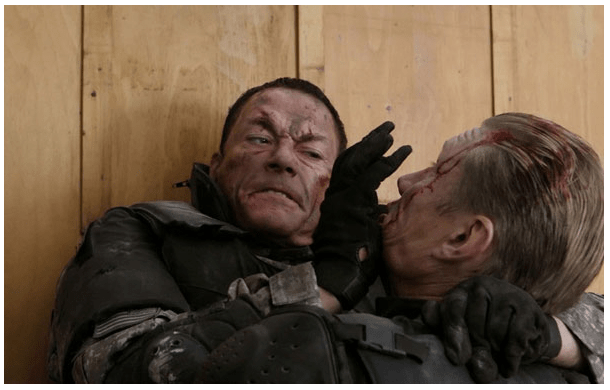
THE TOP TEN FILMS OF ALL TIME (SORT OF)

June 5, 2012

Screen Shot 2020-02-04 at 12.21.55 PM

Later this summer Sight & Sound magazine will unveil the results of their once-a-decade poll of the greatest films of all time. In 2002 they queried 145 critics, writers and academics, who placed Citizen Kane #1, the same place it’s been since 1962.  Re-affirming the greatness of Citizen Kane, and ranking in general, tends to inflame Manichean arguments taking the form of “this over that”. Is Citizen Kane “better” than Tokyo Storyor Vertigo? This attitude treats movies like sporting events, where one film is the clear “winner”.  These lists are intended to start conversations, but instead they end them (I find it’s far more fun to look at individual lists, where personal idiosyncracies shine through, as with James Tobacks’s selection of Jimmy Hollywood in the Director’s Poll). Part of the issue is seeing the same titles every time, embalming them in a canon of good taste, historical artifacts rather than living works of art. This ends up reducing the films the poll set out to glorify. So I am presenting an Alternate All Time Top Ten,  composed of films and directors that have never been represented on the Sight and Sound poll before. These aren’t better or worse than the films that will land on the S&S poll, just different, and hopefully will spark new conversations. I encourage you to post your own alternate lists in the comments.

The list is presented in alphabetical order.

Beau Travail (1999), directed by Claire Denis

When I saw this at the Market Arcade theater in Buffalo, probably in 2000, I was introduced to a new world of movie-making, one of sensuous power that proceeded by a logic of images rather words. An erotic reverie that transposes Herman Melville’s Billy Budd to the French Foreign Legion in Africa, it builds tension through the arch of bodies and the glint of hard sun on sand. A transformative moment for me, although my Dad didn’t like it.

***

The Clock (1945)directed by Vincente Minnelli

Minnelli’s first non-musical is still impeccably choreographed, as Judy Garland and Robert Walker meet-cute in NYC and fall into a whirlwind romance. Walker plays an earnest midwesterner on a two-day leave from the army, who falls instantly in love with Garland’s sophisticated urbanite. Compressing the entire wooing process into two nights, Minnelli heightens the tension of together-separate with big boom shots which pick the lovers out of the crowd, and then lose them in it.

***

Coeur Fidele(Faithful Heart, 1925), directed by Jean Epstein

The current Jean Epstein retrospective at Anthology Film Archives in New York City has been my first exposure to this feverish stylist, and my goodness are they sensual viewing experiences (as much as Beau Travail, say). This one, available on UK DVD/Blu, is about a foundling girl (Gina Manes) whose cheap adoptive parents marry her off to an evil bastard named Little Paul (Edmond Von Daele). She’s in love with sensitive guy Jean (Leon Mathot), who seems to spend most of his time staring at the sea (as do most Epstein characters). Filled with looming close-ups, dreamy super-impositions and sequences of fast-cutting that would make Tony Scott blush, it’s an experimental melodrama that floored me with its earnest audacity.

***

Duck Amuck (1953), directed by Chuck Jones

Where Daffy Duck meets his maker. This modernist masterpiece finds the titular mallard go ballistic when the animator keeps changing the backgrounds to his scenes. A Three Musketeers pastiche all of a sudden becomes a folksy farm routine and then a mountain skiing escapade. Eventually Daffy goes ballistic, yelling at the screen, until the hand of Jones comes in with his eraser… One of the funniest films ever made, which also just happens to be a wittily self-reflexive essay on the author as sadist (or as Bugs Bunny, which amounts to the same thing).

***

Four Nights of a Dreamer (1971), directed by Robert Bresson

The funniest Bresson is also now my new favorite. Jacques (Guillaume des Forets) is an ascetic young painter enraptured by Marthe (Isabelle Weingarten), who attempts suicide after her boyfriend cuts off contact. Jacques promises to act as a go-between between Marthe and her man, as a way to get closer to her. They start strolling along the Seine most nights, zombies in unrequited love, hypnotized by a glass pleasure boat that sails down its waters, trailing its bossa nova tune.

***

The Green Ray (Le Rayon Vert,1986), directed by Eric Rohmer

The perfect summer movie! The wispy Marie Riviere plays Delphine, a neurotic young professional whose friend backs out of a trip to the Greek isles two weeks before departure. Already bummed out by her sometime (mostly never) boyfriend, she wanders from beaches to the mountains in a depressive state, forcing relaxation upon herself, but only ending up in tears. Riviere is a bewitchingly annoying presence, her sulkiness matched by her hectoring lectures on vegetarianism. She is an open wound, cringing at every touch. The healing process begins through another meet-cute in a train station (Rohmer must be a Clockfan!), and the intervention of a Jules Verne short story. There magic in books and sky, so Delphine finally chokes down her pain begins emerging into the world outside her head.

***

Make Way For Tomorrow (1937), directed by Leo McCarey

Bark (Victor Moore) and Lucy (Beulah Bondi) Cooper have lost their house, and depend on the kindness of their children to take them in. It doesn’t work out that way in McCarey’s devastating drama of aging and loss, which was the model for S&S poll mainstay Tokyo Story. Orson Welles famously said it could make a stone cry. It is so affecting because it is so clear-eyed and unsentimental, with no last act redemptions. It is simply a story of two people in love whose lives fall apart.

***

Me and My Gal (1931), directed by Raoul Walsh

The first movie I wrote about here at Movie Morlocks, and one of the most energetic every made. Each frame pops with invention, whether it’s Spencer Tracy’s slangy NYC argot, trick shots or parodies of popular movies of the day, there’s something happening every frame. The whole production seems drunk, from Walsh on down to the gaffer, tossing around ideas and shooting the bull until the shooting day ended. The result is chaotic, messy and joyful – filled with the most life per square inch of film stock in history.

***

Mysteries of Lisbon (2010), directed by Raul Ruiz

A summation of Ruiz’s work, with its nested stories, unstable identities and swirling camera movements, and one that is endlessly pleasurable. I’m rather anxious to see the 6-hour TV version. Adapted from the 19th Century novel by Camilo Castelo Branco, it tells the circuitous story of an orphan and his parentage, one which spans lifetimes and consumes hundreds of identities. It is a a ballet where every step both reveals and conceals, Ruiz’s camera unveiling truth at one edge and a lie at the other.

***

When A Woman Ascends the Stairs(1960), directed by Mikio Naruse

Hideko Takamine’s face is one of the great monuments of cinema, and here she gives a performance of shuddering uncertainty. She plays Keiko, a fiercely independent bar hostess in Ginza forced intent on opening her own place. But the world of men keeps throwing up obstacles to her self-actualization, her impassive expressions intimating only hints of the roiling uncertainty inside.

EDWARDIAN COMEDY: S.O.B., VICTOR/VICTORIA, SKIN DEEP

May 29, 2012

Screen Shot 2020-02-03 at 5.06.13 PM

John Ritter’s spastic freak-out in a parking garage in Skin Deep is an archetypal Blake Edwards image. What characters repress or ignore will always be expressed through their bodies, with or without their consent.  The Warner Archive recently re-issued three Edwards comedies on DVD: S.O.B. (1981), Victor/Victoria (1982) and Skin Deep (1989). While new transfers of these visually elegant works would have been welcome, they gave me an excuse to watch them for the first time, so I’ll keep my complaining to a minimum. All three films involve varying levels of performance, and bodies that either accept or reject the facades imposed upon them. The most furious rejection occurs in S.O.B., a flesh-eating virus coated letter to Hollywood.

The origin of S.O.B. lies in the failure of Edwards’ 1970 Darling Lili, a WWI spy movie musical that went over budget and then under performed. A common occurrence, but one that Edwards was virulently attacked for due to some extenuating circumstances. In his critical study A Splurch in the Kisser, Sam Wasson writes that the Commonwealth United Corporation lent Paramount parent Gulf + Western “a certain humongous sum” to complete production that G +W were unable to pay back, so the studio was especially incensed. Wasson writes that head of production at Paramount Bob Evans said that Edwards was responsible “for the most flagrant misappropriation of funds I’ve seen in my career.” Licking his wounds, but still ambitious, Edwards followed it up with the epic Western Wild Rovers (1971), another big budget disappointment that was cut down by nearly 40 minutes by new MGM head James Aubrey, whom John Houseman had nicknamed “The Smiling Cobra”. After battling with Aubrey again over the medical thriller The Carey Treatment (1972), from which he tried to get his name removed, Edwards was a frustrated man. He moved to Switzerland, only to return to filmmaking two years later for The Tamarind Seed (1974), three Pink Panther sequels, and the enormous hit Ten (1979).

With Inspector Clouseau and Bo Derek’s slow-motion trot restoring him to studios’ good graces, he was finally able to get his savage satire, Hollywood S.O.B. funded. Something of a “secret legend” in town, according to Wasson, it was picked up and then ditched by Orion, before upstart Lorimar, transitioning from TV to film, agreed to back the title-shortened S.O.B., Victor/Victoria, and a sci-fi comedy Far Out that was never made. In an appropriate irony, Lorimar had recently made a deal with Paramount to distribute their films, the studio that S.O.B.is targeted at.

The film is set in motion by the attempted suicide of director Felix Farmer (Richard Mulligan), whose family friendly musical Night Wind tanks horribly. Left in a catatonic funk, his image conscious wife Sally (Julie Andrews, playing off her Mary Poppins persona) abandons him as he wanders his beachfront home clutching the trades, blaring headlines like, “NY CRITICS BREAK WIND”. Rings of PR maneuverings circle around him, from his assistants, to Sally’s team (led by a brassy Shelly Winters) outward to the studio’s, who sends out cynical fixer Tim Cully (William Holden) to corral Farmer and get him to re-edit the film. It’s three circles of self-obsessed hells, with Felix the ignored center. All three are oblivious to Farmer’s depression, and he wanders off to the garage to give himself a carbon monoxide cocktail. But his body betrays him, and he survives. Edwards frames him in backgrounds and corners early on, a wraith irrelevant to his life as an image. The entire film industry is out to defend or destroy his image, while the flesh and blood Farmer is out to polish himself off.

This is mirrored in another unobserved death, as an anonymous runner collapses on the beach outside his home – his body laying in plain sight of sun-bathers for days before he is identified as a corpse. The most sympathetic character in the movie is the dog who yelps for his fallen master (who turns out to be a character actor). Image trumps reality, and Farmer cracks under its pressure. Edwards arranges an ace menagerie of gargoyles to feast off of him, including Robert Vaughan as the cross-dressing vampire of a studio head, Robert Preston as an acidic drugged-up doctor, and Holden as the infernal ring leader, a grizzled vet so jaded he’s cynical about his cynicism.

When Farmer cracks through this PR babble, he changes roles from tortured artist to crackpot prophet, one he acts out with brio, preaching to the lowest common denominator: “We sold them schmaltz – they want sadomasochism!” He proposes re-shooting Night Wind and turning it into soft-core pornography, which Sally agrees to only after weighing the PR hit of a long lawsuit. No matter how much Farmer panders to the audience’s basest impulses, in the end the system returns him to the background, incinerated in a Viking funeral as that sympathetic dog yelps once more.

Victor/Victoria represents the inverse of S.O.B., Edwards’ ideal of performance, one in which identities can be perfected on stage, and the image and the man (or woman in drag), can become one. It is a remake of the Weimar musical comedy Viktor und Viktoria, directed by Reinhold Schünzel, about a down on her luck opera singer who becomes a star as a male drag queen, pretending to be a man pretending to be a woman. In Edwards’ version, it is one Victoria Grant (Julie Andrews) on poverty row, plucked from obscurity from recently fired nightclub singer Toddy (Robert Preston). Chicago gangster King Marchand (James Garner) is hot to book her at his club and into his bed – convinced she’s a woman.

The movie buzzes on a colliding series of contradictions, of which the gender bending is the most obvious. Victoria is an opera singer who makes money at burlesque; King is homophobic and in love with Victor; Toddy is gay but has to pretend to sleep with Victoria. Constructing the Paris of 1934 entirely on a backlot, Edwards has a controlled environment to run these experiments in the expansive 2.40:1 frame, chaotic in café and bar fights, a mess of arms and legs, and only unified on stage, in which Victor/Victoria and Toddy each get their moments of self-actualization. Victoria, after her scandalous debut in which she ripped off a wig to become a “man”, returns to womanhood and cedes the stage to Toddy, who becomes an unselfconscious queen in the raucously funny finale, more woman than Victoria could ever hope to be.

Skin Deep finds Edwards in more heterosexual terrain, as womanizing Pulitzer Prize-winning writer Zach (John Ritter) loses his wife, his career and his sanity. He is introduced as a torso leaning back on a barber’s chair, his head off-screen behind the entryway, as a blonde hairdresser undresses and mounts him in a very unprofessional manner. This is all seen in long shot, from the perspective of the first of many spurned lovers, who will soon have him in bed with a gun to his head. In these brisk opening minutes Edwards establishes images that show Zach as literally brainless, a human pleasure receptor and not much else.

Edwards will use off-screen space, as well as elliptical editing, to indicate Zach’s short attention span and disconnection from the world. In a rapid montage Zach will hear his wife’s divorce demands, and a few shots later, they will be enforced by the judge, his defense invisible, and his force of will indicated by Ritter’s slackjawed stare. Zach becomes more and more self-obsessed and debilitatingly horny, unable to write or maintain any emotional connections (except with an exceedingly understanding bartender, Barney (Vincent Gardenia)). The jokes play off of Zach’s spiraling disconnection, from waking up bleary eyed in a women’s aerobics class to wandering into a black tie party in an Aladdin costume. He even can’t get shocked into self-awareness: the top image shows him recovering from a session with her electric massaging machine. The most notorious joke is one in which Zach entirely disappears except for his erection – a glow in the dark condom provides for a new definition of sword fight. These tame gross-out moments seem to anticipate the Farrelly Brothers  – there’s even an unconscious dog gag that re-appears in There’s Something About Mary.

The ending of the film is disappointingly traditional, coming in the form of a deux ex machina tidal wave that sets Zach on the straight and monogamous path. The natural end for the repeated imagery of a mind-body split would be a beheading of one form or another, but I think it’s safe to say that wouldn’t get past the producers. In any case it is still a tightly shot and structured comedy whose laughs spin organically from Edwards’ mise-en-scene, of a man divided against himself. Maybe if he just watched Victor and Victoria he wouldn’t have had to go through all that trouble.

HATE BINGES: THE BIG HEAT AND THE LAWLESS

May 22, 2012

Screen Shot 2020-02-03 at 4.55.38 PM

The post-WWII economic expansion exploded in 1950, as the GI Bill’s low mortgage rates stoked a housing boom and pent-up consumer demand propped up retail. Success was there for the taking, but not for all. Two early 50s films that are hitting home video in impressive transfers,  Joseph Losey’s The Lawless (1950, on DVD 5/29 from Olive Films) and Fritz Lang’s The Big Heat (1953, now out on Blu-Ray from Twilight Time), documented some of the anxieties caused by this enormous upheaval in American life, what would be the start of the greatest stretch of economic growth in U.S. history. More money meant more crime, and The Big Heat is a nightmare rendering of the American Dream, as good cop  Glenn Ford loses his nuclear family and just goes nuclear. The Lawless is an earnest morality play about the plight of migrant fruit pickers in Southern California, doing the work Americans left for office gigs (by 1956 a majority of U.S. workers held white rather than blue collar jobs).

The Big Heat is premised on a divide, the one between Detective Dave Bannion’s middle class abode, a blandly utilitarian ranch house, and the glittering homes and hangouts of the criminal class, like hired muscle Vince Stone’s (Lee Marvin) plush penthouse apartment. As Tom Gunning wrote in his seminal Films of Fritz Lang, The Big Heat, “moves through this contradictory environment whose smooth surfaces mask the fissure  between the good life for the few and the cramped and hectic worlds of the mass of people”.

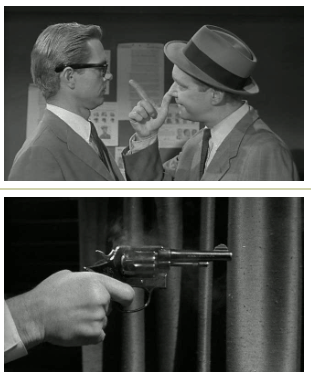
It was based on a novel by William P. McGivern, originally serialized in the Saturday Evening Post. The script was written by Sydney Boehm before Fritz Lang was officially hired on to the project in mid-February of 1953. Lang biographer Patrick McGilligan notes that Boehm was a police reporter on the New York Evening Journal, and that “his specialty was crime…”. The script he delivered was a spare, unflinching tale of corruption, that which kills the wife of Detective Dave Bannion (Glenn Ford), and leads to his vigilante-like quest to take down Mike Lagana’s (Alexander Scourby) crime syndicate. Lang renders Boehm’s straightforward revenge tale with an abstracted intensity, the cold open suicide rendered in massive disembodied close-up of a hand on a revolver, followed by an off-screen gunshot. Lang does not use an establishing shot, breaking the film into pieces that Detective Bannion will struggle to re-connect.

Ford is unduly stressed throughout, on the perpetual edge of exhaustion, his speech clipped into little shotgun blasts of bile that anticipate Charles Bronson’s monotonal delivery a decade or so later. Even when in possession of his nuclear home, he seems uneasy, the jollity forced. His wife, played by Jocelyn Brando, emits a generic housewifely cheer, as if Bannion just wandered onto the set of the Donna Reed Show (which wouldn’t premiere until 1958, but please indulge me). When Bannion’s home is emptied out, it feels more like reality, and the middle-class fantasy the dream. Seeing the rage in Bannion’s eyes, an ex-partner on the force tells him, “you’re on a hate binge.” And so he is, blithely stampeding into Lagana’s nightclubs and mansion, more locales in which he doesn’t belong, with his old dark trenchcoat and faded fedora, suspicious of everyone and belonging nowhere. It is with the entry of Debby Marsh, that childishly erotic creation of Gloria Grahame, that Bannion finds another lost soul, uncomfortable in furs and then in her own skin, when Vince Stone famously scars her face with a pot of coffee (off-screen, like the suicide). Their bond is brief but intense, as each have been ripped away from their place in society. Debby tells a fellow female schemer that they are “sisters under the mink”, but she and Bannion are comrades in hate.

The Lawless was the second film Joseph Losey directed in Hollywood, and he would only be able to make three more before he was blacklisted and had to move overseas. He followed up the anti-war fable The Boy With Green Hair (1948) with this socially conscious drama, which he shot on location in Marysville and Grass Valley, CA in 18 days. He would continue to exploit real locations in his work, used to spectacular effect inThe Prowler (1951) and his remake of Lang’s (1951), in which Southern California becomes a tomb of broken American dreams.

The script was written by Daniel Mainwaring (using his  pseudonym as a mystery novelist, Geoffrey Homes), who would also come under some scrutiny by HUAC, although he was able to work sporadically during that period. Mainwaring’s script hearkens back to the social-realist films of the ’30s, like King Vidor’s ode to communal living, Our Daily Bread, within a completely different political landscape. Anything that smacked of Communism was suspect, so the film’s plea for racial tolerance, and unflattering portrayal of the local police force, came under scrutiny from the Production Code Administration’s Joseph Breen. Here is his amazing note to the film’s distributor, Paramount, as reproduced in the AFI Catalog:

The shocking manner in which the several gross injustices are heaped upon the head of the confused, but innocent young American of Mexican extraction, and the willingness of so many of the people in your story to be a part of, and to endorse, these injustices, is, we think, a damning portrayal of our American social system. The manner in which certain of the newspapers are portrayed in this story, with their eagerness to dishonestly present the news, and thus inflame their readers, is also, we think, a part of a pattern which is not good. The over-all effect of a story of this kind made into a motion picture would be, we think, a very definite disservice to this country of ours, and to its institutions and its ideals….This whole undertaking seems to us to be fraught with very great danger.

However great the danger, Paramount did not greatly alter the film, in which circulation-obsessed newspapermen rile up the public into a frenzy around the story of Mexican “fruit tramp” Paul Rodriguez (Lalo Rios), accused of killing a cop. Already convicted in the court of public opinion, only the stalwart editor Larry Wilder (MacDonald Carey) stands to defend the kid, inflaming the populace to ransack his office. It’s a scene of destructive power, one of the few instances where the theme is illustrated by action rather than static speechifying. This reckless, irrational demolition of a newspaper office, fueled by race hatred, dwarfs the liberal pieties of the rest of the film, which turns Wilder into the hero at the expense of Rodriguez. In plotting action, mostly in long takes, Losey proves he could express his social critique through more subtle means, which he would succeed at in the haunting machinations of The Prowler, one of the great films of 50s middle-class malaise, right alongside The Big Heat.

DTV ACTION ITEMS (PART 3): INMATE AT THE ASYLUM, AN INTERVIEW WITH DIRECTOR RICHARD SCHENKMAN

May 15, 2012

Screen Shot 2020-02-03 at 4.45.33 PM

This is the third and final post in  DTV ACTION ITEMS, a three-part series on direct-to-video action movies. Click here for Part 1, an interview with Outlaw Vern, and here for Part 2, a profile of actor Stone Cold Steve Austin.

The Asylum is the most disreputable studio in that most disreputable of markets: direct-to-video. They made their name cranking out cheaply made “mockbusters”, thinly veiled ripoffs of Hollywood blockbusters starring Z-list celebrities, many of which air in constant rotation on the SyFy channel. Last month Universal Studios sued them for copyright infringement on The Asylum’s Battleship take-off, American Battleship, starring Mario Van Peebles and Carl Weathers. Despite a hilariously cocky press release defending their film (” Looking for a scapegoat, or more publicity, for its pending box-office disaster, the executives at Universal filed this lawsuit in fear of a repeat of the box office flop, John Carter of Mars. The Universal action is wholly without merit and we will vigorously defend their claims in Court. Nonetheless, we appreciate the publicity.”), they changed the title to American Warships, which will be released on video May 22nd.

They are a crew of brilliantly amoral hucksters pranking Hollywood for fun and profit — a commendable goal for sure, but are the movies worth watching? When I spoke to Outlaw Vern two weeks back, he didn’t think so, nothing that “I get a laugh from the titles and covers like everybody else, but the parts I’ve seen have been terrible and not in a fun way.” One of their upcoming releases may indicate an uptick in quality, for Abraham Lincoln vs. Zombies (out on DVD/Blu on May 29th) is a taut, resourceful piece of survival horror, completely lacking the forced campiness of most of The Asylum product. First-time Asylum director Richard Schenkman is an industry veteran who has made everything from indie comedies (The Pompatus of Love) to sci-fi (The Man From Earth), and his experience pays off. The pace is snappy, the action well-staged, and lead actor Bill Oberst is gruffly engaging as Honest Abe. I’d be surprised if its Hollywood counterpart, Abraham Lincoln: Vampire Hunter, is as energetically entertaining. I spoke with Mr. Schenkman about his path into moviemaking, his opinion of The Asylum, and his experience shooting Abraham Lincoln vs. Zombies.

How did you get into the movie business?

All I ever wanted to do was make movies. From the time I was a very small child. So while there were bumps and detours along the road, and while unfortunately when I was young it was much harder to break into independent film than it is today, that was the only direction I’ve ever traveled.

Who were your idols growing up?

When I was a little kid, Jerry Lewis. I guess the first book of filmmaking I ever read was his book The Total Filmmaker. That was when I really began to understand the difference between writing, directing, producing and cinematography. Because when I was very little I thought I wanted to be a cinematographer. When I started reading American Cinematographer magazine and Jerry Lewis’ book, I began to understand what everybody did, and realized what I wanted to do was write and direct. I didn’t want to be a cinematographer; there was too much math involved. So like a lot of people I tried to make little films, I did films with GI Joes and clay, and tried to get friends involved to make live action films. In those days it was so much harder, because you had to shoot on film, it was expensive and you had to send it to the lab, and when it came back you had to cut it with a blade and splice it with glue. It was much more complex and difficult. I have a daughter in fifth grade and she has friends, peers, making films. Eleven, twelve-year-olds. If I was growing up today my whole life would have been different. I would have been making films from the time I was ten, eleven years old.

Was your first paying job working on Playboy documentaries?

No, I started out at MTV. That was my first real job. I was very lucky. I was at MTV when it first started, so I got to have an enormous amount of creative input.

Is that where you learned how to be creative on a budget?

Yes. That was absolutely how I learned it. I’d get an idea on Monday, and I’d write the script and get it approved on Tuesday. I’d go produce the audio for it on Wednesday, the video on Thursday, and it would air Friday night. It was fantastic. The pace was crazy and the hours were long, but it was very very exciting.

How did you transition into filmmaking from there?

I took a bunch of money that I’d made and did a 35mm short, and came to Los Angeles. And said, “OK, great, this is going to get me an agent”. But nobody told me back then that there was no point in going out there with a short until you had written a feature script. I thought I would find work as a director but it didn’t work like that, and it still doesn’t. But it’s much easier to find all that out now. So I went back New York with my tail between my legs, having spent all my money on the short, and wondered what to do next. And that’s when the phone rang. An old executive from MTV had come to Los Angeles to become the new president of the Playboy Entertainment Division. So he brought me out. And again, it was, for a time, a really exciting opportunity. For I was both an executive, the in-house head of production, and a working writer/producer/director. I was able to hire a lot of people to create material, but I was able to jump out there and make stuff myself. It was like being a kid in a candy store.

You had more money to work with there, right?

I did, yes. And, for a time, I had extraordinary autonomy. I was given a pile of money, not a lot, about $400,000. And this money I was given that was just supposed to go towards interstitials for the channel, and I was able to stretch that money so far, that I made full-length shows. More and more the production came under my purview. A lot of short-form stuff. I tried to explain to them how inexpensively they could be making feature films, and own that segment of the market. You know, the softcore, very sexy movies. I was trying to make the point that if we improve the quality of them, made them ourselves, with real actors, working with real scripts, we could really expand the genre – making real movies. Every year for a few years they would put it into the budget, and at the last minute pull it back out. The year after I left they started doing it, and had a huge success with it the first few years.

Were you interested in genre films growing up?

Not particularly. I’ve always loved every kind of movie, as long as it was fairly smart or entertaining. A lot of horror movies are stupid. Too many horror movies, they think it’s enough to scare people, that they don’t really have to make sense, and not have anybody you can identify with. I suppose that’s why I was never much of a genre fan. I’m definitely not one of these guys who grew up seeing every zombie movie and Nightmare movie. I’ve seen lots of them, and the classics are great movies, like The Exorcist. But I’ve never gone for cheap jumps and scares, that always bugs me. To me, Alien is scary.

So the power of suggestion, not having to show everything…

Yes, but also just legitimately frightening you, the way Hitchcock would. Not just go, quiet, quiet, quiet, BOO! I don’t think that’s very clever.

So what appealed to you about Abraham Lincoln vs. Zombies?

The historical mash-up aspect of it. Definitely. I saw it was an opportunity to do a bunch of research and figure out fun and clever ways of working this fictional story into real history. To me that was the fun of the project. How do we insert this story into what we all know to be true? And so my first idea, when I was initially told about the assignment, was the Gettysburg Address. When we think about Abraham Lincoln what do we think about? Holding the nation together, freeing the slaves, and the Gettysburg Address. I just thought, wouldn’t it be great if this zombie adventure tied into the creation and delivery of the Gettysburg Address? That became the spine of the story.

How did you end up getting the job, since you are not a genre guy?

My friend Karl Hirsch is a writer/director/editor who’s done a lot of work for The Asylum over the years, although I don’t think he’s ever done a feature. He’s done some editing of their movies and trailers. They have a relationship, and they came to him, kind of out of the blue, and said, “we’re going to do a direct-to-video title called Abraham Lincoln Vs. Zombies. Are you interested?” He was debating whether he wanted to do it or not, because he had other projects, and he knew it would be very, very challenging. He and I were having breakfast, and he told me about it. So I told him, “Oh, man you have to! That sounds like so much fun. How can you turn that down?” He said, “because there’s not going to be any money, there’s not going to be any time”. And I said, “It’s making a movie!” So I said, “I’ll help you write it. I’ve been trying to find a way to get my foot in the door with The Asylum anyway, because they’re making so many movies, and it would just really be a gas to work on.” And that’s what happened. I pitched him the Gettysburg Address idea, and we beat it out together, along with his wife Lauren, and submitted it. Asylum said, “Yes, we’ll do this.”

And when we were working on a treatment, an eight page, eight act treatment, when midway through that Karl got offered a huge documentary project that he could not turn down. And I said I’d really love to stay on, at least as the writer. Everybody seemed fine with that. David Latt at The Asylum had seen a couple of what he thought were my more indie films, like The Pompatus of Love, although I consider it more of a comedy. So I was offered to stay on as a writer, and pretty early on I said, “I’d love to direct this.” At one point, about a half-hour left before the thing needed to start shooting, they said, “well, there’s going to be no money, no time, nothing that you’re used to having, but if you want to direct it, you can.” I said, “I’m up for the challenge.” In some good news, the line producer Devin Ward figured out how to put the movie together to shoot in Savannah, Georgia, and he got us Fort Pulaski to shoot at. That decision to shoot on location makes the movie exist on any level in terms of quality. If we had to shoot in Los Angeles it really would have been crap.

How much time did you have to shoot?

We had 15 days on location and then a further half-day on a green screen stage. Looking back, how we did it, I have no idea.

Did you have any qualms about making the film for The Asylum, considering their reputation?

The short answer is no, because they make movies. Lots of people talk about making movies, but The Asylum actually makes movies. Here’s the thing from the outside you might not know about The Asylum. Everybody there is really nice, really smart, really hard working, and really loves movies. And everybody there is busting their ass to do as good a job as they can. The people in special effects are there like 20 hours a day trying to make these effects look beautiful. And by the way, some of the effects you have seen in the past in some Asylum movies, and thought, “by God that’s terrible”, a lot of those were done out of house, by people they took a chance with who didn’t deliver, and then they were out of time and out of money. It’s a hard working dedicated bunch of people, all of whom, I think, would like their movies to be better. And I honestly would not be surprised if starting with the movies that are coming out in April-June, if you see a bit of improvement. There is a development executive there, Micho Rutare, who has been there about a year – he’s been pushing very hard for the scripts to be better. As I said, on the technical side, everyone there is challenging themselves to improve the technical quality. I would be surprised if Nazis at the Center of the Earth and Abe Lincoln do not start a trend towards movies that are at least trying to be better.

You were approaching this as a real movie…

I was not encouraged in any way to make a quote unquote Asylum movie. In fact, the way Micho described it was, write an $80 million movie, and then figure out how to do it with nothing. In other words, I was specifically encouraged not to write for the budget. And I was told flat out, “we do not need camp, we do not need intentionally made camp anyway”. Which I had no interest in regardless.

There are no ex-celebrities in the film, right?

No. Basically, we did the movie locally. They are all local actors, except for Bill Oberst, who came from L.A.  Everybody else was local, or if they weren’t local, they got themselves to Savannah somehow, and worked as locals.

I think that would make people take it more seriously. When you see a face you recognize before, it automatically becomes something else. With unknown actors, you become more involved in the story.

There’s that argument. There have always been directors who prefer to work with unknowns or even non-professionals for just that reason. I don’t know where I stand on it. To me, you hire the best actor you can. Frankly, in terms of marketing the film there’s something to be said for getting a known actor. The film’s being produced by its distributor. So they know exactly where they’re selling it, how they’re selling it, and to whom they’re selling it. And they don’t really expect to do much in terms of cable on this title. They do their business in DVD/VOD and foreign sales, and so the movie’s made to fit the place in the market, and within its budget. And the budget is dictated by what their expectations are of how it’s going to sell.

How did the shoot go? Were the budget constraints frustrating?

It’s so funny about a movie shoot. It’s like giving birth to a baby. You end up forgetting just how much it hurt. But if you didn’t forget, you’d never have another baby. If every woman only had one baby, our population would be decimated. So, there’s some mechanism that causes you to forget just how unpleasant it was. And I have to say a couple of months out, I’m beginning to forget how unpleasant it was [laughs]. But it was a very, very difficult shoot. Everybody worked really hard, the community of Savannah really rose up to try and help us get this movie made. People did us all kinds of favors, and the production value we achieved using these local locations is extraordinary. The movie looks like it cost far more than it did. And a lot of that is simply the locations. Having said that, we had a very, very small crew, and almost nonexistent budgets for props, special effects. So you’re asking creative people to pull off miracles every single day. You’re saying to them, “there’s no time to prep, and no money to buy or rent anything, but we need a cool switchblade folding scythe for Lincoln that is going to look mean on screen but not actually hurt anybody. Could you have that by tomorrow?”

The special effects and makeup guys must have worked like crazy…

That’s the thing, it was a zombie movie with no special effects department. Yes, we had a makeup team who worked ridiculously hard, and we had a bunch of day players come in on heavy zombie days. But the casting director and her daughter were on set most days, helping do makeup. And I don’t think they were paid for that. They did it to support the film, and we had a lot of that. Just to support local production in Savannah, to support the project. A lot of people really liked the script, and even though it was, quote unquote, just a zombie movie, I think people really got into the story, and the respect with which we were treating history. I know that sounds crazy to say, but we really were trying to be respectful of history, and the historical characters that were in the film.

Did you at any point look of the promotional images from Abraham Lincoln: Vampire Hunter?

No. I specifically avoided it until I was done. I never read the book. If there are any similarities at all, they’re an unfortunate accident. I honestly know nothing about it. I haven’t seen the full trailer, but I did see the teaser trailer after we wrapped.

I would guess your movie is more historically accurate than that’s going to be.

That would be great! That would be hysterical. Obviously in my mind, it would be nothing short of wonderful if my movie was better than that movie in any aspect at all. If there’s one thing, like “Their Lincoln is better”, or “it’s more historically accurate”, or “It makes a little more sense”, or anything. It was a huge book by a successful writer, a huge budget movie with extraordinarily talented and successful people making it, so if there’s any way my movie compares to theirs favorably, it would be just great. But I don’t expect to come out on the winning side of most comparisons.

How was working with the actors?

They were lovely. Starting with Bill Oberst – he really took it seriously. He was the kind of guy showing up already knowing Lincoln’s speeches by heart. And he actually played Lincoln before on stage. He’s a very dedicated actor, one of the most dedicated I’ve met. He’s also very talented in terms of acting ability and technical skills. He would show up, and let’s say through some scheduling snafu he had prepared for a different scene. Even if he had a page and a half speech to do, he would go off for 5-10 minutes and come back and have the thing memorized. I’ve never seen anything like it.  A true professional and a great leader for the rest of the crew. We had a lot of young actors, a lot of inexperienced actors, and while everyone was super-thrilled to be there, it was great to have someone as experienced and serious as Bill heading up the team.

Especially because you didn’t have time for many takes, right?

That’s kind of a myth, the whole, “we do one take and move on” thing, like Eastwood. In my experience, the time does not go into takes, to do another take is five minutes. That’s not where you lose your time. You lose time getting a shot set-up and trying to load equipment into a huge fort that doesn’t have an elevator, you can’t bring vehicles into, and is open for business for vistors at the same time. That’s where the time goes.

So you had to work around the schedule of the fort?

Yes. It was crazy! Visitors came and went, cannons went off, and we had to shoot around that. We had to get twenty people into makeup with a two-person crew, that was challenging. But the only time I’m forced to say, “we’ve got to move on”, is, for example, you’re against a really hard deadline like lunch, or wrap. If you’re five minutes over, you’re into penalties, and that sort of thing. But having said all that, we didn’t do a lot of takes. I try to rehearse, so…

You had rehearsal time?

Um….no. We did not have rehearsal time before production time. But while the crew was lighting I tend to rehearse with the actors as much as I can.

You worked well with your DP?

We had a terrific camera department. We had two cameras going all the time, and we did that with a camera crew of three, basically. Which is half as many as you’d usually have on a two camera shoot. We had a DP, and two camera assistants. Everybody operated, even I operated sometimes, and we had two cameras almost every shot. It’s the only way we could have ever finished the movie.

While stressful, are you satisfied with how it turned out?

I am happy with how it turned out. Of course there are scenes I would have loved to shoot again. People who’ve seen it so far say it’s a very entertaining film. As retrospect becomes longer, the shoot grows less and less difficult and more and more fun in my mind. It’s always fun to make a movie, because there’s this constant sense of achievement. Every time you get a shot, and it looks good, or complete a scene, or wrap your day. Those are all measurable achievements.

Did you have to improvise a lot on the set?

Sometimes, yes. I try not to improvise utterly on the fly. If I have to improvise I try to do it a day in advance, so that I can write it out and give it to people.

Can you give an example of something you had to improv?

We had a walk and talk along the railroad tracks. We wanted to do it as a tracking shot beside the tracks. Then it occurred to me, can’t we could build some kind of a rig, and take the dolly and customize it so we can track on the railroad tracks? I mean, they’re here, they’re used to having giant things wheeled along them. A couple of our guys got together and dismantled the dolly and reassembled in such a way that it could roll on these railroad tracks. So we did the walk and talk. Then the camera operator was just goofing around, and showed me what it looked like if you rolled the thing pointed forward. He was running in front of it like it was a train coming towards him. Then we realized it could actually roll over a person. I had a scene that needed to be scrapped because we lacked a key prop, and I basically had a character who needed to die a coward’s death. It occurred to me that we could have him run away from a fight, run along the railroad tracks, not realize a train was coming, and get run over by it. And we could get the key shot from the POV of the train by using this rig. So we hurriedly got the guy in wardrobe, and we shot the last part of it.

Would you work with The Asylum again?

Oh yeah. In fact I’m hoping to roll right into another project with them.  I hope to work for them again very soon.
DTV ACTION ITEMS (PART 2): INTRO TO STONE COLD STEVE AUSTIN STUDIES

May 8, 2012

Screen Shot 2020-02-03 at 4.40.53 PM

This is Part 2 of 3 in my series on direct-to-video action movies.

In last week’s post, direct-to-video action expert Outlaw Vern modestly proclaimed that, “for the time being I think Stone Cold Steve Austin is the most prolific star with a good track record [in DTV].” In Part 2 of my industry shaking series on DTV fight films, I exhaustively investigate this claim. Steve Austin (born Steve Anderson) was the biggest star in professional wrestling for most of the past 15 years, perfecting the persona of a blue-collar hellraiser with a rabid anti-authoritarian streak. A series of injuries to his neck and back forced him to retire from the ring, and he’s been churning out DTV bare-knuckle brawlers  since 2009, after his one big bid for the theatrical market, The Condemned (2007), failed at the box office. While he hasn’t matched the insanely successful screen career of frequent WWE foe Dwayne “The Rock” Johnson, Austin is forging a worthy one of his own, albeit on the fringes of the movie business.

Steve Anderson was born in Austin, Texas on December 18th, 1964. His biological father James abandoned the family when he was barely a year old, leaving his mother Beverly to raise Steve and his two brothers. They moved around the state, first to Victoria, then to Edna, each town smaller than the last. In his autobiography The Stone Cold Truth, Austin writes that Eden, “had three or four red lights and a Dairy Queen.” Beverly re-married to a “wonderful man” named Ken Williams: a rancher, country singer and insurance salesman. Ken was also a football player who received a scholarship to Rice University. Steve followed in his step-dad’s footsteps, playing defensive end at North Texas State while nursing a dream to become a pro wrestler. After graduation, he enrolled in Gentleman Chris Adams’ wrestling school, which he attended on his off hours from unloading freight at the docks in Dallas.

A strikingly handsome blonde-haired blue-eyed physical specimen, he was hired by the USWA (United States Wrestling Association). Since there was already a Steve Williams in the territory (one Dr. Death), he had to change his name. Local booker Dutch Mantell suggested “Steve Austin” fifteen minutes before his first match, and it stuck. Initially starting out as a pretty-boy villain (or heel, in wrestling parlance), he rose to be hired by the nationally broadcast WCW (World Championship Wrestling) in 1991, where his narcissistic “Stunning Steve Austin” character failed to create much heat. He was fired after four years.

It was not until 1996, a year into his contract with the then-WWF, that the “Stone Cold” character fully emerged. Drawing on the real-life bitterness from his failed run at WCW, Austin developed a character that embodied a kind of redneck class warfare, a hard-drinking, hard-fighting SOB who would undermine the boss at every available opportunity. His feud with WWF CEO Vince McMahon brought the company record ratings and media exposure, and plenty of opportunity for hilariously over the top subversions – like pouring cement into Vince’s sports car or swatting him over the head with a bedpan. While Austin’s fame also came from his incredible work rate and storytelling ability inside the ring, his ability to tap into underclass rage was the driving ratings force. How could he embarrass the CEO this week?

As the now-WWE (after a tussle with the World Wildlife Fund) expanded their reach, they formed their own production company, WWE Studios. The Rock was the centerpiece of their efforts, as early on it was clear he was eager to expand his brand. They produced or co-produced The Scorpion King (2002), The Rundown (2003), and Walking Tall (2004) before The Rock moved on to bigger things. While The Rock was becoming Dwayne Johnson, movie star, Austin was bickering with WWE’s bookers, and he left the company in 2002 due to a combination of exhaustion and creative differences. By the time they reconciled and he received his one-and-only starring role in a WWE production, in 2007′s The Condemned, he was no longer a cultural phenomenon, but merely wrestling-famous. The Most Dangerous Games-style fight-or-die movie  croaked at the box office, taking in $7 million.

With WWE no longer interested in producing his films, Austin turned to DTV. Joseph Nasser was a prolific producer of trashy TV movies, executive producing such gems as Paparazzi Princess: The Paris Hilton Story (2008) and Anna Nicole (2007), before he started investing in Stone Cold, with whom he has made five fist ballets since 2009. Clearly a canny opportunist, he’s also produced the inspirational religious dramas What Would Jesus Do? (2010) and the Thomas Kinkade-branded Christmas Lodge (2011)). But all we care about here is Austin 3:16, the gospel of which Nasser thought could still make him some quick cash.

The first Nasser-Austin collaboration is Damage (2009) which is also their most ambitious. Austin already has his film persona in place here, which retains the working class resentments of “Stone Cold”, but removes the venomous verbosity. In its place is a bemused, solitary stoicism, a fiercely moral version of Clint Eastwood’s Man With No Name, a wise cracking anti-hero haunted by the past, who values family above all (but never gets the girl). In Damage this character is called John Brickner, an ex-con out on parole from a manslaughter charge in Seattle (shot in Vancouver, as always), drifting from low-paying construction jobs to lower paying bouncer gigs. He’s drawn to an underground fighting ring to make some quick cash, and teams up with slimy promoter Reno (Justified’s Walton Goggins) and his gal Frankie (Laura Vandevoort).

Director Jeff King and writer Frank Hannah are proudly bound to the boxing genre, recalling everything from Gentleman Jim to Body and Soul to Hard Times, with its shady promoters, sympathetic diner waitresses, dangerous pier-side brawls, and just to throw in a side of melodrama, a little girl who needs a heart transplant! All of them are on the take, and all have their reasons, up in their ears in debt and lashing out in desperation. Put across with earnest intensity, it honors its predecessors by playing it straight, which works thanks to the authentically idiosyncratic performances, including the manically weaselly Goggins and extra-crusty Donnelly Rhodes as a fallen priest. The fight scenes are blunt but effective, serving their purpose as expressions of character rather than spectacles-in-themselves.

The Stranger (2010) is the kind of garbled mess that gives DTV a bad name, a paranoid thriller that finds an amnesic Austin racing through Vancouver (posing as Seattle) trying to kick-start his memory. Shot in dilapidated offices and back alleys in what looks like a long inebriated weekend, there’s nothing resembling narrative coherence here, although there is the compensatory pleasure of Austin wearing a big hobo beard. Hunt to Kill (2010) is a welcome return to technical competence and satisfying genre kicks. This one is of the kidnapped-in-the-woods variety. Austin plays a divorced Texas (aka Vancouver) border patrol agent haunted (!) by the death of his deputy (a snickering cameo by Eric Roberts),  who is desperate to insulate his teen daughter from any danger. Of course, they both get kidnapped by raving psychos and go on a forced march through the forest. Strictly abiding by the Rambo playbook, Austin picks off the crazies one-by-one, which director Keoni Waxman (Anna Nicole) and Damage scribe Frank Hannah move along with admirable speed and precision. There is an especially brutal and well-staged fight between Austin and kickboxer Gary Daniels, a drama of reversals and counter-moves that looks like a lead-footed ballet.

There is more light-stepping in Tactical Force (2011), which contains an ingenious B-movie scenario from writer/director Adamo P. Cultraro. This time Austin is the head of an aggressive LAPD swat team that act like a swaggering group of Dirty Harrys, destroying property and criminals’ internal organs with impunity. You can sense Austin cutting loose a bit, channeling some of the absurd humor of his later WWE run, as this character has none of the morality of his other films. Here is a purely destructive force, and is the closest thing to a “Stone Cold” performance in his growing oeuvre.

The SWAT team is suspended after an especially creative outing to a grocery store (in which frozen steaks and BB guns are brandished as weapons), and sent for re-training at a warehouse. Unbeknownst to them, Russian and Italian gangs are there violently negotiating for the rights to a mysterious suitcase (whose contents, as in Pulp Fiction’s McGuffin, are never revealed). Provided only with blanks, the SWAT team is suddenly caught in their crossfire, with little hope for escape. Masking the low budget by filming in one location, and pushing the pace through cross-cutting, this is a resourceful, snarky Tarantino clone aided by the athleticism of its cast. In addition to Austin, the presence of MMA bruiser Keith Jardine and martial artists Michael Jai White and Darren Shahlavi add a bit of physical grace to a film otherwise situated as a snappy dialogue comedy.

My favorite of the Austin DTVers might be Recoil, though, which Nasser just released on DVD and Blu-Ray this past March. Dusting off the Phenix City Story and Walking Tall scenario, Austin is a very haunted vigilante stalking through the Pacific Northwest (read: Vancouver) town of Hope to rid it of the vise-like grip of vice imposed by the biker gang “The Circle”, led by Danny Trejo. After his family was brutally murdered by dirtbags, Austin is eager to return the favor. The film is crisply shot by Terry Miles, whose measured pacing and clear lines make even the smallest of exchanges alive with murderous possibility. It begins with some simple match cuts early on, when he rhymes Austin cleaning the muzzle of his gun with the way he stirs his coffee. Then it builds to deadlier range, when Austin’s first encounter on the street ends with muzzle pointed towards a head. This occurs in a quicksilver although perfectly legible series of movements, emphasizing the quickness and lack of consequences to death in this town.

Later, Miley will match a squeeze of lemon in tea to the local handyman Kirby being forced to squeeze his hand around a knife. The everyday is continually associated with violence, seeped deeply into this town’s being. It culminates in an epic slobberknocker between Austin and Trejo, an operatic brawl which starts as a regular grappling, MMA-style battle and ends with two men taping their hands together,  one single mass of fighter, seemingly beating itself into senselessness. Relentlessly logical in its visual connections, this image of, not one man clapping, but one man brawling, is a rather brilliant way for this movie about a town devouring itself to end.

Unsurprisingly, Outlaw Vern appears to be correct. Steve Austin is a reliable indicator of DTV quality, with four out of his five efforts worthy of attention. With two more films scheduled for release this year, The Package  (co-starring Dolph Lundgren), and Maximum Conviction (with Steven Seagal)it will be interesting to see if he continues to elaborate upon his stoic straight-edge persona, or if  the cocky and logorrheic “Stone Cold” that he flashed in Tactical Force will creep back in to once again strike fear into CEOs the world over.

DTV ACTION ITEMS (PART 1): AN INTERVIEW WITH OUTLAW VERN

May 1, 2012

Screen Shot 2020-02-03 at 4.30.37 PM

The summer movie season is obnoxiously approaching, with long-form toy commercial  The Avengers opening on Friday.  While estimable writer-director Joss Whedon is sure to provide a witty quip or two, this is still a 142 minute movie about a gang of men (and a token woman) who wear molded plastic underwear. This 3D “spectacular” will cost upwards of $20, so I submit that your movie dollar is better spent on the humble direct-to-video action movie. With no budget for CG, these cheap-o brawlers resort to showing actual humans moving in real spaces, often with jaw-dropping athleticism. And if not, they are over in 90 minutes or less.

For the next three weeks, I’ll be discussing DTV action movies, in the hopes of bringing more appreciative eyes to this last bastion of  the B-movie spirit. This week, I chat with Outlaw Vern about the general state of DTV movies today, from its studios to its stars. Vern has been a vocal (and very funny) supporter of the genre for years at Ain’t It Cool News and his own popular review site, sparking my own interest in them with his polemical call-to-arms in his write-up of The Marine 2““Some of us are starting to suspect that there’s been a switcheroo, that the DTV format – once designated as a 100% crap zone – has become the more reliable place to find good [English language] action movies.” The more I watch, the more I agree with him.

The interview was conducted over e-mail. Vern writes in very slangy prose, so words like “websight” are not typos, but are his own invention. You can order his book on Steven Seagal, SEAGALOGY, here.

For some background, what year did you start reviewing movies? Could you talk about what led you to start up your site?

I started in ’99. Back then there was this thing on the internet called “newsgroups” which was sort of like bulletin boards, and I would write crappy little movie reviews on the one called rec.arts.movies.current-films. Some of the people there thought what I was writing was funny and sort of sarcastically suggested starting a websight, so I did. After doing it for a long time I got better.

Did you cover DTV movies right from the start, or was there a particular film (or actor) that made you pay closer attention to them?

It started because I had a friend who was hooking me up with screeners from a video store, these were VHS tapes that the studios sent out to promote upcoming movies. Since they were movies that hadn’t come out yet I would write about them and send it in to Ain’t It Cool News. Back then a lot of them were sequels to Wild ThingsCruel IntentionsThe Skulls, stuff like that. I also got some of the DTV Steven Seagal movies and I was really interested in him because of On Deadly Ground so I really took to those and that obsession led to me writing my book Seagalogy.

Unlike the majority of movie writers, you focus a lot on the way action scenes are shot. What do you think are the key ingredients to making a good action/fight sequence? Of those, what do you think DTV movies do particularly well?

There’s no one way to do an action scene but I’m very big on them having a clear sense of where the characters are standing and what they’re doing. That used to be a minimum standard of competence but now it’s kind of rare. A decade ago I was really bothered by fast edits starting with Armageddon, and then started worrying about bad framing after Gladiator, and of course since then you can usually assume that a theatrically released action movie is gonna have most of the scenes shot very close up with a handheld camera so you get confused and aren’t sure if anything cool happened or not. When the director actually makes an attempt to plan out the shots and clearly show people fighting it becomes a major promotional point, like in Hanna and Haywire.

For a long time actually the action was usually crappy in DTV movies. For example Seagal’s action scenes showed way less effort and craftsmanship than his earlier movies. Belly of the Beast and Urban Justice are two exceptions. But in recent years as most of the studio action movies have turned into shakycam bullshit with actors pretending to be fighters instead of the other way around, DTV became sort of the last refuge for American fight movies with the spirit of what we used to love in the ’80s.

Could you give a general DTV lay of the land for newcomers? Who are the major studios, directors and actors?

Millennium Films is mostly theatrical now (they did The Expendables and the Conan the Barbarian remake) but they were sort of the Cannon Films of the early 2000s, pumping out lots of the DTV movies starring Seagal, Jean-Claude Van Damme and Wesley Snipes. Those guys, Dolph Lundgren and Academy Award winner Cuba Gooding, Jr. are the primary marquee names doing DTV vehicles, but of course Wesley’s in jail now and Seagal has slowed down a little to do TV shows. For the time being I think Stone Cold Steve Austin is the most prolific star with a good track record. Most of his DTV movies, especially Damage, are way better than his one theatrical starring role, The Condemned.

WWE Studios (or “the prestigious WWE Studios” as I always call them) made The Condemned but I think they’ve become much more trustworthy in the DTV market. I really enjoyed The Marine 2starring the son of a wrestler I used to watch in the ’80s, and a quirky crime drama called Inside Out where the wrestler Triple-H is reunited with his Blade 3 co-star Parker Posey to play an ex-con who gets mixed up in his friend’s untaxed cigarette scam, but just wants to make pickles [this actually received a limited theatrical release last year -RES].

Years ago it seemed like no DTV directors left a mark on their movies unless it was a mark of suckiness. Now there are a bunch of directors I try to keep an eye on: Isaac Florentine (Undisputed 2 and 3NinjaSpecial ForcesUS Seals II, many others) and John Hyams (Universal Soldier: RegenerationDragon Eyes) are the standouts, but I’m also interested in William Kaufman (The Hit ListSinners and Saints), Roel Reiné (Pistol Whipped, The Marine 2Death Race 2) and Jesse V. Johnson (The ButcherPit Fighter).

Where are most DTV productions shot? And do you know the general budget of most of these productions?

It seems like most of them shoot in Vancouver, but Avi Lerner, founder of Millennium, has a studio in Bulgaria, so a lot of them are shot there. There are a lot of New Orleans productions now too, because of tax incentives they have there. I don’t really know about budgets, but I just looked it up and IMDb estimates Universal Soldier: Regeneration at $14 million, less than a fourteenth what it cost to make Battleship.

What is your opinion of the “mockbusters” that the production company The Asylum  churns out? Most of them look like manufactured kitsch, but is there anything worthwhile or interesting there?

Not that I’ve seen. I mean, I get a laugh from the titles and covers like everybody else, but the parts I’ve seen have been terrible and not in a fun way, so I haven’t had the stomach to venture into that territory too much. People always ask me to review different ones but I’ve never had anyone claim to have found one that was watchable. Actually I thought about watching I Am Omega because it stars Mark Dacascos. That could still happen. My dream is that they’ll start doing rip-offs of Oscar winners. I’d like to see The King’s Peach and The Artiste. The ‘e’ in Artiste would be really small on the cover.

Scott Adkins is a favorite of yours (and now mine). How would you describe his work to someone who hasn’t seen him before? Do you think he’ll ever break through in Hollywood?

Adkins is an agile, high-kicking screen martial artist kind of like a modern Van Damme, but he’s English so he’s more eloquent in our language. But actually I like him best in the Undisputed movies playing a stoic Russian criminal. He has more of a background in straight acting than most action stars, having been on British TV shows like EastEndersand Mile High, but it’s his fighting that has earned him a following. He also kind of looks like Ryan Reynolds, so he was able to stunt double Reynolds in Wolverine.

I don’t know, part of me feels like he’s so talented and likable and has such an impressive body of work that he’s destined to blow up on the big screen, but part of me thinks there’s just not a theatrical market for martial artist stars like that anymore. Jason Statham is probably the closest thing we have to that in the western world.

Of the aging DTV action stars (Seagal, Lundgren, Van Damme and the like), who is making the most interesting stuff? Any recent recommendations?

I think Van Damme is in an interesting place right now, because he turned down The Expendables to do Universal Soldier: Regeneration, which totally paid off because US:R is a way better movie and now he gets a bigger role as the lead villain in Expendables 2. He’s really great in US:R, playing his zombie super soldier character as a burnt out, tragic character yearning for humanity but not able to reach it. Lundgren is also great in that (he’s only in a few scenes because he didn’t turn down Expendables). He’s doing some experimenting now too, he did an indie comedy, he’s got one coming out where he plays a villain, and he’s working with 3 of the directors I listed above, plus doing some directing of his own.

The best recent movie I’ve seen with any of those guys is Dragon Eyes, but Van Damme really just has a glorified cameo as the mentor to Cung Le.

I know you’re an admirer of Isaac Florentine. What makes him in particular such an effective DTV director?

He’s a martial artist himself and also grew up a movie nerd obsessed with Sergio Leone. But my theory is – and I’m not sure anybody else subscribes to this one – that it comes from directing Power Rangers. He did like 60 episodes as a choreographer and directed a lot of those so it just gave him years of practice quickly shooting down and dirty martial arts sequences with very little money. He loves movement and believes in visual storytelling, so he has a very energetic but clear visual style. And at this point he’s done more than a dozen movies but still puts his all into it so he’s gotten really great at taking guys like Van Damme, Lundgren or Michael Jai White and putting them in a story that really emphasizes their badass qualities. Florentine is also the guy that turned Adkins into a DTV icon, first stealing the show in Special Forces, then as the villain in Undisputed 2, who became the protagonist in Undisputed 3.

I think your favorite DTV production is Universal Soldier: Regeneration. Could you say a few words about why DTV doubters should see it?

That movie is the surprise masterpiece I’ve been hoping for ever since I started watching those screeners. It grabs you right from the beginning with this intense kidnapping, car chase and shootout. The cameras are right in the middle of the action but used very intentionally, not shaking all over the place. It takes these silly but fun sci-fi concepts from the original Roland Emmerich movie but treats them much more seriously. The music and sound design seem very influenced by Alien and The Terminator, it creates a really strong, grim atmosphere. The super soldiers are played mostly by MMA fighters so the fight scenes are really brutal. But there’s also something poetic about it, like the scene where Lundgren’s villain has been cloned after being chopped up in the original movie and he knows to fight Van Damme but can’t remember why. It’s this awesome sci-fi action movie but also says something about war taking away our humanity.

From the few I’ve seen, the DTV action movies seem to have a higher level of craft than Hollywood blockbusters because of their low budgets, forcing them to use more analog techniques (like using longer takes with real fighting instead of fx and rapid cutting). Do you think that is true, or am I exaggerating?

It seems that way because you’ve seen the very best ones. I gotta be honest, there’s a lot more crap than there is Undisputed. But I think that’s definitely true in best case scenarios like Hyams and Florentine. I compare them to the standout directors who were taking advantage of the drive-in market to do interesting stuff in the old days.

The standards keep going up for DTV and at the same time the standards for action scenes in theatrical releases are pretty much in the toilet. It’s like you’re not even expected to point the camera at the action anymore. Did you see Warrior? Really good sports drama, but the fighting tournament is literally shot to look like you’re in the audience with shitty seats where you can’t see anything. The fights are choreographed by J.J. Perry, but his work is showcased way better in DTV movies like Undisputed IIThe Tournament and The Shepherd: Border Patrol.

What upcoming DTV movies are you most looking forward to?

I can’t say Universal Soldier: Day of Reckoning because that’s hopefully gonna be in theaters. I have some hopes for this one called The Package because it’s Jesse V. Johnson directing Steve Austin and Dolph Lundgren, plus lesser known white guy martial artists Darren Shalavi and Jerry Trimble are in the cast. And I’m hoping Maximum Conviction will be fun because it teams Austin with Seagal. It’s all about team-ups right now.

If you had to select five DTV productions to convince someone to take DTV movies seriously, what would they be?

1. Universal Soldier: Regeneration (2009)

2. Blood and Bone (2009): Michael Jai White is a badass motherfucker who gets out of prison, rents a room and enters an underground fighting circuit on a mysterious mission of revenge. He’s every bit as badass as he was in Black Dynamite but in a non-parody context. This reminds me of the best Van Damme movies like Lionheart, mixed with a little blaxploitation swagger. It has an excellent villain, a surprising use of a Wang Chung song, and great little touches like the legendary Bob Wall cameoing as his character from Enter the Dragon.

3. Undisputed II (2006) and III (2010): – I didn’t really like the original Undisputed even though it’s directed by Walter Hill and has a great performance by one of my favorites, Wesley Snipes. But in the sequels Isaac Florentine replaced the boxing with MMA and came up with the brilliant idea of turning the villain George “Iceman” Chambers (originally Ving Rhames, now Michael Jai White) into the protagonist to fight the Russian prison champ Boyka (Scott Adkins). Then in part 3 Boyka has to rebuild himself after defeat and face the great Chilean fighter Marko Zaror (Mandrill). Boyka is a convicted murderer but you find yourself rooting for him to win and escape.

4. Darkman III: Die Darkman Die (1996): I want to honor the rare good-DTV-sequel. Most are half-assed rejected-TV-pilot-esque rehashings with different characters. Darkman III is one of the rare DTV sequels that seems to fit the medium: it’s certainly not worthy of a theatrical release – I mean, Liam Neeson is replaced with Arnold Vosloo from Hard Target and The Mummy – but gives us an idea of some of the fun we might’ve had if more people had paid to see Darkman like we did. It’s from the writers of Face/Off, and they come up with all kinds of clever and funny things to happen to the vigilante master of disguise. My favorite is when he disguises himself as the villain (Jeff Fahey) to break into his house and walks into his surprise birthday party. Later he impersonates the villain again for the good cause of attending his daughter’s school play.

runners up: From Dusk Till Dawn II: Texas Blood Money and Hostel Part III, both directed by Scott Spiegel.

5. Belly of the Beast (2003): I gotta include a Steven Seagal picture on here. Urban Justice is his most hardcore DTV action movie, Out of Reach is maybe his funniest (he plays an animal rescuer/swordsman who has to rescue his orphan pen pal from white slavers) but I think Belly of the Beast is most representative of the DTV yin and yang: quality action mixed with charmingly sloppy filmmaking lunacy that would never make it to theaters. Helmed by the great Ching Siu-Tung (director of A Chinese Ghost Story, choreographer of Hero and Shaolin Soccer), it brings Seagal to Thailand to save his kidnapped daughter from Islamic extremists, a corrupt general, a transvestite and a sorcerer. There’s a great shootout and a fight in a market where a guy slips on a tomato and lands on a meat cleaver.

HOME VIDEO ROUNDUP: BELL, BOOK AND CANDLE and WESTWARD THE WOMEN

April 17, 2012

Screen Shot 2020-02-03 at 4.23.54 PM

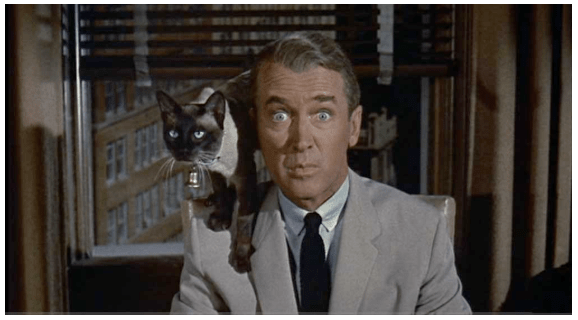
I had a similar reaction to Mr. Stewart when I watched Kim Novak purr her way through Bell Book and Candle, just released by Twilight Time on a gorgeous blu-ray.  He also might have been agog at Westward the Women (1951), the William Wellman femme-Western released in a well-appointed DVD from the Warner Archive, which includes an audio commentary from film historian Scott Eyman. They are two films that focus on female desire, a rare occurrence in the generally leering male gazes of post-code Hollywood (pre-code films were replete with sexually independent women – check out Baby Face (1933) for a bracing example). Bell Book and Candle is set in motion because of Novak’s uncontrollable lust for Stewart, and Westward the Women kicks off because of hundreds of ladies’ self-sacrificing desire for a better life out in California, a gender bending variation on Horace Greeley’s advice to, “Go west, young man”.

Originally, Bell Book and Candle was a stage play written by John Van Druten and produced by Irene Mayer Selznick in 1950. Although her divorce to David O. Selznick had been finalized in ’49, she sold the rights to him in 1953. He intended to cast his next wife, Jennifer Jones, in the lead, but the project never got off the ground, and the rights were eventually purchased by Columbia. After initially considering Rex Harrison for the lead, the studio and producer Julian Blaustein decided to re-team Kim Novak and Jimmy Stewart, who had both wrapped shooting on Paramount’s Vertigo in January of 1958. Since Columbia had lent Novak for that project, Paramount returned the favor in allowing Stewart to film the supernatural romantic comedy, which started shooting on February 3rd. The exuberantly talented Richard Quine (My Sister EileenIt Happened To Jane) was slated to direct, and the legendary James Wong Howe handled the indecently saturated Technicolor cinematography.

Reversing the polarity of obsession from Vertigo, in Bell Book and Candle it is Novak who is the stalker, Stewart the stalked. Novak plays Gillian Holroyd, a stir-crazy witch in the West Village of NYC who deals in African and Oceanic art as a lucrative front. Stewart is the endearingly uptight Shepherd Henderson, the editor-in-chief at an upscale publisher who lives above her storefront. Bored with her hep wiccan lifestyle spent at the Zodiac nightclub (where warlock Jack Lemmon plays the bongos), she yearns for something different. So indeed she indulges in some hoodoo and wraps Shep in her spell. When he finds out his attraction is not entirely natural, Gillian has some explaining to do.

Novak gives a smoldering performance, shooting looks at Stewart of devouring lust as she slowly pours herself onto the couch to accentuate each curve in her body. She even modulates her voice into a low purr, emulating the vocal rhythms of her beloved pet cat. Costume designer Jean Louis puts her in inflammatory red, from a bohemian-chic smock to a scoop-necked sweater, a siren intent on snagging her prey. The colors in James Wong Howe’s cinematography veritably pop off the screen, from those gleaming reds to the sharp pinks of Gillian’s mother Queenie (Elsa Lanchester) and the rich creams and grays of Shep’s sharply lined attire. Richard Quine, always a sharp caricaturist, lets Lanchester and Lemmon loose as the impish do-badders, providing islands of comedy amidst the torrents of Gillian’s pheromones, which course through this intoxicating Technicolor dream.

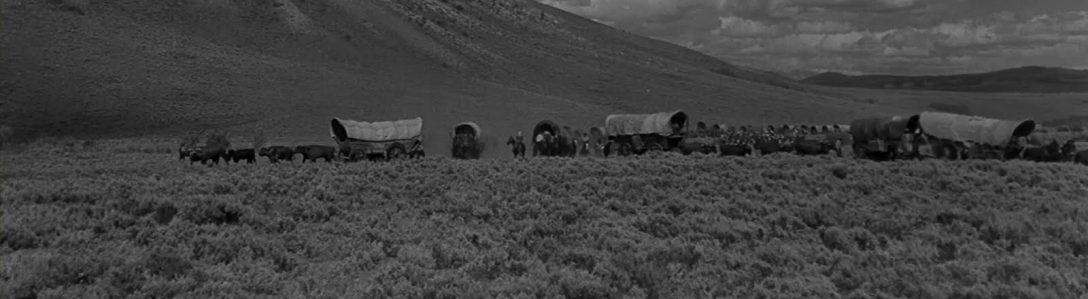
Where Bell is fantastical, Westward the Women (1951) is elemental. Based on a story by Frank Capra, it tracks the travails of hundreds of women traveling from Chicago to California, lured by the promise of hard-working husbands and the open air. According to Capra’s biography, he intended to direct the film with Gary Cooper to star, but eventually had to table it, and ended up selling the rights to his neighbor, William Wellman, who had recently finished his Clark Gable western, Across the Wide Missouri (also 1951).

Ostensibly the lead is Robert Taylor as trail master Buck Wyatt, but the film spends most of its time dutifully tracking the intense labor of the women on the drive, as early on most of the cowboys cut loose, unwilling to drive further into unforgiving territory. But the women endure, as Wellman depicts them in extended montages of work, seemingly inspired by the major drive in Raoul Walsh’s The Big Trail (1931), and perhaps an influence on Kelly Reichardt’s Meek’s Cutoff (2011), other Westerns obsessed with process. These processes are inevitably group efforts, lending these sequences a bit of communal proto-feminism, together doing the jobs of men with little fuss and unspoken teamwork. The gritty heart of the film is Patience (Hope Emerson), the Ward Bond of the movie, whose brute physicality inspires the rest of the ladies to self-abnegation and ultimate triumph, but who secrets a sensitive soul behind all the bluster. She is joined by a cross-section of personalities, from the sharpshooting farm girl Maggie, the still-mourning Italian widow Mrs. Maroni, and the two ex-prostitutes Fifi and Laurie, eager for some vision of country life.

Many women suffer and die, but the rest endure, the vast middle section is a grim kind of survival horror movie, as carriages crash and hostile Native Americans chase them down. Pared to the bone of back-story, the film operates by the familiar Wellman method (although only intermittently witnessed in his post-30s work), of showing character through action. All of the women in the film gain a personality through the attention Wellman pays to their faces, instead of lugubrious scenes of exposition.These roll calls of expressions (similar to the montage of faces before the cattle drive in Red River), intimate more in images of their lined brows than any speech could convey.

Never an emotional director, Westward the Women is nonetheless an unexpectedly moving film. When the women finally meet their prospective husbands in California, it’s a scene that could easily become droopingly sentimental, but instead is reticent and ambiguous, a skittish embrace of an uncertain future, one in which the freedoms of their drive West will likely disappear in their return to male dominated society. It is this melancholy undertone that makes Westward the Women a fascinating object, as the seams and contradictions in Hollywood’s depictions of womanhood poke through thanks to Wellman’s distanced, unvarnished approach. In a similar way, Novak’s voracious sexual appetite, that the movie never indexes as negative, undercuts the usual Madonna-Whore complex of romantic comedy that persists today (see, if you must, the dire What’s Your Number for a current example). Both these films are remarkable in that they show women who can fuck and fight with with the best of them, with no apologies.

MEN NOT AT WORK: THE THREE STOOGES AND THE DAY HE ARRIVES

April 24, 2012

Screen Shot 2020-02-03 at 4.14.31 PM

The mind needs structure. So when watching films in quick succession, unexpected linkages emerge, like the strange thematic similarities between Hong Sang-soo’s The Day He Arrives (in theaters now from Cinema Guild) and The Farrelly Brothers’ version of The Three Stooges, discovered while watching them back-to-back over the weekend. The first is a critically-acclaimed art film in limited release, the second the lowest of lowbrow comedies out everywhere, and yet they are both  episodic narratives about arrested male development, albeit in different stylistic registers. The Day He Arrives uses a teasingly complex script to lay out the alternate life paths its passive protagonist could have taken, hypnotically acted out with repetitive gestures and phrases. The Three Stooges, however, are active participants in their own destruction, eager to endlessly pratfall down the same road to get the eternally recurring nyuk-nyuk inducing result. Two versions of male stupidity, touchingly rendered.

The Day He Arrives is the latest generator of masculine regret from Hong Sang-soo, who has been mastering his elegiac deadpan mode since ’96, with increasingly fractured narratives. This one circles around ex-film director Seongjun (Yu Junsang), who leaves his exile in the country to visit his college friend Youngho (Kim Sang-joong) in Seoul. He says, “I’m not going to meet anyone but him”, which of course means that everyone on the street is a former lover or fan, forcing him to relive all the fumbling mistakes of his past. As Seongjun walks in circles, in a predetermined grid set up by the opening shot of an intersection, his past life starts repeating in the present. A rekindled relationship with an old flame from school is then re-enacted almost word for word with the owner of a bar named “Novel”. Seongjun learns nothing new, though,  keeping his distanced, faux-romantic pose as he once again cuts off personal contacts and retreats into his shell. Though he idly hopes that his films will be “re-evaluated after enough time has passed”, he never deigns to re-evaluate himself. It’s a bumbling, tragi-comic vision of Nietzsche’s eternal return:

“What, if some day or night a demon were to steal after you into your loneliest loneliness and say to you: ‘This life as you now live it and have lived it, you will have to live once more and innumerable times more’ … Would you not throw yourself down and gnash your teeth and curse the demon who spoke thus? Or have you once experienced a tremendous moment when you would have answered him: ‘You are a god and never have I heard anything more divine.’ -Nietzsche, The Gay Science

Seongjun is too oblivious to be aware of his endless circling , his flickering consciousness too self-absorbed  and far too passive to gnash teeth. Maybe he would make do with a clench, if it didn’t strain him too much.

The Three Stooges are also stuck in an eternal return, not just of the endless recycling of television characters, but of their insatiable need to beat the snot out of each other, a trio of sadomasochistic co-dependents. Seongjun burrows inside himself to escape the world, while the Stooges slap each other to do the same. The Farrelly Brothers have examined all kinds of physical and psychological maladies (Seongjun is heading in the direction of Jim Carrey’s severely repressed schizo in Me, Myself and Irene), but the Stooges are the most sociopathic characters in their careers. A stupider and more violent Dumb and Dumber, which means, yes, it is a stirring return to form.

The Farrellys  give the reborn Stooges an origin story, as babies dumped at an orphanage at the feet of the curmudgeonly Sister Mary-Mengele (a hilariously harrumphing Larry David). As amateur hell-raisers they are never chosen for adoption, and are spurred to action when the nuns are forced to sell the place unless they raise six figures in cash.

The trio of low-watt celebrities do a remarkably good job at capturing the staccato tempo of the original Stooges. Sean Hayes has a fine falsetto whine as Larry, Chris Diamantopoulos has the nasal a-hole Moe voice down pat, and Will Sasso does a nimble Curly, always the most balletic Stooge. Avoiding the baggage of the originally rumored stars (Carrey, Sean Penn and Benicio del Toro were all attached at one point), these anonymous performers are able to put the jokes center stage.

Sent off into the world, the Stooges are as helpless as Seongjun, although instead of re-living past failures they establish new ones, including starting up a free-range salmon farm that flops. They attempt to insulate themselves from the world through their friendship (as the conjoined-twin protags of Stuck on You do), but start to crack apart instead. They re-team because they have to, due to the demands of Hollywood narrative as well as their own natures – they eye-poke, therefore they are.

If posed with Nietzsche’s question, they would probably answer “never have I heard anything more divine”, fools in love with their own foolishness, and when peeking outside the edges of their slap-happy triumvirate, would eagerly agree to stay inside of it for eternity, free to create chaos and baby pee fights wherever they may roam. Seongjun, an alcoholic Bartleby, would rather not participate in life. His Cartesian saying would be: “I think, therefore I want to disappear.”

EDWARD L. CAHN’S YOU HAVE TO RUN FAST (1961)

April 10, 2012

Screen Shot 2020-02-03 at 4.11.33 PM

Edward L. Cahn directed 11 films in 1961, and You Have to Run Fast was one of them. MGM recently released it on their DVD burn-on-demand service in a crisp transfer, making it easy to appreciate the thriller’s tight construction and  open-air location shooting. The AFI Catalog lists no production dates but it was undoubtedly completed in a week or two before Cahn and producer Robert E. Kent moved on to the next programmer (17 of which are now streaming on Netflix). I was tipped to Cahn’s work by Dave Kehr’s “Further Research” column in the November/December 2011 Film Comment, where he says, “Cahn…seemed to embrace the aesthetic of speed with a passion and personal commitment not always apparent in the work of his more feverishly productive Poverty Row peers.” Cahn reportedly filmed “an astonishing 40 setups a day”, but as You Have to Run Fast clearly shows, they flow with an ironclad visual logic, and establish a moral equivalency between a mob boss and the innocent he is tracking down.

Dr. Roger Condon (Craig Hill) is at the wrong place at the wrong time, although that tends to happen when you run a private “Day and Night” medical service. Two goons dump a pummeled detective at his feet, who then dies moments later. Condon is now the only eyewitness to the two killers, whom he IDs to the police. Unwilling to be put into protective custody and close down his practice, a guard is assigned to him, who is promptly gunned down in the next sequence (see top images). Accurately appraising the skill of the cops, Condon changes his identity and leaves town. Authorities rarely come off well in Cahn’s work – an entire city is for sale in Afraid to Talk (1932) – resulting in what Kehr describes as Cahn’s worlds of “cruelty and callousness”. Condon shaves his ‘stache and turns up as “Frank Harlow” in quiet Summit City, where he counts down the hours before killer kingpin Craven (Grant Richards) tracks him down.

Not as fatalist as the Depression-scarred Afraid to TalkYou Have to Run Fast offers the possibility of starting anew. In Summit City (shot somewhere in woodsy Northern California) Condon forms a makeshift family with wheelchair-bound Colonel Maitland (Willis Bouchey) and his smitten daughter Laurie (Elaine Edwards). The Colonel is a Korean war vet who lost his legs from a mine and is eager to be useful again, while Laurie is going stir crazy as a pacifist in a hunting town. Condon allows the Colonel to exercise his hibernating machismo (rifle lessons), while offering Laurie some much-needed intellectual (and the possibility of physical) stimulation.  As Craven has trouble finding Condon, he notes matter-of-factly that, “there are a lot of guys hiding out in this country”. Condon is part of a nation of dissemblers hoping their next lie will lead them to the land of milk and honey, and he, for the moment, has found it.

As Craven hides from the police, Condon hides from Craven, and Cahn merges them closer together visually through match cuts. Both men are entrapped by events and enclosed in spartan accommodations.  Cahn rhymes images of them pensively reading the paper and snapping at their respective lady friends, and Condon is shown spying on the thugs who  spent the previous scene trailing him. Regardless of how they began on the moral spectrum, they become more and more alike. They are only “hero” and “villain” by the necessities of the plot; character-wise Cahn flattens their differences as much as possible, even having Craven apologize to Condon in the final shootout, in which they wear matching plaid hunting gear.

Cahn’s instinct for upending genre archetypes leads him to create the most entertaining characters in the film, Craven’s bumbling hired goons Bert (Shepherd Sanders) and “Toothpick Stan” (John Apone). Instead of sadistic mercenaries, they are an inquisitive if dense kind of comedy duo, with Bert playing the epicene straight man and Stan the mealy-mouthed punchline. Stan works his cheeks like a bellows before squeezing out lines like, “Why would the doc pick a jerkwater burg like this to hide out?” Bert then has to explain the whole concept of “hiding out”, his pinched gerbil face overactive at the effort. When they exchange their dunce parlance You Have to Run Fast becomes a downright light-hearted escapade, with Cahn’s dark worldview only peeking back in with the main narrative line.

The finale wraps up every little thematic nugget in resoundingly efficient fashion. The Colonel is tasked to return into action with his sniper rifle, Condon declares his love for Julie, and Craven is magnetically attracted to his double, arriving in Summit City and inevitably breaking down the door of the Maitland’s cabin, finally occupying the same diegetic space as Condon (who is hiding in the basement below). Obviously only one of these men can survive, now seeming like split parts of the same personality, and the big gunfight is framed in an abstracted long shot, the men dots in a  pointillist frame. When they finally converge, in the backseat of a sports car, Condon is the one holding the gun, so he gets to play the hero, get the girl and occupy center stage. In Cahn’s universe though, a hero is just a villain with an assumed name (and vice versa), giving this black & white cheapie an unsettling worldview that is assuredly shades of grey.

LOOK HOMEWARD, STANWYCK: NO MAN OF HER OWN (1950)

March 27, 2012

Screen Shot 2020-02-03 at 4.08.45 PM

Onscreen, Barbara Stanwyck was rarely the nurturing type. She became an icon because of her persona of fearsome independence, her justifiably shameless arrogance next to godliness. So it’s jolting to investigate the byways of her career, in which she played off type, including her elegiac performance in Mitchell Leisen’s noir, No Man of Her Own (released on DVD today by Olive Films). Playing the vulnerable and doomed Helen Ferguson, Stanwyck exhibits a touching passivity in the face of a world continually conspiring against her.

The movie was based on a Cornell Woolrich short story, “They Call Me Patrice”, that he published under the pseudonym William Irish in Today’s Woman magazine. He later expanded it into a novel entitled I Married A Dead Man. Optioned by Paramount, it was adapted into a script by Sally Benson. Leisen later claimed he rejected Benson’s version, and wrote an entirely new screenplay himself, with help from Catherine Turney. Benson and Turney receive the only on-screen credit, since Leisen was not a member of the Screen Writer’s Guild. In the American Film Institute’s notes on the film, it is stated that the PCA refused to approve the script, as supposedly Helen was a prostitute in the original. It would only be passed if Leisen agreed to kill her off at the end, to pay for her “sin”, so instead any reference to her streetwalking was eliminated.

Helen Ferguson is pregnant and penniless after getting dumped by her playboy boyfriend, Stephen (Lyle Bettger), his parting gift a train ticket out of town. The train crashes, and in the confused aftermath Helen is identified as Patrice Harkness, a pregnant newlywed who died in the disaster with her husband. Desperate to start a new life for her child, Helen pretends to be Patrice, whom the Harkness family had never met in person. She passes off her ignorance as trauma from the crash, which raises the suspicion of Bill Harkness (John Lund), Patrice’s brother-in-law. When Stephen reappears and begins blackmailing Helen, she will have to choose between revealing the truth – or remain forever in his oily grip.

Stanwyck exudes helplessness and inertia from the opening frames, as she speaks in resigned tones in a voice-over, with the camera slowly dollying forward toward an idyllic home. “Summer nights are pleasant in Caulfield… But not for us. Not for us.” The camera continues to track through the interior of the home, its progress slow and funereal, the empty, shadowed hallways as quiet as a mausoleum. In the first glimpse of human life, Stanwyck stills her face into the soullessness of a wax figure, while Bill is sweatily reading Thomas Wolfe’s Look Homeward, Angel. Stanwyck: “I love him, and he loves me. I know he does. But someday he’ll pack and leave.” She says these lines with calm resignation, accepting her role as the plaything of fate, her tragedy as destiny.

To initiate the flashback which will describe how she came to this state, Leisen blacks out the screen except for her tired eyes. Stanwyck is always on the edge of exhaustion, moving slowly and deliberately, approaching everything with circumspect weariness. Leisen emphasizes this with the dreamy unreality of his style, which truncates scenes with enigmatic ellipsis and pumps up background noise to unreal levels, the world constantly having its say over the characters in its sway, the rattle of the train tracks insinuating themselves into Helen’s skull.

With the crash, what had been a tragedy turns also to nightmare, with Leisen’s imagery becoming more unhinged. The camera twirls 360 degrees upon the smash-up,  enters  Helen’s unconscious POV as she is anesthesized before giving birth, from which she will awake as Patrice, and a rich woman. Bill tells her, “You were born the day I met you”, but as what? For Helen/Patrice, the mask continually slips, and it’s unclear whether she’d want either face anymore, one a poor wastrel and the other an anxiety-ridden liar. Stanwyck’s passivity shades into nihilism, the turn coming when she realizes that her only way out of her predicament is cold-blooded murder, which she accepts with equanimity. The too-happy ending absolves her of these crimes, but the glint in Stanywck’s eye is far more troubling than what the Production Code Administration presumably censored.

In his New York Times review, the reliably condescending Bosley Crowther said that, “This sort of female agonizing, in which morals are irresponsibly confused for the sake of effect, makes diversion for none but the suckers, we feel sure.” Count me among the suckers. It is a profoundly unsettling film, and proof positive that Stanwyck could play crumbling facades as well as gleaming monuments.